 Grants & funding programs
Small Business Grants in 2026: What's Real, Who Qualifies and How to Apply
Small business grants in 2026: what SBIR/STTR, USDA and state programs really fund, why SBA has no startup grants, how to apply via Grants.gov and spot scams.
 Edited by Sumeet YadavFounder & editor, MSMETOOLS · fact-checked against official sources
Contents (10)
- 1. Do small business grants really exist?
- 2. Federal grants a for-profit small business can actually win
- 3. SBIR and STTR: the biggest grant door for start-ups
- 4. USDA grants for farm and rural businesses
- 5. State and local grants: where most main-street money is
- 6. How to find and apply for federal grants
- 7. How to spot a grant scam
- 8. Grants vs loans: which fits your situation
- 9. Mistakes that sink grant applications
- 10. What to do next
If you've searched for small business grants, you've probably seen promises of "free government money" to start a business. The reality is narrower, and knowing it saves you weeks. Federal grants for for-profit businesses exist mainly for research and development, farming and rural energy, and exporting, and most other federal grants go to nonprofits, states and cities. This guide sorts the real programs from the noise, shows who qualifies, explains how to register on SAM.gov and Grants.gov, flags the 2025–2026 funding changes you need to know, and covers how to spot a grant scam. Every program detail was checked against official pages in October 2026.
Quick answer
The SBA doesn't give grants to start or expand a business. Real federal grants for small businesses are mostly SBIR/STTR research awards, USDA programs for farmers and rural businesses, and export help through your state's STEP program. Most other money comes from state and local programs. Applying is free: register in SAM.gov for a Unique Entity ID, then search and apply on Grants.gov or the agency's own portal.
SBIR/STTR Phase I awards go up to about $323,090; Phase II up to $2,153,927
SBIR/STTR lapsed from October 1, 2025 to April 13, 2026, and is now authorized through September 30, 2031
USDA Value-Added Producer Grants: up to $200,000 for working capital, with a 1:1 match
SAM.gov registration is free and takes up to 10 business days to activate
The government never calls, texts or emails to offer you a grant: that's a scam
Do small business grants really exist?
Yes, but not in the form most ads suggest. A grant is money an agency gives you to carry out a specific public purpose, such as developing a technology the government wants, adding value to farm products or expanding exports. It isn't general-purpose cash to pay rent, payroll or debts.
Grants.gov, the federal government's grant portal, notes that most opportunities listed there are for organizations rather than individuals, and that grants aimed at small businesses go to companies meeting SBA size standards for their industry. Read the "eligible applicants" line on any listing first; many say outright that for-profit businesses can't apply.
Three facts frame everything else:
- SBA is not a grant-maker for start-ups. Its own grants page says it "does not provide grants for starting and expanding a business."
- Economic development grants usually go to communities, not companies. The U.S. Economic Development Administration's public works and economic adjustment funding notice states that individuals and for-profit entities are not eligible; it funds states, cities, tribes, universities and nonprofits.
- Most "small business grants" you'll see advertised are private. Corporate and foundation contests do exist, but they're competitive, small and outside this guide's official-source scope. Treat any of them with the same scam checks below.
Federal grants a for-profit small business can actually win
| Program | Agency | Who it's for | Typical award | How you apply |
|---|---|---|---|---|
| SBIR (Small Business Innovation Research) | 11 federal agencies, coordinated by SBA | US-owned for-profit firms with up to 500 employees doing R&D | Phase I up to $323,090; Phase II up to $2,153,927 | Agency solicitations listed on SBIR.gov |
| STTR (Small Business Technology Transfer) | Several of the same agencies | Same, partnered with a university or nonprofit research institution | Same guidelines | Agency solicitations listed on SBIR.gov |
| Value-Added Producer Grants | USDA Rural Development | Agricultural producers, producer groups, farmer cooperatives | Up to $50,000 planning, $200,000 working capital (FY2026) | USDA's online application portal, annual notice |
| Rural Energy for America Program (REAP) | USDA Rural Development | Agricultural producers and rural small businesses | Share of costs for renewable energy or efficiency projects | Annual notice; new rules from October 16, 2026 |
| State Trade Expansion Program (STEP) | SBA, run by states and territories | Established small businesses starting or growing exports | Varies by state | Your state's STEP office, not SBA |
The award amounts for SBIR and STTR are guidelines: SBA lets agencies go above them only with a waiver, and many agencies award less. Each agency sets its own topics, dates and amounts.
SBIR and STTR: the biggest grant door for start-ups
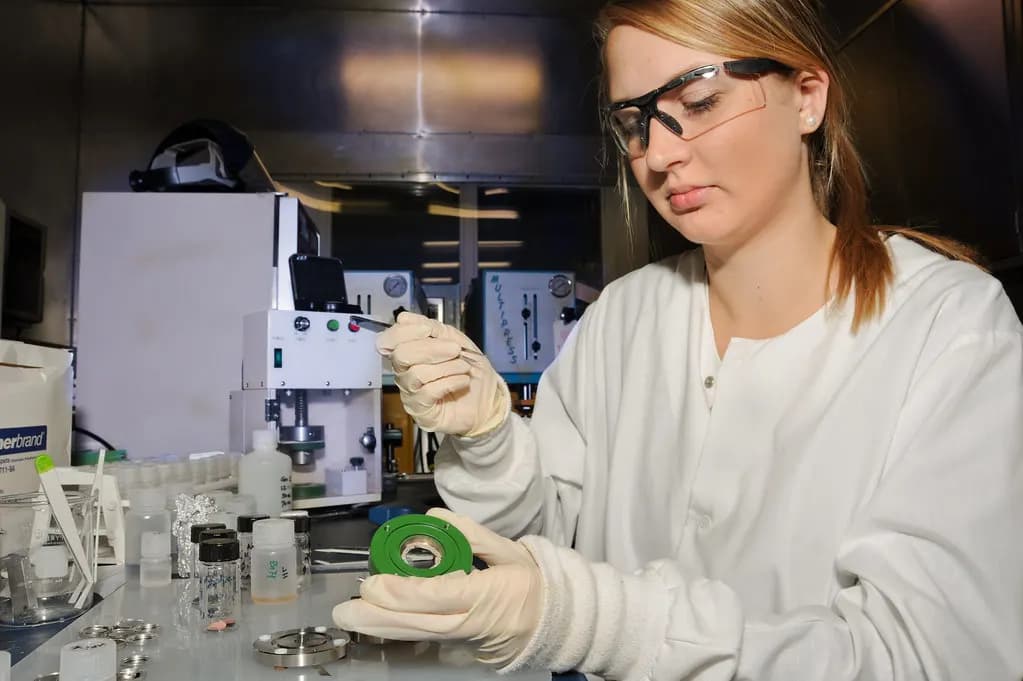
SBIR and STTR give equity-free, non-dilutive money to small companies to research and commercialize new technology. Eleven federal agencies take part, each with its own research topics. The programs run in phases:
- Phase I tests whether an idea is technically feasible, typically over months, with awards up to about $323,090.
- Phase II funds full research and development for firms that succeeded in Phase I, up to about $2,153,927.
- Phase III is commercialization, funded from sources outside the SBIR/STTR budget.
To qualify, your company must be organized for profit with a place of business in the US, have no more than 500 employees including affiliates, and be more than 50% directly owned and controlled by US citizens or permanent residents (or by other qualifying small businesses). The research must be done in the US. For SBIR, your company must be the principal investigator's primary employer. For STTR, you partner with a nonprofit research institution: your firm does at least 40% of the work and the institution at least 30%.
What changed in 2025–2026
- October 1, 2025: SBIR and STTR authority lapsed when Congress didn't reauthorize the programs in time. Agencies couldn't issue new solicitations or commit new funds.
- April 13, 2026: the Small Business Innovation and Economic Security Act of 2026 became law, restarting the programs through September 30, 2031.
- New in the law: a "strategic breakthrough" Phase II award of up to $30 million for agencies with large SBIR budgets, tougher screening of foreign ties to countries of concern, and, from fiscal year 2027, agency-set caps on how many proposals one company can submit.
Because agencies restarted on their own timetables, check each agency's current solicitation rather than relying on last year's calendar.
USDA grants for farm and rural businesses
USDA Rural Development offers the most grant money for non-tech businesses, but it targets farming and rural areas.
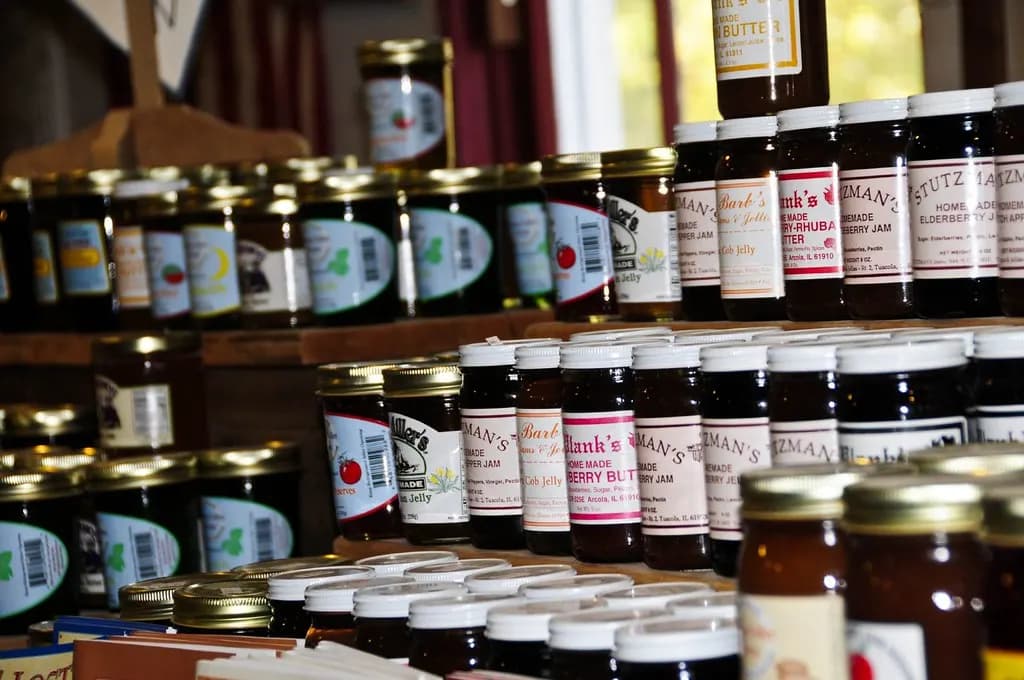
Value-Added Producer Grants (VAPG) help agricultural producers turn raw commodities into higher-value products, such as fruit into jam, milk into cheese or grain into flour, or market them in new ways. The fiscal year 2026 notice cut the maximums to $50,000 for planning grants (feasibility studies, business plans) and $200,000 for working capital grants, down from $75,000 and $250,000 in earlier cycles. About $25 million was available, applications were due April 22, 2026, and you must match every grant dollar with a dollar of your own cash or eligible in-kind contribution. Eligible applicants are agricultural producers, producer groups, farmer or rancher cooperatives and majority-controlled producer-based businesses; a café that buys local produce doesn't qualify on its own.
Rural Energy for America Program (REAP) helps agricultural producers and rural small businesses pay for renewable energy systems and energy-efficiency upgrades. A USDA final rule published October 1, 2026 and effective October 16, 2026 changes how it works: projects must be fully built and operating before you apply, and you submit 12 months of actual energy production or savings data alongside 12 months of pre-installation data. Awards will be based on documented results, state-level competitions are being replaced by one national competition, and some technologies and multi-location projects are no longer eligible. In practice, you'll need to finance the project first, so plan your cash flow around a grant that arrives after completion. Grant shares and maximums will be set in USDA's next annual notice, so don't rely on older figures.
State and local grants: where most main-street money is
If you run a shop, restaurant, salon or trade business, your realistic grant options are usually state, county or city programs, not federal ones. They change often and depend on where you are, but the common types are:
- Export grants under STEP. SBA funds states and territories, which then help established small businesses pay for trade missions, trade show booths, foreign-market websites and translation, export training and Commerce Department services. You apply through your state's STEP office.
- State economic development grants, often tied to creating jobs, locating in a target area or training workers, and frequently paid as reimbursements after you hit milestones.
- City and county storefront or façade grants for improving buildings in downtown or redevelopment districts.
To find them, start with your state's economic development agency website and your local Small Business Development Center (SBDC), which gives free advice and tracks local programs.
How to find and apply for federal grants
Every federal grant uses the same identity plumbing. Set it up before you find the perfect opportunity, because registration can take longer than the application window.
From zero to a submitted federal grant application
- 1
Get your business basics in order
How to get an EINForm your entity and get an EIN. SAM.gov checks your legal name and address against IRS and other records, so they must match exactly.
- 2
Register in SAM.gov and get a Unique Entity ID (UEI)
Create a Login.gov account, then register your entity in SAM.gov. You'll name an Electronic Business Point of Contact (EBiz POC). Registration is free and takes up to up to 10 business days to activate; complex cases can take weeks.
Tip: Renew your SAM registration every year or you can't receive awards.
Open SAM.gov - 3
Set up Grants.gov
Grants.gov registration guideThe EBiz POC creates a Grants.gov account with the same email used in SAM.gov, adds an organization profile using the UEI, and assigns roles such as Authorized Organization Representative to whoever will submit.
- 4
Search and read the funding notice
Filter by eligibility for small businesses or for-profit organizations. Read the notice of funding opportunity (NOFO) for eligibility, match, allowable costs, scoring criteria and deadline. SBIR topics are on SBIR.gov; some USDA programs use their own portals.
- 5
Write to the scoring criteria and submit early
Answer each criterion in the order reviewers score it, attach a clear budget, and submit days before the deadline. Late submissions are almost never accepted.
Set aside real time for the proposal. A short business plan, a cost budget and evidence of need are the core of almost every application; the business plan generator gives you a starting draft.
Before you apply for a federal grant
0/8How to spot a grant scam
The FTC's guidance on grant scams boils down to a few rules:
- The government doesn't reach out first. It won't call, text, email or message you on social media to say you qualify for a grant. Real grants require you to apply for a stated purpose.
- Never pay to get a grant. Searching Grants.gov and registering in SAM.gov are free. Anyone charging a "processing," "release" or "registration" fee, or selling a list of grants, is a red flag.
- Watch the payment method. Requests for gift cards, wire transfers or cryptocurrency are a classic scam sign.
- Check the agency name. Scammers invent official-sounding names such as a "Federal Grants Administration," which doesn't exist. SBA says its staff only email from addresses ending in @sba.gov.
- Protect your numbers. Don't give an SSN, EIN, bank login or SAM.gov credentials to anyone who contacted you.
Grants vs loans: which fits your situation
| Your situation | Best first option | Why |
|---|---|---|
| Developing a new technology, product or scientific process | SBIR/STTR | Equity-free funding designed for R&D-stage companies |
| Farmer or producer adding value to your own crop or livestock | USDA VAPG | Planning and working capital grants for producers |
| Rural business installing solar or efficiency upgrades | USDA REAP, plus a loan to build first | New rules pay after the project is running |
| Established business starting to export | Your state's STEP program | Covers trade shows, missions, translation |
| Opening a shop, restaurant or service business | Savings, an SBA-backed loan or microloan | No federal start-up grant exists |
| Covering uneven cash flow | A business line of credit | Grants don't pay for routine operating gaps |
For the loan route, read our guides to the SBA 7(a) loan and the business line of credit.
Mistakes that sink grant applications
- Applying when you're not eligible. If the notice lists only governments and nonprofits, a for-profit application won't be read.
- Registering too late. A SAM.gov registration stuck in validation the week of the deadline can end your chance.
- Ignoring the match. Programs like VAPG require you to put in a dollar for every grant dollar, and you must document it.
- Skipping reporting after you win. Awards come with progress and financial reports, and you must keep records in case of audit.
Official links
- SBA — GrantsWhat SBA does and doesn't fund
- SBIR.govSBIR/STTR program, phases and award guidelines
- SBIR.gov — Eligibility FAQOwnership, size and PI rules
- Grants.gov — Applicant registrationSAM.gov, UEI and roles
- SAM.govFree entity registration and UEI
- SBA — State Trade Expansion ProgramFind your state's STEP office
- USDA — Value-Added Producer GrantsProgram page and notices
- FTC — Government grant scamsWarning signs and reporting
What to do next
Decide which lane you're in: research and development (SBIR/STTR), farming and rural (USDA), exporting (STEP), or main-street business (state and local programs plus loans). Then register in SAM.gov now, since it's free and the slowest step. If no grant fits, build your plan around financing instead: estimate costs with the startup cost calculator, check when you'll break even with the break-even calculator, and compare an SBA 7(a) loan with a line of credit.
This is general information, not legal or tax advice — confirm on the official source or with a professional. Grant programs change with each funding notice, so always read the current notice before you apply.
Frequently asked questions
No. SBA states plainly that it does not provide grants for starting or expanding a business. Its grant money goes to SBIR and STTR research awards, the State Trade Expansion Program for exporters (run through states), and nonprofits that counsel entrepreneurs. For start-up money, SBA's tools are loan guarantees such as 7(a) and microloans, plus free advice from Small Business Development Centers.
Only in narrow cases. A start-up developing new technology can win an SBIR or STTR Phase I award of up to about $323,090 without already having revenue. Agricultural producers can apply for USDA Value-Added Producer Grants. There is no federal grant for opening a typical shop, restaurant or service business; those usually rely on savings, loans and, occasionally, state or local programs.
Yes. Searching Grants.gov, registering your organization in SAM.gov and getting a Unique Entity ID all cost nothing. Allow up to 10 business days for SAM registration to become active, and renew it every year. Anyone charging you to 'register' for federal grants or selling grant lists is selling something you can get free.
The FTC says the government won't contact you out of the blue to offer a grant by phone, text, email or social media. Real grants require an application for a specific purpose. Walk away if someone asks for an upfront fee, payment by gift card, wire or crypto, or your bank login. Check any agency name against Grants.gov and report scams at ReportFraud.ftc.gov.
Yes. SBIR and STTR authority expired on September 30, 2025, and agencies could not issue new solicitations or commit new funds until the Small Business Innovation and Economic Security Act was signed on April 13, 2026. The programs are now authorized through September 30, 2031, and agencies have resumed solicitations on their own schedules.
Not if you use it as the award terms require. Grants aren't loans, but they come with conditions: allowed costs, reporting, matching funds for some programs, and audits. If you spend grant money on unallowed costs or don't deliver the funded work, the agency can demand repayment. Ask a tax professional how the grant is treated on your tax return.
Sources & verification
Figures on this page were checked against the sources below when it was last reviewed on 7 October 2026. Each rate and limit is stored once with its own official source and review date, and official update channels are monitored daily so changes are picked up. How we verify
- 1.Grants — U.S. Small Business Administration · accessed 7 October 2026
- 2.State Trade Expansion Program (STEP) — U.S. Small Business Administration · accessed 7 October 2026
- 3.About SBIR/STTR — SBIR.gov (U.S. Small Business Administration) · accessed 7 October 2026
- 4.Eligibility requirements FAQ — SBIR.gov (U.S. Small Business Administration) · accessed 7 October 2026
- 5.SBIR/STTR Programs Reauthorized After Six-Month Lapse — Crowell & Moring LLP · accessed 7 October 2026
- 6.Applicant registration — Grants.gov · accessed 7 October 2026
- 7.Grant eligibility — Grants.gov · accessed 7 October 2026
- 8.Government grant scams — Federal Trade Commission · accessed 7 October 2026
- 9.Value-Added Producer Grant FY2026 — Notice of Funding Opportunity — USDA Rural Development · accessed 7 October 2026
- 10.FY 2025 EDA Public Works and Economic Adjustment Assistance Programs — U.S. Economic Development Administration (via Simpler.Grants.gov) · accessed 7 October 2026
- 11.Unleashing American Energy and Economic Prosperity; Rural Energy for America Program (REAP) — final rule — Federal Register (USDA Rural Business-Cooperative Service) · accessed 7 October 2026
MSMETOOLS is an independent platform and is not affiliated with any government agency, ministry or department.
Tools for this
Business Plan Generator (US)
Create a professional business plan for US investors and banks.
Startup Cost Calculator
Estimate how much capital you need to launch.
Break Even Calculator
Find your break even point and units.
Related guides
 Grants for Women-Owned Businesses 2026: What's RealRead guide
 North Carolina Small Business Grants (2026): What's Open NowRead guide
 SBA 7(a) Loan 2026: Rates, Fees, Limits & How to QualifyRead guide
 Florida Small Business Grants (2026): What's Actually OpenRead guide
Official links open the government site in a new tab.