 Starting & growing a business
How to Open a Hair Salon in 2026: Licenses, Costs, Staffing and Break-Even
How to open a hair salon in 2026: cosmetology and salon licenses with fees in CA, TX, NY and FL, OSHA formaldehyde rules, startup costs and a worked break-even.
 Edited by Sumeet YadavFounder & editor, MSMETOOLS · fact-checked against official sources

Contents (11)
- 1. Choose your hair salon model
- 2. Cosmetology and salon licenses by state
- 3. Finding the right location and lease
- 4. Chemical safety, formaldehyde and OSHA
- 5. Booth rental vs commission in a hair salon
- 6. Startup costs for a hair salon
- 7. Pricing hair services
- 8. Worked example: hair salon break-even
- 9. Taxes for a hair salon
- 10. Mistakes to avoid when opening a hair salon
- 11. What to do next
Opening a hair salon means running three things at once: a licensed trade, a licensed premises and a team of stylists who could take their clients across the street. Colour, bleach and smoothing treatments add chemical safety duties that many first-time owners don't expect, and the way you pay stylists shapes your profit more than your price list does. This guide is for licensed stylists ready to open their own space and for owners investing in a salon. It covers cosmetology and salon licenses in California, Texas, New York and Florida with their fees, OSHA chemical rules, suites versus storefronts, booth rental versus commission, startup costs and a worked break-even. Everything was checked against the state boards, OSHA and the BLS in October 2026.
Quick answer
To open a hair salon, make sure everyone doing services holds a state cosmetology license, get an establishment (salon) license for the premises, register the business and local permits, set up chemical safety and ventilation, choose booth rental or commission, and price services from their real cost including colour product.
Two licenses: one per stylist, one for the salon
Salon license fees: CA $50, TX $78, NY $60, FL $40 + $50
Cosmetology training: 1,000 hours in CA, TX and NY; 1,200 hours in FL
New York salons with 2–5 employees need a wage bond of at least $25,000
A six-chair storefront commonly costs about $51,000–$201,000 to open (estimate)
Choose your hair salon model
Before you look at units, decide what kind of salon you're building, because the model sets your budget, your licensing and your staffing.
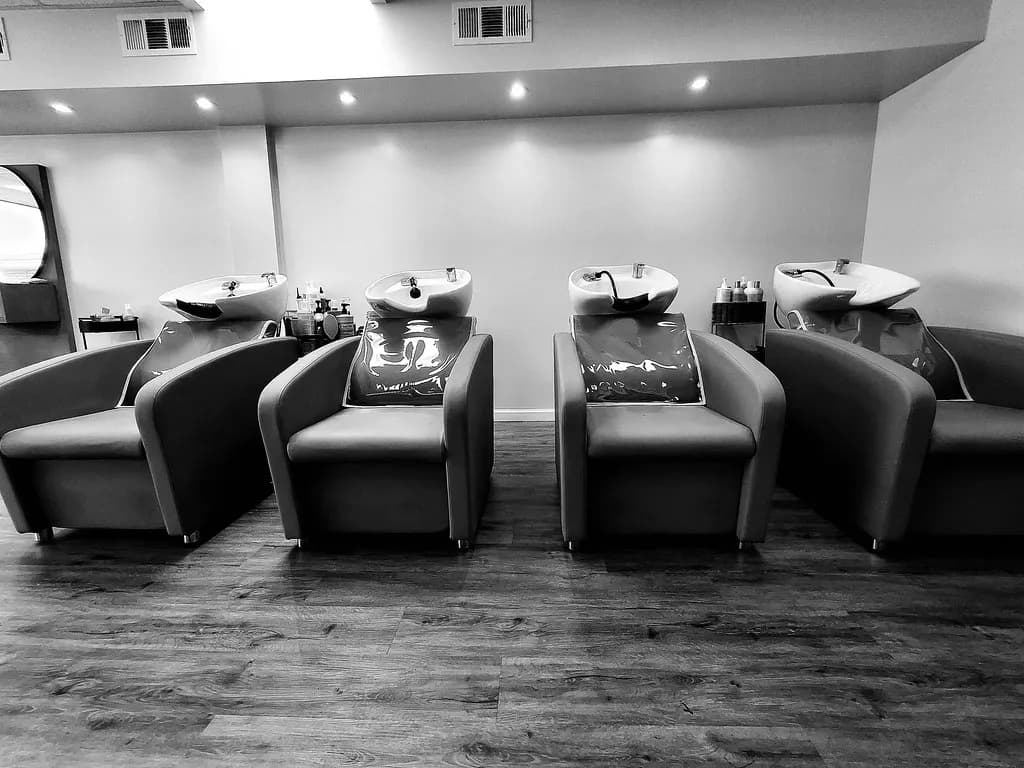
A salon suite is a private, lockable room inside a suite building. You pay weekly rent, run your own book and keep all your service revenue. In Texas a suite can be licensed as a mini-establishment for $70 inside a licensed establishment; elsewhere, check whether the building's license covers you or you need your own. Renting a chair in someone else's salon is cheaper still but gives you no premises of your own. A small storefront salon of four to eight chairs is the classic first business: stations, two or three backwash units, dryers, a colour bar and reception. A full-service salon or salon and spa adds treatment rooms, more staff and higher fit-out costs. Home salons are allowed in some states if the space meets establishment rules, often with a separate entrance.
Vagaro's 2026 breakdown puts a suite at roughly $5,000 to $25,000 to open with $1,200 to $2,500 a month of overhead, against $5,000 to $10,000 a month for a small storefront and $12,000 to $25,000 for a full-service salon (estimates). The BLS says about about 48% of hairdressers, hairstylists and cosmetologists are self-employed, which is why suites and booth rental are so common. Most stylists who want to own a business do best by filling a suite first, then opening a storefront once they can fill at least half the chairs with stylists who bring clients.
Cosmetology and salon licenses by state
Every state licenses cosmetologists and almost every state licenses the salon itself. The owner often doesn't need a cosmetology license, but the establishment answers for everyone who works there. Hours, fees and exams vary, as these four large states show.
| State | Regulator | Cosmetology license | Salon license |
|---|---|---|---|
| California | Board of Barbering and Cosmetology | 1,000 hours; $75 application and exam + $50 initial license | Establishment $50; renewal $40 |
| Texas | Texas Department of Licensing and Regulation | Cosmetology Operator: 1,000 hours; $50; written and practical exams | Establishment $78; mini-establishment $70 |
| New York | Department of State, Division of Licensing Services | 1,000 hours; $40 application + $15 per exam | Appearance enhancement business $60 (four years), wage bond and insurance |
| Florida | Board of Cosmetology (DBPR) | 1,200 hours of training and an exam | Salon $40 + $50 application |
California. Cosmetologists train for 1,000 hours at a school or through an apprenticeship and take a written exam; the fees are $75 to apply and test and $50 for the initial license. The salon needs an establishment license, $50, renewed for $40. Only the owner can apply, so booth renters can't license the premises, and the Board issues one establishment license per address. Working without a license or running an unlicensed establishment can bring a $1,000 fine.
Texas. TDLR licenses Cosmetology Operators after a 1,000 hours course at a licensed school, with the written exam available after 900 hours and the practical after the course. The application is $50, applicants must be 17 or older, and the license lasts two years. The salon needs an establishment license, $78. An establishment that leases space to licensed renters or suites is a "gallery establishment": it must file a list of its independent contractors and stays responsible for the common areas.
New York. Cosmetologists complete a 1,000 hours approved course, pass written and practical exams ($15 each), and get a health certification from a physician, physician assistant or nurse practitioner; the application is $40. The salon needs an appearance enhancement business license, $60 for four years. New York is the strictest state on wage protection: with 2–5 employees you need a wage bond or wage-payment insurance of at least $25,000, rising in tiers to $125,000 with 26 or more. Businesses also need liability insurance and must post a sign saying the business and its operators are licensed.
Florida. Cosmetologists need 1,200 hours of training; schools can certify students for the exam after 1,000 school hours. The salon license costs $40 plus a $50 application fee. The license stays with the original owner: a new owner needs a new license, and moving requires the department's approval. Florida also licenses mobile salons, which must keep a permanent business address and file a monthly itinerary with the board.
On top of these you'll need an LLC or DBA, a free EIN, a city or county business license, a certificate of occupancy and a sales tax permit for retail products. See our business licenses guide for the local layer.
Licensing a new salon, in order
Step 1
Entity, EIN and local business license
Step 2
Lease with zoning and certificate of occupancy
Step 3
Build-out and inspections
Step 4
Establishment license
state board
Step 5
Post licenses and open
Finding the right location and lease
Hair clients are loyal to their stylist first and the salon second, but location still decides walk-ins, new-client bookings and how easily you recruit. Look for a unit near the people you want to serve, with parking, visibility and enough foot traffic that your sign earns its keep. Check the competition within a mile and what they charge, then look for a gap: a curly-hair specialist, a colour-focused studio, an inclusive family salon or late-evening hours.
Plumbing is the make-or-break question in a salon lease. Backwash units need hot water, drains with hair traps, and a water heater sized for back-to-back shampoos; colour bars need a sink too. A second-generation salon space that already has these can save tens of thousands of dollars. Vagaro puts build-out at $15,000 to $75,000 and warns that overruns of 15% to 20% above contractor quotes are common, so negotiate a fit-out period of free rent and a tenant improvement allowance before you sign. Confirm with the city that personal services are allowed in the unit's zoning and certificate of occupancy, and ask about sign permits early.
Inside, plan for flow: reception and retail near the door, stations with enough room between chairs, the shampoo area away from the front, and a dispensary for mixing colour with ventilation and a sink. Board inspectors want to see closed storage for clean tools, a separate container for used ones, and licenses displayed at each station.
Chemical safety, formaldehyde and OSHA
Hair colour, bleach, perms, relaxers and smoothing treatments are chemical products, and once you have employees OSHA's hazard communication standard applies. You need a safety data sheet for every hazardous product, labels on every container (including bottles you decant into) and training so staff understand the hazards and protective steps. Gloves for colour and chemical services, good general ventilation and a dispensary that doesn't vent into the waiting area are the basics.
Formaldehyde deserves special attention. OSHA warns that some hair smoothing products contain or release formaldehyde, especially when heated by blow-drying and flat-ironing, and that some products labelled "formaldehyde free" still released it. The formaldehyde standard limits exposure to 0.75 ppm (8-hour average) and 2 ppm (15 minutes), and OSHA has measured salon air during treatments above the short-term limit. If you offer smoothing treatments, read the safety data sheet, test the air during treatments, use local exhaust, and train staff; many salons simply choose products that don't contain or release formaldehyde.
Chemical safety before opening
0/6Ergonomics matter too. Stylists stand for hours with raised arms, so hydraulic chairs at the right height, anti-fatigue mats and sensible booking gaps reduce injuries and turnover.
Booth rental vs commission in a hair salon
How you pay stylists is the biggest structural choice in a salon. With booth rental, stylists rent a chair or room, keep their own book, set prices and hours, buy their own products and collect their own payments. You get steady rent with little payroll work, but little say over service standards or brand. With commission or hourly pay, stylists are employees: you set the menu and schedule, supply colour and backbar, and pay a share of service revenue, with at least minimum wage for every hour. You get control, consistency and a team you can train, and you take on payroll taxes, workers' compensation and overtime.
The working relationship, not the contract's label, decides which you have. The IRS weighs behavioral control, financial control and the relationship; our 1099 vs W-2 guide explains the tests. California's Board says its licensees can be independent contractors only when they set their own rates, process their own payments, are paid directly by clients and hold their own business license; otherwise the stricter ABC test applies. In New York, a stylist working in your salon but not employed by you needs an area renter license, and you complete an owner affirmation.
Many successful salons use a hybrid: commission for newer stylists who need clients and education, and genuine booth rental or suites for established stylists with their own book. Keep each group's arrangement genuinely different, in writing and in practice.
Startup costs for a hair salon
Here's what a six-chair storefront salon typically costs to open. Figures are estimates based on Vagaro's 2026 cost breakdown and Insureon's median premiums for hair salons; local rent and the state of the unit move them most.
| Startup item | Estimated cost | Basis |
|---|---|---|
| Lease deposit and first/last month | $5,000–$15,000 | Vagaro; 2–3× higher in New York City or Los Angeles |
| Build-out and renovation | $15,000–$75,000 | Plumbing, electrical, flooring, lighting |
| Equipment: six chairs and stations, backwash units, dryers | $10,000–$40,000 | New vs used makes a big difference |
| Opening colour, backbar and retail stock | $2,000–$8,000 | Vagaro |
| Licenses, LLC and permits | $500–$3,000 | Board fees above, $35 – $500 LLC filing |
| Insurance (first year) | $1,500–$4,000 | General and professional liability |
| Booking software and POS | $0–$500 | Subscription plus card reader |
| Branding, website, signage and opening | $2,000–$10,000 | Vagaro |
| Working capital (3–6 months) | $15,000–$45,000 | Rent and payroll while the book fills |
| Total | About $51,000–$201,000 | Vagaro: $50,000–$100,000 for 2–5 chairs; $100,000–$175,000 for 6–10 |
Insureon's median premiums for hair salons are about $35 a month for general liability, $70 for a business owner's policy, $42 for professional liability and $63 for workers' compensation. Keep a contingency of 15% to 20% of the budget for build-out surprises. Financing options include SBA microloans of up to $50,000 and larger 7(a) loans; write the numbers up in a beauty salon business plan and test them in the startup cost calculator.
Pricing hair services
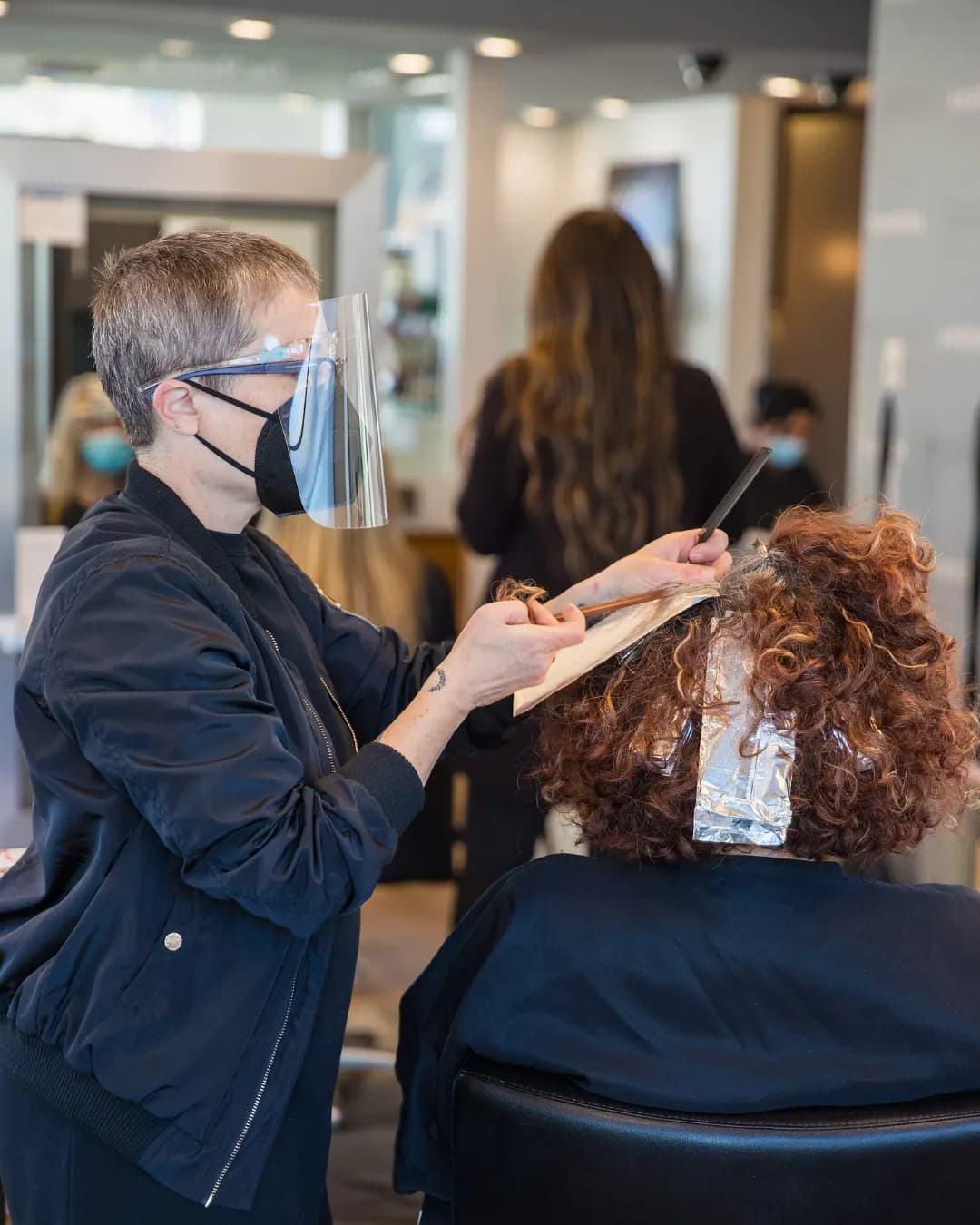
Price each service from its cost, then check the local market. For each service, add the stylist's pay for the time it takes (with payroll taxes for employees), the colour and backbar product used, card fees and a share of rent and overhead. Colour services are where most salons make or lose money, because a full head of highlights can use far more product than a single-process colour and takes much longer. Weigh colour in the dispensary so you know your real product cost per service.
Price by time and complexity: a women's cut, a men's cut, a blow-dry, a single-process colour, partial and full highlights, balayage and corrective colour should each carry their own price, with add-ons for toners, treatments and extra length or density. Tier prices by stylist level so newer stylists can build a book while senior stylists earn more per hour. The BLS median wage for hairdressers, hairstylists and cosmetologists is $17.21 an hour before tips, so your pricing must leave room to pay competitively and still cover rent. Retail is worth planning from day one: a stylist who recommends the products used at the chair adds margin without adding chair time.
Worked example: hair salon break-even
Here's an illustrative month for a six-chair salon with five employed stylists on 45% commission, a part-time front-desk coordinator and an owner who manages. The figures are assumptions for the example, not industry averages.
The average ticket is $85, reflecting a mix of cuts and colour. Direct cost per service is $52.36: commission at 45% ($38.25), employer payroll taxes on that pay at about 8% ($3.06), colour and backbar product at 10% of the ticket ($8.50) and card fees at 3% ($2.55). That leaves $32.64 per service toward overhead.
Fixed monthly costs are $13,799: rent for about 1,400 sq ft ($3,500), utilities including hot water ($700), insurance ($300), booking software ($150), marketing ($600), a loan payment on $100,000 over 10 years at about 10.5% ($1,349), laundry and cleaning ($250), bookkeeping ($250), front-desk wages ($2,200) and an owner's salary of $4,500.
Try it — hair salon break-even (services per month)
Break-even is $13,799 ÷ $32.64, or about 423 services a month: roughly 16 a day over 26 opening days, or just over three per stylist. At 600 services a month (about 23 a day), the salon earns $19,584 toward overhead and keeps about $5,785 a month after paying the owner, before income tax. Retail and higher colour mix move this quickly: lifting the average ticket by $10 adds about $2,300 a month at the same volume after commission, payroll taxes, product and card fees.
Taxes for a hair salon
Tips are wages for tax purposes. Employees must report cash tips of $20 a month or more to you, and you withhold and pay payroll taxes on them. The One Big Beautiful Bill Act, signed on July 4, 2025, extended the Section 45B credit for employer Social Security and Medicare tax on tips to beauty service businesses, including hair care, starting with 2025 tax years. Your stylists may also deduct qualified tips on their own returns for 2025 through 2028, up to $25,000 a year, so accurate tip records matter to everyone.
Hair salon tax figures (2026)
15.3%
Self-employment tax
Schedule C profit
$5,000
First-year startup cost deduction
$20 a month
Tips employees must report
cash tips at or above
$25,000
Employee tip deduction cap
2025 through 2028
As a sole proprietor or single-member LLC you report profit on Schedule C and pay self-employment tax of 15.3%. You can deduct up to $5,000 of startup costs in your first year and depreciate or expense chairs, dryers and backwash units. Retail products are subject to sales tax in most states, and some states tax certain personal services, so check with your state revenue department. If you rent booths, the renters report their own income; you report the rent you receive.
Mistakes to avoid when opening a hair salon
- Signing a lease before checking plumbing. Adding drains and water heating for backwash units can double a build-out budget.
- Opening before the establishment license is issued. Services in an unlicensed salon bring fines for you and your stylists.
- Calling employees booth renters. If you set hours, prices and products, they're employees.
- Not tracking colour product. Unweighed colour quietly eats the margin on your most valuable services.
- Smoothing treatments without air testing. Formaldehyde exposure is a real OSHA issue, not a paperwork one.
- Skipping New York's wage bond. It's a licensing condition for salons with employees.
- No working capital. Vagaro calls it the most underestimated line item; budget at least three months.
Official links
- California Board of Barbering and CosmetologyCosmetologist and establishment licenses
- TDLR — Cosmetology Operator licenseHours, exams and fee
- TDLR — Establishment licenseSalon, mini-establishment and gallery rules
- NY DOS — Become a CosmetologistCourse, exams and fees
- NY DOS — Appearance Enhancement BusinessBusiness license, wage bond and insurance
- Florida DBPR — CosmetologyCosmetologist and salon licenses
- OSHA — Hair salons and formaldehydeSmoothing product hazards
- OSHA — Formaldehyde standard 1910.1048Exposure limits
What to do next
Decide between a suite, a storefront or a hybrid, then read your state board's establishment rules before you tour units. Register the business, get an EIN, cost your ten most common services including product, and run your month through the break-even calculator with your own rent and commission split. If you're planning a men's grooming focus, our guide on how to start a barbershop covers barber licensing and shop rules.
This is general information, not legal or tax advice — confirm on the official source or with a professional.
Frequently asked questions
A six-chair storefront salon typically needs about $51,000 to $201,000, including the lease deposit, build-out, chairs, backwash units and dryers, opening colour and retail stock, licenses, insurance, marketing and three to six months of working capital. These are estimates based on Vagaro's 2026 cost breakdown. A salon suite or a single rented chair can start for about $5,000 to $25,000.
Two kinds: a cosmetology (or barber) license for everyone who cuts, colours or styles, and an establishment or salon license for the premises. Salon license fees include California $50, Texas $78, New York's appearance enhancement business license $60 and Florida $40 plus a $50 application fee. Add your city or county business license and certificate of occupancy.
In most states, yes, you can own a salon without being a licensed cosmetologist, because the license that matters for the business is the establishment license. Everyone who performs services must be licensed, though, and the owner answers for their work at inspection. Owners without a license should hire an experienced licensed salon manager and learn the board's sanitation rules themselves.
Booth rental brings fixed weekly rent with little payroll work but little control over prices, hours or service. Commission or hourly pay gives you a consistent brand and a team you can train, with payroll taxes, workers' compensation and minimum-wage duties. The arrangement must be real: if you set the schedule, prices and products, the stylists are employees, whatever the contract says.
Yes, once you have employees. OSHA's hazard communication standard requires safety data sheets, labels and training for colour, bleach, relaxers and other chemicals. Hair smoothing treatments can release formaldehyde, which has an 8-hour limit of 0.75 ppm (8-hour average) and a short-term limit of 2 ppm (15 minutes); OSHA has measured salon levels above that short-term limit during blow-drying.
It depends on how full the chairs are and how much colour you sell. In our worked example, a six-chair salon with an $85 average ticket, stylists on 45% commission and $13,799 of monthly fixed costs breaks even at about 423 services a month and earns about $5,800 a month at 600 services, after paying the owner $4,500.
Sources & verification
Figures on this page were checked against the sources below when it was last reviewed on 13 October 2026. Each rate and limit is stored once with its own official source and review date, and official update channels are monitored daily so changes are picked up. How we verify
- 1.16 CCR §998 — Schedule of fees — California Board of Barbering and Cosmetology (via LII) · accessed 13 October 2026
- 2.Frequently asked questions — California Board of Barbering and Cosmetology · accessed 13 October 2026
- 3.Understanding workers' rights and responsibilities — establishment owners — California Board of Barbering and Cosmetology · accessed 13 October 2026
- 4.Apply for a Cosmetology Operator license — Texas Department of Licensing and Regulation · accessed 13 October 2026
- 5.Establishment license application — Texas Department of Licensing and Regulation · accessed 13 October 2026
- 6.Become a Cosmetologist — New York Department of State · accessed 13 October 2026
- 7.Become an Appearance Enhancement Business — New York Department of State · accessed 13 October 2026
- 8.Florida Statutes §477.019 and §477.025 — Florida Legislature · accessed 13 October 2026
- 9.Fla. Admin. Code R. 61G5-24.005 — Salon license fee — Florida Board of Cosmetology (via LII) · accessed 13 October 2026
- 10.Hair salons — formaldehyde in hair smoothing products — Occupational Safety and Health Administration · accessed 13 October 2026
- 11.29 CFR 1910.1048 — Formaldehyde — Occupational Safety and Health Administration · accessed 13 October 2026
- 12.Barbers, Hairstylists, and Cosmetologists — Occupational Outlook Handbook — U.S. Bureau of Labor Statistics · accessed 13 October 2026
- 13.Hair salon startup costs: full breakdown from lease to launch — Vagaro (secondary) · accessed 13 October 2026
- 14.Hair salon insurance cost — Insureon (secondary) · accessed 13 October 2026
MSMETOOLS is an independent platform and is not affiliated with any government agency, ministry or department.
Tools for this
Startup Cost Calculator
Estimate how much capital you need to launch.
Break Even Calculator
Find your break even point and units.
Freelance Hourly Rate Calculator
Work out the hourly rate you need to charge.
Profit Margin Calculator
Calculate profit, markup and margin for your products or services.
Related guides
 Starting a Nail Salon Business in 2026: Licenses & CostsRead guide
 Beauty Salon Business Plan 2026: Licenses & NumbersRead guide
 How to Start a Barbershop in 2026: Licenses & CostsRead guide
 How to Start a Food Truck Business in 2026: Costs & RulesRead guide
Official links open the government site in a new tab.