 VAT
The VAT Cash Accounting Scheme in 2026: Thresholds, Rules and Whether It Suits You
VAT Cash Accounting Scheme 2026: pay VAT when customers pay you, the £1.35m join and £1.6m leave limits, exclusions, annual accounting comparison and examples.
 Edited by Sumeet YadavFounder & editor, MSMETOOLS · fact-checked against official sources
Contents (11)
- 1. How the VAT Cash Accounting Scheme works
- 2. Who can join
- 3. Transactions the scheme doesn't cover
- 4. When a payment counts as received or made
- 5. Worked example: standard vs cash accounting for one quarter
- 6. Cash accounting vs annual accounting vs the Flat Rate Scheme
- 7. Leaving the scheme
- 8. Joining when you first register, deregistering and other situations
- 9. Common mistakes
- 10. Budget watch
- 11. What to do next
If your customers take 30, 60 or 90 days to pay, standard VAT accounting can leave you paying HMRC VAT on money you haven't received. The VAT Cash Accounting Scheme fixes that by tying your VAT to actual payments. This guide is for VAT-registered sole traders, partnerships and small companies. It covers how the scheme works in 2026, the £1.35 million joining and £1.6 million leaving limits, the transactions it doesn't cover, the payment-date rules, what happens when you leave, and how it compares with the Annual Accounting and Flat Rate schemes.
Quick answer
Under the VAT Cash Accounting Scheme you pay VAT on sales when customers pay you and reclaim VAT on purchases when you pay suppliers. You can join if your expected VAT taxable turnover for the next 12 months is £1.35 million or less, and you must leave once it passes £1.6 million. There's no application: you start at the beginning of a VAT period.
Best for businesses that give credit or suffer bad debts
Not worth it if you're paid at the point of sale or usually get VAT repayments
Can't be combined with the Flat Rate Scheme; can be combined with Annual Accounting
Excludes invoices with 6 months+ payment terms, advance invoices, hire purchase and reverse-charge supplies
How the VAT Cash Accounting Scheme works
Normally, the VAT you owe for a period is the VAT on the sales invoices you issued minus the VAT on the purchase invoices you received, whether or not any of them have been paid. The Cash Accounting Scheme, set out in regulations 56 to 65 of the VAT Regulations 1995 and explained in VAT Notice 731, changes the trigger from the invoice to the payment.
You account for output tax in the VAT period in which your customer pays you. You reclaim input tax in the period in which you pay your supplier. Your VAT invoices still look exactly the same and still show VAT, and the rate you charge doesn't change. What changes is which VAT return each amount goes on.
The benefit is cash flow. You'll never have to pay HMRC VAT before your customer has paid you, and if a customer never pays, you never pay the VAT on that sale. The cost is that you can't reclaim VAT on purchases until you've paid for them, so a business that buys on long credit terms and gets paid quickly could be worse off.
Cash Accounting Scheme limits (2026)
£1.35 million
Join if expected taxable turnover is up to
Next 12 months, excluding VAT
£1.6 million
Must leave once turnover passes
Previous 12 months, at a period end
6 months
Payment terms that exclude an invoice
Or longer
6 months
To clear outstanding VAT after leaving
Optional; exceptions apply
Who can join
You can use the scheme if you're VAT-registered and expect the value of your taxable supplies in the next 12 months to be £1.35 million or less. Taxable supplies means standard-rated, reduced-rate and zero-rated sales, excluding the VAT itself. Exempt supplies and expected sales of capital assets, such as selling a building or a vehicle, are left out of the joining test.
VAT Notice 731 sets further conditions. You must have no VAT returns outstanding, and you must either owe HMRC nothing or have agreed arrangements to clear what you owe. You can't join if, in the last year, you've been convicted of a VAT offence, accepted an offer to compound proceedings, or been assessed to a penalty for VAT evasion involving dishonest conduct. You also can't join if HMRC has written to you withdrawing the scheme in the last year or denying you access to it.
If you've been registered for less than 12 months, use the estimate you gave when you registered. If you've been registered longer, last year's taxable turnover is a reasonable guide, but you can use business plans or other reasonable evidence if things have changed. HMRC won't penalise you for a wrong estimate if you had reasonable grounds, so keep a note of how you worked it out. If there were no reasonable grounds, HMRC will remove you from the scheme immediately.
Can I use cash accounting?
Step 1
VAT-registered?
Step 2
Expected taxable turnover ≤ £1.35 million?
Next 12 months, excluding VAT
Step 3
Returns and payments up to date?
Or a payment arrangement agreed
Step 4
Not on the Flat Rate Scheme?
The two can't be combined
Step 5
Start from the next VAT period
No application; can't backdate
Transactions the scheme doesn't cover
Once you're in the scheme, you must use it for your whole VAT-registered business. But certain transactions are always accounted for under the normal invoice rules, either to keep the scheme simple or to stop it being used to delay VAT.
Always use standard accounting for
0/5The reverse charge exclusion matters in construction. If most of your work as a subcontractor falls under the construction reverse charge, you don't charge VAT on those sales anyway, so cash accounting gives you little benefit on the sales side and delays your input tax recovery until you pay suppliers. HMRC's notice says that in this situation the scheme may not benefit you.
If you're partly exempt, for example a business that makes both taxable and exempt sales, you can still use the scheme. Your partial exemption calculation is then based on the payments you made and received in the period, rather than on invoices, so the figures in your calculation must come from the same cash records as your return.
When a payment counts as received or made
Because everything turns on the date of payment, Notice 731 sets out how to fix it. Cash is received or paid on the day the money changes hands. Bank transfers, standing orders and direct debits count on the day your account is credited or debited. Card payments count on the date the sales voucher is made out, not when the card provider settles. Cheques count on the later of the date you receive or send the cheque and the date written on it.
If a cheque bounces or a card payment isn't honoured, you don't account for the VAT, and if you already have, you adjust it. Part payments are allocated to invoices in the order they were issued. If a customer deducts commission or an agent or factor collects for you, you still account for VAT on the full value of the supply, not the net amount you receive. Payments in kind, such as barter or part exchange, count as payment on the date the goods or services are supplied.
You must be able to cross-reference every payment to its invoice and to bank statements or other evidence. A cash book with separate VAT columns, or bookkeeping software matching bank transactions to invoices, does the job. All VAT-registered businesses now keep digital records and file through Making Tax Digital software; most packages have a cash accounting setting that changes how your VAT return boxes are calculated.
Worked example: standard vs cash accounting for one quarter
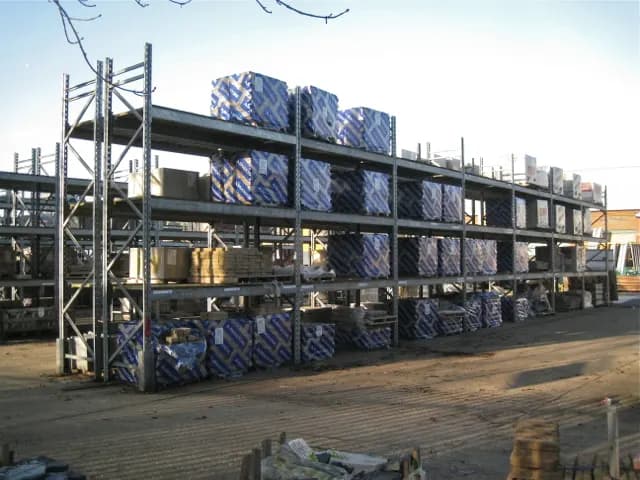
Northgate Supplies sells building materials to trade customers on 30 to 60 day terms. In the VAT quarter to 30 September 2026, it issues invoices for £120,000 plus £24,000 VAT at the 20% standard rate. By the quarter end, customers have paid £84,000 plus £16,800 VAT. It receives purchase invoices for £60,000 plus £12,000 VAT, and has paid £50,000 plus £10,000 VAT of them.
| Standard accounting | Cash accounting | |
|---|---|---|
| Output VAT | £24,000 (all invoices issued) | £16,800 (payments received) |
| Input VAT | £12,000 (all invoices received) | £10,000 (payments made) |
| VAT due for the quarter | £12,000 | £6,800 |
Cash accounting defers £5,200 of VAT to later quarters, when the money is actually collected and paid. The VAT isn't saved; it's just paid later. For a business that's always waiting on customers, that deferral rolls forward every quarter and stays in its bank account.
Now suppose one customer, owing £6,000 including £1,000 VAT, goes into liquidation and never pays. Under cash accounting Northgate never accounts for that £1,000, so there's nothing to recover. Under standard accounting it would have paid the £1,000 to HMRC with the return and then had to wait at least 6 months from when payment was due, write the debt off in its accounts and claim bad debt relief. Use our VAT calculator to split VAT-inclusive amounts like these.
Cash accounting vs annual accounting vs the Flat Rate Scheme
HMRC offers three main simplification schemes for small businesses, and they solve different problems. Cash accounting changes when VAT is due. The Annual Accounting Scheme changes how often you file and pay. The Flat Rate Scheme changes how much VAT you pay, by applying a fixed percentage to your gross turnover.
Comparing the VAT schemes
| Cash accounting | Annual accounting | Flat Rate Scheme | |
|---|---|---|---|
What it changes | VAT due when paid, not invoiced | One return a year, interim payments | Fixed % of gross turnover |
Join if turnover up to | £1.35 million | £1.35 million | £150,000 |
Must leave above | £1.6 million | £1.6 million | £230,000 (VAT-inclusive) |
How to join | Just start; no application | Apply online or by post | Apply online or by post |
Bad debt protection | Automatic | No | Only with its cash-based turnover method |
Combine with cash accounting? | — | Yes | No |
What it changes
- Cash accounting
VAT due when paid, not invoiced
- Annual accounting
One return a year, interim payments
- Flat Rate Scheme
Fixed % of gross turnover
Join if turnover up to
- Cash accounting
£1.35 million
- Annual accounting
£1.35 million
- Flat Rate Scheme
£150,000
Must leave above
- Cash accounting
£1.6 million
- Annual accounting
£1.6 million
- Flat Rate Scheme
£230,000 (VAT-inclusive)
How to join
- Cash accounting
Just start; no application
- Annual accounting
Apply online or by post
- Flat Rate Scheme
Apply online or by post
Bad debt protection
- Cash accounting
Automatic
- Annual accounting
No
- Flat Rate Scheme
Only with its cash-based turnover method
Combine with cash accounting?
- Cash accounting
—
- Annual accounting
Yes
- Flat Rate Scheme
No
The Annual Accounting Scheme
With annual accounting you file one VAT return a year instead of four. During the year you make interim payments based on your previous year's VAT, or an estimate if you're new: either nine monthly payments of 10% of the estimated bill at the end of months 4 to 12, or three quarterly payments of 25% at the end of months 4, 7 and 10. The return and the balancing payment are due 2 months after the end of the accounting year.
It suits businesses that want predictable payments and less admin. It doesn't suit businesses that usually get VAT repayments, because they'd only get one refund a year. Unlike cash accounting, you must apply to join, and if you leave you have to wait 12 months before rejoining. Because the two schemes solve different problems, many small businesses use both together: annual accounting for fewer returns, cash accounting so the annual figure is based on payments.
The Flat Rate Scheme
The Flat Rate Scheme is for businesses with VAT taxable turnover up to £150,000. You pay a fixed percentage of your VAT-inclusive turnover and generally can't reclaim input VAT. It can't be combined with cash accounting, but it lets you calculate turnover on a cash basis instead, which gives a similar cash-flow benefit. Our Flat Rate Scheme guide explains the rates and the limited cost trader test.
Leaving the scheme
You can leave voluntarily at the end of any VAT period, and you don't need to tell HMRC. You must leave at the end of a VAT period if your taxable supplies in the 12 months to the end of that period, now including sales of stock and capital assets, go over £1.6 million. Notice 731 gives the example of a business whose quarter ends on 30 November: if its turnover for the 12 months to 30 November exceeds £1.6 million, it leaves on 30 November and uses standard accounting from 1 December. You must also leave if you can't keep the required records, are convicted of a VAT offence or HMRC withdraws the scheme.
There's an exception for a genuine one-off. If you go over £1.6 million because of a sale that hasn't happened before and isn't expected again, such as selling a capital asset, you can stay in the scheme if the sale was a genuine commercial transaction and you have reasonable grounds to expect turnover in the next 12 months to be below £1.35 million. Keep a written record of that decision.
When you leave, you have to account for VAT on all the sales you've made but haven't been paid for, and you can claim VAT on purchases you haven't yet paid for. You can do this all on the return for the period you leave, or opt to spread it over the next 6 months as payments come in. That 6 months option isn't available if HMRC withdrew the scheme from you, or if your turnover passed £1.6 million and your supplies in the previous 3 months were more than £1.35 million. Debts that are already bad may then qualify for normal bad debt relief.
Leaving cash accounting after outgrowing it
- 1
Check turnover at every period end
Add up taxable supplies, including stock and capital asset sales, for the last 12 months. Over £1.6 million means you leave at the end of this period.
- 2
List unpaid sales and purchases
Total the VAT on sales invoices not yet paid and purchase invoices you haven't paid.
- 3
Choose how to account for the outstanding VAT
Either all on this return or over the next 6 months as payments are made, unless an exception stops the 6-month option.
- 4
Switch your software
From the first day of the next period, account on invoices under standard accounting, keeping old scheme records separate.
- 5
Review bad debts
VAT Notice 731, section 6Claim bad debt relief on unpaid sales once they're at least 6 months overdue and written off.
Joining when you first register, deregistering and other situations
If you start using cash accounting from the date you register for VAT, you can reclaim VAT on qualifying purchases made before registration, such as stock, tools and equipment. Purchases already paid for go on your first return; any paid for after registration are claimed in the period you pay. When you register for VAT, set your accounting software to cash accounting from day one so the first return is right.
If you deregister, your final return, due 2 months after deregistration, must include all outstanding VAT on supplies made and received while you were registered, whether or not they've been paid. You may also owe VAT on stock and assets you keep. If you stop trading, you can keep using the scheme while you sell off remaining stock and assets. If the business becomes insolvent, the VAT outstanding at that date goes on the pre-insolvency return.
Common mistakes
The commonest error is treating every invoice under the scheme, including ones it excludes, such as hire purchase sales or long-dated payment terms. The second is using cash accounting alongside the Flat Rate Scheme. Others include reclaiming VAT on supplier invoices that haven't been paid, accounting for VAT on net receipts after a customer or factor has deducted commission, backdating the scheme to an earlier period, and forgetting to check the £1.6 million test at each period end as the business grows.
Budget watch
The Autumn Budget is on 28 October 2026. The VAT registration threshold was last raised to £90,000 in April 2024, and the cash and annual accounting limits have stayed at £1.35 million and £1.6 million for many years. Any change to the registration threshold or the scheme limits would be announced at a Budget, so we'll check this page against the Budget documents and update it if anything moves.
What to do next
Look at your last four VAT returns alongside your aged debtors list. If you regularly pay HMRC VAT before customers pay you, cash accounting is likely to help, and you can start from your next VAT period with no application. If you'd rather file once a year, consider adding annual accounting. Our VAT returns guide covers deadlines and penalties, and the invoice generator helps you issue invoices with clear payment terms.
This is general information, not legal or tax advice — confirm on the official source or with a professional.
Frequently asked questions
It's an HMRC scheme that lets you pay VAT on your sales when your customers pay you, rather than when you issue the invoice. In return, you reclaim VAT on purchases only when you've paid your suppliers. It helps cash flow if you give customers credit or suffer bad debts, and it's set out in VAT Notice 731.
You can join if you expect your VAT taxable turnover in the next 12 months to be £1.35 million or less, excluding VAT. Once in, you can stay until your taxable turnover for the previous 12 months goes over £1.6 million, at which point you must leave at the end of that VAT period.
No. If you're eligible you simply start using it from the beginning of a VAT accounting period and set your software to account on payments. You don't tell HMRC, and you can't backdate it. You also don't need to tell HMRC when you stop, but you must then account for all outstanding VAT.
No. You can't use the Cash Accounting Scheme and the Flat Rate Scheme together. The Flat Rate Scheme has its own cash-based turnover method that does a similar job. You can, however, combine cash accounting with the Annual Accounting Scheme.
If a customer never pays, you never account for the VAT on that sale, so there's nothing to reclaim. Under standard accounting you'd pay the VAT when you invoiced and then have to wait at least 6 months before claiming bad debt relief. This automatic protection is one of the scheme's main advantages.
You switch to standard accounting from the start of the next VAT period, and you must account for VAT on all sales you haven't been paid for yet, while reclaiming VAT on purchases you haven't yet paid for. You can usually spread the outstanding VAT over 6 months, unless HMRC withdrew the scheme or your turnover in the last 3 months was over £1.35 million.
Sources & verification
Figures on this page were checked against the sources below when it was last reviewed on 9 October 2026. Each rate and limit is stored once with its own official source and review date, and official update channels are monitored daily so changes are picked up. How we verify
- 1.VAT Cash Accounting Scheme — HMRC / GOV.UK · accessed 9 October 2026
- 2.Cash Accounting Scheme (VAT Notice 731) — HMRC · accessed 9 October 2026
- 3.VAT Annual Accounting Scheme — HMRC / GOV.UK · accessed 9 October 2026
- 4.VAT Flat Rate Scheme: eligibility — HMRC / GOV.UK · accessed 9 October 2026
- 5.Relief from VAT on bad debts (VAT Notice 700/18) — HMRC · accessed 9 October 2026
- 6.VAT Regulations 1995, Part VIII (regulations 56 to 65) — legislation.gov.uk · accessed 9 October 2026
- 7.VAT rates — HMRC / GOV.UK · accessed 9 October 2026
MSMETOOLS is an independent platform and is not affiliated with any government agency, ministry or department.
Tools for this
VAT Calculator (UK)
Add or remove VAT at 20%, 5% or 0%.
Invoice Generator
Create professional invoices with tax, logo and custom details.
Related guides
 Register for VAT UK 2026: £90,000 Threshold & How to ApplyRead guide
 VAT Flat Rate Scheme 2026: Rates, 16.5% Test & RulesRead guide
 VAT Return 2026: Deadlines, Boxes 1–9 & Penalties ExplainedRead guide
 VAT Invoice Requirements 2026: Full, Simplified & ModifiedRead guide
Official links open the government site in a new tab.