 VAT
Construction VAT Reverse Charge in 2026: When It Applies, Invoices and VAT Returns
The construction VAT reverse charge in 2026: when it applies under CIS, end user and intermediary exclusions, invoice wording, VAT return boxes and a worked example.
 Edited by Sumeet YadavFounder & editor, MSMETOOLS · fact-checked against official sources
Contents (12)
- 1. What the construction reverse charge is
- 2. When the reverse charge applies
- 3. Services that are in and out of scope
- 4. End users and intermediary suppliers
- 5. The two 5% disregards
- 6. Materials, mixed jobs and supply-and-fix
- 7. How to invoice under the reverse charge
- 8. VAT return boxes for both sides
- 9. Worked example: CIS and the reverse charge on one invoice
- 10. Cash flow, Flat Rate and Cash Accounting
- 11. Common mistakes and how to fix them
- 12. What to do next
If you're a VAT-registered builder, trade subcontractor or main contractor, the construction VAT reverse charge changes who pays VAT to HMRC on most of the work that passes between you. This guide explains when the reverse charge applies, how it fits with the Construction Industry Scheme (CIS), who counts as an end user or intermediary, what your invoices must say, which VAT return boxes to use, and how the numbers work out in a real job priced in pounds.
Quick answer
Since 1 March 2021, when a VAT-registered subcontractor supplies standard or reduced-rated construction services that are reported under CIS to a VAT-registered customer who isn't an end user, the customer accounts for the VAT instead of paying it to the subcontractor. The subcontractor's invoice states that the reverse charge applies and doesn't add VAT to the total. The customer declares the VAT in box 1 and normally reclaims it in box 4 of the same return.
Applies only if both sides are VAT registered and the payment is reportable under CIS
End users and intermediary suppliers who give written notice are charged VAT normally
Materials supplied with the work are caught too: the reverse charge covers the whole supply
CIS deductions still apply, worked out on the labour element excluding VAT
Reverse charge sales can't go through the Cash Accounting Scheme and are left out of Flat Rate turnover
What the construction reverse charge is
Under normal VAT rules a supplier adds VAT to its invoice, collects it from the customer and pays it to HMRC on its return. The domestic reverse charge flips that. The customer works out the VAT on what it bought and declares it on its own VAT return as if it had made the sale, then reclaims it as input tax under the usual rules. For most contractors the two entries cancel out, so no money changes hands with HMRC on that purchase.
The legal basis is section 55A of the VAT Act 1994, extended to construction from 1 March 2021 after two postponements. It targets fraud where labour-only subcontractors collected VAT and vanished without paying it over: if the subcontractor never receives the VAT, there's nothing to steal.
The rule sits on top of CIS rather than replacing it: the reverse charge follows CIS construction operations and CIS-reported payments. If you already understand how CIS registration and deductions work, you know most of the scope already.
When the reverse charge applies
HMRC sets out five conditions, and all must be met. Miss one and normal VAT rules apply.
First, the customer must be registered for VAT in the UK. Second, the payment must be reported within CIS, which in practice means the customer is a CIS contractor (mainstream or deemed) and the service is a construction operation. Third, the supply must be standard-rated or reduced-rated; zero-rated work such as building a new house is outside the rule. Fourth, the supplier mustn't be an employment business supplying staff, because labour supply through an agency is excluded. Fifth, the customer mustn't have told the supplier in writing that it's an end user or an intermediary supplier.
Does the reverse charge apply?
Step 1
Is the customer VAT registered?
Step 2
Is the payment reported under CIS?
Step 3
Standard or reduced rate (not zero)?
Step 4
Not an employment business supplying staff?
Step 5
No written end user or intermediary notice?
Step 6
Reverse charge applies
Customer accounts for VAT
Notice that the supplier's CIS status isn't one of the conditions. A subcontractor who isn't registered for CIS, and suffers the 30% deduction rate, can still be making reverse charge supplies if its customer reports the payment under CIS. And the supplier must be VAT registered for the reverse charge to matter at all, because an unregistered business has no VAT to charge in the first place.
Services that are in and out of scope
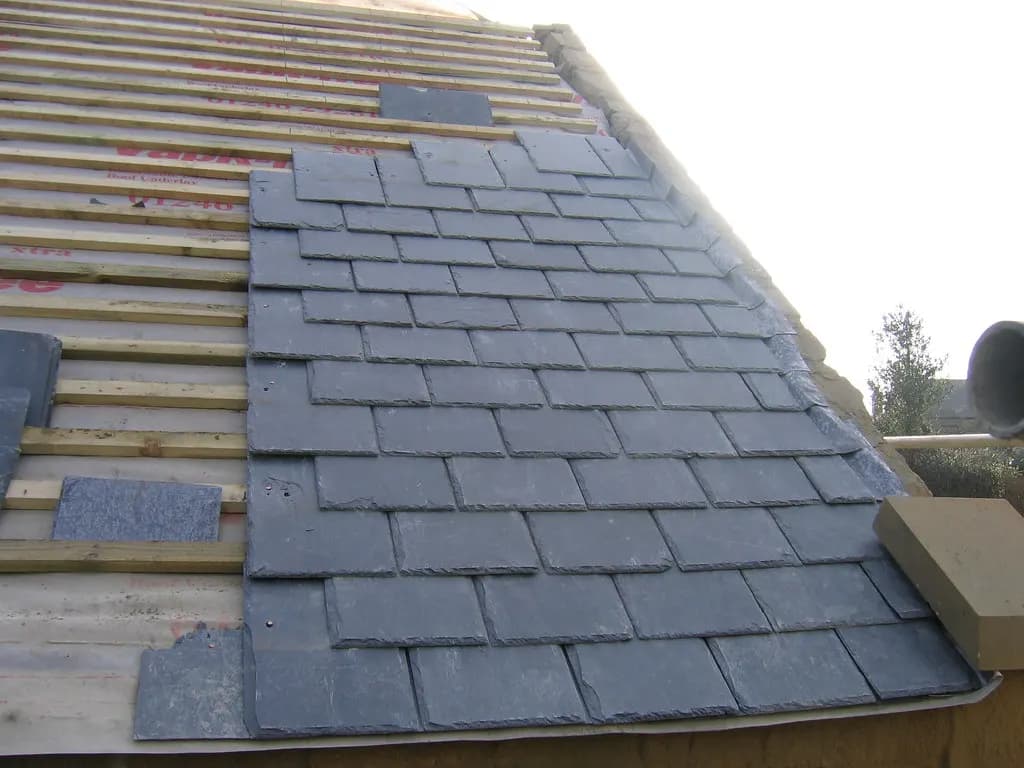
The services covered are the same as CIS construction operations. That takes in building, altering, repairing, extending and demolishing buildings and structures, including roads, walls, sewers, pipelines and harbours. It covers installing heating, lighting, power, water, drainage, ventilation, sanitation and fire protection systems, and the internal cleaning of buildings during construction. Painting and decorating, site clearance, earth-moving, excavation, tunnelling, foundations and erecting scaffolding are all in.
Some activities that sit close to construction are outside CIS and therefore outside the reverse charge when they're supplied on their own. HMRC's list includes professional work by architects, surveyors and consultants, manufacturing building components or delivering materials to site, signwriting and installing signs, purely artistic work like murals and sculptures, installing seating, blinds and shutters, and installing security systems such as burglar alarms, CCTV and public address systems. Drilling for oil and gas, and mineral extraction, are also out.
The phrase "on their own" matters. If an electrician installs a lighting system and a CCTV camera under one contract, you have to look at the supply as a whole. That's where the 5% disregard can come in, covered below.
Plant hire on its own is outside CIS, so the hire charge isn't reverse charged, but operated plant hire (a digger with a driver doing groundwork) usually is a construction operation. On zero-rated new-build housing, erecting and dismantling scaffolding can share the zero rate, and HMRC treats operated plant hire on new-build dwellings as zero-rated and outside the reverse charge. Standard-rated extras within a zero-rated supply, such as built-in ovens and hobs, are outside the reverse charge too.
| Supply (by a VAT-registered sub to a VAT-registered CIS contractor) | Reverse charge? |
|---|---|
| Plastering, bricklaying, roofing, joinery on a commercial refit | Yes |
| Installing lighting, heating or drainage | Yes |
| Painting and decorating an occupied office | Yes |
| Building a new house (zero-rated) | No — zero-rated |
| Architect's or surveyor's fees on their own | No — outside CIS |
| Installing a burglar alarm or CCTV on its own | No — outside CIS |
| Supply of agency labour by an employment business | No — excluded |
| Any work for a homeowner or a non-VAT-registered customer | No — normal VAT |
End users and intermediary suppliers
The reverse charge is meant to apply along the chain of contractors and subcontractors, not to the final client who pays for the building. So the rules carve out end users: businesses registered for VAT and CIS that receive construction services and don't make an onward supply of those same services. Typical end users are property developers building to keep or sell the property (a sale of property isn't an onward supply of construction services), large retailers refitting their own stores, and housing associations or local authorities commissioning repairs. Building contractors are usually not end users, because they re-supply the work to their client.
Intermediary suppliers are a narrower group. They're VAT and CIS-registered businesses connected to an end user, either through a relevant interest in the same land (landlord and tenant, for example) or by being in the same corporate group under section 1161 of the Companies Act 2006, that pass the construction services on without material change. A landlord company that buys repairs and recharges them to a tenant in the same group is the classic case. HMRC lets intermediaries treat themselves as end users for notification purposes.
The exclusion only works if the customer tells the supplier in writing. Notification can be by letter, email or a clause in the contract, including a call-off contract, and a contract drafted by the supplier counts once the customer agrees to it in writing. HMRC suggests wording along the lines of "We are an end user for the purposes of section 55A VAT Act 1994 reverse charge for building and construction services." Notice is optional; an end user that stays silent will simply be charged under the reverse charge if it's VAT and CIS registered.
If notification goes wrong, the risk sits with the customer. HMRC's technical guide says a customer that fails to notify properly is liable to account for the VAT that should have been charged under the reverse charge. In practice, most subcontractors' terms say they'll assume the reverse charge applies unless the customer confirms in writing that it's an end user.

The two 5% disregards
People often mix these up, so it's worth taking them separately.
The mixed-supply disregard applies to a single supply that has a small reverse charge element. If the reverse charge part is 5% or less of the total value, it can be ignored and the whole supply invoiced with VAT in the usual way. For example, an installer fitting a security system (outside CIS) whose contract includes a small amount of electrical work (inside CIS) could use normal VAT on the whole job. The parties must agree this at the start of the contract based on overall contract values, not invoice by invoice, and it doesn't apply where the main element is zero-rated.
The end-user disregard is in HMRC's VAT reverse charge for construction manual at VATREVCON33200. A customer that's mainly an end user but re-charges a small share of the work it buys to someone else would normally fail the end user test. If those re-charges are under 5% by value, it can still give end user notice and doesn't have to disclose the re-charges to its supplier. HMRC's example is a local authority that recharges a slice of maintenance costs to private owners of flats in a shared block.
If you're not sure which side of the line a job falls, decide it at contract stage, write the treatment into the contract, and keep a note of the values you relied on.
Materials, mixed jobs and supply-and-fix
The reverse charge applies to the whole value of a construction supply, not just the labour. If a subcontractor quotes £20,000 for supplying and fitting a kitchen in a commercial unit, the full £20,000 is reverse charged. HMRC says you shouldn't split labour and materials into separate supplies to avoid the reverse charge on the materials.
This is different from CIS, which is one of the most common sources of confusion. For CIS, the contractor makes its deduction only on the labour element, excluding VAT and the cost of materials the subcontractor bought. For VAT, the reverse charge covers labour and materials together. So on one invoice you'll often have two different "base" figures: the full net value for the reverse charge, and the labour-only value for CIS.
Separate supply-only and fix-only orders for the same job are one supply for VAT but are looked at order by order for CIS. Later spares follow the original contract's VAT treatment.
How to invoice under the reverse charge
Writing a reverse charge invoice
- 1
Check the customer
Confirm the customer's VAT number and that it is CIS registered, and check whether it has sent end user or intermediary notice.
Tip: Keep the notice or the customer's written confirmation of its status on file.
Check a UK VAT number - 2
Show the normal VAT invoice details
Your details and VAT number, customer details, date, invoice number, description, net amount and VAT rate.
- 3
Add the reverse charge wording
For example: 'Reverse charge: VAT Act 1994 Section 55A applies' or 'Customer to pay the VAT to HMRC'. If your software can't show the VAT amount, add 'customer to account to HMRC'.
- 4
Show VAT but don't charge it
Show the 20% or 5% rate (and amount if you can), but make the total due the net amount only.
- 5
Set out the CIS split
Show labour and materials separately so the contractor can work out the CIS deduction on labour only.
A reverse charge invoice is still a full VAT invoice. It needs your name, address and VAT number, the customer's details, the invoice date and number, the time of supply, a description of the work and the net value. On top of that, HMRC's technical guide asks you to make clear that the domestic reverse charge applies and to show the VAT rate and amount, or the rate only if your software can't show the amount. You mustn't add the VAT to the total the customer pays.
If you've already issued a VAT-inclusive invoice in error, don't just ask the customer to pay less. Issue a credit note to cancel it and a fresh reverse charge invoice. Credit notes for reverse charge supplies should also say the reverse charge applies and show the VAT adjustment the customer needs to make, with wording such as "customer to account to HMRC for the adjustment to reverse charge output tax". The customer then adjusts both its output and input tax on the same return.
VAT return boxes for both sides
The VAT return entries are where most errors turn up, so it's worth being exact. HMRC's VAT Notice 700/12 sets out the boxes for reverse charge goods and services, including building and construction services.
Where a £10,000 reverse charge job goes on the VAT return
| Box | Subcontractor (supplier) | Contractor (customer) |
|---|---|---|
Box 1 — output VAT | Nothing | £2,000 |
Box 4 — input VAT | VAT on its own purchases only | £2,000 (if normally recoverable) |
Box 6 — sales | £10,000 | Not included |
Box 7 — purchases | Its own purchases | £10,000 |
Box 1 — output VAT
- Subcontractor (supplier)
Nothing
- Contractor (customer)
£2,000
Box 4 — input VAT
- Subcontractor (supplier)
VAT on its own purchases only
- Contractor (customer)
£2,000 (if normally recoverable)
Box 6 — sales
- Subcontractor (supplier)
£10,000
- Contractor (customer)
Not included
Box 7 — purchases
- Subcontractor (supplier)
Its own purchases
- Contractor (customer)
£10,000
For the subcontractor, the net value of the reverse charge sale goes in box 6, and there's no output tax in box 1. For the customer, the VAT on the purchase goes in box 1 as output tax and the same amount in box 4 as input tax, as long as it's entitled to reclaim it under the normal rules, and the net purchase value goes in box 7. The customer doesn't put the purchase in box 6 as if it were a sale, which is a common software set-up mistake.
A partly exempt customer, such as a landlord with exempt residential rents, might not be able to reclaim all the input tax. In that case the reverse charge does produce a real cost, because box 1 is in full but box 4 is restricted. That cost would have existed anyway if VAT had been charged normally; the reverse charge just moves where it's recorded.
Worked example: CIS and the reverse charge on one invoice
Priya runs a plastering company registered for VAT and for CIS with net payment status. She plasters a new office fit-out for Hall Build Ltd, a VAT-registered main contractor who will re-supply the work to the building owner. Her invoice for the month is £10,000 net: £6,000 labour and £4,000 of plaster, beads and board she bought for the job. Hall Build hasn't given end user notice, and couldn't, because it re-supplies the work.
The reverse charge applies to the whole £10,000. Priya's invoice shows the 20% rate and £2,000 VAT, states that the customer must account for the VAT, and shows a total due of £10,000. For CIS, Hall Build deducts 20% of the £6,000 labour, which is £1,200, and pays it to HMRC with its CIS return. Priya receives £8,800 and keeps the payment and deduction statement to offset the £1,200 against her company's PAYE and NIC liabilities.
Priya's £10,000 invoice — before and after the reverse charge
| Normal VAT (pre-2021) | Reverse charge | |
|---|---|---|
Net value (labour £6,000 + materials £4,000) | £10,000 | £10,000 |
VAT added to invoice | £2,000 | £0 (shown, not charged) |
CIS deduction at 20% on labour | £1,200 | £1,200 |
Cash Priya receives | £10,800 | £8,800 |
VAT Priya pays HMRC on this sale | £2,000 | £0 |
Net value (labour £6,000 + materials £4,000)
- Normal VAT (pre-2021)
£10,000
- Reverse charge
£10,000
VAT added to invoice
- Normal VAT (pre-2021)
£2,000
- Reverse charge
£0 (shown, not charged)
CIS deduction at 20% on labour
- Normal VAT (pre-2021)
£1,200
- Reverse charge
£1,200
Cash Priya receives
- Normal VAT (pre-2021)
£10,800
- Reverse charge
£8,800
VAT Priya pays HMRC on this sale
- Normal VAT (pre-2021)
£2,000
- Reverse charge
£0
On their VAT returns, Priya enters £10,000 in box 6 and nothing in box 1. Hall Build enters £2,000 in box 1, £2,000 in box 4 and £10,000 in box 7, so its net VAT position on this purchase is nil. Before 1 March 2021, Priya would have invoiced £12,000, received £10,800 after CIS, and paid the £2,000 to HMRC with her quarterly return, often weeks later. That gap was her cash-flow cushion, and the reverse charge takes it away.
If Priya instead did the same work directly for the company that owns the building, and that owner was VAT and CIS registered and had sent her end user notice, she'd charge VAT normally: £10,000 plus £2,000 VAT. If the owner was a homeowner, she'd also charge VAT normally because the customer isn't VAT registered.
Cash flow, Flat Rate and Cash Accounting
Labour-heavy subcontractors feel the reverse charge most in their bank account. They no longer hold output VAT between being paid and filing, but they still pay VAT on their own materials, tools and vans. Many end up as repayment traders, with HMRC owing them money each quarter. HMRC's technical guide notes that businesses in this position can apply to move to monthly VAT returns so that repayments arrive faster. If you're in this position, read our VAT returns guide for how to change your return period.
Reverse charge supplies can't be accounted for under the Cash Accounting Scheme, either as sales or purchases, though you can keep using cash accounting for your other supplies. That matters because the customer's VAT point is set by the normal tax point rules, not by when it pays.
On the Flat Rate Scheme, reverse charge sales are left out of the turnover you apply your flat rate to. If you buy reverse charge services, you account for and recover the VAT on the same return. HMRC's guide openly suggests that flat rate users think about whether the scheme still helps, because you can't reclaim VAT on materials and overheads under it. A subcontractor that once made a margin on the 14.5% labour-only construction flat rate may now have almost no flat rate turnover left.
Reverse charge set-up checklist
0/8Common mistakes and how to fix them
Charging VAT to a contractor who should have been reverse charged. The customer can't treat wrongly charged VAT as input tax. Fix it with a credit note and a new reverse charge invoice, then correct both returns. HMRC applied a light touch in the first six months after 1 March 2021, but that period is long over, and it now expects errors to be corrected promptly through the normal error correction process.
Reverse charging an end user who sent notice. If you've had written end user notice, charge VAT normally. Missing notices are the single biggest cause of disputes, so file them with each contract.
Applying the reverse charge to homeowners or non-CIS customers. The rule needs a VAT-registered customer reporting the payment under CIS. A café owner hiring you to refit their premises isn't a CIS contractor unless they're a deemed contractor, which only happens once a business spends more than £3 million on construction in a 12-month period, so normal VAT applies.
Using the CIS labour figure as the reverse charge value. The reverse charge covers labour and materials. CIS deductions are on labour only.
Entering the purchase in box 6. The customer only uses boxes 1, 4 and 7. Putting reverse charge purchases in box 6 inflates your declared sales and can trigger HMRC questions.
Ignoring the employment business exclusion. If you supply workers through an agency, the reverse charge doesn't apply to that supply even though the workers are on a building site.
Penalties are considered where HMRC thinks a business deliberately takes advantage of the rules by not accounting for them correctly. Careless errors are dealt with under the normal VAT penalty and interest regime, so a quick, documented correction is always the cheaper route.
Key dates for the construction reverse charge
1 October 2019
Original planned start, postponed
1 October 2020
Second planned start, postponed again
1 March 2021
Reverse charge starts for CIS construction services
6 April 2026
Tougher CIS anti-fraud rules start (CIS, not VAT)
28 October 2026
Autumn Budget — no reverse charge change announced beforehand
No change to the construction reverse charge had been announced before the Autumn Budget on 28 October 2026, and the rules have been stable since 2021 apart from guidance updates. We'll update this page if the Budget changes CIS or VAT rates.
Official links
- VAT domestic reverse charge for building and construction servicesWhen it applies and excluded services
- VAT reverse charge technical guideEnd users, invoices, 5% disregard, schemes
- If you supply construction servicesSupplier checks
- If you buy construction servicesCustomer obligations
- VAT Notice 700/12: filling in your VAT ReturnBoxes 1, 4, 6 and 7
- Check a UK VAT numberVerify your customer
What to do next
Before your next invoice run, check each contractor customer's VAT and CIS status, chase any missing end user notices, and update your invoice template so it shows the reverse charge wording and splits labour from materials. If you're new to CIS, start with our CIS registration guide; if you're close to the £90,000 threshold, see how VAT registration works. The free invoice generator and VAT calculator help you get the figures right.
This is general information, not legal or tax advice — confirm on the official source or with a professional.
Frequently asked questions
It's a VAT rule that started on 1 March 2021. When a VAT-registered subcontractor supplies standard or reduced-rated construction services that are reported under the Construction Industry Scheme to a VAT-registered customer who isn't an end user, the customer accounts for the VAT to HMRC instead of paying it to the subcontractor. The subcontractor invoices without adding VAT to the amount due.
An end user is a business registered for VAT and CIS that doesn't make onward supplies of the construction services it buys, for example a developer building offices to keep, or a retailer refitting its own shop through a contractor. End users must tell their supplier in writing. Once they do, the supplier charges VAT normally. Main contractors who re-sell the work to a client are not end users.
It needs all the usual VAT invoice details plus a clear statement that the reverse charge applies. HMRC accepts wording such as 'Reverse charge: VAT Act 1994 Section 55A applies' or 'Customer to pay the VAT to HMRC'. Show the VAT rate and the VAT amount, or the rate alone if your software can't show the amount, but don't add the VAT to the total payable.
The subcontractor puts the net value of the reverse charge sale in box 6 and nothing in box 1. The customer puts the VAT it must account for in box 1, reclaims the same amount in box 4 if it's entitled to, and puts the net purchase in box 7. The customer doesn't include the purchase in box 6.
No. The reverse charge only applies where the payment is reportable under the Construction Industry Scheme. A VAT-registered customer that isn't a CIS contractor, such as a shop owner hiring a builder directly, pays VAT in the normal way. Domestic customers and businesses that aren't VAT registered are also outside the reverse charge and are charged VAT normally.
You can, but reverse charge sales are left out of your flat rate turnover because the customer accounts for the VAT. Many labour-heavy subcontractors find the scheme stops paying once most of their work is reverse charged, because they can't reclaim VAT on purchases under it. Compare the standard scheme before your next return.
There are two. If the reverse charge element of a single supply is 5% or less of its total value, the parties can agree at the start to ignore it and use normal VAT. Separately, a customer that is mainly an end user but re-charges less than 5% of the work it buys can still give end user notice.
Sources & verification
Figures on this page were checked against the sources below when it was last reviewed on 11 October 2026. Each rate and limit is stored once with its own official source and review date, and official update channels are monitored daily so changes are picked up. How we verify
- 1.VAT domestic reverse charge for building and construction services — HMRC / GOV.UK · accessed 11 October 2026
- 2.VAT reverse charge technical guide — HMRC / GOV.UK · accessed 11 October 2026
- 3.How to use the VAT reverse charge if you supply building and construction services — HMRC / GOV.UK · accessed 11 October 2026
- 4.How to use the VAT reverse charge if you buy building and construction services — HMRC / GOV.UK · accessed 11 October 2026
- 5.How to fill in and submit your VAT Return (VAT Notice 700/12) — HMRC / GOV.UK · accessed 11 October 2026
- 6.VATREVCON33200 — End users and intermediary suppliers: 5% disregard — HMRC · accessed 11 October 2026
- 7.VAT domestic reverse charge for construction: what accountants need to know — Sage · accessed 11 October 2026
- 8.Domestic reverse charge VAT for construction services — BDO · accessed 11 October 2026
MSMETOOLS is an independent platform and is not affiliated with any government agency, ministry or department.
Tools for this
VAT Calculator (UK)
Add or remove VAT at 20%, 5% or 0%.
Invoice Generator
Create professional invoices with tax, logo and custom details.
Related guides
 VAT Return 2026: Deadlines, Boxes 1–9 & Penalties ExplainedRead guide
 VAT Cash Accounting Scheme 2026: £1.35m Limit & How It WorksRead guide
 VAT Flat Rate Scheme 2026: Rates, 16.5% Test & RulesRead guide
 CIS Registration 2026: Rates, Gross Status & Monthly ReturnsRead guide
Official links open the government site in a new tab.