 Income & corporation tax
Self Assessment Late Filing Penalties in 2026: £100, Daily Penalties, Interest and How to Appeal
Self Assessment late filing penalty in 2026: the £100 fine, £10 daily penalties, 5% late payment charges, interest, the new MTD points regime and how to appeal.
 Edited by Sumeet YadavFounder & editor, MSMETOOLS · fact-checked against official sources
Contents (10)
- 1. The deadlines that trigger penalties
- 2. Late filing penalties
- 3. Late payment penalties
- 4. If you can't pay: stop the penalties early
- 5. Making Tax Digital: the new points-based penalties
- 6. Failure to notify: registering late
- 7. Worked examples
- 8. Reasonable excuse and how to appeal
- 9. Common mistakes that lead to penalties
- 10. What to do next
Miss the 31 January Self Assessment deadline and HMRC charges a penalty straight away, whether or not you owe any tax. Leave it longer and the penalties stack up, with separate charges for paying late and interest on top. This guide is for sole traders, landlords, company directors and anyone else who files a personal tax return in the UK. It sets out every penalty that applies to returns due in 2026 and early 2027, the new points-based system for people in Making Tax Digital, how to appeal with a reasonable excuse, and worked examples showing what a late return really costs.
Quick answer
File even one day after the deadline and you get a £100 penalty. After 3 months HMRC adds £10 a day (up to £900); at 6 months and again at 12 months it charges 5% of the tax due or £300, whichever is greater. Paying late brings separate 5% penalties at 30 days, 6 months and 12 months, plus interest at 7.75%.
Online deadline: 31 January; paper deadline: 31 October
The £100 applies even if you owe no tax
Appeal within 30 days if you had a reasonable excuse
MTD for Income Tax users have a points system instead: £200 at 4 points
New penalties reach every Self Assessment filer from April 2027
The deadlines that trigger penalties
Penalties are tied to two deadlines for each tax year, which runs from 6 April to 5 April:
- Filing: a paper return must reach HMRC by 31 October after the tax year ends, and an online return by 31 January. For the 2025-26 tax year that's 31 October 2026 on paper or 31 January 2027 online.
- Paying: any balancing payment for the year, plus your first payment on account for the next year if you make them, is due by 31 January. A second payment on account is due by 31 July.
There's one exception to the filing deadline. If HMRC sent you a notice to file after 31 October, you have 3 months from the date of the notice to file online, and penalties run from that later date. HMRC's penalty estimator flags this case separately because the standard dates don't apply.
2025-26 return — key penalty dates
31 October 2026
Paper return deadline
31 January 2027
Online return deadline and payment due
1 February 2027
£100 late filing penalty; interest starts on unpaid tax
3 March 2027
First 5% late payment penalty (tax unpaid after 30 days)
From 1 May 2027
Daily penalties of £10 for up to 90 days
1 August 2027
6-month filing and payment penalties
1 February 2028
12-month filing and payment penalties
Late filing penalties
GOV.UK sets out the ladder of late filing penalties for a personal return. They come from Schedule 55 to the Finance Act 2009 and apply automatically: you don't need to have been warned, and you don't need to owe tax.
- 1 day late: £100.
- 3 months late: £10 for each day the return is outstanding, for up to 90 days, so up to £900 more. Running total: up to £1,000.
- 6 months late: 5% of the tax due or £300, whichever is greater. Running total with no tax due: up to £1,300.
- 12 months late: another 5% of the tax due or £300, whichever is greater. Running total with no tax due: up to £1,600.
So someone with no tax to pay who files a year late can still face £1,600 in filing penalties. If you owe a lot of tax, the 5% charges at 6 and 12 months become the bigger part: on a £20,000 liability each one is £1,000 rather than £300.
The 12-month penalty can be much higher if HMRC decides you deliberately withheld information it needed to assess your tax. Its Compliance Handbook says the penalty is then 70% of the tax that would have been shown on the return, or 100% if you also took steps to conceal it, with a £300 minimum. Those higher rates can be reduced if you disclose, but the ordinary 6-month penalty and the 5% 12-month penalty can't be.
If a partnership return is late, every partner gets a penalty, not just the nominated partner.
The £100 penalty when you owe nothing
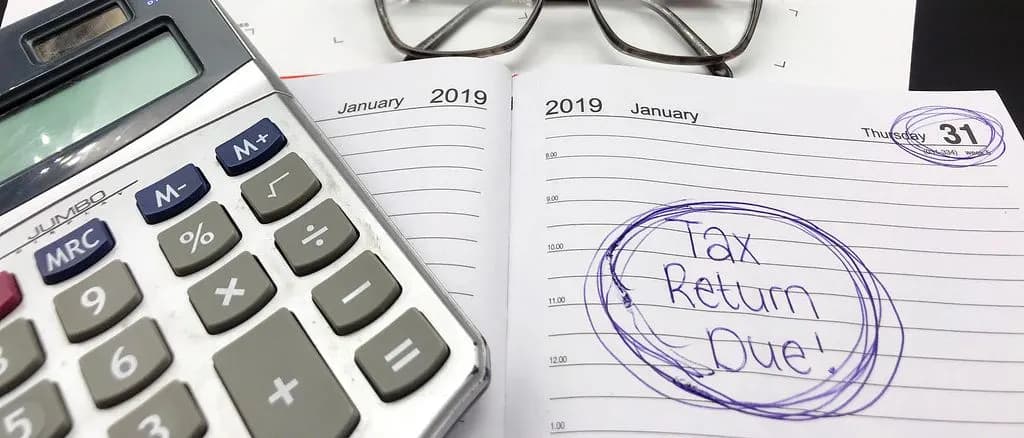
The most common complaint about Self Assessment penalties is from people who owed no tax, or were due a refund, and still got charged £100. The penalty is for the late return, not unpaid tax, so it still applies. What matters is whether you were required to file. If HMRC sent you a notice to file, you're required to send a return even if your income turned out to be small.
If you genuinely don't need to file any more, for example because you stopped trading or your income is now all taxed through PAYE, tell HMRC and ask it to withdraw the notice. HMRC's appeal guidance says you can ask it to cancel a penalty if you didn't need to send a return. Don't simply ignore the letters: daily penalties keep building while the notice is in place.
Late payment penalties
Paying late is a separate failure with its own penalties under Schedule 56 to the Finance Act 2009. For people not yet in Making Tax Digital, GOV.UK says you'll pay 5% of the tax still unpaid at each of three points:
- 30 days after the due date
- 6 months after the due date
- 12 months after the due date
Each penalty is worked out on the amount outstanding at that date, so paying part of the bill reduces the next penalty. Late payment penalties apply to the 31 January balancing payment and to tax due after an amendment or assessment. They don't apply to payments on account, though you will be charged interest on late payments on account. Our guide to payments on account explains how those instalments work.
Interest on late tax
Interest is charged on top of any penalty from the day after the payment deadline until the day you pay. Since 6 April 2025 HMRC's late payment interest rate has been the Bank of England base rate plus 4%, up from base rate plus 2.5%. When we checked in October 2026 the rate was 7.75%, in force since 9 January 2026. HMRC changes it shortly after every base rate move, so the rate on a long-running debt can change several times.
Interest is simple, charged daily and not tax-deductible. It's also charged on penalties that you don't pay within 30 days of the penalty notice. If HMRC owes you money, it pays repayment interest at base rate minus 1%, currently 2.75%.
Filing late vs paying late (current rules for 2025-26 returns)
| Late filing | Late payment | |
|---|---|---|
Legal basis | Schedule 55 Finance Act 2009 | Schedule 56 Finance Act 2009 |
Immediate charge | £100 | Interest from day one |
After 30 days | — | 5% of unpaid tax |
After 3 months | £10 a day, up to 90 days | Interest continues |
After 6 months | 5% of the tax due or £300, whichever is greater | Another 5% |
After 12 months | 5% or £300 (70%/100% if deliberate) | Another 5% |
Applies if no tax is due? | Yes | No |
Legal basis
- Late filing
Schedule 55 Finance Act 2009
- Late payment
Schedule 56 Finance Act 2009
Immediate charge
- Late filing
£100
- Late payment
Interest from day one
After 30 days
- Late filing
—
- Late payment
5% of unpaid tax
After 3 months
- Late filing
£10 a day, up to 90 days
- Late payment
Interest continues
After 6 months
- Late filing
5% of the tax due or £300, whichever is greater
- Late payment
Another 5%
After 12 months
- Late filing
5% or £300 (70%/100% if deliberate)
- Late payment
Another 5%
Applies if no tax is due?
- Late filing
Yes
- Late payment
No
If you can't pay: stop the penalties early
If you can file but can't pay, file anyway. That stops the late filing penalties, which are often the larger charges for small bills, and tells HMRC exactly what you owe.
Then contact HMRC about a payment plan, often called Time to Pay. HMRC's Debt Management manual says a late payment penalty is suspended if you approach HMRC before you become liable to it, HMRC agrees the arrangement, and you keep to its terms. So if you set up a plan before the 30-day penalty date, that 5% penalty isn't charged as long as you keep paying. Interest still runs on the outstanding balance throughout.
Many people can set up a plan online using their Government Gateway account; HMRC will check the plan is affordable and may expect you to use savings first. GOV.UK says monthly payments are usually based on around half of what you have left after essential spending. If you ignore HMRC altogether, it can use debt collection agencies, take money from your wages or bank account (in England, Wales and Northern Ireland), or start court or bankruptcy proceedings.
Making Tax Digital: the new points-based penalties
From 6 April 2026, sole traders and landlords with qualifying income over £50,000 must use Making Tax Digital for Income Tax. HMRC's guidance confirms that for them, new penalties replace the current late filing and late payment penalties, starting with the tax year they join. So an MTD user's 2025-26 return, due 31 January 2027, still gets the current penalties; their 2026-27 return, due 31 January 2028, falls under the new system.
Late submission points. Each missed deadline earns one penalty point instead of a fine. When you reach the threshold of 4 points, you pay £200, and another £200 for every further missed deadline. For 2026-27 there are no penalties or points for late quarterly updates; only the tax return deadline counts. From 2027-28, each quarterly update deadline (7 August, 7 November, 7 February and 7 May) can earn a point too. You get only one point per deadline, even if you run several businesses.
Points expire automatically after 24 months while you're below the threshold. Once you hit it, you have to clear the slate by filing everything on time for 12 months and catching up on any outstanding submissions from the previous 24 months.

Late payment penalties. The new penalties grow with how long the tax stays unpaid:
| Days late | 2026-27 tax year | 2027-28 tax year |
|---|---|---|
| Up to 15 days | No penalty | No penalty |
| 16 to 30 days | 3% of tax owed at day 15 (none in your first year) | 4% of tax owed at day 15 (none in your first year) |
| 31 days or more | 3% at day 15 plus 3% at day 30, plus 10% a year from day 31 | 4% at day 15 plus 4% at day 30, plus 10% a year from day 31 |
In your first year under the new rules, HMRC gives you 30 days from the due date to pay in full or contact it about a payment plan before penalties start; after that the window is 15 days. The daily 10% charge runs for up to 2 years. Late payment interest works exactly as before. If you agree a payment plan and keep to it, penalties are paused from the date you contacted HMRC.
Everyone else joins from April 2027
HMRC's guidance says that from April 2027 the new penalties will apply to everyone who submits a personal Self Assessment tax return, not just MTD users. People who file only an annual return will have a points threshold of 2 points, so missing two annual deadlines would trigger a £200 penalty. That starts with the 2027-28 tax year, whose return is due by 31 January 2029. Partnership, trust and non-resident company returns stay on the current penalties. Our Making Tax Digital guide explains who must join and when.
Failure to notify: registering late
A different penalty applies if you should have registered for Self Assessment and didn't. If you started self-employment, you need to register by 5 October after the end of the tax year you started. GOV.UK says that if you register after 5 October and don't pay all your tax by 31 January, you may get a "failure to notify" penalty. It's based on the tax still unpaid and arrives within 12 months of HMRC receiving your return. The size depends on whether HMRC sees the failure as careless or deliberate and on whether you came forward before HMRC found you.
The practical lesson: if you're late registering, register as soon as you realise and pay what you owe by 31 January, even if you can't file the return by then. That can avoid this penalty entirely. Our sole trader registration guide walks through the process, and you'll need your UTR before you can file.
Worked examples
All three examples use HMRC's late payment interest rate of 7.75% throughout. If base rate changes, the interest figures will too.
Example 1: four months late, small bill. Aisha is a self-employed tutor. Her 2025-26 return shows £2,400 to pay. She files and pays on 20 May 2027, 109 days after the 31 January deadline.
Aisha — filed and paid 20 May 2027
| Charge | How it's worked out | Amount |
|---|---|---|
Late filing penalty | Return late at all | £100.00 |
Daily penalties | 20 days (1–20 May) × £10 | £200.00 |
Late payment penalty | 5% of £2,400 unpaid at 30 days | £120.00 |
Interest | £2,400 × 7.75% × 109 ÷ 365 | £55.55 |
Total extra cost | £475.55 |
Late filing penalty
- How it's worked out
Return late at all
- Amount
£100.00
Daily penalties
- How it's worked out
20 days (1–20 May) × £10
- Amount
£200.00
Late payment penalty
- How it's worked out
5% of £2,400 unpaid at 30 days
- Amount
£120.00
Interest
- How it's worked out
£2,400 × 7.75% × 109 ÷ 365
- Amount
£55.55
Total extra cost
- How it's worked out
- Amount
£475.55
Nearly 20% on top of her tax bill. Had she filed on time but paid late, she'd have paid only the £120 penalty and the interest.
Example 2: a year late on a small liability. Ben is a part-time landlord who owes £800 for 2025-26. He files and pays 14 months late, in April 2028. His filing penalties are £100, plus £900 in daily penalties, plus £300 at 6 months (5% of £800 is only £40, so the £300 minimum applies), plus £300 at 12 months: £1,600. His late payment penalties are 5% of £800 three times, £120, and interest adds roughly £72. Total: about £1,792 on an £800 bill.
Example 3: an MTD user paying late in 2028. Carla's qualifying income on her 2024-25 return was £62,000, so she joined MTD for Income Tax in April 2026. She files her 2026-27 return on time but pays her £3,000 balancing payment 45 days after 31 January 2028. It's her first year of the new penalties, so the 30-day window applies, but she misses it. Using HMRC's table, she pays 3% of £3,000 at day 15 and again at day 30 (£180), plus 10% a year for days 31 to 45 (about £12.33), plus interest of about £28.66: roughly £221. HMRC's penalty letter will confirm the exact figures. She gets no penalty point, because she filed on time.
Reasonable excuse and how to appeal
You can appeal a penalty if you had a reasonable excuse or think HMRC got it wrong. GOV.UK lists examples of what may count:
Examples HMRC may accept as a reasonable excuse
0/9GOV.UK also lists misunderstanding your legal obligation as something that may count, though HMRC will look closely at whether that was reasonable for someone in your position. It's clear about what won't count: a payment that failed because you didn't have enough money, finding HMRC's online system too difficult, not receiving a reminder, or making a mistake on your return. Whatever the excuse, you must file or pay as soon as you're able once it ends.
How to appeal. Use HMRC's online appeal service, or download form SA370 (SA371 for partnerships) and post it. You usually have 30 days from the date on the penalty notice. Have the penalty date, the date you filed and paid, and the details of your excuse to hand, with evidence such as a hospital letter or an error message screenshot. HMRC suggests you consider paying the penalty while you appeal: if the appeal fails you'd owe interest on it, and if it succeeds you get the money back with interest.
If HMRC rejects your appeal, you can ask for an independent review within HMRC, or appeal to the First-tier Tribunal (Tax). HMRC won't ask you to pay the penalty while a review or tribunal appeal is under way. Separately, HMRC can reduce a penalty for "special circumstances", but its guidance is clear that simply being unable to pay isn't one.
Dealing with a penalty notice
- 1
File and pay what you can now
Every day you wait can add daily penalties, a bigger percentage penalty and more interest.
- 2
Check the notice
Confirm the tax year, dates and amounts. Were you actually required to file? If not, ask HMRC to withdraw the return and cancel the penalty.
- 3
Decide whether you have a reasonable excuse
Compare your situation with GOV.UK's list. Gather dates and evidence.
- 4
Appeal within 30 days
Appeal a Self Assessment penaltyOnline, or on form SA370 by post. Explain what happened, when it ended and when you filed or paid.
- 5
Review or tribunal if refused
Ask for an HMRC review or appeal to the First-tier Tribunal (Tax).
Common mistakes that lead to penalties
- Waiting to file until you can pay. The two are separate. File on time and set up a payment plan.
- Ignoring a notice to file because you think you owe nothing. The £100 still applies, and daily penalties follow.
- Leaving registration until January. It can take weeks to receive your UTR and activation code, and you can't file without them.
- Assuming an accountant will absorb the penalty. You're responsible for your return; relying on someone else may be a reasonable excuse only in limited circumstances.
- Missing payments on account. They don't attract penalties under the current rules, but interest builds quickly.
- Not reading HMRC letters. Penalties and points arrive by letter or in your online account, and the 30-day appeal clock starts from the notice date.
Official HMRC and GOV.UK links
- Self Assessment penaltiesLate filing, late payment and failure to notify
- Estimate your penaltyHMRC's calculator for late returns and payments
- Penalties for Making Tax Digital for Income TaxPoints system, new late payment penalties, April 2027 extension
- HMRC interest ratesCurrent late payment and repayment interest
- Appeal a Self Assessment penaltyOnline appeal or forms SA370 and SA371
- If you cannot pay your tax bill on timeSet up a payment plan
What to do next
If your 2025-26 return isn't filed yet, you have until 31 January 2027 online. Check you're registered and have your UTR now, then use our Self Assessment guide to work through the return. If you're already late, file and pay as much as you can today, set up a payment plan for the rest before the 30-day penalty date, and appeal within 30 days if you had a genuine reasonable excuse. If your income is over £30,000, plan now for Making Tax Digital from April 2027.
This is general information, not legal or tax advice — confirm on the official source or with a professional.
Frequently asked questions
An immediate £100 if your return is even a day late. After 3 months, daily penalties of £10 a day (up to £900) are added. At 6 months you pay a further 5% of the tax due or £300, whichever is greater, and at 12 months the same again. These are filing penalties only; late payment penalties and interest are separate.
Yes. The £100 late filing penalty applies even if you owe nothing or are due a refund, because it's for the late return, not unpaid tax. If you didn't actually need to file, ask HMRC to withdraw the return and cancel the penalty. Otherwise, appeal only if you had a reasonable excuse.
Late payment interest is the Bank of England base rate plus 4%. It has been 7.75% a year since 9 January 2026. It's charged daily from the day after the payment deadline until you pay, on the tax and on any unpaid penalties, and it changes whenever base rate changes.
Appeal online through HMRC's service or by post on form SA370 (SA371 for partnerships), normally within 30 days of the date on the penalty notice. Explain your reasonable excuse with dates and evidence, and file the return or pay the tax as soon as you can. If HMRC rejects the appeal you can ask for a review or go to the tax tribunal.
Something that genuinely stopped you meeting the deadline, such as a close relative's death shortly before it, an unexpected hospital stay, serious illness, a fire, flood or theft, HMRC online service problems or a computer failure while preparing the return. Not having the money, finding the system difficult, not getting a reminder or a mistake on your return don't count.
Yes. If you joined Making Tax Digital for Income Tax from 6 April 2026, a points-based late submission system and new late payment penalties apply to you for 2026-27 onwards. From April 2027 the new system extends to everyone who files a personal Self Assessment return. Returns for 2025-26, due 31 January 2027, still use the current penalties.
Sources & verification
Figures on this page were checked against the sources below when it was last reviewed on 12 October 2026. Each rate and limit is stored once with its own official source and review date, and official update channels are monitored daily so changes are picked up. How we verify
- 1.Self Assessment tax returns: penalties — HMRC / GOV.UK · accessed 12 October 2026
- 2.Penalties for Making Tax Digital for Income Tax — HMRC / GOV.UK · accessed 12 October 2026
- 3.HMRC interest rates for late and early payments — HMRC / GOV.UK · accessed 12 October 2026
- 4.CH63520 — Penalties for failure to file on time: calculation process — HMRC Compliance Handbook · accessed 12 October 2026
- 5.Disagree with a tax decision or penalty: reasonable excuses — GOV.UK · accessed 12 October 2026
- 6.Appeal a Self Assessment penalty for late filing or late payment — HMRC / GOV.UK · accessed 12 October 2026
- 7.DMBM803600 — Time To Pay: penalties for late payment — HMRC Debt Management and Banking Manual · accessed 12 October 2026
- 8.If you cannot pay your tax bill on time — HMRC / GOV.UK · accessed 12 October 2026
- 9.Estimate your penalty for late Self Assessment tax returns and payments — HMRC / GOV.UK · accessed 12 October 2026
MSMETOOLS is an independent platform and is not affiliated with any government agency, ministry or department.
Tools for this
Related guides
 Self Assessment Tax Return 2026: Deadlines & How to FileRead guide
 Making Tax Digital 2026: Thresholds, Deadlines & PenaltiesRead guide
 Payments on Account 2026: Dates, Rules & ExamplesRead guide
 Valuation Office Business Rates 2026: Rateable Value GuideRead guide
Official links open the government site in a new tab.