 Income & corporation tax
Allowable Expenses for the Self-Employed in 2026: What You Can Claim, What You Can't and How
Allowable expenses for the self-employed in 2026: HMRC's categories, the wholly and exclusively rule, simplified home and 55p mileage rates and what you can't claim.
 Edited by Sumeet YadavFounder & editor, MSMETOOLS · fact-checked against official sources
Contents (9)
- 1. What counts as an allowable expense
- 2. The "wholly and exclusively" rule
- 3. The main categories HMRC accepts
- 4. Simplified expenses: flat rates for home, vehicles and premises
- 5. What you can't claim
- 6. Worked example: a freelance designer's expenses for 2026-27
- 7. Records, mistakes and how to put things right
- 8. Budget watch
- 9. What to do next
If you're a sole trader or in a partnership, every pound of allowable expense comes straight off the profit you pay Income Tax and National Insurance on. For a basic-rate taxpayer that's a saving of 26p in every pound claimed. This guide sets out what HMRC lets you claim in 2026-27, the "wholly and exclusively" test that sits behind every claim, the flat-rate simplified expenses for your home, vehicle and living-in premises, the costs that are never allowed, and a full worked example in pounds.
Quick answer
Allowable expenses are costs you pay wholly and exclusively for your business. You deduct them from your income to get your taxable profit. If something is part business and part private, you claim only the business share. You can't claim expenses as well as the £1,000 trading allowance.
Main categories: stock, office and phone, travel and vehicles, staff, premises, insurance and finance costs, marketing, subscriptions, training, work clothing
Simplified flat rates: 55p a mile for the first 10,000 business miles, and £10 a month to £26 a month a month for working from home
Never allowed: commuting, fines, entertaining clients, everyday clothes, gym fees, your own drawings
Under the cash basis (the default since 2024-25), equipment such as laptops and vans is claimed as an expense when you pay for it
What counts as an allowable expense
An allowable expense is a running cost of your business that the tax rules let you take away from your income. GOV.UK puts it simply: if your turnover is £40,000 and you claim £10,000 of allowable expenses, you pay tax on £30,000. Money you take out for yourself, known as drawings, is never an expense, however you label it in your bank account.
These rules apply to the self-employed: sole traders and individual partners in a partnership. If you run a limited company you're not self-employed for tax, even if you're the only director and employee. Your company deducts its own costs for Corporation Tax under similar but separate rules, and a few things, such as salaries paid to you as a director, work differently.
The expenses you claim also depend on how you work out your profit. Since 6 April 2024 the cash basis has been the default for sole traders and partnerships. Under it you claim costs in the tax year you pay them, and most equipment bought to keep and use counts as an ordinary expense. If you've opted for traditional accounting instead, you match costs to the period they relate to and claim equipment through capital allowances. The list of things you can claim is broadly the same either way; the timing and the treatment of equipment are what differ.
The "wholly and exclusively" rule
Every claim rests on one sentence in section 34 of the Income Tax (Trading and Other Income) Act 2005: a cost can only be deducted if it's incurred wholly and exclusively for the purposes of the trade. HMRC's Business Income Manual explains that this is a test of your sole purpose when you spend the money. If there's any private purpose behind the spending, even alongside a genuine business one, the whole cost fails the test.
Can I claim this cost?
Step 1
Did the business pay for it?
Step 2
Was it only for the business?
Yes → allowable in full
Step 3
Part business, part private?
Claim the measurable business share
Step 4
Any private purpose and no clear split?
Not allowable
Step 5
On the banned list?
Fines, entertaining, commuting: never allowable
That's the "duality of purpose" problem. A suit you wear to client meetings still keeps you warm and decent, so it has a private purpose and isn't allowable. A holiday where you also visit a trade fair has a private purpose too. On the other hand, a benefit that's purely incidental doesn't spoil the claim. HMRC's own example is a consulting engineer who travels to attractive places to advise on projects: if there's no private purpose, the travel is allowable even though the destinations are pleasant.
The rule doesn't stop you claiming part of a mixed cost where a definite business part can be identified. Your phone contract, your car and your home are all used for both work and private life, but you can measure the business share by calls, miles or rooms and hours, and claim just that. What you can't do is guess a percentage with no basis. Keep the evidence that supports the split, such as itemised bills or a mileage log.
The main categories HMRC accepts
HMRC groups self-employed expenses into the same broad headings that appear on the self-employment pages of the tax return. Knowing where each cost goes makes your return quicker and your records easier to defend.
| Category | Examples you can claim | Watch out for |
|---|---|---|
| Office, property and equipment | Stationery, postage, printing, phone and internet, software, rent, business rates, utilities for business premises, repairs | Equipment you keep: expense under cash basis, capital allowances under traditional accounting |
| Car, van and travel | Fuel, insurance, repairs, servicing, vehicle tax, parking, breakdown cover, train, bus, air and taxi fares, hotels and meals on overnight trips | Not commuting, not fines, not private trips |
| Clothing | Uniforms, protective kit such as safety boots and hard hats, overalls, costumes for performers | Not everyday clothes, even if only worn for work |
| Staff | Wages, bonuses, pensions, employer's National Insurance, agency fees, subcontractors, staff training | Not nannies, carers or domestic help |
| Reselling goods | Stock, raw materials, direct production costs | Not goods for private use; depreciation isn't allowable |
| Legal and financial | Accountants, solicitors, surveyors for business, professional indemnity and public liability insurance, bank and card charges, loan and overdraft interest, hire purchase interest, leasing payments | Not loan repayments, not fines, not your personal tax return |
| Marketing and subscriptions | Advertising, website costs, free samples of what you sell, branded gifts up to £50 per recipient a year, trade journals, professional body membership | Not entertaining, not political donations, not gym membership |
| Training | Courses that update skills you already use or keep up with changes in your industry | Not training to start a new business or move into an unrelated field |
Office, phone and software
Day-to-day office costs are the easiest claims: stationery, postage, printer ink, phone and broadband bills, and software. Software you use for less than two years, or pay for on a renewing subscription, is an expense. Larger software you buy outright and keep is equipment, so it's an expense under the cash basis and a capital allowance claim under traditional accounting.

Travel and vehicles
Business travel covers trips to customers, suppliers, temporary sites and between workplaces. Travel between home and a permanent place of work is commuting and never qualifies. You can claim train, bus, air and taxi fares, parking, and hotels and meals when you're away overnight. For your own car, van or motorbike you either claim the actual costs with a business-use split, or use the simplified mileage rates covered below. Our mileage allowance guide explains what counts as a business mile in detail.
Staff and subcontractors
Wages, employer's National Insurance, workplace pensions and subcontractor payments are allowable. If you pay a family member, the pay must be for real work at a commercial rate, and you should be able to show what they did. Paying your partner £12,000 a year to answer the occasional phone call invites a challenge.
Finance costs and professional fees
Interest on business loans, overdrafts and credit cards is allowable, along with bank charges and the interest part of hire purchase. Repaying the loan itself isn't, because it's not a cost of the business. Accountancy fees for preparing your business accounts are allowable; HMRC's manual says the cost of completing your personal tax return isn't, though in practice the extra cost for a simple return is small.
Simplified expenses: flat rates for home, vehicles and premises
Simplified expenses let sole traders and partnerships with no company partners use flat rates instead of working out actual costs for three things: vehicles, working from home and living at your business premises. Limited companies can't use them. They're optional, and you can use them for one item but not another, for example the mileage rate for your van but actual costs for your home office.
Simplified expense rates for 2026-27
55p a mile
Cars and vans, first 10,000 business miles
Was 45p before 6 April 2026
25p a mile
Cars and vans, over 10,000 miles
24p a mile
Motorcycles, all miles
£10 a month
Home working, 25–50 hours a month
£18 a month
Home working, 51–100 hours a month
£26 a month
Home working, 101+ hours a month
Vehicles
The flat mileage rate replaces the actual costs of buying and running the vehicle: fuel, insurance, repairs, servicing and the purchase itself. For 2026-27 it's 55p a mile for the first 10,000 business miles in a car or goods vehicle, and 25p a mile for each mile after that. Motorcycles get 24p a mile. The car rate went up from 45p for the first time since 2011, backdated to 6 April 2026. GOV.UK's own example: 11,000 business miles gives 10,000 × 55p plus 1,000 × 25p, a claim of £5,750.
You can't use the flat rate for a vehicle you've already claimed capital allowances on or deducted as an expense, and once you use it for a vehicle you must stick with it for as long as that vehicle is in the business. Cars designed for commercial use, such as black cabs and dual-control driving school cars, can't use it at all. Parking, tolls and train fares are claimed on top.
Working from home
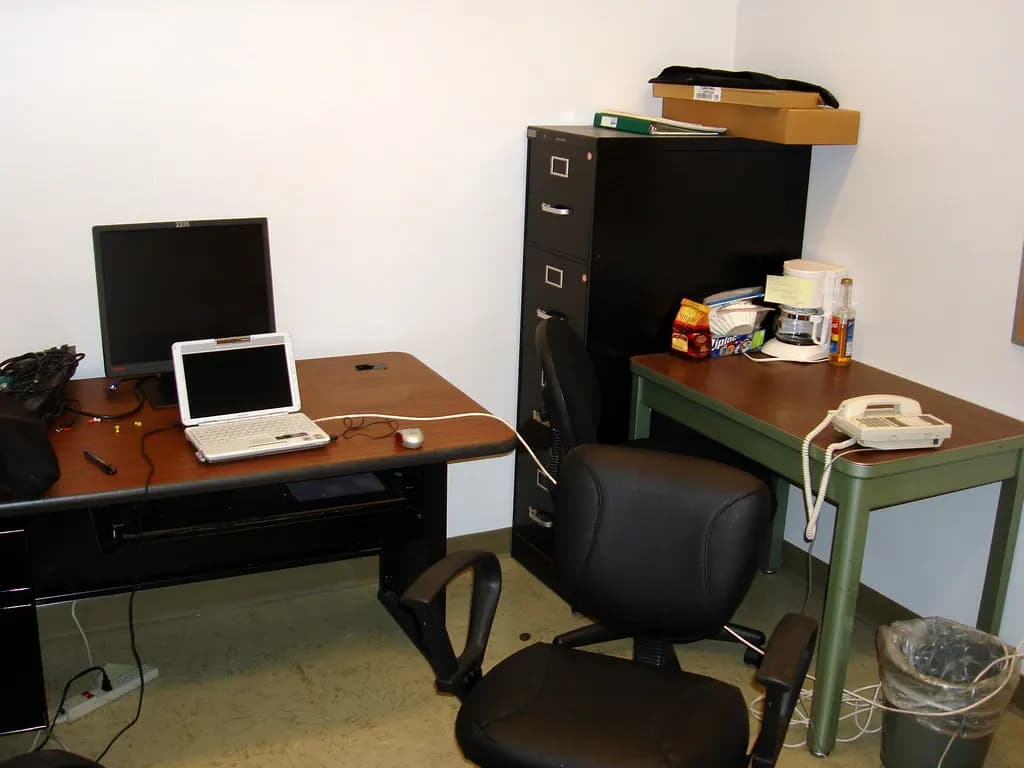
If you work at home for 25 hours or more a month, you can claim a flat monthly amount instead of splitting your household bills. GOV.UK's example: 40 hours a month for ten months and 60 hours for two months gives 10 × £10 a month plus 2 × £18 a month, or £136 for the year. The flat rate doesn't cover phone or broadband, so claim the business share of those separately.
The flat rate is simple but modest. If you have a dedicated office room, working out actual costs often gives more. GOV.UK's method is to find a reasonable basis, such as the number of rooms and the time used for work. With four rooms of similar size, one used only as an office, and an electricity bill of £1,120, you could claim a quarter, £280. If you only worked from home one day a week, the claim would be a seventh of that, £40. Mortgage interest (not capital repayments), rent, Council Tax, heating and water can all be split the same way.
Living at your business premises
Guesthouses, bed and breakfasts and small care homes where the owner lives on site can take their total premises costs and subtract a flat amount for private use: £350 a month for one person, £500 a month for two and £650 a month for three or more. A couple running a B&B with £15,000 of premises costs for the year deduct 12 × £500 = £6,000 and claim £9,000.
What you can't claim
Some costs fail the wholly and exclusively test by their nature, and others are blocked by specific rules. These are the ones that most often get disallowed when HMRC opens an enquiry.
Not allowable, whatever the business reason
0/10Entertaining is the trap that catches most people. Taking a client to lunch to talk about a project is still entertaining, so it isn't allowable, even though it's clearly linked to the business. You can claim the cost of an event mainly for your employees, such as an annual staff party, and food or drink you give away as part of what you sell, such as a restaurant's two-for-one offer. Promotional gifts carrying your business name are allowable up to £50 per recipient a year per recipient a year, as long as they're not food, drink or tobacco.
Everyday meals are another frequent error. Your lunch on a normal working day isn't allowable, even if you're at a client's site, because everyone has to eat. Meals become allowable when you're on an overnight business trip, or when your work takes you away from your usual pattern of travel. Training is similar: a course that refreshes or updates the skills you use now is fine, but a course to retrain for a different line of work isn't.
Worked example: a freelance designer's expenses for 2026-27
Priya is a self-employed graphic designer in Leeds using the cash basis. Her income for the tax year is £48,000. She works from home about 60 hours a month and drives to clients in her own car. Here's how her costs sort out.
| Cost | Paid | Allowable | Why |
|---|---|---|---|
| Design software subscriptions | £600 | £600 | Business only |
| Mobile phone (60% business by itemised bill) | £720 | £432 | Business share |
| Broadband (50% business) | £480 | £240 | Business share |
| Accountant: bookkeeping and business accounts | £900 | £900 | Professional fees for the business |
| Typography course | £350 | £350 | Updates existing skills |
| Professional indemnity insurance | £280 | £280 | Business insurance |
| New laptop | £1,400 | £1,400 | Equipment is an expense under the cash basis |
| Working from home flat rate (60 hrs × 12 months) | — | £216 | 12 × £18 a month |
| Business mileage, 4,000 miles | — | £2,200 | 4,000 × 55p a mile |
| Parking at client offices | £120 | £120 | Claimed on top of mileage |
| Client lunches | £180 | £0 | Entertaining |
| Gym membership | £420 | £0 | Personal |
| New suit for pitches | £250 | £0 | Everyday clothing |
Her allowable expenses total £6,738, so her taxable profit is £48,000 − £6,738 = £41,262. Because her profit sits inside the basic-rate band, each pound of expense saves 20% Income Tax and 6% Class 4 National Insurance. The expenses cut her bill by about £6,738 × 26% = £1,752. The £850 of costs she couldn't claim would have saved nothing, however business-like they felt.
If Priya had claimed the £1,000 trading allowance instead, her profit would have been £47,000, costing her roughly £1,490 more in tax and National Insurance. That's why the allowance mainly suits people with small side incomes and few costs; see our trading allowance guide for the comparison.
Records, mistakes and how to put things right
You don't send receipts with your return, but you must keep records that back up every figure: receipts, invoices, bank and card statements, a mileage log with dates, postcodes and purposes, and notes explaining how you split mixed costs. Keep them for at least 5 years after the 31 January filing deadline for the tax year. Photos and scans are fine.
If your turnover is over £50,000, you're already in Making Tax Digital for Income Tax from April 2026, so expenses need to be recorded digitally and sent in quarterly updates. The categories in the software follow the same headings as the tax return, which makes sorting costs as you go well worth it.
The common mistakes are predictable: claiming 100% of a phone or car that's also used privately, claiming commuting, putting client entertaining through the books, claiming the trading allowance as well as expenses, and claiming equipment twice by deducting it and also claiming capital allowances. If you spot an error on a return you've already sent, you can usually amend it online within 12 months of the 31 January filing deadline. Overclaims found later should be corrected with HMRC directly; telling them before they ask usually means a lower penalty.
Claiming your expenses on your return
- 1
Record every cost as you pay it
Use a spreadsheet or bookkeeping app. Note the date, supplier, amount and category, and attach the receipt.
- 2
Split mixed costs
Work out the business share of your phone, car and home using bills, a mileage log or rooms and hours, and keep the workings.
- 3
Choose actual costs or flat rates
Compare simplified expenses with actual costs for each vehicle and for home working. Use the GOV.UK simplified expenses checker if unsure.
- 4
Total by category
Add up each category on the self-employment pages. If your turnover is under £90,000 you can enter a single total for expenses.
- 5
File by 31 January
How to claim expensesEnter the totals on your Self Assessment return and keep the evidence for at least 5 years.
Budget watch
The Autumn Budget is on 28 October 2026. Expense rules rarely change at a Budget, but the simplified mileage rate rose outside one in May 2026. Watch for any change to the simplified expense rates, to the trading allowance, and to the timetable for bringing more sole traders into Making Tax Digital. We'll update this page if anything affects what you can claim.
Official links
- Expenses if you're self-employedHMRC's categories of allowable expenses
- Simplified expensesFlat rates for vehicles, home and premises
- BIM37007: wholly and exclusivelyHMRC manual on the core test
- Business records if you're self-employedWhat to keep and for how long
- Cash basisDefault method for sole traders since 2024-25
What to do next
Go through last year's bank statements and tag every business payment by category; most people find costs they forgot to claim. Decide whether the flat rates or actual costs work better for your car and home, start a mileage log if you don't have one, and set aside tax on what's left. Our self-employed tax guide shows how to turn your profit into a tax bill, and the budget planner helps you put money aside each month.
This is general information, not legal or tax advice — confirm on the official source or with a professional.
Frequently asked questions
You can claim costs you pay wholly and exclusively for your business: stock and materials, office costs and phone bills, business travel and vehicle running costs, staff and subcontractors, insurance, bank charges and loan interest, accountancy fees, advertising and website costs, trade subscriptions, work clothing that isn't everyday wear, and training that updates skills you already use. Private costs, fines, entertaining and everyday clothes are not allowed.
With simplified expenses it's a flat £10 a month for 25 to 50 hours of home working in a month, £18 a month for 51 to 100 hours and £26 a month for 101 hours or more. Phone and broadband go on top at their business share. Alternatively, claim a reasonable share of your actual heating, electricity, Council Tax, rent or mortgage interest, split by rooms and time used for work.
Yes, for business journeys. Either claim 55p a mile for the first 10,000 business miles and 25p a mile after that in 2026-27, or claim the business share of your actual fuel, insurance, repairs and tax plus capital allowances on the car. Once you choose the mileage rate for a vehicle you must keep using it for that vehicle. Commuting to a permanent workplace never counts.
No. The £1,000 trading allowance replaces all expenses and capital allowances for that trade. If your genuine costs are more than £1,000, claiming actual expenses gives a bigger deduction. If they're lower, the allowance usually wins. You can switch between the two from one tax year to the next.
You don't send receipts to HMRC, but you must keep records that prove each cost: receipts, invoices, bank and card statements and a mileage log. Keep them for at least 5 years after the 31 January filing deadline for the tax year. Digital copies and photos are fine if they're clear and complete.
Not for an ordinary working day, even if you eat at your desk or on site. You can claim reasonable meals while you're away overnight on a business trip, or when you travel to a place that isn't your normal place of work as part of a journey that's outside your usual pattern. Lunch with a client is entertaining and isn't allowable.
Sources & verification
Figures on this page were checked against the sources below when it was last reviewed on 9 October 2026. Each rate and limit is stored once with its own official source and review date, and official update channels are monitored daily so changes are picked up. How we verify
- 1.Expenses if you're self-employed — HMRC / GOV.UK · accessed 9 October 2026
- 2.Simplified expenses if you're self-employed — HMRC / GOV.UK · accessed 9 October 2026
- 3.BIM37007 — Wholly and exclusively: overview — HMRC Business Income Manual · accessed 9 October 2026
- 4.BIM46450 — Professional fees: taxation, accounts and negotiations — HMRC Business Income Manual · accessed 9 October 2026
- 5.BIM72035 — Cash basis: expenses: capital expenditure — HMRC Business Income Manual · accessed 9 October 2026
- 6.Tax-free allowances on property and trading income — HMRC / GOV.UK · accessed 9 October 2026
- 7.Business records if you're self-employed — HMRC / GOV.UK · accessed 9 October 2026
- 8.Self-employed National Insurance rates — HMRC / GOV.UK · accessed 9 October 2026
MSMETOOLS is an independent platform and is not affiliated with any government agency, ministry or department.
Tools for this
Budget Planner
Plan and track your business budget easily.
Freelance Hourly Rate Calculator
Work out the hourly rate you need to charge.
Related guides
 Self-Employed Tax 2026: How to Calculate It (Worked Examples)Read guide
 Use of Home as Office 2026: What the Self-Employed Can ClaimRead guide
 HMRC Mileage Allowance 2026: 55p Rate, Fuel Rates & ClaimsRead guide
 Trading Allowance 2026: The £1,000 Rule for Side HustlesRead guide
Official links open the government site in a new tab.