 HR, payroll & labour
Minimum Wages in Arunachal Pradesh (2026): Area-I and Area-II Rates, Hours and Holidays
Arunachal Pradesh minimum wages 2026: ₹200–₹240 a day by skill and area under the 2016 notification, monthly pay, hours, holidays, central rates and examples.
 Edited by Sumeet YadavFounder & editor, MSMETOOLS · fact-checked against official sources
- Rates in force
- from 1 April 2016
- Last checked
- Against the official source on 12 October 2026
- Next revision due
- 1 October 2026 (not yet notified)
No revision notified since April 2016. The rates in force from 1 April 2016 are still the latest on the official source; a revision was due by 1 October 2026. Any later order may carry arrears back to its own effective date.
Contents (15)
- 1. How Arunachal Pradesh's minimum wages work
- 2. Area-I and Area-II: which column you use
- 3. Which employments the rates cover
- 4. Choosing the right skill grade
- 5. Hours, weekly rest and overtime
- 6. Paid holidays, leave and sickness
- 7. The 2025 revision for government casual workers
- 8. Central-sphere work in Arunachal Pradesh
- 9. The Code on Wages rules and the 2026 amendment
- 10. Worked payroll examples in ₹
- 11. Contract, daily-rated and part-time workers
- 12. Employer duties under the Code on Wages
- 13. Common mistakes Arunachal employers make
- 14. What happens if you underpay
- 15. What to do next
If you employ a shop assistant in Itanagar, a cook at a homestay in Ziro, a mason on a building in Pasighat or a loader at a depot in Naharlagun, the floor for their pay comes from a single Arunachal Pradesh Labour Department notification — and it is ten years old. This guide sets out the rates that still apply, explains the Area-I and Area-II split that decides which column you use, covers the hours, holidays and leave the notification adds, separates the 2025 increase for government casual workers from private-sector pay, and works through payroll in rupees.
Quick answer
Arunachal Pradesh's general minimum wages are still those fixed by notification No. LAB(MW)-22/2016 from 1 April 2016: ₹200 a day for unskilled work in Area-I and ₹220 a day in Area-II, rising to ₹220 a day and ₹240 a day for skilled work. We found no later general revision as of 12 October 2026.
One rate table for 30 scheduled employments — shops, hotels, construction, transport, hospitals, schools, guards
Area-II (higher Special Compensatory Allowance places) pays ₹20 a day more in every grade
Monthly figure in the notification: daily rate × 30, weekly off included — ₹6,000 to ₹7,200
The 2025 hike to ₹18,000–₹30,000 a month covers only the state government's own casual and contingent staff
How Arunachal Pradesh's minimum wages work
The rates come from notification No. LAB(MW)-22/2016, issued by the Department of Labour and Employment in Itanagar in April 2016 under the Minimum Wages Act, 1948. It revised wages on the basis of the rise in consumer prices between April 2014 and March 2016 and the national floor level minimum wage of the time, and replaced the earlier notification No. LAB(MW)-02/2010. It took effect from 1 April 2016.
The Code on Wages, 2019 replaced the 1948 Act from 21 November 2025. Rates fixed under the old Act carry on under the Code until the state notifies new ones, so the 2016 table remains the legal minimum. The Code says rates should normally be reviewed at intervals of no more than 5 years; Arunachal is well past that point, but until a new notification appears the old figures are what an inspector will check.
| Skill grade | Area-I a day | Area-I a month (×30) | Area-II a day | Area-II a month (×30) |
|---|---|---|---|---|
| Unskilled | ₹200 a day | ₹6,000 | ₹220 a day | ₹6,600 |
| Semi-skilled | ₹210 a day | ₹6,300 | ₹230 a day | ₹6,900 |
| Skilled | ₹220 a day | ₹6,600 | ₹240 a day | ₹7,200 |
There is no dearness allowance column. The 2016 rates are all-in figures, and they have not been indexed since. That makes Arunachal unusual among the north-eastern states: Meghalaya, Tripura and Assam move their rates at least once a year, while Arunachal's private-sector floor has stood still for a decade.
Arunachal Pradesh minimum wage calculator
A full month is 26 working days; the daily rate is the monthly rate ÷ 26 where the order fixes only a monthly figure.
Overtime is paid at twice the ordinary rate (daily rate ÷ 8 hours). Arrears assume the same shortfall in every month since the rates took effect on 1 April 2016; a claim under the Code on Wages must generally be filed within 3 years. Estimates only — check the order for your employment.
Area-I and Area-II: which column you use
The notification doesn't list districts. Instead it borrows the Special Compensatory Allowance (SCA) that the state pays its own employees for hardship postings.
- Area-I is every place in Arunachal Pradesh where SCA is paid at the lower rate. It also covers places outside the state where the Arunachal government employs workers — for example an Arunachal Bhawan or a state office in another city.
- Area-II is every other place in the state, where SCA is paid at the higher rate.
In practice the higher-SCA places are the remoter postings, so a worker in a border circle is more likely to fall in Area-II than one in the capital complex. Because the classification follows the government's SCA orders rather than a fixed map, the safest way to confirm your area is to ask the Labour Officer or the Deputy Commissioner's office for your district. If you can't get an answer, pay the Area-II rate: the difference is only ₹20 a day, or ₹600 a month on the ×30 basis.
A third rule protects workers sent outside the state. If a government or semi-government body under the Arunachal government employs someone in another state or union territory where the local minimum is higher, the higher rate applies to that worker.
Which employments the rates cover
Schedule I of the notification lists 30 scheduled employments, and the same three-grade table applies to all of them:
woollen carpet making and shawl weaving; rice, flour and dal mills; tobacco and bidi making; plantations (cinchona, rubber, tea, coffee); oil mills; local authorities; construction or maintenance of roads and buildings; stone breaking and crushing; public motor transport; banks for which the state is the appropriate government; shops and commercial establishments; printing and book binding; printing presses; the cement industry; residential hotels, restaurants and eating houses; motor garages, including tyre retreading and repair; loading and unloading (other than under the Co-operation Department); porters carrying goods between areas; cinema and video halls; saw, veneer and plywood mills; casual and contingency employees of government and semi-government offices; kerosene, petrol and diesel delivery; private co-operative societies, welfare and voluntary organisations; agriculture, including dairy, horticulture, livestock and forestry on the farm; forest operations; educational and coaching institutions; hospitals, nursing homes, dispensaries, pharmacies and clinics; distilleries and breweries; security guards and watch-and-ward staff; and safai karamcharis.
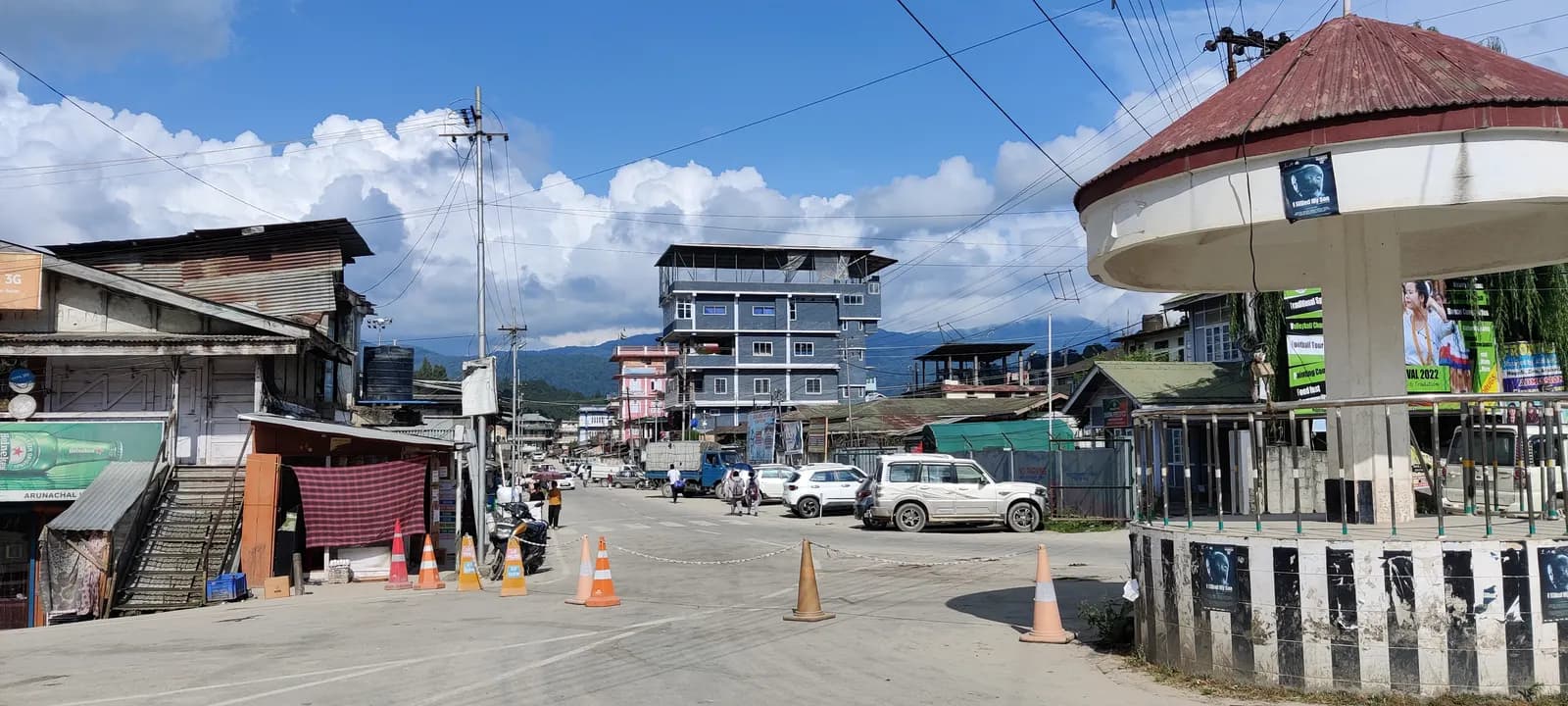
That list covers almost every small employer in the state: a grocery in Ganga Market, a hotel in Bomdila, a private school in Naharlagun, a clinic in Tezu, a petrol pump on the Trans-Arunachal Highway, a saw mill in Namsai and a security agency guarding a bank branch in Aalo.
Choosing the right skill grade
The rate depends only on the grade and the area, so placing each worker correctly is most of the compliance job. The notification defines three grades:
- Unskilled — simple operations needing little or no skill or experience. Its Schedule III list includes helpers, peons, chowkidars, sweepers, khalasis, grass cutters, loaders and general labourers.
- Semi-skilled — some skill picked up on the job, done under a skilled worker's guidance; it includes unskilled supervisory work. The list includes assistant plumbers, barbers, bearers, boatmen, stone breakers, assistant cooks, malis, night guards, quarrymen and head chowkidars.
- Skilled — skill gained through experience, apprenticeship or a technical or vocational institute, with work calling for initiative and judgement. The list runs from masons, carpenters, electricians, mechanics, plumbers, tailors, welders and head cooks to clerks, typists, store keepers, telephone operators and computer operators.
Grade examples from Schedule III
| Grade | Typical jobs | Area-I / Area-II a day |
|---|---|---|
Unskilled | Helper, peon, sweeper, chowkidar, loader, khalasi | ₹200 a day / ₹220 a day |
Semi-skilled | Bearer, barber, assistant cook, mali, night guard, quarryman | ₹210 a day / ₹230 a day |
Skilled | Mason, carpenter, electrician, mechanic, clerk, computer operator | ₹220 a day / ₹240 a day |
Unskilled
- Typical jobs
Helper, peon, sweeper, chowkidar, loader, khalasi
- Area-I / Area-II a day
₹200 a day / ₹220 a day
Semi-skilled
- Typical jobs
Bearer, barber, assistant cook, mali, night guard, quarryman
- Area-I / Area-II a day
₹210 a day / ₹230 a day
Skilled
- Typical jobs
Mason, carpenter, electrician, mechanic, clerk, computer operator
- Area-I / Area-II a day
₹220 a day / ₹240 a day
The lists aren't exhaustive; each ends with "any other categories by whatever name called" of that nature. If a dispute arises, the notification says the Labour Department decides, and its decision is final. A casual, contingency or Auxiliary Labour Corps worker who works 240 days in each calendar year is treated as in continuous service for the purpose of moving into the semi-skilled or skilled grade.
Write the grade into each worker's appointment letter and wage register, and move the worker up from the date their work changes.
Hours, weekly rest and overtime
Schedule IV of the 2016 notification sets out working conditions. It allowed a working day of up to nine hours with a one-hour break, treated anyone engaged for more than five hours as having worked a full day, and gave a paid weekly day of rest — ordinarily Sunday — to anyone who worked the six preceding days. Absence for sickness, authorised leave, an accident or a lawful strike counts as presence for this purpose.
The Code on Wages (Arunachal Pradesh) Rules, 2022 now govern hours. Notified under No. LAB(W)WC/47/2019 dated 19 January 2022 and printed in the Arunachal Pradesh Extraordinary Gazette on 24 February 2022, they took effect with the Code itself. They fix a normal working day of eight hours, with rest intervals of up to one hour and a spread-over of no more than 12 hours, and a weekly rest day that may be substituted, provided no employee works more than ten days in a row without one. Overtime under the Code is paid at twice the normal rate of wages.
So plan rosters around eight hours. For an hourly rate, divide the daily rate by eight: unskilled Area-I work comes to ₹25 an hour and skilled Area-II work to ₹30, so each overtime hour is worth ₹50 and ₹60 respectively.
Arunachal Pradesh minimum wage at a glance (2026)
₹200 a day
Unskilled, Area-I, per day
since 1 Apr 2016
₹240 a day
Skilled, Area-II, per day
30
Scheduled employments on one table
2×
Overtime rate
Paid holidays, leave and sickness
The notification goes further than most state wage notices by attaching service conditions to the minimum rate. They remain useful as a baseline, and many employers still follow them.
- National holidays (paid) — 26 January, 20 February (Statehood Day), 1 May, 15 August and 2 October.
- Festival holidays — any five paid festival holidays a year, chosen by the employer as locally appropriate.
- Casual leave — six days with wages a year, separate from special leave for conferences or meetings.
- Hospitalisation — full wages for up to 15 days when a worker is hospitalised or under treatment, on a medical certificate; up to 30 days for injuries from an accident at work, subject to the employees' compensation law.
- Rest-day and holiday work — a worker made to work on the weekly rest day, a national holiday or a festival holiday is entitled to extra wages.
The notification also says that better rates or conditions a worker already enjoys must not be cut. If you pay above the table, you can't reduce pay to the minimum just because the law allows it.
The 2025 revision for government casual workers
News of a 2025 "minimum wage hike" in Arunachal often confuses private employers. The increase was for people the state government itself engages — contingent employees, casual workers, labourers and members of the Auxiliary Labour Corps — and it came through orders signed in the Governor's name, not through a new notification for the scheduled employments.
The sequence runs like this. A Finance Department order of 29 May 2023 raised those workers' monthly wages by ₹1,000 from 1 June 2023 and added a difficult-area allowance. An order dated 13 December 2023 followed. Then, in the 2025-26 budget presented in March 2025, the Deputy Chief Minister announced a new pay structure from 1 April 2025, which press reports put at ₹18,000–₹30,000 a month for unskilled workers and ₹19,000 to ₹31,000 for skilled workers, depending on length of service, for about 35,674 people. Workers in notified difficult areas get ₹500 a month on top.
We could not find the April 2025 order itself online, so treat the ranges as reported figures. What matters for a private employer is the gap: a government department and a private contractor in the same town may be paying a sweeper ₹18,000 and ₹6,000 a month respectively, both lawfully. If you hire people who have worked as government casual labour, expect wage expectations shaped by the higher figures.
Arunachal Pradesh minimum wages, 2016–26
1 Apr 2016
LAB(MW)-22/2016: ₹200–₹240 a day by grade and area (still in force)
24 Feb 2022
Code on Wages (Arunachal Pradesh) Rules, 2022 printed in the Gazette
1 Jun 2023
Government casual and contingent workers: +₹1,000 a month
1 Apr 2025
Government casual workers: new structure, ₹18,000–₹30,000 a month unskilled
21 Nov 2025
Code on Wages in force nationally
11 Sep 2026
Draft First Amendment to the 2022 rules issued; objections till 11 Oct 2026
Central-sphere work in Arunachal Pradesh
If your workers are employed by or for a central government office, a bank, the railways at Naharlagun, Donyi Polo Airport at Hollongi, a central public sector undertaking or a military station, the central minimum wages apply instead of the state table. The Centre's area annexure doesn't name any Arunachal town in Area A or Area B, so the whole state falls in Area C.
From 1 October 2026 that means ₹565 a day for unskilled construction, sweeping and cleaning, ₹661 for semi-skilled work, ₹794 for skilled work and unarmed guards, and ₹933 for highly skilled work and armed guards.
The difference is large. An unskilled cleaner on a bank contract in Itanagar must get ₹565 a day, against the state's ₹200 a day — almost three times as much. Contractors who bid for central work using state rates end up paying the difference out of their margin, or face claims. Central rates also rise every 1 April and 1 October through VDA, so build that into multi-year contracts.

The Code on Wages rules and the 2026 amendment
Arunachal was one of the earlier states to finalise its rules under the Code. Besides hours and rest days, the Code on Wages (Arunachal Pradesh) Rules, 2022 say that minimum wages are fixed per day on a needs-based formula — a standard family of three consumption units, a calorie norm, a cloth allowance and fixed shares for housing, fuel, education and medical costs. They keep the Area-I and Area-II split, set up a technical committee chaired by the Secretary (Labour and Employment) to sort occupations into unskilled, semi-skilled, skilled and highly skilled, and ask for dearness allowance to be worked out before 1 April and 1 October each year.
Those provisions point towards a new four-grade table with half-yearly DA. None of that has yet been notified, so the 2016 table still applies.
On 11 September 2026 the Labour Department issued draft amendments — the Code on Wages (Arunachal Pradesh) First Amendment Rules, 2026, No. LAE/148/2026/1603 — with objections invited until 11 October 2026. As reported, the draft adds definitions of "geographical area" and "normal rate of wage", revises the rest-day, hours and overtime provisions, inserts a new rule 10-A on wages for part-time work, allows notices and returns to be filed electronically, and requires the employee, wage and attendance registers to be kept for five years. Watch for the final version in the Gazette.
Worked payroll examples in ₹
Example 1 — a shop helper in an Area-I town, paid monthly. Unskilled: at least ₹200 a day a day, which the notification converts to ₹6,000 a month including the weekly off. If the shop is covered by ESI and EPF, contributions of 0.75% and 12% of wages come out of that and the employer adds its own share on top.
Example 2 — a mason in an Area-II town, paid by the day. Skilled: ₹240 a day a day. He works 24 days and does five hours of overtime in the month. Ordinary pay: 24 × ₹240 = ₹5,760. Overtime: ₹240 ÷ 8 × 2 = ₹60 an hour, so five hours = ₹300. Total ₹6,060, plus wages for paid rest days and any national holiday falling in the month if he qualifies.
Example 3 — a guard on a bank contract in Itanagar. Central-sphere work, Area C. An unarmed guard is paid at the skilled rate of ₹794 a day — ₹20,644 a month on 26 days. The state's skilled rate is irrelevant here.
Example 4 — a part-time cleaner at a coaching centre. She works three hours a day in an Area-I town. Using the ÷8 method: ₹200 ÷ 8 × 3 = ₹75 a day. When the draft rule 10-A on part-time wages is finalised, check whether it sets a different method.
Example 5 — a worker posted outside the state. A state-run guest house in Guwahati employs a cook. Assam's minimum for that work is higher than Arunachal's Area-I rate, so the notification's own rule says the higher Assam rate applies.
Minimum-wage check for an Arunachal Pradesh worker
Step 1
Central-sphere work? → central Area C rates
Step 2
State government casual worker? → 2025 government order
Step 3
Area-I or Area-II?
follows the SCA rate; if unsure use Area-II
Step 4
Pick the grade
judge the work, not the title
Step 5
Daily rate × days, or ×30 for a monthly wage
Step 6
Add overtime at 2× and holiday work
Contract, daily-rated and part-time workers
Much of Arunachal's private workforce is hired by the day or through contractors — labourers on road and building work, porters, loaders and helpers at hydro-project camps. For a daily-rated worker the daily rate is the floor for each day worked, and the weekly off is already included. Keep an attendance register so you can show days worked and amounts paid.
Contract workers are owed the same minimum as direct employees doing the same work. A hotel that outsources housekeeping, or a hospital that hires a security agency, is the principal employer and can be held answerable if the contractor underpays. Ask contractors for wage registers and bank-transfer proof each month.
Many workers come from Assam and other states. They are paid at Arunachal rates for work done in Arunachal, whatever the contractor's home state — unless the work is central-sphere, in which case the central Area C rates apply.
Employer duties under the Code on Wages
- Pay on time — monthly wages before the end of the 7th day of the next month; full and final settlement within 2 working days.
- Deductions — no more than 50% of wages of wages in total.
- Overtime — twice the normal rate of wages.
- Records — keep the general register and register of fines and deductions, and issue a wage slip on or before pay day; see our salary slip guide.
- Benefits — ESI and EPF come on top of the minimum where they apply.
Arunachal Pradesh minimum wage checklist
0/7Common mistakes Arunachal employers make
Using figures from payroll websites. Some sites list ₹394 or ₹400 a day, or show a 2026 effective date for the old table. We found no notification behind those figures. Pay at least the 2016 rates, and treat anything higher as your own choice rather than a legal floor.
Mixing up government and private rates. The 2025 increase applies to the state's own casual and contingent workers, not to shops, hotels or contractors.
Guessing the area. Area depends on the SCA rate for the place, not on whether it is a town or a village.
Ignoring Schedule IV. Holidays, casual leave and hospitalisation wages are part of the notification, not optional extras.
Using state rates on central contracts. Bank, railway, airport and central PSU work pays central Area C rates.
What happens if you underpay
A worker, a group of workers or a union can claim unpaid minimum wages under the Code on Wages within 3 years, and the authority can award the shortfall plus compensation of up to 10 times the claim. Paying below the minimum is an offence with a fine of up to ₹50,000 for a first offence and up to ₹1 lakh fine and/or 3 months' imprisonment for a repeat. The Labour Commissioner's office in Itanagar and the district Labour Officers handle complaints and inspections.
Official links
- Department of Labour & Employment, Arunachal Pradesh — Code on Wages notifications
- Department of Labour & Employment — home
- Minimum wages notification LAB(MW)-22/2016 (copy)Rates from 1 April 2016
- Chief Labour Commissioner (Central) — minimum wagesCentral-sphere rates
- The Code on Wages, 2019 (India Code)
What to do next
Check each worker's grade and area against the 2016 table, set an eight-hour normal day, and make sure central contracts are priced on central rates. Then issue wage slips with our free salary slip generator, read our guides to the four labour codes and the Code on Wages, and compare our Assam and Nagaland pages if you also employ people in neighbouring states.
This is general information, not legal or tax advice — confirm on the official source or with a professional.
Frequently asked questions
The general notification still in force dates from 1 April 2016. It fixes ₹200 a day for unskilled work in Area-I and ₹220 a day in Area-II, rising to ₹220 a day and ₹240 a day for skilled work. We found no later general revision as of 12 October 2026.
The notification itself multiplies the daily rate by 30 and says the rate includes the weekly off day. That gives ₹6,000 a month for unskilled work in Area-I and ₹6,600 in Area-II, ₹6,300 and ₹6,900 for semi-skilled work, and ₹6,600 and ₹7,200 for skilled work.
Area-I covers places in the state where the Special Compensatory Allowance is paid at the lower rate, plus places outside the state where the state government employs workers. Area-II covers all other places, where the higher allowance applies. Area-II rates are ₹20 a day higher in every grade.
Only for the state government's own contingent employees, casual workers and labourers. An order effective 1 April 2025 replaced one of 13 December 2023 and, according to budget reports, put unskilled monthly wages at ₹18,000–₹30,000 a month by length of service, plus ₹500 a month in difficult areas. Private-sector rates were not revised.
Yes, for central-sphere work such as central government offices, banks, railways, the airport and central public sector undertakings and their contractors. No Arunachal town is listed in Area A or B, so Area C rates apply: ₹565 a day for unskilled construction, sweeping and cleaning from 1 October 2026.
The Code on Wages (Arunachal Pradesh) Rules, 2022 set a normal day of eight hours plus up to one hour of rest, with a spread-over of no more than 12 hours. Overtime is paid at twice the normal rate of wages. The 2016 notification, written before the Code, used a nine-hour day.
Sources & verification
Figures on this page were checked against the sources below when it was last reviewed on 12 October 2026. Each rate and limit is stored once with its own official source and review date, and official update channels are monitored daily so changes are picked up. How we verify
- 1.Notification No. LAB(MW)-22/2016 — revision of minimum rates of wages w.e.f. 1 April 2016 (copy of the department's notification) — Department of Labour & Employment, Government of Arunachal Pradesh (copy hosted by ComplianceBook) · accessed 12 October 2026
- 2.Department of Labour & Employment, Arunachal Pradesh — Code on Wages notifications page — Department of Labour & Employment, Government of Arunachal Pradesh · accessed 12 October 2026
- 3.Code on Wages (Arunachal Pradesh) Rules, 2022 — summary — Lakshmikumaran & Sridharan Attorneys · accessed 12 October 2026
- 4.Draft Code on Wages (Arunachal Pradesh) First Amendment Rules, 2026 — TeamLease RegTech · accessed 12 October 2026
- 5.Arunachal government announces wage hike for contingent employees, casual workers — India Today NE · accessed 12 October 2026
- 6.Arunachal Govt announces wage hike for 35,674 workers — Northeast Live · accessed 12 October 2026
- 7.Arunachal Govt increases minimum wages of workers (order dated 29 May 2023) — The Echo of Arunachal · accessed 12 October 2026
- 8.Labour Bureau orders dated 30 September 2026 — revised VDA and central minimum wages w.e.f. 01.10.2026, with Area A/B/C annexure — Labour Bureau, Chandigarh, Ministry of Labour & Employment (published on clc.gov.in) · accessed 12 October 2026
- 9.The Code on Wages, 2019 (No. 29 of 2019) — India Code, Legislative Department · accessed 12 October 2026
- 10.Government announces implementation of the four Labour Codes (21 Nov 2025) — PIB — Ministry of Labour & Employment · accessed 12 October 2026
MSMETOOLS is an independent platform and is not affiliated with any government agency, ministry or department.
Tools for this
Related guides
 Minimum Wages in Meghalaya 2026: Daily Rates, VDA & PayRead guide
 Central Minimum Wages 2026: VDA Rates by Area A, B & CRead guide
 Minimum Wages in Assam 2026: Rates, VDA & Daily PayRead guide
 Minimum Wages in Nagaland 2026: ₹176 a Day & the Pending HikeRead guide
Official links open the government site in a new tab.