 MSME & Udyam
Udyam Assist Platform in 2026: How Informal Micro Enterprises Get an Udyam Assist Certificate
Udyam Assist Platform in 2026: who counts as an informal micro enterprise, how your lender registers you, the Udyam Assist Certificate, PSL and Udyam vs UAP.
 Edited by Sumeet YadavFounder & editor, MSMETOOLS · fact-checked against official sources
Contents (10)
- 1. What the Udyam Assist Platform is
- 2. Who counts as an informal micro enterprise
- 3. Designated Agencies: who can register you
- 4. How registration works, step by step
- 5. What the Udyam Assist Certificate gives you
- 6. Udyam Assist vs Udyam registration
- 7. Worked examples: which route fits?
- 8. Moving from Udyam Assist to full Udyam
- 9. Common mistakes and scams to avoid
- 10. What to do next
Millions of India's smallest businesses never registered as MSMEs. These are vegetable sellers, home tailors, tea stalls, small kiranas and repair shops, and most have no PAN or GST number. The Udyam Assist Platform was built for them. This guide explains who qualifies, how your bank or microfinance lender registers you, what the Udyam Assist Certificate does and does not give you, and when to move to regular Udyam registration. Every point is checked against the platform, PIB and RBI as of October 2026.
Quick answer
The Udyam Assist Platform (UAP) at udyamassist.gov.in registers informal micro enterprises (businesses exempt from filing GST returns because of their turnover) through their lender: a bank, NBFC, small finance bank, RRB or microfinance institution acting as a Designated Agency. You cannot register yourself and need no documents. You give consent, and the platform issues an Udyam-I number and an Udyam Assist Certificate, which counts like Udyam for priority-sector loans.
Launched 11 January 2023; run by SIDBI for the Ministry of MSME
2.92 crore enterprises registered on UAP by 17 December 2025
Free: no fee for the registration or the certificate
Have a PAN? Use the regular Udyam portal instead. It's free, and you get the full set of MSME benefits
What the Udyam Assist Platform is
India has had online MSME registration on the Udyam portal since 1 July 2020. That portal needs a PAN for the enterprise, and a GSTIN where GST applies. It is also a self-filed online form. For a street vendor or home-based worker, that is often three hurdles too many. Many have no PAN, most are below the GST threshold, and few would fill an online form without help.
The Ministry of MSME's answer was the MSME Formalisation Project. Instead of asking informal businesses to come to the portal, it asks the institutions that already serve them to bring their data. Those institutions are banks, NBFCs and microfinance lenders, which have already done KYC on these customers when opening accounts or giving loans. The ministry authorised SIDBI to build and run the Udyam Assist Platform. It also authorised SIDBI to collect enterprise data, including Aadhaar information, from these lenders. The platform went live on 11 January 2023.
The platform calls this the "assist methodology". Industry bodies, including the Indian Banks' Association and the microfinance network MFIN, helped finalise the data templates. Enterprises registered this way get a number from a separate series, Udyam-I, so anyone can tell an assisted registration from a regular one.
It has grown quickly. UAP crossed 1.5 crore registrations within 14 months, by March 2024. The ministry's year-end review shows 2.92 crore on UAP by 17 December 2025, against 4.37 crore on the regular Udyam portal. By July 2026 the two platforms together held 8.9 crore enterprises. In other words, roughly two in five registered MSMEs in India came in through the assisted route.
Udyam Assist Platform in numbers
11 January 2023
Platform launched
Ministry of MSME, run by SIDBI
2.92 crore
Registrations on UAP
To 17 Dec 2025
8.9 crore
Udyam + UAP combined
PIB, July 2026
145+
Designated Agencies onboarded
SIDBI
Who counts as an informal micro enterprise
The Ministry of MSME defines informal micro enterprises (IMEs) as enterprises that, based on their turnover, are exempt from filing returns under the CGST Act, 2017. The RBI repeats this definition in its MSME FAQs. A July 2026 PIB release puts it in plainer terms: enterprises that may not have GST registration or are not covered under the income-tax system.
In practice, you are an IME if your business is too small to need GST registration. Under GST that generally means aggregate turnover up to ₹40 lakh a year if you only supply goods, or ₹20 lakh if you supply services. In special-category states the lower limits of ₹20 lakh for goods and ₹10 lakh for services apply. Some activities need GST registration whatever the turnover, such as many e-commerce sellers and inter-state suppliers of goods. A business that has registered for GST, even voluntarily, files returns and is not an IME.
Typical IMEs include:
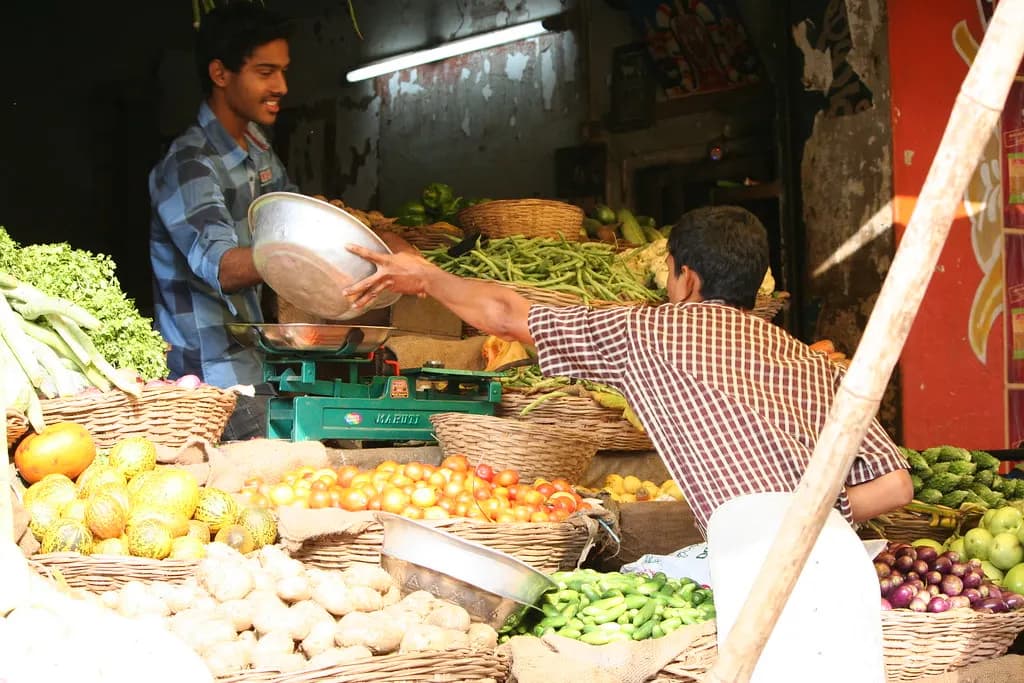
- street vendors and handcart sellers
- home-based tailors, embroiderers and beauticians
- small tea stalls, tiffin services and roadside eateries
- cobblers, cycle and mobile repairers, and small kirana shops below the GST threshold
- women in self-help groups running small production or trading activities
A quick test: if you have a PAN, you can and should register on the regular Udyam portal yourself. It is free, takes about 15 minutes and gives you the full set of benefits. UAP is the route for businesses that can't do that yet, or whose lender is registering them in bulk.
Designated Agencies: who can register you
Only a Designated Agency (DA) can register an enterprise on UAP. The platform lists these as regulated entities:
- Scheduled Commercial Banks, including public, private and foreign banks
- All India Financial Institutions
- Regional Rural Banks
- Scheduled Cooperative Banks
- Small Finance Banks
- NBFCs, including NBFC-MFIs
- Microfinance institutions that are members of MFIN or Sa-Dhan, the RBI-recognised self-regulatory organisations
- any other regulated entity or agency the Ministry of MSME approves
SIDBI says more than 145 DAs are onboarded, and that government departments also act as DAs. PM SVANidhi is the best-known government route. Street vendors who took loans under that scheme can download their Udyam Assist Certificates from the PM SVANidhi portal. Authorised business correspondents of a DA, the agents who run banking kiosks in villages and towns, can also support registration on the DA's behalf.
Where does SIDBI fit? SIDBI is the implementing agency. It built the platform, approves each DA's registration and runs the data validations. It does not register individual businesses for you. What about Common Service Centres? The platform's list of DAs does not name CSCs, and we found no official notice adding them. A CSC operator can help you with the regular Udyam portal if you have a PAN, but an Udyam Assist Certificate has to come through a DA.
How a lender becomes a DA. The lender registers on UAP with a letter naming its nodal officer. NBFCs also submit their RBI registration certificate, and non-NBFC MFIs submit a confirmation from their self-regulatory organisation. Once SIDBI approves it, the nodal officer becomes the DA admin and can add up to 5 sub-users to upload customer data by SFTP or Excel templates. Lenders that want to join can write to [email protected].
How registration works, step by step
From your side the process is short. Most of the work happens between your lender and the platform.
Getting an Udyam Assist Certificate
- 1
Ask your lender
Speak to the bank branch, NBFC, small finance bank or MFI officer you already deal with. Ask whether they can register your business on the Udyam Assist Platform.
Tip: You'll usually need an existing account or loan relationship, because the lender uses KYC data it already holds.
- 2
Confirm your details
The lender checks the business name, activity, address and bank account it has on file. No documents are needed from you for UAP itself.
- 3
Give consent
You consent to the lender sharing your data with UAP, usually by an OTP sent to your Aadhaar-linked mobile or through the lender's app.
- 4
Lender uploads the data
The DA uploads your record to UAP, often in a batch with other customers. The platform runs its validations.
- 5
Number and certificate issued
UAP generates your Udyam-I registration number and Udyam Assist Certificate. The DA receives it, and you're informed by SMS or email.
- 6
Download and keep it
Open Udyam Assist PlatformGet a copy from your lender or download it from udyamassist.gov.in. PM SVANidhi vendors can download it from their PM SVANidhi login.
Timing. Because lenders upload in batches, the certificate can take from a few days to a few weeks. If nothing arrives within a month, ask the branch for the status. Each DA has a dashboard showing whether a record was accepted, failed Aadhaar authentication or is pending.
Common reasons a record fails. These include a mismatch between the name on your Aadhaar and the name in the lender's records, a mobile number not linked to Aadhaar (so the OTP never arrives), an NIC activity code that doesn't match what you actually do, and duplicate records when two lenders try to register the same person. Fix the underlying record with your lender, such as updating your Aadhaar-linked mobile or correcting your name, and ask them to re-upload.
Before you ask your lender for UAP registration
0/6What the Udyam Assist Certificate gives you
The main benefit is priority sector lending. On 20 March 2023 the government issued Gazette notification S.O. 1296(E) under the MSMED Act. It says a certificate issued on UAP to an informal micro enterprise is treated at par with an Udyam Registration Certificate for priority sector lending. The RBI followed with a circular dated 9 May 2023: enterprises holding an Udyam Assist Certificate are classified as micro enterprises for PSL. The RBI's current MSME FAQs say banks follow the classification in the Udyam Registration Certificate or the Udyam Assist Certificate.
Why does that help you? Banks must lend a set share of their credit to priority sectors, with a sub-target for micro enterprises. A loan to a business with a UAC counts towards that target, which makes you a more attractive borrower. It can also bring you under MSME-specific rules in some lending products, such as limits on collateral for micro and small loans that are covered by credit guarantees. Each lender applies its own policy, though.
Other benefits are more limited and partly prospective. The platform says Udyam registration is expected to become the main identifier for MSMEs, and that formal registration should make it easier to get merchant QR codes and build a digital payment history. That history helps you get credit later. Lenders and some government programmes also use the certificate as evidence that you are an MSME. For example, the ECLGS guarantee rules accept either an Udyam number or an Udyam Assist Certificate.
What the UAC is not. It is not a trade licence, not GST registration and not an FSSAI licence. It does not exempt you from local rules on vending, shops or food safety. And while the government's stated purpose is PSL, many schemes still ask for full Udyam registration. Examples include protection for delayed payments, tender preferences and many ministry subsidy schemes. Check the specific scheme's guidelines before relying on a UAC for anything other than a bank loan.

Udyam Assist vs Udyam registration
The two systems sit side by side and lead to the same database, but they are different routes.
| Udyam Registration (udyamregistration.gov.in) | Udyam Assist Platform (udyamassist.gov.in) | |
|---|---|---|
| Who it's for | Micro, small and medium enterprises | Informal micro enterprises exempt from GST returns |
| Who files | The enterprise itself | A Designated Agency (bank, NBFC, MFI, etc.) |
| PAN / GSTIN | PAN required; GSTIN where applicable | Not required |
| Documents from you | Aadhaar OTP, PAN, business details | None; lender uses its KYC data, with your consent |
| Number format | UDYAM-XX-00-0000000 | Udyam-I series |
| Certificate | Udyam Registration Certificate | Udyam Assist Certificate |
| Main recognised benefit | Full MSME benefits (credit, schemes, delayed-payment protection, procurement) | Priority sector lending as a micro enterprise |
| Fee | Free | Free |
If you're unsure which applies, the PAN is the deciding question. With a PAN, use regular Udyam. Our Udyam registration guide walks through it, and downloading your Udyam certificate covers the after-steps. Without a PAN, either get one (our PAN for business guide explains how) or ask your lender about UAP.
Worked examples: which route fits?
1. Meena, vegetable vendor, Pune. Meena sells from a handcart and turns over about ₹7 lakh a year. She has a savings account and Aadhaar but no PAN, and she takes a ₹50,000 loan from an NBFC-MFI. She is well under the ₹40 lakh threshold for goods, so she is an IME. The MFI registers her on UAP with her consent, and her loan is recorded as a micro-enterprise priority-sector loan. To repay ₹50,000 over 12 months, she can work out the instalment with our EMI calculator.
2. Ravi, mobile repair shop, Lucknow. Ravi earns about ₹9 lakh a year in repair charges, which is a service, so the ₹20 lakh services threshold applies and he is under it. He has a PAN. He could be registered through UAP, but he is better off filing regular Udyam himself. It's free, takes minutes, and gives him a full Udyam certificate he can show buyers and banks.
3. Farida, kirana store, Kolkata. Farida's store turned over ₹46 lakh last year, above the ₹40 lakh goods threshold, so she must register for GST and file returns. She is not an IME. She needs GST registration and regular Udyam, and UAP is not the right route for her.
Use our loan eligibility calculator to see what loan size your income supports before you approach a lender.
Udyam and Udyam Assist: key dates
1 Jul 2020
Udyam Registration portal goes live for self-registration
11 Jan 2023
Udyam Assist Platform launched; SIDBI is the implementing agency
20 Mar 2023
S.O. 1296(E) puts the Udyam Assist Certificate at par with Udyam for PSL
9 May 2023
RBI circular classes UAC holders as micro enterprises for PSL
Mar 2024
UAP registrations cross 1.5 crore
17 Dec 2025
2.92 crore on UAP, 7.30 crore across both platforms
Aug 2026
Parliament passes MSMED (Amendment) Bill, 2026; commencement awaits notification
Moving from Udyam Assist to full Udyam
The UAC is meant as a first step, not a permanent status. As your business grows, there are three common reasons to move to regular Udyam:
- You get a PAN. Register on the Udyam portal yourself, using the same Aadhaar and the same business details your lender holds, so the two records can be matched. Tell your lender your new Udyam number so its records show the full registration.
- You cross the GST threshold or register for GST. You then file GST returns, which takes you outside the IME definition. Register for GST and on regular Udyam.
- You need a benefit that requires full Udyam. If a buyer, tender or subsidy scheme asks for a Udyam Registration Certificate, a UAC may not be accepted.
The legal framework is also changing. Parliament passed the MSMED (Amendment) Bill, 2026 in August 2026. PIB's summary says it makes filing of the MSME memorandum free and voluntary for all enterprises, through a national digital platform the Centre will notify, with state platforms possible too. Its provisions take effect on dates the Centre notifies. As of October 2026, we found no notification changing how Udyam or UAP work, so the process above still applies. We'll update this page when that changes.
Common mistakes and scams to avoid
- Paying for a "UAP certificate". The registration is free, and only DAs can file it. Websites that charge ₹499–₹1,999 for an "Udyam Assist Certificate" can't issue a genuine one. At best they file a regular Udyam form you could do yourself for nothing.
- Trying to self-register on udyamassist.gov.in. The login on that site is for lenders. Individual businesses can only download a certificate that has already been issued.
- Assuming the UAC replaces licences. You still need any municipal vending certificate, shop licence or FSSAI registration your business requires.
- Two registrations for one business. If you already have regular Udyam, don't let a lender create a duplicate UAP record. Tell them your Udyam number instead.
- Ignoring a wrong activity code. A wrong NIC code can affect how the loan is classified. Check the certificate and ask the lender to correct the record.
Official links
- Udyam Assist PlatformAbout, Designated Agencies, FAQs, certificate download
- Udyam Registration portalSelf-registration if you have a PAN; free
- PIB — UAP launch, S.O. 1296(E) and RBI circularLegal basis for PSL treatment
- RBI — MSME FAQs (July 2025)IME definition and PSL classification
- SIDBI — MSME Formalisation ProjectImplementing agency; DA onboarding
- PM SVANidhi portalStreet vendors download their UAC here
What to do next
If you run a small business without a PAN, ask the bank, NBFC or microfinance lender you already borrow from to register you on the Udyam Assist Platform, and keep a copy of the certificate. If you have a PAN, skip the assisted route and register yourself on Udyam in 15 minutes using our Udyam registration guide. Either way, once you're registered, read our MSME classification guide to see which category you fall into and what that means for loans.
Frequently asked questions
It is the Ministry of MSME's portal at udyamassist.gov.in for registering informal micro enterprises that cannot use the regular Udyam portal because they have no PAN or GSTIN. SIDBI built and runs it. Banks, NBFCs and microfinance lenders upload their customers' data, and the platform issues an Udyam-I registration number and an Udyam Assist Certificate. It went live on 11 January 2023.
No. The platform's own FAQ says an informal micro enterprise cannot register on its own. You have to ask your bank, NBFC, small finance bank, RRB or microfinance institution to register you as a Designated Agency. You give consent, usually by OTP. If you have a PAN, register yourself free on udyamregistration.gov.in instead.
The platform's FAQ says none from you. The Designated Agency shares the details it already holds from your loan or account KYC, such as Aadhaar-based identity, business activity, address and bank account. You only need to consent. If a lender or agent asks you for extra paperwork or a fee just for the certificate, ask why. The registration itself is free.
Yes, for priority sector lending. Gazette notification S.O. 1296(E) of 20 March 2023 treats the certificate at par with the Udyam Registration Certificate for PSL. The RBI's circular of 9 May 2023 says enterprises holding it are classed as micro enterprises for PSL. That makes your loan count towards the bank's priority-sector target, which encourages lending to you.
Ask the bank, NBFC or MFI that registered you for a copy, or download it from udyamassist.gov.in after the platform's validation steps. You should also get an SMS or email when the number is generated. PM SVANidhi street vendors can download theirs by logging in to the PM SVANidhi portal.
Udyam registration is self-filed on udyamregistration.gov.in with Aadhaar and PAN, and it covers micro, small and medium enterprises. Udyam Assist is only for informal micro enterprises exempt from GST returns. A regulated lender files it for you without PAN or GSTIN, and the number begins Udyam-I. Its stated benefit is priority-sector lending. Udyam registration unlocks the wider range of MSME benefits.
Sources & verification
Figures on this page were checked against the sources below when it was last reviewed on 9 October 2026. Each rate and limit is stored once with its own official source and review date, and official update channels are monitored daily so changes are picked up. How we verify
- 1.Udyam Assist Platform — MSME Formalisation Project, Designated Agencies and FAQs — Ministry of MSME / SIDBI · accessed 9 October 2026
- 2.Registrations of Informal Micro Enterprises on Udyam Assist Platform cross 1.50 crore (4 Mar 2024) — PIB — Ministry of MSME · accessed 9 October 2026
- 3.Year End Review 2025: Ministry of Micro, Small & Medium Enterprises (30 Dec 2025) — PIB — Ministry of MSME · accessed 9 October 2026
- 4.Udyam Registration Portal and the Udyam Assist Platform … (14 Jul 2026) — PIB — Ministry of MSME · accessed 9 October 2026
- 5.Frequently Asked Questions — Micro, Small and Medium Enterprises (updated July 2025) — Reserve Bank of India · accessed 9 October 2026
- 6.MSME Formalisation Project — Udyam Assist Platform — SIDBI · accessed 9 October 2026
- 7.The MSMED (Amendment) Bill, 2026: Reforms for a growing MSME sector (11 Aug 2026) — PIB Research Unit · accessed 9 October 2026
- 8.Formalisation of Informal Micro Enterprises on Udyam Assist Platform — King Stubb & Kasiva · accessed 9 October 2026
- 9.IME with Udyam Assist Certificate to be treated as micro units for PSL: RBI — Business Standard · accessed 9 October 2026
MSMETOOLS is an independent platform and is not affiliated with any government agency, ministry or department.
Tools for this
Udyam Registration Guide (India)
MSME registration in India.
Loan Eligibility Calculator
Check your business loan eligibility based on income and existing loans.
EMI Calculator
Calculate loan EMIs for business and personal loans.
Related guides
 Download Udyam Registration Certificate 2026: Steps & FixesRead guide
 MSME Certificate 2026: Download, Verify, Validity & BenefitsRead guide
 Udyam Registration 2026: Free MSME Registration ProcessRead guide
 MSME Classification 2026: New Definition, Limits & ExamplesRead guide
Official links open the government site in a new tab.