 MSME & Udyam
MSME Classification and Definition in 2026: Investment and Turnover Limits, Explained with Examples
MSME classification and definition for 2026: micro, small and medium limits from 1 April 2025, how investment and turnover are counted, and graduation rules.
 Edited by Sumeet YadavFounder & editor, MSMETOOLS · fact-checked against official sources
Contents (10)
- 1. The current MSME definition (from 1 April 2025)
- 2. Why your category matters
- 3. How investment is calculated
- 4. How turnover is calculated
- 5. Worked examples
- 6. Graduation: what happens when you grow (or shrink)
- 7. Traders, Udyam Assist and other special cases
- 8. Will the definition change again?
- 9. Common classification mistakes
- 10. What to do next
"Is my business micro, small or medium?" sounds like a simple question, but the answer decides whether you get a collateral-free loan, a government tender reservation, 45-day payment protection and lower fees on dozens of schemes. This guide is for owners, accountants and bankers who need the current MSME definition: the limits in force since 1 April 2025, how the Udyam portal actually counts investment and turnover, what is left out, what happens when you grow, where traders stand, and five worked ₹ examples you can match against your own figures.
Quick answer
Since 1 April 2025, an enterprise is micro if investment in plant, machinery or equipment is up to ₹2.5 crore and turnover is up to ₹10 crore. It is small up to ₹25 crore and ₹100 crore, and medium up to ₹125 crore and ₹500 crore. The same limits apply to manufacturing and services. Investment is the written-down value from your ITR, and turnover excludes exports.
Cross either limit and you move up; you move down only when both are below the limit
All GSTINs under one PAN are added together
Land, buildings, furniture and fittings are not counted as investment
After moving up, you keep the old category's non-tax benefits for three years
The current MSME definition (from 1 April 2025)
The definition comes from section 7 of the MSMED Act, 2006, which lets the Central Government classify enterprises by notification. Since 1 July 2020 the operative notification has been S.O. 2119(E), which also created Udyam registration. On 21 March 2025, after the Budget 2025-26 announcement, S.O. 1364(E) raised the limits by about 2.5 times for investment and 2 times for turnover, with effect from 1 April 2025.
MSME classification limits (2026)
| Category | Investment in plant & machinery / equipment | Annual turnover (excluding exports) |
|---|---|---|
Micro | Up to ₹2.5 crore | Up to ₹10 crore |
Small | Up to ₹25 crore | Up to ₹100 crore |
Medium | Up to ₹125 crore | Up to ₹500 crore |
Micro
- Investment in plant & machinery / equipment
Up to ₹2.5 crore
- Annual turnover (excluding exports)
Up to ₹10 crore
Small
- Investment in plant & machinery / equipment
Up to ₹25 crore
- Annual turnover (excluding exports)
Up to ₹100 crore
Medium
- Investment in plant & machinery / equipment
Up to ₹125 crore
- Annual turnover (excluding exports)
Up to ₹500 crore
Four things about this table trip people up:
- It is a composite test. Both conditions must be satisfied. An enterprise with ₹1 crore of machinery but ₹15 crore of domestic turnover is not micro. It is small.
- Manufacturing and services share the same limits. Before 2020 they had separate, lower investment limits. A software firm and a forging unit are now measured the same way.
- There is no employment test. Headcount does not affect classification under Indian law, although some state schemes add their own employment conditions.
- The limits are not adjusted for inflation. They change only when the Ministry issues a new notification, which happened in 2020 and again in 2025.
What came before. Under the original 2006 Act, a manufacturing micro enterprise could invest only up to ₹25 lakh, and a service micro enterprise up to ₹10 lakh, with no turnover test at all. The 2020 composite limits were ₹1 crore/₹5 crore (micro), ₹10 crore/₹50 crore (small) and ₹50 crore/₹250 crore (medium). Many websites, loan forms and even some state schemes still quote the 2020 figures. If you see "₹1 crore and ₹5 crore", the source is out of date.
Why your category matters
Your category is not a label for its own sake. Different laws and schemes draw the line in different places, so the same business can qualify for one benefit and miss another:
| Benefit or rule | Micro | Small | Medium |
|---|---|---|---|
| 45-day payment protection and MSEFC (MSMED Act s.15–24) | Yes | Yes | No |
| Buyer's tax disallowance for late payment (s.43B(h) / section 37(2)(g) of the Income-tax Act, 2025) | Yes | Yes | No |
| Public procurement quota of 25% for MSEs | Yes | Yes | No |
| Priority-sector lending and RBI's MSME lending directions | Yes | Yes | Yes |
| No collateral on loans up to ₹20 lakh | Yes | Yes | No |
| CGTMSE guarantee cover | Yes | Yes | No |
The pattern is clear. Most of the strongest protections stop at the small category, so moving from small to medium is the step that costs the most. That is why the three-year retention rule for non-tax benefits matters, and why it is worth knowing exactly how close you are to the ₹25 crore and ₹100 crore limits before you buy a large machine or sign a big domestic contract. Micro status brings some extras on top, such as higher guarantee cover for very small loans and higher subsidy rates in many central and state schemes, including ZED certification support.
State industrial policies add another layer. Capital subsidies, interest subvention and stamp-duty concessions in states such as Gujarat, Maharashtra, Tamil Nadu and Uttar Pradesh are usually tied to the Udyam category, often with higher rates for micro units and for units in less-developed districts. Read each scheme's own definition: a few state policies still refer to older central limits until they are revised.
How investment is calculated
Paragraph 4 of S.O. 2119(E) sets out the rules for investment, and the Ministry clarified them in August 2020:
- It comes from your income-tax return for the previous year. The Udyam portal pulls it from ITR data linked to your PAN.
- It is the written-down value (WDV) of plant, machinery or equipment at the end of the financial year, as computed under the Income-tax Act. It is not the original invoice price. An older machine bought for ₹1 crore may count at ₹40 lakh after depreciation.
- "Plant and machinery or equipment" has the Income-tax Rules meaning. It covers all tangible assets other than land and building, and furniture and fittings. Computers, vehicles used in the business, tools, generators and diagnostic equipment all count. Your shop or factory building does not.
- Some items are excluded under Explanation I to section 7(1): pollution control equipment, research and development equipment, industrial safety devices and other notified items. Keep them identified separately in your fixed asset register.
- New enterprises without an ITR self-declare the purchase (invoice) value of plant and machinery, excluding GST, whether bought new or second-hand. This relaxation ends after 31 March of the financial year in which the first ITR is filed.

Leased machinery is a common grey area. If an asset is on an operating lease and not in your depreciation schedule, it generally will not appear in the ITR figure. Assets you own or hold on a finance lease will. Follow the figures your ITR actually reports, and get your CA's advice if your classification depends on it.
How turnover is calculated
Paragraph 5 of S.O. 2119(E) sets three rules:
- Exports are excluded. Export of goods, services or both is left out of turnover for classification, whatever your category. This is deliberate. It means an exporter can grow its overseas sales without losing MSME status, as long as its investment stays within the limit.
- Turnover is linked to income tax and GST. Udyam takes total turnover and export turnover from your ITR and GST returns (GSTR-1 and GSTR-3B data under your GSTIN). Since April 2021, PAN and GSTIN have been mandatory for turnover data, except for enterprises that are not required to register for GST.
- All GSTINs under one PAN are one enterprise. If your company has GST registrations in Gujarat, Maharashtra and Karnataka, their turnover is added together, and so is investment. You cannot stay micro by spreading sales across state registrations.
Turnover means your sales or receipts as reported for tax. It does not mean profit, and it excludes GST collected. For a trading-cum-manufacturing business, everything reported under the PAN counts, unless it is export turnover.
| Item | Counted for classification? |
|---|---|
| Machinery, tools, computers, vehicles, generators (WDV from ITR) | Yes, as investment |
| Land and buildings, furniture and fittings | No |
| Pollution control, R&D and industrial safety equipment | No (Explanation I to s.7(1)) |
| Domestic sales of all GSTINs under the PAN | Yes, as turnover |
| Exports of goods or services | No |
| GST collected on sales | No |
The tests in one place (2026)
2 tests
Investment AND turnover
Cross either to move up
WDV
Investment basis
From last year's ITR
Exports out
Turnover basis
All GSTINs under one PAN
three years
Non-tax benefits kept after moving up
S.O. 4926(E)
Worked examples
1. Moradabad brassware exporter. The ITR shows plant and machinery at a WDV of ₹3.2 crore. Total sales are ₹38 crore, of which ₹30 crore are exports.
- Turnover for classification: ₹38 crore − ₹30 crore = ₹8 crore, which is within the micro limit of ₹10 crore.
- Investment: ₹3.2 crore is above the micro limit of ₹2.5 crore.
- Result: small. Crossing either limit takes you up a category, so the investment figure decides it.
2. Pune IT services firm. Laptops, servers and networking equipment have a WDV of ₹1.1 crore. Domestic turnover is ₹14 crore, and there are no exports.
- Investment is within the micro limit, but turnover is above ₹10 crore.
- Result: small. If ₹6 crore of that revenue were export of services, domestic turnover would be ₹8 crore and the firm would be micro.
3. Multi-state packaging company. One PAN has three GSTINs: Gujarat with ₹62 crore of turnover, Maharashtra with ₹35 crore and Karnataka with ₹14 crore. Combined investment is ₹19 crore, and there are no exports.
- Combined turnover is ₹111 crore, which is above the small limit of ₹100 crore.
- Result: medium, even though each GSTIN on its own looks small.
4. New Coimbatore unit, first year. It was set up in May 2026, with no ITR yet. It bought machinery for ₹2.36 crore including 18% GST, so the value before GST is ₹2 crore. Projected turnover is ₹6 crore.
- On self-declaration, investment of ₹2 crore and turnover of ₹6 crore make it micro.
- Once its first ITR is filed, the classification is recalculated from the ITR's WDV and the actual GST turnover.
5. Delhi trader. A wholesale electrical goods trader has a warehouse, a delivery van worth ₹18 lakh and turnover of ₹9 crore.
- By the numbers it would be micro. But a trader's MSME status is limited to priority-sector lending, as the next section explains.
Graduation: what happens when you grow (or shrink)
Udyam classification is not fixed when you register. Each year you must update your Udyam record with the previous year's ITR and GST details, and the portal re-classifies you from government data. If you don't update within the period the portal allows, your registration can be suspended. Paragraph 3 and paragraph 8 of S.O. 2119(E) set out how the category changes:
How your category changes
Step 1
Udyam pulls last year's ITR and GST data
Step 2
Either limit crossed?
move up a category
Step 3
Keep non-tax benefits of old category
three years from the change
Step 4
Both below lower limits?
move down
Step 5
Lower category applies
from 1 April of the next year
- Upward graduation. If you cross either the investment or the turnover limit, you move to the next category. Since S.O. 4926(E) of 18 October 2022, you keep all non-tax benefits of your earlier category for three years from the date of the upward change. Before that, the period was one year. Non-tax benefits include public procurement preference, protection under the delayed-payment chapter, and scheme subsidies tied to category. The rule does not shield tax provisions.
- Reverse graduation. You move down only if you fall below both limits of your present category. Even then, you stay in your current category until the end of that financial year. The lower category's benefits apply from 1 April of the next year.
- You are told about the change. The portal sends a communication when your category changes. Check your Udyam certificate after each annual update, because banks rely on it. RBI's MSME directions tell lenders to follow the classification on the Udyam certificate for priority-sector purposes.
Example. A micro enterprise in Rajkot has turnover of ₹13 crore in 2025-26. When its 2025-26 ITR and GST data are updated in 2026, it is reclassified as small. Under the three-year rule, it can keep micro-category non-tax benefits, such as a micro-specific subsidy rate in a state scheme or micro procurement preferences, until three years from the date of that upward change. Its suppliers' and buyers' obligations under the MSMED Act are unaffected, because micro and small suppliers are both protected.
Traders, Udyam Assist and other special cases
Retail and wholesale traders. Trading was outside the MSME definition until July 2021. That month, the Ministry allowed retail and wholesale traders to register on Udyam, but only so they could count under priority-sector lending. RBI's Master Direction on MSME lending repeats the point: traders are MSMEs "for the limited purpose of priority sector lending". In practice:
- a trader with a Udyam certificate gets PSL treatment, and with it access to MSE-focused loan products and CGTMSE cover
- the trader cannot claim delayed-payment protection or file before an MSEFC
- a buyer's section 43B(h) disallowance (now in section 37(2)(g) of the Income-tax Act, 2025) does not apply to purchases from traders, as the Finance Ministry confirmed in July 2026
Informal micro enterprises. Very small units without GST registration or an income-tax footprint can get a Udyam Assist certificate through authorised partners such as banks and SIDBI. RBI treats it on par with a Udyam certificate for priority-sector lending.
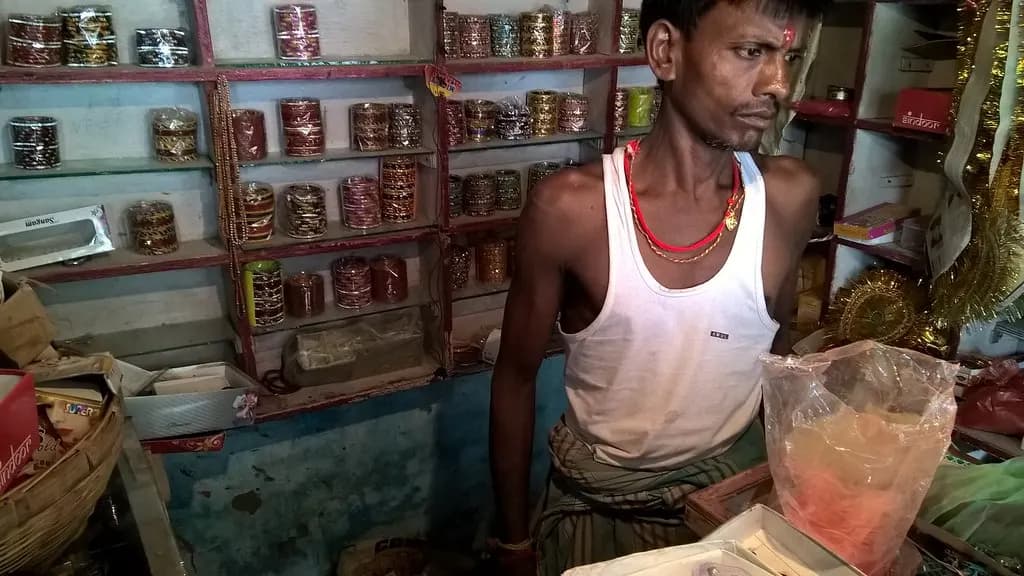
Manufacturing plus services. One Udyam registration can list several activities, both manufacturing and services. The category is decided on the combined figures, and you cannot hold separate registrations for each activity.
Medium enterprises and the payment rules. Medium enterprises are full MSMEs for classification, credit and many schemes. But the delayed-payment chapter of the MSMED Act protects only micro and small suppliers. A medium supplier has no 45-day right and no MSEFC route.
Group companies. The "one PAN" rule aggregates GSTINs under the same PAN, not group companies. Two separate companies with different PANs are assessed separately, even under common ownership. Be cautious, though. Splitting a business mainly to stay under a limit can be challenged, and misstatements in Udyam can be penalised under section 27 and lead to cancellation after a District Industries Centre enquiry.
Will the definition change again?
The MSMED (Amendment) Act, 2026, published on 13 August 2026, rewrites section 7. It puts both investment and turnover into the Act itself and leaves the actual thresholds to be set by notification. It is not yet brought into force (no commencement notification as of 8 October 2026). Even after it commences, the limits in this guide stay in force until the Ministry notifies new ones. Every revision so far has come with a fixed start date, 1 July 2020 and 1 April 2025, so watch for a Gazette notification rather than budget headlines.
Common classification mistakes
- Using purchase price instead of WDV. Since the August 2020 clarification, investment is the written-down value under the Income-tax Act. Using cost can push you into the wrong category.
- Counting the building. Land and buildings, and furniture and fittings, are outside "plant and machinery or equipment".
- Forgetting the export exclusion. Udyam takes export turnover from GST data. Make sure your GSTR-1 reports exports (zero-rated supplies) correctly, or they will be counted as domestic turnover.
- Holding two Udyam registrations. The rules allow only one per enterprise. Duplicate registrations can be cancelled.
- Not updating Udyam each year. The update is mandatory, and failing to make it can suspend your status just when a buyer or bank asks for your certificate.
- Quoting 2020 limits in loan files or tenders. Use the 1 April 2025 limits and attach your current Udyam certificate.
What to do next
Take last year's ITR and add up the written-down value of plant, machinery and equipment, leaving out land, buildings, furniture and fittings. Then take turnover across all GSTINs under your PAN, minus exports, and compare both figures with the table above. If you are not registered, our Udyam registration guide walks you through the free process. If you are, check that your certificate shows the category you expect. Our MSME certificate guide explains what each benefit needs.
This is general information, not legal or tax advice — confirm on the official source or with a professional.
Frequently asked questions
Under S.O. 1364(E), a micro enterprise has investment in plant, machinery or equipment up to ₹2.5 crore and turnover up to ₹10 crore. A small enterprise goes up to ₹25 crore and ₹100 crore, and a medium enterprise up to ₹125 crore and ₹500 crore. The same limits apply to manufacturing and services, and both tests must be met.
No. Export of goods, services or both is excluded when turnover is calculated for classification, for micro, small and medium alike. The Udyam portal pulls total and export turnover from your GST and income-tax data. A firm with ₹40 crore of sales, of which ₹32 crore is exports, is assessed on ₹8 crore.
Investment is taken from your income-tax return for the previous year. It is the written-down value of plant, machinery or equipment at the end of the year, not the original purchase price. It includes all tangible assets except land, buildings, furniture and fittings. Pollution control, R&D and industrial safety equipment are excluded. New firms without an ITR self-declare the GST-exclusive invoice value.
If either your investment or your turnover crosses the limit for your category, you move up when Udyam updates your classification from ITR and GST data. You keep the non-tax benefits of your old category, such as procurement preference and delayed-payment protection, for three years from the date of the upward change. You move down only when both figures fall below the limits.
Yes, but only for a limited purpose. Since July 2021, retail and wholesale traders can register on Udyam, and RBI's MSME directions treat them as MSMEs for priority-sector lending only. They do not get the MSMED Act's delayed-payment protection, and buyers' section 43B(h) tax disallowance does not apply to purchases from traders.
Yes. All GSTINs registered against the same PAN are treated as one enterprise. Their investment and turnover are added together to decide the category. You cannot split a business across several state GST registrations to stay micro. Separate PANs, such as two genuinely separate companies, are assessed separately.
Sources & verification
Figures on this page were checked against the sources below when it was last reviewed on 8 October 2026. Each rate and limit is stored once with its own official source and review date, and official update channels are monitored daily so changes are picked up. How we verify
- 1.S.O. 1364(E) dated 21 March 2025 — revised MSME definition (with S.O. 2119(E) dated 26 June 2020) — Ministry of MSME (Gazette of India) · accessed 8 October 2026
- 2.S.O. 4926(E) dated 18 October 2022 — Ministry of MSME (Gazette of India) · accessed 8 October 2026
- 3.Master Direction — Lending to MSME Sector (updated 9 February 2026) — Reserve Bank of India · accessed 8 October 2026
- 4.Udyam Registration portal — Ministry of MSME · accessed 8 October 2026
- 5.MSMED Act 2006 — section 7 (bare Act) — AdvocateKhoj (text of Act 27 of 2006) · accessed 8 October 2026
- 6.MSME — clarifications on investment etc. — Lakshmikumaran & Sridharan · accessed 8 October 2026
- 7.The MSMED (Amendment) Bill, 2026 — Reforms for a growing MSME sector (11 Aug 2026) — PIB Research · accessed 8 October 2026
- 8.Finance Ministry clarifies section 43B(h) 45-day MSME payment rule (Rajya Sabha, 21 July 2026) — TaxGuru · accessed 8 October 2026
MSMETOOLS is an independent platform and is not affiliated with any government agency, ministry or department.
Tools for this
Udyam Registration Guide (India)
MSME registration in India.
MSME Delayed Payment Calculator (India)
Calculate interest owed on late payments under the MSMED Act.
Loan Eligibility Calculator
Check your business loan eligibility based on income and existing loans.
Related guides
 MSME Act 2006 (2026): Sections, 45-Day Rule & 2026 AmendmentRead guide
 MSME Samadhaan 2026: File Delayed Payment Cases (ODR Portal)Read guide
 MSME Day 2026: 27 June, Theme, Launches & MSME FactsRead guide
 NIC Code List 2026: Udyam Codes for Trading, Services & MfgRead guide
Official links open the government site in a new tab.