 GST & indirect tax
GST on Insurance Premium in 2026: Life, Health, Car and Business Policies
GST on insurance premium in 2026: individual life and health policies exempt, car, bike, fire and group cover at 18%. Worked ₹ premiums and ITC rules.
 Edited by Sumeet YadavFounder & editor, MSMETOOLS · fact-checked against official sources
Contents (9)
- 1. GST on insurance premium in 2026: the rate table
- 2. Individual life insurance: term, ULIP and endowment
- 3. Individual health insurance and the "group" test
- 4. GST rate on car insurance and bike insurance
- 5. When the rate applies: date of payment, instalments and revivals
- 6. Property, business and group policies still at 18%
- 7. Can a business claim ITC on insurance premium?
- 8. Common mistakes on insurance GST
- 9. What to do next
Whether your insurance premium carries GST now depends on the kind of policy, not on the insurer. This guide is for policyholders checking a renewal notice and for business owners deciding which premiums they can claim back. It covers the 2026 position after GST 2.0: which life and health policies became exempt on 22 September 2025, why car, bike, fire and group policies still pay 18%, worked ₹ premiums, the input tax credit (ITC) rules in section 17(5), and what the 57th GST Council decided on 8 October 2026. Everything was checked against the notification text and Finance Ministry FAQs in October 2026.
Quick answer
Individual life and health insurance premiums carry no GST since 22 September 2025 — term, ULIP, endowment, family floater and senior citizen plans. Everything else is still taxed: motor, fire, home, shop, marine and other general insurance at 18%, and group or employer policies at 18%.
Individual term, ULIP, endowment and health policies: Nil (exempt)
Car and two-wheeler insurance (OD + third party + add-ons): 18%
Group health, group term and group credit-life: 18%
Third-party insurance of goods carriages: 5% with ITC
The rate is fixed by the date you pay the premium, not the policy start date
GST on insurance premium in 2026: the rate table
Insurance is a service under heading 9971, so there is no HSN chapter to look up — the rate depends on what is insured and who the insured is. GST 2.0, recommended by the 56th GST Council, did one big thing for insurance: it exempted individual life and health cover through Notification 16/2025–Central Tax (Rate), which inserted entries 36C, 36D and 36E into the services exemption list. Every other policy kept the 18% rate it had before, with one cut for truck owners.
| Policy | Before 22 Sep 2025 | GST now | Who usually buys it |
|---|---|---|---|
| Individual term life | 18% | Nil (exempt) | Individuals and families |
| ULIP and endowment (individual) | 18% on the taxable portion | Nil (exempt) | Individuals |
| Individual and family floater health | 18% | Nil (exempt) | Individuals and families |
| Senior citizen health | 18% | Nil (exempt) | Individuals |
| Reinsurance of the above | 18% | Nil (exempt) | Insurers |
| Group health, group term, group credit-life | 18% | 18% | Employers, banks, associations |
| Car and two-wheeler (OD, TP, add-ons) | 18% | 18% | Vehicle owners |
| Third-party cover of goods carriages | 12% | 5% with ITC | Truck and tempo owners |
| Fire, burglary, shop and home | 18% | 18% | Households and businesses |
| Marine cargo, liability, cyber | 18% | 18% | Businesses |
| Government schemes such as PMSBY, crop insurance | Exempt | Exempt | Individuals, farmers |
Two corrections to what you may read elsewhere. First, the exemption is not limited to policies bought after 22 September 2025 — older individual policies also stop paying GST on any premium paid from that date. Second, "health insurance" in the exemption means individual or family cover; a corporate mediclaim for your staff, a bank's group credit-life cover on your home loan, or a policy bought through an association as a group remains taxable.
Individual life insurance: term, ULIP and endowment
Entry 36C exempts "services of life insurance business provided by an insurer to the insured, where the insured is not a group". The PIB FAQs on the 56th Council say this covers all individual life policies, naming term, ULIP and endowment plans, and reinsurance of them. If you hold a policy in your own name, or a joint-life policy with your spouse, the premium you pay from 22 September 2025 carries no GST.
The saving depends on the type of plan, because life insurance was never taxed on the full premium. Rule 32(4) of the CGST Rules sets the taxable value. For a pure-risk term plan, the whole premium was taxed. For a ULIP, the investment portion that the insurer told you about was excluded, so GST fell only on the charges. For a traditional endowment or money-back plan, GST was charged on 25% of the first-year premium and 12.5% of later premiums — an effective 4.5% and 2.25%. Single-premium annuities were taxed on 10% of the premium, an effective 1.8%.
What the exemption saved on common life policies
| Policy and premium | GST before 22 Sep 2025 | GST now | Annual saving |
|---|---|---|---|
Term plan, ₹20,000 a year | 18% of ₹20,000 = ₹3,600 | Nil | ₹3,600 |
Endowment, ₹50,000 — first year | 18% of 25% = ₹2,250 | Nil | ₹2,250 |
Endowment, ₹50,000 — renewal years | 18% of 12.5% = ₹1,125 | Nil | ₹1,125 |
ULIP, ₹1,00,000 with ₹6,000 of charges | 18% of ₹6,000 = ₹1,080 | Nil | ₹1,080 |
Single-premium annuity, ₹5,00,000 | 18% of 10% = ₹9,000 | Nil | ₹9,000 |
Term plan, ₹20,000 a year
- GST before 22 Sep 2025
18% of ₹20,000 = ₹3,600
- GST now
Nil
- Annual saving
₹3,600
Endowment, ₹50,000 — first year
- GST before 22 Sep 2025
18% of 25% = ₹2,250
- GST now
Nil
- Annual saving
₹2,250
Endowment, ₹50,000 — renewal years
- GST before 22 Sep 2025
18% of 12.5% = ₹1,125
- GST now
Nil
- Annual saving
₹1,125
ULIP, ₹1,00,000 with ₹6,000 of charges
- GST before 22 Sep 2025
18% of ₹6,000 = ₹1,080
- GST now
Nil
- Annual saving
₹1,080
Single-premium annuity, ₹5,00,000
- GST before 22 Sep 2025
18% of 10% = ₹9,000
- GST now
Nil
- Annual saving
₹9,000
These figures assume the insurer kept its base premium unchanged. Insurers lose input tax credit on commissions and overheads once their output becomes exempt, and some re-priced new products. Our health insurance guide covers what the Finance Ministry told Parliament about premium levels after the change.
Group life is different. A group term policy taken by an employer, a group credit-life policy a lender attaches to a loan, or cover bought by members of an association as a group still pays 18%, valued under Rule 32(4) in the same way as before.
Individual health insurance and the "group" test
Entry 36D exempts health insurance business provided to an insured who is not a group. The explanation under the entry says the exemption covers a contract with an individual, or an individual and that individual's family, and that "family" includes everyone insured as family in the policy. So a family floater for you, your spouse, your children and your parents is exempt, and so is a separate senior citizen plan for your parents.
The notification defines a group as people who come together for a common purpose or economic activity other than buying insurance. It names two types: employer–employee groups, and non-employer groups with a clearly evident relationship between the master policyholder and members. That is why a company mediclaim, a housing society's group cover and a bank's group cover for its account holders all stay taxable. The 18% applies even when the employee pays part of the premium through payroll.
Top-up and super top-up policies bought individually are health insurance and are exempt. Critical illness cover sold as an individual health policy is exempt too. The Department of Financial Services FAQ adds that an individual health policy which bundles travel or personal accident cover for one price is exempt in full.
The grey area is standalone cover. The notification's definition of "health insurance business" includes travel cover and personal accident cover, which suggests individual standalone policies of those kinds also qualify. But insurers have not applied this uniformly, and some still quote 18% on standalone travel or accident policies. Look at the GST line on your quote; if it shows 18% on an individual policy, ask the insurer to confirm the basis in writing before you pay.
GST rate on car insurance and bike insurance
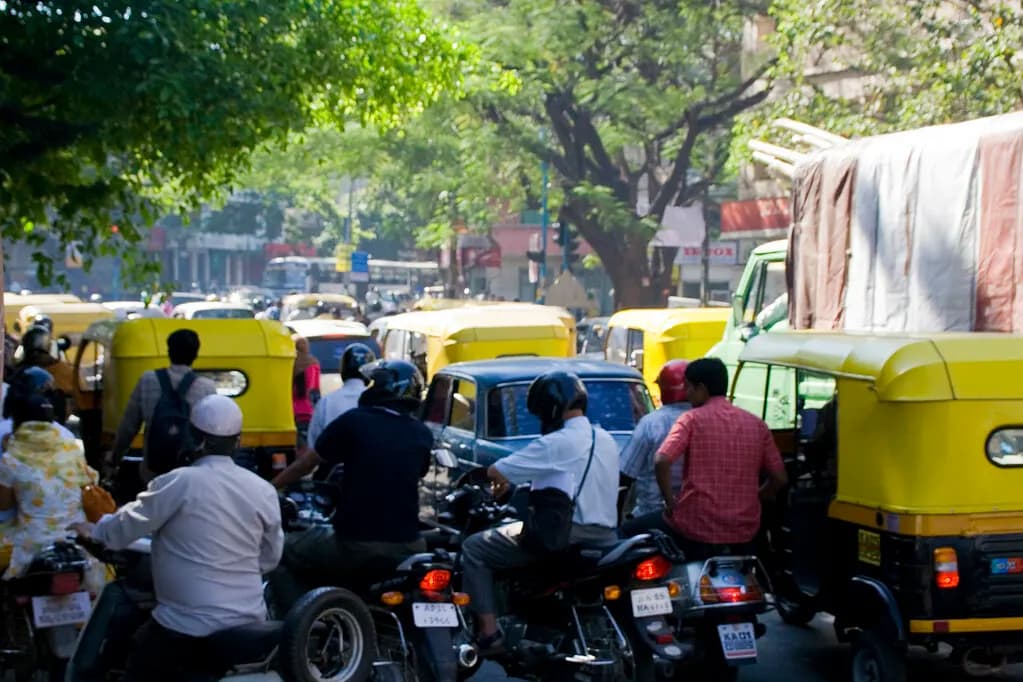
Motor insurance did not get any relief in GST 2.0. A private car or two-wheeler policy attracts 18% on the whole premium: own-damage (OD), third-party (TP) liability, compulsory personal accident cover for the owner-driver, and add-ons such as zero depreciation, engine protection, return-to-invoice and roadside assistance. The rate does not depend on the car's engine size or on the GST rate the car itself paid — a small car taxed at 18% and an SUV taxed at 40% have the same 18% on their insurance.
Third-party premiums for cars and two-wheelers are set by the government under the Motor Vehicles Act, while own-damage premiums are priced by insurers on the vehicle's insured declared value, age, city and your no-claim bonus. GST is added on top of the net premium after any discount or no-claim bonus.
Worked premium — 1.2-litre hatchback, comprehensive policy (illustrative figures):
| Component | Premium | GST at 18% |
|---|---|---|
| Own-damage premium after 35% no-claim bonus | ₹6,800 | ₹1,224 |
| Third-party premium | ₹3,400 | ₹612 |
| Owner-driver personal accident cover | ₹350 | ₹63 |
| Zero-depreciation add-on | ₹1,450 | ₹261 |
| Total | ₹12,000 | ₹2,160 |
You pay ₹14,160. If the insurer's office and your address are in the same state, the invoice splits the ₹2,160 into ₹1,080 CGST and ₹1,080 SGST; otherwise it shows IGST. For a sticker price that already includes GST, divide by 1.18: a renewal quote of ₹14,160 "including taxes" has a net premium of ₹12,000.
Commercial vehicles. Owners of trucks, tempos and other goods carriages got the one cut in motor insurance: third-party cover of goods carriages fell from 12% to 5% with ITC with input tax credit for insurers, effective 22 September 2025. The own-damage portion of a goods-vehicle policy remains at 18%. Taxis and buses pay 18% on both parts.
Try it — GST inside a car insurance quote
When the rate applies: date of payment, instalments and revivals
The Department of Financial Services FAQ settles the most common timing question: GST applies as on the date the premium is paid. If your renewal was due on 21 September 2025 and you paid it on 22 September, no GST applied. If you paid an individual health renewal on 18 September for cover starting in October, the 18% you paid is final — there is no refund because the cover period falls after the exemption.
For premiums paid in advance, section 14 of the CGST Act applies. It looks at three events — the supply of the service, the invoice and the payment — and the rate in force when two of the three happened decides the tax. In practice, insurers treat the payment date as decisive for individual policies.
Monthly, quarterly and half-yearly instalments are each taxed on their own payment date. An individual policy with a quarterly premium paid in August 2025 carried 18% on that instalment; the November 2025 instalment was exempt. If an individual policy lapsed earlier and you revived it on or after 22 September 2025, the revival premium is exempt as well.
Policies issued to non-resident Indians may qualify as an export of services, and the DFS FAQ says those that do not are treated as exempt — either way, no GST is charged on individual life or health cover.
Property, business and group policies still at 18%
Most insurance a small business buys is general insurance outside the individual life and health exemption, so it stays at 18%:
- Fire and allied perils for a factory, godown or shop — including standard fire policies and Bharat Sookshma or Laghu Udyam policies.
- Burglary and stock insurance, money-in-transit and fidelity guarantee cover.
- Marine cargo on goods you ship or receive.
- Public, product and professional liability, directors' and officers' cover and cyber insurance.
- Home insurance bought by an individual — the exemption covers life and health only, not your house or its contents.
- Group health, group term and group personal accident for staff.
Some insurance was exempt long before GST 2.0 and remains so. Notification 12/2017 exempts premiums under several government-backed schemes, including Pradhan Mantri Suraksha Bima Yojana, Pradhan Mantri Jeevan Jyoti Bima Yojana and the government crop insurance schemes, and hut and cattle insurance schemes listed there. If you see GST on one of these, the insurer has made an error.
Worked example — a Ludhiana textile unit. The unit pays a fire policy premium of ₹40,000, burglary cover of ₹8,000, a group mediclaim for 20 workers of ₹2,40,000 and a comprehensive policy on the owner's car of ₹15,000. All four carry 18%, so GST is ₹7,200 + ₹1,440 + ₹43,200 + ₹2,700 = ₹54,540. What the unit can recover as ITC is a separate question, answered in the next section.

Can a business claim ITC on insurance premium?
Insurance bought for the business is normally an input service, and section 16 of the CGST Act allows credit if you hold a tax invoice in your GSTIN, the insurer has reported it so it appears in your GSTR-2B, and you use the cover for taxable business. Section 17(5) then blocks credit on three groups of insurance.
Cars and other small passenger vehicles — section 17(5)(ab). Credit on general insurance of motor vehicles with an approved seating capacity of up to 13 people (including the driver) is blocked, unless the vehicle is used for further supply of such vehicles, for carrying passengers, or for driving training. It is also allowed to vehicle manufacturers and to insurers for vehicles they insure. So a company car's insurance is a cost, while a cab operator, a car dealer's demo fleet or a driving school can claim it. Insurance of trucks and other goods vehicles is not caught by the block at all, so a transporter can claim it.
Life and health insurance — section 17(5)(b)(i). Credit on life insurance and health insurance is blocked, with two exceptions in the provisos. Credit is available where the cover is used to make an outward taxable supply of the same category — an insurer reinsuring part of its risk, for example. And under the proviso to clause (b), credit is available where the employer is obliged to provide the cover to employees under a law in force. A voluntary group mediclaim fails both tests, so in the Ludhiana example above the ₹43,200 is a cost.
Property and business insurance — usually creditable. Fire, stock, burglary, marine cargo, liability and cyber policies used for the business are not in section 17(5), so the GST on them is creditable in the normal way. The exception is insurance of a building under construction on your own account: credit relating to construction of immovable property is blocked by section 17(5)(d).
Before you book ITC on an insurance premium
0/6Mixed use needs apportionment. If a partnership firm insures a car that is partly used for a passenger-transport business and partly for the partners' own travel, only the business share is creditable under section 17(1).
What the 57th GST Council decided on 8 October 2026
The 57th GST Council met in New Delhi on 8 October 2026 and changed no rates. The Finance Minister said rate changes will now be taken up once a year at a meeting dedicated to rates. Among its process reforms, the Council recommended allowing input tax credit on health and life insurance that employers buy for employees, alongside credit for telecom towers, pipelines outside the factory, free samples and stock destroyed after its shelf life ends.
That recommendation is not yet law. The block sits in section 17(5)(b) of the CGST Act, so lifting it needs an amendment passed by Parliament and the state legislatures, followed by a notified start date. Until then, keep treating GST on a voluntary group mediclaim as a cost, and do not claim it in GSTR-3B. Reports of the meeting are from the press; no official notification had been issued as of October 2026.
Common mistakes on insurance GST
- Assuming your home or car insurance became GST-free. The September 2025 exemption covers only individual life and health policies. Motor, home and shop policies still pay 18%.
- Expecting a refund for a premium paid just before 22 September 2025. The payment date fixes the rate; GST paid at 18% before that date is not refundable even if the cover runs later.
- Treating an employer group mediclaim as individual cover. It is a group policy at 18%, even if the employee pays the premium through salary.
- Claiming ITC on a company car's insurance. Section 17(5)(ab) blocks it unless the car is used for passenger transport, resale or driving training.
- Claiming ITC on staff mediclaim on the strength of the 57th Council news. The recommendation needs a law change first.
- Buying business cover in the owner's personal name. A policy without the business's GSTIN gives no credit, even for a fire policy on business stock.
Official links
- Notification 16/2025–CT(Rate) (Gazette, with 15/2025 and 17/2025)Entries 36C–36E and definitions of 'group' and 'health insurance business'
- DFS FAQs on the insurance exemptionPayment-date rule, instalments, revived and NRI policies
- 56th GST Council recommendationsInsurance exemption and goods-carriage TP cut
- Section 17, CGST ActBlocked credits for motor and life/health insurance
- Rule 32, CGST RulesHow life insurance premium is valued for GST
What to do next
Check the GST line on your next renewal notice against the table above — an individual term or health policy should show nil, a car or home policy 18%. Use the GST calculator to split any tax-inclusive quote. For more on health cover, timing and what insurers did with prices, read our GST on health insurance guide. Business owners should read the input tax credit guide before claiming credit on premiums, and see GST on cars for the vehicle itself.
This is general information, not legal or tax advice — confirm on the official source or with a professional.
Frequently asked questions
It depends on the policy. Individual life insurance (term, ULIP, endowment) and individual health insurance have been exempt since 22 September 2025. Motor, fire, home, shop, marine and other general insurance still carries 18%, and group or employer-sponsored life and health policies pay 18%. Third-party cover for goods carriages is 5% with ITC.
Car insurance attracts 18% GST on both the own-damage and third-party premium, and on add-ons such as zero depreciation or engine protection. GST 2.0 did not change motor insurance. On a ₹12,000 net premium the GST is ₹2,160, so you pay ₹14,160. Two-wheeler policies are taxed the same way.
No, if the policy is an individual term plan. Notification 16/2025–Central Tax (Rate) exempts life insurance where the insured is not a group, effective 22 September 2025. A ₹20,000 annual term premium that carried ₹3,600 of GST before that date now carries none. Group term and group credit-life policies still pay 18%.
On most general insurance, yes — fire, burglary, stock, marine cargo, goods-vehicle and liability policies used for business are creditable. Credit is blocked on insurance of cars with up to 13 seats unless you use them to carry passengers, sell them or train drivers, and on life and health insurance for staff unless a law makes the cover compulsory. The 57th GST Council has recommended opening up credit on employee health and life insurance, but that is not yet in force.
No. The Department of Financial Services says GST applies as on the date the premium is paid. A renewal paid on 15 September 2025 carried 18% even if the cover started in October. Premiums and instalments paid on or after 22 September 2025, including revival premiums on lapsed policies, are exempt.
An individual health policy that bundles travel or personal accident cover for a single price is fully exempt, according to the Finance Ministry's FAQ. Standalone travel or personal accident policies are less clear: the notification's definition of health insurance business mentions travel and accident cover, but insurers apply it differently. Check the GST line on the quote and ask the insurer in writing.
Sources & verification
Figures on this page were checked against the sources below when it was last reviewed on 9 October 2026. Each rate and limit is stored once with its own official source and review date, and official update channels are monitored daily so changes are picked up. How we verify
- 1.Notification No. 16/2025–Central Tax (Rate), 17 September 2025 (with 15/2025 and 17/2025), Gazette of India — Ministry of Finance / Gazette of India · accessed 9 October 2026
- 2.Exemption of GST on all Individual Life Insurance and Health Insurance Policies (FAQs) — Department of Financial Services, Ministry of Finance · accessed 9 October 2026
- 3.Recommendations of the 56th Meeting of the GST Council — PIB, Ministry of Finance · accessed 9 October 2026
- 4.FAQs on the decisions of the 56th GST Council — PIB, Ministry of Finance · accessed 9 October 2026
- 5.Section 17 – CGST Act, 2017 (blocked credits) — CBIC · accessed 9 October 2026
- 6.Rule 32 – CGST Rules, 2017 (value of life insurance services) — CBIC · accessed 9 October 2026
- 7.Notification No. 12/2017 – Central Tax (Rate) (services exemptions) — CBIC · accessed 9 October 2026
- 8.GST Council scraps officials' arrest powers, raises prosecution threshold — Forbes India · accessed 9 October 2026
- 9.57th GST Council Meeting: No GST rate change, FMCG & pharma get ITC relief — Office Newz · accessed 9 October 2026
MSMETOOLS is an independent platform and is not affiliated with any government agency, ministry or department.
Tools for this
GST Calculator (India)
Calculate GST for your sales and purchases with current rates.
Invoice Generator
Create professional invoices with tax, logo and custom details.
Related guides
 GST on Health Insurance in 2026: 0% for IndividualsRead guide
 GST on Cars 2026: 18% vs 40% Rates, EVs, Used Cars & ITCRead guide
 GST on Bikes 2026: 18% vs 40%, EVs, Bicycles & InsuranceRead guide
 New GST Rules 2026: GST 2.0 Slabs, Changes & Latest UpdatesRead guide
Official links open the government site in a new tab.