 GST & indirect tax
GST on Commission in 2026: Rates for Agents and Brokers, Registration, RCM and Worked Invoices
GST on commission and brokerage in 2026: 18% rate, exempt farm-produce arhat, RCM for insurance and recovery agents, pure agent rules and worked ₹ invoices.
 Edited by Sumeet YadavFounder & editor, MSMETOOLS · fact-checked against official sources
Contents (10)
- 1. What counts as commission under GST
- 2. GST rate on commission and brokerage in 2026
- 3. Agricultural produce: the arhatiya exemption
- 4. Reverse charge on insurance, recovery and bank agents
- 5. Registration: when a commission agent must register
- 6. Worked invoices: GST on commission in rupees
- 7. Pure agent: reimbursements that are not taxed
- 8. Intermediary services and commission from foreign principals
- 9. Common mistakes with GST on commission
- 10. What to do next
If you earn a commission — as a property broker, a sales agent for a manufacturer, an arhatiya in a grain mandi, an insurance agent or a sourcing agent for an overseas buyer — the GST answer depends on what you sell, who pays you and whose name is on the sale invoice. This guide gives the 2026 rate on commission and brokerage, the exemptions, the agents whose commission is taxed under reverse charge, when an agent must register even below the threshold, how pure-agent reimbursements are treated, and what the 2026 change to intermediary services means for commission from foreign principals. Every rule was checked against CBIC notifications and circulars in October 2026.
Quick answer
Commission and brokerage are taxed at 18% GST — 9% CGST + 9% SGST, or 18% IGST. GST 2.0 did not change the rate. Commission for selling or buying agricultural produce is exempt. For insurance agents, recovery agents and individual DSAs of banks, the company paying the commission pays the GST under reverse charge.
On ₹1,00,000 of brokerage, GST is ₹18,000
Agents who invoice goods in their own name must register at any turnover — section 24(vii)
Pure brokers register once turnover crosses ₹20 lakh
Pure-agent reimbursements shown separately are not taxed — Rule 33
Commission from a foreign principal can now be a zero-rated export (Finance Act 2026)
What counts as commission under GST
The CGST Act defines an agent in section 2(5) as a person — including a factor, broker, commission agent, arhatia, del credere agent or auctioneer — who carries on the business of supply or receipt of goods or services on behalf of another. The commission, brokerage or fee such a person earns is consideration for a service: the service of finding a buyer or seller, negotiating, arranging or completing a deal for the principal.
The scheme of classification places most trade commissions under heading 9961 (services in wholesale trade), whose explanation expressly includes "services of commission agents, commodity brokers, and auctioneers and all other traders who negotiate wholesale commercial transactions between buyers and sellers, for a fee or commission". Retail-side commission falls under heading 9962. Commission for arranging property deals is classed with real estate services on a fee or commission basis under heading 9972, insurance agency under heading 9971, and other brokers and facilitators under the business support headings. The heading changes the SAC on your invoice, not the rate: all of them are taxed at 18%.
GST applies to commission whether the goods being sold are taxable or exempt. A broker who arranges the sale of exempt goods such as unbranded rice still supplies a taxable service — the only exception is the specific exemption for agricultural produce discussed below. Commission also includes incentives, target bonuses and "override" commissions paid for achieving volumes, because they are consideration for the same agency service.
GST rate on commission and brokerage in 2026
The 56th GST Council, which met on 3 September 2025, reworked goods rates and a handful of services, but left business services such as commission and brokerage at the standard rate. Heading 9961 was notified at 9% central tax in Notification 11/2017–Central Tax (Rate) in 2017 and has not changed; with the matching state tax, that is 18%.
GST on commission by type of agent (2026)
| Who earns the commission | GST rate | Who pays the GST to the government |
|---|---|---|
Property broker, sales agent, sourcing agent, auctioneer, commodity broker | 18% | The agent (forward charge) |
C&F or commission agent selling goods in its own name | 18% on commission; goods at their own rate | The agent |
Commission agent for sale or purchase of agricultural produce (arhatiya) | Nil (exempt) | No GST |
Insurance agent paid by an insurance company | 18% | The insurer (reverse charge) |
Recovery agent paid by a bank, financial institution or NBFC | 18% | The bank or NBFC (reverse charge) |
Individual direct selling agent (DSA) paid by a bank or NBFC | 18% | The bank or NBFC (reverse charge) |
Indian agent paid in foreign exchange by an overseas principal | Zero-rated if export conditions are met | No tax under a letter of undertaking |
Property broker, sales agent, sourcing agent, auctioneer, commodity broker
- GST rate
18%
- Who pays the GST to the government
The agent (forward charge)
C&F or commission agent selling goods in its own name
- GST rate
18% on commission; goods at their own rate
- Who pays the GST to the government
The agent
Commission agent for sale or purchase of agricultural produce (arhatiya)
- GST rate
Nil (exempt)
- Who pays the GST to the government
No GST
Insurance agent paid by an insurance company
- GST rate
18%
- Who pays the GST to the government
The insurer (reverse charge)
Recovery agent paid by a bank, financial institution or NBFC
- GST rate
18%
- Who pays the GST to the government
The bank or NBFC (reverse charge)
Individual direct selling agent (DSA) paid by a bank or NBFC
- GST rate
18%
- Who pays the GST to the government
The bank or NBFC (reverse charge)
Indian agent paid in foreign exchange by an overseas principal
- GST rate
Zero-rated if export conditions are met
- Who pays the GST to the government
No tax under a letter of undertaking
Within one state, split the tax equally: on ₹50,000 commission, ₹4,500 CGST and ₹4,500 SGST. If the agent in Surat earns commission from a mill registered in Tamil Nadu, the full ₹9,000 is IGST, because the place of supply of a service to a registered business is generally the recipient's location. Getting the CGST/SGST versus IGST split wrong does not cancel out — the agent pays the right tax and then claims a refund of the wrong one, so check the principal's GSTIN state code before invoicing.
Agricultural produce: the arhatiya exemption
Notification 12/2017–Central Tax (Rate) exempts "services by any Agricultural Produce Marketing Committee or Board or services provided by a commission agent for sale or purchase of agricultural produce". The exemption is aimed at the mandi system, where an arhatiya or kachha arhatiya sells a farmer's crop to traders and keeps a percentage as commission. CBIC confirmed in Circular 57/31/2018–GST that this commission is exempt.
The scope turns on the meaning of agricultural produce in the notification: produce of cultivation or rearing on which either no processing is done, or only the processing usually done by a cultivator or producer that does not alter its essential character but makes it marketable for the primary market. Wheat, paddy, raw cotton, fresh fruit and vegetables usually qualify. Flour, dal, packaged and labelled pulses, refined oil, tea leaves processed in a factory, and jaggery generally do not, so a commission agent dealing in those charges 18% on its commission.
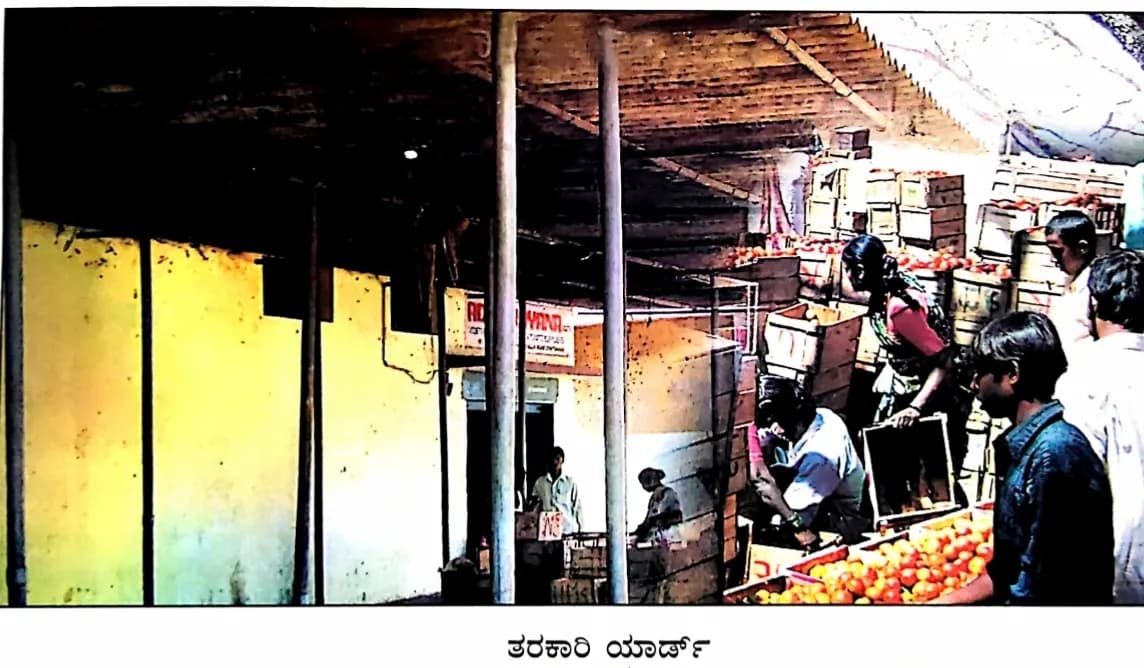
Registration follows the same logic. An arhatiya whose only supplies are exempt commission and exempt produce does not need to register, because section 23(1)(a) excludes persons dealing only in goods or services that are not taxable or wholly exempt. But Circular 57 adds a warning: where the produce itself is taxable — for example, a commission agent selling processed or branded goods for a principal and invoicing in its own name — the agent must register under section 24(vii) regardless of turnover. Mandi agents who also rent out godowns, lend money at interest to farmers or sell fertiliser should look at each income stream separately, because the exemption covers only the commission on agricultural produce.
Reverse charge on insurance, recovery and bank agents
Section 9(3) of the CGST Act lets the government notify services on which the recipient pays the GST instead of the supplier. Notification 13/2017–Central Tax (Rate) lists several agency services:
- Insurance agents — services supplied by an insurance agent to any person carrying on insurance business. The insurer pays 18% on the commission.
- Recovery agents — services to a banking company, financial institution or NBFC. The lender pays the GST.
- Individual direct selling agents — services of DSAs other than a body corporate to a bank or NBFC, added from 27 July 2018.
- Business facilitators and business correspondents — services to banks and, for BC agents, to business correspondents.
These are section 9(3) cases. You will sometimes see them described as section 9(5) cases, but section 9(5) is a different provision that makes electronic commerce operators pay tax on certain services supplied through them, such as passenger transport and restaurant services. Commission earned by a seller on a marketplace is not covered by section 9(5).
For the agent, reverse charge means no GST on the commission statement and no output tax to deposit. An individual insurance agent whose only income is insurance commission does not need to register: Notification 5/2017–Central Tax, issued under section 23(2), exempts persons whose supplies are entirely taxable under reverse charge from registering. If the same person also earns commission from a mutual fund house, a property broker or a loan company that is not on the reverse charge list, that income is on forward charge and counts towards the ₹20 lakh threshold.
For the insurer, the cost has gone up since 22 September 2025. Individual life and health insurance policies became exempt, so the insurer's output on those policies carries no GST, yet it still pays GST under reverse charge on agents' commission. Credit that relates to exempt supplies has to be reversed under section 17(2), so for an insurer selling mainly individual policies, much of that reverse-charge GST is now a real cost. Our guide to GST on insurance premium explains the exemption, and the reverse charge guide covers self-invoicing and the cash-only payment rule.
Is GST on your commission charged by you or by the payer?
Step 1
Who pays the commission?
Step 2
Insurer, bank or NBFC
check Notification 13/2017 list
Step 3
Listed agent type
payer pays GST under RCM
Step 4
Anyone else
you charge GST at 18%
Step 5
Farm-produce commission
exempt
Registration: when a commission agent must register
Most service providers register once their aggregate turnover crosses ₹20 lakh in a financial year, or ₹10 lakh in the special-category states. Section 24 overrides that threshold for some categories, and two of them matter for agents. Clause (vii) covers "persons who make taxable supply of goods or services or both on behalf of other taxable persons whether as an agent or otherwise". Clause (iii) covers persons liable to pay tax under reverse charge — which affects the insurers and banks paying commission, not the agents.
CBIC's Circular 57/31/2018–GST explains how to apply clause (vii) to agents, and the test is simple: whose name is on the invoice to the customer?
| Situation (from Circular 57) | Agent under Schedule I? | Registration |
|---|---|---|
| Procurement agent asks the supplier to invoice the principal directly | No | Only above the ₹20 lakh threshold |
| Auctioneer arranges a bank's auction; the bank invoices the buyer | No | Only above the threshold |
| Auctioneer sells an artist's painting and invoices in its own name | Yes | Compulsory under section 24(vii) |
| C&F or commission agent takes the principal's goods and invoices in its own name | Yes | Compulsory under section 24(vii) |
| Mandi commission agent invoices exempt farm produce | Yes, but supplies are exempt | Not required |
The reason is paragraph 3 of Schedule I to the CGST Act, which treats a transfer of goods from a principal to an agent who will sell them on the principal's behalf as a supply, even without consideration. Once the agent invoices in its own name, it is selling the goods, not just arranging the sale, so it has to charge GST on the goods at their own rate, file returns and pass credit to buyers. The circular adds that disclosing or hiding the principal's name makes no difference; the authority to pass title is what matters.
A del credere agent, who guarantees payment by the buyer, is still an agent under the same test. If it only arranges sales and the principal invoices the buyer, its commission — including any extra charge for the guarantee — is a taxable service, and it registers by the turnover threshold. If it invoices the goods itself, section 24(vii) applies.
Service providers with turnover up to ₹50 lakh can opt for the composition scheme for services and pay 6% of turnover without input tax credit. Few commission agents use it, because their clients are usually registered businesses that want a full tax invoice to claim credit, and a composition taxpayer cannot issue one. Registration itself is free on the GST portal; see our GST registration guide.
Worked invoices: GST on commission in rupees
The examples below show how GST and income-tax TDS land on common commission bills. TDS on commission and brokerage is deducted by the payer at 2% once commission paid to you in the year crosses ₹20,000; from 1 April 2026 this provision sits in section 393 of the Income-tax Act, 2025 (formerly section 194H). Insurance commission has its own TDS provision and is not shown here.
| Case | Commission | GST | Invoice total | Notes |
|---|---|---|---|---|
| Property broker in Pune, buyer in Pune | ₹1,00,000 | ₹9,000 CGST + ₹9,000 SGST | ₹1,18,000 | Payer deducts ₹2,000 TDS if it is liable to deduct |
| Sales agent in Ludhiana, mill in Coimbatore | ₹2,40,000 | ₹43,200 IGST | ₹2,83,200 | Mill claims ₹43,200 as ITC |
| Arhatiya selling ₹10 lakh of wheat at 2.5% | ₹25,000 | Nil | ₹25,000 | Exempt — agricultural produce |
| Insurance agent, monthly commission | ₹40,000 | No GST on the statement | ₹40,000 | Insurer pays ₹7,200 under reverse charge |
| Sourcing agent paid $3,000 by a US buyer | about ₹2.6 lakh (illustrative exchange rate) | Nil under LUT | about ₹2.6 lakh | Zero-rated if export conditions are met |
In the first row, the TDS is deducted on the commission and the GST is paid in full to the broker, who deposits the ₹18,000. A salaried individual buying a home for personal use is generally not required to deduct TDS on brokerage, so the broker receives ₹1,18,000; a company buying office space would deduct ₹2,000 and pay ₹1,16,000.
Try it — GST on a commission invoice
Pure agent: reimbursements that are not taxed
Agents often pay costs on a client's behalf — stamp duty, registration fees, port charges, government fees — and recover them. Rule 33 of the CGST Rules excludes these recoveries from the value of the agent's supply, but only if all three conditions are met: the agent acts as a pure agent of the client when it pays the third party on the client's authority; the payment is shown separately on the invoice; and the third-party supplies are in addition to the services the agent provides on its own account.
The rule's explanation then defines a pure agent as someone who has a contract with the client to incur the cost as its pure agent, neither holds nor intends to hold title to what is bought, does not use it for its own interest, and recovers only the actual amount. CBIC's own illustration is a corporate services firm that pays the Registrar of Companies' registration and name-approval fees for a client; those fees are compulsorily levied on the client, so recovering them is a disbursement.
Here is how a clearing and forwarding agent's bill splits. Agency fee ₹15,000 plus GST at 18% (₹2,700). Customs-related fees paid to a government authority on the importer's behalf, ₹42,000, shown on a separate line as "reimbursement as pure agent", with copies of the receipts attached. The agent charges GST only on ₹15,000. The total bill is ₹59,700.
Costs that fail the test are part of the taxable value. The agent's own travel, phone, office rent, staff costs and courier charges are inputs to its own service, so recovering them at cost does not make them disbursements. Neither does a "reimbursement" with a mark-up, or a cost incurred in the agent's name that it then re-bills. When in doubt, include the item in the taxable value; under-valuing invites demands with interest and penalty.

Intermediary services and commission from foreign principals
An intermediary is defined in section 2(13) of the IGST Act as a broker, an agent or any other person who arranges or facilitates the supply of goods or services, or securities, between two or more persons, but not someone who supplies those goods or services on its own account. CBIC's Circular 159/15/2021–GST explains that an intermediary arrangement needs at least three parties and two distinct supplies — the main supply between the principal and the third party, and the ancillary facilitation by the intermediary. Sub-contracting a service and supplying on a principal-to-principal basis are not intermediary services.
For years this definition mattered most for Indian agents of foreign companies. Section 13(8)(b) of the IGST Act made the place of supply of intermediary services the location of the supplier — in India — so commission from an overseas principal for, say, finding Indian customers or sourcing Indian garments could not be an export and attracted 18% IGST. Disputes over whether an Indian subsidiary or back-office was an "intermediary" ran for years.
The Finance Act, 2026 omitted clause (b) of section 13(8). CBIC's statute page shows the clause as omitted by section 157 of the Finance Act, 2026, dated 30 March 2026, and practitioners read the change as effective from that date because no separate commencement date was set. Intermediary services now follow the general rule in section 13(2): the place of supply is the location of the recipient. For an Indian agent with a foreign principal, that means the commission can qualify as an export of services if all the conditions in section 2(6) of the IGST Act are met — the supplier is in India, the recipient is outside India, the place of supply is outside India, payment is received in convertible foreign exchange (or in rupees where RBI permits), and the two are not merely establishments of the same person.
An exporter can then supply under a letter of undertaking without paying IGST, or pay IGST and claim a refund, and can claim a refund of unused credit. The reverse also applies: an Indian business that pays commission to a foreign agent now imports a service and pays IGST under reverse charge. Because the change is recent, check whether CBIC has issued any clarification before switching your invoicing, and keep the agency contract, foreign inward remittance certificates and your LUT on file.
Before you raise a commission invoice
0/7Common mistakes with GST on commission
Assuming commission is exempt because the goods are exempt. Only the agricultural produce entry exempts commission. A broker arranging sales of exempt goods such as unbranded rice, newspapers or fresh flowers is not covered unless the goods are agricultural produce sold through the agency.
Charging GST on insurance commission. Insurance agents who add GST to their commission bill cause a double payment, because the insurer already pays under reverse charge. The insurer then has to recover the excess, and the agent has registered for nothing.
Not registering as a selling agent. An agent who receives stock from a principal and invoices customers in its own name must register at any turnover. Agents in the textile, steel and FMCG trades who started as pure brokers sometimes drift into this role when they start collecting money and issuing bills, and the first notice comes years later.
Treating own expenses as pure-agent costs. Rule 33 covers costs that belong to the client, paid with its authority and recovered at cost. Your own travel and office costs belong to your service.
Missing the time of supply. GST on commission is due when you issue the invoice or receive payment, whichever is earlier, with the invoice due within 30 days of the service. Agents paid a quarterly or annual commission often wait for the payment, which delays the tax and attracts interest.
Ignoring the 2026 export change. Indian agents of foreign principals who still charge 18% IGST may be paying tax they could avoid; Indian businesses paying foreign agents may now owe reverse-charge IGST they have not been paying.
Official links
- Notification 11/2017–CT(Rate) — service ratesHeading 9961 — commission agents, brokers, auctioneers
- Circular 57/31/2018–GST — principal-agent relationshipInvoice test; section 24(vii); APMC commission agents
- Notification 13/2017–CT(Rate) — reverse charge on servicesInsurance and recovery agents
- Section 24, CGST ActCompulsory registration
- Rule 33, CGST RulesPure agent
- Section 13, IGST ActClause 13(8)(b) omitted by Finance Act 2026
- Circular 159/15/2021–GST — intermediaryWho is an intermediary
What to do next
Work out which box your commission falls into: forward charge at 18%, reverse charge paid by your insurer or bank, exempt arhat, or a possible export. Then check whether you invoice goods in your own name, because that decides whether you must register below the threshold. Use the invoice generator to prepare a compliant commission bill and the GST calculator to check the tax, and read our guides to reverse charge, input tax credit and TDS for the rest of the picture.
This is general information, not legal or tax advice — confirm on the official source or with a professional.
Frequently asked questions
Commission and brokerage earned by agents, brokers and other intermediaries is taxed at 18% — 9% CGST plus 9% SGST within a state, or 18% IGST across states. GST 2.0 did not change it. The main exception is commission for selling or buying agricultural produce, which is exempt. Insurance and recovery agents' commission is also taxed at 18%, but the company paying it pays the tax under reverse charge.
It depends on whose name goes on the sale invoice. An agent who sells or buys goods for a principal and invoices in its own name must register under section 24(vii), whatever its turnover. A broker who only arranges deals, while the principal invoices the customer, registers only when its turnover crosses ₹20 lakh (₹10 lakh in special-category states), as CBIC Circular 57/31/2018-GST explains.
No. Notification 12/2017-Central Tax (Rate) exempts services of a commission agent for the sale or purchase of agricultural produce, and APMC services. Commission on wheat, paddy, fresh vegetables and similar produce is therefore GST-free. The exemption does not cover processed goods such as flour, packaged pulses or jaggery, so commission on those is taxable at 18%.
The insurance company. Services of an insurance agent to a person carrying on insurance business are on the reverse charge list in Notification 13/2017-Central Tax (Rate). The insurer self-assesses 18% GST on the commission and pays it in cash; the agent does not charge GST on its commission statement and does not need registration for this income alone.
The Finance Act, 2026 omitted section 13(8)(b) of the IGST Act, which had made the place of supply of intermediary services the location of the Indian agent. The general rule now applies — the location of the recipient — so an Indian agent paid in foreign exchange by an overseas principal can usually treat the commission as a zero-rated export under a letter of undertaking, if all export conditions are met.
A commission agent earns a fee for arranging or making supplies, and that fee is taxable. A pure agent, under Rule 33 of the CGST Rules, pays third-party costs on the client's behalf with the client's authority, holds no title to what it buys, recovers only the exact cost and shows it separately on the invoice. Such recoveries are excluded from the taxable value; the agent's own fee is not.
Sources & verification
Figures on this page were checked against the sources below when it was last reviewed on 9 October 2026. Each rate and limit is stored once with its own official source and review date, and official update channels are monitored daily so changes are picked up. How we verify
- 1.Notification No. 11/2017–Central Tax (Rate), 28 June 2017 — CBIC · accessed 9 October 2026
- 2.Circular No. 57/31/2018–GST — scope of principal-agent relationship — CBIC · accessed 9 October 2026
- 3.Notification No. 13/2017–Central Tax (Rate) — services under reverse charge — GST Council · accessed 9 October 2026
- 4.Section 24 – CGST Act, 2017 (compulsory registration) — CBIC · accessed 9 October 2026
- 5.Rule 33 – CGST Rules, 2017 (value of supply in case of pure agent) — CBIC · accessed 9 October 2026
- 6.Section 13 – IGST Act, 2017 (place of supply where supplier or recipient is outside India) — CBIC · accessed 9 October 2026
- 7.Circular No. 159/15/2021–GST — scope of intermediary — CBIC · accessed 9 October 2026
- 8.GST on intermediary services: legislative reset through Finance Act, 2026 — Grant Thornton Bharat · accessed 9 October 2026
- 9.CGST — RCM on services by individual DSAs to banks/NBFCs (Notification 15/2018–CT(Rate)) — TaxGuru · accessed 9 October 2026
MSMETOOLS is an independent platform and is not affiliated with any government agency, ministry or department.
Tools for this
GST Calculator (India)
Calculate GST for your sales and purchases with current rates.
Invoice Generator
Create professional invoices with tax, logo and custom details.
TDS Calculator (India)
Calculate TDS for payments and generate reports.
Related guides
 GST on Manpower Supply 2026: 18% Rate, SAC & RCM RulesRead guide
 Reverse Charge Mechanism (RCM) in GST 2026: List & ExampleRead guide
 GST on Insurance Premium 2026: Life, Health & Car RatesRead guide
 GST on IT Services 2026: Software, SaaS, Exports & OIDARRead guide
Official links open the government site in a new tab.