 GST & indirect tax
GST on Advertising Services in 2026: Print, TV, Outdoor and Online Ads Explained
GST on advertising in 2026: 5% on newspaper ad space, 18% on TV, outdoor, digital and agency work, reverse charge on foreign online ads, SAC codes, ₹ examples.
 Edited by Sumeet YadavFounder & editor, MSMETOOLS · fact-checked against official sources
Contents (10)
- 1. Advertising under GST: what is being sold
- 2. GST rates on advertising by medium
- 3. Selling space versus selling services
- 4. Online ads from foreign platforms: OIDAR and reverse charge
- 5. Sponsorship is not advertising
- 6. Advertising for government and foreign clients
- 7. Worked examples in rupees
- 8. Input tax credit on advertising
- 9. Common mistakes and how they are fixed
- 10. What to do next
Whether you run a newspaper ad for a shop opening, buy Google or Meta ads, rent a hoarding on a highway or hire an agency for a festive campaign, GST is part of the bill — but not at one rate. Selling newspaper ad space is taxed at a concessional rate, almost everything else at the standard rate, and ads bought from a foreign platform can shift the tax onto you under reverse charge. This guide sets out the 2026 GST position on advertising services in India: rates by medium, the difference between selling space and selling services, online ads from foreign platforms, sponsorship, SAC codes and worked examples in rupees.
Quick answer
Selling of space for advertisement in print media (newspapers and books) is taxed at 5%. Everything else — agency and creative services, TV and radio airtime, hoardings and other outdoor space, internet ad space and commission for booking media — is taxed at 18%. Online ads billed by a foreign entity are taxed at 18% IGST IGST, paid by a registered Indian business under reverse charge.
GST 2.0 (22 September 2025) did not change advertising rates
Design, copywriting and agency commission stay at 18% even when the space is in a newspaper
Directories, yellow pages and trade catalogues are not 'print media' — 18%
Sponsorship from a non-corporate organiser: the sponsoring company or firm pays GST under reverse charge
Advertising under GST: what is being sold
GST classifies advertising under heading 9983 ("other professional, technical and business services"), group 99836. The official classification separates two kinds of supply that are easy to blur in practice: services of creating and placing advertisements, and the sale of space or time in which advertisements appear.
| SAC | Description | Usual rate |
|---|---|---|
| 998361 | Advertising services — planning, creating and placing ads | 18% |
| 998362 | Purchase or sale of advertising space or time, on commission | 18% |
| 998363 | Sale of advertising space in print media (except on commission) | 5% |
| 998364 | Sale of TV and radio advertising time | 18% |
| 998365 | Sale of internet advertising space | 18% |
| 998366 | Sale of other advertising space or time (outdoor, transit, cinema) | 18% |
The rates come from serial 21 of Notification 11/2017-Central Tax (Rate). Item (i), "selling of space for advertisement in print media", carries 2.5% CGST plus 2.5% SGST — 5% in all — with no bar on input tax credit. Item (ii), all other services under heading 9983, carries 9% plus 9%. When rates were restructured from 22 September 2025, Notification 15/2025-Central Tax (Rate) amended many service entries but left serial 21 untouched, so the same two rates apply in 2026.
What counts as print media
Notification 03/2022-Central Tax (Rate) added a definition. "Print media" means a "book" and a "newspaper" as defined in the Press and Registration of Books Act, 1867 — but a book here does not include business directories, yellow pages and trade catalogues primarily meant for commercial purposes. So a display ad in a daily newspaper or a magazine registered as a newspaper qualifies for 5%, while an ad in a trade directory, a club's members' directory or a supplier catalogue is taxed at 18%. The West Bengal Authority for Advance Ruling applied 18% to a supplier that sold ad space in a club's directory as an agent and printed the directory, treating the whole arrangement as the agency service.
GST rates on advertising by medium
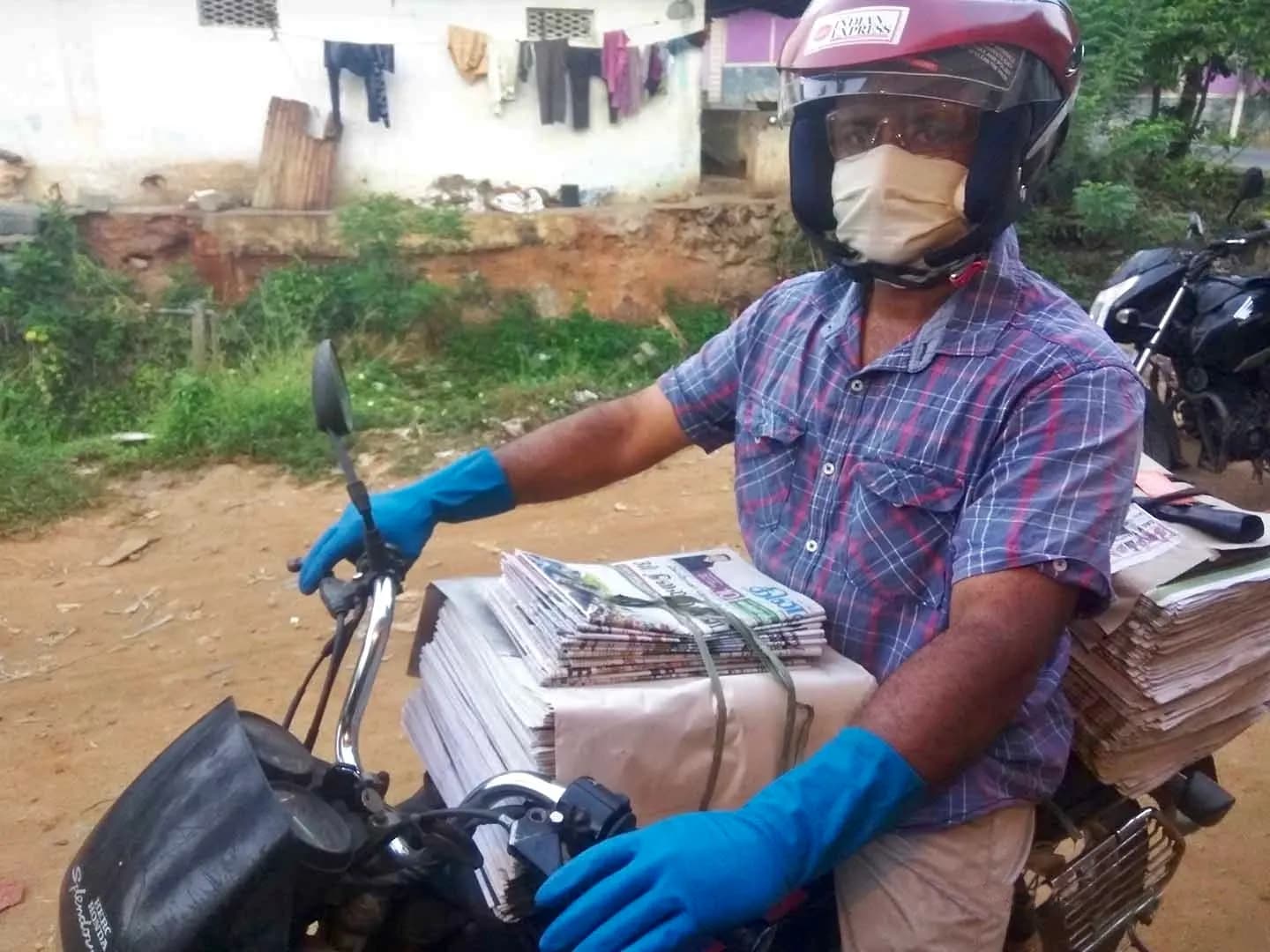
Newspapers and magazines. The publisher's sale of space is 5%. Classified ads, display ads, supplements and inserts sold by the publisher as space all fall here. The publisher can claim credit on newsprint, ink and services despite the lower rate.
Television and radio. Broadcasters and their sales houses sell airtime at 18% under SAC 998364. Production of the TV commercial or radio jingle by a production house is a separate service, also at the standard rate.
Outdoor and transit. Hoardings, unipoles, bus shelters, metro and railway station panels, airport displays, vehicle wraps and mall branding are sales of "other advertising space" under SAC 998366 at 18%. Fabrication, flex printing and mounting are usually billed by the media owner or a vendor at the standard rate as part of the campaign.
Digital. Sale of internet ad space — display, search, social, video and in-app — is SAC 998365 at 18%. Digital marketing agencies that run campaigns, manage social media or do search engine optimisation supply advertising or marketing services at the same rate. Influencers who are paid to promote a product supply a service at 18% and must register once their turnover crosses ₹20 lakh.
Cinema. On-screen ads sold by a multiplex or a cinema advertising company are sales of other advertising space at the standard rate.
Selling space versus selling services
The 5% rate attaches to the activity of selling print space, not to the advertiser's total spend on a newspaper campaign. How the deal is structured decides the tax.
Booked directly with the publisher. The publisher bills the space at 5%. If you also pay a designer for the creative, that is a separate 18% supply.
Booked through an agency on commission. The traditional model is that the agency books space in the advertiser's name, the publisher bills the space, and the agency earns a commission — either from the publisher as a discount or from the advertiser as a fee. The commission is a service under SAC 998362 at 18%. Where the agency pays the publisher on the advertiser's behalf and recovers the exact amount, it can exclude that amount from its own taxable value only if it meets the pure agent conditions in rule 33 of the CGST Rules: authorisation from the advertiser, separate disclosure on the invoice, and recovery at actual cost.
Bought and resold by the agency as principal. Some agencies buy space or airtime in their own name and resell it to clients at a marked-up price. For TV, radio, outdoor and digital space the rate is 18% either way. For print space, the resale is still a sale of print space, and agencies that bill the space as a distinct line usually apply 5% to it. If the agency instead quotes one consolidated price for a "campaign" that mixes concept, design and media, officers may treat the whole as one supply of advertising services at 18%. Separate invoice lines, priced independently, avoid that argument.
Printing of ad material. Brochures, pamphlets, posters and leaflets printed with your content raise a different question — whether the printer supplies goods or a printing service. CBIC's Circular 11/11/2017-GST treats such contracts as composite supplies classified by their principal supply. Our GST on paper guide covers printed goods; check the printer's classification on the invoice.
Who charges what on a typical newspaper campaign
| Line on the bill | Supplier | SAC | GST |
|---|---|---|---|
Ad space in a daily newspaper | Publisher | 998363 | 5% |
Ad design and copy | Agency or freelancer | 998361 | 18% |
Agency commission for booking space | Agency | 998362 | 18% |
Ad space in a trade directory | Directory publisher | 998366 | 18% |
Ad space in a daily newspaper
- Supplier
Publisher
- SAC
998363
- GST
5%
Ad design and copy
- Supplier
Agency or freelancer
- SAC
998361
- GST
18%
Agency commission for booking space
- Supplier
Agency
- SAC
998362
- GST
18%
Ad space in a trade directory
- Supplier
Directory publisher
- SAC
998366
- GST
18%
Online ads from foreign platforms: OIDAR and reverse charge
Section 2(17) of the IGST Act defines "online information and database access or retrieval services" (OIDAR) and lists "advertising on the internet" as the first example. That matters when the supplier is outside India, because the IGST Act then decides who pays.
If you are a registered business. Serial 1 of Notification 10/2017-Integrated Tax (Rate) puts any service supplied by a person in a non-taxable territory to a person in India, other than a non-taxable online recipient, under reverse charge. A registered business that receives an ad invoice from a foreign entity — for example, an entity in Ireland or Singapore — therefore pays IGST at 18% IGST itself, reports it in GSTR-3B Table 3.1(d) and claims it back as input tax credit in the same return. Self-invoice the transaction, because the foreign supplier issues no GST invoice.
If you are not registered. Since 1 October 2023, a "non-taxable online recipient" means any unregistered person receiving OIDAR services in India, whether or not for business. Section 14 of the IGST Act makes the foreign supplier liable to pay IGST on such supplies, through a simplified registration. That is why an unregistered freelancer or small shop usually sees 18% added to its ad bill by the platform.
If the invoice comes from an Indian entity. Several global platforms bill Indian advertisers through an Indian subsidiary or reseller with a GSTIN. That is a domestic supply: the Indian entity charges 18% on a tax invoice and you claim credit through GSTR-2B. There is no reverse charge. Look at the billing entity and its address on the invoice, not the brand name, to decide which rule applies.
Separately from GST, the 6% equalisation levy that Indian businesses used to withhold on payments to foreign online advertising platforms ended from 1 April 2025 under amendments made to the Finance Bill, 2025. It was an income-tax-side levy and never affected the GST treatment.
Sponsorship is not advertising
Paying to have your logo on a cricket tournament's banners, a college fest's backdrop or a marathon's T-shirts is usually sponsorship, not purchase of ad space. Serial 4 of Notification 13/2017-Central Tax (Rate) puts services by way of sponsorship to a body corporate or partnership firm under reverse charge. Notification 07/2025-Central Tax (Rate) narrowed the supplier side from 16 January 2025: reverse charge now applies only when the organiser is not a body corporate. If a society, club, trust or individual organises the event, the sponsoring company or firm pays GST at 18% under reverse charge. If a company organises it, the company charges GST on its own invoice. A proprietor who sponsors an event is not a body corporate or partnership firm, so the organiser charges GST if registered.
Who pays GST on an online ad bill?
Step 1
Who issued the invoice?
check entity name and address
Step 2
Indian entity with GSTIN
it charges 18% — claim ITC from GSTR-2B
Step 3
Foreign entity, you are registered
you pay 18% IGST IGST under RCM
Step 4
Foreign entity, you are unregistered
supplier collects IGST under OIDAR
Advertising for government and foreign clients
Agencies working for government campaigns face a special place-of-supply rule. Section 12(14) of the IGST Act says that when advertisement services are supplied to the Central or a state government, a statutory body or a local authority for dissemination in several states, the place of supply is each of those states, with the value split in proportion to the dissemination in each. An agency running a national awareness campaign for a ministry therefore issues state-wise invoices with CGST and SGST or IGST as the case may be, rather than one invoice in its home state.
Agencies serving clients outside India — a foreign brand launching in India, for instance — may qualify for export of services if the conditions in section 2(6) of the IGST Act are met, including payment in convertible foreign exchange or permitted Indian rupees and the place of supply being outside India. Exports are zero-rated under a letter of undertaking. Because the ads are aimed at Indian audiences, check the place of supply carefully: our GST on IT services guide explains the general rule and the intermediary trap.
Worked examples in rupees
A furniture showroom in Ludhiana. The showroom books a half-page in a Punjabi daily directly with the publisher for ₹1,20,000 and pays a freelance designer ₹15,000. The publisher charges 5% — ₹6,000 — and the designer, if registered, charges 18% — ₹2,700. Total GST is ₹8,700, all claimable as credit by a registered showroom.
The same campaign through an agency. The agency bills: space ₹1,20,000 at 5% (₹6,000), creative ₹15,000 at 18% (₹2,700) and a 10% service fee of ₹12,000 at 18% (₹2,160). GST totals ₹10,860. If the agency instead quoted one lump sum of ₹1,47,000 for the campaign, it risks the whole being taxed at 18% — ₹26,460.
A D2C brand in Bengaluru buying search ads. The brand, registered in Karnataka, spends ₹5,00,000 a month on search ads. If the platform's invoice comes from a foreign entity, the brand pays ₹90,000 IGST under reverse charge in cash, reports it in GSTR-3B and claims ₹90,000 credit in the same return. If the invoice comes from the platform's Indian entity in another state, the Indian entity charges ₹90,000 IGST and the brand claims it from GSTR-2B.
A hoarding campaign in Hyderabad. A builder rents four hoardings for three months at ₹2,50,000 in all, plus ₹40,000 for flex printing and mounting. GST at 18% on ₹2,90,000 is ₹52,200.
Work out GST on an ad bill
Input tax credit on advertising
Advertising is a business expense, so GST on it is normally fully claimable as input tax credit by a registered advertiser that makes taxable sales. Section 17(5) of the CGST Act, which blocks credit on items such as food, club memberships and personal-use goods, does not block advertising services. Two cases need care. Businesses that make exempt supplies — a hospital or a school, say — can claim only the share of credit attributable to taxable supplies. And goods given away free as part of a promotion, such as branded T-shirts or gift hampers, fall under the block on goods disposed of by way of gift, so the GST on buying those goods is not claimable even if the campaign itself is.
Common mistakes and how they are fixed
Applying 5% to everything in a newspaper campaign. Only the publisher's sale of space qualifies. Agencies that apply the concessional rate to design fees or commission under-pay tax and expose their clients to credit mismatches. Split the invoice and apply the right rate to each line.
Missing reverse charge on foreign ad invoices. Businesses that pay a foreign billing entity by card often forget the reverse charge because no GST appears on the receipt. Download the monthly invoices, check the billing entity, and pay the IGST in the month of the time of supply. If you have missed months, pay with interest at 18% a year and claim the credit.
Treating directory or catalogue ads as print media. The definition excludes business directories, yellow pages and trade catalogues. Bill or pay 18%.
Lump-sum campaign pricing. One undifferentiated price makes it hard to defend a lower rate on any part. Price and invoice each element separately.
Ignoring sponsorship rules. Sponsoring a non-corporate organiser's event without paying reverse charge is a common audit finding. Since 16 January 2025, check whether the organiser is a body corporate before deciding who pays.
Before you pay an advertising bill
0/6Official links
- Notification 11/2017-CT(R) — rates on servicesSerial 21 — print space and other heading 9983 services
- Notification 03/2022-CT(R) — definition of print mediaExcludes directories, yellow pages, trade catalogues
- Scheme of Classification of ServicesSAC 998361–998366
- Notification 10/2017-Integrated Tax (Rate)Reverse charge on services imported from abroad
- Notification 07/2025-CT(R) — sponsorshipReverse charge only for non-body-corporate organisers
What to do next
Pull last quarter's advertising bills and sort them by medium and billing entity. Check that print space alone carries 5%, that foreign platform invoices have been taxed under reverse charge, and that sponsorships were treated correctly. Then measure whether the spend is paying back with our ROAS calculator, and use the GST calculator to check any invoice. The reverse charge mechanism guide lists the other services where you, not the supplier, pay the tax.
This is general information, not legal or tax advice — confirm on the official source or with a professional.
Frequently asked questions
Most advertising is taxed at 18% — agency and creative services, TV and radio airtime, outdoor hoardings, internet ad space and commission on buying media. The one exception is selling of space for advertisement in print media — newspapers and books — taxed at 5%. GST 2.0 on 22 September 2025 did not change either rate.
When a newspaper sells advertisement space, GST is 5% (2.5% CGST plus 2.5% SGST) under serial 21(i) of Notification 11/2017-Central Tax (Rate), with input tax credit available. Design, copywriting or an agency's commission for booking the space is a separate service at 18%. Business directories, yellow pages and trade catalogues are not print media, so space in them is taxed at 18%.
Yes. Online advertising is taxed at 18% IGST. If the invoice comes from a platform's Indian entity with a GSTIN, it charges GST on the invoice and you claim credit normally. If the invoice comes from a foreign entity, a registered business pays IGST itself under reverse charge and claims it back. An unregistered buyer pays GST collected by the foreign supplier under the OIDAR rules.
Advertising is in group 99836: 998361 advertising services (planning, creating and placing ads), 998362 purchase or sale of advertising space or time on commission, 998363 sale of advertising space in print media, 998364 sale of TV and radio advertising time, 998365 sale of internet advertising space, and 998366 sale of other advertising space or time, such as hoardings.
Yes, at 18%. The owner or media company that sells space on a hoarding, bus shelter, metro panel or other outdoor site supplies a service under SAC 998366, and agencies' charges for designing, printing and mounting the creative are also taxable. Only print media space qualifies for the 5% rate.
Yes. When a company or partnership firm sponsors an event and the organiser is not a body corporate — a club, society, trust or individual — the sponsor pays GST at 18% under reverse charge (serial 4 of Notification 13/2017, as amended from 16 January 2025). A body corporate organiser charges GST on its own invoice.
Sources & verification
Figures on this page were checked against the sources below when it was last reviewed on 9 October 2026. Each rate and limit is stored once with its own official source and review date, and official update channels are monitored daily so changes are picked up. How we verify
- 1.Notification No. 11/2017–Central Tax (Rate), 28 June 2017 — serial 21, heading 9983 — CBIC · accessed 9 October 2026
- 2.Notification No. 03/2022–Central Tax (Rate) — definition of print media — Ministry of Finance (GST Council website) · accessed 9 October 2026
- 3.Notification No. 15/2025–Central Tax (Rate), 17 September 2025 — Ministry of Finance (copy on Chhattisgarh Commercial Tax (GST) Department website) · accessed 9 October 2026
- 4.Annexure — Scheme of Classification of Services — GST Council · accessed 9 October 2026
- 5.Integrated Goods and Services Tax Act, 2017 (consolidated) — Maharashtra GST Department · accessed 9 October 2026
- 6.Notification No. 10/2017–Integrated Tax (Rate), 28 June 2017 — CBIC · accessed 9 October 2026
- 7.Notification No. 13/2017–Central Tax (Rate) and 07/2025–Central Tax (Rate) — Ministry of Finance (GST Council website) · accessed 9 October 2026
- 8.Circular No. 11/11/2017-GST — taxability of printing contracts — CBIC (GST Council website) · accessed 9 October 2026
- 9.West Bengal AAR — selling advertisement space as an agent and printing a directory — StudyCafe · accessed 9 October 2026
- 10.Equalisation levy on online advertisements to be abolished from April 1 — YourStory · accessed 9 October 2026
MSMETOOLS is an independent platform and is not affiliated with any government agency, ministry or department.
Tools for this
GST Calculator (India)
Calculate GST for your sales and purchases with current rates.
ROAS Calculator
Measure return on ad spend and break-even ROAS.
Related guides
 GST on Commission 2026: Rate, Agent Registration & RCMRead guide
 GST on IT Services 2026: Software, SaaS, Exports & OIDARRead guide
 GST on Paper 2026: HSN 4802–4823 Rates, Notebooks & BoxesRead guide
 GST on Event Management 2026: 18% Rate, SAC & Pure AgentRead guide
Official links open the government site in a new tab.