 Government schemes & funding
Term Loan for Business in 2026: Tenure, Moratorium, EMI, DSCR and Prepayment Rules
Term loan for business in 2026: how it differs from working capital, tenure and moratorium, a ₹22.5 lakh EMI example, DSCR, security, documents and prepayment rules.
 Edited by Sumeet YadavFounder & editor, MSMETOOLS · fact-checked against official sources
Contents (11)
- 1. Term loan vs working capital: which one you need
- 2. Tenure, margin and moratorium
- 3. How the interest rate on a term loan is built
- 4. A worked EMI example in ₹
- 5. DSCR: how banks test whether you can repay
- 6. Security: primary, collateral and guarantees
- 7. Documents and the project report
- 8. How to apply and what happens next
- 9. Prepayment and foreclosure rules from 1 January 2026
- 10. Common mistakes with business term loans
- 11. What to do next
A term loan is how most Indian businesses buy the things that last: a CNC machine for a job shop, a second delivery van, a cold room, solar panels for the roof or a shed on a newly leased plot. This guide is for owners who want to understand the product before walking into a bank — how it differs from a working capital limit, what tenure and moratorium to ask for, what the EMI will really be, how banks test repayment capacity through DSCR, what security they can and can't demand, and what changed in 2026 on prepayment. Every figure that a regulator or bank can change is dated.
Quick answer
A term loan for business is a lump sum, repaid in fixed instalments over roughly 3–10 years, used to buy fixed assets. The bank finances 67–80% of the cost and you bring the rest as margin. Interest on MSME loans is linked to an external benchmark — usually the repo rate (5.50%) — plus the bank's spread and your risk premium.
No collateral for micro and small enterprise loans up to ₹20 lakh (RBI); CGTMSE can cover up to ₹10 crore
Moratorium of 6–18 months is common; interest is usually still payable monthly
Banks test repayment capacity with DSCR — cash accruals ÷ yearly principal + interest
No pre-payment penalty on floating-rate MSE term loans sanctioned from 1 January 2026
Decision due within 14 working days working days for MSE loans up to ₹25 lakh
Term loan vs working capital: which one you need
Banks split business credit into two buckets, and asking for the wrong one is the most common reason a sensible proposal gets cut down. A term loan funds something you will use for years. It is disbursed once (or in tranches as a building goes up), and you repay it on a fixed schedule. A working capital limit — cash credit or overdraft — funds the operating cycle: raw material, stock, wages and the credit you give buyers. You draw on it and pay it down as cash moves, paying interest only on the amount outstanding, and the bank reviews it every year.
The test is simple: will the money still be in the business as an asset after a year? A ₹30 lakh injection-moulding machine will. ₹30 lakh of plastic granules won't — it turns into finished goods and then into receivables within weeks. Fund the first with a term loan and the second with working capital. If you buy a machine out of your cash credit limit, you starve the cycle of cash and the account starts to look overdrawn; if you ask for a term loan to buy stock, the instalments won't match how the stock turns into cash.
Between the two sit a few hybrids worth knowing. A dropline overdraft behaves like an overdraft whose limit reduces every month, so it works like a term loan with the flexibility to park surplus cash. A working capital term loan is a fixed-repayment loan used to fund a permanent part of your working capital gap — the emergency credit lines under ECLGS are an example. A composite loan combines a term loan and working capital in one sanction; RBI lets banks sanction a composite limit of up to ₹1 crore for MSMEs through a single window. RBI has also told banks that when they sanction a term loan for a new unit they must sanction the working capital too, so a factory is never left with machines but no money to run them.
Term loan vs working capital at a glance
| Term loan | Working capital (CC/OD) | |
|---|---|---|
Used for | Machinery, vehicles, building, expansion | Stock, raw material, wages, receivables |
Disbursal | Lump sum or tranches against the project | Revolving limit you draw as needed |
Repayment | Fixed EMIs or quarterly instalments over 3–10 years | On demand; renewed every year |
Interest | On the full outstanding balance | Only on the amount drawn |
How size is set | Project cost minus your margin | Turnover method (at least 20% of projected turnover for MSEs) |
Primary security | Hypothecation/mortgage of the asset bought | Hypothecation of stock and debtors |
Used for
- Term loan
Machinery, vehicles, building, expansion
- Working capital (CC/OD)
Stock, raw material, wages, receivables
Disbursal
- Term loan
Lump sum or tranches against the project
- Working capital (CC/OD)
Revolving limit you draw as needed
Repayment
- Term loan
Fixed EMIs or quarterly instalments over 3–10 years
- Working capital (CC/OD)
On demand; renewed every year
Interest
- Term loan
On the full outstanding balance
- Working capital (CC/OD)
Only on the amount drawn
How size is set
- Term loan
Project cost minus your margin
- Working capital (CC/OD)
Turnover method (at least 20% of projected turnover for MSEs)
Primary security
- Term loan
Hypothecation/mortgage of the asset bought
- Working capital (CC/OD)
Hypothecation of stock and debtors
If you aren't sure what you need yet, start with our MSME loan guide, which compares every product, and size the working capital side with the working capital guide.
Tenure, margin and moratorium
Three numbers shape every term loan: how long you repay, how much you put in yourself, and how long you wait before repayment begins.
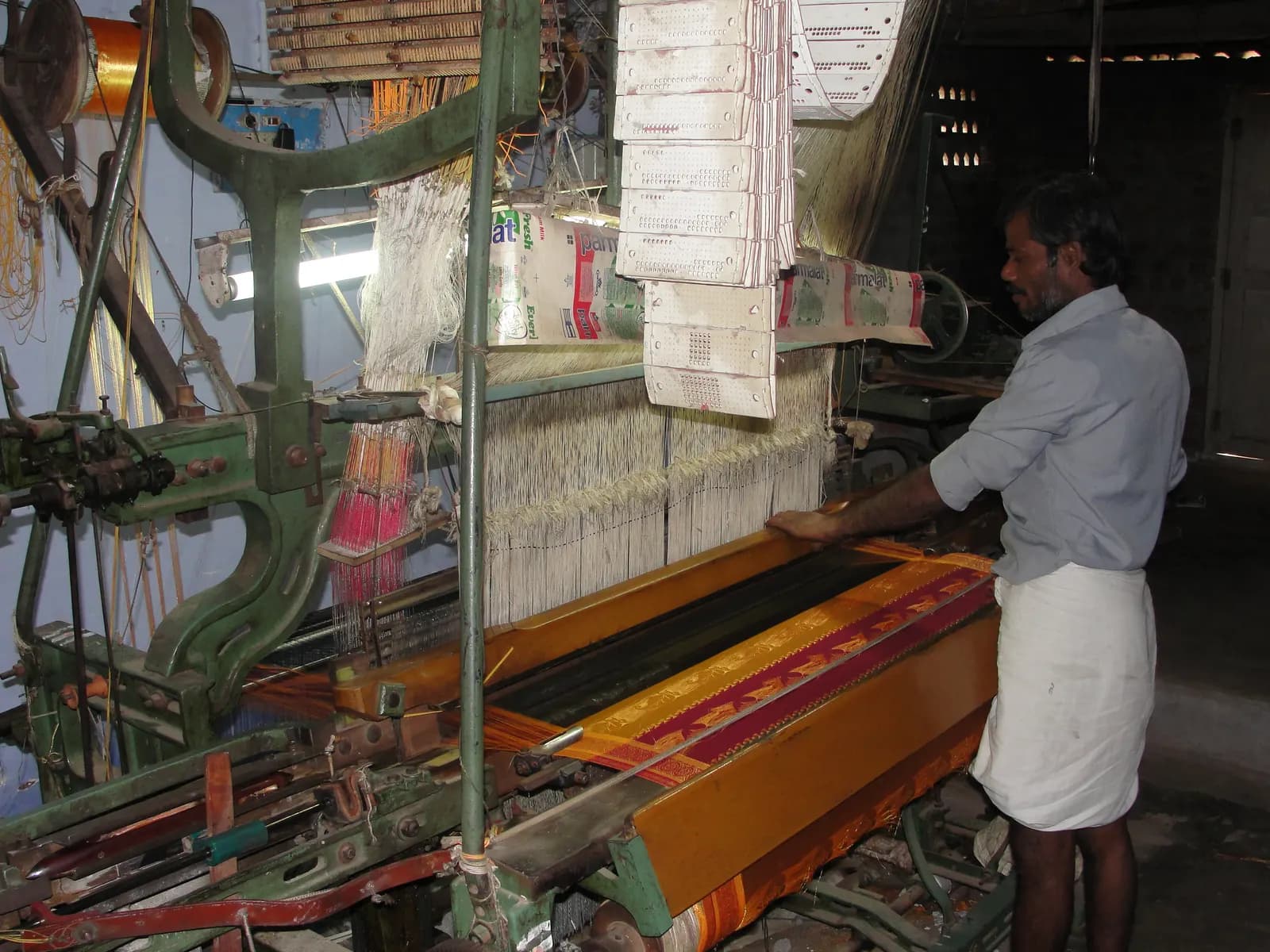
Tenure. The repayment period should roughly match the useful life of the asset and how quickly it pays for itself. Vehicles and computers usually get three to five years; plant and machinery five to seven; buildings and large projects longer. Bank product pages show the range. SBI's published terms, for example, cap its SME Smart Score term loans at seven years including moratorium, its Mudra loans at five years below ₹5 lakh and seven years from ₹5 lakh to ₹10 lakh, and allow up to 240 months on its large Asset Backed Loan against property. A longer tenure lowers the EMI but raises the total interest, so don't stretch it further than your cash flow needs.
Margin (your contribution). Banks rarely fund the full cost. Margin is the share you pay from your own funds — typically 20–33% for MSME term loans. SBI's published products ask for 20% on Mudra loans above ₹50,000, 25% on its Asset Backed Loan, and 33% on the term-loan part of SME Smart Score. A regional rural bank such as Maharashtra Gramin Bank publishes a ceiling of 75% of project cost, subject to DSCR. Government schemes reduce the margin: under PMEGP, general-category borrowers contribute 10% and special categories 5%, with the subsidy treated as part of the promoter's stake.
Moratorium. A moratorium (or "holiday") is the gap between disbursement and the first principal instalment, so the asset can be installed and start earning. Six months is common for machinery; twelve to eighteen months for a building or a new unit. Read the sanction letter carefully: under most bank products, interest must be serviced monthly during the moratorium — only principal is deferred. Where interest is allowed to accumulate instead, it is added to the loan and you pay interest on interest. Ask for a moratorium that matches your installation timeline, not the longest one on offer.
How the interest rate on a term loan is built
The government doesn't fix business loan rates; RBI deregulated lending rates long ago. What RBI does control is the method. Since 1 October 2019, banks must link new floating-rate loans to micro and small enterprises to an external benchmark, and medium enterprises followed from 1 April 2020. Most banks use the RBI policy repo rate, which stands at 5.50% after the Monetary Policy Committee's decision of 7 October 2026.
Your rate is built in layers. The bank first adds its own spread to the repo rate to get its external benchmark lending rate. SBI's MSME product pages, for example, state that its EBR is currently the repo rate plus 2.65% — 8.15% at today's repo rate. On top of that, the bank adds a credit-risk premium that depends on your internal rating, your credit bureau record, the security or guarantee cover and the loan's tenure, and SBI also adds a business strategy premium on some products. RBI requires floating rates on these loans to be reset at least once at least once every three months, so when the repo rate moves, your EMI or your tenure moves at the next reset.
Older loans may still be linked to MCLR, the bank's own cost-of-funds rate. SBI's one-year MCLR was 8.70% from 15 July 2026. If you have an MCLR-linked term loan, ask whether switching to the external benchmark would lower your rate and what the conversion fee is.
Since 1 October 2024, every regulated lender must give MSME term-loan borrowers a Key Facts Statement before signing. It shows the annual percentage rate (APR) — the all-in yearly cost including processing fees, documentation charges and third-party costs such as insurance — and a repayment schedule. Any fee not listed in the KFS cannot be charged later without your explicit consent. Use the APR, not the headline rate, to compare offers.
Rate building blocks (October 2026)
5.50%
RBI repo rate
from 7 Oct 2026
+2.65%
SBI spread over repo
example; each bank sets its own
8.15%
SBI EBR for MSMEs
before your credit-risk premium
8.70%
SBI 1-year MCLR
older loans; w.e.f. 15 Jul 2026
A worked EMI example in ₹
The numbers below are illustrative. They use SBI's published EBR as a starting point, but your bank's spread and your premium will differ, so treat this as a method, not a quote.
Suppose you run a small engineering unit and want a ₹30 lakh CNC turning centre. The bank asks for 25% margin, so you put in ₹7.5 lakh and borrow ₹22.5 lakh. The bank prices the loan at its EBR of 8.15% plus a 1.50% credit-risk premium, giving 9.65%. The tenure is seven years: a six-month moratorium followed by 78 monthly instalments.
During the moratorium you pay interest only — about ₹18,094 a month, or roughly ₹1.09 lakh across the six months. From month seven, the EMI is about ₹38,945. Over 78 instalments that works out to about ₹7.88 lakh of interest, so the loan's total interest cost is close to ₹8.96 lakh on ₹22.5 lakh borrowed, before processing and guarantee fees.
Now change one thing at a time. Cut the instalment period to 60 months and the EMI rises to about ₹47,419, but total interest after the moratorium drops to about ₹5.95 lakh. Price the same loan at 12% — common for a weaker rating or a smaller lender — and the 78-month EMI rises to about ₹41,681, with roughly ₹10 lakh of interest. If the repo rate rises by 0.25 percentage points and the bank passes it on at the next reset, the EMI on the 9.65% loan goes up by roughly ₹290 a month, unless the bank keeps the EMI and stretches the tenure instead. Ask before you sign which of the two the bank applies at a reset, and get it in the sanction letter.
Try it — ₹22.5 lakh machinery loan (change tenure and rate)
DSCR: how banks test whether you can repay
Banks don't lend on the asset alone; they lend on your ability to service the debt from the cash the business generates. The standard yardstick is the debt service coverage ratio (DSCR):
DSCR = (net profit after tax + depreciation + interest on term loans) ÷ (interest on term loans + principal instalments due in the year)
A DSCR of 1 means every rupee of cash accrual goes to the bank, with nothing left for a bad month. RBI does not prescribe a minimum — each bank's board-approved credit policy does — but most lenders want a clear cushion, and an average DSCR of around 1.25 or more over the loan's life is a widely used benchmark. Banks compute it year by year from your projected profit and loss account and look at both the average and the weakest year.
Here is the CNC example worked through. Year-two projections show net profit after tax of ₹3.2 lakh, depreciation of ₹2.4 lakh, and about ₹2.0 lakh of interest on the term loan. Cash available for debt service is ₹7.6 lakh. The year's debt service is 12 EMIs of ₹38,945, or about ₹4.67 lakh. DSCR = 7.6 ÷ 4.67 = 1.63 — comfortable. If profit after tax were only ₹1 lakh, DSCR would fall to about 1.16, and the bank would likely ask for a longer tenure, a bigger margin or a smaller loan.
Three ways to improve DSCR before you apply: show real orders or contracts that back the projected sales; choose a tenure long enough that instalments fit your cash cycle; and bring in a little more margin, which shrinks both the loan and the instalment. Don't inflate projections — banks compare them with your past GST returns, bank credits and income-tax returns, and a jump the history can't explain will be cut.

Security: primary, collateral and guarantees
A term loan has two layers of security. Primary security is the asset the loan pays for — the machine is hypothecated, the vehicle has the bank's lien recorded on the registration certificate, a building is mortgaged. This is always taken, whatever the loan size. Collateral is extra security beyond the asset: your house, a plot, a fixed deposit or a third party's guarantee.
For micro and small enterprises, RBI's Master Direction on lending to the MSME sector tells banks not to accept collateral on loans up to ₹20 lakh, and allows them to extend that to ₹25 lakh for units with a good track record and sound finances. The same ₹20 lakh collateral-free treatment applies to units financed under PMEGP. Gold or silver you pledge voluntarily doesn't break the rule.
Above that limit, ask for cover under the CGTMSE scheme instead of pledging property. CGTMSE guarantees collateral-free credit to micro and small enterprises up to ₹10 crore per borrower, for an annual fee that starts at 0.37% a year of the amount covered on small loans and rises with loan size. The fee is usually passed on to you, so add it to the APR when comparing offers. For large machinery projects, the Mutual Credit Guarantee Scheme for MSMEs gives lenders a 60% guarantee on loans up to ₹100 crore, as explained in our guide to government loans for business.
Banks also take personal guarantees from proprietors, partners or promoter-directors as a matter of routine. That isn't collateral in RBI's sense, but it does mean you are personally liable if the business defaults, so read the guarantee deed before signing.
Documents for a business term loan
0/10Documents and the project report
The checklist above follows SBI's published MSME document list, and most banks ask for much the same file. RBI also requires every bank to publish an indicative MSME document checklist on its website, so download your own bank's version before you go — it saves a second trip.
For a term loan, the project report carries most of the weight, especially for a new unit with no track record. It should name the machine, the supplier and the quoted price; set out installed capacity and the utilisation you expect in years one to three; and build a projected profit and loss account and balance sheet from realistic prices, wages, power and rent. Show where your margin money comes from. Put the DSCR calculation in it yourself, year by year, so the banker can see you have tested repayment. A good report also lists the risks — a single large buyer, an imported part, a seasonal market — and how you will manage them.
Get supplier quotations on letterhead with GSTIN, and make sure they're current; banks normally disburse directly to the supplier against the invoice, not to you.
How to apply and what happens next
You have four routes, and nothing stops you using two at once to compare offers. Your own bank's branch or SME centre knows your account conduct and is usually the quickest for a larger or more complex term loan. Most large banks also run online MSME journeys that read your GST, bank statements and income-tax data; SBI, for instance, lists digital loans of up to ₹5 crore for working capital and fixed assets. For public sector banks, PSB Loans in 59 Minutes gives an in-principle approval for business loans up to ₹5 crore before the branch completes its checks. For scheme loans with a subsidy — PMEGP, Mudra, Stand-Up India — apply through the JanSamarth portal, covered in our guide to government loans for business.
Getting a term loan, step by step
- 1
Fix the asset and the cost
Get current quotations, add installation, transport and GST, and decide your margin. Size the loan as project cost minus margin.
- 2
Check eligibility and credit reports
MSME loan eligibility guideMake sure Udyam registration is current, pull the owners' credit reports and the business's CIBIL MSME Rank, and clear small overdues first.
- 3
Prepare the project report with DSCR
Projected P&L and balance sheet for the loan's life, with a year-by-year DSCR.
- 4
Apply and note the reference number
Apply at the branch, online or via PSB Loans in 59 Minutes. Banks must give an acknowledgement number and track every MSME application.
- 5
Compare KFS and sanction letters
Compare APR, reset clause, moratorium, security, CGTMSE fee and covenants — not just the headline rate.
- 6
Sign, create security, draw down
The bank registers its charge on the asset and pays the supplier directly. Keep insurance on the asset current.
RBI's timeline helps here: for loans up to ₹25 lakh to micro and small enterprises, the credit decision should take no more than 14 working days working days, and if the bank rejects the application it must tell you the main reasons in writing. Larger loans follow the bank's board-approved timelines. If you are turned down, the written reason is your to-do list — see our MSME loan eligibility guide for the common fixes.
Prepayment and foreclosure rules from 1 January 2026
This is the biggest change for term-loan borrowers in years. Under RBI's Pre-payment Charges on Loans Directions, 2025, for floating-rate loans for business purposes to individuals and to micro and small enterprises sanctioned or renewed on or after 1 January 2026:
- Commercial banks (other than small finance, regional rural and local area banks), Tier 4 urban co-operative banks, upper-layer NBFCs and all-India financial institutions cannot charge any pre-payment penalty.
- Small finance banks, regional rural banks, Tier 3 urban co-operative banks, state and central co-operative banks and middle-layer NBFCs cannot charge it on loans with a sanctioned amount up to ₹50 lakh; above that, their board-approved policy applies.
The rules apply whether you prepay in part or in full, whatever the source of the money — including a takeover by another bank — and without any minimum lock-in period. No charge can be levied where the lender itself asks you to prepay, any charge must be disclosed in the sanction letter, loan agreement and KFS, and a charge waived earlier can't be revived at the time of prepayment. Fixed-rate term loans aren't covered by the ban: the lender's disclosed policy applies, and any charge on a term loan must be based on the amount prepaid.
The practical effect is that a floating-rate MSE term loan is now portable. Suppose you took the ₹22.5 lakh loan above and, after 24 instalments, about ₹17 lakh is outstanding. A good season lets you prepay ₹5 lakh while keeping the same EMI. The loan then closes about 18 months earlier and you save roughly ₹2.2 lakh in interest — with no penalty. And if another bank offers a lower spread, you can move the loan without paying for the privilege. Loans sanctioned before 1 January 2026 stay on their original terms until renewal, so check your sanction letter.
Rule changes that affect business term loans
1 Oct 2019
Floating-rate MSE loans linked to an external benchmark (usually repo)
1 Oct 2024
Key Facts Statement with APR mandatory for MSME term loans
1 Jan 2026
No pre-payment penalty on floating-rate MSE business loans (₹50 lakh cap for smaller lenders)
1 Apr 2026
Collateral-free limit for MSE loans raised to ₹20 lakh
7 Oct 2026
Repo rate at 5.50% — flows into floating-rate loans at the next reset
Common mistakes with business term loans
Funding the asset from working capital. Buying machinery out of a cash credit limit leaves no headroom for raw material and makes the account look stressed at renewal. Ask for a term loan for the asset, even if it takes a few more days.
Choosing the longest tenure by default. A seven-year loan on equipment that will be obsolete in four years means you're still paying for a machine you have replaced. Match tenure to useful life and cash flow.
Ignoring the moratorium interest. Many owners budget for the EMI but not for six months of interest-only payments during installation. Put the moratorium interest in your cash plan.
Comparing headline rates. A loan at 9.5% with a 1% processing fee, a CGTMSE fee and compulsory insurance can cost more than one at 9.8% with no extras. Compare the APR in the Key Facts Statement.
Pledging property you don't need to. If you're a micro or small enterprise borrowing up to ₹20 lakh, the bank shouldn't ask for collateral. Above that, ask about CGTMSE first. If a branch insists, escalate to its regional office, then the bank's grievance officer, and after 30 days to the RBI Ombudsman at cms.rbi.org.in.
Missing the reset clause. Floating rates move with the repo rate. Know your reset dates and whether a rise lifts the EMI or stretches the tenure.
Official links
- RBI Master Direction — Lending to MSME Sector₹20 lakh collateral-free rule, timelines
- RBI — Pre-payment Charges on Loans Directions, 2025No prepayment penalty on floating-rate MSE loans from 1 Jan 2026
- RBI — Key Facts Statement circularKFS and APR for MSME term loans
- RBI FAQs on MSME lendingBenchmark pricing, composite loans, decision timelines
- CGTMSEGuarantee cover and fees for collateral-free loans
- Udyam Registration portalFree MSME registration needed before applying
- RBI Complaint Management SystemEscalate unresolved complaints to the RBI Ombudsman
What to do next
Write down the asset, its full cost and your margin, then run two or three tenures through the EMI calculator and check the instalment against your monthly cash surplus. Work out a rough DSCR from last year's accounts. If it's above 1.25 and your Udyam registration and credit reports are clean, apply with your own bank and one other route, and compare the Key Facts Statements line by line. For the full list of MSME products and how interest is set, read the MSME loan guide; to check where you stand before applying, use the loan eligibility calculator.
This is general information, not financial or legal advice — confirm the terms on the official source or with your bank.
Frequently asked questions
A term loan is a lump sum a bank or NBFC lends for a fixed period, usually three to ten years, to buy long-lasting assets such as machinery, vehicles, a shed or a new production line. You repay it in monthly or quarterly instalments, often after a short moratorium. The bank funds part of the cost and you bring the rest as margin money.
A term loan funds fixed assets and is repaid in fixed instalments over several years. Working capital, usually a cash credit or overdraft limit, funds stock, raw material, wages and credit given to buyers; you draw and repay it as cash cycles through the business and pay interest only on the amount used. The limit is reviewed every year.
Yes, for micro and small enterprises. RBI tells banks not to take collateral on MSE loans up to ₹20 lakh, and banks may go up to ₹25 lakh for units with a good track record. Above that, a CGTMSE guarantee of up to ₹10 crore can stand in for property. The machine or asset you buy is still hypothecated to the bank.
RBI does not set a minimum debt service coverage ratio; each bank's credit policy does. Many banks look for an average DSCR comfortably above 1 — around 1.25 or higher is a widely used benchmark — meaning your yearly cash accruals cover the year's principal and interest with a cushion. A thin DSCR usually leads to a smaller loan, a longer tenure or a request for more margin.
For floating-rate business loans to individuals and micro and small enterprises sanctioned or renewed from 1 January 2026, most commercial banks and large NBFCs cannot charge any pre-payment penalty, whether you prepay in part or in full and whatever the source of money. Small finance banks, RRBs and mid-sized NBFCs cannot charge it on such loans up to ₹50 lakh. Fixed-rate loans follow the lender's disclosed policy.
It depends on the product and how long the asset takes to start earning. SBI's published terms, for example, allow up to 6 months on Mudra loans below ₹5 lakh and up to 12 months between ₹5 lakh and ₹10 lakh, and up to 18 months on its larger Asset Backed Loan. Interest is usually serviced monthly during the moratorium even though principal repayments are deferred.
Sources & verification
Figures on this page were checked against the sources below when it was last reviewed on 9 October 2026. Each rate and limit is stored once with its own official source and review date, and official update channels are monitored daily so changes are picked up. How we verify
- 1.Master Direction – Lending to Micro, Small & Medium Enterprises (MSME) Sector (updated 9 February 2026) — Reserve Bank of India · accessed 9 October 2026
- 2.RBI FAQs — Micro, Small and Medium Enterprises (30 July 2025) — Reserve Bank of India · accessed 9 October 2026
- 3.Reserve Bank of India (Pre-payment Charges on Loans) Directions, 2025 — Reserve Bank of India · accessed 9 October 2026
- 4.Key Facts Statement (KFS) for Loans & Advances — RBI/2024-25/18 (15 April 2024) — Reserve Bank of India · accessed 9 October 2026
- 5.SBI — Asset Backed Loan (last updated 7 October 2026) — State Bank of India · accessed 9 October 2026
- 6.SBI — PMMY (Mudra) loans (last updated 3 December 2025) — State Bank of India · accessed 9 October 2026
- 7.SBI — SME Smart Score — State Bank of India · accessed 9 October 2026
- 8.SBI — Required documents checklist for MSME customers — State Bank of India · accessed 9 October 2026
- 9.Maharashtra Gramin Bank — MSME & Project Loans — Maharashtra Gramin Bank · accessed 9 October 2026
- 10.RBI home page — policy repo rate after the 7 October 2026 MPC — Reserve Bank of India · accessed 9 October 2026
MSMETOOLS is an independent platform and is not affiliated with any government agency, ministry or department.
Tools for this
EMI Calculator
Calculate loan EMIs for business and personal loans.
Loan Eligibility Calculator
Check your business loan eligibility based on income and existing loans.
Break Even Calculator
Find your break even point and units.
Related guides
 MSME Loan 2026: How to Apply, Interest Rates & LimitsRead guide
 PSB Loans in 59 Minutes (2026): Eligibility, Fee & StepsRead guide
 MSME Loan Eligibility 2026: Criteria, CIBIL & Scheme RulesRead guide
 ECLGS 2026: Emergency Credit Line Guarantee Scheme 5.0Read guide
Official links open the government site in a new tab.