 Finance & accounting
What Is a Balance Sheet? Format, Sample and How Banks Read It (2026)
Balance sheet meaning for Indian businesses in 2026: Schedule III format, assets vs liabilities, sample company and proprietor balance sheets, key bank ratios.
 Edited by Sumeet YadavFounder & editor, MSMETOOLS · fact-checked against official sources
Contents (10)
- 1. What is a balance sheet? Meaning in plain words
- 2. Assets, liabilities and equity explained
- 3. The Schedule III balance sheet format for companies
- 4. Sample balance sheet of a small private limited company
- 5. Sample balance sheet of a proprietorship
- 6. Key balance sheet ratios and how to calculate them
- 7. How banks read your balance sheet
- 8. Common balance sheet mistakes small businesses make
- 9. Balance sheet filing and who must prepare one
- 10. What to do next
A balance sheet is the one page your banker, investor and tax officer all ask for. It tells them what your business owns, what it owes and how much of it really belongs to you. This guide is for owners of small companies, proprietorships and partnerships in India who want to read their own accounts rather than just sign them. You'll get the meaning, the Schedule III format companies must follow, the ICAI format for proprietors, two sample balance sheets in ₹, the ratios that matter, and how a bank reads the page when you apply for a loan. Everything was checked against the Companies Act, 2013 and ICAI pronouncements in October 2026.
Quick answer
A balance sheet is a statement of a business's assets, liabilities and owners' equity on a particular date — in India, usually 31 March. It always balances: Assets = Liabilities + Equity. Companies must present it in the Schedule III format of the Companies Act, 2013; proprietorships and firms follow ICAI's non-corporate format from 2024-25.
Assets: property, plant and equipment, investments, stock, receivables, cash
Liabilities: long-term loans, short-term borrowings, trade payables, provisions
Equity: share capital + reserves (company) or capital account (proprietor/partner)
Banks read it for net worth, current ratio, debt-equity and TOL/TNW
Schedule III requires current and previous year figures side by side
What is a balance sheet? Meaning in plain words
A balance sheet is a list of everything the business owns and everything it owes, frozen at the close of business on one day. Think of it as a photograph, where the profit and loss account is a video of the year. The photograph shows the machines you bought with a term loan, the stock you bought on supplier credit, the cash you hold, and — after all debts are subtracted — the value that belongs to the owners.
The page always balances because of double-entry bookkeeping. Every rupee in the business came from somewhere: either someone lent it (a liability) or the owners put it in or left their profits in (equity). So the total of what the business owns must equal the total of where the money came from. Assets = Liabilities + Equity is the accounting equation, and a balance sheet is simply that equation written out line by line.
Under section 2(40) of the Companies Act, 2013, the balance sheet is the first component of a company's "financial statement", alongside the profit and loss account, the cash flow statement (which one person companies, small companies and dormant companies may omit), a statement of changes in equity where applicable, and the notes. Section 129 requires those statements to give a true and fair view and to follow the form in Schedule III.
Assets, liabilities and equity explained
Assets are resources the business controls that will bring in cash. Schedule III splits them into non-current and current. Non-current assets are those you'll use or hold beyond the operating cycle or twelve months: property, plant and equipment (land, building, machinery, vehicles, furniture), intangible assets such as software and trademarks, capital work-in-progress (a factory shed still under construction), long-term investments and long-term loans and advances like security deposits. Current assets are expected to turn into cash within the operating cycle or twelve months: inventories, trade receivables, cash and cash equivalents, short-term loans and advances, and other current assets such as GST input credit waiting to be used.
Liabilities are amounts the business owes to outsiders. Non-current liabilities fall due after twelve months — term loans, deferred tax liabilities and long-term provisions such as gratuity. Current liabilities are due within the cycle or twelve months: short-term borrowings (including cash credit and the next year's instalments of term loans), trade payables, other current liabilities like statutory dues and advances from customers, and short-term provisions such as income tax.
Equity is what's left for the owners. In a company it is called shareholders' funds: share capital (the face value of shares issued) plus reserves and surplus (accumulated profits and securities premium). In a proprietorship or partnership it is the capital account — opening capital, plus capital introduced and profit for the year, minus drawings.
The current/non-current test isn't a matter of taste. Schedule III spells out four tests for current assets and four for current liabilities, and adds that a liability is current if the company has no unconditional right to defer settlement for at least twelve months — which is why a term loan instalment due next year moves into short-term borrowings even though the loan itself is long-term.
The Schedule III balance sheet format for companies
Schedule III has three divisions. Division I applies to companies that follow the Accounting Standards under the Companies (Accounting Standards) Rules — almost every private limited company and most unlisted small businesses. Within Division I, a company whose turnover is up to ₹250 crore and borrowings up to ₹50 crore (and which is not listed or a bank or insurer) is a Small and Medium Sized Company under the Companies (Accounting Standards) Rules, 2021, and gets relief from a few Accounting Standards such as segment reporting. Division II applies to companies on Ind AS: listed companies and unlisted companies with net worth of ₹250 crore or more, plus their group companies. Division III is for NBFCs on Ind AS.
The Division I format is vertical and starts with the funding side:
| Schedule III, Division I heading | What goes in it |
|---|---|
| I. Equity and liabilities | |
| (1) Shareholders' funds | (a) Share capital (b) Reserves and surplus (c) Money received against share warrants |
| (2) Share application money pending allotment | Money received for shares not yet allotted |
| (3) Non-current liabilities | (a) Long-term borrowings (b) Deferred tax liabilities (net) (c) Other long-term liabilities (d) Long-term provisions |
| (4) Current liabilities | (a) Short-term borrowings (b) Trade payables — micro and small enterprises / others (c) Other current liabilities (d) Short-term provisions |
| II. Assets | |
| (1) Non-current assets | (a) Property, plant and equipment and intangible assets, capital work-in-progress, intangibles under development (b) Non-current investments (c) Deferred tax assets (net) (d) Long-term loans and advances (e) Other non-current assets |
| (2) Current assets | (a) Current investments (b) Inventories (c) Trade receivables (d) Cash and cash equivalents (e) Short-term loans and advances (f) Other current assets |
Every line carries a note number, the figure at the end of the current year and the figure at the end of the previous year. Companies with total income below ₹100 crore may round to the nearest hundred, thousand, lakh or million (or decimals), and once a unit is chosen it must be used throughout.
What changed with the 2021 amendments
The Ministry of Corporate Affairs amended Schedule III with effect from 1 April 2021, and the additions are now part of every small company's audited accounts. Trade payables must be split between dues to micro and small enterprises and dues to others — useful for any MSME supplier checking whether a buyer pays on time. Companies must give ageing schedules for trade receivables and trade payables, disclose promoters' shareholding and changes in it, and report eleven ratios — current ratio, debt-equity, debt service coverage, return on equity, inventory turnover, receivables turnover, payables turnover, net capital turnover, net profit ratio, return on capital employed and return on investment — with an explanation wherever a ratio moves by more than 25% from the previous year. These ratio disclosures are a ready-made checklist for a lender, so it pays to understand them before your banker does.
Sample balance sheet of a small private limited company
Here is a simplified Schedule III balance sheet for a fictional packaging company, Shree Packaging Pvt Ltd, with sales of ₹4.2 crore and profit after tax of ₹15 lakh for the year. Figures are in ₹ lakh.
| Particulars | Current year | Previous year |
|---|---|---|
| Equity and liabilities | ||
| Share capital | 25 | 25 |
| Reserves and surplus | 63 | 48 |
| Long-term borrowings (term loan) | 40 | 50 |
| Deferred tax liabilities (net) | 3 | 2 |
| Long-term provisions (gratuity) | 4 | 3 |
| Short-term borrowings (cash credit + current maturities) | 45 | 38 |
| Trade payables — micro and small enterprises | 12 | 10 |
| Trade payables — others | 28 | 25 |
| Other current liabilities | 10 | 8 |
| Short-term provisions (income tax) | 5 | 4 |
| Total | 235 | 213 |
| Assets | ||
| Property, plant and equipment | 95 | 92 |
| Capital work-in-progress | 5 | 0 |
| Intangible assets (software) | 2 | 3 |
| Long-term loans and advances (deposits) | 6 | 6 |
| Inventories | 52 | 45 |
| Trade receivables | 58 | 50 |
| Cash and cash equivalents | 7 | 6 |
| Short-term loans and advances | 6 | 7 |
| Other current assets (GST input credit) | 4 | 4 |
| Total | 235 | 213 |
Reading it top to bottom tells a story. Reserves rose by ₹15 lakh — exactly the year's profit, so no dividend was paid. The term loan fell by ₹10 lakh through repayments, while short-term borrowings rose ₹7 lakh as stock and receivables grew by ₹15 lakh between them. The company is investing (₹5 lakh of capital work-in-progress), and its sales grew, but more of its working capital is now funded by the bank. That's the kind of conclusion a credit officer draws in the first two minutes.
Sample balance sheet of a proprietorship
Proprietors and partnership firms don't file accounts with the Registrar, and Schedule III doesn't bind them. But ICAI's Guidance Note on Financial Statements of Non-Corporate Entities, issued in August 2023 and applicable to financial statements for periods from 1 April 2024, gives them a standard format: owners' funds, non-current liabilities, current liabilities, and assets split into non-current and current — close to Schedule III. Firms whose turnover is up to ₹250 crore and borrowings up to ₹50 crore are treated as MSMEs and get relaxations from some Accounting Standards.
A sample for Sharma Traders, a hardware trader run by its proprietor, in ₹ lakh:
| Owners' funds and liabilities | ₹ lakh | Assets | ₹ lakh |
|---|---|---|---|
| Capital account: opening 30 + profit 9 − drawings 6 | 33 | Furniture, fittings and vehicle (net of depreciation) | 12 |
| Unsecured loans from relatives | 5 | Security deposit for shop | 2 |
| Vehicle loan (non-current portion) | 4 | Stock-in-trade | 38 |
| Cash credit from bank | 15 | Trade receivables | 20 |
| Trade payables | 18 | Cash and bank | 5 |
| GST and other dues payable | 2 | ||
| Total | 77 | Total | 77 |
The capital account movement is the heart of a proprietor's balance sheet. A bank looks at whether profit is being retained or drawn out — here two-thirds of the year's ₹9 lakh profit stayed in the business. Unsecured loans from relatives are another point of attention; many banks will treat them as quasi-equity if the lender signs a letter agreeing not to withdraw them while the bank loan is outstanding, which improves the ratios below.
Key balance sheet ratios and how to calculate them
Ratios turn the balance sheet into a handful of numbers you can compare year to year and against what lenders expect. Using the Shree Packaging figures (with sales of ₹420 lakh, cost of goods sold of ₹340 lakh, profit after tax ₹15 lakh, depreciation ₹10 lakh, interest ₹9 lakh and loan repayments of ₹10 lakh):
Shree Packaging — key ratios
1.27
Current ratio
127 ÷ 100
0.97
Debt-equity
85 ÷ 88
1.71
TOL / TNW
147 ÷ 86
1.79
DSCR
(15+10+9) ÷ (9+10)
50 days
Debtor days
58 ÷ 420 × 365
56 days
Inventory days
52 ÷ 340 × 365
Current ratio is current assets (52 + 58 + 7 + 6 + 4 = ₹127 lakh) divided by current liabilities (45 + 12 + 28 + 10 + 5 = ₹100 lakh). At 1.27 it is a little below the 1.33 that Tandon's second method implies, which tells you the company is leaning on short-term borrowing. The quick ratio, excluding stock, is 0.75.
Debt-equity compares borrowings (term loan ₹40 lakh + short-term ₹45 lakh) with net worth (₹25 + ₹63 = ₹88 lakh). Many lenders are comfortable below 2 for manufacturing MSMEs, though each bank's policy differs.
TOL/TNW — total outside liabilities divided by tangible net worth — is the ratio Indian bankers quote most. Outside liabilities are everything except owners' funds (₹235 − ₹88 = ₹147 lakh). Tangible net worth excludes intangible assets (₹88 − ₹2 = ₹86 lakh). A result of 1.71 means outsiders have funded ₹1.71 for every rupee of the owners' own tangible money.
DSCR (debt service coverage ratio) needs the profit and loss account: cash profit before interest (PAT + depreciation + interest = ₹34 lakh) divided by the year's debt service (interest + principal = ₹19 lakh). At 1.79, the business earns enough to meet its loan obligations with a cushion; banks commonly look for an average DSCR comfortably above 1.
Debtor days and inventory days show how long cash is stuck in receivables and stock. They connect the balance sheet to working capital, which our working capital guide covers in detail.
How banks read your balance sheet
When you apply for a term loan or a cash credit limit, the bank feeds your last two or three balance sheets plus projections into a CMA (credit monitoring arrangement) format, and an analyst reads them with a specific set of questions. RBI asks banks to appraise the genuine working capital requirement of each borrower under board-approved loan policies, so the exact thresholds vary — but the questions don't.
What a credit officer checks first
0/8Net worth trend. A business that reports profit but whose net worth doesn't grow is either paying it out or writing it off somewhere. Bankers look at reserves (or the capital account) across three years.
Mismatch with stock statements. If your March stock statement to the bank showed ₹70 lakh of stock but the audited balance sheet shows ₹52 lakh, expect questions and a reduced drawing power. Reconcile the two before the audit is signed.
Diversion of funds. Fixed assets that grew without a matching term loan or capital infusion suggest short-term money was used for long-term purposes — the classic cause of a working capital squeeze.
Contingent liabilities and notes. Guarantees given for group companies, disputed tax demands and pending litigation sit in the notes, not on the face of the balance sheet. They often matter more than the headline numbers.
Consistency with GST and ITR. Banks cross-check sales in the profit and loss account with GSTR-3B and the income-tax return. A balance sheet that doesn't match your returns undermines everything else in it.
Common balance sheet mistakes small businesses make
Mixing personal and business items. Proprietors often show a family home or personal investments as business assets, inflating net worth. Banks strip these out, and so does any careful valuer.
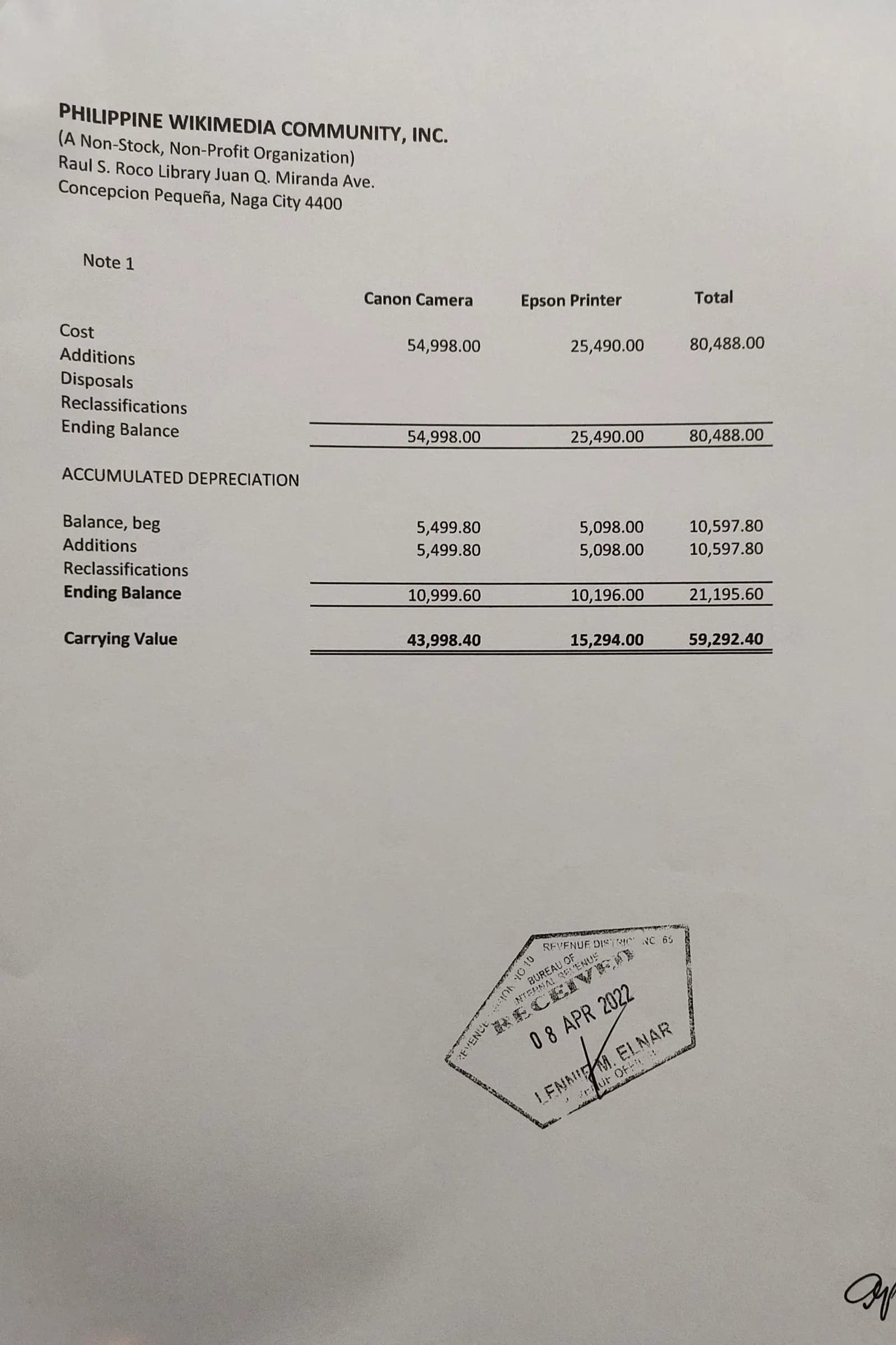
Ignoring depreciation. Showing machinery at purchase cost year after year overstates assets. Depreciate consistently — the fixed-asset note should show cost, accumulated depreciation and carrying value.
Carrying dead receivables and stock. Debtors who will never pay and obsolete stock sit in current assets and flatter the current ratio. Write them off or provide for them; the ageing schedule will expose them anyway.
Classifying the next year's loan instalments as long-term. The portion of a term loan due within twelve months belongs in current liabilities under Schedule III. Leaving it in long-term borrowings overstates the current ratio and is one of the first things a bank's analyst corrects.
Leaving the MSE payables split blank. Small companies sometimes report all trade payables as one figure. Schedule III requires dues to micro and small enterprises to be shown separately, and MSME suppliers paid beyond 45 days bring interest and tax consequences for the buyer.
Balance sheet filing and who must prepare one
Who prepares what
| Entity | Balance sheet format | Cash flow statement | Filed with |
|---|---|---|---|
Company (AS) | Schedule III, Division I | Yes, unless OPC, small or dormant company | Registrar (AOC-4) |
Company (Ind AS) | Schedule III, Division II | Yes (Ind AS 7) | Registrar (AOC-4) |
LLP | Statement of Account and Solvency | Not prescribed | Registrar (Form 8) |
Proprietorship / firm | ICAI non-corporate format (from 2024-25) | Optional for MSMEs | No Registrar filing; figures go in the ITR |
Company (AS)
- Balance sheet format
Schedule III, Division I
- Cash flow statement
Yes, unless OPC, small or dormant company
- Filed with
Registrar (AOC-4)
Company (Ind AS)
- Balance sheet format
Schedule III, Division II
- Cash flow statement
Yes (Ind AS 7)
- Filed with
Registrar (AOC-4)
LLP
- Balance sheet format
Statement of Account and Solvency
- Cash flow statement
Not prescribed
- Filed with
Registrar (Form 8)
Proprietorship / firm
- Balance sheet format
ICAI non-corporate format (from 2024-25)
- Cash flow statement
Optional for MSMEs
- Filed with
No Registrar filing; figures go in the ITR
Every company, including one person companies and small companies, must prepare a balance sheet in Schedule III format, have it audited, adopt it at the annual general meeting and file it with the Registrar on the MCA portal in Form AOC-4. A small company — a private company with paid-up capital up to ₹10 crore and turnover up to ₹100 crore under the limits notified on 1 December 2025 — still prepares a balance sheet but may leave out the cash flow statement. LLPs prepare a Statement of Account and Solvency under the LLP Act, which has its own format.
Proprietors and partnership firms have no Registrar filing, but income-tax law requires many of them to keep books, and a business income-tax return asks for balance sheet figures unless you opt for presumptive taxation. In practice, any business that borrows from a bank, applies for a tender or brings in an investor will need one prepared by a chartered accountant, and from 2024-25 ICAI expects its members to use the non-corporate format.
Official links
- Companies Act, 2013 (India Code) — Schedule IIIFormat and general instructions for the balance sheet
- MCA portal — company filings (AOC-4)File financial statements with the Registrar
- ICAI — accounting standards and guidance notesGuidance Note on financial statements of non-corporate entities
- RBI FAQs on MSME lendingHow banks appraise MSE borrowers
What to do next
Pull out your last two balance sheets and calculate the current ratio, TOL/TNW and debtor days using the method above — it takes ten minutes and tells you what a banker will see. If working capital looks tight, our working capital guide shows how banks size a cash credit limit; if you're preparing for a loan, read the MSME loan guide and check your CIBIL score. To see how cash moved between two balance sheet dates, continue to our cash flow statement guide.
This is general information, not legal or tax advice — confirm on the official source or with a professional.
Frequently asked questions
A balance sheet is a snapshot of what a business owns and what it owes on one date — usually 31 March. Assets (machines, stock, money customers owe, cash) are listed on one side; liabilities (loans, supplier dues) and the owners' funds (capital plus accumulated profit) on the other. The two sides always total the same, because every asset was paid for either with borrowed money or the owners' money.
Companies follow Schedule III. Division I (for companies under the Accounting Standards) uses a vertical format: Equity and Liabilities — shareholders' funds, non-current liabilities, current liabilities — followed by Assets — non-current assets and current assets — with figures for the current and previous year and note references. Companies under Ind AS use Division II, which has different headings such as 'Other equity' and 'Financial assets'.
The Companies Act format doesn't apply, but a proprietor who maintains books of account under income-tax rules, needs a bank loan or has a tax audit prepares a balance sheet anyway. ICAI's Guidance Note on financial statements of non-corporate entities, applicable from 2024-25, gives a standard format with owners' capital account, current and non-current liabilities, and assets — very close to Schedule III.
The most common are the current ratio (current assets ÷ current liabilities), debt-equity ratio, TOL/TNW (total outside liabilities ÷ tangible net worth), debt service coverage ratio from the profit and loss account, and debtor and inventory days. Banks also check the trend over two to three years, unsecured loans from promoters, overdue statutory dues and any auditor's qualification.
Because of double entry. Every transaction has two sides: buying a ₹5 lakh machine on a loan raises assets and liabilities by ₹5 lakh each; earning ₹1 lakh profit raises cash and owners' equity by ₹1 lakh each. So assets will always equal liabilities plus equity. If your balance sheet doesn't tally, an entry is missing or posted to the wrong side.
The balance sheet shows position on one date; the profit and loss account shows performance over a period — sales, expenses and profit for the year. They connect: the year's profit (after drawings or dividends) is added to reserves or the capital account in the balance sheet. A cash flow statement then explains how cash moved between the two balance sheet dates.
Sources & verification
Figures on this page were checked against the sources below when it was last reviewed on 8 October 2026. Each rate and limit is stored once with its own official source and review date, and official update channels are monitored daily so changes are picked up. How we verify
- 1.Companies Act, 2013 — section 2(40), section 2(85) and Schedule III — India Code (Legislative Department) · accessed 8 October 2026
- 2.Applicability of Accounting Standards to non-company entities (from 1 April 2024) — ICAI (EIRC) · accessed 8 October 2026
- 3.MCA raises small company thresholds to ₹10 crore capital and ₹100 crore turnover — Taxmann · accessed 8 October 2026
- 4.FAQs on MSME lending — Reserve Bank of India · accessed 8 October 2026
- 5.ICAI's new balance sheet format for non-corporate entities — ClearTax · accessed 8 October 2026
- 6.How to create financial statements for non-corporate entities as per ICAI guidance — Tally Solutions · accessed 8 October 2026
- 7.Appendix I to the Compendium of Accounting Standards — applicability — ICAI · accessed 8 October 2026
MSMETOOLS is an independent platform and is not affiliated with any government agency, ministry or department.
Tools for this
Working Capital Calculator
Check working capital, current and quick ratios.
Loan Eligibility Calculator
Check your business loan eligibility based on income and existing loans.
Profit Margin Calculator
Calculate profit, markup and margin for your products or services.
Business Valuation Calculator
Estimate what your business is worth.
Related guides
 What Is a Profit and Loss Statement? Format & Example 2026Read guide
 What is CIBIL Score? Range, Good Score & Free Check 2026Read guide
 How to Open a Current Account in 2026: Documents & RBI RulesRead guide
 Documents Needed for a Business Loan in 2026: Full ChecklistRead guide
Official links open the government site in a new tab.