 Business registration & legal
NYC Business License (2026): DCWP Licenses, the Certificate of Authority and City Business Taxes
NYC business license guide for 2026: no general license, but DCWP licenses for 40+ trades, the free NYS Certificate of Authority and the 4% UBT, with examples.
 Edited by Sumeet YadavFounder & editor, MSMETOOLS · fact-checked against official sources
Contents (11)
- 1. Does NYC require a business license?
- 2. Which businesses need a DCWP license
- 3. Common DCWP license fees in 2026
- 4. Licenses and permits from other agencies
- 5. State registrations every NYC business should check
- 6. NYC business taxes: UBT, BCT and GCT
- 7. Commercial Rent Tax in Manhattan
- 8. Worked examples
- 9. Renewals, changes and closing
- 10. Common mistakes
- 11. What to do next
If you're starting a business in Manhattan, Brooklyn, Queens, the Bronx or Staten Island, the first surprise is that there's no single NYC business license to buy. New York City licenses specific trades instead, mainly through the Department of Consumer and Worker Protection (DCWP), and leaves everyone else to register with the state and the city tax office. This guide shows which businesses need a DCWP license and what the common ones cost in 2026, how the free New York State Certificate of Authority works, and how the city's own business taxes, the Unincorporated Business Tax, the corporate taxes and the Commercial Rent Tax, apply. Every figure was checked on City of New York and New York State pages in October 2026.
Quick answer
New York City has no general business license. You need a City license only if your trade is on a regulated list, most of which DCWP licenses: home improvement contractors, tobacco and e-cigarette retailers, general vendors, secondhand dealers, debt collectors, garages and parking lots, and about 30 others. Almost every business still needs state registrations, and many owe city business taxes.
DCWP fees are per license and often prorated, e.g. home improvement contractor $200, tobacco retail dealer $200
Selling taxable goods or services? Get a free NYS Certificate of Authority at least 20 days before you start
NYC sales tax rate: 8.875%
Sole proprietors and LLCs: 4% Unincorporated Business Tax, return required above $95,000 gross income
Food, liquor, building and fire permits come from other agencies, not DCWP
Does NYC require a business license?
Not in the way most cities do. Los Angeles, San Francisco and Seattle all make every business buy a city registration or tax certificate. New York City doesn't. A freelance copywriter in Astoria, an online store run from a Bushwick apartment or a two-person accounting practice in Midtown can operate without any city license at all, as long as their activity isn't on a licensed list.
What the City does have is a long list of regulated activities. DCWP says it licenses more than 45,000 businesses across more than 45 industries, and other agencies handle food, alcohol, construction trades, health care, child care and transport. If your business falls into one of those categories, the license is mandatory before you open, and operating without it brings fines and closure orders.
So the real question isn't "how do I get an NYC business license?" but "which registrations does my particular business need?" For most new businesses the answer is a combination of three things:
- Entity and name registration with New York State or the County Clerk.
- State tax registrations, especially the sales tax Certificate of Authority and, if you hire, employer registration.
- Any trade license or permit your activity requires, from DCWP or another City or State agency.
On top of those, you file the city's business taxes with the NYC Department of Finance. None of these needs an application to "open" an account in advance in the way a license does, but you're on the hook from the first year you have income.
Which businesses need a DCWP license
DCWP publishes a list of the industries it licenses, with each license's expiry date. The September 2026 version includes these, among others:
| Industry | License expires |
|---|---|
| Home Improvement Contractor | February 28, odd years |
| Tobacco Retail Dealer | December 31, odd or even years by filing date |
| Electronic Cigarette Retail Dealer | November 30, odd or even years by filing date |
| General Vendor | September 30, odd years |
| Secondhand Dealer (General and Auto) | July 31, odd years |
| Garage and/or Parking Lot | March 31, odd years |
| Debt Collection Agency | January 31, odd years |
| Employment Agency | May 1, even years |
| Car Wash | October 31, odd years |
| Hotel | September 30, even years |
| Third-Party Food Delivery Service | August 31, odd years |
| Pawnbroker | April 30, annually |
| Tow Truck Company | April 30, even years |
| Process Server (individual and agency) | February 28, even years |
| Self-Storage Facility | April 1, even years |
The list also covers bingo and games of chance, booting companies, construction labor providers, dealers in products for the disabled, horse-drawn cabs, industrial laundries, newsstands, pedicabs, scale dealers, scrap metal processors, sightseeing buses and guides, stoop line stands, storage warehouses, ticket sellers and tow truck drivers.
Most DCWP licenses run for two years and expire on a fixed date for the whole industry, whenever you apply. That's why so many fees are prorated: apply late in a cycle and you pay less, but you renew sooner. You apply online through the City's NYC Business portal, also called the Business Toolbox, and DCWP accepts credit cards with a nonrefundable convenience fee of around 2%.
Licenses the City has dropped
The list shrinks over time, and many older guides are out of date. Under Local Law 183 of 2025, DCWP no longer licenses electronics stores, electronic and home appliance service dealers or general vendor distributors, and the locksmith and locksmith apprentice licenses end on May 31, 2027. Earlier laws ended licenses for special sales, retail laundries, gaming cafés, amusement arcades and devices, auction houses and auctioneers (2021), pool and billiard rooms (2020), home improvement salespersons (2020), cabarets and catering establishments (2017). Since August 30, 2024, street fair vendors no longer need a Temporary Street Fair Vendor Permit, and sidewalk cafés now go through the permanent Dining Out NYC program rather than DCWP.

Common DCWP license fees in 2026
DCWP sets a fee for each license. These are the figures on the City's license pages and checklists in October 2026; card payments add the convenience fee, and fingerprinting is charged separately where it's required.
Selected DCWP licenses and fees
| License | Full-period fee | Prorated fees | Other costs |
|---|---|---|---|
Home Improvement Contractor | $200 (2 years) | $150, $100, $50 | $200 Trust Fund or $20,000 bond; renewal $250 |
Tobacco Retail Dealer | $200 (2 years) | $150 if filed July–December | State retail dealer registration; community district caps |
Secondhand Dealer General | $340 (2 years) | $255, $170, $85 | Online-only sellers exempt |
General Vendor | $200 (1 year) | $100 if filed March 31–September 30 | Only 853 non-veteran licenses |
Home Improvement Contractor
- Full-period fee
$200 (2 years)
- Prorated fees
$150, $100, $50
- Other costs
$200 Trust Fund or $20,000 bond; renewal $250
Tobacco Retail Dealer
- Full-period fee
$200 (2 years)
- Prorated fees
$150 if filed July–December
- Other costs
State retail dealer registration; community district caps
Secondhand Dealer General
- Full-period fee
$340 (2 years)
- Prorated fees
$255, $170, $85
- Other costs
Online-only sellers exempt
General Vendor
- Full-period fee
$200 (1 year)
- Prorated fees
$100 if filed March 31–September 30
- Other costs
Only 853 non-veteran licenses
Home improvement contractors need the license for residential repair, remodelling and renovation work. On top of the fee, you enroll in the City's Trust Fund for $200 or post a $20,000 surety bond, show workers' compensation coverage or an exemption, provide EPA lead-safe certification or an affirmation, and get every owner, officer and 10%-plus shareholder fingerprinted. At least one qualifying person must pass the home improvement exam. The application requires your New York State sales tax ID, so register for the Certificate of Authority first.
General vendors sell non-food goods or services on the street. This is the hardest license to get: the City can issue only 853 to non-veterans, and the waiting list is closed. Honorably discharged veterans who live in New York State, and their surviving spouses or partners, can apply directly and don't pay the license fee. Selling food from a cart or truck is a different license from the Health Department.
Tobacco and e-cigarette retailers need separate DCWP licenses, each about $200 for two years. Since February 24, 2018, the number of licenses in each community district has been capped, so a new store may be refused unless it fits an exception. You also need New York State's registration as a retail dealer of cigarettes and vapor products.
Secondhand dealers who buy and sell used goods from a shop need a license; nonprofits, garage sales and businesses that buy and sell exclusively online are exempt.
Licenses and permits from other agencies
DCWP is only one licensing office. Depending on your business, you may also deal with:
- Department of Health and Mental Hygiene (DOHMH): restaurants and other food service establishments need a permit, currently $280. Mobile food vendors need a personal license ($50 (two years)) and a separate vehicle or cart permit. Child care programs, body piercing and tattoo studios are also licensed here.
- New York State Liquor Authority: any license to sell beer, wine or spirits, and an application process that includes notifying the local community board.
- Department of Buildings: licensed trades such as master plumbers and electricians, plus permits and certificates of occupancy for your space.
- FDNY: permits for things like commercial cooking systems, flammable materials and places of assembly.
- New York State Department of State: licenses for barbers, cosmetologists, nail specialists, real estate brokers, security guards and appearance enhancement businesses.
Our business licenses guide explains how city, state and federal licenses fit together in general.
Registrations to check before you open in NYC
0/7State registrations every NYC business should check
Forming the business and registering a name
Sole proprietors and general partnerships that use a name other than the owner's own file a business certificate (an assumed name certificate) with the County Clerk in each county where they do business. The five boroughs are five counties, so a business in Manhattan files with the New York County Clerk and one in Brooklyn with the Kings County Clerk. Several DCWP licenses, including home improvement and secondhand dealer, ask for this certificate.
LLCs and corporations register with the New York State Department of State instead. LLCs also have to complete the publication requirement within 120 days of formation. Our New York LLC guide walks through the state fees and the publication cost, which is much higher in New York County than elsewhere. You'll also want an EIN from the IRS for a bank account and tax filings.
The sales tax Certificate of Authority
Anyone who sells taxable goods or taxable services in New York must register with the State Department of Taxation and Finance and hold a Certificate of Authority before making sales. The Tax Department says you must register at least 20 days before you begin business, and you apply online through New York Business Express using a NY.gov Business account. There's no fee. The rule applies to home-based sellers, temporary vendors and people who sell only once a year.
The certificate has to be displayed at your place of business. Operating without one is expensive: up to $500 for the first day and up to $200 for each day after that, to a maximum of $10,000. In the city you'll charge 8.875%: the 4% state rate, the 4.5% city rate and the 0.375% commuter district surcharge. Our New York sales tax guide covers which goods and services are taxable and how often you file.
Getting set up in New York City
- 1
Choose your structure and register it
LLCs and corporations file with the NYS Department of State. Sole proprietors using a trade name file a business certificate with their County Clerk.
- 2
Get an EIN
EIN guideFree from the IRS online. You'll need it for state registrations, banking and hiring.
- 3
Register for sales tax if you sell taxable items
NYS — Register for sales taxApply through New York Business Express at least 20 days before your first sale. The Certificate of Authority is free.
- 4
Check whether your trade is licensed
DCWP licensed industriesSearch the DCWP industry list and the NYC Business portal. Apply for any license before you open, and book fingerprinting or exams early.
- 5
Diary your city tax returns
UBT, Business Corporation Tax or General Corporation Tax, and Commercial Rent Tax if you rent in Manhattan below 96th Street.
NYC business taxes: UBT, BCT and GCT
This is where New York City differs most from other places. It doesn't charge a license fee to every business, but it does tax business income directly, on top of state tax.
Unincorporated Business Tax (UBT)
The UBT applies to individuals, partnerships, LLCs, estates and trusts that carry on a trade, business or profession wholly or partly in New York City. That covers most freelancers, consultants, contractors and small LLCs. The rate is 4% of taxable income allocated to the city.
You must file a UBT return if your total gross income from all businesses, wherever carried on, is more than $95,000, measured before deducting the cost of goods sold or services. If you run more than one unincorporated business, the City treats them as one and you combine them on a single return.
Three features take the edge off for small businesses:
- An allowance for your own services of 20% of net income or $10,000, whichever is lower.
- An exemption of $5,000 against net income, prorated if you weren't in business for the whole year.
- A business tax credit: if your computed tax is $3,400 or less, the credit cancels it entirely. Between that and $5,400, you get a partial credit equal to the tax × ($5,400 − tax) ÷ $2,000. At $5,400 or more, there's no credit.
Employees aren't subject to UBT on their wages, and owning and renting out your own property isn't a business for UBT purposes. Smaller filers who don't allocate income outside the city can use the short Form NYC-202S.
Business Corporation Tax and General Corporation Tax
C corporations doing business in the city pay the Business Corporation Tax (BCT). The generally applicable rate is 8.85% of business income allocated to the city, with lower rates available to small corporations and qualified manufacturers. Every corporation also pays at least a fixed dollar minimum based on its New York City receipts, starting at $25 for receipts up to $100,000 and reaching $500 for receipts between $500,000 and $1 million.
S corporations are treated differently. New York City doesn't recognise the federal S election for business tax, so S corporations and qualified subchapter S subsidiaries file the older General Corporation Tax (GCT) instead of the BCT. This is one reason the choice between an LLC and an S corporation works out differently in the city than elsewhere: the LLC owner pays UBT, the S corporation pays GCT, and neither escapes city tax entirely.
NYC business taxes at a glance (2026)
4%
Unincorporated Business Tax rate
Return required above $95,000 gross income
$3,400 or less
UBT fully credited when tax is this or less
8.85%
Business Corporation Tax general rate
8.875%
Combined sales tax rate in NYC
Commercial Rent Tax in Manhattan
If you lease commercial space in Manhattan south of the center line of 96th Street, check the Commercial Rent Tax (CRT). It applies to tenants whose annual or annualized gross rent is at least $250,000. The statutory rate is 6% of base rent, but every tenant gets a 35% base rent reduction, which brings the effective rate to 3.9%. Tenants with taxable rent between $250,000 and $300,000 get a sliding-scale credit.
Since June 1, 2018, a small business tax credit fully exempts tenants with total income of $5 million or less and annual base rent below $500,000, with a partial credit for total income up to $10 million and rent up to $550,000. You must still file a return if your annual gross rent is over $200,000. The CRT year runs June 1 to May 31; the annual return is due June 20, and quarterly returns are due September 20, December 20 and March 20. Outer-borough and uptown tenants don't pay it at all.
Worked examples
These use the 2026 figures above and ignore federal and state income tax.
A freelance graphic designer in Brooklyn. She works as a sole proprietor with $130,000 of gross receipts and $120,000 of net profit. She needs no DCWP license, and no business certificate if she trades under her own name. Because her gross income is above $95,000, she files a UBT return. Her services allowance is $10,000 (lower than 20% of $120,000), leaving $110,000. Taking off the $5,000 exemption leaves $105,000, and 4% of that is $4,200. Her credit is $4,200 × ($5,400 − $4,200) ÷ $2,000 = $2,520, so she pays $1,680 of UBT. Had her net profit been $85,000, the tax of $2,800 would have been fully credited.
A home improvement contractor LLC in Queens, applying in October 2026. The owner forms the LLC with the Department of State, gets an EIN and registers for a Certificate of Authority, because repair and maintenance work on real property is taxable in New York (capital improvements generally aren't). Applying for the DCWP license in October of an even year falls in the last window, so the license fee is $50, plus $200 for the Trust Fund and fingerprinting. But the license expires on February 28, 2027, so the $250 renewal comes four months later. Total licensing cost in the first six months: about $500 before fingerprinting and card fees. Applying in March 2027 instead would have meant paying the full $200 for two years.
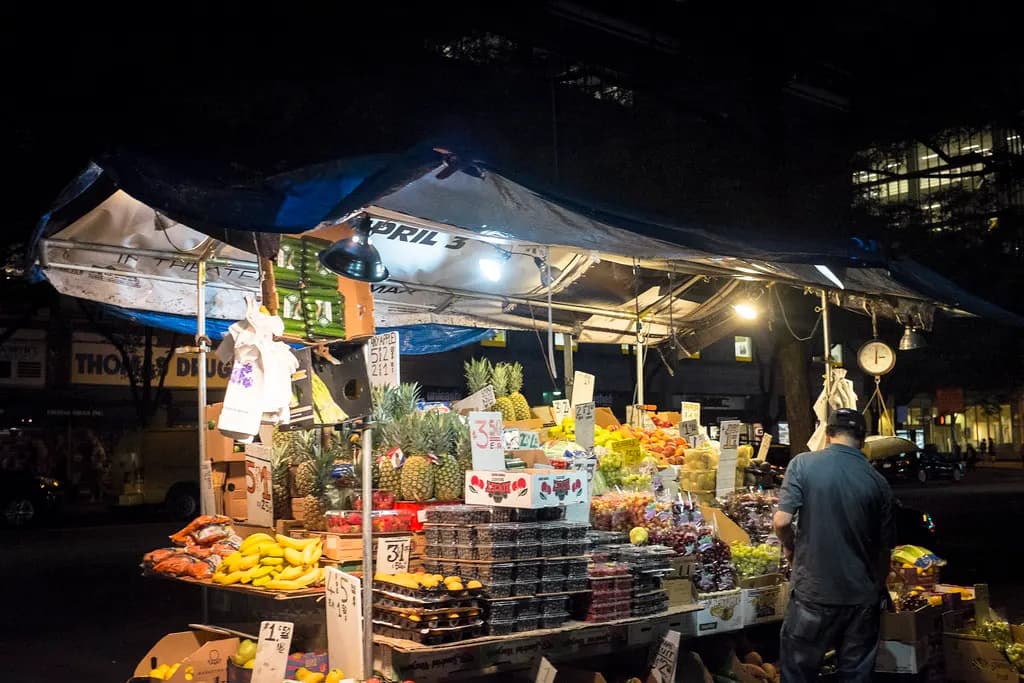
A bodega in the Bronx that wants to sell cigarettes. The owner needs a Certificate of Authority (free), a New York State retail food store license and the State's retail dealer registration for tobacco. The DCWP Tobacco Retail Dealer license costs $200 for a full two years, or $150 if filed from July to December. The bigger obstacle is the community district cap: if the district is at its limit, DCWP won't issue a new license unless the store fits an exception, such as buying an existing licensed business. Taxable sales are charged at 8.875%.
A small S corporation consultancy in Midtown. It rents a small office for $90,000 a year, well under the $250,000 Commercial Rent Tax threshold, and needs no DCWP license. As an S corporation, it files the General Corporation Tax rather than the Business Corporation Tax or UBT.
Try it: NYC sales tax on a $2,500 sale
Renewals, changes and closing
DCWP sends renewal notices before your industry's expiry date, but it's your responsibility to renew on time. Most renewals are filed online through the NYC Business portal. Renew well before the expiry date, because a license that lapses leaves you operating unlicensed until DCWP processes a new application. If your business details change, such as your address, ownership or trade name, notify DCWP rather than waiting for renewal.
Your tax registrations need the same attention. If you move, close or change your entity, update New York State, and file final returns with the Department of Finance. A sole proprietor who forms an LLC usually needs a new Certificate of Authority and new DCWP licenses, because licenses belong to the legal owner, not the trading name. When you close a business, file a final sales tax return and tell the Tax Department so it stops expecting returns.
Common mistakes
Searching for a "general business license" that doesn't exist. Some websites sell "NYC business license" packages that are really a state filing plus a document search. Check the DCWP list and the NYC Business portal yourself, which is free.
Starting sales before the Certificate of Authority arrives. The 20 days rule exists because the Tax Department needs time to process. Penalties start on day one.
Ignoring the UBT because you're "just a freelancer". The UBT was designed for exactly that group. Once your gross income is above $95,000, you must file even if the credit reduces your tax to zero.
Assuming an S corporation avoids city tax. New York City doesn't follow the federal S election for its business taxes, so the corporation files the GCT instead.
Applying for a DCWP license at the wrong time. A license bought weeks before the industry expiry date still needs a full-price renewal. Check the expiry calendar before applying if you have flexibility.
Relying on old license lists. Electronics stores, general vendor distributors and appliance service dealers no longer need DCWP licenses, and locksmiths won't after May 31, 2027.
Official links
- DCWP — LicensesIndustry pages and requirements
- DCWP licensed industries and expiry datesUpdated 09/2026
- NYC Business — Home Improvement ContractorFees and documents
- NYC Finance — Unincorporated Business TaxRate, credit, forms
- NYC Finance — Commercial Rent TaxManhattan south of 96th Street
- NYS — Register for sales taxCertificate of Authority via New York Business Express
What to do next
Start with your structure: form your LLC using our New York LLC guide, or file a business certificate if you're a sole proprietor using a trade name. Then register for sales tax if you'll sell anything taxable, using our New York sales tax guide and the sales tax calculator to price at 8.875%. Check the DCWP list for your trade, and budget license fees, fingerprinting and city taxes with the startup cost calculator.
This is general information, not legal or tax advice — confirm on the official source or with a professional.
Frequently asked questions
No. New York City has no single general business license. You need a City license only if your activity is on a regulated list, such as home improvement contracting, tobacco sales, general vending, secondhand dealing or debt collection, which the Department of Consumer and Worker Protection (DCWP) licenses. Food, liquor, building and fire permits come from other agencies. Most businesses still register with the state and the Department of Finance.
It depends on the license. DCWP fees are set per industry and are often prorated by when you apply. For example, a Home Improvement Contractor license is $200 for a full two-year period plus $200 for the Trust Fund, a Tobacco Retail Dealer license is $200 for two years, and a Secondhand Dealer General license is up to $340. Card payments add a convenience fee.
Yes. The New York State Tax Department doesn't charge for a sales tax Certificate of Authority. You apply online through New York Business Express at least 20 days before you start selling taxable goods or services. Operating without one can cost up to $500 for the first day and $200 for each later day, to a maximum of $10,000.
Sole proprietors, partnerships and LLCs taxed as partnerships or disregarded entities that carry on a business in New York City. You must file a UBT return if your total gross income from all businesses is more than $95,000. The rate is 4%, but a credit wipes out the tax entirely when it comes to $3,400 or less, and partly up to $5,400.
Usually not a license. A freelance writer, designer, developer or consultant isn't in a DCWP-licensed industry. You may still need a business certificate from the County Clerk if you use a trade name, a Certificate of Authority if you sell taxable services, and you'll file the NYC Unincorporated Business Tax once your gross income passes $95,000.
The DCWP license fee is $200 for a full two-year period, falling to $150, $100 or $50 as the period runs down, because every license expires on February 28 of odd-numbered years. You also pay $200 to enroll in the Trust Fund or post a $20,000 surety bond, plus fingerprinting. Renewal is $250.
Sources & verification
Figures on this page were checked against the sources below when it was last reviewed on 9 October 2026. Each rate and limit is stored once with its own official source and review date, and official update channels are monitored daily so changes are picked up. How we verify
- 1.Business Types Licensed by Consumer and Worker Protection (updated 09/2026) — NYC Department of Consumer and Worker Protection · accessed 9 October 2026
- 2.Licenses — NYC Department of Consumer and Worker Protection · accessed 9 October 2026
- 3.Home Improvement Contractor License — NYC Business (City of New York) · accessed 9 October 2026
- 4.General Vendor License — NYC Business (City of New York) · accessed 9 October 2026
- 5.Secondhand Dealer General License — NYC Business (City of New York) · accessed 9 October 2026
- 6.Licensing Checklist: Tobacco Retail Dealer — NYC Department of Consumer and Worker Protection · accessed 9 October 2026
- 7.Unincorporated Business Tax (UBT) — NYC Department of Finance · accessed 9 October 2026
- 8.Instructions for Form NYC-202S (2025) — NYC Department of Finance · accessed 9 October 2026
- 9.Instructions for Form NYC-2 (2025) — NYC Department of Finance · accessed 9 October 2026
- 10.General Corporation Tax (GCT) — NYC Department of Finance · accessed 9 October 2026
- 11.Commercial rent tax (CRT) — NYC Department of Finance · accessed 9 October 2026
- 12.How to register for New York State sales tax — New York State Department of Taxation and Finance · accessed 9 October 2026
- 13.Register for sales tax — New York State Department of Taxation and Finance · accessed 9 October 2026
MSMETOOLS is an independent platform and is not affiliated with any government agency, ministry or department.
Tools for this
Startup Cost Calculator
Estimate how much capital you need to launch.
Sales Tax Calculator (US)
Calculate sales tax for all US states and cities.
Invoice Generator
Create professional invoices with tax, logo and custom details.
Related guides
 New York Business License 2026: What the State RequiresRead guide
 How to Start an LLC in New York State (2026): Fees & StepsRead guide
 Pennsylvania Business License 2026: What PA RequiresRead guide
 Arkansas Business License 2026: Sales Tax Permit & City RulesRead guide
Official links open the government site in a new tab.