 Business registration & legal
Indiana Business License in 2026: The Retail Merchant Certificate, INBiz, Assumed Names and Local Permits
Indiana has no general business license. See what applies in 2026: the $25 Registered Retail Merchant Certificate, INBiz, assumed names and Indianapolis permits.
 Edited by Sumeet YadavFounder & editor, MSMETOOLS · fact-checked against official sources
Contents (10)
- 1. Does Indiana have a state business license?
- 2. The Registered Retail Merchant Certificate
- 3. Assumed business names
- 4. Professional and trade licences
- 5. What Indianapolis licenses
- 6. Local income tax: the payroll item to plan for
- 7. Worked examples
- 8. How to get set up in Indiana
- 9. Common mistakes and how to fix them
- 10. What to do next
Indiana is one of the easier states in which to get legally open, because there is no general state business license and no maze of local business taxes. That does not mean there is nothing to do. If you sell goods, you need a Registered Retail Merchant Certificate; if you trade under a brand name, you file an assumed business name; and if you are a contractor, a short-term rental host or one of a list of regulated trades, your city or county will want a licence. This guide covers each of those in turn, with what Indianapolis actually licenses and the 2026 fees. Figures were checked in October 2026.
Quick answer
Indiana has no general state business license. If you sell taxable goods, you need a Registered Retail Merchant Certificate from the Department of Revenue: $25 per location, applied for through INBiz and renewed every two years. Regulated professions need a state licence, and cities such as Indianapolis license specific activities and contractors rather than every business.
One statewide sales tax rate of 7%; no city or county sales tax
Sole proprietors file assumed names with the county recorder; entities with the Secretary of State
Electrical and HVAC contractors are licensed locally; plumbers by the state
Indianapolis requires an annual permit for each short-term rental unit
Does Indiana have a state business license?
No. Indiana does not issue one licence that every business must hold. Instead, a new business deals with up to four separate offices, each for a narrower purpose.
The Secretary of State registers LLCs, corporations and other entities, and their assumed names, through the INBiz portal. The Department of Revenue registers businesses for sales tax, withholding and other state taxes, also starting in INBiz, with returns filed in the INTIME portal. The Professional Licensing Agency and other state boards license regulated occupations. And cities and counties license particular activities, register contractors and enforce zoning and health rules.
For a shop, an online seller or a restaurant, the Registered Retail Merchant Certificate is the closest thing Indiana has to a business licence. For a consultant, designer or other provider of services Indiana does not tax, there may be no licence at all beyond entity registration, if you form one. Our Indiana LLC guide covers that step: articles of organization cost $95 online and a Business Entity Report of $32 is due every two years.
The Registered Retail Merchant Certificate
Indiana's sales tax registration is called the Registered Retail Merchant Certificate, or RRMC. Every business making retail sales of taxable goods or services from an Indiana location needs one before its first sale. That includes a storefront, a market stall operated as a regular business, and an online store run from your home.
You apply through INBiz, the state's business registration portal, which hands your tax registration to the Department of Revenue. The application carries a $25 fee for each place of business, so a business with shops in Fort Wayne and Lafayette registers two locations and pays twice. The certificate is renewed every two years. The department can refuse to renew it if the business owes unpaid taxes, and selling without a valid certificate is not allowed, so make sure every sales and withholding return is filed in the months before renewal.
Once registered, you charge 7% on taxable sales, the same rate everywhere in Indiana because no city or county may add its own sales tax. Restaurants and other sellers of prepared food in counties that have adopted it also collect a food and beverage tax, usually 1% and 2% in Marion County, which you report to the Department of Revenue alongside sales tax. Monthly returns are due by the 30th, or by the 20th if your average monthly tax last year exceeded $1,000. Our Indiana sales tax guide covers grocery exemptions, the collection allowance and filing in INTIME.
Out-of-state sellers register once their gross sales into Indiana exceed $100,000 in the current or previous calendar year. Indiana no longer uses a separate transaction-count test.
| Registration | Who needs it | Cost | Where |
|---|---|---|---|
| Registered Retail Merchant Certificate | Anyone making taxable retail sales from an Indiana location, including online sellers | $25 per location | INBiz, then INTIME |
| Withholding account | Employers with Indiana employees | No fee | INBiz, then INTIME |
| Food and beverage tax | Restaurants and prepared-food sellers in adopting counties | No separate fee | Added to the sales tax account |
| Entity filing | LLCs and corporations | $95 online | INBiz (Secretary of State) |
| Business Entity Report | LLCs and corporations, every two years | $32 online | INBiz (Secretary of State) |
Assumed business names
Indiana's term for a DBA is an assumed business name, and where you file depends on your structure. Sole proprietors and general partnerships file a certificate of assumed business name with the county recorder in each county where the business has an office. Counties set their own recording fees and procedures, so ask the recorder before you go.
LLCs, corporations, limited partnerships and other registered entities file their assumed names with the Secretary of State, usually online through INBiz, and pay the state fee shown there. The state form for entities makes clear it cannot be used for a county filing, which is a common source of rejected paperwork.
An assumed name filing tells the public who stands behind the trading name. It does not reserve the name, create a separate legal entity or give liability protection, and it is not a trademark. If an LLC called "Hoosier Home Repair LLC" trades as "Northside Handyman", it files an assumed name with the Secretary of State; a sole proprietor using "Northside Handyman" files with the county recorder instead. Our DBA guide compares the rules in neighbouring states.
Where to file an assumed business name in Indiana
| Sole proprietor or general partnership | LLC, corporation or LP | |
|---|---|---|
Where | County recorder, each county with an office | Secretary of State (INBiz) |
Fee | Set by the county | State fee on INBiz |
Creates rights to the name? | No | No |
Liability protection? | No | Comes from the entity, not the name |
Where
- Sole proprietor or general partnership
County recorder, each county with an office
- LLC, corporation or LP
Secretary of State (INBiz)
Fee
- Sole proprietor or general partnership
Set by the county
- LLC, corporation or LP
State fee on INBiz
Creates rights to the name?
- Sole proprietor or general partnership
No
- LLC, corporation or LP
No
Liability protection?
- Sole proprietor or general partnership
No
- LLC, corporation or LP
Comes from the entity, not the name
Professional and trade licences
Many Indiana occupations need a state licence regardless of local rules. The Indiana Professional Licensing Agency supports boards that license accountants, cosmetologists and barbers, real estate brokers, nurses, engineers, home inspectors and many others, and most applications start through the agency's online system. Alcohol sales need a permit from the Alcohol and Tobacco Commission. Childcare providers are licensed by the state's Office of Early Childhood and Out of School Learning, which, for Indianapolis providers, asks for a city letter confirming that the city itself does not license daycares.
Construction is where Indiana differs most from its neighbours. There is no state general contractor licence. The City of Indianapolis states that there is no state licence for electrical, HVAC or wrecking contractors either; licensing those trades is left to local governments, which set their own exams and requirements. Plumbing is the exception: plumbing contractors are licensed by the State of Indiana, and in Indianapolis they must also register that state licence with the city before working there.
In practice, that means a contractor working across central Indiana may hold a state plumbing licence plus separate registrations with Indianapolis and with each other city or county building department where it pulls permits. Each local office sets its own insurance, bond and renewal rules.
Food businesses are permitted and inspected by the local health department under the state retail food rules. In Indianapolis that is the Marion County Public Health Department. Plan to have your space approved before you open, and budget time for a plan review if you are building out a kitchen.
What Indianapolis licenses
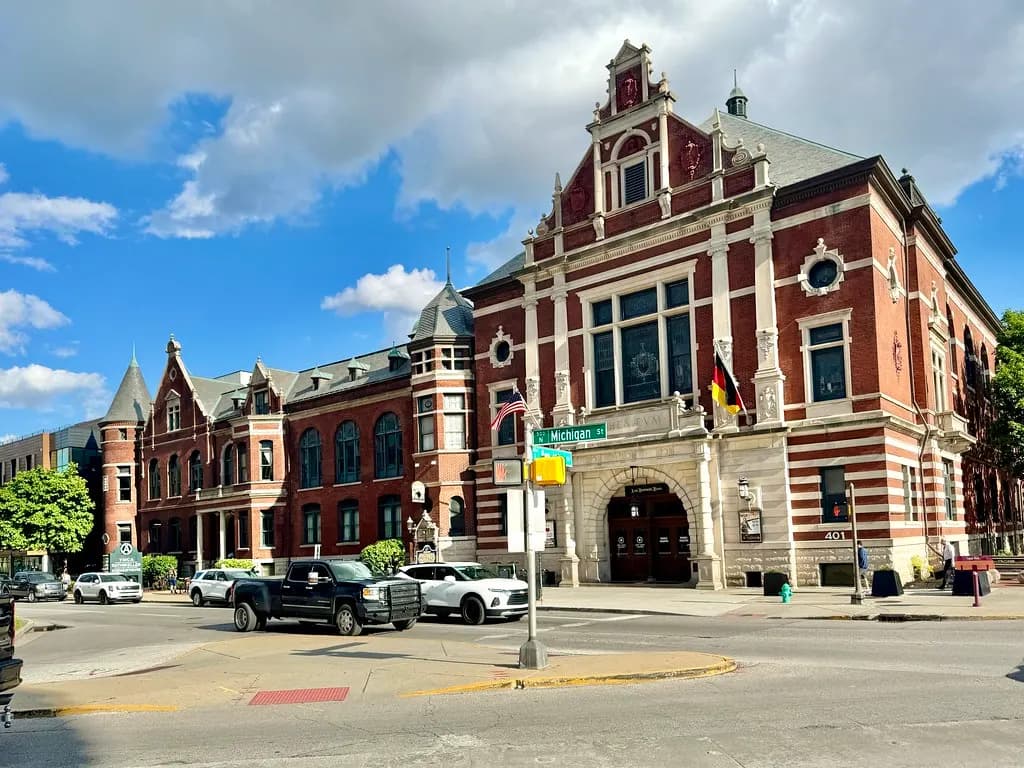
Indianapolis and Marion County share a consolidated government, and its Department of Business and Neighborhood Services (BNS) handles licensing, permits and inspections. The city does not issue a general business licence. Its business licence page instead lists the activities that need one, each with its own application and ordinance:
- Hospitality and lodging: hotels and motels (any business providing lodging for profit, even occasionally) and short-term rental units.
- Entertainment: amusement locations with five or more coin-operated machines, dance halls charging admission, adult entertainment, tobacco specialty bars and ticket brokers reselling near venues.
- Transport: taxis, pedal cabs, horse-drawn carriages and coaches, towing, valet zones and commercial parking facilities.
- Trade and resale: pawn brokers, scrap metal and junk dealers, and transient merchants selling from outdoor locations.
- Personal services: massage businesses and escort services.
- Animals: kennels, pet stores and stables.
- Other: alarm companies, fire prevention equipment businesses and their service staff, vendor carts and mobile food, and waste haulers.
Short-term rentals deserve a special mention because they catch many homeowners. Indianapolis requires anyone offering property as a short-term rental to obtain a permit, and each unit must be permitted individually and renewed every year. A homeowner listing two units in a duplex needs two permits.
Once BNS receives an application and fees, it carries out any required inspection and then mails either an operating licence or a letter of denial. Contractor licences are handled separately: general contractors must be listed with the city to do construction, excavation, sewer or driveway work, and electrical, HVAC and wrecking contractors need city licences after passing the required exam. Contractor applications cannot be completed online but can be emailed with insurance certificates and bonds.
If your business is not on the list, the city needs no licence from you, but you still need zoning approval for your location, sign permits for signage, and building permits for any build-out.
Local income tax: the payroll item to plan for
Indiana cities do not levy business licence taxes, but every county levies a local income tax on residents. It is an individual tax, not a business licence fee, yet it affects every employer. You withhold county tax from each employee's pay at the rate for the county where they lived on January 1, in addition to the state rate of 2.95%, which falls to 2.9% in 2027. The Department of Revenue publishes current county rates in Departmental Notice No. 1, and rates change: six counties raised theirs for 2026, and Boone County changed its rate from October 1, 2026. Owners of pass-through businesses pay the same county tax on their own business income.
Indiana figures at a glance (2026)
$25
Retail merchant certificate, per location
7%
Sales tax, statewide
2%
Marion County food and beverage tax
$32
Business Entity Report, every two years
Worked examples
A gift shop in Madison. The owner forms an LLC on INBiz for $95 and registers the shop for an RRMC for $25. State setup cost: $120. She charges 7% on sales, so a $40 candle costs the customer $42.80. She then asks the city whether her activity needs any local licence, gets a sign permit, and files an assumed name with the Secretary of State if the shop trades under a name other than the LLC's. Every two years she files the $32 Business Entity Report and keeps her RRMC renewed.
A food truck based in Indianapolis. The truck needs an RRMC for its sales, a food permit from the Marion County Public Health Department, and a city mobile food licence from BNS. Because it sells prepared food in Marion County, it collects 7% sales tax plus the 2% food and beverage tax, so a $12 meal costs $13.08. If it parks at events in Hamilton County, it checks that county's food and beverage tax and local vending rules too.
A short-term rental host in Fountain Square. He rents out a carriage house on a booking platform. He needs an Indianapolis short-term rental permit for the unit, renewed every year. Lodging is taxable in Indiana, so he checks his host dashboard and the Department of Revenue's guidance to see which state and county lodging taxes the platform collects for him before deciding whether he needs his own RRMC.
Add licence and registration fees to your first-year budget
How to get set up in Indiana
Getting legally set up in Indiana
- 1
Register your entity or name
Indiana LLC guideForm an LLC on INBiz for $95, or, as a sole proprietor using a trade name, file an assumed business name with your county recorder.
- 2
Get an EIN
EIN guideFree from the IRS; needed for entities and employers.
- 3
Register for state taxes
Apply through INBiz for a Registered Retail Merchant Certificate ($25 per location) and withholding if you have employees.
- 4
Get any professional licence or permit
Check the Professional Licensing Agency for your occupation, the local health department for food and the Alcohol and Tobacco Commission for alcohol.
- 5
Check local licences
Ask your city or county whether your activity is licensed, and register as a contractor where you pull permits.
- 6
Keep renewals on the calendar
RRMC every two years, Business Entity Report every two years, and any annual local permits.
Common mistakes and how to fix them
The first mistake is assuming a sole proprietor's brand name needs no filing. Indiana requires the assumed business name certificate with the county recorder, and banks usually ask for it before opening an account in the trading name. File it in each county where you have an office.
The second is filing an entity's assumed name with the county, or a sole proprietor's with the state. The two filings go to different offices. If yours was rejected or misfiled, refile with the right office; there is no penalty for correcting it promptly.
The third is opening a second location on the first certificate. The RRMC is issued per place of business. Register the new location through INBiz and pay another $25 before it opens.
The fourth is letting the certificate lapse because of unpaid tax. The department can refuse to renew an RRMC when liabilities are outstanding. If you receive a notice, file the missing returns and pay or set up a payment plan before the renewal date.
The fifth is assuming that because Indiana has no state contractor licence, no licence is needed. Indianapolis and most other cities require contractors to be licensed or listed locally, and electricians and HVAC contractors must pass local exams. Check with every building department where you work.
Official Indiana links
- INBiz — Indiana business registration portalEntity filings, assumed names, tax registration
- Indiana DOR — Sales tax and the Registered Retail Merchant Certificate
- INTIME — Indiana tax portalFile and pay sales and withholding tax
- Indiana Professional Licensing Agency
- City of Indianapolis — Business licenses
- City of Indianapolis — Contractor licenses
What to do next
Choose your structure with our Indiana LLC guide, check the name with the LLC name checker and get an EIN. If you sell goods, register for the Registered Retail Merchant Certificate on INBiz before your first sale, and use our Indiana sales tax guide and sales tax calculator to charge the right amount. Then check your city's licence list and zoning before you sign a lease. For how neighbouring states compare, see our Illinois and Michigan guides or the business licenses overview.
This is general information, not legal or tax advice — confirm on the official source or with a professional.
Frequently asked questions
No. Indiana does not issue a general state business license. Businesses that sell taxable goods need a Registered Retail Merchant Certificate from the Department of Revenue, regulated professions need a licence from the Professional Licensing Agency, and cities and counties license specific activities such as short-term rentals, hotels, pawn shops and contractors. Entities also register with the Secretary of State through INBiz.
The Department of Revenue charges a $25 registration fee for each place of business. You apply through INBiz before your first taxable sale. The certificate is renewed every two years, and the department can refuse to renew it if you have unpaid tax liabilities, so keep your sales tax filings current.
Only for certain activities. The City of Indianapolis Department of Business and Neighborhood Services licenses specific business types, including hotels, short-term rental units, pawn brokers, massage businesses, amusement locations, parking facilities, scrap metal dealers, transient merchants, vendor carts, mobile food, towing and taxis. Contractors need a city contractor licence. Other businesses need no general city licence, though zoning and health rules still apply.
Indiana calls it an assumed business name. Sole proprietors and general partnerships file a certificate of assumed business name with the county recorder in each county where they have an office. LLCs, corporations and other entities file their assumed name with the Secretary of State, usually online through INBiz. The filing does not reserve the name against others or create a separate entity.
Mostly no. Indiana has no state general contractor licence, and the City of Indianapolis notes there is no state licence for electrical, HVAC or wrecking contractors; local governments license those trades. Plumbing contractors are the main exception: they are licensed by the State of Indiana, and in Indianapolis must also register that licence with the city. Many cities and counties require contractors to register before pulling permits.
Yes, if you sell taxable goods to Indiana customers from an Indiana location, including your home. You register the home address through INBiz, pay the $25 fee and collect 7% sales tax. Sales made only through a marketplace that collects Indiana tax as a marketplace facilitator are handled by the marketplace.
Sources & verification
Figures on this page were checked against the sources below when it was last reviewed on 12 October 2026. Each rate and limit is stored once with its own official source and review date, and official update channels are monitored daily so changes are picked up. How we verify
- 1.Business Licenses — Application instructions and licenses by type — City of Indianapolis Department of Business and Neighborhood Services · accessed 12 October 2026
- 2.Contractor Licenses — City of Indianapolis Department of Business and Neighborhood Services · accessed 12 October 2026
- 3.Sales Tax — Registered Retail Merchant Certificate — Indiana Department of Revenue · accessed 12 October 2026
- 4.Six Indiana counties, state have tax rate changes in 2026 — PayrollOrg (secondary) · accessed 12 October 2026
- 5.One Indiana county has tax rate change effective October 1 — PayrollOrg (secondary) · accessed 12 October 2026
- 6.How to get a small business license in Indiana — Nolo (secondary) · accessed 12 October 2026
- 7.Business Entity Report — Indiana Secretary of State (INBiz) · accessed 12 October 2026
MSMETOOLS is an independent platform and is not affiliated with any government agency, ministry or department.
Tools for this
Sales Tax Calculator (US)
Calculate sales tax for all US states and cities.
Startup Cost Calculator
Estimate how much capital you need to launch.
LLC Name Checker (US)
Check business name availability in your state.
Related guides
 Indiana Sales Tax Rate 2026: 7%, Food, Permits & FilingRead guide
 How to Start an LLC in Indiana (2026): INBiz Filing GuideRead guide
 Michigan Business License 2026: What You Need & CostsRead guide
 Illinois Business License 2026: Chicago, Cook & State StepsRead guide
Official links open the government site in a new tab.