 Sales tax
Indiana Sales Tax Rate in 2026: The 7% Rate, Food Rules, Registration and Filing
Indiana sales tax rate 2026: a flat 7% with no local sales tax, the grocery exemption, food and beverage tax, INBiz registration and filing.
 Edited by Sumeet YadavFounder & editor, MSMETOOLS · fact-checked against official sources
Contents (10)
- 1. How Indiana sales tax works
- 2. What is taxable and what is exempt
- 3. Food and groceries: the rules that trip people up
- 4. The local food and beverage tax
- 5. Worked examples
- 6. Registering: INBiz and the Registered Retail Merchant Certificate
- 7. Filing and paying: INTIME, due dates and frequency
- 8. Recent changes in 2025 and 2026
- 9. Common mistakes and how to fix them
- 10. What to do next
Indiana has one of the simplest sales taxes in the country to get right at the till. There is a single statewide rate, no county or city sales tax, and no list of local rates to look up by address. That simplicity has limits, though. Restaurants in most counties add a separate food and beverage tax, grocery food is exempt while candy and soda are not, and registration, filing and the collection allowance have their own rules. This guide covers the current rate, how food is taxed, the local food and beverage tax, worked receipts, registering through INBiz and filing through INTIME. Figures were checked against the Indiana Department of Revenue (DOR) in October 2026.
Quick answer
The Indiana sales tax rate is 7% statewide, with no local sales tax. Grocery food is exempt, but candy, soft drinks and prepared food are taxable. Restaurants in most counties also charge a food and beverage tax of 1%, or 2% in Marion County (Indianapolis).
Register through INBiz: $25 per location for a Registered Retail Merchant Certificate
Certificate renewed every two years; file and pay electronically through INTIME
Monthly returns due by the 30th, or the 20th if average monthly tax tops $1,000
Timely filers keep a collection allowance of 0.26%–0.73%
Remote sellers must collect above $100,000 of Indiana sales
How Indiana sales tax works
Indiana's sales tax, officially the state gross retail tax, applies to retail sales of tangible personal property and a short list of services in the state. A matching use tax at the same rate applies to taxable items bought without Indiana tax, such as equipment ordered from an out-of-state supplier that didn't charge it. Sellers collect the tax from customers and send it to DOR; the customer pays it, but the retailer is responsible for collecting and remitting it.
The rate is 7% on every taxable sale, everywhere in Indiana. Unlike neighbours such as Illinois, Indiana does not let counties or cities add their own general sales tax, so a shop in Gary charges the same rate as one in Evansville. That makes pricing, point-of-sale setup and online checkout far simpler than in most states: there is no address lookup and no rate table to maintain.
Local governments do raise money from two narrower taxes that sit beside the sales tax. Many counties and some cities impose a food and beverage tax on food and drink sold for consumption at the seller's premises or with the seller's equipment, which in practice means restaurants, bars and caterers. And counties levy innkeeper's taxes on hotel and short-term lodging stays. If you run a shop that sells ordinary goods, neither applies to you, and 7% is the whole story.
Try it — Indiana sales tax at 7%
What is taxable and what is exempt
Most tangible goods are taxable: clothing, electronics, furniture, household goods, building materials, vehicles and car parts. Indiana does not have a clothing exemption or a sales tax holiday. Services are generally not taxable unless the law lists them, although charges for goods supplied with a service, and some services tied to goods, can be.
Common exemptions include grocery food, prescription drugs and certain medical equipment, goods bought for resale (with an exemption certificate), and many purchases by manufacturers and farmers for direct use in production. Each exemption has conditions, and the buyer generally has to give the seller a valid exemption certificate; DOR's Form ST-105 is the general one. Keep these certificates on file, because in an audit an undocumented exempt sale is treated as taxable.
Food and groceries: the rules that trip people up
Indiana exempts food and food ingredients sold for human consumption, the items people think of as groceries. DOR's Sales Tax Information Bulletin #29 sets out the definitions, which follow national Streamlined Sales Tax rules, and they decide most food questions.
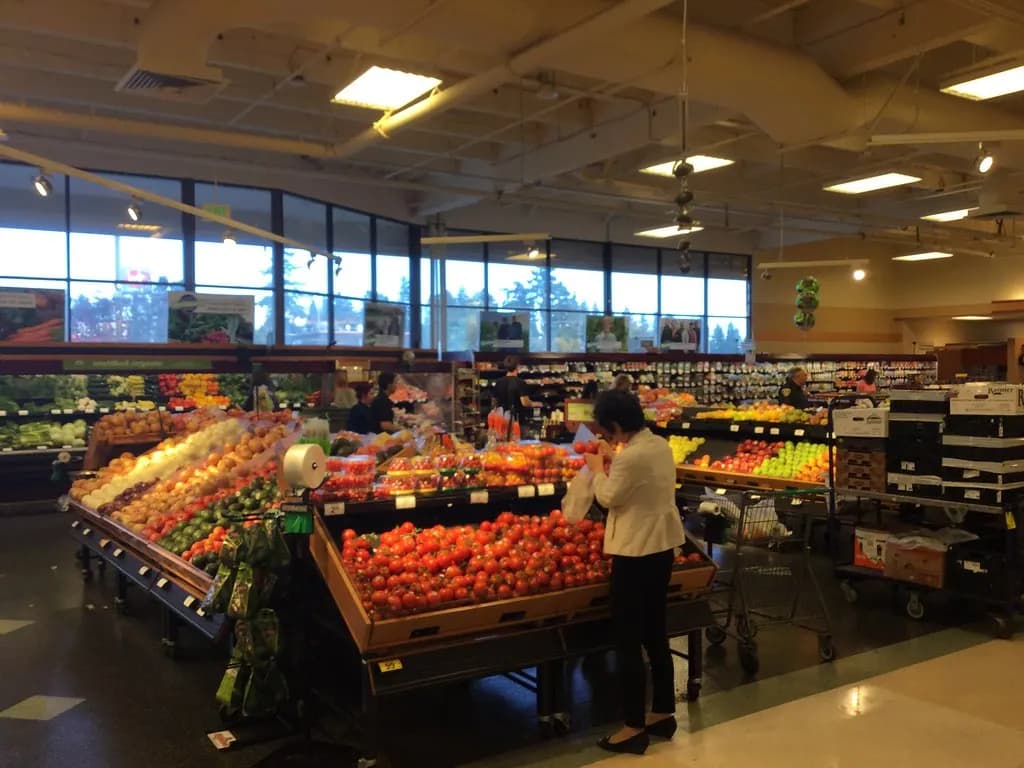
Food that stays exempt. Groceries are exempt when sold unheated and without eating utensils provided by the seller: produce, meat, dairy, bread, cereal, frozen meals, snacks such as chips and crackers, coffee beans and baking supplies.
Candy is taxable, with an exception. Candy means sweetened preparations combined with chocolate, fruit, nuts or flavourings in the form of bars, drops or pieces. The definition excludes anything that lists flour on its label or needs refrigeration. So a chocolate bar is taxable, while a wafer bar with flour among its ingredients is exempt as food, and a gluten-free bar without flour is taxable. Sweets that are not bars, drops or pieces, such as powdered candy in straws, are also outside the definition.
Soft drinks are taxable. Any non-alcoholic drink with natural or artificial sweeteners counts, including canned soda and sweetened water. Drinks that contain milk or milk substitutes, or are more than 50% fruit or vegetable juice, are not soft drinks and stay exempt. Plain bottled water is exempt.
Prepared food is taxable. Food the seller heats, food sold with seller-provided utensils, and food the seller mixes or combines into a single item for sale, such as a deli sandwich, are prepared food. A pizza sold hot for take-out is taxable; a frozen pizza from the freezer aisle is not.
Alcohol, tobacco and dietary supplements are excluded from the definition of food and are taxable.
The local food and beverage tax
The food and beverage tax (often shortened to FAB) is a local tax that DOR collects for counties and some cities. It applies to food and drink sold for consumption at the seller's location or on equipment the seller provides, plus most carry-out from the same kinds of establishments. In the DOR's guidance, for most restaurants every sale that is subject to sales tax is presumed to be subject to the food and beverage tax too, because everything they sell counts as prepared food.
The rate is 1% in most places that have adopted it. Marion County, which is Indianapolis, charges 2%, as does the Orange County historic hotels district. Not every county has the tax, and it can apply in a single city rather than the whole county, so check DOR's current food and beverage tax chart for your location. DOR collects it on behalf of the local government, so you report it to DOR alongside your sales tax rather than paying the county separately.
| Where you sell prepared food | Sales tax | Food and beverage tax | Total |
|---|---|---|---|
| Indianapolis (Marion County) | 7% | 2% | 9% |
| A county or city with the standard food and beverage tax | 7% | 1% | 8% |
| A place without a food and beverage tax | 7% | None | 7% |
| Groceries anywhere (unheated, no utensils) | Exempt | None | 0% |
Worked examples
An Indianapolis restaurant bill. A table's food and soft drinks come to $80 before tax. The sales tax is $80 × 7% = $5.60, and the Marion County food and beverage tax is $80 × 2% = $1.60, for $7.20 in total and a bill of $87.20. The restaurant reports the $5.60 as sales tax and the $1.60 as food and beverage tax.
A grocery receipt in Fort Wayne. A shopper buys $42 of produce, meat and bread, a $6 case of soda and a $2 chocolate bar. The groceries are exempt. The soda and the candy, $8 together, are taxable: $8 × 7% = $0.56. The receipt total is $50.56. If the shopper had picked a $2 wafer bar listing flour instead of the chocolate bar, the tax would fall to $0.42.
A hardware store's collection allowance. A Bloomington hardware store collected $36,000 of sales tax in the 12 months to June 30 last year, which puts it in the lowest tier with a 0.73% allowance. On a month when it collects $3,200, it keeps $3,200 × 0.73% = $23.36 and sends $3,176.64, as long as the return and payment are on time. File late and the allowance is lost.
An online seller in Ohio. A Columbus business sells $130,000 of goods a year to Indiana buyers through its own website. Because that exceeds the $100,000 threshold, it must register through INBiz, pay the $25 fee, and collect 7% on every Indiana order. Sales it makes through a marketplace that collects Indiana tax as a marketplace facilitator are handled by the marketplace.
Indiana sales tax at a glance (2026)
7%
State rate, no local sales tax
2%
Indianapolis food and beverage tax
$25
Registration per location
$100,000
Remote seller threshold
Registering: INBiz and the Registered Retail Merchant Certificate
Every business making retail sales from an Indiana location needs a Registered Retail Merchant Certificate (RRMC) before its first sale; it is Indiana's version of a seller's permit. You apply online through INBiz, the state's business registration portal, which also handles forming an LLC or corporation with the Secretary of State and registering for withholding if you have employees. The sales tax application carries a one-time, non-refundable $25 fee for each location. Once DOR processes the business tax application, it issues the certificate, which must be displayed at your place of business.
The certificate is renewed every two years. DOR can refuse to renew it if the business has unpaid tax liabilities, and selling without a valid certificate is not allowed, so keep your account clean in the months before renewal. If you open a second shop, register the new location and pay another $25.
To apply, have your federal EIN (or Social Security number for a sole proprietor with no employees), legal and trade names, addresses for each location, the date you began selling, owner and officer details, and an estimate of your monthly sales tax. DOR's BT-1 checklist lists everything the application asks for. If you need an EIN first, our EIN guide explains the free IRS process, and our LLC registration guide covers forming a company.

Filing and paying: INTIME, due dates and frequency
All Indiana sales tax returns are filed and paid electronically, either in INTIME, DOR's online tax portal, or through approved third-party software that transmits Form ST-103. Paper returns are not an option for ordinary retailers.
Filing frequency. DOR assigns your frequency based on your average monthly liability during the tax year. Monthly filing is the standard. Businesses collecting less than $1,000 of sales tax a year may be allowed to file once a year. You can ask to file more often than assigned, but you cannot choose to file less often.
Due dates. DOR's filing bulletin sets monthly returns due by the 30th day of the month after the reporting period. If your average monthly sales tax in the preceding year was more than $1,000, the return and payment are due by the 20th instead. A return is required for every period, even if you made no taxable sales; DOR calls this a zero return.
Collection allowance. If you file and pay on time, you keep a small percentage of the tax you collected to offset your costs. The rate depends on your total Indiana sales tax liability for the 12 months ending June 30 of the previous year:
Indiana sales tax collection allowance
| Prior-year liability (12 months to June 30) | Allowance rate |
|---|---|
Up to $60,000 | 0.73% |
$60,000.01 to $600,000 | 0.53% |
Over $600,000 | 0.26% |
Up to $60,000
- Allowance rate
0.73%
$60,000.01 to $600,000
- Allowance rate
0.53%
Over $600,000
- Allowance rate
0.26%
A late return or payment forfeits the allowance and adds penalties and interest. For a small retailer the allowance is modest, but it adds up over a year, and losing it is an avoidable cost.
Recent changes in 2025 and 2026
Indiana's 7% rate has not changed, but a few developments matter for sellers. The remote seller rule is now a single dollar test: a business without an Indiana location collects once its gross sales into Indiana exceed $100,000 in the current or previous calendar year, with no separate transaction count. In the 2026 legislative session, Senate Enrolled Act 243, the Department of Revenue's agency bill, added rounding rules for cash transactions as the federal penny is phased out, along with new enforcement powers for vehicles bought through out-of-state entities and used in Indiana. And DOR began a review of its sales and use tax regulations in 2026, with a public hearing held in July; we will update this page if final rule changes affect retailers.
Common mistakes and how to fix them
Charging tax on exempt groceries. Point-of-sale systems imported from other states sometimes tax all food. Set up separate tax codes for exempt grocery items, taxable candy and soft drinks, and prepared food.
Treating all candy and drinks alike. The flour, refrigeration, milk and 50%-juice tests change the answer item by item. Check labels when you set up a product.
Forgetting the food and beverage tax. A café or food truck in a county with the tax owes it on prepared food on top of the 7% sales tax. Check DOR's chart for every location where you sell.
Skipping zero returns. A missed return, even with no sales, can bring penalties and cost you the collection allowance. File every period.
Letting the certificate lapse. Unpaid tax debts can block your two-year renewal. Clear balances before the renewal date.
Indiana sales tax setup checklist
0/8What to do next
If you are about to start selling, register through INBiz first and set your tax codes before your first sale. Use our sales tax calculator to check prices at 7%, and our invoice generator to show tax correctly on invoices. For the method behind the numbers, read how to calculate sales tax; if you also sell across the state line, compare our Illinois sales tax guide, where local rates vary by city.
This is general information, not legal or tax advice — confirm on the official source or with a professional.
Frequently asked questions
Indiana's sales tax rate is 7%, and it is the same everywhere in the state because Indiana has no county or city sales tax. Local governments can add a separate food and beverage tax on restaurant-style food, usually 1% and 2% in Marion County, and innkeeper's taxes on lodging, but ordinary retail goods are taxed at 7%.
The sales tax on general merchandise in Indianapolis is 7%, the same as the rest of Indiana. Prepared food and drinks sold by restaurants and similar sellers in Marion County also carry the 2% food and beverage tax, so a restaurant bill is taxed at 9% in total.
Grocery food is exempt from Indiana sales tax when it is sold unheated and without utensils from the seller. Candy, soft drinks, alcohol, tobacco, dietary supplements and prepared food are taxable at 7%. Candy that lists flour on its label, and drinks with at least 50% juice or containing milk, fall outside the taxable definitions.
Indiana calls it a Registered Retail Merchant Certificate. You apply through INBiz and pay a one-time $25 fee for each location. The certificate is renewed every two years, and the Department of Revenue can refuse to renew it if you owe unpaid taxes.
Monthly returns are due by the 30th day after the end of the month, or by the 20th if your average monthly sales tax for the prior year was more than $1,000. Sellers collecting less than $1,000 a year may be put on annual filing. Returns are filed electronically through INTIME, and a zero return is required even when you made no sales.
Yes, once their gross sales into Indiana exceed $100,000 in the current or previous calendar year. Indiana dropped its separate transaction-count test, so the dollar threshold alone decides. Qualifying remote sellers register through INBiz, pay the $25 fee and collect 7% on sales delivered into Indiana.
Sources & verification
Figures on this page were checked against the sources below when it was last reviewed on 9 October 2026. Each rate and limit is stored once with its own official source and review date, and official update channels are monitored daily so changes are picked up. How we verify
- 1.Sales Tax (business) — Indiana Department of Revenue · accessed 9 October 2026
- 2.Remote Sellers — Indiana Department of Revenue · accessed 9 October 2026
- 3.General Tax Information Bulletin #102 (sales tax filing) — Indiana Department of Revenue · accessed 9 October 2026
- 4.Indiana Tax Guide for New & Small Business Owners — Indiana Department of Revenue · accessed 9 October 2026
- 5.Sales Tax Information Bulletin #29 — Food — Indiana Department of Revenue · accessed 9 October 2026
- 6.Food and Beverage Tax — Indiana Department of Revenue · accessed 9 October 2026
- 7.Indiana DOR highlights details from the 2026 Legislative Session — Indiana Department of Revenue · accessed 9 October 2026
- 8.Form BT-1 Checklist — Indiana Department of Revenue · accessed 9 October 2026
MSMETOOLS is an independent platform and is not affiliated with any government agency, ministry or department.
Tools for this
Sales Tax Calculator (US)
Calculate sales tax for all US states and cities.
Invoice Generator
Create professional invoices with tax, logo and custom details.
Related guides
 Indiana Business License 2026: Retail Merchant & Local PermitsRead guide
 Illinois Sales Tax Rate 2026: Chicago, Groceries & FilingRead guide
 South Carolina Sales Tax 2026: 6% State & Local RatesRead guide
 Kentucky Sales Tax 2026: 6% Rate, Services & Permit GuideRead guide
Official links open the government site in a new tab.