 Business registration & legal
SAIF Zone Sharjah in 2026: Licences, Facilities, Visas and What Setup Really Costs
SAIF Zone Sharjah in 2026: trade, service and industrial licences, office visa quotas, warehouses, the AED 150,000 capital rule, costs and 0% QFZP tax.
 Edited by Sumeet YadavFounder & editor, MSMETOOLS · fact-checked against official sources
Contents (12)
- 1. What SAIF Zone is and who it suits
- 2. SAIF Zone licence types
- 3. Legal forms and the AED 150,000 capital rule
- 4. Facilities: offices, warehouses and land
- 5. What SAIF Zone costs in 2026
- 6. How to set up a SAIF Zone company
- 7. Airport and logistics advantages
- 8. Visas and staff
- 9. Corporate tax, VAT and compliance
- 10. SAIF Zone vs Hamriyah vs Ajman Free Zone
- 11. Common mistakes to avoid
- 12. What to do next
SAIF Zone — the Sharjah Airport International Free Zone — sits right next to Sharjah International Airport and is one of the UAE's older and more industrial free zones. It's built for companies that move physical goods: traders, assemblers, manufacturers and logistics firms that need an office with visas, a warehouse or a plot of land within reach of an airport and the ports. This guide is for founders comparing SAIF Zone in 2026. It covers licence types and legal forms, the facilities and their visa quotas, the capital rule most comparison sites miss, what set-up costs (estimates, because SAIF Zone publishes no price list), the steps, airport logistics, and corporate tax.
Quick answer
SAIF Zone is a Sharjah government free zone beside Sharjah International Airport, offering trade, service and industrial licences to FZEs, FZCs and branches with 100% foreign ownership. Licences are issued within 1 hour of a complete file. Offices come with visa quotas of 3 visas, 5 visas or 8 visas; warehouses run from 125 to 600 sq m and land from 2,500 sq m. An FZE or FZC needs minimum capital of AED 150,000 (USD 41,000).
No public price list — consultancies advertised packages from about AED 10,800 in 2026 (estimate)
Branches of UAE or foreign companies need no minimum capital
Investor visas valid 3 years, employee visas 2 years
Corporate tax: register within 3 months; 0% only on qualifying income for QFZPs
Goods sold into the UAE market pay customs duty, generally 5%
What SAIF Zone is and who it suits
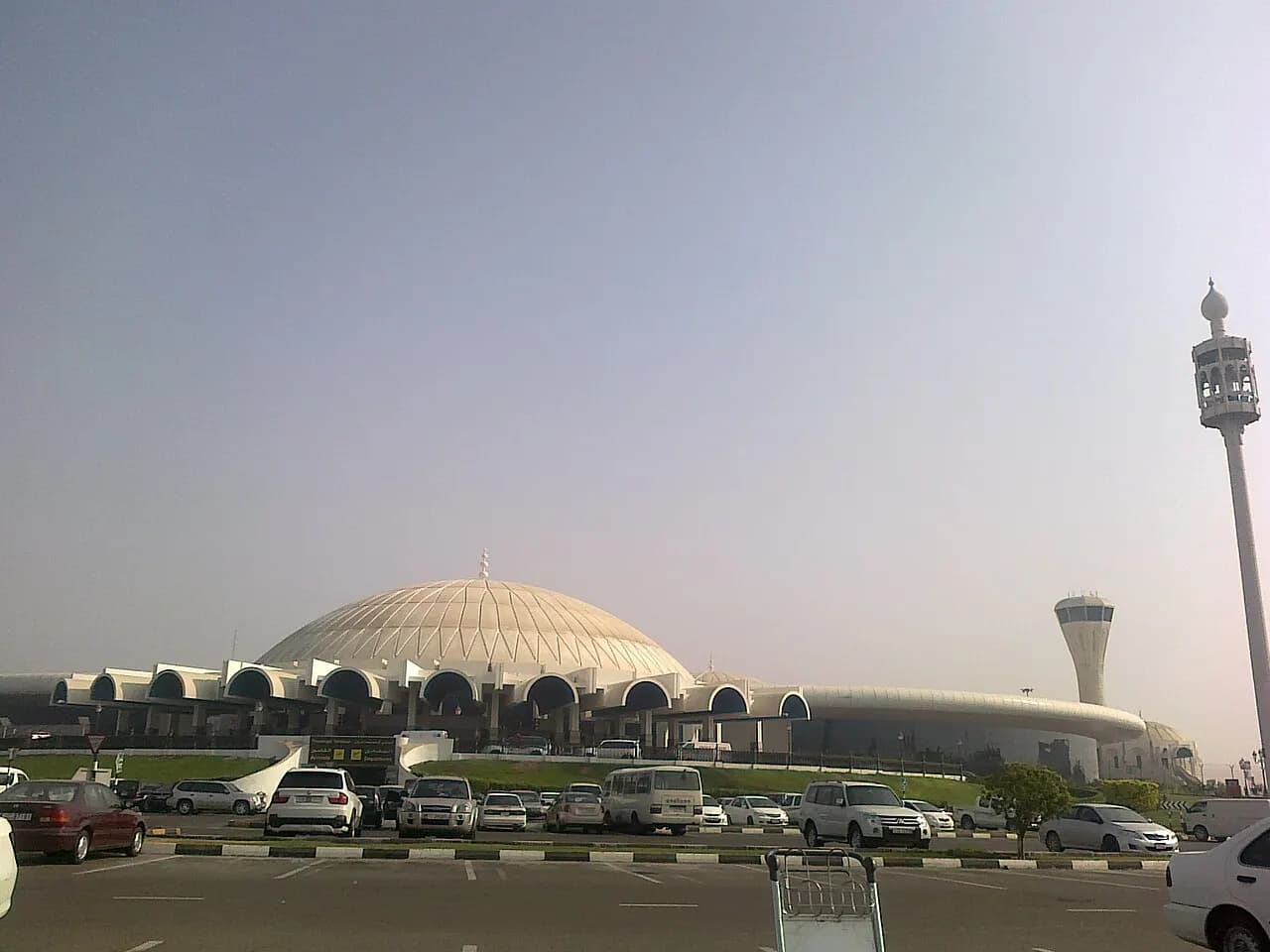
SAIF Zone was established in 1995 by the Government of Sharjah. It wraps around Sharjah International Airport, about ten minutes from Sharjah city centre and around 20 minutes from Dubai by road, with Port Khalid about 30 minutes away. SAIF Zone says more than 8,000 companies from about 160 countries operate there. It has on-site immigration and customs offices, banks, clinics, a mall, container parking and budget labour accommodation, which matters if you'll employ warehouse or factory staff.
The authority is both regulator and landlord. It issues your licence, registers the company, leases you the facility and sponsors visas through its own immigration counter. Everything is leased rather than sold: SAIF Zone's FAQ says facilities are on long-term renewable leases, with rent paid yearly.
SAIF Zone suits:
- trading companies that import, store and re-export goods — electronics, auto parts, FMCG, building materials;
- air-freight-heavy businesses such as perishables, pharmaceuticals, spare parts and e-commerce fulfilment, thanks to the airport next door;
- light manufacturing, assembly and packaging, including a specialist jewellery manufacturing park;
- logistics and freight forwarding firms.
It suits less well a consultant who only needs a cheap licence and a desk — Sharjah's media and publishing zones, Shams and SPC, are built for that — or a company whose cargo is mainly bulk or containerised sea freight, which may be better served by Hamriyah Free Zone and its port.
SAIF Zone licence types
SAIF Zone issues three main licences:
SAIF Zone licences
| Licence | What it covers | Notes |
|---|---|---|
Trade | Import, export, distribution, consolidation, storage and warehousing | Up to 3 similar product lines |
Service | The specific service named on the licence | Consultancy, shipping and freight forwarding, e-commerce |
Industrial | Raw material import, manufacturing, processing, assembly, packaging and export | Needs clearance from SAIF Zone's Health & Environment Department |
Trade
- What it covers
Import, export, distribution, consolidation, storage and warehousing
- Notes
Up to 3 similar product lines
Service
- What it covers
The specific service named on the licence
- Notes
Consultancy, shipping and freight forwarding, e-commerce
Industrial
- What it covers
Raw material import, manufacturing, processing, assembly, packaging and export
- Notes
Needs clearance from SAIF Zone's Health & Environment Department
The trade licence limit of three similar product lines is the detail that catches traders out. If you plan to deal in unrelated goods — say mobile phones, cosmetics and car tyres — discuss it with SAIF Zone at the start, because you may need additional activities or a different licence structure. A service licence can cover any service not restricted by federal or local authorities. An industrial licence brings environmental and safety checks: SAIF Zone's FAQ explains that industrial applicants must show relevant experience in their business plan and complete an Environmental Impact Assessment form covering waste, chemicals, water discharge and similar risks.
Legal forms and the AED 150,000 capital rule
SAIF Zone offers four legal forms:
- FZE (Free Zone Establishment) — a limited liability entity with one shareholder, an individual or a company;
- FZC (Free Zone Company) — a limited liability company with more than one shareholder;
- Branch of a UAE company — an extension of a company registered elsewhere in the UAE;
- Branch of a foreign company — an extension of a company incorporated outside the UAE.
The figure most comparison sites leave out is in SAIF Zone's own FAQ: the minimum capital for an FZE or FZC is AED 150,000 (USD 41,000). Branches have no minimum capital. That's far higher than zones that set no minimum, so it shapes your decision. Ask SAIF Zone, in writing, whether you'll need to show a bank deposit or only declare the capital in the memorandum of association — consultancies say declaration is normal, but the authority's answer is what counts.
If you already own a company abroad or elsewhere in the UAE, a branch avoids the capital requirement and keeps the parent's track record, which helps with banks and suppliers. The trade-off is liability: a branch isn't a separate legal entity, so the parent is liable for its debts. A branch also needs more paperwork — certificate of incorporation, memorandum and articles, a board resolution to open the branch, and a power of attorney for the manager, all notarised and attested.
Facilities: offices, warehouses and land
Your facility decides your visa quota, so choose it with your hiring plan in mind.
SAIF Zone facilities and visa quotas
| Facility | What you get | Visa quota |
|---|---|---|
SAIF Office | Furnished dedicated executive desk space, non-shared | 3 visas |
SAIF Executive Office | Unfurnished, customisable office; utilities included | 5 visas |
SAIF Suite | Fully furnished executive suite | 8 visas |
Pre-built warehouse | 125, 250, 400 or 600 sq m, with built-in office, pantry and toilets | Set by size and business |
Land plot | From 2,500 sq m; build your own warehouse or factory | Set by project |
SAIF Office
- What you get
Furnished dedicated executive desk space, non-shared
- Visa quota
3 visas
SAIF Executive Office
- What you get
Unfurnished, customisable office; utilities included
- Visa quota
5 visas
SAIF Suite
- What you get
Fully furnished executive suite
- Visa quota
8 visas
Pre-built warehouse
- What you get
125, 250, 400 or 600 sq m, with built-in office, pantry and toilets
- Visa quota
Set by size and business
Land plot
- What you get
From 2,500 sq m; build your own warehouse or factory
- Visa quota
Set by project
The pre-built warehouses are multi-purpose units for manufacturing, trading, assembly and logistics, with heavy-duty power, industrial exhaust and built-in offices. Land plots start at 2,500 sq m and suit companies building a custom factory or warehouse; SAIF Zone provides a list of contractors and can house staff on site. There's also a dedicated Jewellery Park for manufacturers, container parking areas and labour accommodation.
SAIF Zone doesn't offer a virtual or flexi-desk licence comparable to Dubai's low-cost zones. The SAIF Office is the entry point: a dedicated desk with three visas. For a small trading company that needs staff, that's often a good fit; for a one-person consultancy, it's more space and cost than needed.
What SAIF Zone costs in 2026
SAIF Zone doesn't publish a fee schedule on its website. Pricing comes as a quote based on licence type, facility, visa count and lease length. The only package page on the site still advertises a 2020 promotion. Every figure on reseller sites is an estimate.
What your year-one budget needs to cover:
- licence fee for your licence type and number of activities;
- facility rent — office, warehouse or land — paid yearly on a long-term lease, plus any deposit;
- establishment card (immigration registration) so the company can sponsor visas;
- visas — entry permit, residence visa, medical test, Emirates ID and health insurance per person;
- attestation and translation of corporate documents if shareholders are companies;
- capital of AED 150,000 (USD 41,000) for an FZE or FZC (company money, not a fee);
- for warehouses and factories: fit-out, utilities connections, insurance and EHS approvals.
Worked example: an air-freight spare-parts trader
Karan runs an auto spare-parts business in Mumbai and wants a SAIF Zone FZE to import parts by air, store them and sell to distributors in East Africa and the Gulf. He'll employ a manager and two warehouse staff.
- Facility: a 250 sq m pre-built warehouse with a built-in office. Its visa quota depends on size; he confirms with SAIF Zone that it covers three visas.
- Licence: a trade licence for auto spare parts — one product line, well within the three-line limit.
- Capital: AED 150,000 (USD 41,000) declared in the FZE's memorandum.
- Budget: using the reseller ranges above as a placeholder, three visas at about AED 3,240–4,965 each come to roughly AED 9,700–14,900, plus an establishment card of about AED 2,000–3,500 — before the licence and warehouse rent, which he gets quoted directly.
His alternative is to register a branch of his Indian company. That avoids the AED 150,000 capital and keeps the parent's trading history for supplier credit, but needs attested Indian documents and leaves the parent liable. Build both options in the startup cost calculator before deciding.
How to set up a SAIF Zone company
SAIF Zone runs a single-window process and says licences and permits are issued within 1 hour of a complete application. The time goes into preparing documents and agreeing the facility.
SAIF Zone set-up, step by step
- 1
Choose licence and legal form
Trade, service or industrial licence; FZE, FZC or branch. Check the three-product-line limit for trade licences.
- 2
Choose your facility
SAIF Zone — business set-upSAIF Office, Executive Office, Suite, warehouse or land plot — sized for the visas you'll need.
- 3
Prepare documents
Application form, project summary, passport copies of owners and managers; for corporate shareholders and branches, certificate of incorporation, memorandum and articles, board resolution and power of attorney — notarised and attested.
- 4
Approval, lease and licence
Pay the fees, sign the lease and receive the licence. Industrial licences also need Health & Environment clearance.
- 5
Immigration card and visas
Get the establishment (immigration) card and e-channel access, then apply for visas: entry permit, medical, Emirates ID and residence stamping.
- 6
Bank, tax and compliance
Open a bank account, register for corporate tax within 3 months, file UBO details and check VAT registration.
Attestation is the usual bottleneck. Corporate documents must be notarised, then attested by the foreign ministry and the UAE embassy in the country of origin, then by the UAE Ministry of Foreign Affairs. Where there's no UAE embassy, the relevant embassy in the UAE attests them. Start this early; it can take weeks.
SAIF Zone's mobile app and e-services handle most later tasks: new and renewed immigration cards, residence stamping, visa cancellations and transfers, company name or activity changes, no-objection letters, export health certificates and loading permissions.
Airport and logistics advantages
SAIF Zone's location is its main selling point. The free zone adjoins Sharjah International Airport and its cargo centre, and SAIF Zone gives drive times of about 30 minutes to the nearest seaport, 20 minutes to Dubai and 90 minutes to Abu Dhabi. Sharjah's other ports — Hamriyah on the Gulf coast and Khorfakkan on the east coast — are also reachable by road. A SAIF Zone customs centre on site handles clearance, so goods can move from aircraft to warehouse without leaving the customs-controlled area.
Within the zone, goods are free of import and export duties. Duty becomes payable only when goods are sold into the UAE local market, at the standard GCC rate of 5% on most goods. That's why SAIF Zone works best for re-export: a trader can bring in stock by air, store it, repack it and ship it to Africa, South Asia or the GCC without paying UAE duty on goods that never enter the UAE market.
SAIF Zone at a glance
1 hour
Licence issue time
complete file
8,000+
Companies in the zone
20 min
Drive to Dubai
5%
Customs duty on UAE sales
most goods
Visas and staff
Visas are issued through SAIF Zone's own immigration service, within your facility's quota. SAIF Zone's FAQ says residence visas are valid for 3 years for investors and 2 years for employees. There are no nationality restrictions on whom you employ, family members can be sponsored on residence visas, and SAIF Zone can supply hired labourers and technicians if you need temporary help. Labour accommodation is available inside the zone.
Corporate tax, VAT and compliance
SAIF Zone's FAQ still says there's no corporate tax. That's out of date. Since corporate tax took effect for financial years starting on or after 1 June 2023, SAIF Zone companies have been within the regime, and SAIF Zone's own free zone page now refers to 0% corporate tax "as per corporate tax law". Every company must register with the FTA within 3 months of incorporation — late registration costs AED 10,000.
A company that meets every Qualifying Free Zone Person condition — adequate substance, audited accounts, transfer pricing compliance, qualifying income, and non-qualifying revenue within 5% of revenue or AED 5 million, whichever is lower — pays 0% on qualifying income. Qualifying activities under Ministerial Decision No. 229 of 2025 include manufacturing and processing of goods, logistics services, and distribution of goods in or from a designated zone to buyers who resell, process or use them. SAIF Zone appears in the 2017 Cabinet Decision list of designated zones for Sharjah, which matters for that distribution activity. Sales to consumers generally aren't qualifying.
Example. Karan's FZE earns AED 9,000,000 revenue: AED 8,600,000 from selling parts to distributors (qualifying distribution from a designated zone) and AED 400,000 from online sales to individual mechanics in the UAE (non-qualifying). The de minimis limit is the lower of 5% × 9,000,000 = AED 450,000 and AED 5 million, so AED 450,000; the AED 400,000 fits. If the online sales leave AED 80,000 of profit, tax is 9% × 80,000 = AED 7,200. If online sales grew past AED 450,000, the company would lose QFZP status for 5 tax periods. Test scenarios in the UAE corporate tax calculator.
Try it — corporate tax on a SAIF Zone company
For VAT, register once taxable supplies pass AED 375,000 in 12 months. Designated zone status can take some movements of goods between designated zones outside the scope of VAT, but services and sales to the mainland follow normal rules at 5%. See our UAE VAT guide.
Other compliance. SAIF Zone requires an ultimate beneficial owner declaration under Cabinet Decision No. 109 of 2023 — anyone owning or controlling 25% or more. Dealers in precious metals and stones, including jewellery businesses in the Jewellery Park, are regulated as designated non-financial businesses under the anti-money-laundering law and must register and report accordingly. See our UBO register guide.
SAIF Zone vs Hamriyah vs Ajman Free Zone
| SAIF Zone | Hamriyah Free Zone | Ajman Free Zone | |
|---|---|---|---|
| Emirate | Sharjah | Sharjah | Ajman |
| Transport edge | Adjoins Sharjah International Airport | Own deep-water port | Ajman port nearby |
| Land from | 2,500 sq m | 2,500 sq m | Check AFZ offers |
| Published entry figure | None — quote only | Basic licence AED 11,000 | Package offers on AFZ site |
| FZE/FZC capital | AED 150,000 (USD 41,000) | Ask HFZA | Ask AFZ |
| Best for | Air-freight trading, assembly, jewellery | Heavy industry, marine, bulk cargo | Low-cost trading and services |
If goods fly, SAIF Zone's airport location is hard to beat in the northern emirates. If they come by sea in bulk, Hamriyah is usually the better fit. If you mainly need a cheap licence, look at Ajman Free Zone or Sharjah's SPC and Shams.
Common mistakes to avoid
- Ignoring the capital requirement. An FZE or FZC needs AED 150,000 (USD 41,000); a branch needs none.
- Overloading a trade licence. It covers up to three similar product lines.
- Leasing too small a facility. Visa quotas are fixed per office type, and moving later costs time.
- Relying on reseller prices. SAIF Zone quotes directly — get it in writing.
- Believing the FAQ on tax. Register for corporate tax and plan for QFZP conditions.
- Leaving attestation to the end. Unattested corporate documents are the most common delay.
Official links
- SAIF Zone — business set-upLicences, facilities and visa quotas
- SAIF Zone — FAQCapital, visas, customs and leases
- SAIF Zone — document requirements (PDF)
- SAIF Zone — rules and regulationsUBO and AML
- FTA — Corporate Tax registration
- Ministry of Finance — Ministerial Decision No. 229 of 2025Qualifying and excluded activities
What to do next
Decide how your goods will move — air, sea or road — how many staff you'll sponsor, and whether you'll set up a new FZE/FZC or a branch. Then ask SAIF Zone for an itemised quote and compare it with Hamriyah Free Zone for the same facility and visa count. Build the year-one budget in the startup cost calculator and read the UAE corporate tax guide before choosing activities.
This is general information, not legal or tax advice — confirm on the official source or with a professional.
Frequently asked questions
SAIF Zone doesn't publish a licence price list — it quotes by licence type, facility and visa count. In October 2026, consultancy sites advertised entry packages from about AED 10,800 up to AED 75,000 or more for warehouse set-ups. Treat these as estimates and ask SAIF Zone for a written quote. Remember the AED 150,000 minimum capital for an FZE or FZC.
SAIF Zone's FAQ says the minimum capital for a Free Zone Establishment (FZE) or Free Zone Company (FZC) is AED 150,000 (USD 41,000). A branch of a UAE or foreign company has no minimum capital. Ask SAIF Zone whether you need to show proof of deposit or only declare the capital in your memorandum of association.
It depends on the facility. SAIF Zone's offices come with fixed quotas: a SAIF Office includes 3 visas, an Executive Office 5 visas and a SAIF Suite 8 visas. Warehouse and land quotas depend on the size and nature of the business. Investor residence visas are valid for 3 years and employee visas for 2 years.
Not automatically. SAIF Zone companies are within UAE corporate tax and must register with the FTA. A company that meets every Qualifying Free Zone Person condition pays 0% on qualifying income — such as manufacturing, logistics, or distributing goods from a designated zone to resellers — and 9% on other taxable income. There's no personal income tax.
SAIF Zone says it issues licences and permits within 1 hour once your file is complete, through a single-window service. The whole process — attested documents, facility lease, establishment card, then visas with medicals and Emirates ID — usually takes a few weeks, longer if corporate documents need attestation abroad.
Yes, but goods sold into the UAE market pay customs duty — generally 5% — and SAIF Zone says its licence covers operating inside the free zone only. To trade directly on the mainland you'd normally use a local distributor or set up a mainland branch with the approval of the local authorities.
Sources & verification
Figures on this page were checked against the sources below when it was last reviewed on 12 October 2026. Each rate and limit is stored once with its own official source and review date, and official update channels are monitored daily so changes are picked up. How we verify
- 1.Business set-up — Sharjah Airport International Free Zone Authority · accessed 12 October 2026
- 2.Frequently asked questions — Sharjah Airport International Free Zone Authority · accessed 12 October 2026
- 3.Free zone — Sharjah Airport International Free Zone Authority · accessed 12 October 2026
- 4.About us — Sharjah Airport International Free Zone Authority · accessed 12 October 2026
- 5.Document requirements — Sharjah Airport International Free Zone Authority · accessed 12 October 2026
- 6.Rules and regulations — Sharjah Airport International Free Zone Authority · accessed 12 October 2026
- 7.Corporate Tax registration — Federal Tax Authority (UAE) · accessed 12 October 2026
- 8.Ministerial Decision No. 229 of 2025 on Qualifying Activities and Excluded Activities — UAE Ministry of Finance · accessed 12 October 2026
- 9.Cabinet Decision No. 59 of 2017 on Designated Zones (VAT alert with list) — Grant Thornton UAE · accessed 12 October 2026
- 10.SAIF Zone Company Setup 2026: Cost, Licences & Visas — BusinessDubai (consultancy) · accessed 12 October 2026
MSMETOOLS is an independent platform and is not affiliated with any government agency, ministry or department.
Tools for this
Corporate Tax Calculator (UAE)
Calculate 9% UAE corporate tax above AED 375,000.
UAE VAT Calculator (UAE)
Calculate 5% UAE VAT on sales and purchases.
Startup Cost Calculator
Estimate how much capital you need to launch.
Related guides
 Hamriyah Free Zone 2026: Licences, Costs, Land & SetupRead guide
 JAFZA Free Zone 2026: Licences, Costs, Visas & TaxRead guide
 SHAMS Free Zone 2026: Packages, Visa Costs & SetupRead guide
 KEZAD Abu Dhabi 2026: Licences, Land Rates & SetupRead guide
Official links open the government site in a new tab.