 Business registration & legal
JAFZA (Jebel Ali Free Zone) in 2026: Licences, Published Costs, Facilities, Visas and Tax
Jebel Ali Free Zone (JAFZA) in 2026: licence types and JAFZA's published fees, FZE, FZCO and branch setup, warehouses and land, visa quotas, customs and 0% QFZP tax.
 Edited by Sumeet YadavFounder & editor, MSMETOOLS · fact-checked against official sources
Contents (12)
- 1. What JAFZA is and who it suits
- 2. JAFZA licence types and what they let you do
- 3. Company forms: FZE, FZCO, branch, PLC or offshore
- 4. Facilities: offices, workstations, warehouses and land
- 5. What a JAFZA setup costs: building a first-year budget
- 6. How to set up a company in JAFZA
- 7. Visas for JAFZA companies
- 8. Customs and trade advantages at Jebel Ali Port
- 9. Corporate tax for JAFZA companies
- 10. JAFZA vs other free zones
- 11. Common mistakes to avoid
- 12. What to do next
Jebel Ali Free Zone — JAFZA — is where many of the world's largest manufacturers, distributors and logistics firms run their Middle East operations, right beside one of the busiest container ports on the planet. This guide is for founders, regional managers and trading businesses deciding whether JAFZA fits, and what it really costs. It covers the four licence types and the fees JAFZA itself publishes, company forms (FZE, FZCO, branch and offshore), the offices, warehouses and land you can lease, visa quotas, customs advantages at Jebel Ali Port, and how the 0% corporate tax rate works for a Qualifying Free Zone Person.
Quick answer
JAFZA is DP World's flagship free zone in Jebel Ali, Dubai, with 11,000+ companies from 150+ countries. You choose a licence (trading, service, industrial or logistics), a company form (FZE, FZCO, branch, PLC or offshore) and a facility to lease, and JAFZA issues the licence in about 3 to 14 business days once documents are in. Licence fees published by JAFZA start at AED 5,000 a year, but the lease is usually the bigger cost.
General trading or logistics licence: AED 15,000 a year (JAFZA guides, costs subject to change)
Land from AED 40 per sq m a year, minimum 5,000 sq m
Visas follow the facility: 2 visas per workstation, 5 visas for a showroom, 20 visas initially for a plot
Customs-bonded zone next to Jebel Ali Port; duty only when goods enter the UAE market
Designated zone — 0% corporate tax possible on qualifying income, 9% on the rest
What JAFZA is and who it suits
Jebel Ali Free Zone opened in 1985 alongside Jebel Ali Port, under a decree of the Ruler of Dubai. It started with 19 companies; JAFZA now reports more than 11,000 businesses from over 150 countries, including more than 100 Fortune Global 500 companies, and describes itself as the largest customs-bonded zone in the Middle East. It's owned and run by DP World, which also operates the port, and it sits close to Al Maktoum International Airport and the main Sheikh Zayed Road corridor to Abu Dhabi.
The companies at Jebel Ali Free Zone cluster in a few industries: logistics, automotive and spare parts, food and agriculture, electronics, FMCG, petrochemicals, healthcare distribution, machinery, manufacturing, and retail and e-commerce fulfilment. What they have in common is physical goods moving in volume. JAFZA was designed around warehouses, plots and port access, and its pricing reflects that.
So JAFZA tends to suit:
- Importers and regional distributors who land containers at Jebel Ali and re-export across the Gulf, East Africa or South Asia.
- Manufacturers and assemblers who need a plot or warehouse and an industrial licence.
- Logistics, freight-forwarding and 3PL businesses that want to be inside the port's customs perimeter.
- Multinationals setting up a regional hub, branch or holding entity with a well-known address.
It's usually not the cheapest home for a consultant, a one-person e-commerce brand or a service business that needs only a licence and a visa. Zones such as Meydan, Ajman Free Zone or Umm Al Quwain FTZ publish lower all-in packages for that kind of business. JAFZA does offer workstations, but the zone's strengths are port access, industrial land and big-company infrastructure.
JAFZA licence types and what they let you do
JAFZA separates two decisions that people often blur: the formation type (your legal structure and shareholders) and the licence (the activities you're allowed to carry on). JAFZA follows the Dubai activity list and groups activities, and the licence fee depends on how many groups and activities you pick. Every licence is valid for one year from issue and is renewed annually, provided your lease is active.
JAFZA licence types and published fees
| Licence | What it covers | Published fee a year* |
|---|---|---|
Trading | Buying, selling, importing, exporting and storing goods | AED 5,000 (1 group, ≤7 activities) · AED 8,500 (2 groups, ≤6 each) · AED 15,000 general trading (3+ groups) |
Service | Consulting and services with no stock of physical goods | AED 5,000 (1 group, ≤7 activities) |
Industrial | Manufacturing, processing, assembly, packaging — facility must be in JAFZA | From AED 5,000 (1 group) · AED 8,500 (2 groups) |
Logistics | Storage, transport, distribution, forwarding, clearing, inventory management | AED 15,000 flat |
Trading
- What it covers
Buying, selling, importing, exporting and storing goods
- Published fee a year*
AED 5,000 (1 group, ≤7 activities) · AED 8,500 (2 groups, ≤6 each) · AED 15,000 general trading (3+ groups)
Service
- What it covers
Consulting and services with no stock of physical goods
- Published fee a year*
AED 5,000 (1 group, ≤7 activities)
Industrial
- What it covers
Manufacturing, processing, assembly, packaging — facility must be in JAFZA
- Published fee a year*
From AED 5,000 (1 group) · AED 8,500 (2 groups)
Logistics
- What it covers
Storage, transport, distribution, forwarding, clearing, inventory management
- Published fee a year*
AED 15,000 flat
Fees are from JAFZA's own licence guides, first published on 29 September 2021 and still live on 7 October 2026. JAFZA adds AED 500 for each activity over a group's limit and says all costs are subject to change. They cover the licence only — not registration, lease, visas or deposits.
The trading licence is JAFZA's most common, and it's the one most regional distributors take. The jump from one group to three or more groups is where many founders overpay. Before choosing general trading at AED 15,000, list exactly what you'll sell and see whether one or two groups cover it.
A service licence is for businesses that provide services and don't trade in or hold stock of physical products. An industrial licence requires the production facility and warehouse to be inside the free zone, and JAFZA says industrial companies are audited regularly by its health, safety and environment authority. The logistics licence was created for companies offering storage, transport, sorting, forwarding, clearing and inventory management for others — the activities that benefit most from the port next door.
Some activities need approvals from other regulators. JAFZA gives the example of importing or exporting food and agricultural goods, which can require extra certificates. JAFZA companies also register for the Dubai Unified Licence (DUL), a single business identifier used across Dubai's mainland and free zones. Anyone can search the DUL portal to verify a licensed business, and each DUL carries a QR code.
Company forms: FZE, FZCO, branch, PLC or offshore
JAFZA offers five formation types. There's no foreign ownership restriction on any of them, and JAFZA no longer sets a minimum share capital for an FZE or FZCO. Before 2017, FZEs needed AED 1 million and FZCOs AED 500,000 per shareholder; now JAFZA asks only that capital be sufficient for your licensed activities, in line with the UAE Commercial Companies Law.
| Formation | Shareholders | Best for |
|---|---|---|
| Free Zone Establishment (FZE) | One — an individual or a company | Founder-owned businesses and wholly owned subsidiaries |
| Free Zone Company (FZCO) | 2 to 50 — individuals, companies or both | Joint ventures and partner-owned businesses |
| Branch of a company | 100% owned by an existing UAE or foreign company | Groups keeping one legal entity, name and trading history |
| Public Listed Company (PLC) | Two or more; shares listed on an exchange | Companies raising capital publicly |
| Offshore company | One or more, no maximum | Holding assets or shares through a registered agent |
An FZE and an FZCO are both limited liability companies, with liability limited to paid-up capital, and either can hold any licence type. The only real difference is the shareholder count.
A branch isn't a new company. It's an extension of the parent, so it must be 100% owned by the parent, use the same name and carry on the same activities; its licence type is inherited from the parent. Groups choose branches to keep their operating history and name, but the parent is fully liable for the branch. You need an attested parent trade licence and memorandum, a board resolution guaranteeing financial commitment, and a no-objection letter.
You can't transfer an existing mainland company into JAFZA. JAFZA says you either dissolve the mainland company and form a new one in the zone, or keep the mainland company and register a JAFZA branch of it.
The offshore company is registered under JAFZA's separate offshore regime through one of JAFZA's registered agents, and may carry on the lawful activities its registrar permits. It's typically used to hold shares, property or other assets rather than to run day-to-day operations from a JAFZA facility, so confirm with JAFZA what it can and can't do — including visas — before choosing it.
Facilities: offices, workstations, warehouses and land
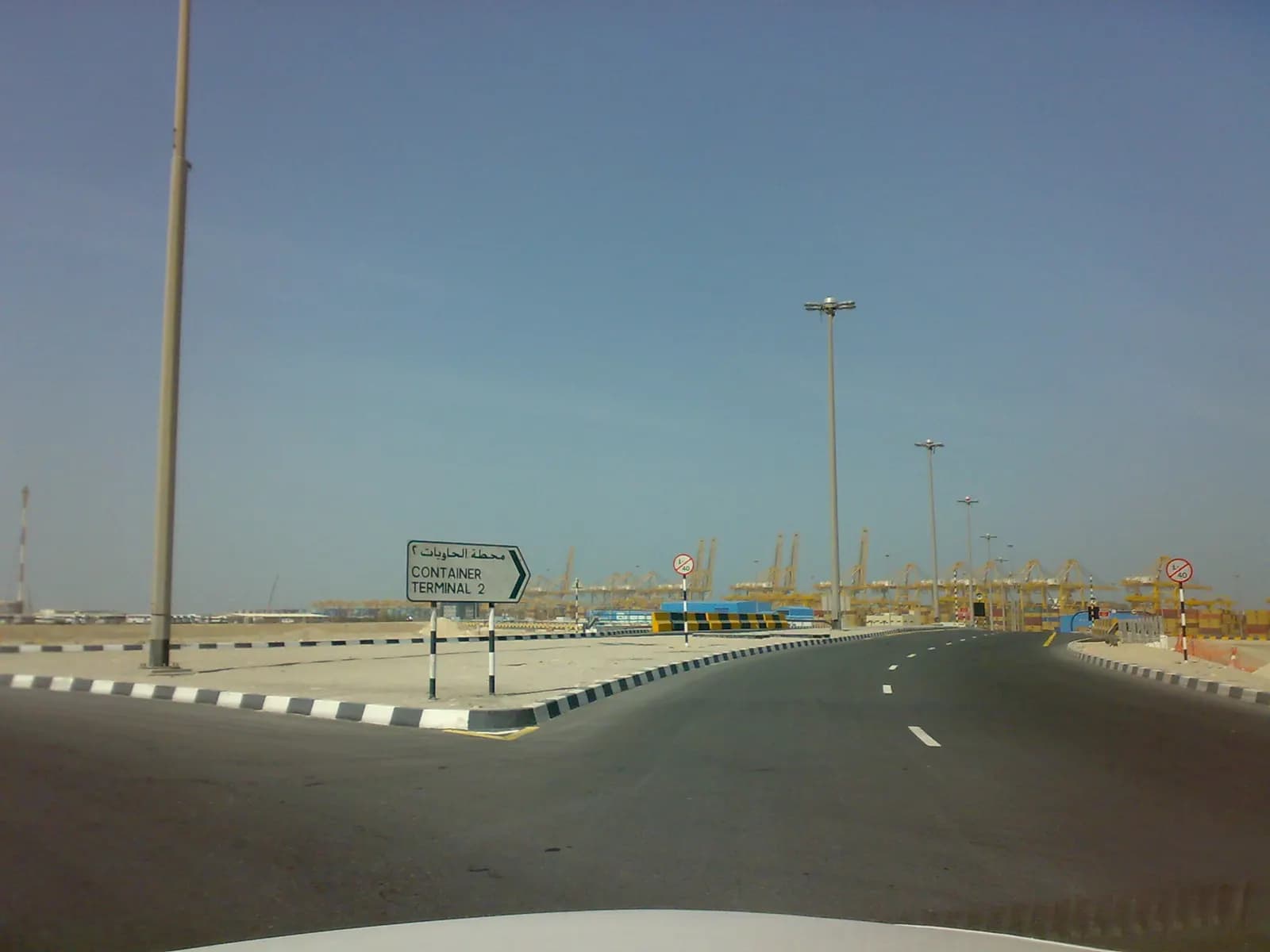
In JAFZA, you need a lease before you can complete setup, and the facility decides your visa quota. JAFZA's published options are:
- Workstations and co-working — furnished desks with meeting rooms and a business lounge, available for trading and service licences. Good for starting small; you can upgrade to an office later.
- Offices — unfurnished space in low-, mid- and high-rise buildings, including the Jafza View towers and the Jafza One complex, from a single unit to a whole floor or building.
- Warehouses — pre-built, insulated units from 313 to 1,110 sq m with office space, loading docks, floor loads of 5 tonnes per sq m and heights from 6 to 12 metres.
- Light industrial units (LIUs) — from 313 to 619 sq m with 10–74 kW power, for light assembly and storage.
- Showrooms — a glass-fronted showroom with warehouse behind and mezzanine offices; JAFZA lists units with a 264 sq m showroom, 158–277 sq m of office and a 348 sq m warehouse.
- Logistics parks — multi-tenant units in Jafza Logistics Park (Phase 2: 16 units, 46,112 sq m) and Jafza Gateway (187 units, 325–2,475 sq m).
- Plots of land — infrastructure-ready plots from 5,000 sq m, at an annual rent from AED 40 per sq m a year, on short or long leases. JAFZA can also design and build a facility for you under its customised development service.
- Staff accommodation — the on-site Jafza Workers Residence for registered companies.
JAFZA doesn't publish rents for offices, workstations or warehouses on its site; it quotes them on enquiry. The land figure is the one exception. At AED 40 per sq m a year, the smallest 5,000 sq m plot costs at least AED 200,000 a year in rent before you build anything.
What a JAFZA setup costs: building a first-year budget
Because JAFZA publishes licence fees and land rent but not office or warehouse rents, you can't get a complete figure from its website. Use its online cost calculator for licence and formation costs, then ask the sales team for written quotes on the facility. A realistic first-year budget has these lines:
- Licence fee — from AED 5,000 to AED 15,000, depending on licence type and activity groups.
- Registration and formation charges — shown by the cost calculator for your formation type.
- Lease — workstation, office, warehouse, LIU, showroom or land. For most physical businesses, this is the largest line.
- Immigration establishment card (computer immigration card) for your company before you can sponsor anyone.
- Visas — entry permit, medical, Emirates ID and residence stamping for each person.
- Deposits — typically for the lease and utilities.
- Attestation and translation of foreign documents, if your shareholder is an overseas company.
Here's how the published numbers stack up for two typical cases, before the items JAFZA quotes on request:
Two worked examples — published JAFZA figures only
| Line | Spare-parts distributor (2 activity groups) | Packaging manufacturer on land |
|---|---|---|
Licence a year | AED 8,500 trading | AED 5,000 industrial (1 group) |
Facility | Warehouse 313–1,110 sq m (quoted on request) | Plot 5,000 sq m × AED 40 = AED 200,000 a year rent |
Build cost | None — pre-built | Your own facility, or JAFZA customised development |
Visa quota | Depends on warehouse area | 20 visas initially, can be increased |
Still to add | Registration, CIC, visas, deposits | Registration, CIC, visas, deposits, construction |
Licence a year
- Spare-parts distributor (2 activity groups)
AED 8,500 trading
- Packaging manufacturer on land
AED 5,000 industrial (1 group)
Facility
- Spare-parts distributor (2 activity groups)
Warehouse 313–1,110 sq m (quoted on request)
- Packaging manufacturer on land
Plot 5,000 sq m × AED 40 = AED 200,000 a year rent
Build cost
- Spare-parts distributor (2 activity groups)
None — pre-built
- Packaging manufacturer on land
Your own facility, or JAFZA customised development
Visa quota
- Spare-parts distributor (2 activity groups)
Depends on warehouse area
- Packaging manufacturer on land
20 visas initially, can be increased
Still to add
- Spare-parts distributor (2 activity groups)
Registration, CIC, visas, deposits
- Packaging manufacturer on land
Registration, CIC, visas, deposits, construction
If an agent's "JAFZA package from AED X" looks far below these figures, ask exactly which facility it includes and whether the price is for the licence alone. Compare written quotes for the same facility size and number of visas.
How to set up a company in JAFZA
JAFZA's process is digital, though you can also visit its sales centre in the zone. The broad steps are the same for every formation type.
Setting up in JAFZA (2026)
- 1
Register your interest and choose the structure
JAFZA cost calculatorSubmit JAFZA's online enquiry. A sales adviser contacts you, usually within a day, to agree formation type (FZE, FZCO, branch), licence type and activities.
- 2
Prepare and file documents
Signed application form, a one-page business plan, KYC and ultimate beneficial owner forms, the EHS form, passport copies (valid at least six months; managers 21 or older) and appointment letters. Corporate shareholders add attested incorporation documents, MOA/AOA and a board resolution.
Tip: Overseas company documents must be notarised and attested by the UAE embassy — or another GCC/Arab embassy plus the UAE Ministry of Foreign Affairs. Start this first.
- 3
Choose a facility and sign the lease
Pick a workstation, office, warehouse, showroom or plot. The lease (property settlement agreement) must be in place for setup.
- 4
Pay and receive your licence
Pay the formation, licence and lease charges. JAFZA estimates 3 to 14 business days after documents are complete.
- 5
Get your immigration card and visas
Apply for the computer immigration card, then entry permits, medicals, Emirates ID and residence visas for shareholders and staff.
- 6
Register for corporate tax (and VAT if needed)
Register with the Federal Tax Authority within 3 months of incorporation, and for VAT once taxable supplies pass AED 375,000.
Visas for JAFZA companies
JAFZA sponsors employees of companies in the zone, but only after the licence is issued, the lease is signed and the company holds a computer immigration card. The number of visas you can apply for is tied to the facility you lease, according to JAFZA's visa guide:
| Facility leased | Visa quota |
|---|---|
| Workstation | 2 visas per workstation |
| Showroom | 5 visas, regardless of size |
| Office | Depends on the office area |
| Warehouse or LIU | Depends on the property area |
| Plot of land | 20 visas initially; can be increased with approval (after facility drawings or completion) |
Shareholders and partners can get residence visas too, but each needs a shareholding worth at least AED 50,000 and a shareholder confirmation letter from JAFZA's commercial department. Employees must be at least 18. A JAFZA-sponsored employee may only work inside the free zone; temporary work outside it — installing or repairing equipment for a customer, for example — needs JAFZA's prior approval or a no-objection certificate through the portal.
All JAFZA companies must pay staff through the UAE Wage Protection System and follow UAE end-of-service gratuity rules.
Customs and trade advantages at Jebel Ali Port
The main reason companies pay JAFZA's rents is the port. JAFZA is a customs-bonded zone right beside Jebel Ali Port, so goods can be landed, stored, repacked, assembled and re-exported without being imported into the UAE customs territory. Customs duty is only due when goods leave the zone for the UAE local market. The standard GCC customs duty is 5% of the CIF value (cost, insurance and freight), though some goods carry other rates or anti-dumping duties.
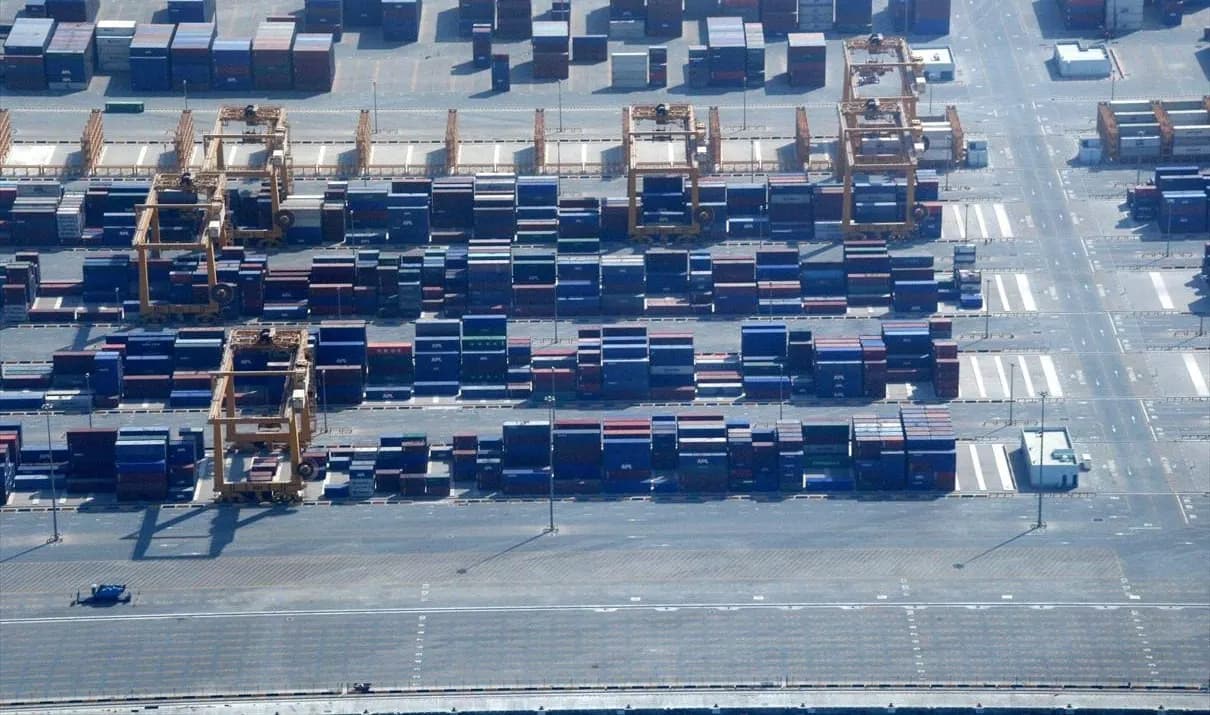
Consider a distributor that lands AED 1,000,000 of auto parts (CIF) in its JAFZA warehouse. It re-exports AED 600,000 of them to Oman and East Africa, and sells AED 400,000 to a mainland Dubai reseller. Duty applies only to the goods entering the UAE market — about AED 20,000 (5% of AED 400,000). The re-exported stock never paid UAE duty. GCC customs union rules and free trade agreements can change the treatment for particular origins and destinations, so confirm with your customs broker.
JAFZA is also a VAT Designated Zone: Cabinet Decision No. 59 of 2017 lists Jebel Ali Free Zone (North-South). Certain supplies of goods within or between designated zones can be outside the scope of UAE VAT, but services supplied in the zone are still subject to VAT at 5%. Designated zone rules are technical — goods must stay under customs control — so get them right before relying on them.
To sell into mainland Dubai yourself, rather than through a distributor, you'll need a licence or permit from Dubai's Department of Economy and Tourism under Executive Council Resolution No. 11 of 2025, or a separate mainland branch. Our UAE business licence guide and Dubai business setup guide explain the mainland options.
Corporate tax for JAFZA companies
JAFZA's marketing still mentions 0% corporate tax for 50 years with a renewable concession. Read that alongside the federal law: since UAE corporate tax began in 2023, every JAFZA company is a taxable person, must register with the Federal Tax Authority within 3 months of incorporation (or face a AED 10,000 penalty) and files a return each year. The 0% rate is available only to a Qualifying Free Zone Person (QFZP) and only on qualifying income.
Does a JAFZA company get 0% corporate tax?
Step 1
Registered with FTA
Step 2
Adequate substance in JAFZA
Step 3
Qualifying income (e.g. distribution, logistics, manufacturing)
Step 4
Non-qualifying revenue ≤ 5% and ≤ AED 5m
de minimis
Step 5
Audited accounts
Step 6
0% on qualifying income
9% on the rest
Because JAFZA is a designated zone, its typical activities fit the qualifying list in Ministerial Decision No. 229 of 2025 well. Qualifying activities include manufacturing and processing goods, logistics services, and distribution of goods in or from a designated zone to customers who resell or process them — exactly what a JAFZA distributor does. Selling goods to consumers, or services to mainland businesses, generally isn't qualifying.
To keep QFZP status, a company must hold adequate substance in the zone, earn qualifying income, prepare audited financial statements and keep non-qualifying revenue within the de minimis limit: no more than 5% of total revenue or AED 5 million, whichever is lower. Fail a condition and the company loses QFZP status for 5 tax periods, paying the standard rates — 0% on taxable income up to AED 375,000 and 9% above it.
Worked example. A JAFZA FZE earns AED 4,000,000 from selling machinery parts to resellers across the Gulf, shipped through the zone, and AED 150,000 from repair services for mainland customers. Non-qualifying revenue is AED 150,000 — 3.6% of AED 4,150,000 total, under both the 5% and AED 5 million limits — so the FZE stays a QFZP. Qualifying profit is taxed at 0%, and the AED 150,000 doesn't disqualify it. If the repair revenue had been AED 300,000 (7%), the de minimis test would fail and all taxable income would be taxed at standard rates for five tax periods. Use our UAE corporate tax calculator to test your own numbers.
JAFZA vs other free zones
| JAFZA | DAFZ (Dubai Airport) | Hamriyah (Sharjah) | Budget zones (Ajman, UAQ, Meydan) | |
|---|---|---|---|---|
| Location advantage | Next to Jebel Ali Port | Next to Dubai International Airport | Own deep-water port | Low cost; no major port inside |
| Best for | Sea freight, distribution, manufacturing | Air freight, high-value goods, tech | Heavy industry, marine | Service, e-commerce, small trading |
| Land | From 5,000 sq m | Limited | From 2,500 sq m | Limited |
| Published entry price | Licence from AED 5,000 a year + lease | Packages on DAFZ site | Basic licence AED 11,000 | Packages from a few thousand AED |
If containers come in by sea and you need a warehouse, JAFZA is hard to beat. If your goods fly, look at DAFZ. For heavy industry in Sharjah, compare Hamriyah Free Zone. If you mainly need a licence and a visa, start with UAQ FTZ or Ajman Free Zone.
Common mistakes to avoid
- Treating the licence fee as the setup cost. The lease almost always costs more than the licence.
- Picking general trading by default. Two activity groups at AED 8,500 may be enough.
- Under-sizing the facility. Your visa quota follows your space; a workstation won't cover a team.
- Leaving document attestation until last. It often takes longer than JAFZA's own processing.
- Assuming 0% tax. QFZP status depends on activity, substance, audit and de minimis — and sales to consumers usually don't qualify.
- Selling to the mainland directly without a DET permit, branch or distributor.
What to do next
Start with the goods. List what you'll import, store, make or ship, and through which port or airport. Then use JAFZA's cost calculator for the licence and ask for a written facility quote with the visa quota stated. Get a comparable quote from one other zone for the same space and visa count, and run both through our startup cost calculator. Once you're incorporated, diarise your corporate tax registration and check that your income mix keeps you inside the 0% rules.
This is general information, not legal or tax advice — confirm on the official source or with a professional.
Frequently asked questions
JAFZA's own licence guides list AED 5,000 a year for a trading, service or industrial licence with up to seven activities from one group, AED 8,500 for two groups, and AED 15,000 for a general trading or logistics licence, plus AED 500 per extra activity. Those figures date from JAFZA guides published in 2021 and JAFZA says costs can change, so get a current quote. The lease is extra.
Both are limited liability companies with no foreign ownership restrictions. An FZE has a single shareholder — a person or a company. An FZCO has between two and fifty shareholders, who can be individuals, companies or a mix. Both can hold any JAFZA licence type. JAFZA also registers branches of existing companies, public listed companies and offshore companies.
It depends on the facility you lease. JAFZA's visa guide says a workstation allows two visas, a showroom five regardless of size, and a plot of land an initial 20 (which can be increased). Office, warehouse and light industrial unit quotas depend on the area leased. A shareholder visa needs a shareholding worth at least AED 50,000.
They're within UAE corporate tax and must register with the Federal Tax Authority. JAFZA is a designated zone, so a Qualifying Free Zone Person can pay 0% on qualifying income — such as distributing goods from the zone to resellers, logistics services or manufacturing — and 9% on other taxable income. Non-qualifying revenue must stay within the de minimis limit.
Not directly as a free zone company without permission. Goods leaving JAFZA for the UAE market clear customs and duty — usually 5% of the CIF value — is paid at that point. To trade on the mainland, use a mainland distributor or agent, open a mainland branch, or get a Department of Economy and Tourism licence or permit under Executive Council Resolution No. 11 of 2025.
JAFZA estimates 3 to 14 business days after all documents are submitted, depending on the formation type, licence and activities. You need a lease agreement in place at setup. Documents from a foreign parent company must be notarised and attested, which can add weeks before you can file, so start that early.
Sources & verification
Figures on this page were checked against the sources below when it was last reviewed on 7 October 2026. Each rate and limit is stored once with its own official source and review date, and official update channels are monitored daily so changes are picked up. How we verify
- 1.Business licence in Dubai with Jafza — Jebel Ali Free Zone Authority · accessed 7 October 2026
- 2.Company formation in Dubai with Jafza — Jebel Ali Free Zone Authority · accessed 7 October 2026
- 3.What is a trading license? (Jafza guide, 29 September 2021) — Jebel Ali Free Zone Authority · accessed 7 October 2026
- 4.What is a Jafza logistics license? (Jafza guide) — Jebel Ali Free Zone Authority · accessed 7 October 2026
- 5.What is a Jafza industrial license? (Jafza guide) — Jebel Ali Free Zone Authority · accessed 7 October 2026
- 6.Issuing a visa for an employee for Jafza companies — Jebel Ali Free Zone Authority · accessed 7 October 2026
- 7.How to set up a branch of an existing company — Jebel Ali Free Zone Authority · accessed 7 October 2026
- 8.How to set up an FZE company — Jebel Ali Free Zone Authority · accessed 7 October 2026
- 9.Jafza — plots of land, warehouses, co-working and showrooms — Jebel Ali Free Zone Authority · accessed 7 October 2026
- 10.About Jafza / Why Jafza — Jebel Ali Free Zone Authority · accessed 7 October 2026
- 11.The Dubai Unified Licence (Jafza guide) — Jebel Ali Free Zone Authority · accessed 7 October 2026
- 12.Cabinet Decision No. 59 of 2017 on Designated Zones — UAE Cabinet (copy hosted by Grant Thornton UAE) · accessed 7 October 2026
- 13.Ministerial Decision No. 229 of 2025 regarding Qualifying Activities and Excluded Activities — UAE Ministry of Finance · accessed 7 October 2026
- 14.Corporate Tax Guide — Free Zone Persons (CTGFZP1) — Federal Tax Authority (UAE) · accessed 7 October 2026
- 15.Corporate Tax registration — Federal Tax Authority (UAE) · accessed 7 October 2026
- 16.Hamdan bin Mohammed issues resolution to regulate free zone establishments operating outside designated zones — Dubai Media Office · accessed 7 October 2026
- 17.United Arab Emirates — other taxes (customs duties) — PwC Worldwide Tax Summaries · accessed 7 October 2026
MSMETOOLS is an independent platform and is not affiliated with any government agency, ministry or department.
Tools for this
Corporate Tax Calculator (UAE)
Calculate 9% UAE corporate tax above AED 375,000.
UAE VAT Calculator (UAE)
Calculate 5% UAE VAT on sales and purchases.
Startup Cost Calculator
Estimate how much capital you need to launch.
Related guides
 SAIF Zone Sharjah 2026: Licences, Costs, Visas & SetupRead guide
 Dubai Business Setup 2026: Mainland, Free Zone or OffshoreRead guide
 DAFZA Free Zone 2026: Licences, Costs, Visas & Tax GuideRead guide
 Hamriyah Free Zone 2026: Licences, Costs, Land & SetupRead guide
Official links open the government site in a new tab.