 Business registration & legal
KEZAD Abu Dhabi in 2026: Licences, Land Lease Rates, Visas and What Setup Really Costs
KEZAD Abu Dhabi in 2026: free zone vs mainland, industrial, trading and service licences, official land lease rates, visa fees, a worked AED budget and setup steps.
 Edited by Sumeet YadavFounder & editor, MSMETOOLS · fact-checked against official sources
Contents (11)
- 1. What KEZAD is and who runs it
- 2. Free zone or mainland: KEZAD's two jurisdictions
- 3. Licence types and legal forms
- 4. What KEZAD costs: the official tariff
- 5. Warehouses, land and the new SME Hub
- 6. Worked example: a food-packaging plant on serviced land
- 7. How to set up in KEZAD
- 8. Visas and staff
- 9. Corporate tax, VAT and customs
- 10. Common mistakes to avoid
- 11. What to do next
KEZAD is where Abu Dhabi puts factories, warehouses and the companies that feed Khalifa Port. If you're weighing a manufacturing plant, a distribution centre or a trading company in the capital, this guide is for you. It explains what KEZAD is and who runs it, the choice between its free zone and its mainland zone, the three licence types, KEZAD's own published tariff (which lists new licences at AED 0 — the money is in the lease), official land rates per square metre, visa fees, a worked year-one budget in AED, corporate tax and the mistakes that slow projects down.
Quick answer
KEZAD (Khalifa Economic Zones Abu Dhabi) is AD Ports Group's industrial and logistics zone operator, covering 550 sq km around Khalifa Port, Musaffah and Al Ain. You can set up in its free zone (100% foreign ownership, export-focused) or its mainland Domestic Economic Zone (direct UAE/GCC sales). KEZAD's tariff lists a new licence with up to up to 5 activities at AED 0; you pay for land, warehouse or office space and permits instead.
Licences: industrial, trading (general trading above 17 products or 3 groups) and service
Serviced industrial land AED 32–38 per sq m a year, plus a AED 3 per sq m a year maintenance levy
Licence renewal after two years: AED 5,000 (AED 15,000 for general trading)
Establishment card AED 1,000; employment residence AED 1,500 plus federal fees
Corporate tax registration within 3 months; 0% possible on qualifying manufacturing and logistics income
What KEZAD is and who runs it
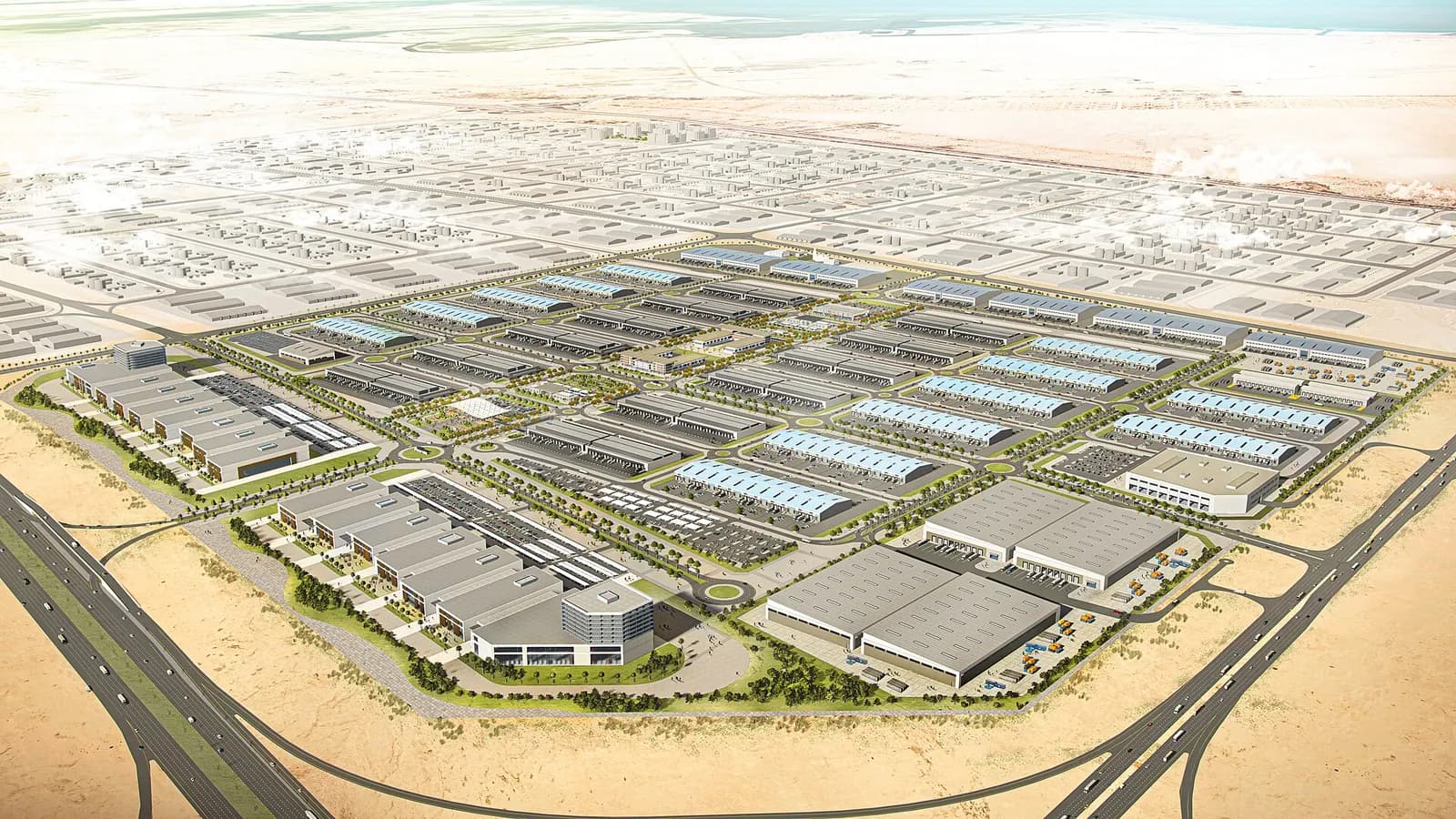
KEZAD Group — Khalifa Economic Zones Abu Dhabi — is part of the Economic Cities and Free Zones cluster of AD Ports Group, which is listed on the Abu Dhabi Securities Exchange. It started as the Khalifa Industrial Zone Abu Dhabi (KIZAD) beside Khalifa Port and now runs a wider portfolio across the emirate. KEZAD describes itself as the UAE's largest operator of integrated economic zones, with about 550 sq km of land and more than 1,750 companies on its community platform.
The portfolio has three main locations. KEZAD Al Ma'mourah (often called KEZAD A) is the large zone between Abu Dhabi and Dubai next to Khalifa Port; it holds most of the KEZAD Logistics Park warehouses and the newer specialised hubs. KEZAD Musaffah sits in Abu Dhabi's established industrial district close to the city. KEZAD Al Ain serves the eastern region and offers the lowest published land rates. Within these, KEZAD has built sector clusters — the Abu Dhabi Food Hub, Metal Park, Polymers Park, an Agtech Park and Rahayel Auto and Mobility City.
The scale is industrial rather than office-based. At the end of 2025 KEZAD reported 73.6 sq km of land under lease, with roughly two-thirds of land leases tied to industrial and manufacturing activity, and land leases running 25 to 50 years. That shapes everything about how setup works: the licence is cheap or free, and the commitment is the land, warehouse or unit you take.
KEZAD suits:
- manufacturers and processors that need serviced land or a light industrial unit next to a deep-water port;
- distributors and re-exporters serving the Gulf, Africa and South Asia from a bonded free zone warehouse;
- food, metals, polymers and automotive businesses that want to sit in a sector cluster with shared infrastructure;
- SMEs scaling into production, especially once the new SME Hub opens.
It's a poor fit for a solo consultant who just wants a cheap licence and a visa. Abu Dhabi's tech and services community clusters in Masdar City Free Zone and ADGM instead.
Free zone or mainland: KEZAD's two jurisdictions
KEZAD is unusual because it offers both jurisdictions on the same land bank. The choice decides who you can sell to, what VAT and customs rules apply and how your goods are certified, so make it before you look at plots.
The KEZAD free zone gives 100% foreign ownership and full repatriation of capital and profits, with free zone labour rules. Goods held inside the zone sit outside customs duty until they move into the local market. KEZAD positions it for wholesale distribution, re-export, warehousing, services and manufacturing aimed at markets outside the GCC. Selling into the UAE is possible, but indirectly: through a local distributor or agent, or by adding a dual licence from the Abu Dhabi Department of Economic Development so you can operate outside the zone without separate premises.
The KEZAD mainland, which KEZAD calls the Domestic Economic Zone, gives direct access to UAE and GCC customers. KEZAD says up to 100% foreign ownership is available across more than 1,100 activities. Standard VAT applies, goods made there can be certified "Made in UAE", and holders of a national industrial licence can sell locally manufactured goods across the GCC without customs duty. Customs exemptions on imported raw materials and machinery are available for manufacturers.
KEZAD free zone vs KEZAD mainland
| Free zone | Mainland (Domestic Economic Zone) | |
|---|---|---|
Ownership | 100% foreign | Up to 100% foreign in 1,100+ activities |
Selling in the UAE | Via distributor, agent or ADDED dual licence | Direct |
Customs | No duty inside the zone; duty when goods enter the local market | GCC duty-free for qualifying local manufacture |
VAT | Designated-zone rules may apply to goods | Standard VAT |
Typical user | Re-exporters, regional distributors, export manufacturers | Manufacturers selling in the UAE and GCC |
Ownership
- Free zone
100% foreign
- Mainland (Domestic Economic Zone)
Up to 100% foreign in 1,100+ activities
Selling in the UAE
- Free zone
Via distributor, agent or ADDED dual licence
- Mainland (Domestic Economic Zone)
Direct
Customs
- Free zone
No duty inside the zone; duty when goods enter the local market
- Mainland (Domestic Economic Zone)
GCC duty-free for qualifying local manufacture
VAT
- Free zone
Designated-zone rules may apply to goods
- Mainland (Domestic Economic Zone)
Standard VAT
Typical user
- Free zone
Re-exporters, regional distributors, export manufacturers
- Mainland (Domestic Economic Zone)
Manufacturers selling in the UAE and GCC
A simple rule works for most projects. If most of your revenue will come from customers in the UAE or the GCC, look hard at the mainland. If you're importing, storing and re-exporting, or manufacturing mainly for overseas buyers, the free zone is usually cleaner. Some groups use both: a free zone entity holding regional stock and a mainland entity selling locally.
Licence types and legal forms
KEZAD issues three licence types. An industrial licence covers importing raw materials, manufacturing, processing, assembling and packaging, and exporting intermediate or finished goods. A trading licence covers import, export, distribution, stocking and warehousing of the products named on it. A service licence covers activities such as management and economic consultancy, marketing, logistics support including cargo and freight forwarding, restaurants and catering, and travel agencies.
The trading licence has a hard ceiling that catches traders out. Once you list more than 17 products or more than three product groups, KEZAD issues a general trading licence instead — and general trading renews at AED 15,000 rather than AED 5,000. If you only need a narrow product range, keep your activity list tight; if you genuinely trade across categories, budget for the higher renewal from the start.
For the company itself, KEZAD offers a limited liability company — with natural-person or corporate shareholders — or a branch of an existing UAE or foreign company. KEZAD publishes separate legal-document checklists for each, plus a business plan template and an ultimate beneficial owner declaration. A branch has no separate legal personality, so the parent stays liable for its debts; an LLC ring-fences liability but needs its own constitutional documents. KEZAD doesn't publish a minimum share capital on its site, so confirm the figure for your structure in writing before you finalise the articles.
Some activities need approvals from other authorities before the licence is issued — food handling, chemicals, healthcare products, and anything with environmental or civil defence implications. Industrial projects also go through building and fit-out permitting before you can operate. Build that time into your plan.
What KEZAD costs: the official tariff
Unlike most UAE free zones, KEZAD publishes a tariff on its own website. When we read it on 12 October 2026, it listed most company and licence services — including registration of a new LTD or branch and a new industrial, trading, general trading or service licence with up to up to 5 activities — at AED 0. Charges begin when you renew after two years, amend shareholdings, or need establishment-card and visa services.
KEZAD published fees (read 12 Oct 2026)
AED 0
New licence
up to 5 activities
AED 5,000
Renewal after 2 years
industrial, trading, service
AED 15,000
General trading renewal
after 2 years
AED 1,000
New establishment card
That doesn't mean setting up is free. The real cost is the facility. KEZAD's published land lease bands, per square metre per year, were:
| Facility | Standard use fee (AED/sq m a year) |
|---|---|
| Serviced industrial plots, Abu Dhabi (free zone and domestic) | AED 32–38 per sq m a year |
| Serviced logistics plots, Abu Dhabi (free zone and domestic) | AED 36–45 per sq m a year |
| Temporary industrial plots (domestic zone) | AED 15–20 |
| Serviced industrial plots, KEZAD Al Ain | AED 15–20 per sq m a year |
| Temporary laydown area | AED 10–12 |
All land prices carry a common area maintenance levy of AED 3 per sq m a year, adjusted annually, plus annual escalation under the lease and a premium levy on strategic allocations. KEZAD doesn't publish warehouse, light industrial unit or office rents; those are quoted per unit.
Other published fees you're likely to meet are a AED 3,000 share amendment per instrument, an AED 2,500 incumbency letter, AED 200 notarisations and amendments, and a AED 2,500 licence cancellation. Many routine amendments — activity changes within a group, director, manager or name changes — were listed at AED 0.
Warehouses, land and the new SME Hub
Most KEZAD customers pick a facility first and a licence second. There are four routes.
Serviced land suits manufacturers who want to build their own plant. Plots come with roads and utilities to the boundary; you design, permit and build. Leases are long — KEZAD quotes 25 to 50 years — and you pay the annual standard use fee plus the maintenance levy from the lease start, so time your lease to your construction programme.
Pre-built warehouses and light industrial units in KEZAD Logistics Park suit distributors and assemblers who want to start within months. KEZAD's warehouse pages list standard warehouses, logistics warehouses, light industrial units and cold-store-convertible units across several phases; its Phase 2 light industrial units start at 419 sq m, and customers can lease or buy units. Earlier phases are fully leased, so availability depends on the current phase.
Build-to-suit facilities suit larger tenants with specific specifications, such as cold chains, clean rooms or heavy floor loads. KEZAD designs and builds the facility and leases it back.
Offices and start-up workspaces suit service companies and the commercial arms of industrial groups. KEZAD markets free zone office packages and an Entrepreneurship and Incubation Centre for SMEs, but doesn't publish their prices.
The newest option is the KEZAD SME Hub. Announced on 11 June 2026, it's an AED 112 million, 25,260 sq m development in KEZAD Al Ma'mourah combining 175 micro industrial units from 100 sq m with office suites and a business centre. KEZAD says handover is scheduled before the end of 2026. It's aimed at small producers that have outgrown an incubator but can't justify a full warehouse — a gap that pushed many SMEs towards Sharjah or Ajman in the past.
Worked example: a food-packaging plant on serviced land
Sara runs a snack-packaging company in Egypt and wants a GCC plant. She takes a 5,000 sq m serviced industrial plot in KEZAD Al Ma'mourah, an industrial licence in the free zone with three activities, and plans to sponsor ten workers in year one.
Using KEZAD's published tariff:
- land: 5,000 sq m × AED 32–38 = AED 160,000–190,000 a year;
- maintenance levy: 5,000 × 3 = AED 15,000 a year;
- licence and company registration: AED 0;
- establishment card: AED 1,000;
- KEZAD permitting fees per worker — initial approval AED 450, employment residence AED 1,500 and ID card AED 300 — about AED 2,250, so roughly AED 22,500 for ten workers.
That's about AED 198,500–228,500 in year one before construction, federal immigration charges, medical tests, Emirates ID, health insurance and recruitment. Construction will dwarf all of this, so the land rent during the build period matters: negotiate a start date or a rent-free fit-out period that matches your contractor's programme. In year three she'll pay the AED 5,000 licence renewal. If her products sell mainly in the UAE, she should price the same plant on the mainland side, where "Made in UAE" certification and GCC duty-free access may be worth more than free zone status. Put the numbers into our startup cost calculator.
How to set up in KEZAD
KEZAD set-up, step by step
- 1
Decide jurisdiction and facility
Choose free zone or mainland based on where you'll sell, then shortlist land, a warehouse, a light industrial unit or an office.
Tip: Ask for the lease start date, CAM levy and escalation in writing.
- 2
Submit the business enquiry and application
KEZAD company legal types and formsComplete the Free Zone Registration and Licensing Application Form, the registry identification form and the business plan template.
- 3
Provide shareholder documents
Passports and IDs for individual shareholders and managers; attested constitutional documents and board resolutions for corporate shareholders and branches; UBO declaration.
- 4
Sign the lease and receive the licence
The licence is issued against your facility. Most company and licence services are processed through the Abu Dhabi Trade Link Platform (ATLP).
- 5
Establishment card and visas
Apply for the establishment card, then initial approval, entry permit or change of status, medical, Emirates ID and residence for each employee.
- 6
Permits, tax and bank
Obtain building and operating permits, register for corporate tax within the deadline, register for VAT if required, and open a bank account.
Industrial projects take longer than a trading licence because of design approvals and inspections. Consultancy guides put a straightforward office-based KEZAD licence at one to two weeks once documents are complete and a full industrial set-up at several months; these are estimates, and the build timetable usually decides yours. Delays most often come from unattested corporate documents, activity descriptions that don't match the licence category lists, and missing UBO details.
Visas and staff
KEZAD processes visas through its permitting services. The published fees are KEZAD's own charges — AED 450 for initial approval, AED 1,500 for employment residence, AED 800 for an in-country change of status and AED 300 for an ID card — and federal immigration, medical and Emirates ID charges are paid on top. Health insurance is compulsory in Abu Dhabi for every sponsored employee.
KEZAD doesn't publish a fixed visa-per-square-metre formula on its site; allocations are tied to your facility and business plan, so state your two-year headcount in the application. Industrial employers also need staff accommodation that meets Abu Dhabi standards. KEZAD's Sdeira communities business manages more than 40 accommodation communities across Abu Dhabi, Al Ain and Al Dhafra, which is one reason manufacturers choose KEZAD over smaller zones.
If you hold a UAE Golden Visa, KEZAD advertises a 25% discount on free zone office packages and 10% on land and warehouses through an agreement with the Abu Dhabi Residents Office. See our Golden Visa guide for eligibility.
KEZAD application checklist
0/8Corporate tax, VAT and customs
KEZAD companies are fully inside UAE corporate tax. Every company must register with the FTA within 3 months of incorporation — the late penalty is AED 10,000 — and file a return within 9 months of its year end.
KEZAD's free zone is where the Qualifying Free Zone Person regime matters most. Under Ministerial Decision No. 229 of 2025, qualifying activities include manufacturing and processing of goods, logistics services, trading of qualifying commodities and distribution of goods from a designated zone to customers who resell or process them. A KEZAD free zone manufacturer exporting its output, with adequate substance, audited accounts and transfer-pricing compliance, can pay 0% on that income. Sales to UAE consumers and other non-qualifying revenue must stay within 5% of revenue or AED 5 million, whichever is lower, or QFZP status is lost for 5 tax periods. A mainland KEZAD company pays 9% on taxable income above AED 375,000. Model both in the UAE corporate tax calculator.
For VAT, Khalifa Industrial Zone has long been on the Cabinet's list of designated zones, which treats qualifying movements of goods within or between designated zones as outside the UAE for VAT. That relief is narrow: services are taxed normally at 5%, and goods released into the local market are taxed. Confirm whether your specific plot and activity sit inside the designated area before relying on it. Registration is compulsory once taxable supplies pass AED 375,000. Our UAE VAT guide covers the rules.
On customs, goods inside the free zone aren't subject to duty, but standard duty applies when goods move to the local market or into another GCC state at first point of entry.
Common mistakes to avoid
- Treating "AED 0 licence" as the cost of setting up. The lease, maintenance levy, permits and staff costs are the budget.
- Picking free zone when your customers are in the UAE. You'll then need a distributor or dual licence; the mainland zone may be simpler.
- Listing too many products. More than 17 products or three groups turns a trading licence into general trading, with a AED 15,000 renewal.
- Signing a land lease before permits are mapped. Rent and the CAM levy start at lease commencement, not at first production.
- Ignoring escalation. Land rents escalate annually under the lease and the levy is adjusted every year.
- Assuming free zone means no tax. Register for corporate tax, and test each income stream against the qualifying-activity list.
Official links
- KEZAD — TariffsLand lease bands and free zone service fees
- KEZAD — Company licence typesIndustrial, trading and service licences
- KEZAD — Company legal types and formsLLC and branch checklists, application form, UBO declaration
- KEZAD — Free zone licence searchCheck a KEZAD company's licence
- FTA — Corporate Tax registrationRegister within 3 months of incorporation
- Ministry of Finance — Ministerial Decision No. 229 of 2025Qualifying activities for the 0% rate
What to do next
Write down where your customers are, the floor area and power you need, and your two-year headcount. Then ask KEZAD for written offers on both the free zone and the mainland side, compare them with JAFZA and Hamriyah, and build the full budget in the startup cost calculator. Before you sign, check your tax position with our UAE corporate tax guide.
This is general information, not legal or tax advice — confirm on the official source or with a professional.
Frequently asked questions
KEZAD — Khalifa Economic Zones Abu Dhabi — is AD Ports Group's operator of industrial and logistics zones. It covers 550 sq km across KEZAD Al Ma'mourah (next to Khalifa Port), KEZAD Musaffah and KEZAD Al Ain, plus specialised hubs for food, metals, polymers and autos. It licenses companies in a free zone and in a mainland Domestic Economic Zone, and leases land, warehouses and offices.
KEZAD's published tariff, read on 12 October 2026, lists a new industrial, trading, general trading or service licence with up to up to 5 activities at AED 0, with renewal after two years at AED 5,000 (AED 15,000 for general trading). Your real cost is the lease — land, warehouse or office — plus establishment card and visa fees.
Yes, in practice. Khalifa Industrial Zone Abu Dhabi (KIZAD) was the original zone next to Khalifa Port. AD Ports Group later grouped KIZAD and its other economic zones under the KEZAD Group brand. You'll still see KIZAD on older documents, VAT designated-zone lists and consultancy pages; the zone you deal with today is KEZAD.
KEZAD's tariff lists serviced industrial plots in Abu Dhabi at AED 32–38 per sq m a year, serviced logistics plots at AED 36–45 per sq m a year and serviced industrial plots in KEZAD Al Ain at AED 15–20 per sq m a year. Add a common area maintenance levy of AED 3 per sq m a year, annual escalation and, for strategic plots, a premium levy. Leases typically run 25 to 50 years.
Not directly on a free zone licence. KEZAD says free zone companies can sell locally through a distributor or agent, or obtain a dual licence from the Abu Dhabi Department of Economic Development. If the UAE and GCC are your main market, KEZAD's mainland Domestic Economic Zone licence gives direct local access and 'Made in UAE' certification for eligible goods.
Yes, they're inside UAE corporate tax and must register with the FTA within 3 months. A free zone company that meets every Qualifying Free Zone Person condition can pay 0% on qualifying income — manufacturing, processing, logistics and qualifying trading are on the list. Everything else is taxed at 9% above AED 375,000 for non-QFZPs.
Sources & verification
Figures on this page were checked against the sources below when it was last reviewed on 12 October 2026. Each rate and limit is stored once with its own official source and review date, and official update channels are monitored daily so changes are picked up. How we verify
- 1.KEZAD Group — home page — KEZAD Group (AD Ports Group) · accessed 12 October 2026
- 2.Tariffs — KEZAD Group · accessed 12 October 2026
- 3.Company Licence Types — KEZAD Group · accessed 12 October 2026
- 4.Company Legal Types — KEZAD Group · accessed 12 October 2026
- 5.Free Zone — KEZAD Group · accessed 12 October 2026
- 6.Mainland Business Solutions — KEZAD Group · accessed 12 October 2026
- 7.Pre-Built Warehouses — KEZAD Group · accessed 12 October 2026
- 8.KEZAD Group Announces the Development of AED 112 Million SME Hub in Abu Dhabi — KEZAD Group · accessed 12 October 2026
- 9.Golden Visa Offers — KEZAD Group · accessed 12 October 2026
- 10.Corporate Tax registration — Federal Tax Authority (UAE) · accessed 12 October 2026
- 11.Ministerial Decision No. 229 of 2025 on Qualifying Activities and Excluded Activities — UAE Ministry of Finance · accessed 12 October 2026
- 12.These 20 areas in UAE are exempt from VAT — Khaleej Times · accessed 12 October 2026
- 13.KIZAD Free Zone Setup Guide 2026 — BusinessDubai (consultancy) · accessed 12 October 2026
MSMETOOLS is an independent platform and is not affiliated with any government agency, ministry or department.
Tools for this
Startup Cost Calculator
Estimate how much capital you need to launch.
Corporate Tax Calculator (UAE)
Calculate 9% UAE corporate tax above AED 375,000.
UAE VAT Calculator (UAE)
Calculate 5% UAE VAT on sales and purchases.
Related guides
 Masdar Free Zone Abu Dhabi 2026: Costs, Licences & VisasRead guide
 JAFZA Free Zone 2026: Licences, Costs, Visas & TaxRead guide
 ADGM Company Setup 2026: Fees, Entities & Tech LicenceRead guide
 SAIF Zone Sharjah 2026: Licences, Costs, Visas & SetupRead guide
Official links open the government site in a new tab.