 Business registration & legal
ADGM Company Setup in 2026: Official Fees, Entity Types, Tech Start-ups and Courts
ADGM company setup in 2026: official Registration Authority fees in USD and AED, entity types, the Hub71 tech start-up licence, ADGM Courts, setup steps and costs.
 Edited by Sumeet YadavFounder & editor, MSMETOOLS · fact-checked against official sources
Contents (11)
- 1. What ADGM is and how its legal system works
- 2. ADGM entity types
- 3. ADGM fees in 2026: the official schedule
- 4. The ADGM tech start-up licence
- 5. How to set up an ADGM company
- 6. Offices, visas and employment
- 7. Data protection in ADGM
- 8. Corporate tax and VAT
- 9. ADGM vs DIFC
- 10. Common mistakes to avoid
- 11. What to do next
Abu Dhabi Global Market (ADGM) is the capital's international financial centre — a free zone where English common law applies directly, with its own courts, its own financial regulator and its own company registry. Since ADGM cut its licence fees in January 2025, it has also become a realistic option for non-financial businesses, not just banks and funds. This guide is for founders, family offices, fund managers and tech start-ups weighing ADGM in 2026. It covers the legal framework, entity types, the Registration Authority's official fees, the Hub71 tech start-up licence, setup steps, corporate tax, and worked budgets in AED.
Quick answer
ADGM is Abu Dhabi's financial free zone on Al Maryah and Al Reem Islands, with English common law, the ADGM Courts and the FSRA as financial regulator. A non-financial company pays USD 5,800 in year one and USD 5,300 a year after that in Registration Authority fees. Eligible tech start-ups with a Hub71 letter pay USD 1,500 a year for 3 years.
Fees by category: financial USD 17,000, non-financial USD 5,800, retail USD 2,800 (year one, incl. data protection)
SPVs and other specialised entities: USD 1,900 to register, USD 1,400 to renew
Every entity needs a registered office in ADGM
Financial firms apply to the FSRA before incorporating
Corporate tax: register within 3 months; 0% only on qualifying income for QFZPs
What ADGM is and how its legal system works
ADGM was set up under Abu Dhabi Law No. 4 of 2013 and opened in 2015 as a financial free zone. Its jurisdiction originally covered Al Maryah Island; it now also covers Al Reem Island, after a transition period for businesses there that ended on 31 December 2024. Consultancy reports put the zone at more than 12,000 active licences at the end of 2025.
The core difference from an ordinary free zone is the law. Under ADGM's Application of English Law Regulations 2015, English common law — including equity — applies directly in ADGM, alongside ADGM's own regulations on companies, insolvency, employment, data protection and property. Federal civil and commercial law doesn't apply inside the zone, although federal criminal law, anti-money-laundering law and tax law do. For an international investor, that means shareholder agreements, security, trusts and corporate disputes work the way they do in London.
Three authorities run the zone:
- Registration Authority (RA) — incorporates and licenses every entity and keeps the public register;
- Financial Services Regulatory Authority (FSRA) — authorises and supervises banks, asset managers, brokers, insurers, fintechs and virtual asset firms;
- ADGM Courts — English-language courts that apply English common law, run on a fully digital platform, with judgments enforceable across the UAE.
Who ADGM suits
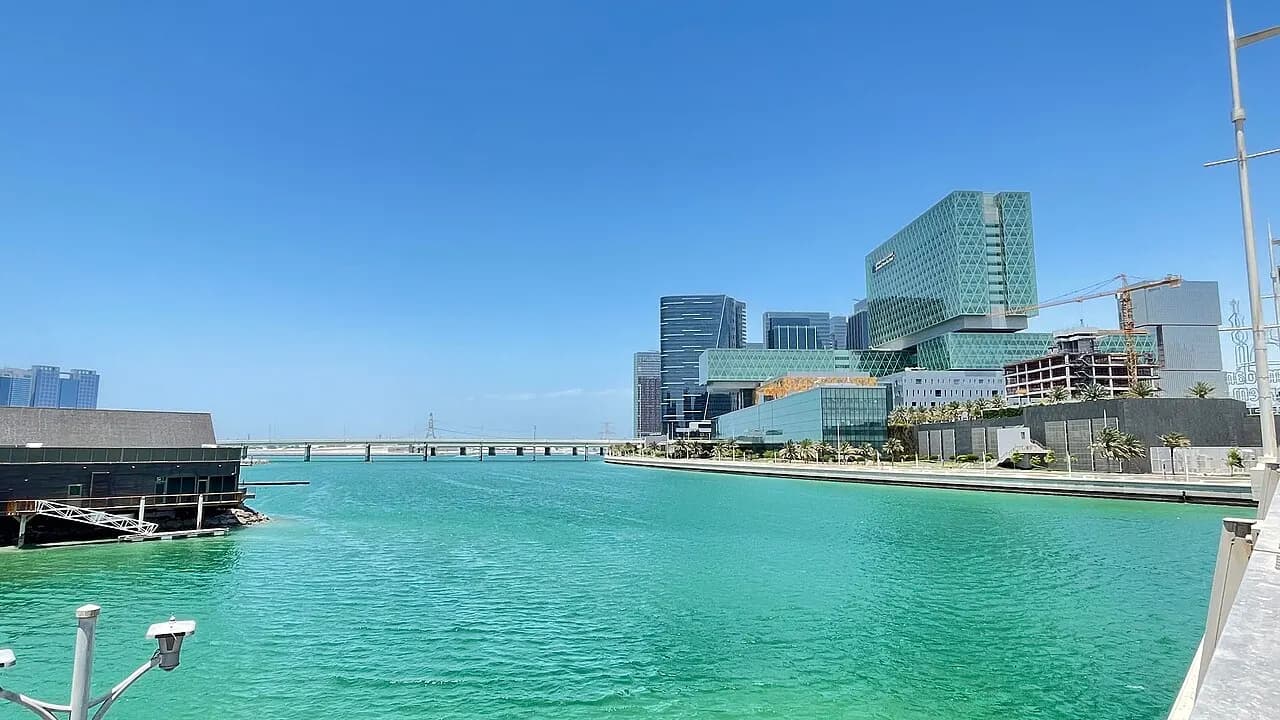
ADGM is a strong fit for fund managers and venture capital firms, banks, brokers and fintechs that need FSRA authorisation, family offices and foundations that want English-law structures, holding companies and SPVs for regional investments, and tech start-ups that qualify for the Hub71 route. Since the 2025 fee cuts, it's also competitive for professional services and consultancy firms that want an Abu Dhabi address and common-law contracts.
It's less suited to businesses that need warehouses, industrial land or a shopfront outside the islands. Abu Dhabi's commercial free zones — such as Masdar City Free Zone or KEZAD — handle those needs better.
ADGM entity types
ADGM offers a full range of English-style structures. The main ones are:
- Private company limited by shares — the standard choice for operating businesses, holding companies and joint ventures. It can't offer shares to the public.
- Public company limited by shares — can offer shares to the public and be listed.
- Private company limited by guarantee and unlimited companies — for non-profit, membership or specialist uses.
- Restricted Scope Company (RSC) — a private company with lighter public disclosure, typically used by family offices and group holding vehicles; it costs an extra USD 3,100 to register as one and must meet conditions in the Companies Regulations.
- Protected cell and incorporated cell companies — ring-fenced cells, used for funds and insurance.
- Branch of a foreign company — a registered presence for a company formed outside ADGM, including elsewhere in the UAE.
- Partnerships — LLPs, general partnerships and limited partnerships, plus branches of foreign partnerships.
- Foundations and DLT foundations — foundations for wealth and succession; DLT foundations for blockchain projects, DAOs and Web3 entities.
- Special purpose vehicles (SPVs) — passive holding and financing vehicles, charged at the lower "specialised" fee.
For a typical operating company, you'll need at least one shareholder, at least one director and a registered office in ADGM, and you'll file details of beneficial owners — anyone owning or controlling 25% or more. ADGM sets no general minimum share capital for non-financial companies; FSRA-authorised firms have capital requirements set by the FSRA.
ADGM fees in 2026: the official schedule
ADGM's Registration Authority publishes an Overview of Fees. The current version took effect on 1 January 2025, when ADGM cut non-financial initial registration from USD 10,000 to USD 5,500 and renewals from USD 8,000 to USD 5,000 (excluding data protection), and cut retail fees by more than half. We found no newer schedule as of 12 October 2026. Fees are in US dollars; ADGM uses AED 3.6725 to USD 1.
Fees depend on your activity category: Category A (financial), Category B (non-financial) or Category C (retail), with lower "specialised" fees for SPVs and certain fund vehicles.
| Fee line (year one) | Cat A financial | Cat B non-financial | Cat C retail | Specialised (e.g. SPV) |
|---|---|---|---|---|
| Name reservation | USD 200 | USD 200 | USD 200 | USD 200 |
| Application for incorporation | USD 300 | USD 300 | USD 300 | USD 300 |
| Commercial licence | USD 200 | USD 200 | USD 200 | USD 200 |
| Business activity fee | USD 16,000 | USD 4,800 | USD 1,800 | USD 900 |
| Data protection | USD 300 | USD 300 | USD 300 | USD 300 |
| Total, year one | USD 17,000 | USD 5,800 | USD 2,800 | USD 1,900 |
| Total, each renewal | USD 16,500 | USD 5,300 | USD 2,300 | USD 1,400 |
A foundation costs USD 1,000 to register and USD 500 a year to renew. The annual confirmation statement costs USD 100; most event filings — share transfers, director changes, amendments to the articles — cost USD 100 each. Moving an existing company into or out of ADGM by continuance costs USD 7,500. Incorporation fees aren't refunded if an application is withdrawn or rejected.
These are Registration Authority fees only. They don't include your office lease and lease registration, establishment card and visa fees (paid through ADGM's government services platform), medical tests, Emirates ID, health insurance, FSRA fees for financial firms, or a corporate service provider's charges. Consultancies quoted about AED 4,500 per residence visa in government costs in mid-2026 — an estimate, not an official figure.
Worked example 1: a consultancy (Category B)
Priya is moving her strategy consultancy's regional office to Abu Dhabi as an ADGM private company with one shareholder.
- year one: name reservation USD 200, incorporation application USD 300, licence USD 200, business activity fee USD 4,800 and data protection USD 300 = USD 5,800, about AED 21,300;
- each later year: licence USD 200, activity fee USD 4,800 and data protection USD 300 = USD 5,300, plus the USD 100 confirmation statement = USD 5,400, about AED 19,830.
Add her office — a flexi desk or business-centre office on Al Maryah or Al Reem — and around AED 4,500 per visa (estimate). Compared with DIFC's USD 8,000 incorporation plus USD 12,000 licence for the same profile, the ADGM registry bill is under a third.
Worked example 2: a holding SPV
A family office wants a vehicle to hold shares in three Gulf operating companies. As an SPV, it pays USD 1,900 (about AED 6,980) to register and USD 1,400 (about AED 5,140) a year, plus a registered office provider's fee. If it later wanted to carry on non-financial business, varying the licence to Category B costs USD 4,000 plus the higher annual fees.
The ADGM tech start-up licence
ADGM's tech start-up licence is a sector-agnostic, incentivised licence for start-ups with a tech-driven business model, the potential to scale regionally or globally, and a business model that fits ADGM's regulatory remit. It isn't meant for technology service providers — an IT outsourcing or software reseller business, for example, would normally take a standard Category B licence.
The key step is Hub71, Abu Dhabi's tech ecosystem based in ADGM. Since July 2024, ADGM won't accept a tech start-up application without an eligibility letter from Hub71, so apply to Hub71 first. Hub71's own programmes can add incentives such as subsidised office space, housing and health insurance for selected start-ups.
Tech start-up licence vs standard non-financial licence
| Tech start-up (incentivised) | Standard Category B | |
|---|---|---|
Year one | USD 1,500 + USD 300 data protection | USD 5,800 |
Years two and three | USD 1,500 + USD 300 | USD 5,300 |
Year four onwards | Category B fees (Category A for fintechs) | USD 5,300 |
Pre-condition | Hub71 eligibility letter | None beyond normal approval |
Year one
- Tech start-up (incentivised)
USD 1,500 + USD 300 data protection
- Standard Category B
USD 5,800
Years two and three
- Tech start-up (incentivised)
USD 1,500 + USD 300
- Standard Category B
USD 5,300
Year four onwards
- Tech start-up (incentivised)
Category B fees (Category A for fintechs)
- Standard Category B
USD 5,300
Pre-condition
- Tech start-up (incentivised)
Hub71 eligibility letter
- Standard Category B
None beyond normal approval
The incentive covers registration and two consecutive renewals — 3 years in total. After that, a non-financial start-up moves to Category B fees and a fintech carrying on at least one financial activity moves to Category A, which jumps to USD 16,500 a year. A fintech start-up also needs FSRA authorisation, or a place in the FSRA's regulatory sandbox, for its regulated activity.
Example. Omar's AI analytics start-up gets a Hub71 letter. Its registry costs are USD 1,800 a year (USD 1,500 plus USD 300 data protection), about AED 6,610, for three years — about AED 19,830 in total. In year four it pays the standard USD 5,300 renewal, about AED 19,460. Plan for that step-up in your fundraising model.
How to set up an ADGM company
Applications are made online through ADGM's Online Registry Solution, with government services (establishment card and visas) through ACCESSADGM.
ADGM set-up, step by step
- 1
Choose structure and category
Decide the legal form and whether your activities are Category A, B or C. Financial firms must apply to the FSRA before applying for incorporation.
- 2
Get pre-approvals
Tech start-ups get a Hub71 eligibility letter; regulated activities get FSRA or other authority approval.
- 3
Reserve a name and apply
Reserve the name (USD 200) and submit the incorporation application with shareholder, director and beneficial owner details, articles and supporting documents.
- 4
Secure a registered office
Lease space on Al Maryah or Al Reem Island — flexi desk, business centre or office — and register the lease. SPVs can use a registered office provider.
- 5
Pay and receive the licence
Pay the licence, activity and data protection fees. ADGM issues the certificate of incorporation and commercial licence.
- 6
Establishment card, visas, bank and tax
Apply for the establishment card and visas on ACCESSADGM, open a bank account and register for corporate tax within 3 months.
Consultancies put the licence stage at about four to six weeks for a non-financial company with complete documents; FSRA-authorised firms take months because the regulatory application comes first. Corporate shareholders need certified constitutional documents and board resolutions, and documents not in English need translations. The most common delays come from unclear activity descriptions, missing beneficial owner details and office leases that aren't registered.

Offices, visas and employment
Every ADGM entity must keep a registered office address in ADGM and pay the lease registration fee. In practice, start-ups use flexi desks or business-centre offices, growing firms lease space in the towers on Al Maryah or the newer buildings on Al Reem, and SPVs use a registered office provider. Your visa allocation depends on the size of the space you lease, so match the lease to your hiring plan.
Employment in ADGM is governed by the ADGM Employment Regulations, which are modelled on international practice. Visas follow the usual UAE steps — establishment card, entry permit, medical test, Emirates ID biometrics, residence visa — managed through ACCESSADGM. Investors and senior employees may also qualify for the UAE Golden Visa, which is granted by the federal and Abu Dhabi immigration authorities rather than ADGM.
Data protection in ADGM
ADGM has its own data protection law — the ADGM Data Protection Regulations 2021 — in place of the federal Personal Data Protection Law. Every entity pays the USD 300 data protection fee on registration and again every year, and the Registration Authority notes that the data protection renewal is a separate submission from the licence renewal, which is easy to miss. If you process personal data about employees or customers, you'll also need a privacy notice, a record of processing, appropriate contracts with processors and a lawful basis for any transfer of data outside ADGM.
ADGM annual registry costs at a glance
USD 5,300
Non-financial renewal
USD 1,500
Tech start-up (3 years)
USD 1,400
SPV renewal
USD 300
Data protection, yearly
Corporate tax and VAT
ADGM companies are fully within UAE corporate tax. They must register with the FTA within 3 months of incorporation — late registration costs AED 10,000 — and file a return within 9 months of the year end.
ADGM is a free zone for corporate tax purposes. An ADGM entity that meets every Qualifying Free Zone Person condition — adequate substance, audited financial statements, transfer pricing compliance, qualifying income and non-qualifying revenue within 5% of revenue or AED 5 million, whichever is lower — pays 0% on qualifying income. Qualifying activities under Ministerial Decision No. 229 of 2025 include holding shares, fund management and wealth management services regulated by a competent authority, headquarters and treasury services to related parties, and reinsurance. Banking, most insurance, and finance and leasing to third parties are excluded and taxed at 9%.
Example. An ADGM fund manager regulated by the FSRA earns AED 8,000,000 of management fees from the funds it manages and AED 200,000 from advising an unrelated mainland company. Fund management for regulated funds is a qualifying activity. The advisory fees are non-qualifying but sit inside the de minimis limit (the lower of 5% × 8,200,000 = AED 410,000 and AED 5 million). If the advisory work earns AED 120,000 of profit, the tax is 9% × 120,000 = AED 10,800, and the qualifying profit stays at 0%. A small consultancy with no qualifying income may do better outside the QFZP regime, using the AED 375,000 0% band. Model your case in the UAE corporate tax calculator.
For VAT, normal rules apply: register once taxable supplies pass AED 375,000 and charge 5% on most supplies. Many margin-based financial services are VAT-exempt, which limits input VAT recovery for banks and insurers. See our UAE VAT guide.
ADGM vs DIFC
ADGM and DIFC are the UAE's two common-law financial centres, and most founders who look at one look at the other.
| ADGM | DIFC | |
|---|---|---|
| Emirate | Abu Dhabi | Dubai |
| Law | English common law applied directly | DIFC's own laws on common-law lines |
| Courts | ADGM Courts | DIFC Courts |
| Financial regulator | FSRA | DFSA |
| Non-financial company, year one | USD 5,800 | USD 8,000 + USD 12,000 + USD 750 DP |
| Non-financial renewal | USD 5,300 | USD 12,000 + DP + USD 300 |
| Start-up route | Tech start-up licence USD 1,500 (Hub71 letter) | Innovation licence USD 1,500 |
| SPV | USD 1,900 / USD 1,400 | USD 100 + USD 1,000 / USD 1,000 |
On published registry fees, ADGM is much cheaper for non-financial companies, while SPVs cost a similar amount in both. The decision usually turns on other things: where your clients, investors and staff are, which regulator you'd rather deal with, office costs, and whether Abu Dhabi's sovereign and institutional investors matter to you. Our DIFC company setup guide covers the Dubai option in detail.
Common mistakes to avoid
- Applying for the tech start-up licence without a Hub71 letter. ADGM won't accept it.
- Budgeting only for year one of an incentive. Tech start-ups revert to Category B — or Category A for fintechs — after three years.
- Picking the wrong activity category. Moving from Category B to Category A later costs USD 11,300 in variation fees alone.
- Forgetting the separate data protection renewal. It isn't bundled with the licence renewal.
- Leasing too little space. Visa allocations follow the office size.
- Treating ADGM as tax-free. Register for corporate tax and check whether your income is qualifying.
Official links
- ADGM Registration Authority — Overview of Fees 2025All registration, licence and filing fees
- ADGM — setting up a tech start-upHub71 eligibility letter required
- ADGM — fee reductions from January 2025
- ADGM CourtsLegislation, rules and e-courts
- FTA — Corporate Tax registration
- Ministry of Finance — Ministerial Decision No. 229 of 2025Qualifying and excluded activities
What to do next
Work out your activity category first — it drives fees, regulation and tax. If you're a tech start-up, start the Hub71 application now. Then compare a two-year budget for ADGM and DIFC, including office rent and visas, in the startup cost calculator, and read the UAE corporate tax guide before you finalise your structure.
This is general information, not legal or tax advice — confirm on the official source or with a professional.
Frequently asked questions
ADGM's Registration Authority fee schedule (effective 1 January 2025) puts a non-financial (Category B) company at USD 5,800 in year one — name reservation, incorporation application, licence, business activity fee and data protection — and USD 5,300 a year to renew. That's about AED 21,300 then AED 19,500, before office rent, visas and professional fees.
It's an incentivised licence for tech start-ups with a scalable, tech-driven business model. You first need an eligibility letter from Hub71, Abu Dhabi's tech ecosystem. The fee is USD 1,500 at registration and at each of the next two renewals (3 years in total), plus the USD 300 data protection fee; afterwards you pay standard category fees.
Yes. ADGM applies English common law directly, including the rules of equity, under its Application of English Law Regulations 2015, alongside its own regulations for companies, employment, insolvency and data protection. Disputes go to the ADGM Courts, which sit in English with judges from common-law jurisdictions, and their judgments are enforceable across the UAE.
Both are financial free zones with common-law systems, their own courts and financial regulators — DFSA in DIFC, FSRA in ADGM. ADGM applies English law directly; DIFC has its own codified laws on common-law lines. ADGM's published fees for non-financial companies are lower: USD 5,800 in year one versus USD 8,000 plus USD 12,000 in DIFC.
Yes. ADGM companies are within UAE corporate tax and must register with the FTA within 3 months of incorporation. A company that meets every Qualifying Free Zone Person condition pays 0% on qualifying income, such as holding shares or regulated fund management. Other income is taxed at 9%, and banking and most insurance are excluded activities.
Yes. ADGM's fee schedule says every legal entity must keep a registered office address in ADGM — on Al Maryah or Al Reem Island — and pay the lease registration fee. Start-ups commonly use a flexi desk or business centre; SPVs can use a registered office provider. Your visa allocation depends on the space you lease.
Sources & verification
Figures on this page were checked against the sources below when it was last reviewed on 12 October 2026. Each rate and limit is stored once with its own official source and review date, and official update channels are monitored daily so changes are picked up. How we verify
- 1.Registration Authority — Overview of Fees 2025 — Abu Dhabi Global Market · accessed 12 October 2026
- 2.ADGM Reduces Commercial Licence Fees from January 2025 — Abu Dhabi Global Market · accessed 12 October 2026
- 3.Tech startup — overview — Abu Dhabi Global Market · accessed 12 October 2026
- 4.ADGM Courts — Abu Dhabi Global Market · accessed 12 October 2026
- 5.Corporate Tax registration — Federal Tax Authority (UAE) · accessed 12 October 2026
- 6.Ministerial Decision No. 229 of 2025 on Qualifying Activities and Excluded Activities — UAE Ministry of Finance · accessed 12 October 2026
- 7.ADGM 2026: the complete breakdown — jurisdiction and structures — UpperSetup (consultancy) · accessed 12 October 2026
- 8.ADGM company cost — Avyanco (consultancy) · accessed 12 October 2026
MSMETOOLS is an independent platform and is not affiliated with any government agency, ministry or department.
Tools for this
Corporate Tax Calculator (UAE)
Calculate 9% UAE corporate tax above AED 375,000.
Startup Cost Calculator
Estimate how much capital you need to launch.
UAE VAT Calculator (UAE)
Calculate 5% UAE VAT on sales and purchases.
Related guides
 DIFC Company Setup 2026: Fees, Entities & Innovation LicenceRead guide
 Masdar Free Zone Abu Dhabi 2026: Costs, Licences & VisasRead guide
 UAE Golden Visa for Entrepreneurs 2026: Routes & FeesRead guide
 Trade Name Reservation Dubai 2026: Rules, AED 620 FeeRead guide
Official links open the government site in a new tab.