 Business registration & legal
How to Check Trade Licence Information in Dubai (2026): Mainland, Free Zones and Fakes
Check trade license information in Dubai in 2026: DET and Invest in Dubai searches, the National Economic Register, free zone registers and fake red flags.
 Edited by Sumeet YadavFounder & editor, MSMETOOLS · fact-checked against official sources
Contents (11)
- 1. Why checking a trade licence matters
- 2. Mainland or free zone? Identify the issuing authority first
- 3. How to check a mainland Dubai trade licence
- 4. How to check a free zone licence
- 5. What the search result tells you
- 6. Renewal status and expired licences
- 7. How to spot a fake or misused trade licence
- 8. Due diligence beyond the licence
- 9. Checking your own licence and getting a copy
- 10. Checking companies in other emirates
- 11. What to do next
Before you pay a supplier, sign a lease, accept a job offer or hire a contractor in Dubai, it's worth checking that the company's trade licence is real and current. This guide shows you how to look up trade licence information in Dubai for both mainland companies (licensed by Dubai Economy and Tourism) and free zone companies (licensed by DMCC, JAFZA, DAFZ, DIFC and others). It explains what each field on a search result means, how to tell whether a licence is due for renewal, and the red flags that point to a fake.
Quick answer
Start with the issuing authority printed on the licence. For a mainland Dubai licence, search the licence number or trade name in Dubai Economy and Tourism's (DET) licence information service or on Invest in Dubai; the federal National Economic Register is a second check. For a free zone licence, use that zone's own register — DMCC and DIFC publish public searches — or ask its registry. Confirm the name, status, activities and expiry date match what you've been told.
Public searches listed on u.ae are free and need no login
Mainland and free zone licences sit in different systems — a blank DET result isn't proof of a fake
Check status (active, expired, cancelled) and the expiry date, not just that a record exists
Type official web addresses yourself; don't trust links or QR codes sent by the other party
Why checking a trade licence matters
A UAE trade licence is the legal permission for a business to operate, and it names the exact activities that business may carry out. A company that's trading without a valid licence — or outside its licensed activities — can't legally invoice you for that work, may not be able to sponsor visas, and may disappear without consequence. Checking takes a few minutes and protects you in several common situations.
Paying a supplier or contractor. Before a large deposit, confirm the business exists, its licence is active and its activities cover what you're buying. A general trading company quoting for fit-out work, for example, should also hold a contracting activity.
Taking a job or a visa. If a company offers you employment and a residence visa, check its licence and that it's active. An expired licence usually means the company can't process or renew visas.
Renting property or signing a commercial contract. Landlords and counterparties check tenants' licences routinely; you can do the same in reverse.
Banking and compliance checks. Businesses with anti-money-laundering duties must verify customers. A licence search is one piece of that due diligence, not all of it.
Mainland or free zone? Identify the issuing authority first
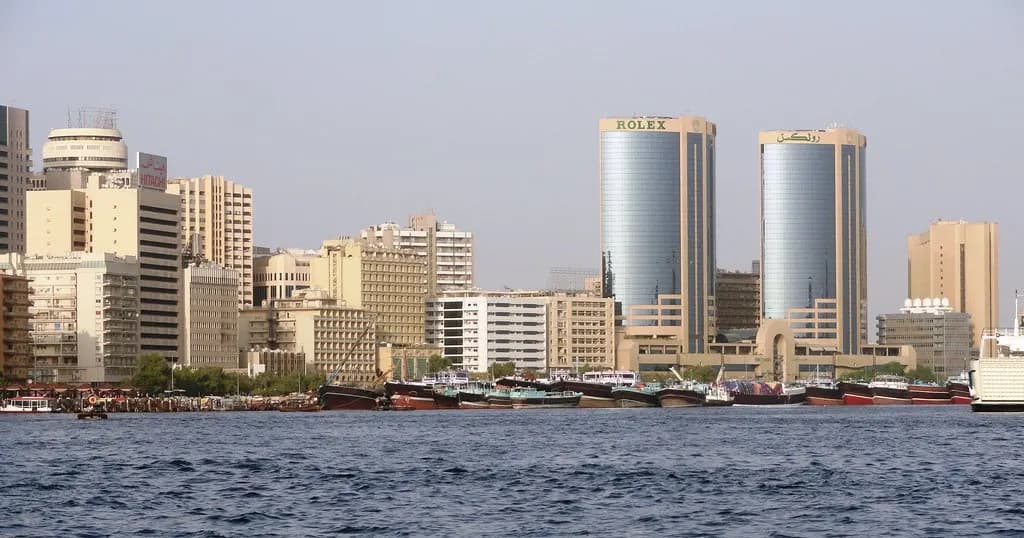
Dubai has two broad licensing systems. Mainland businesses are licensed by Dubai Economy and Tourism (DET) — still widely called the "DED", its name before 2021 — and DET's company-setup services now run through the Invest in Dubai platform. Free zone businesses are licensed by the authority of the zone they sit in: DMCC, Jebel Ali Free Zone (JAFZA), Dubai Airport Freezone (DAFZ), Dubai Silicon Oasis, Meydan Free Zone, Dubai South, the Dubai International Financial Centre (DIFC) and others. The UAE government portal is clear that free zones issue licences through their own authorities, separate from the emirate's economic department.
That's why the first step is simply to read the licence. The issuing authority's name and logo appear at the top. Mainland Dubai licences carry DET's branding and a licence number; free zone licences carry the free zone's name. Companies in other emirates are licensed by those emirates' economic departments — Sharjah, Ajman and Abu Dhabi each run their own searches.
If you don't have a copy of the licence, ask for one. Any legitimate business will send it. Ask too for the exact trade name in English and Arabic, because searches match on the registered name, and a company's brand or website name is often different.
Which register to search
Step 1
Read the issuing authority on the licence
Step 2
DET / Invest in Dubai
mainland Dubai
Step 3
Free zone register
DMCC, DIFC, JAFZA, DAFZ…
Step 4
National Economic Register
federal cross-check
How to check a mainland Dubai trade licence
The UAE government's list of verification tools, last updated on 6 April 2026, names two Dubai services: DET's search for licence information and search for business names, and Invest in Dubai's check business name search. Both are public.
Checking a mainland licence
- 1
Open DET's licence information search
u.ae — verify business licencesGo to Dubai Economy and Tourism's e-services and choose the licence information enquiry. The u.ae 'Verify business licences' page links straight to it.
- 2
Search by licence number or trade name
Enter the licence number exactly as printed, or the registered trade name in English or Arabic. The number is more reliable — names can be similar.
Tip: If the name search fails, try fewer words or the Arabic name.
- 3
Read the company profile
Check the trade name, legal form, licence status, expiry date, activities and address against what the business told you.
- 4
Cross-check on Invest in Dubai or the NER
u.ae — National Economic RegisterSearch the same name on Invest in Dubai or the federal National Economic Register to confirm the record matches.
The search pages can be slow or blocked by some browsers and VPNs, so if a page won't load, try another browser, switch off your VPN, or try again later rather than relying on a third-party copy. If you need a formal document — for a tender, court case or bank — ask the company to provide a licence extract or certificate from DET, which carries more weight than a screenshot.
The National Economic Register
The National Economic Register (NER) is a federal platform run by the Ministry of Economy and Tourism that holds real-time data on economic licences across the UAE. You can search it for licences, activities and trade names. The u.ae page describing the NER, updated on 17 April 2026, lists the licensing authorities that feed it: the Ministry and the economic development departments of Abu Dhabi, Dubai, Sharjah, Ajman, Umm Al Quwain and Ras Al Khaimah, plus the Fujairah and Dibba Al Fujairah municipalities. It doesn't say that free zone licences are included, so treat it as a mainland cross-check, especially useful when a company says it's licensed in another emirate.
How to check a free zone licence
Each free zone keeps its own register, and the tools differ. Some publish a free public search; others only confirm details if you ask. The u.ae verification page doesn't list free zone tools, so go to the free zone's own website — the one named on the licence — and look for "public register", "company directory" or "verify a company".
| Free zone | How to check | What to expect |
|---|---|---|
| DMCC | Public register search on dmcc.ae | Search registered DMCC entities by name |
| DIFC | DIFC public register on difc.ae | Company status and registration details; regulated financial firms also on the DFSA register |
| JAFZA | Contact JAFZA customer service; licences are managed on the Dubai Trade portal | Confirmation on request |
| DAFZ | Contact DAFZ customer service | Confirmation on request |
| Meydan, Dubai Silicon Oasis, Dubai South | The zone's own site or customer service | Varies — ask in writing |
For DIFC companies there's a second step if money is involved. A DIFC registration lets a company exist; it doesn't by itself allow it to offer financial services. Firms that manage money, give investment advice or deal in investments must also be authorised by the Dubai Financial Services Authority (DFSA), which keeps its own public register and regularly warns about fake licences and firms falsely claiming DFSA authorisation. If a DIFC company is asking you to invest, check both registers.
When a free zone only confirms on request, email its registry with the company name and licence number and ask whether the licence is active and when it expires. Keep the reply on file. Our guides to JAFZA, DAFZ and Meydan cover how those zones license companies.
What the search result tells you
Mainland search results generally show a company profile with these fields. Free zone registers show some or all of them.
Reading a trade licence search result
| Field | What it means | What to check |
|---|---|---|
Trade name (English and Arabic) | The registered legal name | Matches the name on invoices, contracts and the bank account |
Licence number | The unique ID issued by the authority | Matches the copy you were sent |
Legal form | LLC, sole establishment, branch, civil company, etc. | Matches the type of contract you're signing |
Licence status | Active, expired, frozen or cancelled | Must be active for ongoing trading |
Issue and expiry dates | Licences are usually renewed every year | Expiry is in the future; recent renewal if near |
Activities | The exact activities the business may perform | Covers the goods or services you're buying |
Address | The registered premises | Plausible for the business; matches its lease |
Trade name (English and Arabic)
- What it means
The registered legal name
- What to check
Matches the name on invoices, contracts and the bank account
Licence number
- What it means
The unique ID issued by the authority
- What to check
Matches the copy you were sent
Legal form
- What it means
LLC, sole establishment, branch, civil company, etc.
- What to check
Matches the type of contract you're signing
Licence status
- What it means
Active, expired, frozen or cancelled
- What to check
Must be active for ongoing trading
Issue and expiry dates
- What it means
Licences are usually renewed every year
- What to check
Expiry is in the future; recent renewal if near
Activities
- What it means
The exact activities the business may perform
- What to check
Covers the goods or services you're buying
Address
- What it means
The registered premises
- What to check
Plausible for the business; matches its lease
Public searches usually don't show the owners or managers. That's normal: shareholder and manager details are held by the authority and released to the company or to people with a legitimate interest. If you need to know who's behind a business — for example before a large deal — ask the company for its memorandum of association and the passport copy of the person signing, or use a professional due-diligence provider.
Activities matter more than people think. A licence authorises specific activities, and a company working outside them is in breach. If you're hiring a firm to carry out building works, look for a contracting activity; if you're buying medical devices, look for the matching trading activity plus any health-authority approvals. A cheap quote from a company whose licence covers only consultancy is a warning sign.
Renewal status and expired licences
Most Dubai licences are renewed annually. A mainland renewal generally needs a valid registered tenancy contract (Ejari) for the premises and any outstanding government fines cleared; free zones set their own renewal conditions. If a licence's expiry date has passed, the company is not licensed to trade until it renews, and it usually can't renew visas, register a lease or clear goods through customs in the meantime. Late-renewal fines apply on both the mainland and in free zones, and continued non-renewal can lead to the licence being cancelled.
So when you check, look at the dates. If the expiry date is within the last few weeks, the company may simply be mid-renewal — ask for the payment receipt or the renewed licence. If it expired months ago, treat the business as unlicensed until it proves otherwise. If the status shows frozen or cancelled, don't proceed.
If it's your own licence you're checking, set a reminder at least a month before expiry. Renewals often stall on a lapsed Ejari, an unpaid fine or an outstanding approval from another authority. Our Dubai business setup guide explains how mainland and free zone licences are issued and kept current.
How to spot a fake or misused trade licence
Forged UAE licences do circulate, usually as PDFs or images attached to emails, job offers or investment pitches. Fraudsters also use real licences belonging to someone else. These checks catch most problems:
Red flags on a Dubai trade licence
0/8Be careful with QR codes and links. Dubai Police have warned that scammers use fake QR codes and links to send people to look-alike websites that collect personal and banking details. Don't verify a licence by scanning a code or clicking a link someone else gave you. Type the authority's address yourself — or start from the u.ae verification page — and search the number there.
Also watch for licence borrowing: a scammer sends you a genuine licence copy for a real company and asks you to pay a different account. The licence checks out, but the bank account doesn't belong to that company. Confirm bank details by phoning the company on a number you found independently, and pay only to an account in the licensed company's exact name.
If you think you've found a fake licence or been defrauded, report it to Dubai Police (including through its eCrime platform) and tell the authority whose name was misused. For fake financial-services licences, alert the DFSA or the Securities and Commodities Authority as appropriate.
Due diligence beyond the licence
A valid licence proves a business is registered and allowed to carry out certain activities. It doesn't prove the business is solvent, honest or the right partner for you. For anything significant, add a few more checks.
VAT registration. If a supplier charges you VAT, its invoice must show a Tax Registration Number (TRN). The Federal Tax Authority offers a TRN verification service on its website, so you can confirm that the number belongs to the company named on the invoice. A business charging VAT without a valid TRN is either making a mistake or collecting tax it won't pay over — and you won't be able to recover that VAT as input tax. Businesses must register once taxable supplies exceed AED 375,000 in 12 months.
The signatory's authority. Check that the person signing your contract is the manager named in the company's memorandum of association or holds a valid power of attorney. A sales manager's signature on a large contract may not bind the company.
Track record. Ask for references from existing customers, look for court judgments in the company's name where these are published, and search news and social media for complaints. For a large deal, a professional due-diligence report from a credit agency or law firm is worth the fee.
Your own records. Save a dated screenshot or PDF of the search result, along with the licence copy and any registry email, in the supplier's file. If something goes wrong later, you'll be able to show you checked — and banks, auditors and insurers increasingly expect that evidence.
A sensible check sequence before paying a new supplier
Before the quote is accepted
Get the licence copy, exact trade name and licence number
Same day
Search the number on the issuing authority's register; check status, expiry and activities
Before the first invoice
Verify the TRN with the FTA if VAT is charged
Before paying
Confirm bank details by phone on an independently found number
Every renewal
Re-check the licence each year for ongoing suppliers
Checking your own licence and getting a copy
Business owners often search for their own trade licence information too — to download a copy for a bank, check the expiry date or confirm the activities before bidding for a contract. For a mainland company, the licence and its details are available through your Invest in Dubai account, where you can also renew, amend activities or add partners. For a free zone company, log in to the zone's customer portal; most let you download the current licence, certificate of incorporation and lease. If the details in a public search look wrong — a misspelt trade name, a missing activity or an old address — raise it with the issuing authority, because counterparties will rely on what the register shows.
Checking companies in other emirates
Not every company you deal with "in Dubai" is licensed in Dubai. Many trade from Dubai offices on licences issued in Sharjah, Ajman, Ras Al Khaimah or a northern-emirates free zone. The u.ae verification page lists trade-name or licence enquiry services for Abu Dhabi (through TAMM), Sharjah's Economic Development Department, Ajman's Department of Economic Development, Umm Al Quwain and Fujairah. For those, search the relevant emirate's tool and cross-check on the National Economic Register. For northern-emirates free zones such as SPC or SHAMS, ask the zone to confirm.
Official links
- u.ae — Verify business licencesLinks to DET, Invest in Dubai, NER and other emirates' tools
- u.ae — National Economic RegisterFederal licence and trade-name search
- Invest in DubaiDET's business setup and licence services
- DMCC public registerSearch DMCC entities
- u.ae — starting a business in a free zoneHow free zone licensing works
What to do next
Make a licence check part of your routine before any significant payment or contract: identify the issuing authority, search the number on that authority's own register, and confirm the status, expiry date and activities. If you're setting up your own company, our Dubai business setup guide compares mainland and free zone licences, and our invoice generator helps you issue invoices that carry your licence and VAT details correctly.
This is general information, not legal or tax advice — confirm on the official source or with a professional.
Frequently asked questions
First find out who issued it — the authority's name is printed on the licence. For a mainland licence, search the licence number or trade name in Dubai Economy and Tourism's licence information service or on Invest in Dubai. For a free zone licence, use that free zone's public register or ask its registry directly. Then confirm the status is active and the expiry date hasn't passed.
The public search tools listed on the UAE government portal — DET's licence information search, Invest in Dubai's name search and the federal National Economic Register — are free to use and don't need you to log in. Some free zones only confirm licence details on request, and paid company reports from data providers cost extra.
Typically the trade name in English and Arabic, licence number, legal form, licence status, issue and expiry dates, licensed activities and the registered address. Owners' and managers' details are usually not shown in public searches, though some free zone registers, such as DIFC's, publish more company information.
Usually not. DET licenses mainland businesses; free zones such as DMCC, JAFZA, DAFZ, DIFC and Meydan run their own registers. If a search on DET returns nothing, check the free zone named on the licence before assuming it's fake.
The company can't legally keep trading, and it usually can't process visas, renew its lease registration or clear goods until the licence is renewed. Late-renewal fines apply. A business you're dealing with should be able to show a current licence — if the expiry date has passed, ask for proof of renewal.
Look up the licence number yourself on the issuing authority's official site rather than trusting a link or QR code someone sends you. Check that the name, activities, legal form and address match what the business claims, and that the expiry date is in the future. Be wary of licences with no Arabic name, odd formatting or an authority you can't find.
Sources & verification
Figures on this page were checked against the sources below when it was last reviewed on 9 October 2026. Each rate and limit is stored once with its own official source and review date, and official update channels are monitored daily so changes are picked up. How we verify
- 1.Verify business licences — UAE Government portal (u.ae) · accessed 9 October 2026
- 2.National Economic Register — UAE Government portal (u.ae) · accessed 9 October 2026
- 3.Steps to start a business on the mainland — UAE Government portal (u.ae) · accessed 9 October 2026
- 4.Starting a business in a free zone — UAE Government portal (u.ae) · accessed 9 October 2026
- 5.Public register — DMCC · accessed 9 October 2026
- 6.Dubai trade licence: Types, application process, verification explained — Khaleej Times · accessed 9 October 2026
- 7.Dubai Police warn of scams using fake QR code links — Khaleej Times · accessed 9 October 2026
- 8.Ministry of Economy and Tourism — enquire about commercial companies' licence — UAE Ministry of Economy and Tourism · accessed 9 October 2026
MSMETOOLS is an independent platform and is not affiliated with any government agency, ministry or department.
Tools for this
UAE VAT Calculator (UAE)
Calculate 5% UAE VAT on sales and purchases.
Invoice Generator
Create professional invoices with tax, logo and custom details.
Currency Converter
Convert between 180+ currencies with live exchange rates.
Related guides
 UAE Trade License 2026: Dubai Costs, Setup & Renewal GuideRead guide
 Dubai Business Setup 2026: Mainland, Free Zone or OffshoreRead guide
 KEZAD Abu Dhabi 2026: Licences, Land Rates & SetupRead guide
 Trade Name Reservation Dubai 2026: Rules, AED 620 FeeRead guide
Official links open the government site in a new tab.