 Sales tax
Virginia Sales Tax Rate in 2026: Statewide, Regional and Grocery Rates Explained
Virginia sales tax rate 2026: the 5.3% base, 6% regional rates, 7% in the Historic Triangle, 1% on groceries, plus registration and Form ST-1.
 Edited by Sumeet YadavFounder & editor, MSMETOOLS · fact-checked against official sources
Contents (10)
- 1. How the Virginia sales tax rate is built
- 2. Virginia sales tax rates by region and locality (2026)
- 3. Groceries and hygiene products: the 1% rate
- 4. What is taxable in Virginia
- 5. Worked examples in dollars
- 6. Who must register for Virginia sales tax
- 7. Filing Form ST-1, due dates and dealer discounts
- 8. Recent changes and what to watch
- 9. Common mistakes and how to fix them
- 10. What to do next
Virginia's sales tax looks simple at first, one statewide rate, but the number on your receipt depends on where in the state you sell and what you sell. A boutique in Arlington, a gift shop in Williamsburg and a furniture store in Danville each charge a different rate, and groceries are taxed at a fraction of the rate on everything else. This guide gives the current Virginia sales tax rate for every region, explains the grocery rate, and walks through registration, the Form ST-1 return, dealer discounts and penalties, with worked examples in dollars. Rates were checked against the Virginia Department of Taxation in October 2026.
Quick answer
Virginia's general sales tax rate is 5.3% (4.3% state + 1% local). Northern Virginia, Hampton Roads and Central Virginia charge 6%, the Historic Triangle (Williamsburg, James City and York counties) 7%, and eight southern localities 6.3%. Groceries and essential hygiene products are taxed at 1% everywhere.
Register with Virginia Tax online before your first sale; you receive a Form ST-4 certificate
Remote sellers register once Virginia sales top $100,000 or 200 transactions
Returns are due the 20th of the month after each period, filed electronically on Form ST-1
Late filing or payment costs 6% a month (up to 30%) of the tax, minimum $10
Voters in several localities decide on a new 1% school sales tax on November 3, 2026
How the Virginia sales tax rate is built
Virginia's retail sales and use tax is a single tax collected by the Virginia Department of Taxation, usually called Virginia Tax, but the rate is made of several layers. Every sale of general merchandise carries the 4.3% state tax and a 1% local tax that every city and county levies. Together they make the 5.3% rate that applies across most of the state, from Roanoke and Lynchburg to Charlottesville and Winchester.
On top of that, three regions add a 0.7% regional tax that funds transportation: Northern Virginia, Hampton Roads and Central Virginia. Their combined rate is 6%. The Historic Triangle, made up of the City of Williamsburg, James City County and York County, sits inside Hampton Roads and adds a further 1% that took effect on July 1, 2018 to fund tourism marketing, for a combined 7%.
A third layer applies in a group of southern localities that won authority to add an extra 1% local tax for school construction: Charlotte, Gloucester, Halifax, Henry, Northampton, Patrick and Pittsylvania counties and the City of Danville. Their combined rate is 6.3%. That list may grow. The 2026 General Assembly extended the same option to every county and city, provided local voters approve it in a referendum, and several localities have put the question on the November 3, 2026 ballot.
You never show these layers separately on a receipt. You charge one combined rate for the locality, and Virginia Tax splits the money between the state, the locality and the regional funds based on the locality codes on your return.
Virginia sales tax rates by region and locality (2026)
The table below shows the combined general rate in each group of localities, taken from Virginia Tax's rate list. Towns follow the rate of the county they sit in.
| Rate | Region | Localities |
|---|---|---|
| 7% | Historic Triangle | James City County, Williamsburg, York County |
| 6.3% | Additional 1% local tax | Charlotte, Danville, Gloucester, Halifax, Henry, Northampton, Patrick, Pittsylvania |
| 6% | Northern Virginia | Alexandria, Arlington, Fairfax City, Fairfax County, Falls Church, Loudoun, Manassas, Manassas Park, Prince William |
| 6% | Hampton Roads | Chesapeake, Franklin City, Hampton, Isle of Wight, Newport News, Norfolk, Poquoson, Portsmouth, Southampton, Suffolk, Virginia Beach |
| 6% | Central Virginia | Charles City, Chesterfield, Goochland, Hanover, Henrico, New Kent, Powhatan, Richmond City |
| 5.3% | Rest of the state | All other counties and cities, including Roanoke, Lynchburg, Charlottesville, Harrisonburg, Winchester, Fredericksburg and Blacksburg |
| 1% | Statewide | Qualifying food for home consumption and essential personal hygiene products |
Fredericksburg, Stafford and Spotsylvania sit just outside the Northern Virginia region, so they charge the 5.3% base, while neighboring Prince William County charges 6%. Likewise Gloucester charges 6.3% although it borders Hampton Roads. Look up the exact locality with Virginia Tax's rate and locality code map, because a mailing address can name a city the business is not actually in.
Groceries and hygiene products: the 1% rate
Virginia taxes qualifying food and essential personal hygiene products at a reduced 1%. Since January 1, 2023, the state portion has been fully exempt, and only the 1% local tax remains. The regional 0.7%, the Historic Triangle tax and the additional local tax for schools do not apply to these items, so groceries cost the same 1% in Arlington, Williamsburg and Danville.
Qualifying food follows the federal SNAP definition of food for home consumption. That includes groceries, fresh produce, packaged foods and cold prepared foods packaged for home consumption. It excludes alcoholic beverages, tobacco and hot prepared food. Essential personal hygiene products include items such as diapers, feminine hygiene products, toothpaste, soap and shampoo.
Restaurant meals are a different matter. Prepared food sold for eating on site, hot food to go and catered meals carry the full general rate for the locality. Most counties and cities also levy a separate local meals tax on restaurant food, administered by the local commissioner of the revenue or treasurer rather than by Virginia Tax. A restaurant in Virginia Beach therefore collects both the 6% sales tax and the city's meals tax on a dinner bill, and files them in two places.
What is taxable in Virginia
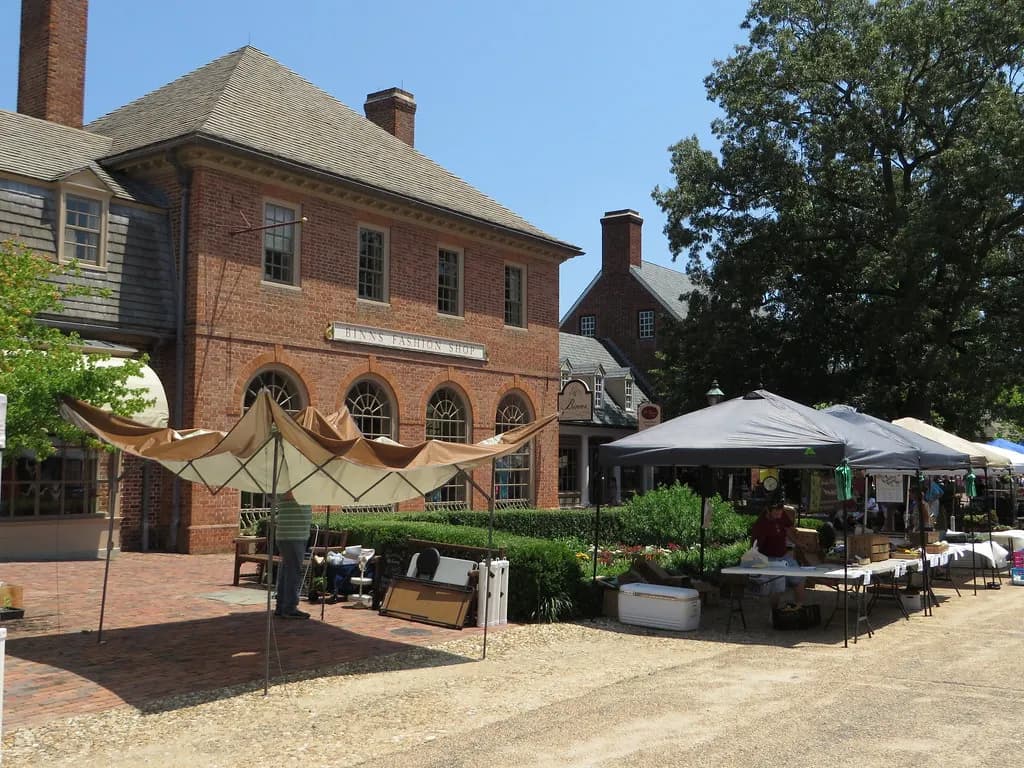
The tax applies to retail sales, leases and rentals of tangible personal property in Virginia, and to a short list of services, mainly accommodations and some services provided as part of a sale of goods. Most services, such as consulting, accounting, legal work, haircuts and repairs where labor is stated separately, are not subject to sales tax. That makes Virginia's base narrower than in states like Texas, which tax many more services.
Common exemptions small sellers meet include sales for resale, prescription medicines, sales to the federal government and to Virginia public schools, and certain manufacturing and agricultural equipment. Buyers claim most exemptions by giving you a Virginia exemption certificate, such as Form ST-10 for resale, which you keep on file. Motor vehicles, watercraft and aircraft are taxed under separate laws at different rates, so a car dealer or marina does not use the general sales tax rate.
Some localities also charge a 5-cent tax on disposable plastic bags at grocery, convenience and drugstores. It is reported on the same Form ST-1. A retailer that files and pays on time remits 4 cents of each 5 cents and keeps a cent to cover its costs.
Worked examples in dollars
A clothing boutique in Arlington sells a $250 jacket. Arlington is in Northern Virginia, so the rate is 6% and the tax is $15.00. The same jacket sold in a Fredericksburg shop, at 5.3%, carries $13.25 of tax.
A gift and grocery shop in Williamsburg rings up a $40 souvenir mug and $120 of packaged groceries. The mug is taxed at 7%, $2.80. The groceries are taxed at 1%, $1.20. The total tax is $4.00 on a $160 basket.
A furniture store in Danville sells a $1,000 sofa. Danville charges 6.3%, so the tax is $63. In Roanoke, at 5.3%, the same sofa would carry $53.
A Richmond hardware store files monthly and had $40,000 of taxable sales in September. The general tax at 6% is $2,400. If it files and pays by October 20, it can claim the dealer discount: the state tax portion of $1,720 ($40,000 × 4.3%) multiplied by the 1.116% rate for its sales tier, which is $19.20. The discount is small, but filing late costs it and adds a penalty.
Try it — Virginia sales tax on a $1,000 sale in Northern Virginia
The calculator's state field uses Virginia's 5.3% general rate, so the "local" field holds only the extra layers: 0.7% for Northern Virginia, Hampton Roads and Central Virginia, 1.7% for the Historic Triangle and 1% for the 6.3% localities.
Who must register for Virginia sales tax
Anyone who is a dealer under Virginia law must register before making taxable sales. In practice that means any business that sells or leases taxable goods from a location in Virginia, including shops, restaurants, food trucks, online stores with Virginia inventory and craft sellers at markets. Virginia Tax gives in-state retailers an account number beginning with 10.
Out-of-state sellers with no physical presence must register as remote sellers once their gross sales into Virginia exceed $100,000, or they make 200 or more separate sales into Virginia, in the previous or current calendar year. Their accounts begin with 12. Note that the 200-transaction test can catch small sellers: an online shop selling $30 items reaches 200 orders with only $6,000 of sales. Marketplace sellers do not collect tax on orders a marketplace facilitator such as Amazon or Etsy handles, but they may still need to register for their direct sales.
Registration is online through Virginia Tax's business registration system. Since 2024 legislation, all new businesses must register online; the paper Form R-1 is reserved for exceptions such as owners with no Social Security number or EIN, or reopening a closed account. You will need your federal EIN (or SSN for a sole proprietor without employees), your State Corporation Commission registration if you formed an LLC or corporation, your legal name, business addresses, start date and a description of what you sell. Online registrants are registered immediately and can print the Sales Tax Certificate of Registration, Form ST-4, which must be displayed at your registered location.
How to register and start collecting
- 1
Form your entity and get an EIN
How to get an EINLLCs and corporations register with the State Corporation Commission first. Most businesses then get a free EIN from the IRS.
- 2
Register online with Virginia Tax
Virginia Tax registrationUse the online business registration and select retail sales and use tax. You can save a draft and come back.
- 3
Print and display Form ST-4
Your sales tax certificate of registration must be displayed at the location you registered.
- 4
Set up your local license and rates
Virginia business license guideCheck whether your city or county requires a business license (BPOL) and set the correct sales tax rate for each location in your POS.
- 5
Diary your filing dates
Returns are due the 20th of the month after each period, filed and paid electronically.
Filing Form ST-1, due dates and dealer discounts
Since the April 2025 filing period, Virginia retailers file a single return, Form ST-1, which replaced the old ST-9, ST-8, ST-7 and ST-6. Monthly filers first used it for returns filed in May 2025 and quarterly filers in July 2025. Businesses that sell in more than one Virginia locality, mobile vendors without a fixed location, remote sellers and business consumers attach Schedule ST-1A to report sales by locality.
Virginia Tax assigns monthly or quarterly filing based on your tax liability and tells you which applies. Every return is due on the 20th of the month after the period ends. Quarterly returns are due April 20, July 20, October 20 and January 20. You must file even if you had no sales, and all returns and payments must be made electronically unless you hold a waiver.
Timely filers can claim a dealer discount on the state portion of the tax. The rate depends on monthly taxable sales, with quarterly filers dividing their quarter's sales by three: a factor of 1.116% applies under $62,501 a month, 0.837% from $62,501 to $208,000, and 0.558% above that, each multiplied by taxable sales times 4.3%. Businesses whose average monthly sales tax liability exceeds $20,000 cannot claim it, and Virginia Tax notifies them each May. The discount never applies to the local, regional or Historic Triangle portions.
Late filing or payment costs 6% a month (up to 30%) of the tax, with a $10 minimum even if no tax is due. Interest accrues at the federal underpayment rate plus 2%. A shop that pays $2,000 of tax two months late owes a $240 penalty plus interest and loses its dealer discount.
Virginia sales tax due dates for quarterly filers
April 20
January–March return on Form ST-1
July 20
April–June return
October 20
July–September return
November 3, 2026
Local referendums on a new 1% school sales tax in several localities
January 20
October–December return
Recent changes and what to watch
Three changes since 2023 matter for Virginia sellers. First, the grocery rate fell to 1% on January 1, 2023, when the 1.5% state portion was repealed. Point-of-sale systems that still apply 2.5% to groceries are overcharging, and over-collected tax must be refunded to customers or paid to the state.
Second, Form ST-1 replaced the ST-9 family from April 2025. If you file amended returns for periods before April 2025, you still use the old forms, so keep both versions straight.
Third, the 2026 General Assembly allowed every county and city to add up to 1% for school construction or renovation after a local referendum, with some localities also able to use the money for public transportation. According to WRIC reporting, Chesterfield, Essex, New Kent and Powhatan counties were among the localities moving to place the question on the November 3, 2026 ballot. If voters approve, the rate in those places will rise on a date Virginia Tax announces, so check its rate list before the start of each quarter in 2027.
Common mistakes and how to fix them
The most common mistake is charging the wrong regional rate. Businesses on the edge of a region, such as Stafford, Spotsylvania or Gloucester, or that move from one county to another, often keep the wrong rate in their system. Match the rate to the locality code where the sale is made, and update it whenever you open or move a location.
The second is taxing groceries at the general rate, or hot food at the grocery rate. A deli counter that sells cold packaged salads for home consumption and hot sandwiches has two rates at the same register. Set product categories carefully in your POS.
The third is forgetting the local meals tax. Restaurants and caterers must register with their city or county for meals tax as well as with Virginia Tax for sales tax.
The fourth is missing zero returns. Seasonal businesses still owe a return for every period. A missed return carries at least the $10 minimum penalty, and repeated misses can lead Virginia Tax to assess tax based on estimates.
If you find that you should have been collecting tax earlier, Virginia Tax runs a voluntary disclosure program that can reduce penalties for businesses that come forward before being contacted.
Official Virginia links
- Retail sales and use taxRates, registration, filing, penalties
- Sales tax rate and locality code lookupMap and spreadsheet of rates by locality
- Form ST-1 and instructionsReturn, Schedule ST-1A, dealer discount worksheet
- Register a businessOnline registration
- New Virginia tax laws2026 local option sales tax for schools
What to do next
Look up the locality code for each place you sell, register online with Virginia Tax before your first sale, and set separate rates for general merchandise and groceries in your register. Check whether your city or county needs a local license with our Virginia business license guide, and if you are still choosing a structure, start with how to register an LLC. Selling into other states? Compare the California, Florida and New York rules, test totals with the sales tax calculator and send invoices with the free invoice generator.
This is general information, not legal or tax advice — confirm on the official source or with a professional.
Frequently asked questions
The general rate is 5.3%: 4.3% state tax plus a 1% local tax charged everywhere. Northern Virginia, Hampton Roads and Central Virginia add a 0.7% regional tax for 6%. Williamsburg, James City County and York County charge 7%, and eight southern localities charge 6.3%. Qualifying groceries are taxed at 1%.
Virginia Beach is in the Hampton Roads region, so the rate on general merchandise is 6%: 4.3% state, 1% local and 0.7% regional. Qualifying groceries and essential personal hygiene products are taxed at 1%. Restaurant meals also carry the city's separate local meals tax, which the city collects, not Virginia Tax.
Food for home consumption and essential personal hygiene products, such as diapers and feminine hygiene products, are taxed at a reduced 1% statewide. The state portion was removed from January 1, 2023, leaving only the local 1%. Prepared hot food, restaurant meals, alcohol and tobacco are taxed at the full general rate, and most localities add a meals tax on restaurant food.
Yes, if you sell taxable goods from a location in Virginia or are otherwise a dealer under state law. Virginia calls it a sales tax certificate of registration (Form ST-4). Remote sellers must register once their Virginia gross sales exceed $100,000 or they make 200 or more separate transactions in the current or previous year.
Returns are due on the 20th of the month after each filing period, for monthly and quarterly filers alike, even when you had no sales. Quarterly returns are due April 20, July 20, October 20 and January 20. Returns and payments must be filed electronically, and late filing or payment costs 6% a month (up to 30%) of the tax, with a $10 minimum.
The 2026 General Assembly allowed any county or city to add up to 1% for school construction or renovation if voters approve it in a referendum. Several localities placed the question on the November 3, 2026 ballot. Any approved increase would take effect later and would not apply to groceries or hygiene products. Check Virginia Tax's rate lookup before each quarter.
Sources & verification
Figures on this page were checked against the sources below when it was last reviewed on 9 October 2026. Each rate and limit is stored once with its own official source and review date, and official update channels are monitored daily so changes are picked up. How we verify
- 1.Retail Sales and Use Tax — Virginia Department of Taxation · accessed 9 October 2026
- 2.Form ST-1, Virginia Retail Sales and Use Tax Return and instructions (Rev. 9/26) — Virginia Department of Taxation · accessed 9 October 2026
- 3.A New Look for Sales Tax Filing — Virginia Department of Taxation · accessed 9 October 2026
- 4.Tax Bulletin 18-3 — Historic Triangle sales tax — Virginia Department of Taxation · accessed 9 October 2026
- 5.New Virginia tax laws (2026 session) — Virginia Department of Taxation · accessed 9 October 2026
- 6.Form R-1 Business Registration instructions — Virginia Department of Taxation · accessed 9 October 2026
- 7.Need to register a business? Use our checklist — Virginia Department of Taxation · accessed 9 October 2026
- 8.Sales tax increase to fund Central Virginia schools on the ballot — WRIC ABC 8News · accessed 9 October 2026
MSMETOOLS is an independent platform and is not affiliated with any government agency, ministry or department.
Tools for this
Sales Tax Calculator (US)
Calculate sales tax for all US states and cities.
Invoice Generator
Create professional invoices with tax, logo and custom details.
Related guides
 Wyoming Sales Tax 2026: 4% Rate, Local Rates, Lodging TaxRead guide
 Virginia Business License 2026: BPOL Tax, Fees & RatesRead guide
 West Virginia Sales Tax 2026: 6% Rate + 1% City Tax GuideRead guide
 South Carolina Sales Tax 2026: 6% State & Local RatesRead guide
Official links open the government site in a new tab.