 Sales tax
Pennsylvania Sales Tax in 2026: Rates, What's Exempt, Getting a License and Filing
Pennsylvania sales tax in 2026: the 6% state rate, 7% in Allegheny County, 8% in Philadelphia, the clothing exemption, myPATH licensing, filing and examples.
 Edited by Sumeet YadavFounder & editor, MSMETOOLS · fact-checked against official sources
Contents (10)
- 1. Pennsylvania sales tax rates in 2026
- 2. How the local tax works on sales and deliveries
- 3. What's taxable and what's exempt
- 4. Worked examples in dollars
- 5. Who needs a Pennsylvania sales tax license
- 6. How to register through myPATH
- 7. Filing frequency and due dates
- 8. Discounts, penalties and interest
- 9. Common mistakes and how to fix them
- 10. What to do next
Pennsylvania's sales tax looks simple on paper: one 6% state rate and only two local add-ons. The details are where businesses slip up. Most clothing is exempt but formal wear isn't, groceries are exempt but soft drinks aren't, and the vendor discount for paying on time is capped at a few dollars. This guide covers the Pennsylvania sales tax rates for Philadelphia, Pittsburgh and the rest of the state, what's taxable, how to get a license through myPATH, filing frequency and deadlines, and the penalties for being late, with worked examples in dollars.
Quick answer
Pennsylvania charges a 6% state sales tax. Allegheny County (including Pittsburgh) adds 1% for 7%, and Philadelphia adds 2% for 8%. Nowhere else has a local sales tax.
Most clothing and shoes, groceries, candy and gum, and prescription drugs are exempt
Register for a Sales, Use and Hotel Occupancy Tax License through myPATH
Returns are due the 20th after each monthly, quarterly or semi-annual period
Remote sellers must collect once PA sales exceed $100,000 a year
Timely filers keep a 1% discount, capped at $25–$150 a return
Pennsylvania sales tax rates in 2026
The Pennsylvania Department of Revenue imposes a 6% sales and use tax on retail sales, rentals and use of tangible personal property, including digital products, and on a list of business services. State law lets a county or the City of Philadelphia add a local sales tax, but only two have done so: Allegheny County at 1% and the City of Philadelphia at 2%. Both are collected and administered by the state alongside the state tax, so you file one return.
| Location | State rate | Local rate | Combined rate |
|---|---|---|---|
| Philadelphia | 6% | 2% | 8% |
| Pittsburgh and the rest of Allegheny County | 6% | 1% | 7% |
| Harrisburg, Allentown, Erie, Scranton, Lancaster and all other areas | 6% | None | 6% |
That makes Pennsylvania far easier to price than states with hundreds of local rates. There are no city, school district or transit sales taxes to look up by address. Philadelphia's suburbs, such as Bucks, Montgomery, Delaware and Chester counties, are at 6%, not 8%. A shopper who crosses City Avenue from Philadelphia into Lower Merion pays two points less.
The same rates apply to the state's use tax, which is due when you buy taxable items without paying Pennsylvania sales tax, for example from an out-of-state seller who didn't collect. They also apply to the hotel occupancy tax on rooms rented for fewer than 30 days, which now covers homes and apartments booked through online platforms.

How the local tax works on sales and deliveries
The local tax applies to sales originating in Allegheny County or Philadelphia, and to the use of taxable goods or services there. In practice that gives three situations.
You're located in Philadelphia or Allegheny County. You must collect the local tax on your sales, so a Philadelphia store charges 8% at the register. Sales of goods delivered to a location outside Pennsylvania aren't subject to the local tax.
You're located elsewhere in Pennsylvania and deliver into those areas. You collect the 6% state tax. You may voluntarily collect the local tax as well, which spares your customer from having to report local use tax. The Department limits voluntary collection to vendors outside Allegheny County and Philadelphia.
Your customer buys outside and brings goods into those areas. If no local tax was paid, the buyer technically owes the local use tax. Businesses buying equipment for a Philadelphia office from a seller elsewhere should report it on their own return.
For most small retailers, the practical rule is: charge the rate for your own store's location, and decide as a policy whether to collect the extra 1% or 2% on deliveries into Pittsburgh-area or Philadelphia addresses. Many online sellers do, because it's simpler for customers.
What's taxable and what's exempt
Pennsylvania taxes most tangible goods and a defined set of services. The Department's major exemptions are food that isn't ready to eat, candy and gum, most clothing, textbooks, pharmaceutical drugs, sales for resale, and residential heating fuels such as oil, electricity, gas, coal and firewood. The Retailer's Information Guide (REV-717) carries long lists marking hundreds of items "T" for taxable or "NT" for not taxable.
Clothing. Everyday clothing and shoes are exempt, which sets Pennsylvania apart from most states. Three kinds of clothing stay taxable: formal day or evening wear, such as tuxedos, dinner jackets, formal gowns and flower girl dresses; articles made of real or imitation fur, or where fur is the main material; and sporting goods and clothing normally worn only for sport, such as biking clothing. Safety clothing is taxable too, as are accessories such as umbrellas. Maternity clothes, rainwear, hunting clothing, underclothing, compression clothing and fabric or thread for making clothing are exempt.
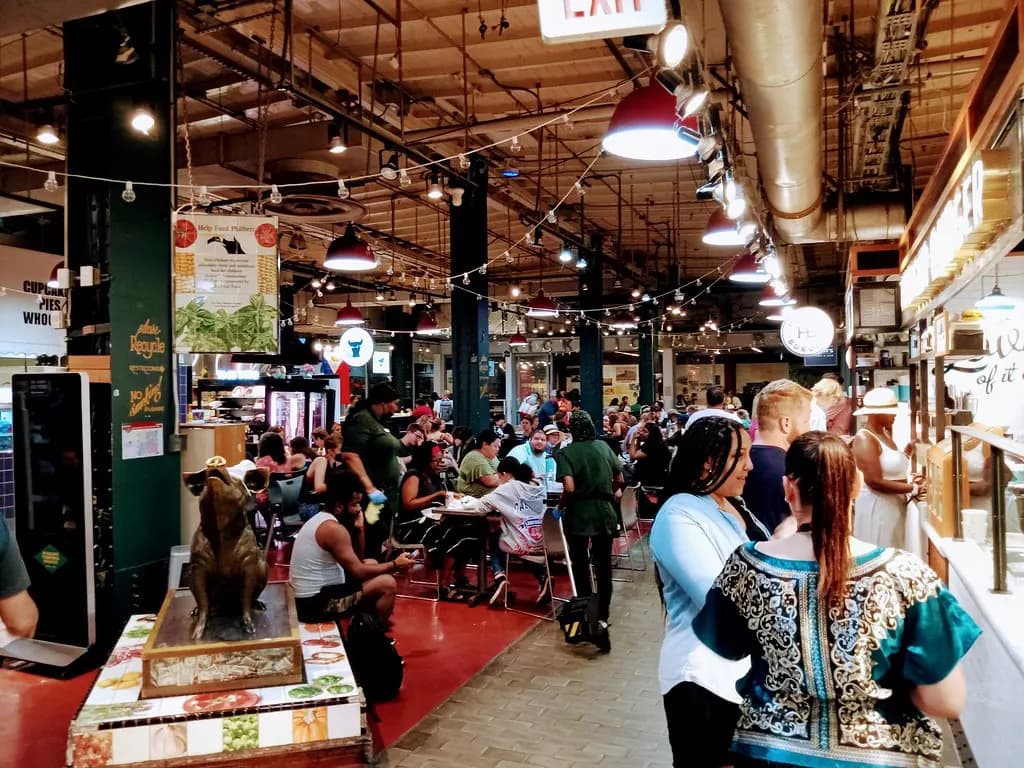
Food. Groceries for home preparation are exempt, and unusually, so are candy and gum. Soft drinks are taxable. Food that's ready to eat, including food sold by restaurants, cafés, food trucks and market stalls, is generally taxable at the full state and local rate.
Digital products and software. Pennsylvania taxes canned (pre-written) software and digital products, whether downloaded, streamed or accessed, including e-books, digital music and video streaming.
Services. Most services aren't taxed, but REV-717 lists a set of business services that are, including lobbying, adjustment and collection services, credit reporting, employment agency and help supply services, disinfecting and pest control, and building maintenance and cleaning. Certain services relating to taxable property are also taxed; check the taxability lists for your trade.
Shipping and installation. Tax is due on the full purchase price, with no deduction for labor, shipping, handling, delivery or installation charges, even when they're separately stated. Only separately stated charges for returnable containers are left out.
Worked examples in dollars
1. A $200 lamp in three cities. In Harrisburg: $200 × 6% = $12. In Pittsburgh: $200 × 7% = $14. In Philadelphia: $200 × 8% = $16.
2. A clothing store's mixed receipt in Philadelphia. Jeans at $80 and sneakers at $95 are exempt. A $300 tuxedo rental or purchase is formal wear, taxable at 8%: $24. A $40 cycling jersey is sports clothing: $40 × 8% = $3.20. Total tax on the receipt: $27.20.
3. Delivery charges. A furniture store in Lancaster sells a $1,200 sofa with a $100 delivery charge. Pennsylvania taxes the full purchase price, so tax is $1,300 × 6% = $78, not $72.
4. A café in Pittsburgh. A $9 sandwich and $3 bottled soft drink to eat in: $12 × 7% = $0.84. A loaf of bread and a bag of candy bought for home: no tax.
5. Vendor discount. A quarterly filer in Erie collects $5,200 of tax in a quarter and files on time. One percent is $52, below the $75 cap, so it keeps $52. A monthly filer collecting $9,000 a month would work out to $90, but the monthly cap limits the discount to $25.
Try it — Pennsylvania sales tax on a $1,000 sale in Philadelphia
Who needs a Pennsylvania sales tax license
Any business that sells taxable goods or performs taxable services in Pennsylvania needs a Sales, Use and Hotel Occupancy Tax License before it starts selling. That includes shops, restaurants, online sellers based in the state, landlords renting rooms for less than 30 days, and service businesses on the taxable list. Selling without a license can lead to a fine, and the Department won't issue or renew a license until all your Pennsylvania tax returns are filed and taxes paid.
Out-of-state sellers with no physical presence must register once their gross sales into Pennsylvania exceed $100,000 in the previous calendar year. Act 13 of 2019 put this economic nexus rule into law from July 1, 2019, and ended the old choice of sending customers use tax notices instead of collecting. Marketplace facilitators such as large online marketplaces collect on their third-party sellers' Pennsylvania sales once they meet the threshold. A business with neither a physical nor economic presence has no Pennsylvania sales tax obligation.
How the $100,000 test is counted matters. REV-717 measures gross sales into Pennsylvania in the previous calendar year, and the figure is gross, not just taxable sales, so a remote seller of mostly exempt clothing can still cross the line and need a license even though it collects little tax. Sales you make through a marketplace facilitator that collects on your behalf are taxed by the facilitator, but your own website sales remain your responsibility. If you sell through both, keep separate records so you can show which channel collected tax on each order.
Pennsylvania-based businesses have no threshold at all. A craft seller in Lancaster with $3,000 a year of taxable sales needs a license from the first sale, just like a department store. The same is true of a home-based seller working from a spare room: there's no small-seller exemption for in-state retailers.
Before your first taxable sale in Pennsylvania
0/7The Department issues several other registrations for specific situations:
- Wholesale certificate for businesses that only sell to retailers for resale. Wholesalers don't file sales tax returns and use the Pennsylvania Exemption Certificate (REV-1220) with suppliers.
- Transient vendor certificate for out-of-state sole proprietors and partnerships without a permanent location in Pennsylvania who sell at shows, fairs or events in the state. They must notify the Department 30 days before entering Pennsylvania to do business.
- Promoter license for anyone who rents out space at a show where taxable goods or services are sold. Promoters register at least 30 days before the first show and renew annually.
- Booking agent license for platforms or agents arranging short-term lodging, in addition to the retail license.
How to register through myPATH
Registration is online through the Pennsylvania Online Business Tax Registration in myPATH, the Department of Revenue's portal. The same application can register you for employer withholding and other state taxes.
How to get a Pennsylvania sales tax license
- 1
Form your business and get your IDs
EIN application guideIf you're using an LLC or corporation, register it with the Pennsylvania Department of State first. Get an EIN from the IRS; sole proprietors can use their Social Security number.
- 2
Open myPATH and start a business tax registration
Open myPATHOn mypath.pa.gov, choose Register a New Business under the Pennsylvania Online Business Tax Registration. Enter your legal name, entity type, owners and officers, NAICS code and start date.
- 3
List every location and what you sell
Give the address of each place of business. Each location must display a copy of the license, and Philadelphia or Allegheny County addresses tell the Department you collect local tax.
Tip: If you only sell to retailers for resale, apply for a wholesale certificate instead of a retail license.
- 4
Receive your license and 8-digit Account ID
The Department issues your Sales, Use and Hotel Occupancy Tax License with an account ID you'll use on returns and exemption certificates.
- 5
Set up filing and payments in myPATH
Create your myPATH logon, check your assigned filing frequency, and set up ACH payment if your payments will reach $1,000.
Licenses don't expire as long as you stay compliant. They renew automatically every five years, provided you have no unfiled returns or unpaid tax. If you're behind, the renewal is blocked until you catch up, which can leave you selling without a valid license.
Filing frequency and due dates
The Department sets your filing frequency based on your actual tax liability, and you must file every period even with no sales. You can file and pay free in myPATH, or by TeleFile phone filing if the Department approves a request.
| Your actual tax liability | Filing frequency | Return due |
|---|---|---|
| $300 or less a year | Semi-annual | August 20 (Jan–Jun) and February 20 (Jul–Dec) |
| less than $600 a quarter but more than $300 a year | Quarterly | 20th of the month after each quarter |
| more than $600 but less than $25,000 a quarter | Monthly | 20th of the following month |
| $25,000 a quarter or more | Monthly with prepayments (AST) | Prepayment and prior month's return by the 20th |
If the 20th falls on a weekend or federal holiday, the return is due the next business day.
Accelerated sales tax prepayments. Businesses whose tax for the third quarter of the previous year was at least $25,000 a quarter make prepayments by the 20th of each month for the current month. At AST Level 1, from $25,000 a quarter up to $100,000 a quarter, you prepay either 50% of the same month's liability last year or at least 50% of the current month's actual liability. At AST Level 2, $100,000 a quarter or more a quarter, you must prepay 50% of last year's same-month liability, with no alternative. The prepayment and the prior month's balance are separate payments.
Electronic payments. Any single payment of $1,000 or more must be made by electronic funds transfer, through ACH debit, ACH credit or credit card. Missing the EFT rule can cost a penalty of 3% of the tax due, up to $500.
Discounts, penalties and interest
Pennsylvania's vendor discount rewards on-time filers, but it's small. You keep 1% of the tax collected, limited to $25 a return for monthly filers, $75 for quarterly filers and $150 for semi-annual filers. No discount is allowed on late returns or on use tax you report on your own purchases.
Pennsylvania vendor discount caps
1%
Discount rate
Of tax collected, timely returns only
$25
Monthly filer cap
$75
Quarterly filer cap
$150
Semi-annual filer cap
Late returns cost more. If a return isn't filed by its due date, the Department adds 5% of the tax a month, up to 25% (minimum $2). Interest also runs daily on late tax at a rate the Department sets each January 1, equal to the rate set by the U.S. Treasury, and published on form REV-1611. For example, a quarterly filer who owes $1,200 and files two months late faces a $120 addition (two months at 5%) plus daily interest, and loses the discount.
If you discover you've been selling without a license or under-reporting, the Department runs a Sales Tax Non-Registrant Program for catching up on unpaid sales tax. Coming forward yourself is almost always cheaper than waiting for an audit.
Common mistakes and how to fix them
Charging tax on everyday clothing. Point-of-sale systems set up for other states often tax all apparel. In Pennsylvania, tag everyday clothing as exempt and formal wear, fur and sports clothing as taxable.
Leaving delivery charges untaxed. Unlike some states, Pennsylvania taxes delivery, shipping and installation charges on a taxable sale even when they're listed separately.
Charging 8% outside Philadelphia city limits. The Philadelphia tax applies only within the City of Philadelphia. Suburban stores charge 6%.
Skipping zero returns. Every period needs a return. A missed zero return still triggers notices, and it can block your license renewal.
Ignoring use tax. Equipment and supplies bought from out-of-state sellers without Pennsylvania tax must be reported as use tax on your return, at the rate where the item is used.
Not keeping exemption certificates. If you sell for resale or to exempt organizations, collect a completed REV-1220 from the buyer. Without one, the sale is treated as taxable in an audit.
Official links
- Sales, Use and Hotel Occupancy TaxRates, license types, registration
- myPATHRegister, file and pay online
- Retailer's Information Guide (REV-717)Filing rules and taxability lists
- Online RetailersEconomic nexus and marketplace rules
- AST PrepaymentsPrepayment levels
- Exemption Certificate (REV-1220)Resale and exempt purchases
What to do next
Register in myPATH before your first taxable sale, set your point-of-sale system to the right rate for each location, and tag clothing and food items carefully. Use the sales tax calculator to check invoices, and our how to calculate sales tax guide for tax-inclusive pricing. If you also sell into New York, our New York sales tax guide covers the very different local rate system next door.
This is general information, not legal or tax advice — confirm on the official source or with a professional.
Frequently asked questions
The state rate is 6%. Only two places add a local tax: Allegheny County, including Pittsburgh, adds 1% for a combined 7%, and the City of Philadelphia adds 2% for 8%. Everywhere else in Pennsylvania, from Harrisburg to Erie, the rate is a flat 6%.
Most everyday clothing and shoes are exempt. Three groups stay taxable: formal day or evening wear such as tuxedos and gowns, articles made of real or imitation fur, and sporting goods and clothing worn mainly for sport, such as biking clothing. Safety clothing and accessories like umbrellas are also taxable. Maternity wear, rainwear and underclothing are exempt.
Register through the Pennsylvania Online Business Tax Registration in myPATH at mypath.pa.gov. You'll need your entity details, EIN or SSN, business addresses and start date. The Department of Revenue issues a Sales, Use and Hotel Occupancy Tax License, which you must display at each location. Licenses renew automatically every five years if you have no unfiled returns or unpaid tax.
Monthly returns are due the 20th of the following month. Quarterly returns are due the 20th of the month after each quarter. Semi-annual returns are due August 20 for January–June and February 20 for July–December. Your frequency depends on actual tax: monthly for more than $600 but less than $25,000 a quarter, quarterly for less than $600 a quarter but more than $300 a year, and semi-annual for $300 or less a year.
Yes, once their gross sales into Pennsylvania exceed $100,000 a year. Act 13 of 2019 made this economic nexus standard law from July 1, 2019, and removed the old option of sending customers use tax notices instead of collecting. Marketplace facilitators that pass the threshold collect on their sellers' sales.
No. Food that isn't ready to eat is exempt, and so are candy and gum. Soft drinks are taxable, and food sold ready to eat, such as at restaurants, cafés and food stalls, is generally taxable at the full state and local rate. Prescription drugs and residential heating fuels are also exempt.
Sources & verification
Figures on this page were checked against the sources below when it was last reviewed on 9 October 2026. Each rate and limit is stored once with its own official source and review date, and official update channels are monitored daily so changes are picked up. How we verify
- 1.Sales, Use and Hotel Occupancy Tax — Pennsylvania Department of Revenue · accessed 9 October 2026
- 2.Retailer's Information Guide (REV-717) — Pennsylvania Department of Revenue · accessed 9 October 2026
- 3.Online Retailers — Pennsylvania Department of Revenue · accessed 9 October 2026
- 4.Accelerated Sales Tax (AST) Prepayments — Pennsylvania Department of Revenue · accessed 9 October 2026
- 5.myPATH — Pennsylvania Online Business Tax Registration — Pennsylvania Department of Revenue · accessed 9 October 2026
- 6.Pennsylvania Exemption Certificate (REV-1220) — Pennsylvania Department of Revenue · accessed 9 October 2026
MSMETOOLS is an independent platform and is not affiliated with any government agency, ministry or department.
Tools for this
Sales Tax Calculator (US)
Calculate sales tax for all US states and cities.
Invoice Generator
Create professional invoices with tax, logo and custom details.
Related guides
 New York City Sales Tax Rate 2026: 8.875% ExplainedRead guide
 Pennsylvania Business License 2026: What PA RequiresRead guide
 Illinois Sales Tax Rate 2026: Chicago, Groceries & FilingRead guide
 New Jersey Sales Tax 2026: 6.625% Rate, UEZ & ClothingRead guide
Official links open the government site in a new tab.