 Sales tax
Minnesota Sales Tax in 2026: Rates, Minneapolis and St. Paul, Clothing, the Delivery Fee and Filing
Minnesota sales tax 2026: the 6.875% state rate, Minneapolis 9.025% and St. Paul 9.875%, metro taxes, tax-free clothing, the 50-cent delivery fee and filing.
 Edited by Sumeet YadavFounder & editor, MSMETOOLS · fact-checked against official sources
Contents (10)
- 1. How Minnesota's sales tax rate is built
- 2. Minneapolis, St. Paul and city rates in 2026
- 3. What's taxable and what isn't
- 4. The retail delivery fee
- 5. Worked examples in dollars
- 6. Registering for a sales tax permit
- 7. Out-of-state sellers and marketplaces
- 8. Filing and paying
- 9. Common mistakes and how to fix them
- 10. What to do next
If you sell in Minnesota, from a shop in Minneapolis to an online store shipping into the state, this guide gives you the 2026 sales tax rates and the rules that catch new sellers out. It covers the 6.875% state rate, the city, county and metro-area taxes on top, the Minneapolis and St. Paul totals, why clothing and groceries are tax-free, how the 50-cent retail delivery fee works, and how to register and file. Rates come from the Minnesota Department of Revenue's rate guides for October 1 to December 31, 2026, and the statutes behind them.
Quick answer
Minnesota's state sales tax rate is 6.875%. Local, transit and metro-area taxes push combined rates to 9.025% in Minneapolis and 9.875% in St. Paul. Clothing and groceries are exempt, and retailers with $1 million or more in sales pay a 50 cents retail delivery fee on qualifying deliveries of $100 or more.
The seven Twin Cities counties have added 1% in metro housing and transportation taxes since October 1, 2023
Downtown Minneapolis restaurants charge 12.025% with the 3% restaurant tax
Remote sellers register after 200 or more retail sales or more than $100,000 in sales in 12 months
Returns and payments are due by the 20th of the following month
A sales tax permit is issued through e-Services before your first sale
How Minnesota's sales tax rate is built
The state rate of 6.875% has two pieces in the law. The base sales tax is 6.5%. On top of it sits a 0.375% tax that voters added to the state constitution in 2008 to fund clean water, outdoor heritage, parks and the arts. That extra tax is written to expire on July 1, 2034, unless voters renew it, so the state rate could change after that date.
Local taxes come next. Minnesota doesn't give cities and counties a general right to add sales tax, so each local tax needs specific approval, usually a special law from the Legislature plus a local vote. That's why rates differ so much from city to city. Most counties now levy a 0.5% transportation or transit tax, Hennepin County adds a separate 0.15% county tax, and dozens of cities from Duluth to Rochester have their own taxes for specific projects.
The biggest recent change came on October 1, 2023, when two region-wide taxes took effect in the seven Twin Cities counties: Anoka, Carver, Dakota, Hennepin, Ramsey, Scott and Washington. The Metro Area Transportation Sales and Use Tax is 0.75% and the Metro Area Sales and Use Tax for Housing is 0.25%. Together they added a full percentage point to every metro sale. The department treats both as general local taxes, so they follow the same exemptions as the state tax.
Some places also charge special local taxes on specific sales. These include lodging taxes, food and beverage taxes, and the Minneapolis entertainment, downtown restaurant and downtown liquor taxes. They don't appear in the general rate tables and apply only to the businesses they target.
Every local tax is reported on the same state return and collected by the Department of Revenue. The department updates its rate guides about 30 days before any change takes effect, and publishes a rate calculator and map that find the exact rate for an address or nine-digit ZIP code.
Minneapolis, St. Paul and city rates in 2026
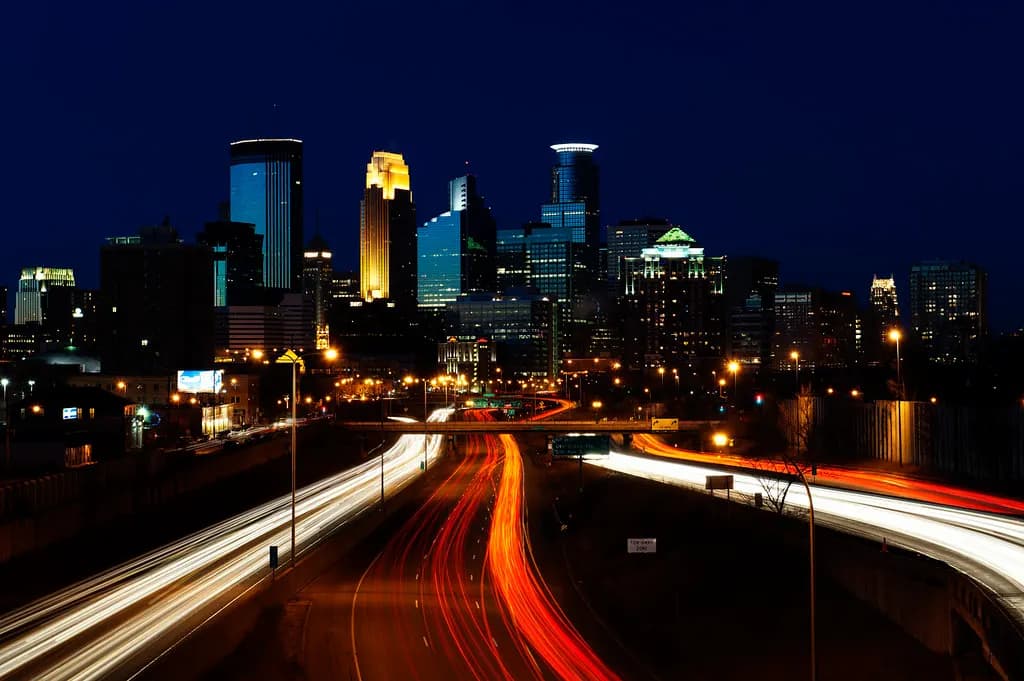
Minneapolis is at 9.025%. The department's Minneapolis fact sheet breaks it down as 6.875% state, 0.5% Hennepin County transit, 0.15% Hennepin County, 0.25% metro housing, 0.75% metro transportation and 0.5% Minneapolis city tax. Bloomington, which added a 0.5% city tax on April 1, 2024, matches it at 9.025%.
St. Paul has the highest general rate in the state at 9.875%, because its city tax is 1.5% and Ramsey County's transit tax is 0.5%. Golden Valley, at 9.775%, is the next highest, thanks to a 1.25% city tax on top of the Hennepin County and metro taxes.
| City | Combined general rate (Oct–Dec 2026) | What's in it beyond the state's 6.875% |
|---|---|---|
| St. Paul | 9.875% | 1.5% city, 0.5% Ramsey transit, 1% metro |
| Golden Valley | 9.775% | 1.25% city, 0.65% Hennepin, 1% metro |
| Minneapolis | 9.025% | 0.5% city, 0.65% Hennepin, 1% metro |
| Bloomington | 9.025% | 0.5% city, 0.65% Hennepin, 1% metro |
| Duluth | 8.875% | 1.5% city, 0.5% St. Louis County transit |
| Eden Prairie | 8.525% | 0.65% Hennepin, 1% metro |
| Rochester | 8.125% | 0.75% city, 0.5% Olmsted transit |
| Mankato | 7.875% | 0.5% city, 0.5% Blue Earth County transit |
Outside the metro, many rates sit between 7.375% and 7.875%. A county with no local tax of its own charges only the state's 6.875%. Because local taxes can be city-specific, two addresses in the same county, or even with the same five-digit ZIP code, can have different rates. The department's rate calculator is the safest way to check.
Local taxes have been spreading. The department's fourth-quarter 2026 chart lists recent starts such as 0.5% city taxes in Monticello and Stillwater from April 1, 2025, and in Roseville from July 1, 2025. If you set up your rates a few years ago, check them against the current guide.
Minneapolis special taxes
Minneapolis layers special taxes on top of the 9.025% general rate for certain businesses. A 3% entertainment tax applies city-wide to admissions, amusement devices, and food, drink and merchandise sold during live entertainment. In the downtown taxing area, which runs from the core downtown to the North Loop warehouse district, St. Anthony Main and US Bank Stadium, a 3% restaurant tax and a 3% liquor tax apply to restaurants and bars.
Alcohol sold anywhere in Minnesota also carries a 2.5% liquor gross receipts tax. The department's own combinations table shows how these stack: a downtown restaurant without entertainment charges 12.025% on food, an on-sale bar outside downtown charges 11.525% on drinks, and a downtown bar with live music charges 17.525%.
What's taxable and what isn't
Minnesota taxes retail sales of tangible goods, prewritten software and digital products, plus a long list of services written into the law. Taxable services include lodging, admissions and amusement, laundry and dry cleaning, lawn and garden care, building cleaning and maintenance, detective and security services, pet grooming and boarding, parking, and telecommunications. Delivery charges on taxable items count as part of the taxable price.
Clothing is exempt
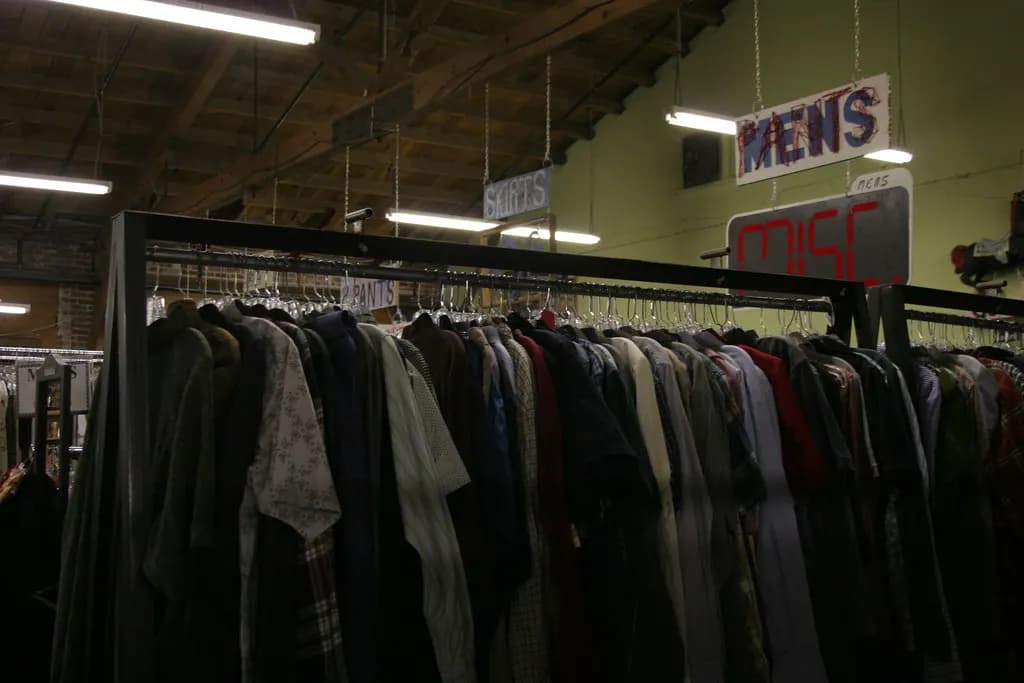
Clothing suitable for general use is exempt from Minnesota sales tax and from general local taxes. The statute lists examples: coats and jackets, boots, shoes and sneakers, hats, gloves and mittens for general use, socks, underwear, uniforms, wedding apparel and children's and adult diapers, including disposable ones.
The exemption has limits. Clothing accessories such as jewelry, handbags, watches and sunglasses are taxable, and so are sports and recreational equipment such as ski boots, cleats and swim goggles, and protective equipment such as hard hats and welding gloves. Belt buckles sold on their own and costume masks are also taxable. Because everyday clothing is already exempt, Minnesota has no back-to-school sales tax holiday.
Food and drink
Food and food ingredients are exempt, which covers most groceries. Candy, soft drinks, dietary supplements and prepared food are carved out and taxed at the full combined rate. Prepared food means food the seller heats or mixes into a single item, or sells with utensils like plates, knives or straws, so a grocery store's deli sandwiches and hot rotisserie chicken are taxable while the bread and deli meat on the shelf aren't. Alcoholic beverages and tobacco are taxable too.
Other common exemptions include prescription and over-the-counter drugs, subscription publications issued at least four times a year, sales for resale, and many sales to governments, tribal governments and qualifying nonprofits with the right exemption certificate. Manufacturers and farmers have exemptions for items used directly in production.
The retail delivery fee
Since July 1, 2024, Minnesota has charged a 50 cents retail delivery fee to fund roads and transit. It's a fee on the retailer, not a sales tax, but it's reported on the sales tax return.
The fee applies once per transaction when a retailer delivers taxable goods or clothing to a Minnesota address and the order totals $100 or more, counted before sales tax and excluding exempt items. Clothing counts toward the $100 even though it isn't taxed, but diapers don't. Taxable shipping charges count as part of the price. The fee is charged once even if the order ships in several boxes, and it doesn't apply when a customer picks up at your store.
You may absorb the fee or pass it on. If you pass it on, the statute says it must be shown separately on the receipt as the "road improvement and food delivery fee," and when it's separately stated it isn't subject to sales tax. It's not refunded when items are returned, but it is if the delivery is canceled.
Several deliveries are exempt: deliveries to tax-exempt buyers, food and prepared food including restaurant and grocery delivery, drugs, medical devices and baby products, and deliveries on vehicles that need an oversize or overweight permit. A 2025 law added exemptions for fuel products and road construction materials delivered to businesses or local governments.
Small retailers are excluded entirely. If your Minnesota retail sales were under $1,000,000 in the previous calendar year, you don't charge the fee. A marketplace provider doesn't charge it on sales for a third-party seller whose prior-year sales were under $100,000. Once you cross a threshold, you must start collecting on the first day of a month no more than 60 days later.
Does the retail delivery fee apply?
Step 1
Prior-year Minnesota retail sales $1,000,000 or more?
Step 2
Delivered to a Minnesota address (not picked up)?
Step 3
Taxable goods + clothing total $100 or more?
Step 4
Not food, drugs, baby products or another exempt delivery?
Step 5
Charge 50 cents once per order
Show as road improvement and food delivery fee
Worked examples in dollars
A Minneapolis electronics store. A customer buys a $1,200 laptop at the counter. Tax at 9.025% is $108.30.
A downtown Minneapolis restaurant. A couple's $80 dinner with soft drinks is taxed at 12.025%, or $9.62. The same meal at a restaurant in south Minneapolis, outside the downtown taxing area, is taxed at 9.025%, or $7.22.
A St. Paul home-goods retailer delivering an order. A customer orders $150 of kitchenware and a $40 winter coat for delivery in St. Paul. The coat is exempt, so tax at 9.875% applies only to the $150 of kitchenware: $14.81. The order is over $100 and the retailer had more than $1,000,000 in sales last year, so it also owes the 50 cents delivery fee. If it passes the fee on, the customer pays $205.31.
A Duluth grocery trip. A shopper buys $60 of groceries, a $5 bag of candy and a $3 bottle of soda. The groceries are exempt. The candy and soda are taxed at 8.875%, or $0.71.
An online seller in Wisconsin. A Madison seller ships 210 orders averaging $60 to Minnesota customers in a year, about $12,600 in sales. It's far below more than $100,000, but 210 orders passes the 200 or more retail sales test, so it must register and collect Minnesota tax at the rate for each delivery address.
Try it — Minneapolis sales tax on $1,200
Registering for a sales tax permit
You need a Minnesota sales tax permit before you make taxable sales if you have a physical presence or economic nexus in the state. Physical presence includes a store, office or warehouse, employees or sales reps, delivering goods in your own vehicles, performing services or construction work, and selling at a convention or trade show in Minnesota. Businesses that only buy items subject to use tax also need to register.
You register online through the Department of Revenue's e-Services system. You'll need your federal EIN or Social Security number, your business name and structure, the addresses of your selling locations, and the date you expect to start sales. Neither of the permit statutes sets an application fee. A permit stays valid until it's canceled or revoked, but it can't be transferred to a new owner, and the department won't issue one to an applicant that owes delinquent sales tax unless an appeal is pending.
The department assigns your filing frequency when you register, based on how much tax it expects you to collect. Most businesses start on monthly or quarterly filing, and very small accounts can be moved to annual filing.
Before your first Minnesota sale
0/6Out-of-state sellers and marketplaces
Minnesota's Small Seller Exception lets a remote seller skip registration only while it stays under both tests. Once it makes 200 or more retail sales shipped into Minnesota, or retail sales totaling more than $100,000, during the prior 12 months, it must register and collect. The transaction test catches small sellers with many low-priced orders, which is why Minnesota registrations are common for craft and print-on-demand sellers.
A marketplace provider that lists a seller's products and processes payment is treated as the retailer for the sales it facilitates. Amazon, Etsy, eBay and similar platforms collect and remit Minnesota tax on those sales. If you also sell through your own website, count those sales toward your own thresholds.
Minnesota uses destination sourcing. When goods are shipped or delivered, the sale is taxed at the rate where the customer receives them, including any local taxes there. When a customer buys in your store, you charge your store's rate.
Use tax works the other way. If your business buys taxable items from an out-of-state seller that didn't charge Minnesota tax, you owe use tax at your location's rate. Individuals can buy up to $770 of taxable goods a year without owing use tax, but that allowance doesn't apply to business purchases.
Filing and paying
Sales tax returns and payments are due by the 20th of the following month after the end of your filing period. If the 20th falls on a weekend or holiday, the due date moves to the next business day. You file and pay through e-Services, and you report state tax, each local tax and any retail delivery fee on the same return.
Larger vendors have an extra step in June. If your sales tax liability was $250,000 or more in the fiscal year ending June 30, you must pay part of your June liability before June 30 instead of waiting until July 20. The statute has been amended for 2027 onward, so check the department's current instructions if you're near this threshold.
If you file late or pay late, the department charges penalties and interest on the unpaid tax. While your permit is active, the department expects a return for every period, so file a zero return when you have no sales and cancel the permit in e-Services if you stop selling.
A monthly filer's calendar for late 2026
October 1
Fourth-quarter rate guides take effect; check for new local taxes
October 20
September monthly and July–September quarterly returns due
November 20
October return due
December 21
November return due (the 20th is a Sunday)
January 2027
December return due on the 20th; annual returns due in early February
Common mistakes and how to fix them
Using a pre-2023 metro rate. Older POS setups often show Minneapolis at 8.025%. The metro taxes added 1% on October 1, 2023. If you're behind, update the rate and pay the difference on your next return.
Taxing all clothing, or none. Everyday apparel is exempt, but accessories and sports equipment aren't. Tag items correctly in your system so a $200 pair of hiking boots is exempt and a $200 pair of ski boots is taxable.
Treating candy and soda as groceries. Grocery stores need separate tax categories for candy, soft drinks and prepared deli items.
Missing the restaurant and entertainment taxes. A café that books live music in Minneapolis owes the 3% entertainment tax on food and drink sold during the performance. Check the downtown boundary map before opening a downtown location.
Charging the delivery fee when you're exempt. Retailers under $1,000,000 and food deliveries don't owe it. If you've collected it in error, refund customers or remit what you collected.
Ignoring the 200-transaction test. Remote sellers who only watch the dollar figure often register late. Count orders, not just revenue.
Official links
- Minnesota Department of Revenue — Sales and Use TaxRegistration, filing and guidance
- Local Sales and Use Tax Rate Guide (Q4 2026)Combined rates by city
- Metro Counties Rate Guide (Q4 2026)Seven-county Twin Cities rates
- Minneapolis Special Local Taxes (Fact Sheet 164M)Entertainment, restaurant and liquor taxes
- Retail Delivery FeeWho pays and how to report
- Minn. Stat. chapter 168ERetail delivery fee law
What to do next
Register for your permit in e-Services, look up the exact rate for each address you sell from or ship to, and decide early whether the retail delivery fee applies to you. Use the sales tax calculator to check receipts, and our how to calculate sales tax guide if you need to back tax out of a tax-included price. Selling into neighboring states too? Compare our Wisconsin and Illinois sales tax guides.
This is general information, not legal or tax advice — confirm on the official source or with a professional.
Frequently asked questions
The state general rate is 6.875%, made up of a 6.5% base rate and a 0.375% constitutional tax for clean water, parks and the arts that runs until July 1, 2034. Cities, counties and the Twin Cities metro area add local taxes, so combined rates in the October–December 2026 rate guide reach 9.875% in St. Paul. Places with no local tax charge only the state rate.
The general rate in Minneapolis is 9.025%: 6.875% state, 0.5% Minneapolis city tax, 0.15% Hennepin County tax, 0.5% Hennepin County transit tax and 1% in metro-area housing and transportation taxes. Restaurants in the downtown taxing area add a 3% restaurant tax, for 12.025%, and venues with live entertainment add a 3% entertainment tax.
No. Minnesota exempts clothing suitable for general use, such as shirts, pants, coats, shoes, boots, hats and children's and adult diapers, from state and general local sales tax all year. Clothing accessories like jewelry, handbags and watches, sports or recreational gear such as ski boots and cleats, and protective equipment like hard hats are taxable. There's no back-to-school holiday because clothing is already exempt.
Since July 1, 2024, retailers pay a 50 cents fee on each delivery transaction of $100 or more of taxable goods and clothing to a Minnesota address. Retailers with under $1,000,000 in retail sales in the prior year are excluded. The retailer may pass the fee on, and it must appear on the receipt as the road improvement and food delivery fee.
Groceries are exempt. Candy, soft drinks, dietary supplements and prepared food, such as restaurant meals, hot food and food sold with utensils, are taxable at the full combined rate. Alcohol is taxable too, with an extra 2.5% liquor gross receipts tax. Food deliveries, including restaurant and grocery orders, are exempt from the retail delivery fee.
A seller with no physical presence in Minnesota must register and collect once it makes 200 or more retail sales or retail sales of more than $100,000 shipped into Minnesota during the prior 12 months. Either test is enough. Sales made through a marketplace provider such as Amazon are collected by the marketplace, which is treated as the retailer for those sales.
Sources & verification
Figures on this page were checked against the sources below when it was last reviewed on 9 October 2026. Each rate and limit is stored once with its own official source and review date, and official update channels are monitored daily so changes are picked up. How we verify
- 1.Minn. Stat. § 297A.62 — Sales tax imposed; rates — Minnesota Office of the Revisor of Statutes · accessed 9 October 2026
- 2.Local Sales and Use Tax Rate Guide, effective 10/1/2026 – 12/31/2026 — Minnesota Department of Revenue · accessed 9 October 2026
- 3.Metro Counties Sales and Use Tax Rate Guide, effective 10/1/2026 – 12/31/2026 — Minnesota Department of Revenue · accessed 9 October 2026
- 4.Local Sales and Use Tax Chart, 4th quarter 2026 — Minnesota Department of Revenue · accessed 9 October 2026
- 5.Fact Sheet 164M — Minneapolis Special Local Taxes — Minnesota Department of Revenue · accessed 9 October 2026
- 6.Minn. Stat. §§ 168E.01, 168E.03 and 168E.05 — Retail delivery fee — Minnesota Office of the Revisor of Statutes · accessed 9 October 2026
- 7.Minn. Stat. § 297A.66 — Remote sellers and marketplace providers — Minnesota Office of the Revisor of Statutes · accessed 9 October 2026
- 8.Minn. Stat. § 297A.67 — Exemptions (food, clothing) — Minnesota Office of the Revisor of Statutes · accessed 9 October 2026
- 9.Minn. Stat. § 289A.20 — Due dates (sales and use tax) — Minnesota Office of the Revisor of Statutes · accessed 9 October 2026
- 10.Introduction to Sales and Use Tax (webinar handout) — Minnesota Department of Revenue · accessed 9 October 2026
- 11.Fact Sheet 156 — Use Tax for Individuals — Minnesota Department of Revenue · accessed 9 October 2026
MSMETOOLS is an independent platform and is not affiliated with any government agency, ministry or department.
Tools for this
Sales Tax Calculator (US)
Calculate sales tax for all US states and cities.
Invoice Generator
Create professional invoices with tax, logo and custom details.
Related guides
 Wisconsin Sales Tax 2026: 5% State, Milwaukee 7.9% & PermitRead guide
 Colorado Sales Tax Rate 2026: 2.9% State, Denver & Home-RuleRead guide
 Ohio Sales Tax Rate 2026: 5.75% State, Columbus & Cleveland 8%Read guide
 Indiana Sales Tax Rate 2026: 7%, Food, Permits & FilingRead guide
Official links open the government site in a new tab.