 Finance & accounting
How to Collect Unpaid Invoices: A Step-by-Step Plan for US Small Businesses (2026)
How to collect unpaid invoices in 2026: a reminder schedule, demand letters, small claims limits by state, collection agencies, liens and bad debt write-offs.
 Edited by Sumeet YadavFounder & editor, MSMETOOLS · fact-checked against official sources
Contents (12)
- 1. Step 1: Rule out a problem on your side
- 2. Step 2: Send reminders on a fixed schedule
- 3. Step 3: Negotiate a payment plan or settlement
- 4. Step 4: Send a formal demand letter
- 5. Step 5: Small claims court
- 6. Step 6: Collection agencies and the debt collection laws
- 7. Know your deadline: statutes of limitations
- 8. Step 7: Mechanics liens for construction work
- 9. Step 8: Write off what you can't collect
- 10. A worked example
- 11. Common mistakes
- 12. What to do next
An unpaid invoice is a cash problem first and a legal problem only if you let it become one. Most overdue invoices get paid after a well-timed reminder or a phone call; a smaller number need a formal demand, and a few end in small claims court, a collection agency or a write-off. This guide is for US small business owners, freelancers and trades who are owed money by business or consumer customers. It sets out a reminder schedule, how to write a demand letter, small claims limits in four large states, how collection agencies and the debt collection laws work, mechanics liens for construction work, limitation periods, and the tax rules for writing off what you can't recover. Court limits and statutes were checked in October 2026.
Quick answer
To collect an unpaid invoice, confirm the invoice was received and is correct, send reminders on a fixed schedule, then call and offer a payment plan if needed. If that fails, send a formal demand letter with a deadline, then choose between small claims court, a collection agency or, for construction work, a mechanics lien. Act well inside your statute of limitations, and write off truly uncollectible invoices only if you use the accrual method.
Remind before the due date, on it, and at 7, 15 and 30 days late
Small claims limits: $20,000 Texas, $6,250 California businesses, $10,000 New York City, $8,000 Florida
Agencies typically keep about 15%–50% of what they recover, more for older debts (market estimate)
The FDCPA covers third-party collectors of consumer debts, not B2B debts
Lien deadlines are short: 90 days after completion in California, 90 days after last work in Florida
Step 1: Rule out a problem on your side
Before you chase, make sure there is nothing to fix. A large share of "late" invoices are invoices the customer cannot pay yet: sent to the wrong email address, missing a purchase order number, addressed to the wrong legal entity, or disputed because the quantity or price does not match the order. Large customers often pay only invoices entered in their system with a valid PO, and an invoice that fails that check can sit unnoticed for weeks.
Pull up the invoice and check the customer's legal name, billing address and contact, the PO or job number, the line items against the order or signed quote, the total and tax, the due date and the payment instructions. Confirm you sent it to the person or mailbox the customer told you to use. If anything is wrong, issue a corrected invoice or a credit note and restart the conversation from there.
Then find out whether there is a dispute. A customer who thinks the work was incomplete or the goods arrived damaged will not respond to reminders about the due date. Ask directly, fix what is legitimate, and get the customer to confirm in writing that the remaining balance is accepted. A short email saying "we agree the balance of $6,800 is due" is valuable evidence later.
Step 2: Send reminders on a fixed schedule
Consistency beats intensity. Customers learn quickly which suppliers follow up and which can be paid last. A short, polite message at set intervals, each with the invoice attached and a payment link, collects most overdue balances without damaging the relationship.
A reminder schedule for net 30 invoices
3 days before due
Friendly heads-up with the invoice and payment link
Due date
Payment due today; confirm the amount and how to pay
7 days late
Firmer reminder; ask whether anything is holding up payment
15 days late
Phone call to your contact and to accounts payable
30 days late
Written notice that the account is overdue, late charges apply if agreed, and new work is on hold
45–60 days late
Formal demand letter with a final deadline
60–90 days late
Decide: small claims, agency, lien, attorney or write-off
Keep each reminder short and factual: invoice number, amount, due date, days overdue, how to pay, and a direct question. Change the tone gradually rather than jumping to threats. The payment reminder generator writes polite, firm and final versions you can send by email or text. If your terms include a late fee, mention it from the 30-day notice onward and apply it exactly as your contract says; the late payment fees guide explains the state limits.
Pick up the phone at about two weeks late. Calls get answers that emails don't: the invoice is waiting for approval, the person who approves it is on leave, or the customer has a cash problem. Each answer leads to a different next step. Ask for a specific payment date and follow up the call with an email that confirms it.
Step 3: Negotiate a payment plan or settlement
If the customer is struggling rather than refusing, a structured plan often recovers more than a lawsuit. Agree the full balance in writing, the installment amounts and dates, what happens if a payment is missed (the whole balance becomes due immediately), and whether late charges are waived if the plan is kept. Ask for post-dated payments or automatic ACH debits rather than promises.
A discount for prompt payment of an old balance can also make sense. Receiving $5,500 this week on a $6,800 invoice that is 90 days late may be better than spending months in court for the full amount, especially if the customer's finances are getting worse. Get any settlement in writing, stating that the payment settles the account in full only once it clears. Be careful about cashing a check marked "payment in full" for less than the amount owed when there is a genuine dispute, because in many states that can settle the claim under the UCC's accord and satisfaction rules.
While an account is overdue, stop extending more credit. Put the customer on hold for new orders, or require payment in advance, until the account is current. Your terms should already say this, so it is a business decision rather than a breach.
Step 4: Send a formal demand letter
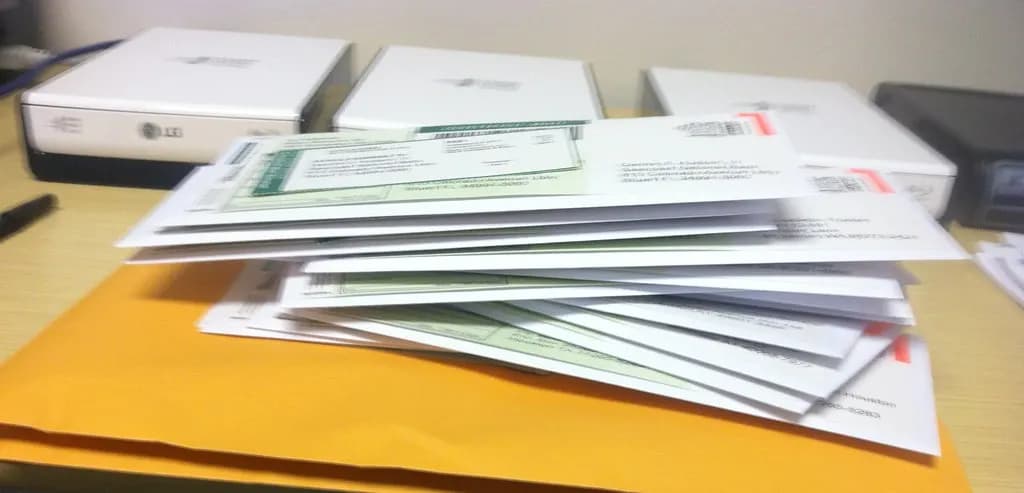
A demand letter is the last step before you hand the debt to someone else or go to court. It tells the customer exactly what is owed and what will happen if it isn't paid by a deadline. Courts like to see one, and in some situations it is a practical requirement before filing.
A good demand letter states: who you are and the customer's legal name; the invoices, dates and amounts, with copies attached; any agreed late charges, calculated; total due; previous reminders and any acknowledgment of the debt; a clear deadline, usually 10 to 14 days; how to pay; and what you will do next, such as filing in small claims court or referring the account for collection. Keep it factual. Don't threaten anything you don't intend to do or can't legally do, such as criminal charges or contacting the customer's employer about a consumer debt.
Send it by a method you can prove, such as certified mail with return receipt, plus email. Keep copies of everything; the same records support a court claim and a bad debt deduction.
Step 5: Small claims court
Small claims court is designed for people and businesses without lawyers. Filing fees are modest, hearings are short, and a judge or magistrate decides quickly. The catch is the limit on how much you can claim, which varies widely by state and sometimes by who is suing. You generally cannot split one debt into several claims to fit under the limit.
Small claims limits in four large states (2026)
| State | Limit | Where | Notes |
|---|---|---|---|
California | $12,500 individuals; $6,250 businesses | Superior Court, small claims division | Lawyers cannot represent you at the hearing; filing fee about $30–$100 |
New York | $10,000 NYC; $5,000 city courts; $3,000 town and village courts | Civil Court (NYC) or local court | Businesses use the separate commercial claims part |
Texas | $20,000 | Justice court | Entities can appear through an owner, officer or employee |
Florida | $8,000 | County court | Excludes costs, interest and attorney fees |
California
- Limit
$12,500 individuals; $6,250 businesses
- Where
Superior Court, small claims division
- Notes
Lawyers cannot represent you at the hearing; filing fee about $30–$100
New York
- Limit
$10,000 NYC; $5,000 city courts; $3,000 town and village courts
- Where
Civil Court (NYC) or local court
- Notes
Businesses use the separate commercial claims part
Texas
- Limit
$20,000
- Where
Justice court
- Notes
Entities can appear through an owner, officer or employee
Florida
- Limit
$8,000
- Where
County court
- Notes
Excludes costs, interest and attorney fees
California's lower limit for businesses means a company owed $9,000 must either file in the regular limited civil court or waive the excess. In New York, corporations, partnerships and LLCs cannot use ordinary small claims; they file in the commercial claims part of the city courts, which has its own filing limits and procedures. Texas has the highest ceiling of the four, and justice courts handle small claims under simplified rules.
Winning is only half the job. A judgment is a court order that the customer owes you money; it does not put money in your account. If the customer still doesn't pay, you use the state's enforcement tools, which can include a bank levy, wage garnishment where the state allows it for that kind of debt, or a judgment lien on property. Before you file, ask whether the customer has assets or income you could reach. A judgment against a business with no assets may be worth little.

Step 6: Collection agencies and the debt collection laws
A commercial collection agency takes over the chasing in exchange for a share of what it recovers. Most work on contingency, so you pay nothing if nothing is collected. Industry pricing guides commonly put contingency fees at about 15% to 25% of the amount recovered for accounts under 90 days old, 25% to 40% for accounts six to twelve months old, and 40% to 50% for very old accounts or those headed for litigation; small balances often cost more. Treat those figures as a market estimate, not a regulated rate, and ask several agencies for written quotes. Check whether the fee rises if the agency refers the account to a lawyer, who pays court costs, and whether you can withdraw the account.
Choose an agency that specializes in your type of debt. Business-to-business collectors and consumer collectors work under different rules. Ask about licensing: many states require collection agencies to be licensed or bonded, and an agency that can't show its license for your customer's state is a risk to you.
Does the FDCPA apply to this debt?
Step 1
Consumer (personal or household) debt?
Step 2
No — B2B debt
FDCPA does not apply
Step 3
Collected by a third party or under another name?
Step 4
Yes — FDCPA and Regulation F apply
check state law too
The FDCPA. The federal Fair Debt Collection Practices Act applies to debt collectors collecting consumer debts, meaning obligations arising from transactions primarily for personal, family or household purposes. A "debt collector" is mainly someone whose business is collecting debts owed to others. Business-to-business invoices are outside the Act, and so, generally, is a business collecting its own invoices in its own name. A business that collects its own debts under a different name that suggests a third party is involved is treated as a debt collector.
If you use an agency for consumer debts, it must follow the Act and the CFPB's Regulation F. Among other things, it must send a validation notice within five days of first contacting the consumer, cannot collect any fee or interest that the original agreement or the law does not authorize, and is presumed to be harassing if it calls about a debt more often than seven calls in seven days, or within seven days after a phone conversation about the debt.
State laws can reach you directly. Some states apply debt collection rules to original creditors collecting consumer debts. California's Rosenthal Fair Debt Collection Practices Act defines a debt collector to include a person collecting on its own behalf in the ordinary course of business, and Florida's Consumer Collection Practices Act restricts what "a person" may do when collecting consumer debts, including calls between 9 p.m. and 8 a.m. If you sell to consumers, follow the federal standards as good practice even when collecting yourself.
Know your deadline: statutes of limitations
Every state limits how long you have to sue on an unpaid debt. The clock usually starts when payment was due, and a written acknowledgment or a partial payment can restart or extend it in some states. Once the period expires, the customer can defeat your claim simply by pointing to the date.
Limitation periods for unpaid invoices
| State or rule | Period | Notes |
|---|---|---|
California | four years | Written contracts, book accounts and open accounts (CCP 337) |
New York | six years | Contract claims (CPLR 213); sales of goods follow the UCC |
Texas | four years | Suits on debt (CPRC 16.004) |
Florida | five years written; four years unwritten | Unwritten period covers sales of goods and store accounts |
Sales of goods (UCC 2-725) | four years | Parties may shorten it to no less than one year |
California
- Period
four years
- Notes
Written contracts, book accounts and open accounts (CCP 337)
New York
- Period
six years
- Notes
Contract claims (CPLR 213); sales of goods follow the UCC
Texas
- Period
four years
- Notes
Suits on debt (CPRC 16.004)
Florida
- Period
five years written; four years unwritten
- Notes
Unwritten period covers sales of goods and store accounts
Sales of goods (UCC 2-725)
- Period
four years
- Notes
Parties may shorten it to no less than one year
These are long periods, but the practical deadline is much shorter. Customers who haven't paid in six months often have bigger problems, and the longer you wait the more likely they are to close, move or file for bankruptcy. If a customer files for bankruptcy, stop collection activity immediately; the automatic stay forbids it, and you will need to file a proof of claim instead.
Step 7: Mechanics liens for construction work
Contractors, subcontractors and suppliers who improve real property have an extra tool: a mechanics lien, a claim against the property itself that can block a sale or refinance until you are paid. Every state has a lien law, and every one has strict deadlines and notice requirements. Miss one and the lien is usually lost.
In California, most claimants must serve a preliminary notice within 20 days after first furnishing work or materials; a late notice covers only work from 20 days before it was served onward. A direct contractor must then record its claim of lien after completing its contract and before the earlier of 90 days after completion of the whole project or 60 days after the owner records a notice of completion or cessation. In Florida, a claim of lien must be recorded no later than 90 days after the claimant's final furnishing of labor, services or materials, and served on the owner before or within 15 days after recording. Recording is only the first step; you must also file suit to foreclose the lien within a further deadline.
If you work in construction, build the notice deadlines into your project setup rather than your collections process. Serve preliminary notices on every job as routine, because by the time an invoice is overdue it may be too late. Our construction company guide covers the wider licensing and contract basics.
Step 8: Write off what you can't collect
At some point the cost of chasing exceeds what you are likely to recover. Writing the debt off doesn't forgive it legally, but it cleans up your books and may reduce your tax.
For federal income tax, a business bad debt is deductible only if the amount was already included in your gross income. Accrual-method businesses report income when they invoice, so they can deduct an invoice that becomes worthless. Cash-method businesses report income only when paid; an unpaid invoice was never income, so there is no deduction. You deduct the debt in the year it becomes worthless, which the IRS describes as when there is no reasonable expectation of repayment. You must show you took reasonable steps to collect, but you don't have to go to court if a judgment would be uncollectible. Sole proprietors report it on Schedule C. The IRS suggests keeping records for bad debt deductions for 7 years, and the accounts receivable guide covers partly worthless debts and recoveries.
Your collection plan in order
- 1
Check the invoice
Confirm the customer received a correct invoice with the right PO, contact and amount; resolve any dispute.
- 2
Remind on schedule
Generate reminder emailsBefore the due date, on it, and at 7, 15 and 30 days late, with a call at about two weeks.
- 3
Offer a plan or settlement
Agree installments in writing; stop new credit until the account is current.
- 4
Send a demand letter
Itemize what is owed, set a 10–14 day deadline, send by certified mail and email.
- 5
Escalate
Small claims if within the limit, an agency for larger or out-of-state debts, a lien for construction work, or an attorney for big balances.
- 6
Write off and learn
Deduct the bad debt if you use the accrual method, and tighten credit terms for the next customer.
A worked example
A commercial landscaping company in Dallas, Texas, invoices a property manager $6,800 for spring installation work on net 30 terms. The signed proposal includes 1% a month interest on overdue balances, within an authorized optional ceiling, and states that work stops if an account is 30 days past due.
The company sends reminders on schedule. At 15 days late, a call reveals the invoice was coded to the wrong property. The company reissues it with the right property code, and the manager promises payment in two weeks. Nothing arrives. At 45 days late, the company suspends its maintenance contract and sends a demand letter by certified mail for $6,800 plus $102 of agreed interest (1% a month for one and a half months), with a 14-day deadline.
Two routes for the $6,902 claim
$6,902
Owed with agreed interest
$6,800 + $102
≈ $4,760
Net via a 30% agency
If $6,800 recovered; estimate
Full claim + costs
Justice court judgment
If the customer can pay
Still unpaid, the company compares two routes. Filing in justice court costs a filing fee and a service fee, which vary by county, and a morning of the owner's time; the claim is well under the $20,000 limit and the business can appear through its owner. A collection agency quoting 30% would net the company about $4,760 if it recovered the $6,800 in full. Because the property manager is an established company with bank accounts it can levy, the owner files in justice court, wins a judgment including interest and costs, and is paid within a month of the judgment. Had the customer been insolvent, the company, which uses the accrual method, could have deducted the $6,800 as a business bad debt in the year it became worthless.
Common mistakes
Waiting too long to start. The first reminder should go before the due date, not after 60 days of silence.
Chasing without checking the invoice. If the PO number is missing, every reminder goes to a queue nobody reads.
Continuing to supply a customer who isn't paying. Each new order increases your exposure. Hold new work until the account is current.
Threatening what you can't do. Empty threats and anything that looks like harassment weaken your position and, with consumers, can break the law.
Missing a lien or limitation deadline. These are absolute. Diary them on day one of every job.
Deducting unpaid invoices on the cash method. If you never reported the income, there is no bad debt deduction.
What to do next
Run your accounts receivable aging report and start the schedule above for every invoice past its due date. Use the payment reminder generator for the messages and the invoice generator to reissue corrected invoices. To stop the problem recurring, tighten your payment terms and add a lawful late fee clause. If slow payers are squeezing cash rather than refusing to pay, invoice factoring may bridge the gap.
This is general information, not legal or tax advice — confirm on the official source or with a professional.
Frequently asked questions
Check that the client actually received a correct invoice with the right PO number, amount and billing contact, then send a polite reminder with the invoice attached and a payment link. Many late payments are lost or stuck invoices, not refusals. If there is no reply within a week, call your contact and the client's accounts payable team.
Most small businesses escalate after 60 to 90 days past due, once reminders, calls and a formal demand letter have failed. Recovery odds fall as debts age, so don't let an account drift past three or four months without a decision. Check your statute of limitations, which is four years for written contracts in California and six years for contracts in New York.
Yes, if the amount is within your state's limit. Examples: $20,000 in Texas justice courts, $6,250 for businesses in California, $10,000 in New York City and $8,000 in Florida. You usually file where the defendant is located or where the contract was performed, and you may not need a lawyer.
Most commercial collection agencies work on contingency, keeping a percentage of what they recover. Industry guides commonly quote about 15% to 25% for accounts under 90 days old, 25% to 40% at six to twelve months, and 40% to 50% for very old or legal-track accounts. These are market estimates, not regulated rates, so get written quotes and read the contract before you assign an account.
The FDCPA covers third-party debt collectors collecting consumer debts, those for personal, family or household purposes. It does not cover business-to-business debts, and it generally does not cover a business collecting its own debts under its own name. Some states, including California and Florida, apply similar rules to original creditors collecting consumer debts.
Only if you already reported it as income, which generally means you use the accrual method. You deduct it in the year it becomes worthless after reasonable collection efforts. Cash-method businesses never reported the unpaid invoice as income, so there is nothing to deduct. Keep collection records for 7 years.
Sources & verification
Figures on this page were checked against the sources below when it was last reviewed on 11 October 2026. Each rate and limit is stored once with its own official source and review date, and official update channels are monitored daily so changes are picked up. How we verify
- 1.Small claims in California — Judicial Branch of California · accessed 11 October 2026
- 2.File a claim in Small Claims Court — New York State Department of Labor · accessed 11 October 2026
- 3.About civil suits — Justice Courts — Harris County Justice Courts · accessed 11 October 2026
- 4.Florida Small Claims Rules (effective July 1, 2026) — The Florida Bar · accessed 11 October 2026
- 5.Fair Debt Collection Practices Act (text) — Federal Trade Commission · accessed 11 October 2026
- 6.Regulation F § 1006.14 — Harassing, oppressive, or abusive conduct — Consumer Financial Protection Bureau · accessed 11 October 2026
- 7.Topic No. 453, Bad debt deduction — Internal Revenue Service · accessed 11 October 2026
- 8.California Civil Code §§ 1788.2, 8204, 8412 — FindLaw (statute text) · accessed 11 October 2026
- 9.Florida Statutes § 713.08 and § 559.72 — The Florida Senate · accessed 11 October 2026
- 10.Statutes of limitation — CCP § 337, CPLR 213, CPRC § 16.004, Fla. Stat. § 95.11, UCC § 2-725 — New York State Senate (and state code publishers) · accessed 11 October 2026
- 11.Debt collection agency fees and the portfolio coverage gap — Prodigal (vendor blog) · accessed 11 October 2026
MSMETOOLS is an independent platform and is not affiliated with any government agency, ministry or department.
Tools for this
WhatsApp Payment Reminder
Write polite, firm or final payment reminders.
Invoice Generator
Create professional invoices with tax, logo and custom details.
Related guides
 Late Fees on Invoices (2026): State Limits, Rates & WordingRead guide
 How to Make an Invoice in 2026: Template, Terms & ExamplesRead guide
 Invoice Factoring (2026): Rates, Recourse & True APRRead guide
 Accounts Receivable Meaning 2026: AR vs AP, DSO & Bad DebtRead guide
Official links open the government site in a new tab.