 Finance & accounting
Net 30 Payment Terms: What They Mean, What They Cost and How to Set Them (2026)
Net 30 payment terms explained for 2026: net 15, 30 and 60, due on receipt, EOM, the real cost of 2/10 net 30, how terms become binding and worked examples.
 Edited by Sumeet YadavFounder & editor, MSMETOOLS · fact-checked against official sources
Contents (9)
- 1. What net 30 means
- 2. Common invoice payment terms compared
- 3. How to count the days: a worked example
- 4. Early-payment discounts: what 2/10 net 30 really costs
- 5. How payment terms become legally binding
- 6. Federal and state rules that set payment deadlines
- 7. Choosing the right terms for your business
- 8. Common mistakes with payment terms
- 9. What to do next
Payment terms decide when your money arrives, and for most small businesses that matters as much as the price. This guide is for US owners, freelancers and bookkeepers who send invoices to business customers. It explains what net 30 and the other common terms mean, how to count the days, what an early-payment discount such as 2/10 net 30 really costs you, and how to make your terms binding so customers cannot quietly stretch them. It also covers the default rules that apply when nothing was agreed, the federal Prompt Payment Act, and state freelancer laws that set a 30-day deadline. Rules were checked against official sources in October 2026.
Quick answer
Net 30 means the full invoice amount is due 30 calendar days after the invoice date (or another agreed start date). Net 15 and net 60 work the same way with different periods. 2/10 net 30 adds an early-payment discount of 2% if paid within 10 days. Terms bind the customer only if they were agreed — put them in your quote or contract, not just on the invoice.
Net 30 from October 1 = due October 31; always print the actual due date
Due on receipt = payable when the customer gets the invoice
2/10 net 30 costs the seller about 37% a year in annualized terms
With no agreement, the UCC makes payment for goods due on delivery
Federal agencies must pay a proper invoice within 30 days if the contract sets no date
What net 30 means
"Net" refers to the full invoice amount, after any discounts or credits already shown on the invoice. The number is the count of days the customer has to pay it. So net 30 means the customer must pay the whole balance within 30 days, and the seller is extending 30 days of interest-free credit in the meantime.
Unless your agreement says otherwise, the days are calendar days, including weekends and holidays, and the clock starts on the invoice date. An invoice dated March 3 on net 30 terms is due April 2. The start date is the source of most arguments. Some customers count from the date they receive the invoice, some from the date goods arrive, and some from the date their accounts payable team approves it. Avoid the debate by printing "Due: April 2" next to the terms.
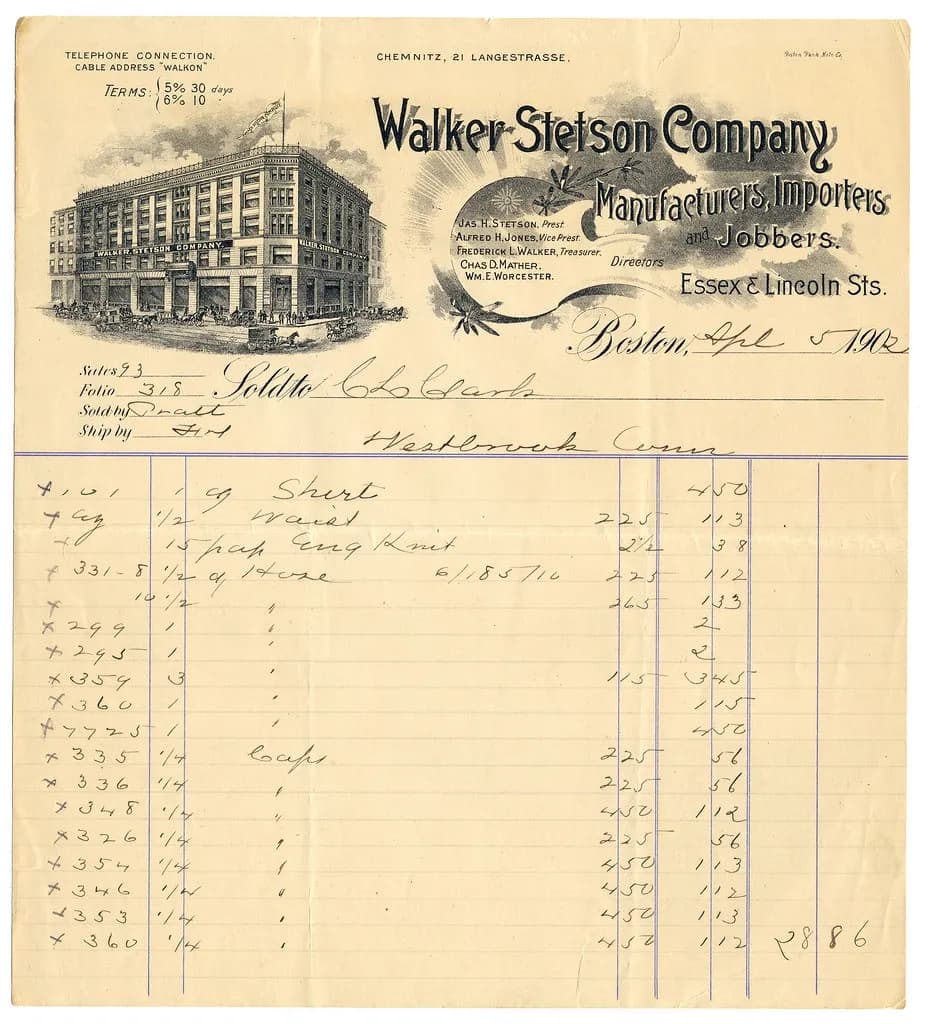
The Uniform Commercial Code, which every state except Louisiana has adopted for sales of goods, rewards invoicing promptly. Under UCC 2-310(d), when a seller ships on credit, the credit period runs from the time of shipment, but if you post-date the invoice or delay sending it, the credit period starts later by the same amount. In plain terms, a late invoice gives the customer extra free days. Invoice the day the goods ship or the work is done.
Net 30 is the most widely used term in US business-to-business trade because it matches a monthly accounting cycle: the customer receives the invoice, books it, and pays it in the next month's payment run. That is also why big customers ask for net 45, net 60 or longer. Every extra day you give them is a day you finance their business instead of yours.
Common invoice payment terms compared
The abbreviations look similar, but they move cash on very different timetables. This table shows how each one works on an invoice dated October 1.
Payment terms on an invoice dated October 1
| Term | What it means | Due date | Best for |
|---|---|---|---|
Cash in advance (CIA) | Pay before work starts or goods ship | Before October 1 | New or risky customers, custom orders |
Due on receipt | Pay as soon as the invoice arrives | October 1 (in practice, a few days) | Consumers, small one-off jobs |
Net 7 / net 10 | Full amount within 7 or 10 days | October 8 / October 11 | Freelancers, trades, small balances |
Net 15 | Full amount within 15 days | October 16 | Repeat small business clients |
Net 30 | Full amount within 30 days | October 31 | Standard B2B terms |
Net 30 EOM | 30 days after the end of the invoice month | November 30 | Customers with monthly payment runs |
Net 60 / net 90 | Full amount within 60 or 90 days | November 30 / December 30 | Large retailers and corporates (only if priced in) |
2/10 net 30 | 2% off if paid by day 10, else full amount by day 30 | October 11 (discount) / October 31 | Sellers who need cash quickly |
50% upfront, 50% on completion | Deposit, then balance when work is delivered | Deposit before start | Projects, construction, creative work |
Cash in advance (CIA)
- What it means
Pay before work starts or goods ship
- Due date
Before October 1
- Best for
New or risky customers, custom orders
Due on receipt
- What it means
Pay as soon as the invoice arrives
- Due date
October 1 (in practice, a few days)
- Best for
Consumers, small one-off jobs
Net 7 / net 10
- What it means
Full amount within 7 or 10 days
- Due date
October 8 / October 11
- Best for
Freelancers, trades, small balances
Net 15
- What it means
Full amount within 15 days
- Due date
October 16
- Best for
Repeat small business clients
Net 30
- What it means
Full amount within 30 days
- Due date
October 31
- Best for
Standard B2B terms
Net 30 EOM
- What it means
30 days after the end of the invoice month
- Due date
November 30
- Best for
Customers with monthly payment runs
Net 60 / net 90
- What it means
Full amount within 60 or 90 days
- Due date
November 30 / December 30
- Best for
Large retailers and corporates (only if priced in)
2/10 net 30
- What it means
2% off if paid by day 10, else full amount by day 30
- Due date
October 11 (discount) / October 31
- Best for
Sellers who need cash quickly
50% upfront, 50% on completion
- What it means
Deposit, then balance when work is delivered
- Due date
Deposit before start
- Best for
Projects, construction, creative work
Two other terms appear on older or industry-specific invoices. COD (cash on delivery) means the customer pays when the goods arrive, which is also what the law assumes if nobody agrees anything else. Progress billing, common in construction and consulting, splits a project into stages, each invoiced on its own terms.
How to count the days: a worked example
A small packaging distributor in Ohio ships $12,000 of boxes to a regional bakery on Thursday, October 1, and emails the invoice the same afternoon. Its quote, which the bakery signed, says "Terms: net 30 from invoice date; invoices are payable in US dollars by ACH."
The due date is October 31, a Saturday. The contract says calendar days and does not move the date for weekends, so technically the payment is late if it arrives on Monday, November 2. In practice, most suppliers accept the next business day, and the distributor writes "Due: October 31" on the invoice so there is no room for a different count.
Now suppose the bakery's purchase order said "net 30 from receipt of a correct invoice," and the bakery's accounts payable team logged the invoice on October 6. The bakery would argue for November 5. Whose terms win depends on what was agreed first, which is why the next section matters. If the distributor had waited until October 9 to send the invoice, UCC 2-310(d) would start the credit period later anyway, and the due date would slide to November 8.
The cash effect of terms adds up quickly. If the distributor sells $90,000 a month on credit, each day of terms ties up about $2,960 of sales (90,000 × 12 ÷ 365). Moving its customers from net 45 to net 30 would release roughly 15 × $2,960, or about $44,400, of cash, provided customers actually pay on time. The working capital calculator shows the same effect for your own figures, and the accounts receivable guide explains how days sales outstanding measures whether customers keep to your terms.
Early-payment discounts: what 2/10 net 30 really costs
A discount term has three parts. In 2/10 net 30, the "2" is the percentage discount, the "10" is the number of days the discount is available, and "net 30" is the final due date for the full amount. On the $12,000 invoice, a customer who pays by October 11 sends $11,760. One who misses the window pays $12,000 by October 31.
The trap is that 2% sounds small. The customer is being paid $240 to send money 20 days early. Expressed as an annual rate, that is 2 ÷ 98 × 365 ÷ 20, or about 37%. Very few small businesses borrow at 37%, so for the seller a 2/10 net 30 discount is usually one of the most expensive sources of cash available. For the buyer, the same arithmetic makes taking the discount one of the best returns it can earn on idle cash.
What early-payment discounts cost the seller
| Discount term | Discount | Days paid early | Approximate annualized cost |
|---|---|---|---|
1/10 net 30 | 1% | 20 | 18.4% |
2/10 net 30 | 2% | 20 | 37.2% |
2/10 net 60 | 2% | 50 | 14.9% |
1/15 net 45 | 1% | 30 | 12.3% |
1/10 net 30
- Discount
1%
- Days paid early
20
- Approximate annualized cost
18.4%
2/10 net 30
- Discount
2%
- Days paid early
20
- Approximate annualized cost
37.2%
2/10 net 60
- Discount
2%
- Days paid early
50
- Approximate annualized cost
14.9%
1/15 net 45
- Discount
1%
- Days paid early
30
- Approximate annualized cost
12.3%
Annualized cost = discount ÷ (100 − discount) × 365 ÷ days paid early. The figures assume customers would otherwise pay exactly on the due date. If a customer who normally pays at day 50 starts paying at day 10 to get the discount, the real cost to you is lower, because you are also eliminating 20 days of lateness.
Offer a discount when cash in hand now is worth more than the margin you give up: you face a payroll gap, you would otherwise draw on a line of credit at a higher rate, or you are considering invoice factoring, which often costs more. Be specific about what happens when customers take the discount late. Many will deduct the 2% on day 18 and pay the rest. Decide in advance whether you will rebill the difference, and say so in your terms.
How payment terms become legally binding
Terms are part of the contract between you and your customer, so they bind the customer only if the customer agreed to them. The invoice is usually the last document in the deal, sent after the work is done. Printing new terms on it, such as a shorter period or a late fee, is often too late to change what was already agreed.
The safest place for terms is the document the customer accepts before work starts: a signed quote, a statement of work, a master services agreement, or your order confirmation. Put the payment period, the start date, accepted payment methods, any deposit, any discount and any late charge in that document. Then repeat them on every invoice so the customer's payables team sees them.
When both sides exchange their own forms, the UCC's "battle of the forms" rule decides which terms count for sales of goods. Under UCC 2-207, a definite acceptance creates a contract even if it adds different terms. Between merchants, the additional terms become part of the contract unless the original offer limited acceptance to its own terms, the new terms materially alter the deal, or the other side objects within a reasonable time. A big customer's purchase order that says "net 75" can therefore override your quote's "net 30" if you accept the order without objecting, and a late-interest clause first printed on your invoice may be treated as a material alteration that never becomes binding. Services contracts are governed by general contract law rather than Article 2, but the practical lesson is the same: agree terms before you deliver.
If nothing was agreed at all, the law fills the gap. For goods, UCC 2-310(a) makes payment due at the time and place the buyer receives the goods. There is no automatic 30-day grace period. For services, courts generally require payment within a reasonable time after the work is completed, and a state's statutory interest rate may apply after a breach.
Put these terms in your quote or contract before work starts
0/8Federal and state rules that set payment deadlines
Most private business-to-business terms are whatever the parties agree. A few laws set defaults or deadlines that override silence, and sometimes override the contract.
Selling to the federal government
The Prompt Payment Act governs payments by federal agencies. Under 31 U.S.C. 3903, if the contract does not set a payment date, the agency must pay within 30 days after it receives a proper invoice. Shorter deadlines apply to some food: 7 days after delivery for meat, poultry, eggs and fish, and 10 days after a proper invoice for dairy products and edible fats and oils. When an agency pays late, it generally owes interest automatically. The Treasury's Bureau of the Fiscal Service sets the rate every six months; it is 4.75% a year for July 1 to December 31, 2026.
Small businesses get a faster target. FAR 32.009-1 tells agencies to make accelerated payments to small business contractors, with a goal of paying within 15 days after a proper invoice when the contract sets no specific date, and asks prime contractors that receive accelerated payments to pass them on to small business subcontractors within the same window. This goal does not create new rights to interest; the 30-day clock still governs late-payment interest. The catch in every case is the "proper invoice": if the invoice is missing a contract number, line item detail or the correct billing office, the clock does not start.
Default payment deadlines when the contract is silent
On delivery
Sale of goods (UCC 2-310)
No automatic grace period
30 days
Federal agencies
After a proper invoice
30 days
CA and IL freelancers
After work is completed
35 days
Texas private construction
After a payment request
Freelancers and independent contractors
Three large states now require written contracts and default payment deadlines when businesses hire individual freelancers.
- New York (statewide since August 28, 2024): the Freelance Isn't Free Act covers individual or single-person freelancers paid $800 or more, alone or over the preceding 120 days with the same client. The written contract must state the date payment is due or how it will be set, and the hiring party must keep it for six years. Lawyers, licensed medical professionals, construction contractors and certain sales representatives are excluded.
- California (contracts from January 1, 2025): the Freelance Worker Protection Act covers single-person freelancers providing professional services worth $250 or more, alone or aggregated over 120 days. Payment is due on the contract date, or no later than 30 days after the work is completed if the contract is silent.
- Illinois (contracts from July 1, 2024): the Freelance Worker Protection Act applies when work is worth $500 or more in a 120-day period. Payment is due on the contract date or within 30 days of completing the services if none is set.
If you are a freelancer in these states, cite the law when a client tries to impose net 90. If you hire freelancers, build these deadlines into your accounts payable schedule; New York City has had its own version since 2017.
Construction prompt payment laws
Most states have prompt payment statutes for construction that set deadlines and interest even on private projects. Texas, for example, requires an owner to pay a contractor within 35 days after receiving a payment request, and California requires an owner to pay an undisputed progress payment within 30 days after a written demand. The late payment fees guide covers the interest these laws add.
Choosing the right terms for your business
There is no single correct term. The right choice balances your cash needs, your customers' expectations and the risk that a customer will not pay at all.
Start with your own cash cycle. If you pay staff weekly and suppliers on net 30, offering customers net 60 means you finance a month of their trade from your bank balance. Before agreeing to longer terms, work out how much extra cash the gap requires and what it costs to borrow it. A customer worth $20,000 a month on net 60 instead of net 30 ties up about $20,000 more of your money at any time.
Deciding which terms to offer a customer
Step 1
New or one-off customer?
Step 2
Deposit or due on receipt
if yes
Step 3
Established, good payer?
Step 4
Net 15 or net 30
if yes
Step 5
Longer terms only if priced in
large accounts
Match terms to the customer. New customers, one-off jobs and consumers suit due on receipt, cash in advance or a deposit. Established business customers with good payment histories can earn net 30. Reserve longer terms for large accounts where the volume or margin pays for the credit, and consider adding a modest price increase for net 60 or net 90 rather than absorbing it.
Use deposits for anything custom or large. A 30% to 50% deposit on a project, with the balance due on completion, protects you against cancellations and makes collection easier because you are owed less. For multi-month projects, invoice monthly or by milestone so no single unpaid invoice is large.
Check credit before you extend it. Ask new business customers for trade references and bank details, check their business credit where you can, and set a credit limit. Put "orders may be held if the account is past due" in your terms so you can stop supplying a customer who falls behind without breaching the contract.
Setting your standard payment terms
- 1
Choose a default term
Pick net 15 or net 30 for business customers and due on receipt or a deposit for consumers and new accounts.
- 2
Write them into your quote template
Include the term, start date, payment methods, deposit, any discount and any late charge.
Tip: A signed quote or accepted order confirmation is far stronger evidence than an invoice footer.
- 3
Check customer paperwork
Read purchase orders and vendor portal terms before accepting; object in writing if they change your terms.
- 4
Invoice the same day
Open the invoice generatorEvery day of delay adds a day of free credit. Use the invoice generator to send a PDF with the due date printed.
- 5
Remind before and on the due date
Write a payment reminderA friendly reminder a few days before the due date prevents most late payments.
Common mistakes with payment terms
Printing "net 30" without a due date. The customer counts from whichever date suits them. Print the actual date.
Adding terms for the first time on the invoice. A late fee or shorter period that the customer never agreed to is weak. Agree terms in the quote or contract.
Accepting a purchase order without reading it. Large customers' standard terms often say net 60 or net 90 and sometimes require invoices to be submitted through a portal within a short window. If you accept the PO, you may have accepted those terms.
Offering 2/10 net 30 without doing the math. The annualized cost is about 37%. Compare it with your line of credit before you offer it, and decide what you will do when customers take the discount late.
Giving long terms to a customer you have not checked. Extending net 60 to a new customer is an unsecured loan. Ask for references or a deposit first.
Letting terms slide in practice. If you accept payment at day 50 on net 30 terms for a year without saying anything, the customer will treat day 50 as the real term. Follow up from day one, and use the collections guide when reminders stop working.
Official sources
- Bureau of the Fiscal Service — Prompt PaymentCurrent interest rate and rules for invoicing federal agencies
- FAR 32.009-1 — Accelerated payments to small business
- New York State DOL — Freelance Isn't Free ActModel contract and complaint process
- N.Y. General Business Law § 1410
- Illinois DOL — Freelance Worker Protection Act
What to do next
Write your standard terms into your quote template today, including the start date and the due date format. Then send your next invoice with the free invoice generator, set reminders with the payment reminder generator, and read the late payment fees guide before adding interest or a late charge to your terms. For the full picture of how to lay out an invoice, see how to make an invoice.
This is general information, not legal or tax advice — confirm on the official source or with a professional.
Frequently asked questions
Net 30 means the full invoice amount is due 30 days after the date that starts the clock, which is usually the invoice date. An invoice dated October 1 on net 30 terms is due October 31. Write the actual due date on the invoice as well, because customers sometimes count from the date they receive or approve the invoice instead.
Calendar days, unless your contract says otherwise. Weekends and holidays count. If the 30th day lands on a weekend, many customers pay the next business day, and few suppliers object. If you want business days or a specific cut-off, write it into the quote or contract rather than relying on the abbreviation alone.
2/10 net 30 means the customer can deduct 2% if it pays within 10 days; otherwise the full amount is due in 30 days. On a $12,000 invoice, paying by day 10 costs $11,760. For the seller that 2% buys 20 days of earlier cash, which works out to an annualized cost of about 37%.
Due on receipt asks for payment as soon as the customer gets the invoice, so it is better for your cash flow on paper. In practice, business customers with approval processes often still pay in two to four weeks. Due on receipt suits one-off consumer jobs and small invoices; net 15 or net 30 is more realistic for repeat business clients.
Only if you agree. Terms are part of the contract. A large customer's purchase order or vendor portal may state longer terms, and if you accept the order without objecting, those terms can become part of the deal. Read the PO before you accept it, and object in writing if the terms differ from your quote.
Under the Prompt Payment Act, if the contract does not set a date, an agency must pay a proper invoice within 30 days of receiving it, and it owes interest if it pays late, at 4.75% a year for July to December 2026. Agencies aim to pay small business contractors within 15 days.
Sources & verification
Figures on this page were checked against the sources below when it was last reviewed on 11 October 2026. Each rate and limit is stored once with its own official source and review date, and official update channels are monitored daily so changes are picked up. How we verify
- 1.UCC § 2-310 — Open time for payment or running of credit — Legal Information Institute, Cornell Law School · accessed 11 October 2026
- 2.UCC § 2-207 — Additional terms in acceptance or confirmation — Legal Information Institute, Cornell Law School · accessed 11 October 2026
- 3.31 U.S. Code § 3903 — Regulations — Legal Information Institute, Cornell Law School · accessed 11 October 2026
- 4.Prompt Payment — Bureau of the Fiscal Service, U.S. Treasury · accessed 11 October 2026
- 5.FAR 32.009-1 — Providing accelerated payments to small business subcontractors / General — Acquisition.gov (GSA) · accessed 11 October 2026
- 6.N.Y. General Business Law § 1410 and § 1412 (Freelance Isn't Free Act) — New York State Senate · accessed 11 October 2026
- 7.Freelance Isn't Free Act — New York State Department of Labor · accessed 11 October 2026
- 8.Freelance Worker Protection Act — Illinois Department of Labor · accessed 11 October 2026
- 9.California Governor Signs Freelance Worker Protection Act — Ogletree Deakins · accessed 11 October 2026
MSMETOOLS is an independent platform and is not affiliated with any government agency, ministry or department.
Tools for this
Invoice Generator
Create professional invoices with tax, logo and custom details.
WhatsApp Payment Reminder
Write polite, firm or final payment reminders.
Working Capital Calculator
Check working capital, current and quick ratios.
Related guides
 How to Make an Invoice in 2026: Template, Terms & ExamplesRead guide
 Late Fees on Invoices (2026): State Limits, Rates & WordingRead guide
 Invoice Factoring (2026): Rates, Recourse & True APRRead guide
 Purchase Order (2026): Meaning, Contract Rules & 3-Way MatchRead guide
Official links open the government site in a new tab.