 Income & corporation tax
Valuation Office Business Rates in 2026: How Your Rateable Value Is Set and How to Challenge It
How the Valuation Office sets your rateable value in 2026, what the 2026 revaluation changed, and how to check, challenge and appeal it — with worked £ bills.
 Edited by Sumeet YadavFounder & editor, MSMETOOLS · fact-checked against official sources

Contents (11)
- 1. What the Valuation Office Agency does (and doesn't do)
- 2. What rateable value means
- 3. How the VOA calculates rateable value
- 4. Worked examples: from floor area to 2026 bill
- 5. The 2026 revaluation: what changed
- 6. Transitional relief: how big increases are phased in
- 7. How to find and read your valuation
- 8. Check, challenge, appeal: the three stages
- 9. Common valuation mistakes and how to fix them
- 10. What's coming next: the duty to notify
- 11. What to do next
If you run a business from a shop, office, workshop or unit in England or Wales, the Valuation Office Agency (VOA) decides the single number your business rates bill is built on: the rateable value. This guide is for owners who want to know how that number was reached, whether the 2026 revaluation got it right, and what to do if it didn't. You'll see how the VOA values different property types, how to read your valuation, worked bills at the 2026 multipliers, and the check, challenge and appeal process step by step.
Quick answer
The Valuation Office Agency sets the rateable value of every business property in England and Wales: its estimated open-market annual rent on 1 April 2024. Your council multiplies that by the multiplier and deducts reliefs to produce your bill. The 2026 revaluation took effect on 1 April 2026, and local-list values rose 19.4% on average. If your valuation looks wrong, raise a free check in your business rates valuation account, then a challenge, then an appeal.
Look up any property's rateable value free on GOV.UK's 'Find a business rates valuation'
England's 2026 to 2027 multipliers run from 38.2p to 50.8p per £1 of rateable value
Challenge within 4 months of the check decision; appeal within 4 months of the challenge decision
Transitional relief caps 2026 to 2027 increases at 5%, 15% or 30%, applied automatically
Keep paying your bill while you challenge — overpayments are refunded
What the Valuation Office Agency does (and doesn't do)
The VOA is an executive agency of HMRC. For business rates, its job is to value every non-domestic property in England and Wales and keep the official record of those values, called the rating list. Each separately occupied unit (a "hereditament") gets its own entry.
The VOA does not send bills, collect payments or award relief. Your local council does all three. It takes the rateable value from the list, applies the multiplier the government has set for the year, and then deducts any relief you qualify for, such as small business rate relief. Valuation questions go to the VOA; bill, payment and relief questions go to the council.
A council can't change your rateable value, and the VOA can't change your bill. Our main guide to business rates covers the bill side; this page concentrates on the valuation.
Scotland and Northern Ireland don't use the VOA: local assessors value Scottish properties, and Land & Property Services handles Northern Ireland. This guide covers England and Wales.
Who does what in England and Wales
Step 1
VOA values the property
Step 2
Rateable value goes on the rating list
Step 3
Council applies the multiplier
Step 4
Council deducts reliefs
Step 5
Bill for 1 April – 31 March
from your council
What rateable value means
Rateable value is the VOA's estimate of the rent a property could have been let for, for a year, on the open market at a fixed date. For the current list that date — the "antecedent valuation date" — is 1 April 2024. It is not the rent you actually pay, and it doesn't depend on your turnover or profit. Two identical units side by side should have the same value whatever rents their tenants agreed.
The VOA also values each property on standard assumptions. It assumes the property is vacant and available to let, is in a reasonable state of repair, and that the tenant would pay the rates, repairs and insurance. This is why a leaking roof you haven't fixed doesn't automatically reduce the value: the hypothetical landlord is assumed to have kept the building in reasonable repair. Physical changes, such as knocking two units together or adding a mezzanine, do affect it.
Because every value is fixed to the same date, later rents don't change your valuation during the list. If your area has declined because of something physical and lasting — a road closure, a demolished anchor store next door — that can be a "material change of circumstances", which is a ground for a check.
How the VOA calculates rateable value
The VOA uses three main methods. Which one applies depends on how that type of property normally changes hands.
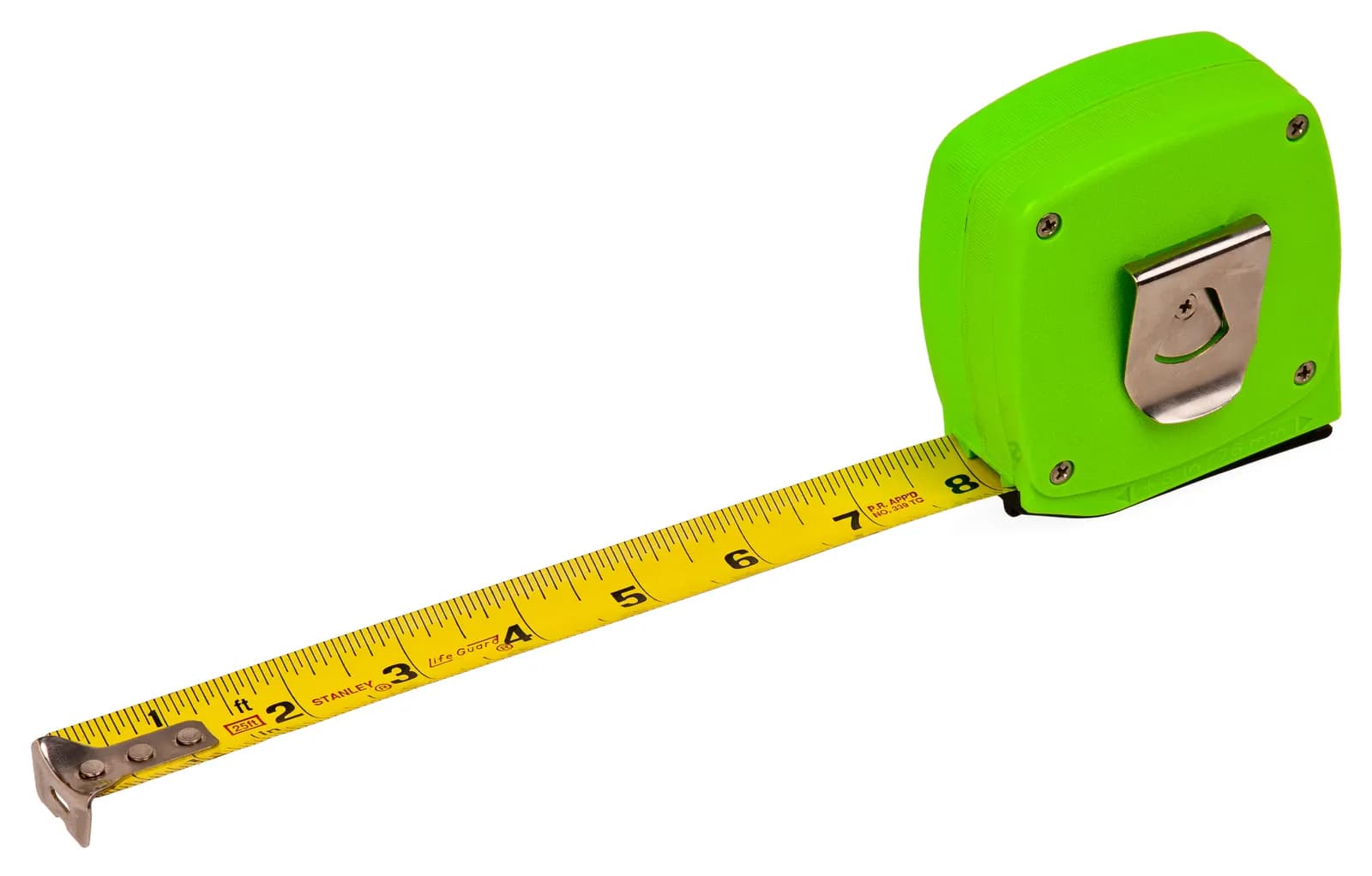
Rental comparison covers most small businesses: shops, offices, cafés, workshops, factories and warehouses. The VOA collects rents paid around the valuation date, adjusts them for lease terms, rent-free periods and tenant improvements, and turns them into a price per square metre. It then applies that rate to your measured floor area. Shops, offices and restaurants are measured on net internal area — the usable space inside, excluding toilets, stairwells, lift shafts and plant rooms. Factories, workshops and warehouses are measured on gross internal area, which includes internal walls and circulation space.
Receipts and expenditure (the profits method) is used where rents are scarce and the property is run to make money from the building itself — cinemas, theme parks, and similar. The VOA looks at the accounts of a sample of properties, ideally over three years, deducts running costs and a fair return for the operator, and treats what's left as the rent a tenant could afford. That result is then applied to similar properties as a percentage of income. Pubs and hotels are valued by reference to their trade too.
Contractor's basis is for property that is rarely let or run for profit, such as schools, hospitals and airports. The VOA estimates the cost of building a modern equivalent on a cleared site, adjusts for age and condition, adds the land value and applies a "decapitalisation rate" set in legislation. GOV.UK's own illustration is a school with an adjusted value of £1 million at 2.6%, giving a rateable value of £26,000.
Properties are grouped into valuation schemes. Rental-method properties sit in local schemes, so all the shops on your high street share a Zone A price. Profits-method and contractor's-basis properties use national schemes. This matters when you challenge: comparing your entry with others in the same scheme is often the quickest way to spot an error.
How shops are zoned
Shops are usually valued by zoning, because customers see and use the space nearest the window most, so it earns more. Zone A starts at the shop front and usually runs back 6.1 metres (20 feet). Zone B is the next 6.1 metres, and Zone C the next. Anything behind that is the remainder. Each zone is worth half the one in front, so if Zone A is £400 per square metre, Zone B is £200, Zone C £100 and the remainder £50. Zone depths can differ in some locations, particularly in London. Large stores and supermarkets aren't zoned, and storerooms and upstairs offices are valued at a flat rate per square metre instead.
The total is often expressed as "ITZA" — area in terms of Zone A — which converts all the space into its Zone A equivalent. The worked example below shows how that adds up. Many valuation errors on small shops come from the wrong depth being recorded, an old shop front line after a refit, or ancillary space being zoned as sales area.
Worked examples: from floor area to 2026 bill
These examples use England's 2026 to 2027 multipliers. Zone prices and rents are illustrative — your local scheme sets the real figures, which you can see in your property's valuation summary.
Three properties valued and billed (England, 2026 to 2027, before relief)
| Property | How it's valued | Rateable value | Multiplier | Bill |
|---|---|---|---|---|
Gift shop, 6m wide × 20m deep, plus 30m² first-floor store | Zoning: 65.3m² ITZA × £400, plus 30m² × £40 | £27,330 | 38.2p (retail) | £10,440 |
Accountant's office, 120m² net internal area | Rental comparison: 120m² × £180 | £21,600 | 43.2p | £9,331 |
Dental surgery (GOV.UK example) | Rental comparison | £60,000 | 48p | £28,800 |
Gift shop, 6m wide × 20m deep, plus 30m² first-floor store
- How it's valued
Zoning: 65.3m² ITZA × £400, plus 30m² × £40
- Rateable value
£27,330
- Multiplier
38.2p (retail)
- Bill
£10,440
Accountant's office, 120m² net internal area
- How it's valued
Rental comparison: 120m² × £180
- Rateable value
£21,600
- Multiplier
43.2p
- Bill
£9,331
Dental surgery (GOV.UK example)
- How it's valued
Rental comparison
- Rateable value
£60,000
- Multiplier
48p
- Bill
£28,800
Here's the gift shop in detail. It is 6 metres wide and 20 metres deep. Zone A is 6.1 metres deep, so it covers 36.6 square metres. Zone B and Zone C are also 36.6 square metres each. The remainder is the last 1.7 metres, or 10.2 square metres. Converting to Zone A terms gives 36.6 + 18.3 (half of Zone B) + 9.15 (a quarter of Zone C) + 1.275 (an eighth of the remainder) = 65.3 square metres ITZA. At £400 per square metre that's about £26,130. The first-floor store adds 30 × £40 = £1,200, giving a rateable value of roughly £27,330. As a qualifying retail property under £51,000, it pays 38.2p in the pound: about £10,440 for the year before any relief.
Now imagine the VOA has recorded the shop as 22 metres deep after a rear extension that was actually demolished. The extra 2 metres of remainder adds 12 square metres at one-eighth, or 1.5 square metres ITZA — about £600 of rateable value and £229 a year on the bill. Small on its own, but errors like that compound across a three-year list and backdated corrections. Getting the measurements right is the cheapest win in business rates.
The accountant's office is simpler. The VOA has rents for similar offices in the town at around £180 per square metre, so 120 square metres gives £21,600. It isn't retail, hospitality or leisure, so it pays 43.2p: £9,331.20. It doesn't qualify for small business rate relief, because its rateable value is above £15,000.
The 2026 revaluation: what changed
Properties in England and Wales are revalued every three years so that bills track the rental market. The latest revaluation took effect on 1 April 2026, replacing the 2023 list. Values on the new list reflect rents at 1 April 2024, three years later than the 1 April 2021 date used for the 2023 list.
The VOA's statistics for the compiled list show 2.14 million properties on the local lists in England and Wales, with a total rateable value of £84.6 billion, up from £70.9 billion on the 2023 list. That's an average rise of 19.4% — 19.6% in England and 15.5% in Wales. The averages hide big differences by property type and region: retail values rose 9.8%, offices 14.5% and industrial property 21.4%.
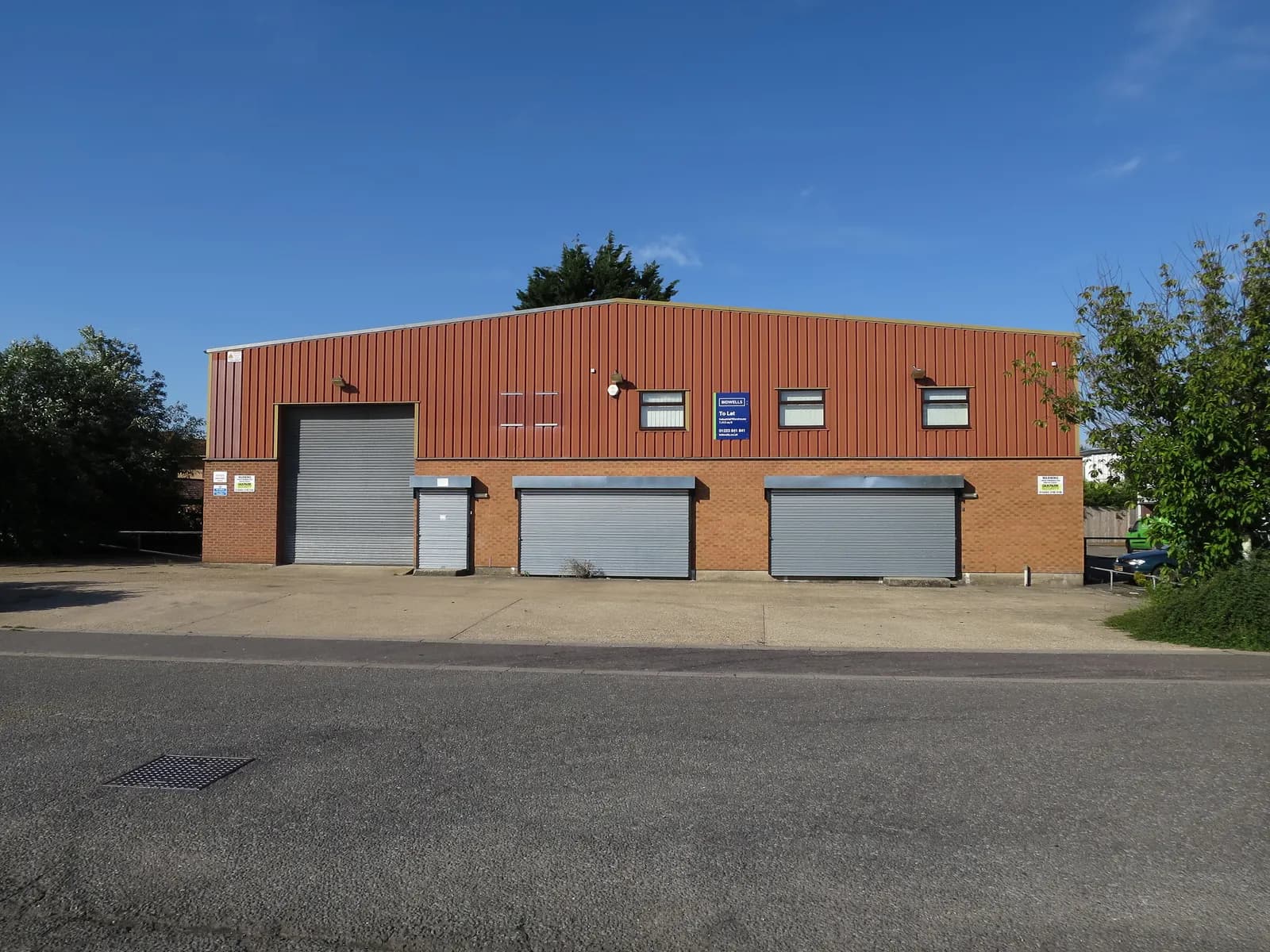
Industrial units saw much bigger rises than shops, reflecting strong demand for warehouse and workshop space. The "other" category — which includes pubs, hotels, leisure and many specialist properties — rose 28.1%. London had the largest regional rise at 22.5%, and the East Midlands the smallest in England at 16.4%.
A higher rateable value doesn't automatically mean a higher bill. England introduced five multipliers on 1 April 2026, with lower rates for retail, hospitality and leisure properties under £500,000 and a higher rate for properties worth £500,000 or more. At the same time the 40% retail, hospitality and leisure relief ended. Transitional relief limits how quickly bills can rise.
| Rateable value (England) | Most properties | Retail, hospitality and leisure |
|---|---|---|
| Under £51,000 | 43.2p | 38.2p |
| £51,000 – £499,999 | 48p | 43p |
| £500,000 and over | 50.8p | 50.8p |
Wales revalued on the same date, using the same valuation date, but the Welsh Government sets its own multipliers and reliefs. Your council's bill will show the Welsh figures.
The Autumn Budget on 28 October 2026 could change multipliers or reliefs for 2027 to 2028. The rateable values themselves are fixed for the life of the list unless they're corrected, so a Budget change affects the multiplier side of your bill, not your valuation.
Transitional relief: how big increases are phased in
If the revaluation increased your bill, transitional relief limits how much it can rise each year. Your council applies it automatically — you don't need to claim it.
Maximum yearly increase under transitional relief (England)
| Rateable value | 2026 to 2027 | 2027 to 2028 | 2028 to 2029 |
|---|---|---|---|
Up to £20,000 (£28,000 in London) | 5% | 10% + inflation | 25% + inflation |
£20,001 to £100,000 (£28,001 to £100,000 in London) | 15% | 25% + inflation | 40% + inflation |
Over £100,000 | 30% | 25% + inflation | 25% + inflation |
Up to £20,000 (£28,000 in London)
- 2026 to 2027
5%
- 2027 to 2028
10% + inflation
- 2028 to 2029
25% + inflation
£20,001 to £100,000 (£28,001 to £100,000 in London)
- 2026 to 2027
15%
- 2027 to 2028
25% + inflation
- 2028 to 2029
40% + inflation
Over £100,000
- 2026 to 2027
30%
- 2027 to 2028
25% + inflation
- 2028 to 2029
25% + inflation
Take a small workshop whose rateable value went from £16,000 to £19,500. In 2025 to 2026 its bill was £16,000 × 49.9p = £7,984. Without help, its 2026 to 2027 bill would be £19,500 × 43.2p = £8,424. Its new value is under £20,000, so the increase is capped at 5%: £7,984 × 1.05 = £8,383. Transitional relief takes about £41 off.
A larger office whose value rose from £60,000 to £80,000 would have paid £60,000 × 55.5p = £33,300 last year. The new uncapped bill is £80,000 × 48p = £38,400. The 15% cap limits it to £38,295. These are simplified illustrations — councils apply the cap to a notional base figure and adjust for changes in the property, so your bill may differ slightly. If you lost small business or retail relief at the revaluation, also look at supporting small business relief, which limits the increase to the greater of £800 or the transitional cap.
How to find and read your valuation
Start with GOV.UK's free "Find a business rates valuation" service. Search by postcode or address and you can see the current rateable value, the description, the effective date and, for most properties, a summary valuation showing how the VOA built the figure. For rental-method properties that means each floor and zone, its area and the price per square metre. You can also look up neighbouring units and compare.
To do anything more — report a change, see more detail or start a check — you need a business rates valuation account. You sign in with Government Gateway or GOV.UK One Login, then claim your property by showing you're connected to it. A business rates bill or a utility bill usually does. The VOA says claims can take up to 15 working days to approve, so start early if you're working to a deadline.
When you read your summary valuation, check these things against reality:
- The description. "Shop and premises" versus "restaurant" or "office" can move you into a different scheme and a different price.
- Floor areas. Measure yourself. Shops and offices should exclude toilets, stairwells and plant rooms.
- Zone depths and frontage. Has a refit moved the shop front? Is the rear store zoned as sales space?
- Extras. Car parking spaces, mezzanines, air conditioning and other additions are often listed separately.
- The price per square metre. Is it the same as for similar properties in the same street or estate?
Check, challenge, appeal: the three stages
England and Wales use a three-stage process, all started online through your valuation account. You can't skip a stage. Even if the facts are right and you only disagree with the value, you must complete a check before you can challenge.
How to change your rateable value
- 1
Claim your property
Find a business rates valuationSign in to your business rates valuation account and add the property, with a rates or utility bill as proof of connection. Approval can take up to 15 working days.
- 2
Raise a check case
Tell the VOA which facts are wrong or have changed — size, layout, use, a split or merger, or a change in the area around you. Upload photos, floor plans and lease documents. The VOA writes to you when it has decided.
- 3
Submit a challenge
Within 4 months of the check decision, explain why the value is wrong. Give a proposed rateable value, the date it should apply, your evidence and your rent details. All evidence must go in with the challenge.
Tip: If the check is about a change in the surrounding area, you have up to 16 months from submitting it. If the VOA hasn't decided your check after 12 months, you can move on to a challenge.
- 4
Appeal to the Valuation Tribunal
Within 4 months of the challenge decision — or 18 months from submitting the challenge if there's been no decision. The tribunal is independent of the VOA.
Stage 1: the check
A check corrects or updates the facts the VOA holds. Use it for changes to the address, the main use or description, splitting or merging units, demolition, or renovation. You can also use it for a material change of circumstances: an external, physical change affecting the property's value, such as long-term roadworks or a neighbouring building being demolished. If the change is temporary, raise the check while it's still happening.
The VOA reviews the check, may ask you for more information, updates the record if needed and tells you the outcome in writing. GOV.UK doesn't publish a standard turnaround time. If you report something new after you've submitted, raise a second check and the VOA will consider both together.
Stage 2: the challenge
A challenge is your formal argument that the rateable value is wrong. The grounds include: the valuation is wrong, the property shouldn't be valued at all, it should be split or merged, the published details are wrong, or a legal decision on another property means yours is wrong.
This is where most challenges are won or lost, because all your evidence must be submitted at this stage. Later evidence is only accepted in exceptional circumstances, and the tribunal will only look at evidence you gave during check and challenge. Good evidence includes rateable values of comparable properties, rents for similar units around 1 April 2024, photos, plans and relevant tribunal decisions. You must also propose your own figure.
Stage 3: the appeal
If you disagree with the challenge decision, appeal to the Valuation Tribunal for England, or the Valuation Tribunal for Wales. The tribunal hears appeals on rateable values, penalty notices and transitional certificates. After it accepts your appeal, it sends a notice of hearing with time to prepare your statement.
There's no fee at any stage. But you must keep paying your bill throughout. If the value goes down, the council recalculates and refunds you.
Common valuation mistakes and how to fix them
Challenging the bill instead of the value. The VOA can only change the rateable value. If the multiplier or relief looks wrong, that's a council matter.
Arguing about your actual rent. Your own rent is evidence, but the test is market rent at 1 April 2024 on the standard assumptions. A low rent negotiated with a friendly landlord won't, on its own, prove the value is too high.
Using current trading conditions. A quiet year doesn't reduce the rateable value of a rental-method property. Only physical, lasting changes in the area count as a material change of circumstances.
Keeping evidence back for the tribunal. You can't. Put everything into the challenge.
Before you raise a check
0/6Giving false information. Knowingly submitting false information to the VOA can lead to a penalty, and you can appeal a penalty notice to the tribunal within 28 days.
Signing up with a cold-calling agent. Checks and challenges are free and you can do them yourself. If you want help, choose a firm regulated by RICS or with IRRV-qualified staff, and read the fee terms: many charge a share of the savings for the life of the list.
Missing old-list deadlines. Changes to the 2023 list now need special circumstances. You had until 31 March 2026 for most checks, or within 6 months of the VOA changing the list. For legal decisions on another property, the deadline is 30 September 2026. If you haven't acted on the 2023 list, it's almost certainly too late.
What's coming next: the duty to notify
The Non-Domestic Rating Act 2023 creates a new duty on ratepayers in England to tell the VOA about changes to their property and occupation. The VOA has said it expects to introduce the duty in phases after 1 April 2026, testing it with small groups first, and to make it mandatory for everyone by 1 April 2029. Advisers expect a 60-day window to report changes and an annual confirmation that your details are up to date, with penalties for non-compliance. The detail still depends on secondary legislation, so treat it as provisional.
The VOA also plans to publish more of the evidence behind valuations, including rental evidence for properties valued by comparison, from the draft 2029 lists. The check, challenge and appeal system is due to change in April 2029. The next revaluation is expected to take effect on 1 April 2029.
In practice, start keeping a simple property file now: floor plans, a list of alterations with dates, your lease and any rent reviews. It will make a check faster today and the duty to notify painless later.
Official VOA and GOV.UK links
- Find a business rates valuationLook up any rateable value and summary valuation
- How non-domestic property is valuedRental, profits and contractor's methods
- How shops are valuedZoning explained
- Raising a check caseCorrect the facts
- Challenging your valuationGrounds, evidence and time limits
- Appealing to the Valuation TribunalAfter a challenge decision
- Estimate your business rates2026 to 2027 multipliers
- 2026 revaluation statisticsChanges by sector and region
What to do next
Look up your property on the VOA's search today and check the floor areas and description against what's actually there. If something is wrong, claim the property in your valuation account and raise a check, then put the challenge deadline in your diary. While you wait, build the current bill into your monthly costs with the budget planner, and see whether you qualify for small business rate relief. For the full picture of bills and reliefs, read our guide to business rates.
This is general information, not legal or tax advice — confirm on the official source or with a professional.
Frequently asked questions
The Valuation Office Agency (VOA) sets a rateable value for every non-domestic property in England and Wales and keeps the rating list. It doesn't send bills or collect money — your council does that by multiplying the rateable value by the multiplier and taking off any reliefs. Questions about the valuation go to the VOA; questions about the bill, payments or relief go to the council.
For most shops, offices, workshops and warehouses, the VOA estimates the yearly rent the property could have been let for on the open market on 1 April 2024, using rents paid for similar properties nearby. It measures the floor area and applies a price per square metre. Shops are usually 'zoned', so the front is valued highest. Pubs, hotels and cinemas use trading figures, and schools or hospitals use building costs.
The 2026 revaluation replaced the 2023 list on 1 April 2026. Values now reflect rents at 1 April 2024 instead of 1 April 2021. Across England and Wales, rateable values on the local list rose by 19.4% on average. Industrial property and 'other' types rose more than shops. A higher value doesn't always mean a higher bill, because England's multipliers also changed and transitional relief caps increases.
First raise a check case through your business rates valuation account. You then have 4 months from the check decision to submit a challenge. If you still disagree, you have 4 months from the challenge decision to appeal to the Valuation Tribunal, or 18 months from submitting the challenge if the VOA hasn't decided it. Checking, challenging and appealing are all free.
Yes. GOV.UK says your rateable value may go up, go down or stay the same after a check or challenge. If the VOA finds space it hadn't recorded, such as a mezzanine or an extra storeroom, it can increase the value. That's why you should compare your entry with similar properties and check the floor areas before you submit anything.
Yes. Keep paying the bill your council sends while the check, challenge or appeal is under way. If the rateable value is reduced, the council recalculates the bill from the date the change takes effect and refunds or credits any overpayment. Stopping payment can lead to a summons and court costs, even if your challenge later succeeds.
Sources & verification
Figures on this page were checked against the sources below when it was last reviewed on 9 October 2026. Each rate and limit is stored once with its own official source and review date, and official update channels are monitored daily so changes are picked up. How we verify
- 1.How non-domestic property, including plant and machinery, is valued — Valuation Office Agency (GOV.UK) · accessed 9 October 2026
- 2.How shops and high street businesses are valued for business rates — Valuation Office Agency (GOV.UK) · accessed 9 October 2026
- 3.Non-domestic rating: change in rateable value of rating lists, England and Wales — 2026 revaluation compiled list (statistical commentary) — Valuation Office Agency · accessed 9 October 2026
- 4.Business rates — revaluation — GOV.UK · accessed 9 October 2026
- 5.Estimate your business rates — GOV.UK · accessed 9 October 2026
- 6.Transitional relief — GOV.UK · accessed 9 October 2026
- 7.Raising a check case — Valuation Office Agency (GOV.UK) · accessed 9 October 2026
- 8.Challenging your business rates valuation — Valuation Office Agency (GOV.UK) · accessed 9 October 2026
- 9.Appealing your business rates to the Valuation Tribunal — Valuation Office Agency (GOV.UK) · accessed 9 October 2026
- 10.Claim your property to manage your valuation — Valuation Office Agency (GOV.UK news, 3 November 2025) · accessed 9 October 2026
- 11.Greater transparency in valuation information — Valuation Office Agency blog · accessed 9 October 2026
- 12.Preparing for the VOA's new duty to notify — Montagu Evans · accessed 9 October 2026
MSMETOOLS is an independent platform and is not affiliated with any government agency, ministry or department.
Tools for this
Budget Planner
Plan and track your business budget easily.
Break Even Calculator
Find your break even point and units.
Rental Yield Calculator
Calculate gross and net rental yield.
Startup Cost Calculator
Estimate how much capital you need to launch.
Related guides
 Business Rates 2026: 2026 Multipliers, Reliefs & How to CheckRead guide
 Corporation Tax UK 2026: Rates, Marginal Relief & DeadlinesRead guide
 Small Business Rate Relief 2026: Thresholds & How to CheckRead guide
 Use of Home as Office 2026: What the Self-Employed Can ClaimRead guide
Official links open the government site in a new tab.