 Income & corporation tax
Business Asset Disposal Relief in 2026: Rates, Conditions and Worked Examples
Business Asset Disposal Relief in 2026: the 18% rate from April 2026, the £1m lifetime limit, the 2-year and 5% tests, how to claim, and worked examples in pounds.
 Edited by Sumeet YadavFounder & editor, MSMETOOLS · fact-checked against official sources
Contents (12)
- 1. What Business Asset Disposal Relief is
- 2. BADR rates by date of disposal
- 3. Contracts that straddle a rate change
- 4. Who qualifies: sole traders and partners
- 5. Who qualifies: shareholders
- 6. Associated disposals: property you own personally
- 7. How the calculation works
- 8. Worked examples in pounds
- 9. How and when to claim
- 10. Common mistakes
- 11. What the Autumn Budget could change
- 12. What to do next
Selling your business, your shares in a family company, or closing down and taking the cash out are usually the biggest tax events in an owner's life. Business Asset Disposal Relief (BADR), known as Entrepreneurs' Relief until April 2020, cuts the Capital Gains Tax on those gains. This guide is for sole traders, partners and owner-directors who are planning an exit in 2026. It explains the new 18% rate from April 2026, the £1 million lifetime limit, who qualifies, how the relief interacts with your basic rate band, how to claim, and what it's worth in pounds.
Quick answer
Business Asset Disposal Relief taxes qualifying business gains at 18% for disposals from 6 April 2026 (it was 14% in 2025-26 and 10% before that), up to a £1 million lifetime limit. To qualify you normally need to have owned the business, or been an officer or employee holding at least 5% of a trading company, for 2 years up to the sale. You claim on your Self Assessment return.
Saves 6 percentage points against the 24% higher CGT rate; nothing against the 18% basic rate
Gains above £1 million are taxed at normal CGT rates
Closing a business? Dispose of assets or shares within 3 years of the trade ending
Claim deadline: first anniversary of 31 January after the tax year of sale
What Business Asset Disposal Relief is
Capital Gains Tax is charged when you sell or give away an asset that has gone up in value. For a business owner, the asset might be the whole business (sole traders), an interest in a partnership, shares in a trading company, or a property you own personally and let your company use. Without relief, gains above the £3,000 annual exempt amount are taxed at 18% to the extent they fit in your unused basic rate band, and at 24% above it.
BADR replaces those rates with a single lower rate on qualifying gains. The legislation is in sections 169H to 169S of the Taxation of Chargeable Gains Act 1992, introduced in 2008 as Entrepreneurs' Relief and renamed by Finance Act 2020 from 6 April 2020. The relief applies per individual, so two shareholders selling the same company each have their own lifetime limit and their own conditions to meet.
The relief has been cut back twice in recent years. The lifetime limit fell from £10 million to £1 million for disposals from 11 March 2020. Then the October 2024 Budget announced that the rate would rise from 10% to 14% from 6 April 2025 and to 18% from 6 April 2026, which is now in force.
BADR at a glance (2026-27)
18%
BADR rate
Disposals from 6 April 2026
£1 million
Lifetime limit
Since 11 March 2020
24%
Normal higher CGT rate
What BADR replaces
5%
Minimum stake
Shares, votes and economic rights
BADR rates by date of disposal
The rate depends on the date of disposal, which for Capital Gains Tax is normally the date a contract becomes unconditional, not the date of completion or payment. That timing rule matters because the rate has changed twice in two years.
| Date of disposal | BADR rate | Normal CGT rate (higher rate taxpayer) | Saving per £100,000 of gain |
|---|---|---|---|
| On or before 5 April 2025 | 10% | 24% (from 30 Oct 2024) | £14,000 |
| 6 April 2025 to 5 April 2026 | 14% | 24% | £10,000 |
| From 6 April 2026 | 18% | 24% | £6,000 |
At 18%, BADR now matches the basic rate of Capital Gains Tax. That changes the planning picture. A basic rate taxpayer selling a small business for a modest gain gets no rate saving at all on the part of the gain that fits into their basic rate band, though they still use up part of the lifetime limit. The relief is mainly valuable for gains that would otherwise be taxed at 24%, which for most business sales is the bulk of the gain.
Contracts that straddle a rate change
Because the disposal date for CGT is when a contract becomes unconditional, sellers could in theory sign early, before a rate rise, and complete later. Finance Act 2025 closed that route with an anti-forestalling rule, explained in HMRC's Capital Gains Manual at CG64174.
If you entered into an unconditional contract during the 2025-26 tax year (6 April 2025 to 5 April 2026) and it completed on or after 6 April 2026, the disposal is treated as happening at completion for the purpose of working out the BADR rate and the lifetime limit. So the 18% rate applies, not 14%. A parallel rule covered contracts signed between 30 October 2024 and 5 April 2025 that completed after 6 April 2025.
There's an exception for excluded contracts: ones not entered into to get a tax advantage from the timing rule, and, where buyer and seller are connected, entered into wholly for commercial reasons. Where the gains on all such excluded contracts come to £100,000 or less, no claim is needed. Above that, you claim to disapply the rule and include a statement that the contract met those conditions. HMRC's example of a seller who agreed to sell shares to a newly formed company she was connected with, purely to lock in the old rate, shows the rule biting.

Who qualifies: sole traders and partners
If you're a sole trader or partner selling all or part of your business, you must have been a sole trader or partner, and owned the business, for at least 2 years up to the date of the sale. The relief applies to gains on assets used in the business, such as goodwill, premises and equipment, not to investment assets the business happens to hold.
"Part of the business" means a part that could operate on its own, such as one of two shops or a distinct trading division. Selling individual assets while carrying on the same trade, for example replacing a van, doesn't qualify. That's a disposal of assets, not of part of the business.
If you close the business instead of selling it, the same 2-year conditions apply up to the date the trade stopped, and you must dispose of the business assets within 3 years of that date. A builder who retires and sells their yard 18 months later can still claim; one who sells it four years later can't.
Partners are treated as owning a share of each partnership asset. A partner who retires and sells their interest in the partnership is making a disposal of part of a business, and can qualify if the conditions are met. HMRC's helpsheet notes that when you withdraw from a partnership you must reduce your interest by at least 5%, with a fallback for long-standing partners whose share is now smaller.
One trap catches people incorporating a business. Goodwill transferred by an individual to a close company they're related to is generally excluded from BADR, under section 169LA. If you're moving a sole trade into a limited company, take advice before assuming the goodwill gain qualifies.
Who qualifies: shareholders
Most owner-managed businesses are limited companies, so most claims are on shares. For at least 2 years up to the date of sale, all of these must be true:
BADR conditions for company shares (2-year test)
0/5The last three tests together define a personal company. The economic-entitlement test was added for disposals from 29 October 2018, so alphabet share structures that give someone 5% of the votes but a tiny share of profits can fail it. Joint holdings are split: a married couple holding 9% jointly are each treated as holding 4.5%, and neither passes.
Trading company means the company's activities don't include non-trading activities to a substantial extent. HMRC's Capital Gains Manual (CG64090) weighs indicators such as non-trading income, the share of non-trading assets, and the expenses and staff time spent on non-trading activities. They aren't separate percentage tests, but where those indicators suggest non-trading activity of 20% or less, HMRC says the case is unlikely to need detailed review. A company that has built up a large cash pile or bought investment property can drift out of trading status without anyone noticing, so check this well before a sale.
EMI shares are an exception to the 5% test. If your shares came from an Enterprise Management Incentive option, you qualify if the shares were acquired after 5 April 2013 and the option was granted at least 2 years before the sale, provided the officer or employee and trading conditions are met.
Dilution: if a new share issue for genuine commercial reasons takes your holding below 5%, you can elect to be treated as selling and re-buying your shares just before the issue, locking in BADR on the gain to that date. You can also elect to defer the tax on that deemed gain until you actually sell. The election goes in the additional information section of your Capital Gains summary, or in a letter to HMRC if you don't file a return.
If the company stops trading, you can still qualify if you dispose of your shares within 3 years of the cessation, as long as you met the conditions for the 2 years up to that date. This is how many owners claim BADR on a members' voluntary liquidation: see our guide to closing a limited company for the MVL versus strike-off comparison and the anti-avoidance rule for people who start a similar business within 2 years.
Associated disposals: property you own personally
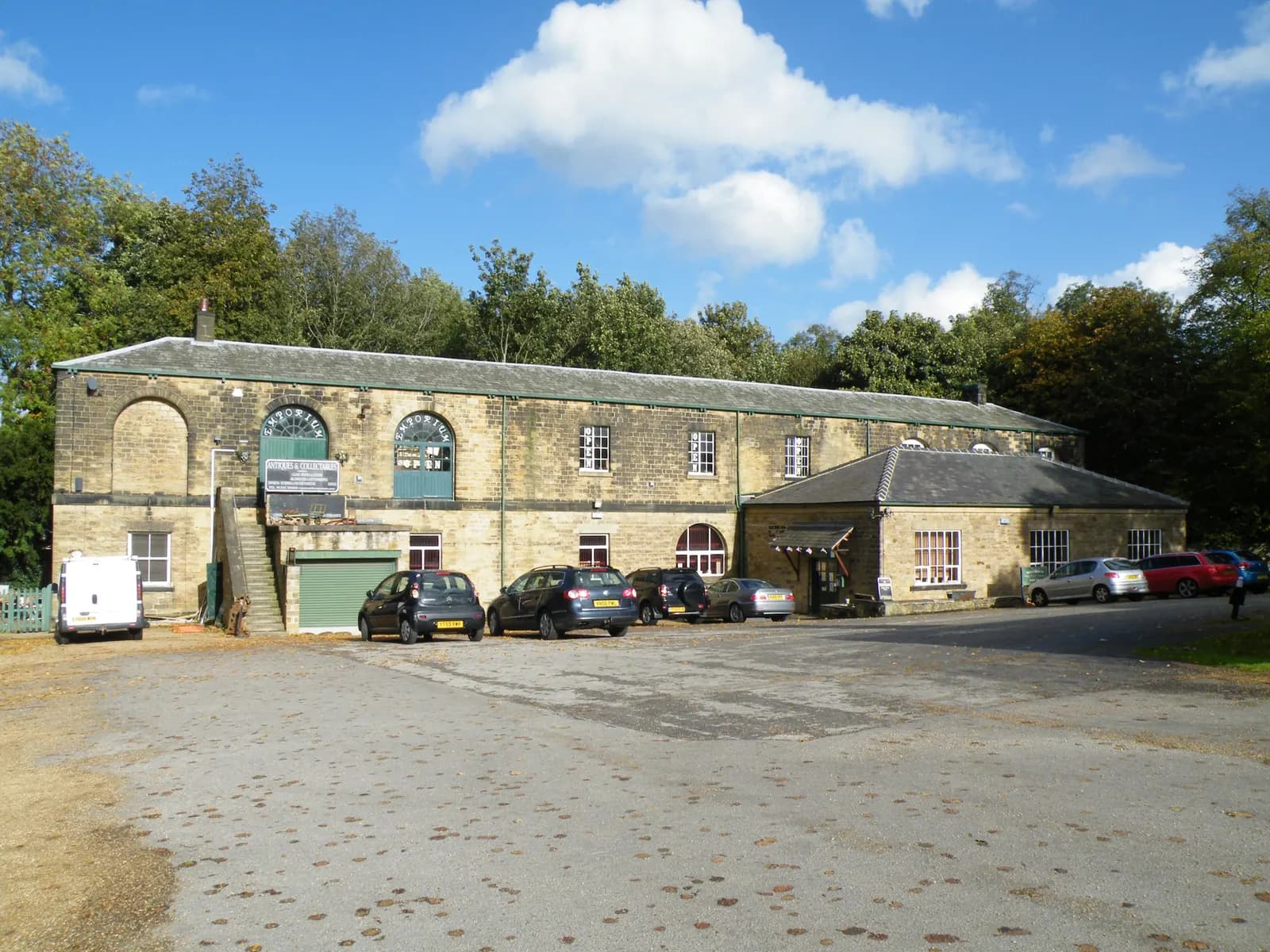
Many owner-directors hold the business premises personally and let the company use them. When you sell those premises, the gain can qualify for BADR as an associated disposal if it's linked to a qualifying sale of your shares or partnership interest.
The conditions are that you've sold at least 5% of your shares in your personal company, or at least 5% of your interest in a partnership (the material disposal), and the asset sale is part of your withdrawal from the business. You must have owned the asset and let the business use it for at least 1 year up to the date of the sale or cessation, and HMRC's helpsheet sets a 3-year ownership requirement for assets acquired on or after 13 June 2016. The asset also needs to have been used in the business for 2 years up to your withdrawal or the cessation.
Two restrictions cut the gain that qualifies. If the business paid you rent for using the asset after 5 April 2008, only a just and reasonable part of the gain qualifies. And if the asset was only partly used in the business, or used for only part of your ownership, the qualifying gain is reduced in proportion. HMRC's worked example in HS275 restricts a £500,000 premises gain to £300,000 because rent was paid for four of the ten years. A full market rent typically wipes out the relief on the property; a nominal or nil rent preserves it.
How the calculation works
The order of steps comes from HMRC's guidance. You add up your gains on qualifying assets and deduct qualifying losses. You deduct the annual exempt amount; if you also have non-qualifying gains, HMRC lets you set the £3,000 against those first, because they're taxed at the higher rate. Qualifying gains up to your remaining lifetime limit are taxed at 18%.
The basic rate band works in a way that surprises people. BADR gains are treated as using up your unused basic rate band first, even though they're taxed at 18% anyway. Any other gains you make in the same year are then pushed into the 24% band. So if you sell a business and a buy-to-let flat in the same tax year, the flat's gain is likely to be taxed at 24% in full.
Gains above the lifetime limit are taxed at the normal rates. HMRC's helpsheet example has qualifying gains of £1,325,000: £1,000,000 gets the relief, and £325,000 is taxed at normal rates. Someone who has already used £600,000 of the limit on an earlier sale only gets relief on £400,000 of a new £750,000 gain.
Estimate what your business might sell for
Worked examples in pounds
Example 1 — owner-director selling shares. Amira founded a software company eight years ago and owns 60% of the shares. She's a director and the company trades. She sells her shares in July 2026 for £850,000; they cost her £100 on incorporation, so her gain is about £849,900. She has salary and dividends that make her a higher rate taxpayer and no other gains. After the £3,000 annual exempt amount, her taxable gain is £846,900. At 18%, the tax is £152,442. Without BADR, at 24%, it would be £203,256. BADR saves her £50,814, and she has £150,100 of lifetime limit left.
Example 2 — gain above the limit. Tom sells his 100% stake in a manufacturing company in 2026-27 for a gain of £1,400,000, and has never claimed BADR or Entrepreneurs' Relief. £1,000,000 qualifies at 18%: £180,000. The remaining £400,000 is taxed at normal rates; he sets the £3,000 exemption against it, so £397,000 at 24% is £95,280. Total CGT: £275,280.
Example 3 — basic rate band. Gwen retires and sells her sole-trader café, making a qualifying gain of £60,000, plus a separate £20,000 gain on shares in a listed company. Her taxable income uses all but £20,000 of her basic rate band. Her BADR gain takes the £20,000 of basic rate band first, so it makes no difference to the £60,000, which is taxed at 18% anyway (£10,800). Her £20,000 share gain, less the £3,000 exemption, is £17,000 at 24%: £4,080. Her total is £14,880.
Amira's £846,900 taxable gain — with and without BADR
| Without BADR | With BADR | |
|---|---|---|
Rate | 24% | 18% |
CGT | £203,256 | £152,442 |
Saving | — | £50,814 |
Lifetime limit left | £1 million | £150,100 |
Rate
- Without BADR
24%
- With BADR
18%
CGT
- Without BADR
£203,256
- With BADR
£152,442
Saving
- Without BADR
—
- With BADR
£50,814
Lifetime limit left
- Without BADR
£1 million
- With BADR
£150,100
How and when to claim
BADR isn't automatic. You claim it through your Self Assessment tax return for the tax year of the disposal, entering the gain on the Capital Gains summary pages and the amount you're claiming relief on. If you can't claim on the return, you can claim in writing or by filling in Section A of the Business Asset Disposal Relief form at the back of HMRC's helpsheet HS275. Trustees claim jointly with the qualifying beneficiary.
The time limit is the first anniversary of the 31 January following the tax year in which you made the disposal. For a sale in 2025-26 the deadline is 31 January 2028. For a sale in 2026-27 it's 31 January 2029. You can amend or withdraw a claim within the same window. The tax itself is normally due by 31 January after the end of the tax year, so a sale in July 2026 means CGT due by 31 January 2028, unless the sale includes UK residential property, which has its own 60-day reporting rule.
If you're not already in Self Assessment, you'll need to register; see our Self Assessment guide for how and when.
Claiming BADR step by step
- 1
Check the 2-year conditions
Confirm ownership, officer or employee status, trading status and the 5% tests for the full 2 years up to the sale or cessation.
- 2
Work out the gain
Sale proceeds less costs of acquisition and sale. Split qualifying and non-qualifying gains, and restrict any associated disposal for rent or part use.
- 3
Check your lifetime limit
Add up any Entrepreneurs' Relief or BADR claimed on disposals since 11 March 2020.
- 4
Claim on your tax return
BADR: how to claimComplete the Capital Gains summary and claim the relief, or use Section A of the HS275 form.
- 5
Pay the tax
Pay by 31 January after the end of the tax year of the sale.
Common mistakes
Missing the 2-year window by days. The 2 years run up to the date of disposal, which is usually the date of an unconditional contract. If you became a director or crossed the 5% threshold less than 2 years before exchange, the relief fails, however long you owned the company before.
Losing trading status. Large cash balances, investment property or loans to other businesses can make the company non-trading. Extract surplus cash or invest it back in the trade well before a sale, and get the trading status position checked as part of due diligence.
Charging full rent on premises. If your company pays you a market rent for a building you own, an associated disposal of that building is likely to get little or no relief.
Ignoring earn-outs. Deferred, uncertain consideration paid in shares or loan notes can be taxed at a later date, when the conditions or rate may differ. Elections can be made to bring the gain into the original disposal, but they have their own deadlines.
Forgetting about the basic rate band. Selling a BADR asset and another asset in the same tax year can push the second gain into the 24% band. Spreading disposals across tax years can help.
What the Autumn Budget could change
The Autumn Budget is on 28 October 2026. The 18% rate and £1 million limit were legislated in Finance Act 2025, and no further change had been announced at the time of writing. Bear in mind that when the main CGT rates last rose, the change took effect on Budget day itself (30 October 2024), so if you're close to a sale, talk to your adviser before the Budget about timing. We'll update this page after the Budget.
BADR is a Capital Gains Tax relief for lifetime sales. If you're thinking about passing the business on when you die instead, the relevant relief is Inheritance Tax Business Property Relief, which changed from 6 April 2026.
What to do next
If an exit is on the horizon, check the 2-year conditions now, not in the month before the sale: trading status, your shareholding and your role are all easier to fix with time. Work out how much of the £1 million lifetime limit you've already used, and plan which tax year each disposal falls into. Our closing a limited company guide compares an MVL with a strike-off, and the valuation calculator gives a starting point for what the business might be worth.
This is general information, not legal or tax advice — confirm on the official source or with a professional.
Frequently asked questions
For disposals on or after 6 April 2026 the rate is 18%. It was 14% for disposals between 6 April 2025 and 5 April 2026, and 10% before that. The relief applies to qualifying gains up to a £1 million lifetime limit; gains above the limit are taxed at the normal Capital Gains Tax rates of 18% or 24%.
Yes for higher and additional rate taxpayers, because the alternative is 24%, so you save 6 percentage points on qualifying gains, or up to £60,000 on a full £1 million. For gains that would fall inside your basic rate band the saving is nil, because the normal rate there is also 18%. Claiming still uses up part of your lifetime limit.
The lifetime limit is £1 million of qualifying gains for disposals from 11 March 2020. It was £10 million before then. It's not an annual limit: every BADR claim you make, including those under its old name Entrepreneurs' Relief since 11 March 2020, counts towards it. Gains above the limit are taxed at the normal Capital Gains Tax rates.
For ordinary company shares, yes. For at least 2 years up to the sale the company must be your personal company: you hold at least 5% of the shares and voting rights, and are entitled to at least 5% of distributable profits and assets on a winding up, or of the sale proceeds. You must also be an officer or employee. EMI option shares are exempt from the 5% test.
Claim on your Self Assessment tax return for the year of the disposal, or by filling in Section A of HMRC's Business Asset Disposal Relief helpsheet (HS275) form. The deadline is the first anniversary of 31 January after the tax year of disposal. For a sale in 2025 to 2026 that's 31 January 2028; for a sale in 2026 to 2027 it's 31 January 2029.
Often, yes. Capital distributions from a members' voluntary liquidation, or up to £25,000 on a strike-off, can qualify if you met the conditions for 2 years up to the date the company stopped trading and the disposal happens within 3 years of that date. A separate anti-avoidance rule can tax the distribution as income if you carry on a similar trade within 2 years.
Sources & verification
Figures on this page were checked against the sources below when it was last reviewed on 11 October 2026. Each rate and limit is stored once with its own official source and review date, and official update channels are monitored daily so changes are picked up. How we verify
- 1.Business Asset Disposal Relief: eligibility — HMRC / GOV.UK · accessed 11 October 2026
- 2.Business Asset Disposal Relief: work out your tax — HMRC / GOV.UK · accessed 11 October 2026
- 3.Business Asset Disposal Relief: how to claim — HMRC / GOV.UK · accessed 11 October 2026
- 4.HS275 Business Asset Disposal Relief (2026) — HMRC · accessed 11 October 2026
- 5.CG64174 — BADR rates from April 2025 and April 2026: anti-forestalling rule — HMRC · accessed 11 October 2026
- 6.CG63950 — BADR: introduction and legislation — HMRC · accessed 11 October 2026
- 7.CG64000 — BADR: associated disposals — HMRC · accessed 11 October 2026
- 8.CG64090 — BADR: trading company, substantial non-trading activities — HMRC · accessed 11 October 2026
- 9.Business Asset Disposal Relief (BADR) – 10%, then 14%, now 18% — Bytestart · accessed 11 October 2026
MSMETOOLS is an independent platform and is not affiliated with any government agency, ministry or department.
Tools for this
Business Valuation Calculator
Estimate what your business is worth.
ROI Calculator
Calculate return on investment for your business projects.
Related guides
 Tax on Dividends UK 2026: Rates, Allowance & ExamplesRead guide
 Business Property Relief 2026: £2.5m Allowance & AIM RulesRead guide
 How to Close a Limited Company in 2026: Strike-Off or MVLRead guide
 Director's Loan Account 2026: s455 at 35.75% & RulesRead guide
Official links open the government site in a new tab.