 Income tax & TDS
TDS on Contractor Payments in 2026: Rates, Limits, Transporters and Worked Examples
TDS on contractor payments in 2026: 1% or 2%, the ₹30,000 per-bill and ₹1 lakh yearly limits, transporter exemption with PAN, manpower supply and worked ₹ examples.
 Edited by Sumeet YadavFounder & editor, MSMETOOLS · fact-checked against official sources

Contents (13)
- 1. What counts as "work" for contractor TDS
- 2. Who must deduct TDS on contractor payments
- 3. Rates, thresholds and payment codes
- 4. What amount TDS is worked out on
- 5. Transporters: the ten-vehicle exemption
- 6. Contract, purchase or professional fee?
- 7. Worked examples in ₹
- 8. Individuals and HUFs paying above ₹50 lakh
- 9. Deposit, statements and certificates
- 10. Interest, penalties and disallowance
- 11. Common mistakes
- 12. What changed under the Income-tax Act, 2025
- 13. What to do next
Contractor TDS is the deduction MSMEs make most often — on the electrician's bill, the transporter's freight, the housekeeping agency's monthly invoice and the job worker who stitches your fabric. It is also the one most often got wrong, because of the two-part threshold, the transporter exemption and the line between "work" and "professional services". This guide is for business owners, accountants and contractors who receive these deductions. It covers what counts as contract work, who must deduct, the 1% and 2% rates, the per-bill and yearly limits, transporters, the manpower change from April 2026, the rule for individuals building a house, and the forms and penalties — with examples in rupees.
Quick answer
TDS on contractor payments is 1% when the contractor is an individual or HUF and 2% for companies, firms and others. Deduct if a single bill exceeds ₹30,000 or the year's total to that contractor exceeds ₹1,00,000. Since 1 April 2026 the rule is section 393(1) Table Sl. No. 6(i) of the Income-tax Act, 2025 (old section 194C).
Who deducts: companies, firms, LLPs, trusts, government bodies and individuals/HUFs with prior-year turnover above ₹1 crore (business) or ₹50 lakh (profession)
Transporters with 10 goods carriages or fewer goods carriages: no TDS on a declaration with PAN
Manpower supply is contract work from 1 April 2026 — 1% or 2%, not 10%
Other individuals/HUFs: 2% only above ₹50 lakh a year (old 194M), via Form 141
No PAN from the contractor: 20%
What counts as "work" for contractor TDS
The contractor provision applies to any sum paid to a resident contractor for carrying out any work, including supply of labour for carrying out work, under a contract with the payer. "Contract" includes a sub-contract, so a main contractor paying a sub-contractor deducts in the same way a factory owner pays the main contractor.
Section 402(47) of the Income-tax Act, 2025 says "work" includes advertising; broadcasting and telecasting, including production of programmes; carriage of goods or passengers by any mode of transport other than railways; catering; and manufacturing or supplying a product to a customer's requirement or specification using material bought from that customer or its associate. That last item is what the trade calls job work. Civil construction, repairs, electrical and plumbing contracts, painting, interiors executed by a contractor, housekeeping, security services and event set-up are all treated as work in practice.
Two things are expressly outside "work". The first is manufacturing or supplying a product to your specification using material the contractor buys from someone other than you — that is a sale of goods, not a works contract, and any TDS falls under the purchase-of-goods provision for large buyers instead. The second is any sum covered by the professional and technical services row (Table Sl. No. 6(iii)): fees for professional services, technical services, royalty and directors' fees. Those carry a 2% or 10% rate and are explained in our TDS on professional fees guide.
From 1 April 2026 the Finance Act 2026 added supply of manpower to the definition of work. The Budget memorandum explained that there had been ambiguity over whether manpower contracts belonged under the contractor rows or the professional/technical row, and that the amendment was made to settle the question in favour of contractor TDS. Staffing agencies, security agencies, housekeeping and loading-unloading labour suppliers therefore face 1% or 2%, not 10%.
Contractor TDS at a glance (2026-27)
1%
Individual/HUF contractor
2%
Company, firm, LLP, others
₹30,000
Single bill limit
₹1,00,000
Yearly limit per contractor
Who must deduct TDS on contractor payments
The regular contractor row (Sl. No. 6(i)) applies only when the payer is a designated person. Section 402(11) lists them: the Central and State Governments, local authorities, statutory corporations, companies, co-operative societies, housing and development authorities, registered societies, trusts, universities, foreign governments and enterprises, and firms (which include LLPs). The list ends with any individual, HUF, association of persons or body of individuals whose total sales, gross receipts or turnover exceeded ₹1 crore from business, or ₹50 lakh from a profession, in the tax year immediately before the year of payment.
So a proprietor whose shop turned over ₹1.4 crore in 2025-26 deducts contractor TDS throughout 2026-27. A proprietor with ₹80 lakh turnover does not — unless payments to one contractor go past ₹50 lakh, as explained further down. Even a designated individual or HUF need not deduct on payments made exclusively for personal purposes, such as repainting their own home; section 393(4) Table Sl. No. 8(b) exempts those.
Rates, thresholds and payment codes
The Income Tax Department's e-filing help confirms that the rates and thresholds were carried over unchanged when section 194C became section 393(1) Table Sl. No. 6(i). What you quote on the challan and in the statement is now the new table reference and a four-digit payment code.
| Payee | Rate | Limits (either triggers TDS) | New Act reference | Payment code | 1961 Act |
|---|---|---|---|---|---|
| Individual or HUF contractor | 1% | Single sum above ₹30,000, or year's total above ₹1,00,000 | s.393(1) Table Sl. 6(i)(a) | 1023 | s.194C |
| Company, firm, LLP, AOP, others | 2% | Same | s.393(1) Table Sl. 6(i)(b) | 1024 | s.194C |
| Paid by an individual/HUF who is not a designated person | 2% | Year's total above ₹50 lakh | s.393(1) Table Sl. 6(ii) — Form 141 Schedule C | — | s.194M |
| Contractor without PAN | 20%, or the normal rate if higher | Same limits | s.397(2) | — | s.206AA |
The two limits work independently. A single bill above ₹30,000 attracts TDS even if it is the only bill of the year. Smaller bills attract nothing until the year's total to that contractor goes past ₹1,00,000 — and at that point the law says TDS applies to the entire amount, so you deduct on the bill that crosses the limit and also catch up on the earlier small bills that escaped deduction. Most accountants recover the catch-up from the same bill or the next one.
Timing follows the general rule: deduct when the amount is credited to the contractor's account in your books or when you pay it, whichever is earlier. An advance paid before work starts is a payment, so TDS applies to the advance if it crosses a limit.
What amount TDS is worked out on
GST. Where the contract or invoice shows GST separately, TDS is worked out on the amount excluding GST. That is the position in CBDT Circular 23/2017, which remains in use under the new Act. If the invoice shows one consolidated figure, the deduction applies to the whole of it.
Material in job work. For work of the job-work type — making a product to your specification from material you supplied — the Act tells you to deduct on the invoice value excluding the material, if the material value is shown separately on the invoice. If it is not shown separately, deduct on the whole invoice value. In ordinary works contracts, such as a builder who buys cement and steel and constructs a shed for you, there is no such carve-out: TDS applies to the full contract value excluding GST.
Reimbursements. Out-of-pocket expenses billed by the contractor as part of the same invoice are generally treated as part of the payment for the work. If you want to keep reimbursements outside TDS, they need to be genuine pass-through costs supported by third-party bills in your name, and even then many deductors play safe and deduct on the full invoice.
Transporters: the ten-vehicle exemption
Carriage of goods is contract work, so freight paid to a transporter normally attracts contractor TDS. Section 393(4) Table Sl. No. 8(a) — the successor to section 194C(6) — switches it off when all four conditions are met.
Conditions for paying a transporter without TDS
0/4Collect the declaration at the start of the year (or before the first trip) and keep it on file with a copy of the PAN card. A transporter that grows its fleet past ten vehicles during the year loses the exemption from that point. A transporter who does not give a PAN cannot use the exemption at all, and the payment attracts 20%. Commission agents and brokers who book trucks but do not own them are a grey area; the declaration is meant for the operator, so check the facts before relying on it.
Payments to transport operators by an individual or HUF exclusively for personal purposes — moving house, for example — are also outside TDS. GST on freight is a separate question; see our guide to GST on transport services.
Contract, purchase or professional fee?
Choosing the right row is the decision that matters most, because the rates range from 0.1% to 10%. The test is what you are really paying for.
Which TDS row fits the payment?
| You are paying for | Row (new Act) | Old section | Rate |
|---|---|---|---|
Labour or work done to your order, with or without material, including transport, catering, advertising, manpower | s.393(1) Sl. 6(i) | 194C | 1% / 2% |
Goods made to your design from material the supplier buys itself | s.393(1) Sl. 8(ii) (only buyers above ₹10 crore turnover) | 194Q | 0.1% above ₹50 lakh |
Advice or services of a CA, lawyer, architect, engineer, doctor, consultant | s.393(1) Sl. 6(iii) | 194J | 10% |
Technical services (not professional), call centres | s.393(1) Sl. 6(iii) | 194J | 2% |
Hire of machinery or premises without an operating service | s.393(1) Sl. 2(ii) | 194-I | 2% / 10% |
Labour or work done to your order, with or without material, including transport, catering, advertising, manpower
- Row (new Act)
s.393(1) Sl. 6(i)
- Old section
194C
- Rate
1% / 2%
Goods made to your design from material the supplier buys itself
- Row (new Act)
s.393(1) Sl. 8(ii) (only buyers above ₹10 crore turnover)
- Old section
194Q
- Rate
0.1% above ₹50 lakh
Advice or services of a CA, lawyer, architect, engineer, doctor, consultant
- Row (new Act)
s.393(1) Sl. 6(iii)
- Old section
194J
- Rate
10%
Technical services (not professional), call centres
- Row (new Act)
s.393(1) Sl. 6(iii)
- Old section
194J
- Rate
2%
Hire of machinery or premises without an operating service
- Row (new Act)
s.393(1) Sl. 2(ii)
- Old section
194-I
- Rate
2% / 10%
The common borderline cases are equipment hire and annual maintenance contracts. Hiring a crane with its operator to lift material for you is usually work, because you are buying the lifting service; hiring the crane alone for your own staff to operate is rent of machinery. An annual maintenance contract for lifts or air-conditioners is work; a contract under which an engineer designs and certifies the system is closer to a professional or technical service. Write the contract so it reflects what is actually being supplied, and the deduction follows.
Worked examples in ₹
1. Small bills that cross the yearly limit. A private limited company pays an individual electrician four bills during the year: ₹25,000 in May, ₹20,000 in July, ₹40,000 in September and ₹35,000 in December. May and July are each below ₹30,000 and the running total is only ₹45,000, so nothing is deducted. September's ₹40,000 is above the single-bill limit: deduct 1%, ₹400. December's bill takes the year's total to ₹1,20,000, above ₹1,00,000, so TDS now applies to the whole year's amount: 1% × ₹1,20,000 = ₹1,200. ₹400 is already deducted, so December's deduction is ₹800 — ₹350 on the December bill plus ₹450 catch-up on May and July.
2. Contractor that is a firm. A builder's partnership firm bills ₹2,50,000 plus GST at 18% (₹45,000), shown separately, for a factory extension. TDS at 2% on ₹2,50,000 is ₹5,000. The firm receives ₹2,90,000.
3. Job work with material. A garment exporter sends its own fabric to a stitching unit run by a proprietor. The invoice shows stitching charges of ₹1,80,000 and, separately, ₹20,000 for buttons and thread the job worker bought. Because this is job work, deduct on the invoice value excluding the separately shown material: 1% × ₹1,80,000 = ₹1,800. Had the material not been shown separately, TDS would be ₹2,000 on the full ₹2,00,000.
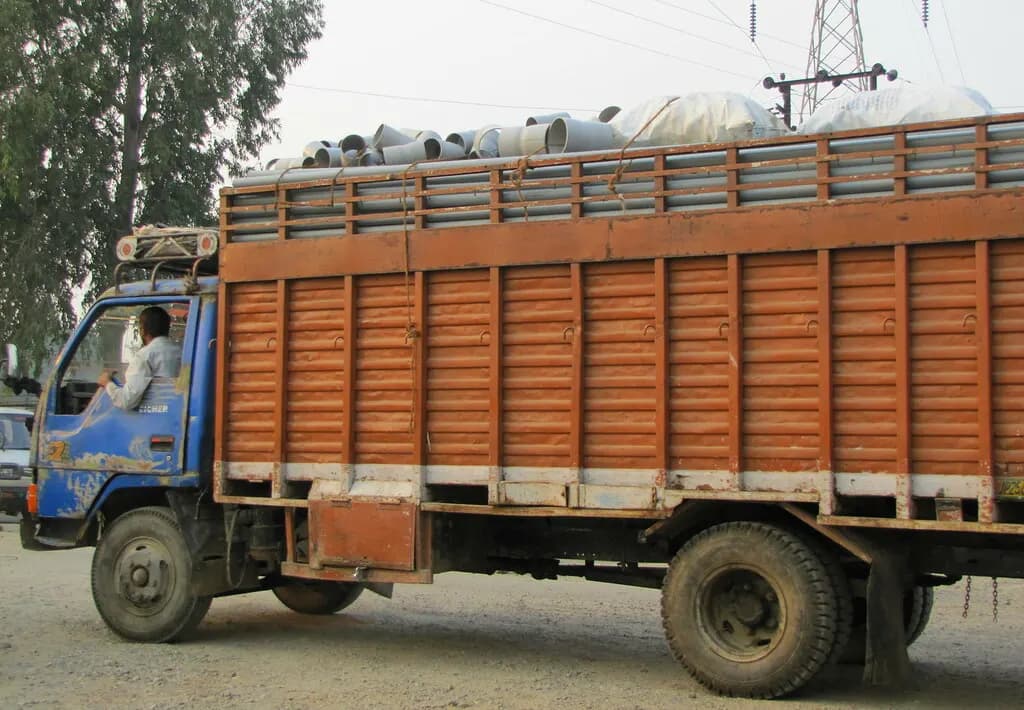
4. Two transporters. A manufacturer pays ₹4,00,000 of freight in the year to a proprietor who owns six trucks and has given a declaration with PAN — no TDS, but the payments go into the quarterly statement as no-deduction entries. It pays ₹6,00,000 to a transport company that owns forty trucks: TDS at 2% = ₹12,000.
5. Security agency from April 2026. A hotel pays a private limited security agency ₹1,50,000 a month for guards. Since supply of manpower is now work, the rate is 2%: ₹3,000 a month, ₹36,000 a year. Before 1 April 2026 some deductors had applied 10% treating it as a technical service; that is no longer the position.
6. Individual building a house. A salaried couple pays a building contractor ₹62 lakh over the year for their new home. They are not designated persons, so the regular contractor row does not apply, but the payments exceed ₹50 lakh, so section 393(1) Table Sl. No. 6(ii) applies: 2% on the entire ₹62 lakh, i.e. ₹1,24,000. Each spouse deducts on the payments they make, using PAN and Form 141 Schedule C, without a TAN.
Try it — TDS on a contractor's bill
Individuals and HUFs paying above ₹50 lakh
The old section 194M — now Table Sl. No. 6(ii) — exists to catch large payments by people who are outside the regular contractor and professional rows. It applies to an individual or HUF who is not required to deduct under Sl. No. 6(i), 6(iii) or the commission row, and who pays a resident for contract work, professional fees or commission. Once the year's payments to one person exceed ₹50 lakh, the payer deducts 2%.
Unlike the regular contractor row, there is no exemption here for personal-purpose payments — the classic case is an individual paying a contractor to build or renovate their own house. Section 397(1)(c) frees these payers from getting a TAN. They deposit and report through Form 141 on the e-filing portal, choosing Schedule C, within 30 days from the end of the month in which tax was deducted, and download the contractor's certificate from TRACES.
Deposit, statements and certificates
Business deductors deposit contractor TDS by the 7th of the next month under their TAN, quoting section 393(1) Table Sl. No. 6(i) and payment code 1023 or 1024; tax deducted in March is due by 30 April. The quarterly statement is Form 140 (formerly Form 26Q), due 31 July, 31 October, 31 January and 31 May, and the contractor gets a quarterly Form 131 certificate (formerly Form 16A) downloaded from TRACES. If you do not yet have a TAN, get one before the first deduction — see our TAN registration guide.
Contractors should check their Annual Information Statement each quarter. If a customer's deduction is missing, the usual cause is a wrong PAN or an unfiled statement, and only the customer can fix it with a correction statement. A contractor whose actual tax will be well below what is being deducted — for example, a thin-margin civil contractor — can apply on TRACES in Form 128 for a lower or nil deduction certificate under section 395(1). The Finance Act 2026 also enabled an electronic, rule-based route for small taxpayers to get such certificates, but the rules were still being prepared when the government last updated Parliament in August 2026.
Contractor TDS under income tax is separate from GST TDS. Government departments and some public bodies also deduct 2% GST TDS from contracts above ₹2.5 lakh; that is explained in our guide to TDS under GST, and the two deductions apply side by side.
Contractor TDS, step by step
Step 1
Is it 'work'? (not a purchase or professional fee)
Step 2
Is the payer a designated person?
Step 3
Bill above ₹30,000 or year above ₹1 lakh?
either test
Step 4
Transporter declaration with PAN?
Step 5
Deduct 1% / 2%
20% if no PAN
Step 6
Deposit by the 7th, Form 140, Form 131
Interest, penalties and disallowance
If you fail to deduct, interest runs at 1% a month or part of a month until the tax is deducted; if you deduct but deposit late, it runs at 1.5% a month or part of a month until deposit. The quarterly statement attracts a late fee of ₹200 a day, capped at the TDS amount, and penalties can follow for non-filing or wrong details.
The larger cost is usually the disallowance. Under section 35(b) of the new Act (old section 40(a)(ia)), 30% of a payment to a resident is disallowed in computing your business profit if TDS was not deducted, or was deducted but not paid by the return due date. On ₹20 lakh of unrecorded labour-contract payments, that adds ₹6 lakh to taxable profit. The amount is allowed in the year the TDS is eventually paid. You may also be treated as an assessee in default for the tax not deducted, though section 398(2) protects you if the contractor has already paid tax on that income and a certificate to that effect is furnished.
Contractor TDS calendar, tax year 2026-27
1 April 2026
Collect fresh transporter declarations; check designated-person status
7th of every month
Deposit TDS deducted in the previous month
31 July 2026
Q1 Form 140 statement
31 October 2026
Q2 Form 140 statement
31 January 2027
Q3 Form 140 statement
30 April 2027
Deposit TDS deducted in March 2027
31 May 2027
Q4 Form 140 statement
Common mistakes
Ignoring the yearly total. Systems that test each bill against ₹30,000 but never track the ₹1,00,000 running total miss the catch-up deduction. Track totals by contractor PAN, not by invoice.
Treating manpower as a professional service. From 1 April 2026, manpower supply is contract work. Deducting 10% on a staffing agency's invoice now over-deducts and invites refund claims and disputes with the vendor.
Accepting a transporter declaration without PAN, or from a fleet owner with more than ten vehicles. The exemption fails and you are liable for the TDS not deducted. Refresh declarations every tax year.
Missing the switch to designated-person status. A proprietor whose turnover crosses ₹1 crore becomes a designated person from the next tax year. Update the TDS settings in the accounting software on 1 April, and get a TAN if you do not have one.
Using old forms for new payments. For amounts credited or paid on or after 1 April 2026, use the section 393 references, payment codes and Form 140. Form 26Q applies only to deductions where the credit or payment happened on or before 31 March 2026.
What changed under the Income-tax Act, 2025
The Income-tax Act, 2025 came into force on 1 April 2026. Section 194C became section 393(1) Table Sl. No. 6(i), section 194M became Sl. No. 6(ii), and the transporter exemption in section 194C(6) became section 393(4) Table Sl. No. 8(a). The rates of 1% and 2%, and the ₹30,000 and ₹1,00,000 limits, stayed the same. The only change to the substance in 2026 was the Finance Act 2026 amendment bringing manpower supply into "work". The transition rule is that the old Act governs a payment if the earlier of credit or payment happened on or before 31 March 2026, and the new Act governs it if that event happened on or after 1 April 2026.
Official links
- Income-tax Act, 2025 — Gazette texts.393(1) Table Sl. 6(i), 6(ii); s.393(4) Sl. 8; s.402(11), 402(47)
- Finance Bill 2026 — MemorandumManpower supply as 'work' from 1 April 2026
- TDS compliance helpSection mapping, interest, disallowance
- Form 141 (Schedule C) helpIndividuals paying contractors above ₹50 lakh
- TRACESForm 131 certificates, Form 128 applications, corrections
What to do next
Set up each regular contractor in your books with their PAN, entity type and — for transporters — the year's declaration, so the right rate and the running total are applied automatically. Check a bill with our free TDS calculator, and read our guides to TDS on rent and TDS on professional fees for the other payments you make every month. Contractors receiving TDS should keep their advance tax in step with the credits shown in their AIS.
This is general information, not legal or tax advice — confirm on the official source or with a professional.
Frequently asked questions
TDS on payments to a resident contractor is 1% if the contractor is an individual or HUF and 2% for any other contractor, such as a company, firm or LLP. Since 1 April 2026 the provision is section 393(1) Table Sl. No. 6(i) of the Income-tax Act, 2025, which replaced section 194C; the rates did not change.
Deduct TDS if a single bill exceeds ₹30,000 or if the total paid or credited to that contractor in the tax year exceeds ₹1,00,000. Either test is enough. Once the yearly total crosses the limit, TDS applies to the whole amount for the year, including the smaller bills paid earlier.
Freight is contract work, so TDS normally applies. But no TDS is deducted if the transporter is in the business of plying, hiring or leasing goods carriages, owns 10 goods carriages or fewer at any time in the year, and gives you a declaration to that effect with their PAN. You must still report the payment in your quarterly statement.
The Finance Act 2026 added supply of manpower to the definition of 'work' from 1 April 2026, so manpower and security-staffing agencies now fall under contractor TDS: 1% if the agency is an individual or HUF and 2% otherwise. This ended the earlier dispute over whether the 10% professional-fee rate applied.
Only above ₹50 lakh. An individual or HUF who is not a specified business person has no duty under the regular contractor provision, but must deduct 2% under section 393(1) Table Sl. No. 6(ii) (old section 194M) once payments to one contractor exceed ₹50 lakh in the year. They use their PAN and Form 141, not a TAN.
GST shown separately is excluded under CBDT Circular 23/2017. Material is excluded only in job-work cases — where a product is made to your specification using material bought from you — and only if the material value is shown separately on the invoice. In other contracts, TDS applies to the full invoice value excluding GST.
Sources & verification
Figures on this page were checked against the sources below when it was last reviewed on 9 October 2026. Each rate and limit is stored once with its own official source and review date, and official update channels are monitored daily so changes are picked up. How we verify
- 1.The Income-tax Act, 2025 (Act No. 30 of 2025), Gazette of India Extraordinary, 21 August 2025 — Ministry of Law and Justice (Legislative Department) · accessed 9 October 2026
- 2.Memorandum explaining the provisions in the Finance Bill, 2026 — Ministry of Finance (Union Budget) · accessed 9 October 2026
- 3.TDS Compliance — e-Filing help — Income Tax Department (e-Filing portal) · accessed 9 October 2026
- 4.Form 141 — challan-cum-statement for deduction of tax under section 393(1) — Income Tax Department (e-Filing portal) · accessed 9 October 2026
- 5.TDS / TCS Rate Chart Tax Year (FY 2026-27) — TDSMAN · accessed 9 October 2026
- 6.Key TDS / TCS proposed changes in Budget 2026-27 — TDSMAN · accessed 9 October 2026
- 7.CBDT Circular No. 23/2017 — TDS on GST component — TaxGuru (reproducing CBDT circular dated 19 July 2017) · accessed 9 October 2026
MSMETOOLS is an independent platform and is not affiliated with any government agency, ministry or department.
Tools for this
TDS Calculator (India)
Calculate TDS for payments and generate reports.
Invoice Generator
Create professional invoices with tax, logo and custom details.
Related guides
 TDS on Rent 2026: Rates, ₹50,000 Limit & Form 141 GuideRead guide
 TDS on Professional Fees 2026: 10% vs 2%, ₹50,000 LimitRead guide
 TDS on Dividend 2026: 10% Rate, ₹10,000 Limit & Form 121Read guide
 TDS on Purchase of Goods 2026: 0.1%, ₹50 Lakh & ₹10 Cr RulesRead guide
Official links open the government site in a new tab.