 Income tax & TDS
TDS on Purchase of Goods in 2026: Who Deducts, the ₹50 Lakh Limit and What Happened to TCS
TDS on purchase of goods in 2026: 0.1% above ₹50 lakh per seller for buyers over ₹10 crore turnover, section 393 (old 194Q), GST, TCS status and ₹ examples.
 Edited by Sumeet YadavFounder & editor, MSMETOOLS · fact-checked against official sources

Contents (9)
- 1. What the law says now
- 2. Who must deduct: the ₹10 crore turnover test
- 3. How the ₹50 lakh limit and the deduction work
- 4. Which provision wins when several could apply
- 5. TCS on sale of goods: what happened to section 206C(1H)
- 6. Worked examples in ₹
- 7. Depositing, reporting and the seller's credit
- 8. Common mistakes and how to fix them
- 9. What to do next
If your business buys raw material, stock-in-trade or packing from a handful of large suppliers, TDS on purchase of goods may apply to you even though you never think of those bills as "payments" that attract tax. This guide is for buyers and sellers in manufacturing, distribution and trading. It explains who must deduct, how the ₹50 lakh limit and the ₹10 crore turnover test work, how GST, advances and returns are handled, what happens without a PAN, where the old section 194Q now sits in the Income-tax Act, 2025, and why the matching TCS on sale of goods no longer exists — with worked examples in rupees.
Quick answer
TDS on purchase of goods applies when a buyer whose business turnover was above ₹10 crore last year buys goods from a resident seller worth more than ₹50 lakh in the tax year. The buyer deducts 0.1% on the amount above ₹50 lakh, at credit or payment, whichever is earlier. From 1 April 2026 this is section 393(1) Table Sl. No. 8(ii) of the Income-tax Act, 2025 (old section 194Q).
Rate 0.1%; 5% if the seller has no PAN
Only on the excess over ₹50 lakh per seller per year
GST excluded if shown separately and TDS is at credit; included on advances
TCS on sale of goods (206C(1H)) ended on 1 April 2025 — no seller-side collection
Report in quarterly Form 140 (old 26Q), payment code 1031
What the law says now
Until 31 March 2026, the rule was section 194Q of the Income-tax Act, 1961, introduced from 1 July 2021. From 1 April 2026 it is serial number 8(ii) in the table in section 393(1) of the Income-tax Act, 2025: "any sum exceeding fifty lakh rupees for purchase of any goods", payable by "any person, being a buyer", at a rate of 0.1%. Two notes complete it. Note 1(a) says the deduction does not apply to a transaction on which tax is deductible or collectible under any other provision of the Act. Note 1(b) says tax is deducted on the sum exceeding fifty lakh rupees.
"Buyer" is defined in section 402(6). It is a person whose total sales, gross receipts or turnover from the business carried on by him exceeded ten crore rupees during the tax year immediately before the tax year in which the purchase is made, other than persons the Central Government notifies. Because section 393(1) deals with sums paid to residents, the seller must be a resident.
The Income Tax Department has said in its transition FAQs that TDS rates and monetary thresholds were carried over unchanged into the new Act. What changed is the section you quote, the payment code (1031 for purchase of goods) and the forms. The rule for which Act applies is the earlier of credit or payment: a purchase booked in March 2026 and paid in April 2026 stays under section 194Q; one booked and paid from 1 April 2026 falls under section 393.
TDS on purchase of goods at a glance (2026-27)
0.1%
TDS rate
on the excess over ₹50 lakh
₹50 lakh
Per-seller limit
in the tax year
₹10 crore
Buyer's turnover test
previous tax year
5%
Rate without PAN
s.397(2)
Who must deduct: the ₹10 crore turnover test
The test is applied to the buyer, year by year, using the previous year's numbers. For purchases in tax year 2026-27, look at the buyer's business turnover for financial year 2025-26. If it was above ₹10 crore, the buyer must deduct on qualifying purchases throughout 2026-27. If it was ₹10 crore or less, the buyer has no duty for the whole year, even if turnover crosses ₹10 crore during 2026-27.
Several points follow from the wording and from CBDT Circular 13 of 2021, which clarified the old section 194Q. Only business turnover counts; receipts from non-business activity are left out. A business in its year of incorporation is outside the provision, because there is no previous-year turnover to test. The seller's own turnover is irrelevant to the buyer's duty. And the buyer can be any kind of person — a company, a firm, an LLP, a proprietor, a trust running a business — as long as it meets the turnover test.
Some purchases are outside the provision altogether. The circular excluded transactions in securities and commodities traded on recognised stock exchanges or cleared through recognised clearing corporations, and electricity, renewable energy certificates and energy saving certificates traded on registered power exchanges. Purchases from a seller whose entire income is exempt — for example a body exempt under its own Act of Parliament — were also excluded, though not where only part of the seller's income is exempt. These circulars were issued under the 1961 Act; the CBDT has not issued fresh versions for section 393 at the time of writing, and they continue to be followed in practice.

How the ₹50 lakh limit and the deduction work
The limit is per seller, per tax year. Add up everything you buy from one seller from 1 April. Nothing is deducted until the running total crosses ₹50 lakh. On the purchase that crosses it, TDS applies to the part above ₹50 lakh; on every later purchase from that seller in the same year, it applies to the full amount. On 1 April the count restarts at zero.
The deduction is made at the time of credit to the seller's account or at payment, whichever is earlier. For most businesses buying on credit, that means at the time the purchase invoice is booked. If you pay an advance before the goods arrive, the deduction happens when the advance is paid.
GST and other taxes. CBDT Circular 13/2021 says that where TDS is deducted at the time of credit and the GST is shown separately in the invoice, tax is deducted on the amount excluding GST. Where TDS is deducted at the time of an advance payment, it is deducted on the whole amount, because the GST component cannot be separated at that point. A later circular, 20/2021, applied the same treatment to VAT, sales tax, excise duty and central sales tax shown separately on the invoice. For the ₹50 lakh threshold, use the same base you use for the deduction.
Purchase returns. If goods are returned and the seller refunds the money after TDS was deducted, the circular says that TDS may be adjusted against the next purchase from the same seller. If the seller replaces the goods instead of refunding, no adjustment is needed.
Seller without PAN. Section 397(2) requires the seller to give its PAN. If it does not, tax is deducted at the higher of the normal rate and 5% — not the 20% that applies to most other payments. The no-PAN rate for purchase of goods and for e-commerce payments was set at 5% in the new Act's section 397(2)(b)(i)(C), as it was under the old section 206AA.
Do you deduct TDS on this purchase?
Step 1
Was your business turnover above ₹10 crore last year?
Step 2
Is the seller a resident, and are these goods (not services)?
Step 3
Is another TDS or TCS provision already applying? (e-commerce, scrap TCS)
Step 4
Have purchases from this seller crossed ₹50 lakh this year?
only the excess
Step 5
Deduct 0.1% at credit or payment (5% without PAN)
Which provision wins when several could apply
Note 1(a) to the section 393 table says the purchase-of-goods deduction does not apply to a transaction on which tax is deductible or collectible under any other provision. Three overlaps come up in practice.
E-commerce sales. If you buy through an online marketplace and the operator deducts TDS on the seller's sale under section 393(1) Table Sl. No. 8(v) (old section 194-O), the operator's deduction takes precedence and you do not deduct again. The circular made the same point for the old sections.
Goods covered by TCS. Section 394(1) still requires sellers to collect tax on specific goods: alcoholic liquor, tendu leaves, timber and forest produce, scrap, coal, lignite and iron ore, and motor vehicles and notified goods above ₹10 lakh. Rates for several of these were changed from 1 April 2026; scrap and the minerals, for example, are now at 2%. Where the seller is required to collect TCS on a sale, the buyer does not also deduct TDS on purchase of goods. If a manufacturer buying scrap gives the seller the declaration under section 394(2) that the goods are for manufacturing and not trading, no TCS is collected — and in that case the purchase can fall back into the TDS rule if the buyer meets the turnover test.
Contracts for work. A contract to manufacture goods to the buyer's specification using material bought from the buyer is treated as "work" for contractor TDS, not as a purchase of goods. If the supplier uses its own material, it is generally a sale of goods. Our TDS on contractor payments guide covers the contractor rules.
| Overlap | Which applies | Buyer deducts purchase-of-goods TDS? |
|---|---|---|
| Bought through an e-commerce operator that deducts under Sl. 8(v) | Operator's TDS | No |
| Scrap, coal, lignite, iron ore, liquor, forest produce — seller collects TCS | Seller's TCS under s.394(1) | No |
| Same goods, buyer gives the s.394(2) manufacturing declaration | No TCS collected | Yes, if the buyer meets the turnover test |
| Motor vehicle above ₹10 lakh | Seller's TCS (Sl. 6) | No |
| Job work using the buyer's material | Contractor TDS | No |
TCS on sale of goods: what happened to section 206C(1H)
Until 31 March 2025, the 1961 Act had a mirror provision on the seller's side. Section 206C(1H) required a seller whose turnover exceeded ₹10 crore to collect 0.1% TCS on sale consideration received from a buyer above ₹50 lakh in a year. Where both applied, the buyer's TDS under section 194Q took priority, and the seller did not collect if the buyer had deducted.
The Finance Act 2025 withdrew section 206C(1H) with effect from 1 April 2025. Section 394 of the Income-tax Act, 2025 lists the TCS cases in force from 1 April 2026, and there is no entry for sale of goods in general; the only goods entries are the specific items listed above. So from 1 April 2025, a large seller does not collect TCS on ordinary sales, and the whole burden of reporting high-value purchases sits with the buyer through TDS.
Two practical consequences follow. Sellers whose billing software still adds "TCS 0.1%" to invoices should switch it off; any TCS shown on sales after 1 April 2025 is an error to reverse with the customer. And buyers can no longer rely on "the seller is collecting TCS" as a reason not to deduct. If your turnover was above ₹10 crore last year, the duty is yours.
This is separate from TCS under GST, which e-commerce operators collect from sellers on their platforms; see our TCS under GST guide.
Before and after the 2025 change
| Point | Up to 31 March 2025 | From 1 April 2025 (and under the 2025 Act) |
|---|---|---|
Buyer with turnover > ₹10 crore | TDS 0.1% under s.194Q above ₹50 lakh | Same — s.194Q, then s.393(1) Sl. 8(ii) from 1 April 2026 |
Seller with turnover > ₹10 crore | TCS 0.1% under s.206C(1H) if buyer had not deducted | No TCS on sale of goods in general |
Buyer with turnover ≤ ₹10 crore buying from a large seller | Seller collected TCS above ₹50 lakh | Nothing deducted or collected |
Scrap, minerals, liquor, forest produce, motor vehicles > ₹10 lakh | Specific TCS | Specific TCS continues under s.394(1) |
Buyer with turnover > ₹10 crore
- Up to 31 March 2025
TDS 0.1% under s.194Q above ₹50 lakh
- From 1 April 2025 (and under the 2025 Act)
Same — s.194Q, then s.393(1) Sl. 8(ii) from 1 April 2026
Seller with turnover > ₹10 crore
- Up to 31 March 2025
TCS 0.1% under s.206C(1H) if buyer had not deducted
- From 1 April 2025 (and under the 2025 Act)
No TCS on sale of goods in general
Buyer with turnover ≤ ₹10 crore buying from a large seller
- Up to 31 March 2025
Seller collected TCS above ₹50 lakh
- From 1 April 2025 (and under the 2025 Act)
Nothing deducted or collected
Scrap, minerals, liquor, forest produce, motor vehicles > ₹10 lakh
- Up to 31 March 2025
Specific TCS
- From 1 April 2025 (and under the 2025 Act)
Specific TCS continues under s.394(1)
Worked examples in ₹
All amounts exclude GST unless stated; the buyer deducts at the time of credit, and invoices show GST separately.
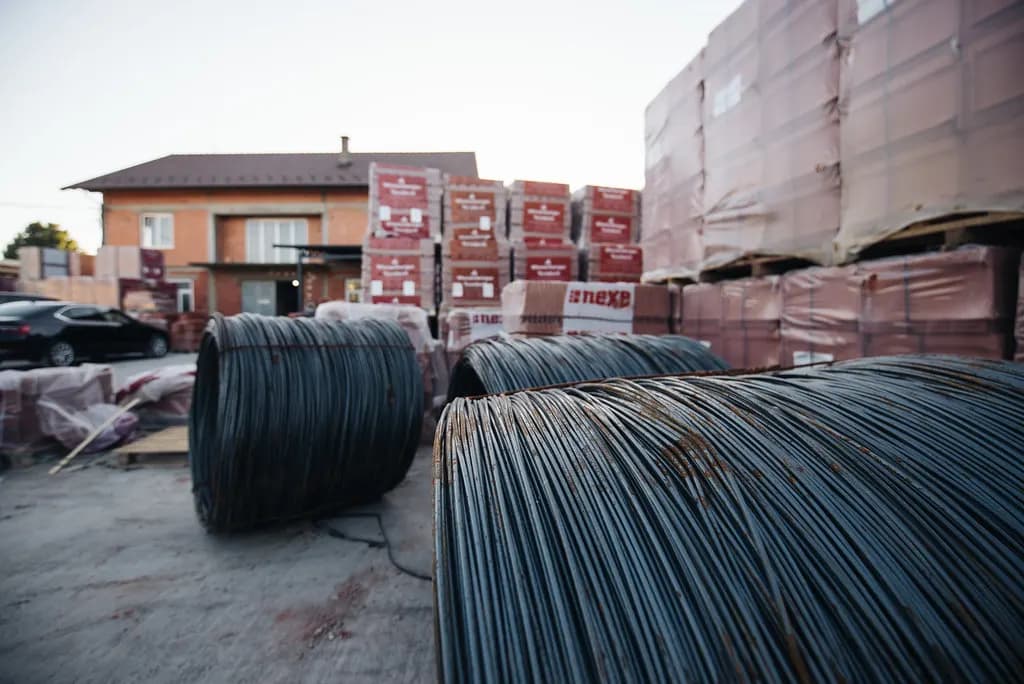
1. Crossing the limit mid-year. A Pune auto-components maker had turnover of ₹18 crore in 2025-26. In 2026-27 it buys steel from one resident supplier: ₹30 lakh in April, ₹15 lakh in May and ₹20 lakh in June. After May the running total is ₹45 lakh — no TDS. The June invoice takes it to ₹65 lakh, so TDS applies to the ₹15 lakh above the limit: 0.1% × ₹15,00,000 = ₹1,500. In July it buys another ₹25 lakh; the whole amount is now subject to TDS: ₹2,500.
2. Advance payment including GST. In August the same buyer pays the supplier an advance of ₹11,80,000 (₹10,00,000 plus 18% GST) for a special order. Because the deduction is at payment and the GST cannot be identified yet, TDS is on the whole ₹11,80,000: ₹1,180. When the invoice is later booked against the advance, no second deduction is made.
3. Seller without PAN. A distributor with ₹25 crore turnover buys ₹80 lakh of goods from a new supplier who has not given a PAN. TDS applies to ₹30 lakh above the limit at 5%: ₹1,50,000, instead of ₹3,000 with a PAN. Collecting the PAN before the threshold is crossed saves the seller a large cash-flow hit.
4. Small buyer, large seller. A retailer with ₹9.5 crore turnover last year buys ₹70 lakh of goods from a manufacturer with ₹200 crore turnover. The retailer is not a buyer under section 402(6), so it does not deduct. Since 206C(1H) was withdrawn, the manufacturer does not collect TCS either. Nothing is withheld on this transaction.
5. Goods returned. The steel buyer in example 1 returns ₹2 lakh of defective coils in September, and the supplier refunds the money. TDS of ₹200 was deducted on those coils. Under the circular, the buyer adjusts the ₹200 against its next purchase from the same supplier — deducting ₹200 less on that invoice — rather than seeking a refund.
6. Missed deduction. A wholesaler with ₹40 crore turnover bought ₹2.5 crore from one supplier in 2026-27 and did not deduct. TDS that should have been deducted: 0.1% × ₹2 crore = ₹20,000. It owes interest at 1% a month or part of a month from each date of credit, and if the TDS is still unpaid when it files its return, 30% of the ₹2 crore — ₹60 lakh — is disallowed as an expense for the year under section 35(b), coming back as a deduction in the year the TDS is paid. The disallowance costs far more than the TDS.
Try it — TDS on purchases above the limit
Depositing, reporting and the seller's credit
The buyer deposits the tax under its TAN by the 7th of the next month (30 April for March), quoting section 393 and payment code 1031. It reports the deduction in the quarterly statement for payments to residents, Form 140 (formerly Form 26Q), due 31 July, 31 October, 31 January and 31 May, and issues the seller a Form 131 certificate (formerly Form 16A) within 15 days from the due date of the quarterly statement. Our TDS return filing guide covers the statement, the ₹200 a day late fee and corrections.
For the seller, the TDS is a credit against its own income tax, visible in the Annual Information Statement under its PAN. A seller supplying many large buyers can see a meaningful amount of its margin held as TDS, especially in low-margin trades such as metals or grains. Sellers in that position should check their AIS quarterly and factor the credits into their advance tax instalments.
Common mistakes and how to fix them
Testing the current year's turnover. The duty for 2026-27 depends on 2025-26 turnover. A buyer that crossed ₹10 crore only during 2026-27 starts deducting from 1 April 2027.
Deducting on the first rupee. Only the amount above ₹50 lakh per seller is subject to TDS in the year the limit is crossed. Over-deduction annoys suppliers and has to be adjusted.
Including GST at credit. If the invoice shows GST separately and you deduct at the time of booking, leave the GST out. Set your accounting software's TDS base to the taxable value.
Leaving 206C(1H) switched on. Sellers still charging TCS on ordinary sales should stop and refund amounts wrongly collected after 1 April 2025.
Quoting 194Q after 1 April 2026. Challans and Form 140 rows must quote section 393 with the new payment code; the Department warns that old section references can cause processing errors.
Forgetting the seller's PAN. Without it, the rate jumps to 5%. Make PAN a field in your vendor master and block payments to large suppliers without it.
Official links
- Income-tax Act, 2025 — Gazette texts.393(1) Table Sl. 8(ii) and Note 1; s.402(6) buyer; s.394 TCS; s.397(2)
- TDS compliance FAQsTransition, thresholds carried over, 30% disallowance
- Form 140 user manualQuarterly statement for residents (old 26Q)
- TRACESForm 131 certificates, defaults, corrections
- e-Filing portalPay TDS, file statements, view AIS
What to do next
Check your business turnover for the last financial year. If it was above ₹10 crore, list the suppliers you expect to buy more than ₹50 lakh from this year, confirm their PAN and set your purchase ledger to deduct 0.1% once each crosses the limit. Get a TAN if you do not have one, and run individual invoices through our free TDS calculator. For the full picture of TDS on business payments, read what TDS is and how it works.
This is general information, not legal or tax advice — confirm on the official source or with a professional.
Frequently asked questions
The rate is 0.1% of the amount paid or credited to a resident seller above ₹50 lakh in the tax year. It is in section 393(1) Table Sl. No. 8(ii) of the Income-tax Act, 2025, which replaced section 194Q from 1 April 2026. If the seller does not give a PAN, the rate is 5% instead.
Only a buyer whose total sales, gross receipts or turnover from business exceeded ₹10 crore in the tax year immediately before the year of purchase. A trader with ₹8 crore turnover last year has no duty, however much it buys. The seller's turnover does not matter for the buyer's TDS. The government can also notify persons who are excluded.
No. TCS at 0.1% on sale of goods above ₹50 lakh under section 206C(1H) was withdrawn from 1 April 2025 by the Finance Act 2025, and section 394 of the new Act has no equivalent. Sellers should not collect it on sales after that date. TCS still applies to specific goods such as scrap, minerals, forest produce and motor vehicles above ₹10 lakh.
When TDS is deducted at the time of crediting the seller's account and the invoice shows GST separately, CBDT Circular 13/2021 says tax is deducted on the amount excluding GST. When the deduction happens on an advance payment, it is on the whole amount, because the GST component cannot be identified at that stage.
Only on the amount above ₹50 lakh. Note 1(b) to the section 393 table says the tax is deducted on the sum exceeding fifty lakh rupees. Once purchases from that seller cross the limit in the tax year, every later purchase from that seller is fully subject to TDS for the rest of the year.
The buyer pays interest of 1% a month or part of a month from the date tax was deductible, can be treated as an assessee in default for the tax, and loses 30% of the purchase expense on which tax was not deducted when computing taxable profit, until the tax is paid. Late filing of the quarterly statement adds a ₹200 a day fee.
Sources & verification
Figures on this page were checked against the sources below when it was last reviewed on 9 October 2026. Each rate and limit is stored once with its own official source and review date, and official update channels are monitored daily so changes are picked up. How we verify
- 1.The Income-tax Act, 2025 (Act No. 30 of 2025), Gazette of India Extraordinary, 21 August 2025 — Ministry of Law and Justice (Legislative Department) · accessed 9 October 2026
- 2.TDS Compliance — e-Filing help (FAQs on the transition to the Income-tax Act, 2025) — Income Tax Department (e-Filing portal) · accessed 9 October 2026
- 3.Form 140 — user manual — Income Tax Department (e-Filing portal) · accessed 9 October 2026
- 4.CBDT Circular 13/2021 — guidelines on section 194Q — StudyCafe (summarising the CBDT circular of 30 June 2021) · accessed 9 October 2026
- 5.TDS / TCS rate chart tax year 2026-27 — TDSMAN · accessed 9 October 2026
- 6.TDS and TCS changes from April 2026 — ClearTax · accessed 9 October 2026
- 7.Coexistence of TDS 194Q and TCS 206C(1H) — TDSMAN · accessed 9 October 2026
MSMETOOLS is an independent platform and is not affiliated with any government agency, ministry or department.
Tools for this
TDS Calculator (India)
Calculate TDS for payments and generate reports.
Invoice Generator
Create professional invoices with tax, logo and custom details.
Related guides
 TDS on Contractor Payments 2026: 1%/2%, Limits & TransportersRead guide
 TDS on Professional Fees 2026: 10% vs 2%, ₹50,000 LimitRead guide
 TAN Registration 2026: Form 135, Fee, Process & PenaltyRead guide
 194O TDS 2026: 0.1% E-commerce TDS, ₹5 Lakh Limit & GST TCSRead guide
Official links open the government site in a new tab.