 Income tax & TDS
Professional Tax in Puducherry (2026): Half-Yearly Slabs, Who Pays and How Local Bodies Collect It
Puducherry professional tax 2026: nil up to ₹99,999 of half-yearly income, then ₹250 to ₹1,250 a half-year, the 60-day rule, employer deduction and penalties.
 Edited by Sumeet YadavFounder & editor, MSMETOOLS · fact-checked against official sources

Contents (12)
- 1. Puducherry professional tax slab for 2026
- 2. Who levies the tax: municipalities and commune panchayats
- 3. Who has to pay: the 60-day rule
- 4. How employers deduct profession tax
- 5. Government employees: quarterly deduction under G.O.Ms. 24/F3/2017
- 6. Due dates and the half-year
- 7. Self-employed people and businesses
- 8. Worked examples in ₹
- 9. Penalties, interest and recovery
- 10. Common mistakes and how to fix them
- 11. Staff in other states and income-tax treatment
- 12. What to do next
Puducherry handles professional tax differently from almost every state. There is no state professional tax Act and no state tax department collecting it. Instead, profession tax is a local-body tax: the municipalities and commune panchayats levy it twice a year under the Puducherry Municipalities Act, 1973 and the Puducherry Village and Commune Panchayats Act, 1973. The tax is fixed on half-yearly income, not monthly salary. This guide is for employers, payroll teams, shop owners and professionals in Puducherry, Oulgaret, Karaikal, Mahe and Yanam. It covers the current classes, who is liable, how deduction works for private and government employers, penalties and worked rupee examples.
Quick answer
In Puducherry, profession tax is charged per half-year by your municipality or commune panchayat. Half-yearly income up to ₹99,999 is nil; above that the tax rises in ₹1 lakh steps from ₹250 a half-year to ₹1,250 a half-year for income above ₹5 lakh. Anyone who works or does business in the area for 60 days or more in a half-year is liable.
Law: Puducherry Municipalities Act, 1973 (sections 144–151) and the Village and Commune Panchayats Act, 1973
Classes revised by the 2017 amending Acts, in force since May 2017
Employers deduct when the local body's Commissioner sends a requisition; government offices deduct quarterly
Maximum ₹2,500 a year a year — two half-years at ₹1,250
Puducherry professional tax slab for 2026
The rates were last revised in 2017. The Puducherry Municipalities (Amendment) Act, 2017 (Act 5 of 2017) replaced Schedule-IV of the Municipalities Act, and the Puducherry Village and Commune Panchayats (Amendment) Act, 2017 (Act 4 of 2017) replaced Schedule-III of the Panchayats Act with an identical table. Both were published in the Gazette of Puducherry in May 2017 and took effect on publication. We found no later amendment to either schedule.
The tax is assessed on your aggregate half-yearly income from every source that makes you liable — salary, professional fees, business income and, for residents, investment income:
| Class | Half-yearly income | Tax per half-year | Tax per year |
|---|---|---|---|
| I | Up to ₹99,999 | Nil | Nil |
| II | ₹1,00,000 to ₹2,00,000 | ₹250 a half-year | ₹500 |
| III | ₹2,00,001 to ₹3,00,000 | ₹500 a half-year | ₹1,000 |
| IV | ₹3,00,001 to ₹4,00,000 | ₹750 a half-year | ₹1,500 |
| V | ₹4,00,001 to ₹5,00,000 | ₹1,000 a half-year | ₹2,000 |
| VI | Above ₹5,00,000 | ₹1,250 a half-year | ₹2,500 |
Maximum or minimum? The Act's column is headed "maximum half-yearly tax": each municipal council sets its own scale by resolution, and the scale cannot exceed these figures. A second proviso keeps the scale progressive — the tax on a class, as a share of that class's minimum income, can never be lower than the share for a lower class. The Finance Department's order of July 2017, however, describes the same table as the "minimum half-yearly rates" that the amendments "upwardly revised". In practice local bodies and payroll providers apply the table as printed, so plan on these amounts and check the demand your local body issues.
To translate the classes into monthly pay: a salaried employee on a steady wage crosses the nil limit at about ₹16,667 a month (₹1,00,000 over six months), reaches Class III above about ₹33,333 a month, and hits the top class above about ₹83,333 a month. Bonuses and arrears paid in a half-year count towards that half-year's income.
Who levies the tax: municipalities and commune panchayats
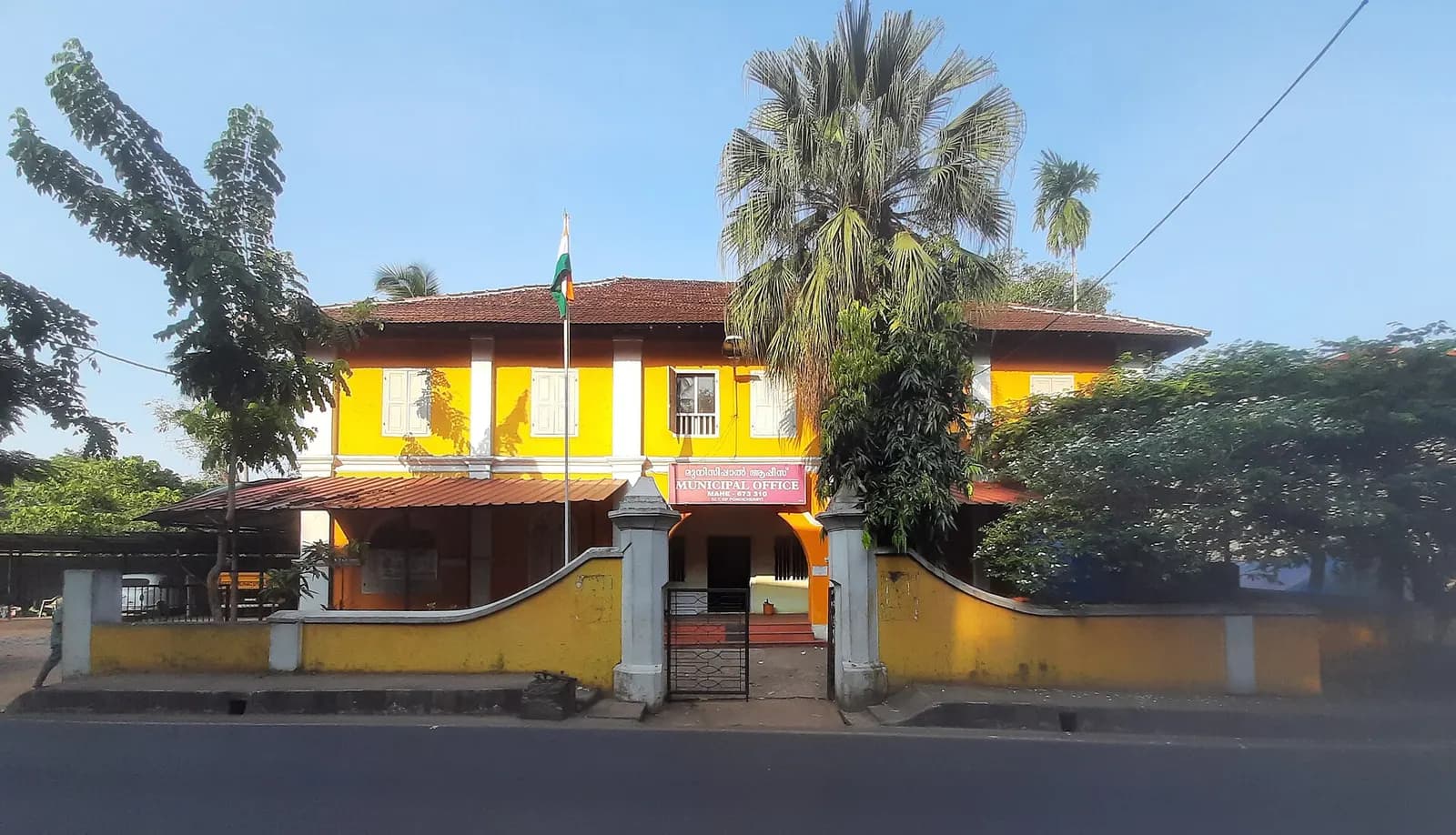
Section 144 of the Puducherry Municipalities Act lets a municipal council levy profession tax by resolution, and the Panchayats Act gives commune panchayats the same power under section 143. The Union Territory's four regions — Puducherry, Karaikal, Mahe and Yanam — are each covered by municipalities and, outside the towns, commune panchayats. The Finance Department's 2017 order calls profession tax the second-largest source of revenue for these local bodies, which is why they publish arrears and ward-wise collection lists.
Because each local body is a separate taxing authority, your liability is to the body where you work, trade or (for investment income) live. The Commissioner of the municipality or commune panchayat assesses you, issues the demand and collects the money. Two rules stop you being taxed twice:
- Moving within the Union Territory. If you prove you have already paid profession tax for a half-year to another municipality or local authority in Puducherry, a new local body can only collect the difference between that amount and your liability to it (section 144(3)).
- Living in one area, working in another. A person who lives in one local body's area but works or does business in another cannot be charged more than the higher of the two amounts; the Government apportions the tax between the bodies (section 144(4)).
How Puducherry profession tax reaches you
Step 1
Work or trade 60+ days in a half-year
Step 2
Local body Commissioner assesses your class
Step 3
Demand or employer requisition
per half-year
Step 4
Pay the municipality or commune panchayat
Step 5
Certificate / receipt
keep for transfers
Who has to pay: the 60-day rule
Liability turns on presence during a half-year rather than on registration. Under section 144(1), the tax applies to:
- Companies that transact business in the municipality for at least 60 days in aggregate in any half-year.
- Individuals who, for 60 days or more in a half-year, practise a profession, art or calling, transact business, or hold any appointment, public or private, within the municipality.
- Residents who live in the municipality for 60 days or more in a half-year and either work outside it or have income from investments.
The 60 days are counted in aggregate, so a consultant who spends three separate fortnights in Puducherry over a half-year can cross the line. A seasonal business that trades for less than sixty days in a half-year is outside the net for that half.
Firms, families and agents. Profession tax on a firm, association or joint Hindu family can be levied on any adult member (section 145). A company or person that sends a servant or agent to transact business in the municipality is treated as transacting business there, and the agent is liable for the tax on that business — but an agent is not taxed separately on the same income as its principal (section 146).
Who is exempt? The Act's general schedule does not carve out classes of people the way many state Acts do. The working exemption is the nil class: anyone whose half-yearly income is up to ₹99,999 pays nothing. Some payroll websites list exemptions for senior citizens, people with disabilities or defence personnel in Puducherry; we could not find these in the Act or the 2017 amendments, so confirm any claimed exemption in writing with your local body before relying on it.
How employers deduct profession tax
Puducherry's employer system is built on requisitions, not on self-assessment by the employer. The Commissioner can serve a notice under section 150 requiring any employer — including the head, secretary or manager of an office, hotel, club, firm or company — to furnish a list of everyone employed, with their residential addresses and salary or income. Once the local body has assessed each person, section 151 applies:
- Deduct on requisition. On receiving a requisition from the Commissioner, the employer deducts the amount of profession tax named in it from the salary or wages of the employee (or from sums paid to an agent, supplier or contractor it engages).
- Adjust within the half-year. When making a deduction the employer may increase or reduce it to correct an earlier over- or under-deduction in the same half-year.
- Pay the municipality. The amount deducted must be paid to the credit of the municipality within the prescribed time.
- Give a certificate. At the time of payment of salary the employer gives the employee a certificate of the tax deducted; rule 9(a) of the 1976 Profession Tax Rules lists the details — date, name, period and amount.
- File the half-yearly return. Within the prescribed period after the half-year ends, the employer delivers a return to the Commissioner listing each person, their address, the amount deducted and the half-year it relates to.
Pondicherry Municipality's own guidance summarises the duty the same way: employers deduct when the Commissioner issues a requisition, pay it to the municipality, and furnish a statement of salaries paid after each half-year. Once tax has been deducted, the employee cannot be asked to pay that amount again (section 151(6)).
Profession tax compliance for a Puducherry employer
- 1
Identify your local body
Find the municipality or commune panchayat for each workplace — Pondicherry, Oulgaret, Karaikal, Mahe, Yanam or a commune panchayat.
- 2
Send the salary list
Give the Commissioner the list of employees, addresses and salaries when asked under section 150 — or proactively after each half-year.
- 3
Deduct what the requisition says
Deduct each employee's half-yearly tax from salary; staff with half-yearly income up to ₹99,999 pay nothing.
- 4
Pay the local body and issue certificates
Remit the deductions to the municipality and give each employee a deduction certificate.
- 5
File the half-yearly return
Deliver the return of deductions after the half-year ends, and keep challans and certificates for assessment.
Government employees: quarterly deduction under G.O.Ms. 24/F3/2017
The steep increase in 2017 prompted the Finance Department to soften the impact for its own staff. G.O.Ms. No. 24/F3/2017 dated 4 July 2017 directs drawing and disbursing officers in all government departments, autonomous bodies, corporations, boards, societies and public sector undertakings to deduct profession tax quarterly, from the salary for the last month of each quarter, at a rate worked out proportionately from the half-yearly classes.
Government staff — quarterly profession tax (G.O.Ms. 24/F3/2017)
| Quarter | Months covered | Deducted from | Gross for 3 months → tax |
|---|---|---|---|
First | March – May | May salary | ₹50,001–₹1,00,000 → ₹125 |
Second | June – August | August salary | ₹1,00,001–₹1,50,000 → ₹250 |
Third | September – November | November salary | ₹1,50,001–₹2,00,000 → ₹375; ₹2,00,001–₹2,50,000 → ₹500 |
Fourth | December – February | February salary | ₹2,50,001 and above → ₹625 |
First
- Months covered
March – May
- Deducted from
May salary
- Gross for 3 months → tax
₹50,001–₹1,00,000 → ₹125
Second
- Months covered
June – August
- Deducted from
August salary
- Gross for 3 months → tax
₹1,00,001–₹1,50,000 → ₹250
Third
- Months covered
September – November
- Deducted from
November salary
- Gross for 3 months → tax
₹1,50,001–₹2,00,000 → ₹375; ₹2,00,001–₹2,50,000 → ₹500
Fourth
- Months covered
December – February
- Deducted from
February salary
- Gross for 3 months → tax
₹2,50,001 and above → ₹625
The Directorate of Accounts and Treasuries must remit the deducted tax to the local body concerned within fifteen days of deduction, by separate cheque, much like income-tax deductions. Every drawing and disbursing officer continues to issue employees a deduction certificate under rule 9(a) of the 1976 Profession Tax Rules. The quarterly amounts are simply half of the half-yearly rates — ₹625 a quarter is half of ₹1,250 — so a government employee in the top class still pays ₹2,500 a year a year. The order applies to government payrolls only; private employers follow the requisition system above.
Due dates and the half-year
The Act charges a half-yearly tax, and section 151(7) requires the employer's return "after the expiry of the half-year" within a prescribed period. We could not find a published notice from the Puducherry local bodies fixing the half-year boundaries and payment dates for private employers and self-employed people, and secondary sources disagree. Payroll references report deadlines of 31 July and 31 January; another compliance database shows a half-yearly cycle starting at the end of June. The government quarter calendar above (March–May, June–August and so on) suggests the local bodies work on salary periods rather than the financial year.
Treat the dates in any third-party calendar as "as reported". The safe course is to ask your municipality's revenue or accounts section for the half-year your demand covers, pay within the time on the demand notice, and keep the receipt. Interest only starts once tax is unpaid fifteen days after it falls due, so an employer who pays promptly on each demand will not be exposed.
Self-employed people and businesses
Professionals, traders and companies pay their own profession tax on demand from the local body. Pondicherry Municipality says businesses are assessed with reference to turnover and must furnish a statement of turnover after each half-year; professionals and others are placed in the class matching their half-yearly income. Section 149 lets the Commissioner require landlords, hotel and lodging-house managers and club secretaries to list everyone occupying their premises and their profession, which is how unregistered businesses get traced.
Everything you file for profession tax is confidential. Section 148 says statements, returns, accounts and documents produced for assessment cannot be copied to the public.
If you run a business with staff, you have two liabilities: the tax on the business itself (by its income or turnover class) and the tax you deduct for employees. Keep them separate in your books — the demand notices are separate too.
Worked examples in ₹
Example 1 — a shop assistant. Kavya earns ₹15,000 a month in a Puducherry textile shop: ₹90,000 for the half-year. That is within Class I, so nothing is due.
Example 2 — an accounts executive. Arun earns ₹32,000 a month: ₹1,92,000 a half-year, Class II. His profession tax is ₹250 a half-year each half-year, or ₹500 a year. If he receives a ₹20,000 Diwali bonus in the same half-year, his half-yearly income becomes ₹2,12,000 and he moves into Class III — ₹500 a half-year for that half.
Example 3 — a software engineer. Meena earns ₹90,000 a month in an Oulgaret IT firm: ₹5,40,000 a half-year, Class VI. She pays ₹1,250 a half-year each half-year — ₹2,500 a year, the constitutional ceiling.
Example 4 — a government teacher. A teacher drawing ₹45,000 a month has ₹1,35,000 of gross pay for March to May, so ₹250 is deducted from her May salary — and ₹250 again in August, November and February. Her annual total is ₹1,000, the same as two half-years in Class III.
Example 5 — a Karaikal manufacturer with 30 staff. Twelve workers earn ₹14,000 a month (nil), ten earn ₹25,000 (₹1,50,000 a half-year, ₹250), and eight supervisors earn ₹40,000 (₹2,40,000, ₹500). On the Commissioner's requisition the firm deducts 10 × ₹250 + 8 × ₹500 = ₹6,500 for the half-year, pays it to Karaikal Municipality, gives each worker a certificate and files the return. The company also pays tax on its own business, by the class the municipality assigns.
Our free salary slip generator shows a professional tax line so staff can see what was deducted and when.
Penalties, interest and recovery
- Notice to pay (section 147): if profession tax due from a company or person is not paid, the Commissioner serves a notice requiring payment within fifteen days.
- Interest (section 188): any municipal tax not paid within fifteen days of falling due is treated as arrears, and simple interest of up to 10% a year, as the Commissioner fixes, runs from that date. It is collected as if it were part of the tax.
- Employer default (section 151(8)): an employer who does not deduct, pay, certify or file as section 151 requires can be fined up to ₹500. The fine does not apply to Central or State Government officers.
- Recovery: unpaid municipal taxes can be recovered through the Act's distraint and recovery procedures, modelled on the Puducherry Revenue Recovery Act, 1970.
Common mistakes and how to fix them
Applying a monthly slab from another state. Payroll software set up for Tamil Nadu or Karnataka often deducts a monthly amount. Puducherry's tax is half-yearly and based on half-yearly income. Re-map the payroll to the six classes and the half-year.
Using the pre-2017 schedule. The 2017 amendments raised the amounts sharply; any deduction table that tops out below ₹1,250 a half-year is out of date.
Deducting without a requisition — or ignoring one. The Act ties private employers' deduction to the Commissioner's requisition. If you deduct in advance, keep it ring-fenced and pay it over when the demand arrives; if you receive a requisition, act on it in the next payroll or you become liable for the default.
Paying twice when staff move. An employee transferred from Pondicherry to Karaikal in the same half-year only owes the difference to the new body, if any. Keep the old certificate as proof.
Forgetting the business's own tax. The employer's deductions do not cover the company, firm or proprietor, which is assessed separately.
Puducherry profession tax checklist
0/6Staff in other states and income-tax treatment
Profession tax follows the place of work. A Puducherry business with staff in Chennai or Cuddalore applies Tamil Nadu's half-yearly local-body tax, which works on a similar model; staff in Kerala follow Kerala's half-yearly schedule. Our due dates table lists every state, and the state-wise professional tax guide explains the common rules.
Employees can deduct profession tax paid from salary income only under the old income-tax regime; a business can claim its own profession tax as an expense.
Official links
- Puducherry Municipalities (Amendment) Act, 2017 — Schedule-IV (PDF)
- Village and Commune Panchayats (Amendment) Act, 2017 (PDF)
- G.O.Ms. No. 24/F3/2017 — quarterly deduction for government staff (PDF)
- Puducherry Municipalities Act, 1973 (PDF)
- Pondicherry Municipality — Know about taxWho is liable and employer duties
What to do next
Find out which local body covers each of your workplaces, set payroll up on the half-yearly classes, and ask the revenue section for the current half-year's demand dates. Setting wages for the year? Check the Puducherry minimum wages first.
This is general information, not legal or tax advice — confirm on the official source or with a professional.
Frequently asked questions
Profession tax in Puducherry is charged per half-year on half-yearly income. Up to ₹99,999 is nil; ₹1,00,000–₹2,00,000 pays ₹250 a half-year; ₹2,00,001–₹3,00,000 pays ₹500 a half-year; ₹3,00,001–₹4,00,000 pays ₹750 a half-year; ₹4,00,001–₹5,00,000 pays ₹1,000 a half-year; and above ₹5,00,000 pays ₹1,250 a half-year. These classes come from the 2017 amendments to the municipal and panchayat Acts.
Unlike most states, Puducherry has no state professional tax Act. The tax is levied by the local bodies — the municipalities and the commune panchayats — under the Puducherry Municipalities Act, 1973 and the Puducherry Village and Commune Panchayats Act, 1973. You pay the local body where you work or do business, and the Commissioner of that body assesses you.
Every company that transacts business in a municipality for at least 60 days in aggregate in a half-year, and every person who practises a profession, does business or holds a public or private appointment there for 60 days or more in a half-year. People who live in the area for 60 days and earn investment income are also covered.
Under section 151 of the Municipalities Act, an employer deducts profession tax from salary when the Commissioner sends a requisition naming the amount due, pays it to the local body, gives each employee a certificate, and files a return after each half-year. Government offices deduct quarterly under G.O.Ms. No. 24/F3/2017.
If you do not pay, the Commissioner serves a notice giving fifteen days to pay. Tax unpaid fifteen days after it is due is in arrears and carries simple interest of up to 10% a year, as the Commissioner fixes. An employer that ignores its deduction duties can be fined up to ₹500.
No. The tax is fixed per half-year, so most private employers deduct it once or twice a half-year once the local body issues a demand. Government departments spread it over four quarterly deductions — from the May, August, November and February salaries — under the Finance Department's 2017 order.
Sources & verification
Figures on this page were checked against the sources below when it was last reviewed on 12 October 2026. Each rate and limit is stored once with its own official source and review date, and official update channels are monitored daily so changes are picked up. How we verify
- 1.The Puducherry Municipalities (Amendment) Act, 2017 (Act No. 5 of 2017) — Gazette of Puducherry Extraordinary No. 28, 17 May 2017 — Law Department, Government of Puducherry (copy hosted by Karaikal Municipality) · accessed 12 October 2026
- 2.The Puducherry Village and Commune Panchayats (Amendment) Act, 2017 (Act No. 4 of 2017) — Gazette of Puducherry Extraordinary No. 25, 11 May 2017 — Directorate of Stationery and Printing, Government of Puducherry · accessed 12 October 2026
- 3.G.O.Ms. No. 24/F3/2017 dated 04.07.2017 — Deduction of profession tax from salary of employees of Government departments — Finance Department, Government of Puducherry · accessed 12 October 2026
- 4.The Puducherry Municipalities Act, 1973 (consolidated) — Pondicherry Municipality · accessed 12 October 2026
- 5.Know about tax — Profession tax — Pondicherry Municipality · accessed 12 October 2026
- 6.Article 276 — Taxes on professions, trades, callings and employments — Constitution of India · accessed 12 October 2026
- 7.Professional tax — Puducherry — Zoho Payroll · accessed 12 October 2026
- 8.Professional tax detail — Puducherry — Simpliance · accessed 12 October 2026
MSMETOOLS is an independent platform and is not affiliated with any government agency, ministry or department.
Tools for this
Salary Slip Generator
Create professional salary slips in seconds.
TDS Calculator (India)
Calculate TDS for payments and generate reports.
Related guides
 Tamil Nadu Professional Tax 2026: Slabs, Due Dates & PaymentRead guide
 Professional Tax Kerala 2026: Half-Yearly Slabs & Due DatesRead guide
 Professional Tax Tripura 2026: ₹150 & ₹208 Slabs and Due DatesRead guide
 Professional Tax Manipur 2026: 2020 Slabs & Due DatesRead guide
Official links open the government site in a new tab.