 Income tax & TDS
Presumptive Taxation Scheme in 2026: Section 58 (Old 44AD, 44ADA and 44AE) Explained with Examples
Presumptive taxation in 2026: section 58 of the new Act (old 44AD/44ADA/44AE), 8%/6% and 50% rates, ₹2–3 crore and ₹50–75 lakh limits, lock-in and examples.
 Edited by Sumeet YadavFounder & editor, MSMETOOLS · fact-checked against official sources
Contents (9)
- 1. What is the presumptive taxation scheme?
- 2. What changed from 1 April 2026: section 58 replaces 44AD, 44ADA and 44AE
- 3. Who can use presumptive taxation
- 4. Presumptive rates and limits for 2026
- 5. Worked examples
- 6. The five-year lock-in, books and tax audit
- 7. How to report presumptive income and pay tax
- 8. Common mistakes and how to avoid them
- 9. What to do next
Small traders, shop owners, freelancers, doctors, architects and truck owners in India can skip full books and a tax audit by paying income tax on a fixed share of their turnover. That is the presumptive taxation scheme. From 1 April 2026 it lives in section 58 of the Income-tax Act, 2025, which replaced the familiar sections 44AD, 44ADA and 44AE. This guide covers who qualifies, the 2026 rates and limits, how the 6% digital rate works, the five-year lock-in, advance tax, which return to file, and four worked examples in rupees.
Quick answer
Under the presumptive taxation scheme (section 58 of the Income-tax Act, 2025; earlier 44AD, 44ADA and 44AE), a resident small business declares 8% of turnover as profit (6% on digital receipts), a specified professional declares 50% of gross receipts, and a truck owner declares a fixed amount per vehicle per month. No books or audit are needed as long as you declare at least that much.
Business limit: ₹2 crore, or ₹3 crore if cash receipts ≤ 5%
Profession limit: ₹50 lakh, or ₹75 lakh with the same cash test
Goods carriages: up to 10 vehicles, ₹1,000 per tonne of gross vehicle weight per month for heavy vehicles, ₹7,500 per vehicle per month for others
Opting out after opting in locks a business out for five tax years
Advance tax in one go by 15 March; file ITR-4 if total income is within ₹50 lakh
What is the presumptive taxation scheme?
Normally a business pays tax on its actual profit: sales minus every allowable expense, worked out from proper books and, above certain sizes, checked in a tax audit. Presumptive taxation turns this around. The law presumes your profit is a fixed percentage of turnover or receipts, and you pay tax on that figure. You do not have to prove a single expense, prepare a profit and loss statement for the tax department, or hire an auditor, provided you declare at least the presumed amount.
The scheme is optional. If your real profit margin is higher than the presumed rate, you must declare the higher figure, because the deemed profit is only a floor. If your real margin is lower, you can declare it, but then you must keep books and, if your total income is above the basic exemption limit, get them audited. That trade-off is the whole decision: lower compliance cost and certainty versus paying tax on profit you may not have earned.
Presumptive taxation at a glance (2026)
8% / 6%
Deemed profit for a business
6% on bank or online receipts
₹3 crore
Highest business turnover limit
if cash ≤ 5%
50% of gross receipts
Deemed profit for professionals
up to ₹75 lakh
five tax years
Lock-out after opting out
business scheme only
Three businesses get a presumptive option for residents. Ordinary businesses (traders, manufacturers, shops, contractors) use the business scheme. Professionals such as doctors, lawyers, engineers, architects, chartered accountants and IT consultants use the profession scheme. Owners of goods carriages use a per-vehicle scheme. Non-residents in shipping, oil exploration and airlines have separate presumptive rules in section 61, which this guide does not cover.
What changed from 1 April 2026: section 58 replaces 44AD, 44ADA and 44AE
The Income-tax Act, 2025 came into force on 1 April 2026 and applies to income earned from that date, which the new law calls tax year 2026-27. The Income Tax Department's own FAQ on the new Act says the three old schemes have been consolidated into one section, section 58, set out as a table. The rates and turnover limits carried over unchanged, and the Finance Act, 2026 did not alter them.
What has changed is the numbering, a few definitions and some wording. If you are filing a return in 2026 for income earned up to 31 March 2026 (assessment year 2026-27), you still use the 1961 Act and cite 44AD, 44ADA or 44AE. From tax year 2026-27 onwards, the return and your accountant's working paper will cite section 58(2) and the relevant serial number. Section 536(2)(f) of the new Act says an option exercised under the old law is treated as made under the equivalent new provision, so a business that has been on 44AD simply continues under section 58. Read our guide on financial year, assessment year and the new tax year if the change of terms is confusing.
| What it covers | Income-tax Act, 1961 | Income-tax Act, 2025 |
|---|---|---|
| Presumptive business income | Section 44AD | Section 58(2), Table serial 1 |
| Goods carriages | Section 44AE | Section 58(2), Table serial 2 |
| Specified professions | Section 44ADA | Section 58(2), Table serial 3 |
| Opt-out lock-in and forced audit | Section 44AD(4) and (5) | Section 58(7) and (8) |
| Books of account | Section 44AA | Section 62 |
| Tax audit | Section 44AB | Section 63 |
| Single advance-tax instalment | Section 211(1)(b) | Section 408(2) |
Who can use presumptive taxation
The business scheme (old 44AD)
The business scheme is open to an "eligible assessee", which section 58(11) defines as a resident individual, Hindu undivided family or partnership firm, but not a limited liability partnership. Companies and LLPs are excluded, and so are non-residents. The person must not have claimed the special economic zone deduction in section 144 or any profit-linked deduction under Chapter VIII-C for the year.
Three further exclusions matter for MSMEs. The person must not carry on a specified profession, must not earn any income in the nature of commission or brokerage, and must not carry on any agency business. Under the 1961 Act these were treated mainly as excluded types of business: a trader could put trading income under 44AD and report a small commission separately. The new text describes them as conditions on the person. Read literally, a shop owner who also earns a modest commission from, say, selling insurance policies or acting as a dealer's agent may lose the scheme for the entire business. Commentators have flagged this; until the CBDT clarifies, take advice before mixing commission income with presumptive trading income.
The profession scheme (old 44ADA)
The profession scheme is for a "specified assessee": a resident individual or a partnership firm other than an LLP. The profession must be one listed in section 62(4): legal, medical, engineering, architectural, accountancy, technical consultancy, interior decoration, information technology or company secretary, plus any other profession the CBDT notifies. Under the old law the notified list included authorised representatives and film artists, and existing notifications continue unless inconsistent with the new Act. A freelance graphic designer or content writer who is not in the list cannot use the 50% scheme, though they may be able to use the business scheme.
The goods-carriage scheme (old 44AE)
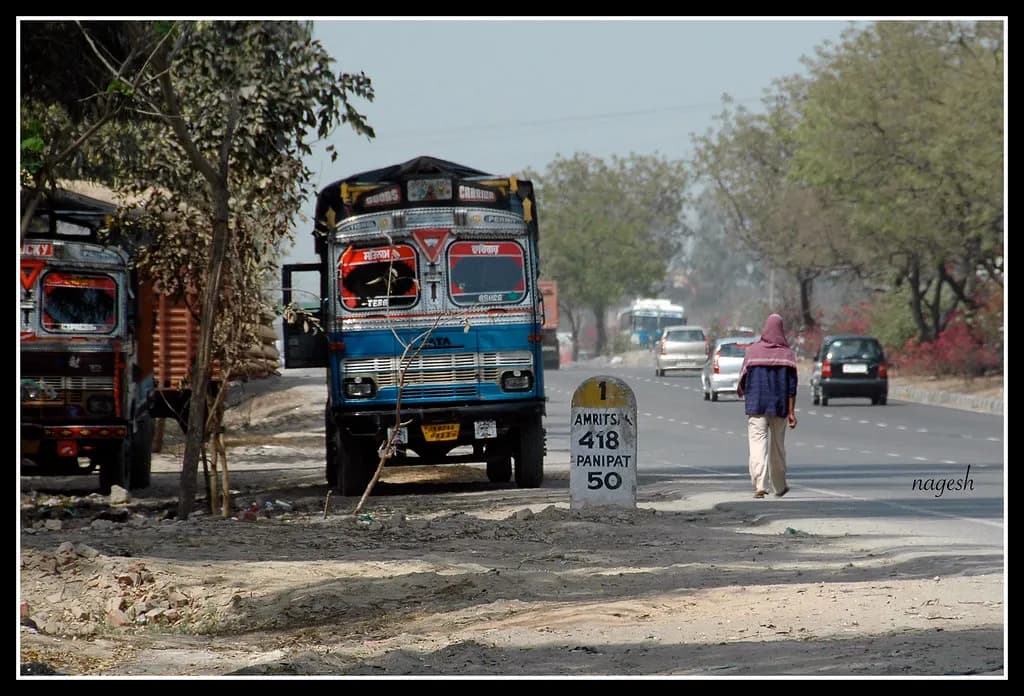
Any assessee who owns no more than ten goods carriages at any time during the tax year can use the per-vehicle scheme. Unlike the other two, there is no turnover limit and no restriction on the type of person, so a company with eight trucks can use it. A vehicle bought on hire purchase or instalments counts as owned even while money is still due. Section 58(10) also takes the trucking income out of the books and audit tests, and out of the turnover used to check the audit limits for any other business you run.
Presumptive rates and limits for 2026
Business: 8% of turnover, 6% of digital receipts
For a business, the deemed profit is 6% of the part of turnover received by "specified banking or online mode" and 8% of the rest. Banking or online mode covers account-payee cheques and drafts, bank transfers and the electronic modes the rules prescribe, which include UPI, debit and credit cards, NEFT, RTGS and IMPS. A receipt counts at 6% if it arrives during the tax year or before the return due date for that year, so a customer who pays a March invoice by bank transfer in June still qualifies.
The turnover limit is ₹2 crore. It rises to ₹3 crore if the total received in cash during the year is no more than 5% of turnover. Section 58(9) treats a cheque or draft that is not account-payee as cash, so a bearer cheque from a customer pushes you towards the 5% line. These two limits were introduced under 44AD from assessment year 2024-25 and are unchanged in the new Act.
Which business limit applies to you?
Step 1
Turnover up to ₹2 crore
Step 2
Eligible
whatever the cash share
Step 3
Turnover ₹2–3 crore
Step 4
Cash receipts ≤ 5%?
bearer cheques count as cash
Step 5
Yes: eligible · No: books at actual profit
Professionals: 50% of gross receipts
A specified professional declares 50% of gross receipts as profit. The limit is ₹50 lakh, or ₹75 lakh if cash receipts are no more than 5% of the gross. The rate is the same whatever the mode of receipt. The 50% figure is generous for a consultant working from home, whose real costs are often 15–25% of fees, but poor for a doctor running a clinic with staff, rent and equipment, so professionals with high costs should compare it with their real margin.
Goods carriages: a fixed amount per vehicle
For each heavy goods vehicle, meaning one whose gross vehicle weight exceeds 12,000 kg, the deemed income is ₹1,000 per tonne of gross vehicle weight per month, worked on gross vehicle weight or unladen weight as the case may be. For every other goods carriage it is ₹7,500 per vehicle per month. A part of a month counts as a full month. A firm on this scheme can deduct salary and interest paid to partners within the section 35(e) limits; that deduction is not available to firms on the business or profession scheme.
Worked examples
A hardware shop with mixed cash and UPI sales
Ravi runs a hardware and sanitaryware shop in Nashik as a proprietor. In tax year 2026-27 his turnover is ₹2.60 crore. He receives ₹2.522 crore through UPI, cards and bank transfers and ₹7.8 lakh in cash, which is 3% of turnover. Because cash is within 5%, his limit is ₹3 crore, so he qualifies even though he is above ₹2 crore.
His deemed profit is 6% of ₹2,52,20,000, which is ₹15,13,200, plus 8% of ₹7,80,000, which is ₹62,400: a total of ₹15,75,600. If his actual margin after rent, two salesmen's wages and electricity is about 5%, the scheme costs him tax on roughly ₹2.8 lakh of profit he did not make, but saves him full books and a tax audit, which sections 58(3) and 63 would require if he declared a lower profit and his income exceeded the basic exemption limit. If his margin is 8% or more, he must declare the actual figure anyway.
| Ravi's receipts, tax year 2026-27 | Amount | Rate | Deemed profit |
|---|---|---|---|
| UPI, cards, bank transfers | ₹2,52,20,000 | 6% | ₹15,13,200 |
| Cash | ₹7,80,000 | 8% | ₹62,400 |
| Total | ₹2,60,00,000 | ₹15,75,600 |
On ₹15.76 lakh under the new-regime slab rates, his tax before cess is about ₹1.16 lakh, and about ₹1.21 lakh with the 4% cess. He can pay all of it as advance tax by 15 March 2027 rather than in four instalments.
An interior designer
Meera is a freelance interior designer in Bengaluru; interior decoration is a specified profession. Her gross receipts for the year are ₹68 lakh, of which ₹1 lakh is cash (1.5%). She is within the ₹75 lakh limit and declares 50%, or ₹34 lakh, as profit. If her site supervisors, studio rent and software actually cost ₹40 lakh, her real profit is ₹28 lakh and the scheme overstates it by ₹6 lakh. She then has a choice: declare ₹28 lakh with books and an audit, or pay tax on ₹34 lakh and keep life simple. Unlike a trader, she can switch between the two from year to year without a lock-out.
A transporter with three trucks
Suresh owns three goods vehicles in Indore. One is a heavy truck with a gross vehicle weight of 16 tonnes owned all year: ₹1,000 × 16 × 12 = ₹1,92,000. One light truck is owned all year: ₹7,500 × 12 = ₹90,000. A second light truck bought on 10 October is owned for six months, October to March, counting October in full: ₹7,500 × 6 = ₹45,000. His presumptive income is ₹3,27,000, regardless of freight earned, and he cannot set off fuel, tolls, driver wages or depreciation against it.
When the lock-in bites
Anita declares 8% presumptive profit for her garment trading business in tax years 2026-27 and 2027-28. In 2028-29 sales slump and she declares 3% from books. Because that year falls within five years of a year in which she used the scheme, section 58(7) bars her from the business scheme for the next five tax years, 2029-30 to 2033-34. In each of those years she must keep books under section 62 and get a tax audit under section 63 whenever her total income exceeds the basic exemption limit, even if her turnover is well below the audit threshold.
The five-year lock-in, books and tax audit
The lock-in rule only applies to the business scheme. Section 58(7) works on a rolling window: once you have declared profit under serial 1 for any year, declaring less than the presumptive profit in any of the next five tax years triggers a ban for the five tax years that follow the year of the shortfall. Section 58(8) then requires books and an audit in every year of the ban in which total income exceeds the basic exemption limit.
Outside the lock-in, two other rules decide whether you need books and an audit. Section 58(3) says anyone using any of the three schemes who claims a lower profit than the deemed figure, and whose total income exceeds the basic exemption limit, must keep books and get them audited. Section 63 then switches off the normal audit rule for people who do declare at the presumptive rate: subsection (2) says the audit section does not apply where profits are declared as per section 58(2). In plain terms, declare at or above the presumptive rate and you are outside the audit net up to the scheme limits.
Books themselves are covered by section 62. An individual or HUF in business must keep books if business income exceeds ₹2.5 lakh or turnover exceeds ₹25 lakh (or income above ₹2.5 lakh) in any of the previous three years. A presumptive taxpayer declaring at least the deemed profit is outside clause (c) of that section, but a person carrying on a specified profession is listed in clause (a). In practice, keep a cash book, bank statements, sales and purchase bills and a stock list. You will need them to answer a notice, to reconcile with GST returns and the annual information statement, and for any bank loan.
How to report presumptive income and pay tax
Presumptive income is still taxed at your normal slab or firm rate. The scheme decides how much profit you declare, not the rate of tax on it, and it works under both the new and the old individual tax regimes. Section 58(4) says no loss, allowance or deduction under the Act is allowed against the income computed under the scheme, and section 58(6) treats depreciation as already allowed, so the written-down value of your shop fittings or vehicles falls each year whether or not you claim it. Commentators have noted that 58(4) is worded more widely than the old law; if you have a brought-forward business loss, ask your accountant before using the scheme.
Advance tax is easier. Section 408(2) lets anyone declaring under serial 1 or 3 pay the whole year's advance tax by 15 March instead of in four instalments. Goods-carriage owners must follow the normal quarterly schedule. If your total tax for the year is below the threshold for advance tax, nothing is due until you file.
Key dates for a presumptive taxpayer
1 April 2026
Section 58 of the Income-tax Act, 2025 applies from tax year 2026-27
21 October 2026 / 21 November 2026
Audit report and ITR for AY 2026-27 audit cases (CBDT Circular 07/2026) — relevant if you opted out last year
15 March each year
Single advance-tax instalment for business and profession schemes
31 August after the tax year
ITR due date for non-audit business and professional cases
31 December after the tax year
Last date for a belated return (with late fee)
The return form depends on your income. A resident individual, HUF or firm (not an LLP) with total income up to ₹50 lakh who uses the scheme files ITR-4 (Sugam), provided none of the exclusions applies; for assessment year 2026-27 those include being a company director, holding unlisted equity shares, having foreign assets, agricultural income above ₹5,000, or long-term gains under section 112A above ₹1.25 lakh. Everyone else reports presumptive income in ITR-3 (individuals and HUFs) or ITR-5 (firms). Our guide on which ITR to file for business income walks through the choice. The due date for a business or professional not liable to audit is 31 August; for tax year 2026-27 that means 31 August 2027.
The scheme is about income tax only. It does not change your GST position: if your turnover crosses the GST registration threshold you must still register, charge GST and file returns. Small traders who want a simpler GST life should look separately at the GST composition scheme, which has its own limits.
Common mistakes and how to avoid them
Counting the 6% receipts wrongly. Only receipts that actually came through banking or online channels by the return due date get the 6% rate. Cash deposited into the bank by you does not convert a cash sale into a digital one. Keep a simple monthly split of cash and non-cash receipts from your billing software and bank statements.
Crossing 5% cash without noticing. The ₹3 crore and ₹75 lakh limits depend on cash receipts staying at or below 5%. A few large cash orders, or bearer cheques, can push you over. If that happens and turnover is above ₹2 crore (or ₹50 lakh for a professional), the scheme is not available for that year.
Using the scheme with commission income. Under the new definition, earning commission or brokerage can disqualify you from the business scheme altogether. Insurance agents, stockists who earn incentive commissions and shopkeepers acting as agents should check their position before filing.
Assuming LLPs qualify. Neither the business nor the profession scheme is open to an LLP. A partnership firm registered under the Partnership Act can use them; an LLP must keep books and compute actual profit.
Opting out for one bad year. Declaring below the rate in a weak year can lock a business out for five years and force audits. If the drop is small, the extra tax from staying in may be cheaper than five years of audit fees, which professionals set out in our statutory audit guide.
Ignoring mismatches. The department sees your GST turnover, TDS credits and bank-reported data in the annual information statement. Declaring presumptive turnover lower than GST sales is one of the most common triggers for a notice. Reconcile turnover with GSTR-1 and GSTR-3B before you file.
Before you file on the presumptive basis
0/7Official links
- Income-tax Act, 2025 — section 58 (Income Tax Department)Text of the presumptive scheme for residents
- FAQs on the new Income-tax Act, 2025 (e-filing portal)Q25 on section 58; Q26 on options carried over
- Finance Bill 2026 — Memorandum31 August due date for non-audit business returns
- Income Tax e-filing portalFile ITR-4 / ITR-3 and pay advance tax
What to do next
Pull last year's turnover, split it into cash and digital receipts, and work out what the scheme would deem your profit to be. Compare it with your real margin using the profit margin calculator. If the deemed figure is close to or below your real profit, the scheme is almost always worth it. If it is well above, talk to your accountant about books and an audit, and about the five-year lock-in before you switch. Then read our guide on which ITR form to file for business income.
This is general information, not legal or tax advice — confirm on the official source or with a professional.
Frequently asked questions
It is an optional way for small resident businesses and professionals to pay income tax on a fixed percentage of turnover or receipts instead of on profit from full books. From 1 April 2026 it sits in section 58 of the Income-tax Act, 2025, which combines the old sections 44AD (business), 44ADA (professions) and 44AE (goods carriages). You may declare more than the deemed figure, but not less without books and an audit.
For a business, the limit is ₹2 crore of turnover, rising to ₹3 crore if cash receipts are no more than 5% of turnover. For a specified profession, the limit is ₹50 lakh of gross receipts, or ₹75 lakh with the same cash condition. Goods-carriage owners have no turnover limit but must own no more than ten vehicles.
The section number has changed, not the scheme. For income earned up to 31 March 2026 (AY 2026-27 and earlier) you still cite section 44AD of the 1961 Act. From tax year 2026-27, the same 8% and 6% deemed-profit rules apply under section 58(2), Table serial 1, of the Income-tax Act, 2025. An option exercised under the old Act carries over to the new one under section 536(2)(f).
If you declare profit under the business scheme for a year and then, in any of the next five tax years, declare profit below the presumptive rate, you lose the scheme for the following five tax years. During that period you must keep books and get a tax audit whenever your total income exceeds the basic exemption limit. The lock-in applies to the business scheme, not to professionals or transporters.
Resident individuals and partnership firms (not LLPs) carrying on a specified profession: legal, medical, engineering, architecture, accountancy, technical consultancy, interior decoration, information technology, company secretary and any profession the CBDT notifies (such as film artists and authorised representatives). Gross receipts must be within ₹50 lakh, or ₹75 lakh if cash is no more than 5%.
Yes, but in one instalment. Section 408(2) of the Income-tax Act, 2025 lets businesses and professionals declaring presumptive income pay their whole advance tax by 15 March of the financial year, instead of the four quarterly instalments. Paying after 15 March, or paying less than the tax due, attracts interest. Goods-carriage owners do not get this single-instalment option.
ITR-4 (Sugam), if you are a resident individual, HUF or firm (other than an LLP) with total income up to ₹50 lakh and none of the exclusions, such as being a company director or holding unlisted shares. Otherwise an individual reports presumptive income in ITR-3 and a firm in ITR-5. The due date for non-audit business returns is 31 August.
Sources & verification
Figures on this page were checked against the sources below when it was last reviewed on 9 October 2026. Each rate and limit is stored once with its own official source and review date, and official update channels are monitored daily so changes are picked up. How we verify
- 1.Income-tax Act, 2025 (Act 30 of 2025) as published in the Gazette of India — sections 58, 62, 63 and 408 — Ministry of Law and Justice (Gazette of India, reproduced by TaxHeal) · accessed 9 October 2026
- 2.Objective and scope of the new Act (Income-tax Act, 2025) — FAQs — Income Tax Department (e-filing portal) · accessed 9 October 2026
- 3.Finance Bill 2026 — Memorandum explaining provisions (direct taxes) — Ministry of Finance (India Budget) · accessed 9 October 2026
- 4.CBDT Circular No. 07/2026 (28 September 2026) — Central Board of Direct Taxes (copy on CAalley) · accessed 9 October 2026
- 5.Income-tax Amendment Rules 2026: key changes in ITR forms for AY 2026-27 — SCC Online · accessed 9 October 2026
- 6.Analysis of presumptive taxation under section 58 of the Income-tax Act, 2025 — TaxGuru · accessed 9 October 2026
MSMETOOLS is an independent platform and is not affiliated with any government agency, ministry or department.
Tools for this
Profit Margin Calculator
Calculate profit, markup and margin for your products or services.
Break Even Calculator
Find your break even point and units.
Related guides
 Which ITR for Business Income? ITR-3 vs ITR-4 vs ITR-5/6 2026Read guide
 Financial Year vs Assessment Year vs Tax Year (2026 Guide)Read guide
 LLP Income Tax 2026: Tax Rate, AMT, Partner Pay & ITR-5Read guide
 TDS on Salary 2026: Section 392 Rules & Monthly CalculationRead guide
Official links open the government site in a new tab.