 Business registration & legal
POSH Act Compliance in 2026: Internal Committee, Annual Report, SHe-Box and a Checklist for Small Businesses
POSH Act compliance in 2026: who needs an Internal Committee, Local Committee, complaint timelines, annual report, ₹50,000 penalty, SHe-Box and an MSME checklist.
 Edited by Sumeet YadavFounder & editor, MSMETOOLS · fact-checked against official sources
Contents (10)
- 1. What the POSH Act covers
- 2. Internal Committee: who needs one and how to form it
- 3. Local Committee: if you have fewer than 10 workers
- 4. How a complaint is handled: the timelines
- 5. Employer duties, the annual report and board disclosures
- 6. Penalties and enforcement in 2026
- 7. SHe-Box: registering your Internal Committee
- 8. Worked example: POSH compliance for a 15-person MSME
- 9. Common mistakes
- 10. What to do next
Most small business owners first hear about the POSH Act when a client's vendor form asks for their "Internal Committee details", or when a district officer's notice arrives. The Sexual Harassment of Women at Workplace (Prevention, Prohibition and Redressal) Act, 2013 applies to almost every employer in India, from a 12-person accounting practice to a 300-worker factory. This guide explains, in plain terms, who needs an Internal Committee, how the Local Committee works for smaller units, the complaint and inquiry timelines, the annual report, penalties, the SHe-Box portal, what changed in 2024–2026, and a step-by-step compliance checklist with realistic costs for an MSME.
Quick answer
The POSH Act, 2013 requires every employer to prevent and redress sexual harassment of women at work. Workplaces with 10 or more workers must set up an Internal Committee led by a senior woman with an external member; smaller ones rely on the district Local Committee. Not complying can cost up to ₹50,000, doubled on repeat, plus possible licence cancellation.
Complaint within 3 months of the incident; inquiry within 90 days
Report within 10 days of completing the inquiry; employer acts within 60 days
Annual report each calendar year to the employer and District Officer
Register the Internal Committee on the SHe-Box portal (shebox.wcd.gov.in)
Companies disclose complaints received, disposed and pending 90+ days in the board report
What the POSH Act covers
The Act came into force on 9 December 2013, together with its rules. It grew out of the Supreme Court's 1997 Vishaka guidelines and gives every woman a right not to be sexually harassed at any workplace.
Sexual harassment includes any unwelcome physical contact and advances, a demand or request for sexual favours, sexually coloured remarks, showing pornography, and any other unwelcome physical, verbal or non-verbal conduct of a sexual nature. Section 3 adds that implied or explicit promises of preferential treatment, threats about her job, interference with her work or creating a hostile environment, and humiliating treatment can amount to sexual harassment when linked to such conduct.
Workplace is defined very widely. It includes private businesses of every kind, hospitals, sports venues, any place an employee visits because of work — including transport provided by the employer — and homes where domestic workers are employed. A client site, a hotel during a trade fair and a company cab can all be part of it.
Aggrieved woman means a woman of any age, employed or not, who alleges harassment at the workplace — so a customer, a visiting vendor's staff member or an intern can complain. Employee covers regular, temporary, ad hoc and daily-wage staff, contract workers, probationers, trainees, apprentices and volunteers. The respondent can be anyone, including a client or vendor.
Where a complaint goes
Step 1
Workplace with 10+ workers
Internal Committee
Step 2
Fewer than 10, or against the employer
District Local Committee
Step 3
Domestic worker
Local Committee via nodal officer
Step 4
Any woman, any sector
Can also file on SHe-Box
The POSH Act sits outside the four labour codes; it is administered by the Ministry of Women and Child Development and state governments. But the codes now lean on it. The central OSH rules make POSH compliance a condition for employing women at night, and Tamil Nadu's 2026 renewal of 365-day trading for shops requires Internal Committees. See our labour codes hub.
Internal Committee: who needs one and how to form it
Section 4 requires every employer to constitute an Internal Committee by written order. The Act's Local Committee provision covers workplaces with fewer than ten workers, so in practice the Internal Committee is mandatory where there are 10 or more workers. Where offices or units are in different places, each one needs its own committee.
Composition (section 4(2)):
- Presiding Officer — a woman employed at a senior level. If none is available at that unit, one from another office of the same employer, or from another workplace or organisation.
- At least two members from among employees, preferably committed to women's causes or with social work or legal experience.
- One external member from an NGO or association committed to women's causes, or a person familiar with sexual harassment issues.
- At least half the members must be women.
Members hold office for up to three years. The external member is paid an allowance by the employer — ₹200 per day plus travel under Rule 3 of the central rules — though in practice employers often agree higher professional fees. A member who breaches confidentiality, faces criminal or disciplinary proceedings, or abuses their position must be removed and replaced.
A 10-person business often lacks a "senior level" woman. The Act's answer is to borrow one from another office or organisation — a partner firm, an industry association or a trained external professional — rather than skip the committee.
Internal Committee vs Local Committee
| Internal Committee | Local Committee | |
|---|---|---|
Who sets it up | Employer, by written order | District Officer (DM, ADM, Collector or Deputy Collector) |
When it applies | Workplaces with 10 or more workers | Fewer than 10 workers, complaints against the employer, domestic workers |
Chair | Senior woman employee (Presiding Officer) | Eminent woman in social work |
Outside member | One NGO / expert member | Two NGO members, plus a block-level woman and the district WCD officer |
Where women complain | Directly to the committee | Directly, or via block/taluka nodal officer (forwarded in 7 days) |
Annual report | To employer and District Officer | To District Officer and the State |
Who sets it up
- Internal Committee
Employer, by written order
- Local Committee
District Officer (DM, ADM, Collector or Deputy Collector)
When it applies
- Internal Committee
Workplaces with 10 or more workers
- Local Committee
Fewer than 10 workers, complaints against the employer, domestic workers
Chair
- Internal Committee
Senior woman employee (Presiding Officer)
- Local Committee
Eminent woman in social work
Outside member
- Internal Committee
One NGO / expert member
- Local Committee
Two NGO members, plus a block-level woman and the district WCD officer
Where women complain
- Internal Committee
Directly to the committee
- Local Committee
Directly, or via block/taluka nodal officer (forwarded in 7 days)
Annual report
- Internal Committee
To employer and District Officer
- Local Committee
To District Officer and the State
Local Committee: if you have fewer than 10 workers
Section 5 asks the appropriate government to notify a District Officer — a District Magistrate, Additional District Magistrate, Collector or Deputy Collector — in every district. Section 6 makes that officer constitute a Local Committee to hear complaints from workplaces that don't have an Internal Committee because they have fewer than ten workers, and complaints against the employer personally. Domestic workers also complain to it. The District Officer designates nodal officers at block, taluka, tehsil or ward level to receive complaints and forward them within seven days.
Implementation was patchy for years. On 3 December 2024, in the long-running Aureliano Fernandes case, the Supreme Court directed every state and union territory to appoint a District Officer in each district by 31 December 2024 and constitute Local Committees by 31 January 2025, appoint nodal officers at taluka level, and have district magistrates survey public and private organisations for Internal Committee compliance. Chief Secretaries were asked to oversee the work, with compliance due by 31 March 2025.
If your business has fewer than ten workers, you still have duties: provide a safe workplace, adopt a short policy, tell staff which Local Committee to approach, and cooperate fully with any inquiry. If you grow past ten, form an Internal Committee straight away.
How a complaint is handled: the timelines
Filing. The aggrieved woman files a written complaint within 3 months of the incident. The committee can extend it by up to three more months for recorded reasons. If she can't write it, committee members must help. If she is physically or mentally unable to complain, or has died, a relative, friend, co-worker, special educator, psychologist or other person with knowledge can complain, under Rule 6, generally with consent.
Conciliation. At her request only, the committee can try to settle the matter before inquiry. No monetary settlement is allowed as the basis of conciliation.
Inquiry (Rule 7). She submits six copies of the complaint with documents and witness names. The committee sends a copy to the respondent within seven working days; the respondent replies within ten working days. The inquiry follows natural justice; neither side may bring a lawyer; at least three members including the Presiding Officer must be present. A party who misses three consecutive hearings without cause can face termination of proceedings or an ex parte decision, after 15 days' written notice. The inquiry must finish within 90 days.
Interim relief. On her written request, the committee can recommend transferring her or the respondent, up to three months' extra paid leave for her, or stopping the respondent from writing her performance appraisal.
Report and action. The committee reports to the employer within 10 days of completing the inquiry. If the allegation is proved, it recommends action under service rules or, where there are none, under Rule 9: written apology, warning, reprimand, withholding promotion or increments, termination, counselling or community service. It can also recommend deducting compensation from the respondent's salary, considering her mental trauma, lost career opportunity, medical costs and the respondent's means. The employer must act within 60 days. Either side can appeal within 90 days.
False complaints. A complaint that is malicious or knowingly false can lead to action against the complainant — but simply being unable to prove a complaint is not grounds for action.
Confidentiality. The identities of the woman, respondent and witnesses, and the proceedings, cannot be made public — the RTI Act doesn't override this. Breach can be penalised; Rule 12 fixes ₹5,000, recovered by the employer from the person responsible.
A complaint, day by day (example)
Day 0
Complaint filed with six copies (within 3 months of the incident)
By working day 7
Copy sent to the respondent
Within 10 working days of receipt
Respondent's reply and witness list
By day 90
Inquiry completed
+10 days
Report to employer
+60 days
Employer acts on recommendations
+90 days
Last date for appeal
Employer duties, the annual report and board disclosures
Section 19 and Rule 13 list what every employer must do, whether or not a complaint ever arrives:
- provide a safe working environment, including safety from visitors and clients;
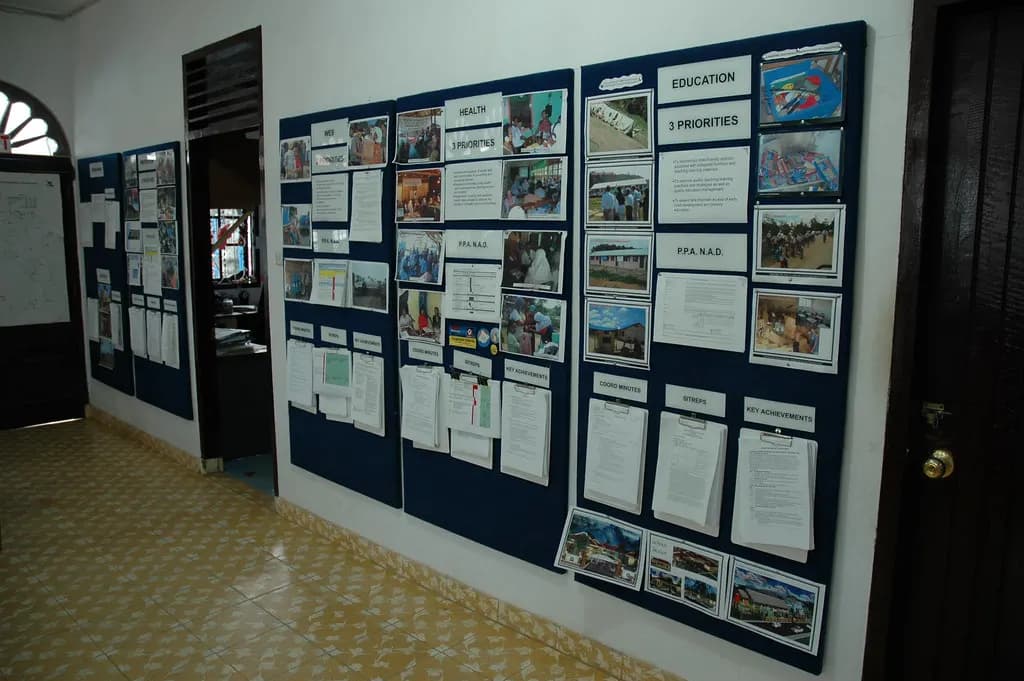
- display the penal consequences of sexual harassment and the order constituting the Internal Committee;
- formulate and widely circulate an internal policy;
- run workshops and awareness programmes for employees, and orientation and skill-building for committee members;
- declare the names and contact details of all committee members;
- give the committee facilities, secure attendance of respondents and witnesses, and share information it needs;
- help the woman file a criminal complaint if she chooses, and treat sexual harassment as misconduct under service rules;
- monitor that the committee submits its reports on time.
Annual report. Under section 21 and Rule 14, the Internal Committee prepares a report each calendar year covering complaints received, complaints disposed of, cases pending for more than 90 days, workshops and awareness programmes held, and the nature of action taken. It goes to the employer and the District Officer. Section 22 then requires the employer to include the number of cases and their disposal in its own annual report, or, if it doesn't prepare one, to inform the District Officer. If there were no complaints, file a nil report — it shows the committee exists and is working.
Companies. From 14 July 2025, the Companies (Accounts) Rules, 2014 require the board's report to state the number of complaints received, disposed of and pending for more than 90 days during the year — not just that an Internal Committee exists — along with a statement on maternity benefit compliance. See our maternity benefit guide.
Penalties and enforcement in 2026
Section 26 makes it an offence to fail to constitute an Internal Committee, to fail to act on the committee's or Local Committee's recommendations, to fail to file the annual information, or to breach any other provision or rule. The fine is up to ₹50,000. A second conviction for the same offence carries twice the punishment, and the government or local authority can cancel, withdraw or refuse to renew the licence or registration needed to run the business. Offences are non-cognizable and can be tried only on a complaint by the aggrieved woman or a person authorised by the committee.
Enforcement has stepped up. On 14 May 2026, Maharashtra authorised District Officers and Women and Child Development officials to inspect establishments against a formal checklist covering the policy, committee composition, complaint mechanisms, confidentiality, interim relief, training, inquiry timelines, annual reports and SHe-Box onboarding. On 19 June 2026, the National Commission for Women issued an advisory recommending mandatory annual POSH audits for establishments with ten or more people and public disclosure of committee details. These are advisories and state measures, not amendments to the Act, but they show what inspectors now look for.
POSH Act — key numbers
10 or more
Workers needing an Internal Committee
Section 4 with section 6
up to ₹50,000
Fine for non-compliance
Double on repeat; licence at risk
90 days
Time to complete inquiry
Section 11(4)
94,479
Internal Committees on SHe-Box
Portal counter, October 2026
SHe-Box: registering your Internal Committee
SHe-Box (Sexual Harassment electronic Box) is the Ministry of Women and Child Development's online system at shebox.wcd.gov.in. Any woman — in government or private employment, organised or unorganised — can file a complaint there, and it is routed to the Internal or Local Committee with jurisdiction. A revamped version launched on 29 August 2024 also works as a national register of Internal and Local Committees, with nodal officers at central, state, district and private head-office level.
When we checked in October 2026, the portal listed about 2.04 lakh workplaces and 94,479 Internal Committees, 41,071 of them in the private sector — a fraction of India's employers, which is why district officers have been pushing private firms to register. Mumbai City district set a 15 May 2025 deadline, and Delhi issued a similar public notice in June 2025.
How to register (private employer): open the portal, choose Private Head Office Registration, register a nodal officer for your head office with official email and mobile, then add each workplace and the composition of its Internal Committee — Presiding Officer, members and external member. Keep the details current when members change. Registration is free.
Worked example: POSH compliance for a 15-person MSME
Meera runs a 15-person digital marketing agency in Pune with 9 women and 6 men. Here is how she gets compliant in about a month.
Week 1 — policy and committee. She adopts a three-page policy: the definition of sexual harassment, examples, how to complain, the committee's contacts, timelines, confidentiality and non-retaliation. Her senior-most woman, the accounts head, becomes Presiding Officer; a woman designer and a male project manager are members; a lawyer who works with a women's NGO agrees to be the external member. The committee has four members, three of them women. Meera signs a written order constituting it.
Week 2 — display and register. She puts up the order and a notice of penal consequences in the office and on the intranet, and registers the head office and committee on SHe-Box.
Week 3 — training. A two-hour awareness session for all staff and a half-day orientation for committee members.
Week 4 — records. She sets up a confidential complaint register and a calendar reminder for the annual report each January.
Indicative first-year cost (market estimates from typical Pune rates, not official figures): external member retainer ₹10,000–₹25,000 a year plus sitting fees if a complaint arises (the statutory minimum is ₹200 per day plus travel); awareness and committee training ₹8,000–₹20,000; policy drafting ₹5,000–₹15,000 if she uses a professional. Total, roughly ₹25,000–₹60,000 — far below the risk of a fine, a licence problem or a lost client audit.
Common mistakes
No external member. A committee of only employees isn't validly constituted, and its findings can be set aside.
A male Presiding Officer, or fewer than half women. Both breach section 4.
Waiting for a complaint before forming the committee. The duty applies from the moment you have ten workers.
Allowing lawyers or delaying past 90 days. Rule 7 bars legal practitioners at hearings; delays invite challenge.
Leaking details. Sharing names in a team chat or with clients breaches section 16.
Skipping the nil report. Even with no complaints, file the annual report and record it in your own annual report or with the District Officer.
POSH compliance checklist for MSMEs
0/10What to do next
Count your workers today, including contract staff and interns. If you have ten or more, put the policy and the committee order in place this month and register on SHe-Box; if you have fewer, adopt a short policy and find out who your District Officer and Local Committee are. Then diarise the annual report and yearly training. For the rest of your HR compliance, read our hub on the new labour codes and the maternity benefit guide.
This is general information, not legal or tax advice — confirm on the official source or with a professional.
Frequently asked questions
Yes. Every employer must prevent sexual harassment, display the penal consequences and run awareness. An Internal Committee is required where there are 10 or more workers; workplaces with fewer than ten rely on the district's Local Committee, but still need a policy and must cooperate with it.
The Act defines 'employee' widely: regular, temporary, ad hoc and daily-wage staff, contract workers engaged through an agent, probationers, trainees, apprentices and volunteers. Count everyone working at the workplace, men and women, not only women.
Under section 26, an employer that fails to constitute an Internal Committee, act on its findings or file the annual information can be fined up to ₹50,000. A repeat conviction attracts twice the punishment and can lead to cancellation of the business's licence or registration.
Within 3 months of the incident. For a series of incidents, the clock runs from the last one. The Internal or Local Committee must complete the inquiry within 90 days and give its report within 10 days of completing the inquiry; the employer must act on it within 60 days.
The Act itself doesn't mention SHe-Box. But the Ministry of Women and Child Development uses the portal to record Internal Committees, and district officers in Mumbai, Delhi and elsewhere have directed private employers to register. Maharashtra's 2026 inspection checklist also checks SHe-Box onboarding. Registering is free and quick, so treat it as expected.
Rule 14 requires the Internal Committee's yearly report to show complaints received, complaints disposed of, cases pending for more than 90 days, workshops and awareness programmes held, and the action taken. It goes to the employer and the District Officer; companies also summarise it in their board report.
Sources & verification
Figures on this page were checked against the sources below when it was last reviewed on 9 October 2026. Each rate and limit is stored once with its own official source and review date, and official update channels are monitored daily so changes are picked up. How we verify
- 1.The Sexual Harassment of Women at Workplace (Prevention, Prohibition and Redressal) Act, 2013 — India Code, Legislative Department · accessed 9 October 2026
- 2.SHe-Box — Sexual Harassment electronic Box — Ministry of Women & Child Development · accessed 9 October 2026
- 3.Sexual Harassment of Women at Workplace Rules, 2013 (full text) — Comply4HR · accessed 9 October 2026
- 4.Companies to report data on sexual harassment complaints (Companies (Accounts) Second Amendment Rules, 2025) — SCC Online · accessed 9 October 2026
- 5.Amendment to Companies (Accounts) Rules (Ergo, 10 June 2025) — Khaitan & Co · accessed 9 October 2026
- 6.SC orders mandatory ICC committees for all government workplaces (3 Dec 2024) — Onmanorama · accessed 9 October 2026
- 7.Employment Law Bulletin, October 2026 — Shardul Amarchand Mangaldas & Co · accessed 9 October 2026
- 8.Registration procedure on SHe-Box portal — King Stubb & Kasiva · accessed 9 October 2026
MSMETOOLS is an independent platform and is not affiliated with any government agency, ministry or department.
Tools for this
Related guides
 Private Limited Company Registration 2026: Fees & ProcessRead guide
 LLP Annual Filing 2026: Form 8, Form 11, Due Dates & Late FeesRead guide
 Private Limited Company Annual Compliance 2026: Forms & DatesRead guide
 One Person Company Registration 2026: Fees, Rules & ProcessRead guide
Official links open the government site in a new tab.