 HR, payroll & labour
Maternity Benefit Act and the Social Security Code in 2026: Leave, Pay, Crèche and What Employers Pay
Maternity Benefit Act rules in 2026, now in the Social Security Code: 26 weeks' leave, 80-day eligibility, crèche at 50 staff, ESIC route and a worked cost.
 Edited by Sumeet YadavFounder & editor, MSMETOOLS · fact-checked against official sources
Contents (11)
- 1. From the 1961 Act to the Social Security Code
- 2. Which employers it applies to
- 3. Eligibility: the 80-day rule
- 4. Leave periods, adoption and the 2026 Supreme Court ruling
- 5. How the payment is calculated and when it is due
- 6. The ESIC route: when ESIC pays instead of you
- 7. Crèche, nursing breaks and other employer duties
- 8. Job protection and penalties
- 9. Worked example: what 26 weeks costs a small employer
- 10. Common mistakes
- 11. What to do next
Maternity benefit is one of the few labour rules that reaches almost every business that employs women — a 12-person clinic, a 30-person garment unit, a software start-up. Since 21 November 2025 the Maternity Benefit Act, 1961 no longer exists as a separate law; its rules now sit in Chapter VI of the Code on Social Security, 2020. This guide is for employers, HR and payroll teams, and for women checking their own rights. It covers who is eligible, how long the leave is, how the payment is calculated, when ESIC pays instead of the employer, crèche and nursing breaks, the Supreme Court's 2026 ruling on adoption, penalties, and a worked example of what 26 weeks costs a small employer.
Quick answer
The Maternity Benefit Act, 1961 was replaced on 21 November 2025 by Chapter VI of the Code on Social Security, 2020. A woman who has worked 80 days for her employer in the 12 months before her expected delivery gets 26 weeks of paid leave at her average daily wage. Women insured under ESI are paid by ESIC instead.
Applies to every factory, mine and plantation, and to shops and establishments with 10 or more employees
Up to 8 weeks before delivery; 12 weeks for a woman with two or more surviving children
Medical bonus of ₹3,500 if the employer gives no free pre- and post-natal care
Crèche at 50 or more employees; two nursing breaks a day until the child is 15 months old
Not paying it: up to 6 months' imprisonment or a fine up to ₹50,000, or both
From the 1961 Act to the Social Security Code
The Maternity Benefit Act was passed in 1961 and amended in 2017, when paid leave went from 12 to 26 weeks and the crèche and work-from-home provisions were added. On 21 November 2025 the Code on Social Security brought nine social security laws together, and the Maternity Benefit Act became sections 59 to 72 of the Code.
The substance carried over almost unchanged. What did change is mainly procedural: proof of pregnancy, delivery or miscarriage can now be certified by an ASHA worker, a qualified auxiliary nurse-midwife or a midwife as well as a registered doctor; the inspector is now an Inspector-cum-Facilitator; and penalties moved into the Code's common penalty section. The crèche duty is described in gender-neutral terms, and the information about maternity benefits must be given to every woman in writing and electronically when she is first appointed.
The central government notified the Social Security (Central) Rules, 2026 on 8 May 2026 (G.S.R. 344(E)). These set the forms, the crèche standards and the list of gross misconduct that can disqualify a woman from benefit. Several states — Andhra Pradesh, Arunachal Pradesh, Bihar, Gujarat, Ladakh, Lakshadweep and Uttar Pradesh — had notified final rules under the Code by October 2026. Others are still working from drafts.
Maternity benefit law — key dates
1961
Maternity Benefit Act passed (12 weeks' paid leave)
2017
Amendment: 26 weeks, crèche at 50 employees, work from home
21 Nov 2025
Act repealed; rules move to Chapter VI of the Code on Social Security
17 Mar 2026
Supreme Court removes the 3-month child-age limit for adoptive mothers
8 May 2026
Social Security (Central) Rules, 2026 notified — forms, crèche standards, gross misconduct list
Which employers it applies to
The First Schedule to the Code decides coverage. The maternity chapter applies to:
- every factory, mine and plantation, including those owned by government, whatever their size;
- every shop or establishment with 10 or more employees now, or on any day in the preceding twelve months;
- any other establishment the government notifies.
Once covered, an establishment stays covered even if its headcount later falls below the threshold. The chapter protects every woman employed in the establishment, whether permanent, temporary, fixed-term or on probation. The only eligibility test is the 80-day rule.
If your business has fewer than 10 employees and is not a factory, mine or plantation, the statute doesn't bind you — but many small firms offer leave anyway, and a woman covered by ESI may still get ESIC's maternity benefit if your unit is registered voluntarily.
Eligibility: the 80-day rule
A woman is entitled to maternity benefit only if she has actually worked in the employer's establishment for at least 80 days in the twelve months immediately before her expected date of delivery. Days she was laid off, and paid holidays declared under law, count towards the 80. Days of unpaid absence don't.
Example. Priya joined a Pune packaging firm on 1 June. Her expected delivery date is 15 October. Between 1 June and 14 October she has worked 104 days, so she qualifies. Had she joined on 15 August, she would have worked roughly 50 days and would not qualify under the Code — although the employer may still grant leave as a matter of policy.
Notice that there is no salary ceiling. A ₹2 lakh-a-month manager and a ₹15,000 helper have the same entitlement. There is also no limit on how many times a woman can claim, but the duration drops once she has two surviving children.
How much leave — by situation
| Situation | Paid leave | Before delivery |
|---|---|---|
First or second child | 26 weeks | Up to 8 weeks |
Two or more surviving children | 12 weeks | Up to 6 weeks |
Adoption or surrogacy (commissioning mother) | 12 weeks | From date child is handed over |
Miscarriage or medical termination | 6 weeks | From the day after |
Tubectomy | 2 weeks | From the day after |
Illness arising out of pregnancy or delivery | Up to 1 extra month | On top of the above |
First or second child
- Paid leave
26 weeks
- Before delivery
Up to 8 weeks
Two or more surviving children
- Paid leave
12 weeks
- Before delivery
Up to 6 weeks
Adoption or surrogacy (commissioning mother)
- Paid leave
12 weeks
- Before delivery
From date child is handed over
Miscarriage or medical termination
- Paid leave
6 weeks
- Before delivery
From the day after
Tubectomy
- Paid leave
2 weeks
- Before delivery
From the day after
Illness arising out of pregnancy or delivery
- Paid leave
Up to 1 extra month
- Before delivery
On top of the above
Leave periods, adoption and the 2026 Supreme Court ruling
Normal delivery. The maximum is 26 weeks, and no more than 8 weeks of it can come before the expected delivery date. The rest follows the birth. Separately, the Code forbids an employer from knowingly employing a woman — and forbids the woman from working — in the six weeks immediately after delivery, miscarriage or termination. In the month before that six-week window, a pregnant woman can ask not to be given arduous work or work involving long hours of standing.
Two or more surviving children. The period drops to 12 weeks. This is about surviving children, not the number of pregnancies.
Death of mother or child. If the woman dies during the benefit period, benefit is paid up to the day of her death. If she dies during or after delivery leaving the child, the employer pays the full period; if the child also dies, up to the child's death. Payment goes to her nominee or legal representative.
Adoption and surrogacy. Section 60(4) gave 12 weeks to a woman who legally adopts a child below three months of age, and to a commissioning mother (a biological mother who uses a surrogate). On 17 March 2026, in Hamsaanandini Nanduri v Union of India, the Supreme Court held that the three-month age limit violates Articles 14 and 21 of the Constitution. Adoptive mothers are now entitled to 12 weeks from the date the child is handed over, whatever the child's age. The Court also urged the government to consider a statutory paternity leave regime; there is none for private employers yet. If your HR policy still mentions the three-month condition, update it.
Work from home. Where the nature of work allows it, the employer may let the woman work from home after the maternity leave, for a period and on conditions both agree. It is not an entitlement, but it must be considered.
How the payment is calculated and when it is due
Maternity benefit is paid at the average daily wage for the period of actual absence. The average daily wage is the average of the woman's wages for the days she worked in the three calendar months before she goes on leave, and it can never be below the minimum wage fixed under the Code on Wages. "Wages" here follows the Code's definition — basic pay, dearness allowance and retaining allowance, with excluded allowances above 50% of pay added back — so a low-basic salary structure doesn't shrink the benefit as much as it once did.
Timing. The woman gives written notice in the prescribed form, naming the date she will stop work (not earlier than eight weeks before the expected delivery) and, if she wishes, a nominee. Failing to give notice does not cancel her right. The employer must pay:
- the benefit for the period before the expected delivery in advance, once she produces proof of pregnancy;
- the balance within 48 hours of her producing proof of delivery.
Medical bonus. If the employer does not provide free pre-natal confinement and post-natal care, the woman also gets a medical bonus of ₹3,500. The central rules say it is paid together with the maternity benefit.
No deductions. You cannot reduce her normal daily wage because she was moved to lighter work during pregnancy or because she takes nursing breaks.
Paying maternity benefit — the employer's steps
- 1
Receive the notice
The woman gives written notice in the prescribed form with the date she will stop work and her nominee.
- 2
Check the 80-day test
Count days actually worked, plus lay-off and paid holidays, in the 12 months before the expected delivery.
- 3
Check ESI status
If she is an insured person with 70 contribution days in the two previous contribution periods, ESIC pays — help her file the claim.
- 4
Pay the pre-delivery amount in advance
Compute the average daily wage on the last three calendar months and pay the pre-delivery period on proof of pregnancy.
- 5
Pay the balance within 48 hours
On proof of delivery, pay the remaining period and the medical bonus if you don't provide free care.
The ESIC route: when ESIC pays instead of you
Most small employers have ESI-covered staff — those earning up to ₹21,000/month in units with 10 or more employees. For these women, maternity benefit comes from ESIC, not from the employer's pocket.
An insured woman who has contributions payable for 70 days in the two immediately preceding contribution periods gets ESIC's maternity benefit at her full wage for 26 weeks, extendable by one month on medical advice. If her confinement happens where ESI medical facilities are not available, ESIC also pays ₹15,000 towards confinement expenses. She cannot claim maternity benefit from both ESIC and the employer for the same period.
There is a gap to watch. Section 61 says a woman entitled under the maternity chapter stays entitled, even after ESI applies to her establishment, until she qualifies for ESIC's benefit. So if a new ESI-covered employee becomes pregnant before she has 70 contribution days in the right periods, the employer must pay under the Code. Many small firms miss this and leave the woman with neither.
Read our ESIC rules guide for contribution periods and the ESIC registration guide if your unit isn't registered yet.
ESIC maternity benefit at a glance
26 weeks
Benefit period
Extendable by 1 month on medical advice
70 days
Contribution days needed
In the two preceding contribution periods
Full wage
Rate of benefit
Paid by ESIC, not the employer
₹15,000
Confinement expenses
Where ESI facilities aren't available
Crèche, nursing breaks and other employer duties
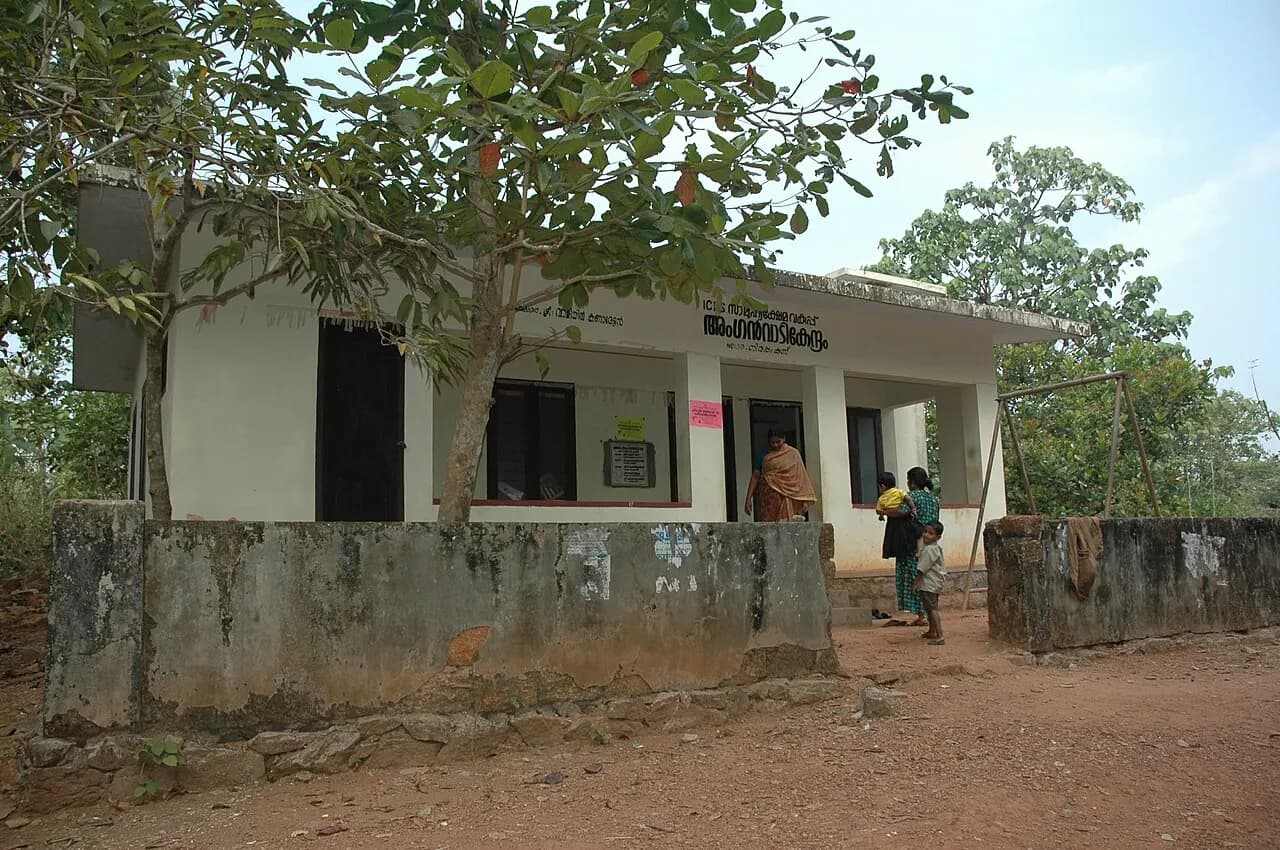
Crèche. Every establishment with 50 or more employees must have a crèche, either on its own or shared. Under the central rules, the crèche must be within one kilometre, for children under six, with at least ten square feet per child and trained staff. The mother can visit four times a day, including her rest intervals. Employers can use a common crèche run by government, a municipality, an NGO or a group of establishments. With the agreement of a negotiating union or council, or a majority of employees, the employer can pay a crèche allowance of at least ₹500 a month per child (up to two children) instead.
Nursing breaks. After returning to work, a woman gets two nursing breaks a day, in addition to her rest interval, until the child is 15 months old. The central rules set each break at 15 minutes, plus up to 15 minutes' travel to the crèche.
Display and information. An abstract of the maternity chapter and rules must be displayed in the local language in every part of the establishment where women work, and every woman must be told about her benefits in writing and electronically when she joins.
Board reports. Since 14 July 2025, companies must include a statement of compliance with the maternity benefit provisions in the directors' report under the Companies (Accounts) Rules, 2014.
Job protection and penalties
While a woman is absent under the maternity chapter, the employer cannot discharge or dismiss her, give her a notice that expires during her absence, or change her service conditions to her disadvantage. If she is dismissed during pregnancy, she still keeps the maternity benefit and medical bonus she would otherwise have received.
The only exception is dismissal for gross misconduct. The Social Security rules list five acts: wilful destruction of the employer's goods or property; assaulting a superior or co-employee at work; conviction for a criminal offence involving moral turpitude; theft, fraud or dishonesty connected with the employer's business or property; and wilful breach of safety rules or interference with safety or fire-fighting equipment. Even then, the order must be in writing, and the woman can appeal to the competent authority within 60 days.
A woman forfeits benefit only for days she works for pay elsewhere during her leave.
Penalties. Failing to pay maternity benefit, or dismissing or penalising a woman in breach of the chapter, is punishable under section 133 with up to 6 months' imprisonment or a fine up to ₹50,000, or both. A woman can also complain to the Inspector-cum-Facilitator, who can order payment; either side can appeal within 30 days.
Worked example: what 26 weeks costs a small employer
Take a 22-person design studio in Bengaluru — a shop and establishment, so the maternity chapter applies. Anjali, a senior designer, earns ₹40,000 a month, of which ₹24,000 is basic and the rest HRA and conveyance (under 50%), so her wages under the Code are ₹24,000 plus any amount added back — here none. Her gross is above the ESI limit, so the studio pays.
Average daily wage. In the three calendar months before her leave she was paid ₹72,000 in wages for 78 working days: ₹72,000 ÷ 78 = ₹923.08 a day.
Maternity benefit. 26 weeks is 182 days: 182 × ₹923.08 = ₹1,68,000, roughly seven months of her ₹24,000 wages.
Medical bonus. The studio provides no free pre- and post-natal care, so it adds ₹3,500.
Total statutory cost: about ₹1,71,500, plus a replacement — a freelancer for six months at, say, ₹35,000 a month would add about ₹2,10,000 (an estimate based on typical Bengaluru freelance rates, not an official figure). The studio has fewer than 50 employees, so no crèche duty applies.
| Cost item | Anjali (not ESI-covered) | Sunita (ESI-covered) |
|---|---|---|
| Wages under the Code | ₹24,000 a month | ₹18,000 a month |
| Who pays the benefit | Employer | ESIC |
| 26 weeks' maternity benefit | ₹1,68,000 | ₹0 to the employer |
| Medical bonus | ₹3,500 | ESIC confinement expenses where applicable |
| Employer's statutory cost | about ₹1,71,500 | close to nil |
Now take Sunita, a helper at the same studio earning ₹18,000 gross and covered by ESI, with 70+ contribution days. ESIC pays her full wage for 26 weeks from its fund. The studio's direct cost is close to nil beyond holding her job open — the reason ESI coverage matters for small employers.
Many owners ask whether maternity benefit is a business expense for tax. It is salary paid to an employee, so it is normally deductible like other wages; confirm treatment with your accountant.
Common mistakes
Refusing benefit to probationers or fixed-term staff. The only test is 80 days in 12 months. Probation, contract or part-time status doesn't matter.
Calculating on basic pay alone. The average daily wage uses "wages" under the Code, which can include special allowance and excess allowances. Recalculate.
Assuming ESIC always pays. A newly covered woman may not yet have the 70 contribution days. Until she does, you pay.
Ending a contract or 'restructuring' a role during leave. Changing her conditions to her disadvantage during absence is unlawful and invites prosecution.
Old adoption policies. The three-month child-age limit is no longer valid after March 2026.
Maternity benefit — employer checklist
0/10What to do next
Check your headcount and each woman's ESI status, then put the notice-and-payment steps into your HR policy so nobody is caught out. If your business is moving past 50 employees, plan the crèche or a common-crèche arrangement early. For the wider picture, read our hub on the new labour codes and the POSH Act compliance guide, and use our salary slip generator to show maternity benefit as a separate line on the wage slip.
This is general information, not legal or tax advice — confirm on the official source or with a professional.
Frequently asked questions
No. It was repealed on 21 November 2025 when the Code on Social Security, 2020 came into force. Its provisions — 26 weeks of paid leave, the 80-day eligibility rule, medical bonus, nursing breaks and crèche — were carried into Chapter VI of the Code with small changes, such as simpler proof of pregnancy.
A woman who has actually worked for the employer for at least 80 days in the twelve months before her expected delivery date. Days of lay-off and paid holidays count. There is no minimum salary or length of service otherwise, so probationers, contract-period staff and part-time workers who meet the 80-day test qualify.
Up to 26 weeks, of which not more than 8 weeks may be taken before the expected delivery. A woman with two or more surviving children gets 12 weeks. Adopting and commissioning mothers get 12 weeks. Miscarriage carries 6 weeks of paid leave.
If the woman is an insured person under ESI and has contributions for 70 days in the two preceding contribution periods, ESIC pays her full wage for 26 weeks. Otherwise the employer pays at her average daily wage. An employer stays liable until an ESI-covered woman qualifies for ESIC's benefit.
Only for establishments with 50 or more employees. Under the central rules the crèche must be within one kilometre, and the woman can visit it four times a day. With the agreement of the union or a majority of employees, the employer can instead pay a crèche allowance of at least ₹500 a month per child (up to two children).
Yes. The Code gave 12 weeks only where the adopted child was under three months old. On 17 March 2026 the Supreme Court, in Hamsaanandini Nanduri v Union of India, held that age limit unconstitutional, so adoptive mothers are entitled to 12 weeks from the date the child is handed over, whatever the child's age.
Sources & verification
Figures on this page were checked against the sources below when it was last reviewed on 9 October 2026. Each rate and limit is stored once with its own official source and review date, and official update channels are monitored daily so changes are picked up. How we verify
- 1.Code on Social Security, 2020 — sections 59 to 72 (bare act text) — AdvocateKhoj · accessed 9 October 2026
- 2.Code on Social Security, 2020: Towards Universal and Inclusive Social Protection (factsheet, 22 Nov 2025) — PIB · accessed 9 October 2026
- 3.ESIC — Information on benefits — Employees' State Insurance Corporation · accessed 9 October 2026
- 4.Government makes the four Labour Codes effective (21 Nov 2025) — PIB — Ministry of Labour & Employment · accessed 9 October 2026
- 5.[Analysis] Maternity Benefit under Code on Social Security 2020 — Taxmann · accessed 9 October 2026
- 6.SC strikes down 3-month cap on maternity benefits for adoptive mothers (17 Mar 2026) — SCC Online · accessed 9 October 2026
- 7.Employment Law Bulletin, October 2026 — Shardul Amarchand Mangaldas & Co · accessed 9 October 2026
- 8.Government of India notifies final Rules on four Labour Codes (10 May 2026) — KPMG in India · accessed 9 October 2026
- 9.Companies to report data on sexual harassment complaints (Companies (Accounts) Second Amendment Rules, 2025) — SCC Online · accessed 9 October 2026
MSMETOOLS is an independent platform and is not affiliated with any government agency, ministry or department.
Tools for this
Related guides
 ESIC Rules 2026: Eligibility, Deduction, Periods & BenefitsRead guide
 Minimum Wages Act 1948 & Code on Wages 2026: What ChangedRead guide
 New Labour Codes 2026: All 4 Codes Explained for EmployersRead guide
 Leave Encashment in 2026: Rules, Formula & ₹25 Lakh Tax LimitRead guide
Official links open the government site in a new tab.