 Business registration & legal
LLP Annual Filing in 2026: Form 11, Form 8, Audit Limits, Late Fees and ITR
LLP annual filing in 2026: Form 11 by 30 May, Form 8 by 30 October, the slab late fees that replaced ₹100 a day, the audit limits, ITR-5 dates and an example.
 Edited by Sumeet YadavFounder & editor, MSMETOOLS · fact-checked against official sources

Contents (9)
- 1. What LLP annual filing involves
- 2. When an LLP needs an audit
- 3. Due dates for FY 2025-26 and a worked calendar
- 4. The late fee: slab multiples, not ₹100 a day
- 5. How the filing works on the MCA portal
- 6. Penalties, and what happens if an LLP stops filing
- 7. Event-based LLP filings to keep in mind
- 8. Common mistakes and how to fix them
- 9. After you file: what to do next
An LLP is often chosen because it's "lighter" than a private limited company. On compliance that's true: there's no AGM, no board meetings and no audit below the limits. It isn't zero. Every LLP files two returns with the Registrar each year, plus its income-tax return, even in a year with no business. This guide is for partners and accountants of small LLPs. It explains what Form 11 and Form 8 contain, the due dates for FY 2025-26, when an audit is needed, how the late fee works now that the old ₹100-a-day rule has gone, the penalties, the ITR dates and a worked example. Everything was checked against the LLP Act, the 2021 amendment, MCA fee rules and CBDT circulars in October 2026.
Quick answer
Every LLP files Form 11 (annual return) by 30 May and Form 8 (Statement of Account and Solvency) by 30 October each year, plus ITR-5. For FY 2025-26 that's 30 May 2026 and 30 October 2026. Late filing no longer costs ₹100 a day. Since 1 April 2022 it costs a multiple of the normal fee, which grows with the delay.
Audit needed only if turnover exceeds ₹40 lakh and contribution exceeds ₹25 lakh
Normal fee per form: ₹50 to ₹600, depending on contribution
Penalty on top: ₹100 a day, up to ₹1 lakh for the LLP and ₹50,000 for each designated partner
ITR-5: 21 November 2026 for audited LLPs this year (extended); 31 August for others
What LLP annual filing involves
An LLP's yearly compliance comes from two laws. The Limited Liability Partnership Act, 2008 and the LLP Rules, 2009 require two filings with the Registrar of Companies on the MCA portal. The Income-tax Act requires a return in ITR-5, and a tax audit where turnover crosses the tax-audit limit. Designated partners also have their own director-style KYC obligation, because they hold a DIN.
Form 11, annual return. This is a snapshot of the LLP's partners and their contributions as at 31 March: who the partners and designated partners are, how much each has contributed, any changes in the year, and summary details such as penalties imposed. It doesn't contain financial statements. Section 35 requires it within 60 days of the close of the financial year, which is 30 May for an April–March year.
Form 8, Statement of Account and Solvency. Section 34 requires every LLP to keep proper books on a cash or accrual basis and double entry, and to prepare a Statement of Account and Solvency within six months of the year end. Form 8 files that statement. Part A is a solvency declaration by the designated partners that the LLP can pay its debts in the normal course of business. Part B summarises the statement of assets and liabilities and the income and expenditure account. It's due within 30 days after the first six months of the next year, which is 30 October. Form 8 is signed digitally by designated partners. Where the LLP's accounts are audited, the auditor's details are given in the form.
ITR-5. The LLP files its income-tax return in ITR-5, with an audit report if one is needed. LLP profits are taxed at 30% (plus surcharge and cess). Partners' share of profit is exempt in their hands, while their remuneration and interest are taxable.
Designated partner KYC. Each designated partner's DIN is subject to the same KYC rule as a company director's. From 31 March 2026 that's a filing once every three years by 30 June. Our DIR-3 KYC guide has the details.
Form 11 vs Form 8 at a glance
| Form 11 — annual return | Form 8 — account and solvency | |
|---|---|---|
Law | LLP Act s.35; LLP Rules | LLP Act s.34; LLP Rules rule 24 |
What it contains | Partners, designated partners, contributions, changes | Solvency declaration, assets and liabilities, income and expenditure |
Made up as at | 31 March | Year ended 31 March |
Due date (31 March year end) | 30 May | 30 October |
FY 2025-26 | 30 May 2026 | 30 October 2026 |
Signed by | Designated partners | Designated partners; auditor details where audited |
Penalty if not filed | s.35(2) | s.34(5) |
Law
- Form 11 — annual return
LLP Act s.35; LLP Rules
- Form 8 — account and solvency
LLP Act s.34; LLP Rules rule 24
What it contains
- Form 11 — annual return
Partners, designated partners, contributions, changes
- Form 8 — account and solvency
Solvency declaration, assets and liabilities, income and expenditure
Made up as at
- Form 11 — annual return
31 March
- Form 8 — account and solvency
Year ended 31 March
Due date (31 March year end)
- Form 11 — annual return
30 May
- Form 8 — account and solvency
30 October
FY 2025-26
- Form 11 — annual return
30 May 2026
- Form 8 — account and solvency
30 October 2026
Signed by
- Form 11 — annual return
Designated partners
- Form 8 — account and solvency
Designated partners; auditor details where audited
Penalty if not filed
- Form 11 — annual return
s.35(2)
- Form 8 — account and solvency
s.34(5)
When an LLP needs an audit
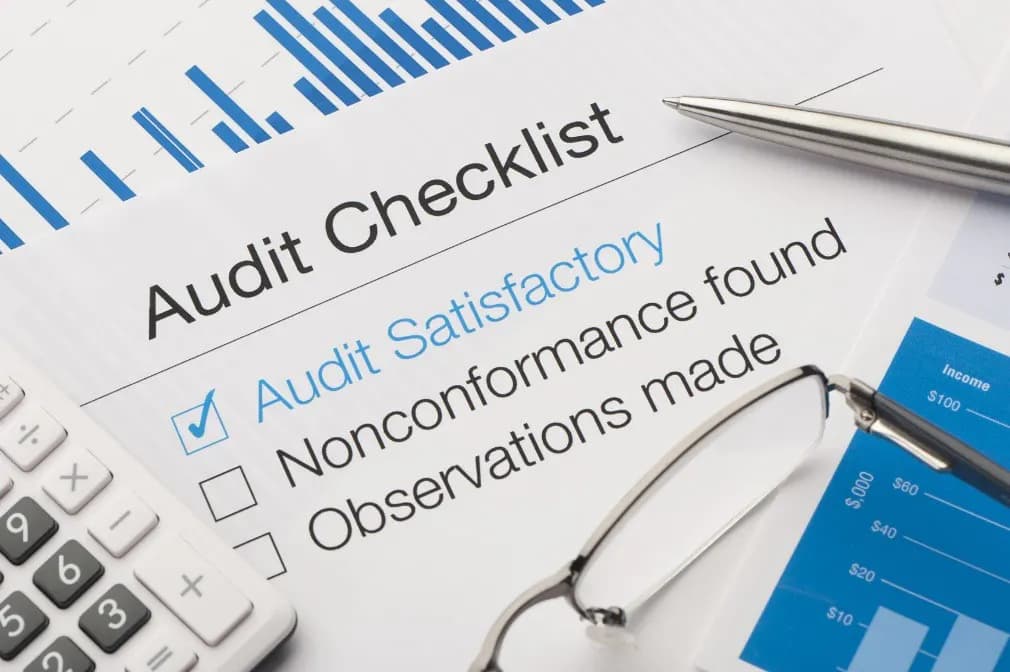
Under the LLP Rules, an LLP's accounts must be audited by a chartered accountant every year. The exception is an LLP whose turnover doesn't exceed ₹40 lakh in the year, or whose partners' contribution doesn't exceed ₹25 lakh. Meet either test and the audit is optional, unless the LLP agreement requires one. In practice, a two-partner LLP with ₹2 lakh of contribution doesn't need a statutory audit even if its turnover runs into crores. That's a big difference from a private limited company, which has to be audited whatever its size. Our statutory audit guide compares the two.
Tax audit is separate. An LLP exempt from statutory audit may still need a tax audit. Under the Income-tax Act a business needs one when its turnover exceeds ₹1 crore, or ₹10 crore if cash transactions are within 5%. An LLP with ₹3 lakh contribution and ₹12 crore turnover, mostly received in cash, needs a tax audit but no LLP audit. One with ₹50 lakh contribution and ₹60 lakh turnover needs an LLP audit but no tax audit.
Small LLPs. Since the LLP (Amendment) Act, 2021, a "small LLP" is one with contribution up to ₹25 lakh and turnover up to ₹40 lakh for the previous year. The government can raise these limits by rules, up to ₹5 crore and ₹50 crore. Small LLPs pay lower additional fees when they file late and face lower penalty exposure. The limits happen to match the audit limits, but they are a separate concept. A small LLP is outside the audit requirement anyway, while some LLPs exempt from audit (say, ₹10 lakh contribution and ₹90 lakh turnover) aren't small LLPs.
Due dates for FY 2025-26 and a worked calendar
The LLP's financial year normally runs from 1 April to 31 March. There's one exception. An LLP incorporated on or after 1 October can close its first financial year on 31 March of the following year, so the first year can run up to 18 months. Its first Form 11 and Form 8 then fall due on that later cycle.
Take "Mehta Interiors LLP", set up in Ahmedabad in 2022 by two designated partners with ₹4 lakh of contribution. It had FY 2025-26 turnover of ₹1.4 crore, all through bank and UPI. It doesn't need an LLP audit, because its contribution is under ₹25 lakh. It doesn't need a tax audit either, because its receipts are almost entirely non-cash and turnover is under ₹10 crore. It isn't a small LLP, because turnover is above ₹40 lakh. Its normal filing fee is ₹100 per form, because contribution is in the ₹1–5 lakh slab.
Mehta Interiors LLP — FY 2025-26 filing calendar
31 March 2026
Financial year closes; partners and contributions as on this date go into Form 11
30 May 2026
Form 11 annual return (60 days)
31 August 2026
ITR-5 (no audit of any kind)
30 September 2026
Statement of Account and Solvency signed (within six months)
30 October 2026
Form 8 filed with the Registrar
30 June 2028
Next routine DIR-3 KYC Web for both designated partners (if they completed KYC earlier)
If Mehta Interiors also needed an audit, the ITR-5 date would be the audit-case date. For this year that is 21 November 2026, after CBDT Circular 07/2026, with the tax audit report due by 21 October 2026. Today is three weeks before the Form 8 deadline. If your statement of accounts isn't signed yet, this is the time to finish it.
The late fee: slab multiples, not ₹100 a day
Many guides still say a late LLP form costs ₹100 a day. That was the rule under the original section 69 of the LLP Act. The LLP (Amendment) Act, 2021 replaced section 69 from 1 April 2022. The new section lets the government set different additional fees for different classes of LLPs. The fee table in the LLP Rules now charges a multiple of the normal filing fee, depending on how late the form is and whether the LLP is small:
| Delay | Small LLP | Other LLP |
|---|---|---|
| Up to 15 days | 1× normal fee | 1× normal fee |
| 16–30 days | 2× | 4× |
| 31–60 days | 4× | 8× |
| 61–90 days | 6× | 12× |
| 91–180 days | 10× | 20× |
| 181–360 days | 15× | 30× |
| Beyond 360 days (Form 8 / Form 11) | 15× + ₹10 a day | 30× + ₹20 a day |
The additional fee is paid on top of the normal fee, and the portal won't accept the form without it. The normal fee depends on contribution: ₹50 up to ₹1 lakh, ₹100 up to ₹5 lakh, ₹150 up to ₹10 lakh, ₹200 up to ₹25 lakh, ₹400 up to ₹1 crore and ₹600 above that.
Worked example. Mehta Interiors (not a small LLP, normal fee ₹100) files Form 8 on 14 December 2026, 45 days late. The additional fee is 8 × ₹100 = ₹800, so ₹900 in all. A small LLP with ₹1 lakh contribution (normal fee ₹50) filing 45 days late pays 4 × ₹50 = ₹200 extra, ₹250 in all. The real damage comes with years of non-filing. Take an LLP with ₹30 lakh contribution (normal fee ₹400) that files Form 11 two years late, about 365 days beyond the 360-day mark. It pays 30 × ₹400 = ₹12,000 plus ₹20 × 365 = ₹7,300, so roughly ₹19,700 in additional fees on one form. It has two forms a year to catch up on.
How the filing works on the MCA portal
Both forms are web forms on the MCA V3 portal. They are filed from the login of a designated partner or the professional handling the filing. Before you start, check that both designated partners have valid digital signature certificates, that their DSCs are linked to their DINs on the portal, and that their DINs are active. A DIN deactivated for missed KYC is the most common reason a filing stalls on the last day.
For Form 11, the web form draws partner details from the Registrar's records. You confirm each partner's contribution and add any changes in the year that were already filed through Form 4. For Form 8, you enter the summary figures from the signed statement of account and solvency. Attach the signed statement, and the auditor's report where the LLP is audited. You then pay the fee online and keep the SRN.
If the master data is wrong, for example a partner who left but whose Form 4 was never filed, fix that with the event-based form first. Otherwise the annual return will disagree with the Registrar's records.
Penalties, and what happens if an LLP stops filing

The additional fee is what you pay to file late. A penalty is a separate liability the Registrar can impose through adjudication, and paying the fee doesn't cancel it. After the 2021 amendment, both missed returns carry the same civil penalty. For Form 8, section 34(5) applies. For Form 11, section 35(2) applies. Each is ₹100 a day, up to ₹1 lakh for the LLP and ₹50,000 for each designated partner.
Not keeping proper books, or not preparing the statement of account and solvency at all, is still a criminal offence under section 34(6). It carries a fine of ₹25,000 to ₹5 lakh for the LLP and ₹10,000 to ₹1 lakh for each designated partner. That's a strong reason to keep the books in order even in a quiet year.
Beyond money, a long run of non-filing lets the Registrar treat the LLP as defunct and strike it off. Defaults also stay on the designated partners' records. When the same people later form a company or another LLP, or apply for a bank loan, the history shows. If the LLP really has stopped trading, has no assets or liabilities and has a bank account closed or at nil, the cleaner route is to bring the filings up to date if needed and apply for strike-off in Form 24.
Event-based LLP filings to keep in mind
Annual filing reports the position. Changes during the year have their own forms, generally due within 30 days of the change:
- Form 3: the LLP agreement and every change to it, such as new profit shares or capital terms. The first agreement is due within 30 days of incorporation.
- Form 4: a partner or designated partner joins, leaves or changes their details. It goes with the person's consent where they are joining.
- Form 15: change of registered office.
- Form 5: change of name.
These forms use the same slab late fees. A partner change that wasn't filed in Form 4 will also make Form 11 inconsistent, because Form 11 reports partners as at 31 March. The LLP registration guide explains Form 3 and the agreement in more depth.
LLP annual filing checklist
0/8Common mistakes and how to fix them
Waiting for the ITR before filing Form 8. Form 8 is due on 30 October, while the ITR of an audited LLP is often due later. The Registrar's form doesn't wait for the tax return. Prepare one set of final accounts by the end of September and use it for both.
Quoting the wrong year's partners in Form 11. Form 11 is made up as at 31 March. A partner who joined in April belongs in next year's return, and the change goes through Form 4 first.
Assuming "no business" means "no filing". A nil Form 11 and Form 8 are still due every year. The fee for a nil filing on time is the normal fee only, which costs far less than a late filing.
Getting the audit test backwards. The LLP is exempt from audit if either limit is met: turnover up to ₹40 lakh or contribution up to ₹25 lakh. It only needs an audit when both are exceeded. Some partners pay for audits they don't need. Others skip one they do need because turnover is low, without noticing that contribution is high and turnover isn't.
Letting a designated partner's DIN lapse. A deactivated DIN can't sign Form 8 or Form 11. Under the triennial rule it's easy to lose track. Reactivation costs ₹5,000.
Ignoring the agreement's own rules. Many LLP agreements require an audit, partner approval of accounts or a meeting before filing, even where the Act doesn't. If you skip these, the filing still goes through, but partners can challenge the accounts later.
After you file: what to do next
Once Form 8 and Form 11 are approved, save the SRNs and challans with the signed statement of accounts. Diarise next year's 30 May and 30 October dates now. Check whether the LLP will still be small or audit-exempt next year as turnover grows. If you are weighing an LLP against a company, compare this workload with our private limited company annual compliance guide. For the tax side, see ITR for business. To test whether the LLP's margins can carry its fixed costs, including compliance fees, try the break-even calculator.
This is general information, not legal or tax advice. Confirm on the official source or with a professional.
Frequently asked questions
For an LLP with a 31 March year end, Form 11 (annual return) is due by 30 May, within 60 days of the year end. Form 8 (Statement of Account and Solvency) is due by 30 October, 30 days after the first six months of the next year. For FY 2025-26, that means 30 May 2026 and 30 October 2026. The income-tax return in ITR-5 is a separate filing.
No. The flat ₹100 a day ended on 1 April 2022, when section 69 of the LLP Act was replaced. Late filing now costs a multiple of the normal fee. Small LLPs: 1× the normal fee up to 15 days, 2× up to 30 days, 4× up to 60, 6× up to 90, 10× up to 180 and 15× up to 360 days. Other LLPs: 1×, 4×, 8×, 12×, 20× and 30×. Beyond 360 days, Form 8 and Form 11 cost 15× the normal fee plus ₹10 a day (small LLP); 30× plus ₹20 a day (other LLPs). A separate penalty can also be imposed.
No. Under the LLP Rules, an LLP's accounts must be audited unless its turnover doesn't exceed ₹40 lakh or its partners' contribution doesn't exceed ₹25 lakh. If either figure is within the limit, the designated partners certify Form 8 instead. A tax audit is a separate question and depends on the Income-tax Act limits.
Yes. Both forms are due every year as long as the LLP is on the register, even with nil turnover. If the LLP has stopped operating and has no assets or liabilities, partners can apply to strike it off in Form 24. That is cheaper than paying late fees year after year.
An LLP files ITR-5. If its accounts must be audited, under the LLP Rules or because of a tax audit, the usual due date is 31 October. For FY 2025-26, CBDT Circular 07/2026 extended this to 21 November 2026. An LLP that needs no audit files by 31 August. Profits are taxed at 30% (plus surcharge and cess).
A small LLP has contribution up to ₹25 lakh and turnover up to ₹40 lakh. It pays lower additional fees for late filings: 2× the normal fee where other LLPs pay 4×, rising to 15× where they pay 30×. It also faces lower penalty exposure. The normal filing fee is the same.
Sources & verification
Figures on this page were checked against the sources below when it was last reviewed on 9 October 2026. Each rate and limit is stored once with its own official source and review date, and official update channels are monitored daily so changes are picked up. How we verify
- 1.The Limited Liability Partnership (Amendment) Act, 2021 — Gazette of India Extraordinary, 13 August 2021 — Ministry of Law and Justice (Gazette copy hosted by the High Court for the State of Telangana) · accessed 9 October 2026
- 2.LLP Act, 2008 — section 69 (MCA e-book text with amendment note) — Ministry of Corporate Affairs e-book (extract via Vaquill) · accessed 9 October 2026
- 3.Limited Liability Partnership (Amendment) Rules, 2022 — fees and additional fees — ClearTax · accessed 9 October 2026
- 4.LLP fee and late filing calculator (LLP Second Amendment Rules 2022) — CorpLawUpdates · accessed 9 October 2026
- 5.Companies (Appointment and Qualification of Directors) Amendment Rules, 2025 — G.S.R. 943(E) — Ministry of Corporate Affairs (Gazette copy hosted by the High Court for the State of Telangana) · accessed 9 October 2026
- 6.CBDT Circular No. 07/2026 — extension of timelines for audit reports and ITRs, AY 2026-27 — CBDT (copy hosted by CAalley) · accessed 9 October 2026
- 7.Annual filing of LLP for financial year 2024-25 — TaxGuru · accessed 9 October 2026
- 8.Income Tax e-filing portal — Income Tax Department · accessed 9 October 2026
MSMETOOLS is an independent platform and is not affiliated with any government agency, ministry or department.
Tools for this
Break Even Calculator
Find your break even point and units.
Working Capital Calculator
Check working capital, current and quick ratios.
Related guides
 Private Limited Company Annual Compliance 2026: Forms & DatesRead guide
 DIR-3 KYC 2026: New 3-Year Rule, Due Date, Fees & ProcessRead guide
 POSH Act 2026: Internal Committee, SHe-Box & MSME ChecklistRead guide
 What Is Statutory Audit? Rules, CARO & Tax Audit (2026)Read guide
Official links open the government site in a new tab.