 Finance & accounting
What Is Double Entry Bookkeeping? Debit–Credit Rules, Worked ₹ Entries with GST, and the Legal Requirements in India (2026)
What is double entry bookkeeping? Debit and credit rules, journal to ledger to trial balance, worked ₹ entries with GST input and output, and 2026 legal rules.
 Edited by Sumeet YadavFounder & editor, MSMETOOLS · fact-checked against official sources
Contents (10)
- 1. What double entry means
- 2. The rules of debit and credit
- 3. From journal to ledger to trial balance
- 4. Worked example: a month of entries for a small trader
- 5. GST set-off: the month-end entry
- 6. Ledger balances and the trial balance
- 7. Is double entry compulsory in India?
- 8. The audit trail rule for accounting software
- 9. Common double entry mistakes and how to fix them
- 10. What to do next
Double entry is the idea that holds every set of accounts together: each transaction touches at least two accounts, one debited and one credited, for the same amount. If you run a shop, a trading firm or a small company in India, understanding it lets you read your own books, catch errors before your accountant does, and make sense of GST ledgers. This guide explains what double entry means, the rules of debit and credit, how entries move from journal to ledger to trial balance, a worked set of ₹ entries for a small trader including GST input and output, and the legal rules — section 128 of the Companies Act and the audit trail requirement for accounting software. Checked in October 2026.
Quick answer
Double entry is a bookkeeping system in which every transaction is recorded twice — as a debit in one account and a credit in another — for equal amounts, so total debits always equal total credits. Companies in India must keep books on the accrual basis and double entry system under section 128 of the Companies Act, 2013.
Assets and expenses go up with a debit; liabilities, capital and income go up with a credit
Flow: source document → journal → ledger → trial balance → financial statements
GST: debit Input CGST/SGST on purchases, credit Output CGST/SGST on sales, set off monthly
Companies: preserve books for eight financial years; audit-trail software mandatory since 1 April 2023
What double entry means
Every business transaction is an exchange: something comes in and something goes out. When a trader buys stock for cash, stock comes in and cash goes out. When a customer buys on credit, the customer now owes money (an asset for you) and you have earned income. Double entry records both sides of each exchange.
The two sides are called debit (Dr, the left side of an account) and credit (Cr, the right side). The words don't mean "good" or "bad", or "money in" and "money out" — they're just the two columns. What matters is the rule that, for every entry, total debits equal total credits.
That rule rests on the accounting equation:
Assets = Liabilities + Capital
Every transaction keeps the equation in balance. Buying a ₹50,000 machine on credit raises assets (machinery) and liabilities (the supplier) by the same amount. Paying the supplier later lowers both assets (bank) and liabilities by ₹50,000. Earning income increases capital (through profit); paying expenses reduces it. Because the equation always holds, your balance sheet balances — and if it doesn't, an entry is wrong somewhere.
The alternative, single entry, records only one side — typically a cash book and a list of who owes what. It's simple but can't produce a reliable profit and loss account or balance sheet, can't prove arithmetical accuracy, and leaves no clear trail for a lender, a tax officer or an auditor.
The rules of debit and credit
Indian commerce students learn two equivalent sets of rules. Use whichever makes sense to you; they always give the same answer.
The traditional (golden) rules classify accounts into three types:
- Personal accounts — people, firms, companies, banks, and representative accounts such as outstanding salary. Debit the receiver, credit the giver. When you pay Gupta Suppliers, Gupta receives, so debit Gupta.
- Real accounts — assets: cash, stock, furniture, machinery, buildings. Debit what comes in, credit what goes out. When cash comes in, debit Cash.
- Nominal accounts — expenses, losses, incomes and gains. Debit all expenses and losses, credit all incomes and gains. Rent paid is debited; commission earned is credited.
The modern (accounting equation) rules classify accounts into five types:
| Account type | Examples | Increase | Decrease | Normal balance |
|---|---|---|---|---|
| Assets | Cash, bank, stock, debtors, machinery, Input GST | Debit | Credit | Debit |
| Expenses | Purchases, rent, salaries, electricity | Debit | Credit | Debit |
| Liabilities | Creditors, loans, Output GST payable | Credit | Debit | Credit |
| Capital | Owner's capital (drawings reduce it) | Credit | Debit | Credit |
| Income | Sales, interest received, commission | Credit | Debit | Credit |
A useful memory aid: DEAD CLIC — Debits increase Expenses, Assets and Drawings; Credits increase Liabilities, Income and Capital.
Note where GST sits. Input GST (tax you paid on purchases that you can claim) is an asset — a claim against the government — so it carries a debit balance. Output GST (tax you collected on sales) is a liability you owe the government, so it carries a credit balance.
From journal to ledger to trial balance
Bookkeeping follows a fixed path. Even if software does most of it, knowing the path tells you where to look when something is wrong.
The double entry cycle
Step 1
Source document (invoice, bill, bank slip)
Step 2
Journal entry (Dr and Cr)
Step 3
Post to ledger accounts
Step 4
Balance each ledger
Step 5
Trial balance
total Dr = total Cr
Step 6
Adjustments and financial statements
- Source documents. Every entry starts with evidence — a sales invoice, a purchase bill, a bank statement line, a salary sheet, a credit note. No document, no entry. Under GST you need valid tax invoices to claim input tax credit, so the paper trail matters twice.
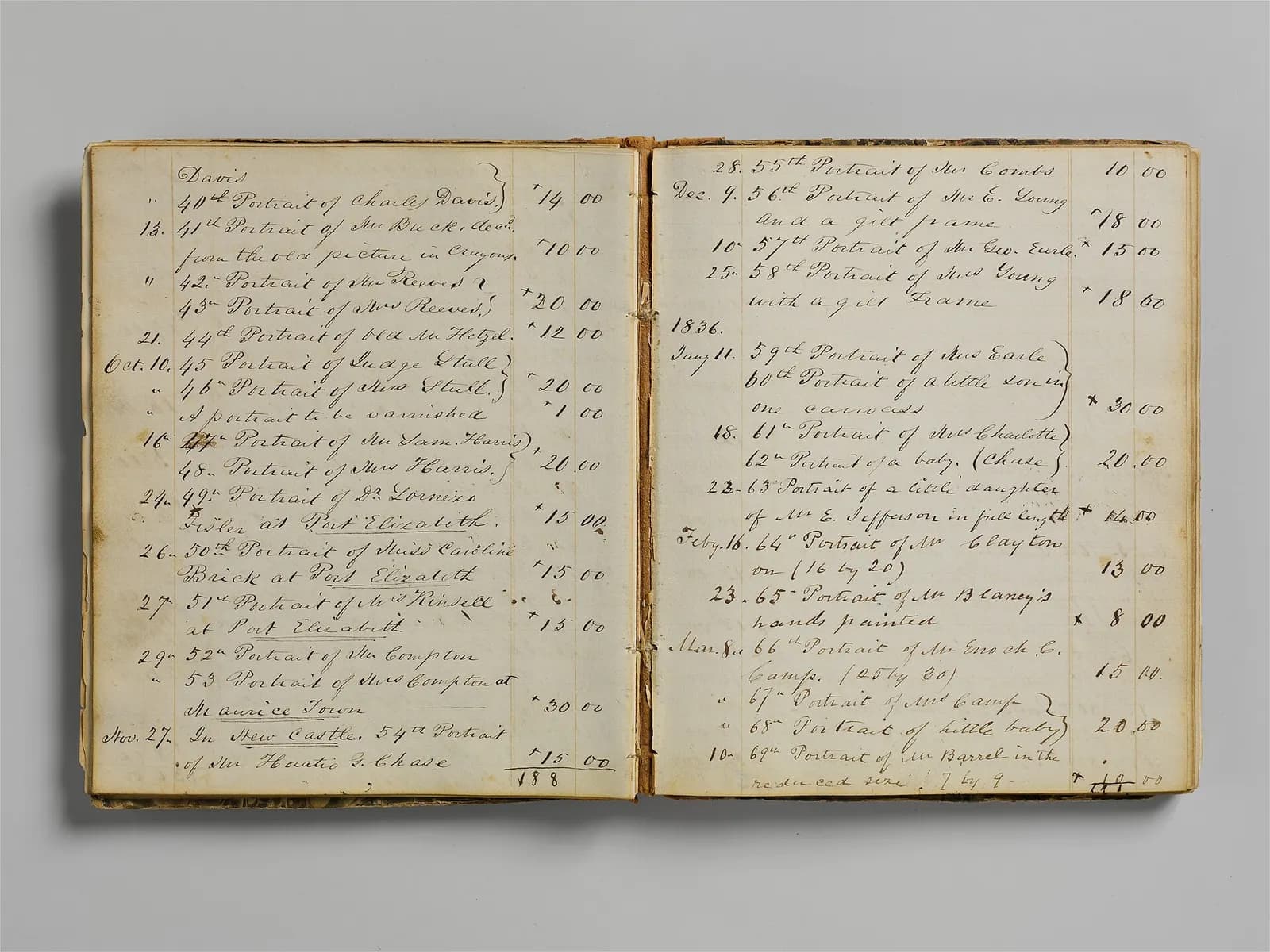
- Journal (book of original entry). Transactions are recorded in date order with the accounts debited and credited and a short narration. Many businesses use subsidiary journals — a purchases book, sales book, cash book and bank book — and keep the general journal for everything else (adjustments, depreciation, GST set-off).
- Ledger (book of final entry). Each amount is posted to its account. The Cash account collects every cash debit and credit; each customer and supplier has its own account. Balancing a ledger account tells you, for example, how much a customer still owes.
- Trial balance. At month-end or year-end you list every ledger balance — debits in one column, credits in the other. If the totals agree, the books are arithmetically correct. If they don't, there's an error to find. (A trial balance that agrees can still hide errors — an entry posted to the wrong account, or a transaction missed entirely.)
- Final accounts. After adjustments (closing stock, depreciation, accruals and prepaid expenses), the balances become the profit and loss account and the balance sheet.
Worked example: a month of entries for a small trader
"Sharma Traders" is a proprietorship in Pune, registered under GST, that trades in kitchen appliances taxed at 18%. All its purchases and sales are within Maharashtra, so GST is split into CGST 9% and SGST 9%. Here is its first month, entry by entry.
| No. | Particulars | Dr (₹) | Cr (₹) |
|---|---|---|---|
| 1 | Bank Dr | 5,00,000 | |
| 1 | To Capital — Ramesh Sharma | 5,00,000 | |
| 2 | Purchases Dr | 2,00,000 | |
| 2 | Input CGST Dr | 18,000 | |
| 2 | Input SGST Dr | 18,000 | |
| 2 | To Gupta Suppliers | 2,36,000 | |
| 3 | Mehta Stores Dr | 3,54,000 | |
| 3 | To Sales | 3,00,000 | |
| 3 | To Output CGST | 27,000 | |
| 3 | To Output SGST | 27,000 | |
| 4 | Rent Dr | 25,000 | |
| 4 | To Bank | 25,000 | |
| 5 | Bank Dr | 2,00,000 | |
| 5 | To Mehta Stores | 2,00,000 | |
| 6 | Gupta Suppliers Dr | 2,36,000 | |
| 6 | To Bank | 2,36,000 | |
| 7 | Drawings Dr | 20,000 | |
| 7 | To Bank | 20,000 |
The transactions behind these entries, and the reasoning for each:
- The owner brings in ₹5,00,000 of capital by bank transfer. Bank, an asset, increases, so it's debited; the owner's capital increases, so it's credited.
- Stock is bought on credit from Gupta Suppliers for ₹2,00,000 plus CGST ₹18,000 and SGST ₹18,000. The tax isn't a cost when you can claim it, so it goes to Input GST accounts rather than Purchases. Gupta becomes a creditor for the full ₹2,36,000 and is credited.
- Goods are sold on credit to Mehta Stores for ₹3,00,000 plus CGST ₹27,000 and SGST ₹27,000. Mehta owes the full invoice value of ₹3,54,000. Only ₹3,00,000 is your income; the ₹54,000 is tax you hold for the government, credited to Output GST.
- Shop rent of ₹25,000 is paid by bank. The landlord isn't registered, so there's no GST on the bill. Rent is an expense (debit) and Bank goes down (credit).
- Mehta Stores pays ₹2,00,000. Bank goes up; the amount Mehta owes goes down.
- Gupta Suppliers is paid in full. The liability is cleared and Bank goes down by ₹2,36,000.
- The owner withdraws ₹20,000 for personal use. Drawings reduce capital; they aren't a business expense, so they never touch the profit and loss account.

GST set-off: the month-end entry
At the end of the month, Sharma Traders files GSTR-3B. Its output tax is ₹27,000 CGST + ₹27,000 SGST; its input tax credit is ₹18,000 CGST + ₹18,000 SGST. The credit is used against the output tax, and the balance — ₹9,000 CGST + ₹9,000 SGST — is paid in cash. Two journal entries record it.
8a. Set off input against output, and recognise the balance payable.
| Account | Dr (₹) | Cr (₹) |
|---|---|---|
| Output CGST | 27,000 | |
| Output SGST | 27,000 | |
| Input CGST | 18,000 | |
| Input SGST | 18,000 | |
| CGST Payable | 9,000 | |
| SGST Payable | 9,000 |
8b. Pay the balance from the bank. Dr CGST Payable ₹9,000 and SGST Payable ₹9,000; Cr Bank ₹18,000. (Many accountants debit an "Electronic Cash Ledger" account when depositing the challan, then clear it when the return is filed; the result is the same.)
After these entries, every GST account is nil. If input had exceeded output, the excess Input GST would stay as a debit balance — an asset carried to next month, matching the balance in your electronic credit ledger on the GST portal. Reconcile the two every month; a difference usually means a supplier hasn't reported your invoice, which affects whether you can keep the credit. Our input tax credit guide explains the conditions.
Ledger balances and the trial balance
Posting entries 1 to 8b to the ledger gives these closing balances. The Bank account, for instance, received ₹5,00,000 and ₹2,00,000 and paid out ₹25,000, ₹2,36,000, ₹18,000 and ₹20,000, leaving ₹4,01,000. Mehta Stores was debited ₹3,54,000 and credited ₹2,00,000, so it still owes ₹1,54,000. Gupta Suppliers is fully paid, and all GST accounts are nil after the set-off.
Trial balance of Sharma Traders at month-end
| Ledger account | Debit (₹) | Credit (₹) |
|---|---|---|
Bank | 4,01,000 | |
Mehta Stores (debtor) | 1,54,000 | |
Purchases | 2,00,000 | |
Rent | 25,000 | |
Drawings | 20,000 | |
Capital — Ramesh Sharma | 5,00,000 | |
Sales | 3,00,000 | |
Total | 8,00,000 | 8,00,000 |
Bank
- Debit (₹)
4,01,000
- Credit (₹)
Mehta Stores (debtor)
- Debit (₹)
1,54,000
- Credit (₹)
Purchases
- Debit (₹)
2,00,000
- Credit (₹)
Rent
- Debit (₹)
25,000
- Credit (₹)
Drawings
- Debit (₹)
20,000
- Credit (₹)
Capital — Ramesh Sharma
- Debit (₹)
- Credit (₹)
5,00,000
Sales
- Debit (₹)
- Credit (₹)
3,00,000
Total
- Debit (₹)
8,00,000
- Credit (₹)
8,00,000
The totals agree, so the books are arithmetically correct. To prepare final accounts you'd add closing stock: if ₹60,000 of the ₹2,00,000 purchased is still on the shelf, cost of goods sold is ₹1,40,000, gross profit is ₹1,60,000 and net profit after rent is ₹1,35,000. Capital at month-end becomes ₹5,00,000 + ₹1,35,000 − ₹20,000 drawings = ₹6,15,000, which matches assets of ₹4,01,000 bank + ₹1,54,000 debtor + ₹60,000 stock. The equation balances.
Is double entry compulsory in India?
For companies — yes, by law. Section 128(1) of the Companies Act, 2013 requires every company to prepare and keep, at its registered office, books of account and other relevant papers and financial statements for every financial year that give a true and fair view of its affairs, including branches, and that these books be kept on accrual basis and according to the double entry system of accounting. The books may be kept in electronic form in the manner prescribed, and the board can decide to keep them at another place in India if the company tells the Registrar within seven days. Section 128(5) requires the books and the vouchers behind every entry to be preserved for at least eight financial years immediately before the current year (or all years, for a younger company). The managing director, whole-time finance director, CFO or other person the board makes responsible can be punished for contravening the section.
For LLPs, firms and proprietors, section 128 doesn't apply, but other laws push you to the same place. GST law requires registered persons to keep true and correct accounts of production or manufacture, inward and outward supplies, stock, input tax credit availed and output tax, at the principal place of business, and to retain them for 72 months from the due date of the annual return for the year. Income-tax law requires businesses and professionals above specified income or turnover levels to maintain books, and a tax audit is needed once turnover crosses the applicable limit. A bank lending you working capital will want proper financial statements. In practice, any business registered under GST should keep double-entry books.
Accrual basis matters as much as double entry: you record income when earned and expenses when incurred, not when cash moves. That's why Sharma Traders recorded the full sale to Mehta Stores in month one, even though only part was collected.
Books of account — company law at a glance
Accrual + double entry
Basis required by s.128(1)
eight financial years
Minimum preservation period, s.128(5)
1 April 2023
Audit trail mandatory for FYs from
daily
Backup of electronic books on servers in India
The audit trail rule for accounting software
If your company keeps its books in accounting software, a proviso to rule 3(1) of the Companies (Accounts) Rules, 2014 — inserted by notification G.S.R. 205(E) of 24 March 2021 and, after two deferrals, applicable for financial years starting on or after 1 April 2023 — requires you to use only software that:
- records an audit trail of each and every transaction;
- creates an edit log of each change made in the books, with the date of the change; and
- ensures the audit trail cannot be disabled.
Statutory auditors must report whether the company's software had this feature, whether it operated throughout the year for all transactions, and whether it was tampered with. A separate 2022 amendment requires that electronic books remain accessible in India at all times and that backups be kept on servers physically located in India daily, with details given to the Registrar where the service provider is outside India.
What this means for a small company: check that audit-trail logging is switched on in your software (in some packages it is a setting you must enable), don't use utilities that delete or "compact" the edit log, keep your daily backup on an Indian server, and expect your auditor to ask for evidence. Proprietors and firms aren't covered by this rule, but an edit log is still the best defence when a tax officer questions a back-dated entry.
Common double entry mistakes and how to fix them
- Putting GST into Purchases. Claimable input tax belongs in Input GST accounts. If it's buried in Purchases, your cost is overstated and you can't reconcile your credit ledger. Fix with a journal entry moving the tax to Input GST.
- Recording drawings as expenses. Personal withdrawals reduce capital; they aren't rent, salary or "misc. expenses". Reclassify to Drawings.
- Cash-basis sales in an accrual system. Record the invoice when you raise it, not when the customer pays.
- Errors of principle. Buying a computer is an asset (debit Computers), not an expense. Assets are depreciated over their life.
- Compensating errors. Two mistakes that cancel out leave the trial balance agreeing. Regular ledger scrutiny and bank and GST reconciliations catch them.
- No narration or document. Every journal entry needs a narration and a supporting document; an entry nobody can explain is a red flag in an audit.
Official links
What to do next
Set up your chart of accounts with separate Input and Output GST ledgers for CGST, SGST and IGST, then record one week of transactions using the rules above and see if your trial balance agrees. Raise GST invoices with the invoice generator so the tax split is right from the start, check figures with the GST calculator, and use credit notes — never deletions — to correct sales. When the month closes, read the result through your balance sheet and cash flow statement.
This is general information, not legal or tax advice — confirm on the official source or with a professional.
Frequently asked questions
Double entry means every transaction is recorded in at least two accounts — one debited and one credited — for the same total amount. If you buy goods for ₹10,000 in cash, Purchases is debited ₹10,000 and Cash is credited ₹10,000. Because debits always equal credits, the books balance, and errors show up when they don't.
Under the traditional Indian approach: for personal accounts, debit the receiver and credit the giver; for real accounts, debit what comes in and credit what goes out; for nominal accounts, debit all expenses and losses and credit all incomes and gains. The modern equivalent: assets and expenses increase with a debit; liabilities, capital and income increase with a credit.
For companies, yes. Section 128 of the Companies Act, 2013 requires books of account to be kept on an accrual basis and according to the double entry system, at the registered office, and preserved for at least eight financial years. Sole traders and firms aren't bound by section 128, but tax and GST record-keeping rules make double entry the practical choice.
On a purchase, debit Purchases with the taxable value and debit Input CGST and Input SGST (or Input IGST) with the tax, and credit the supplier or bank with the total. On a sale, debit the customer or bank with the total and credit Sales and Output CGST and SGST. At month-end, set input off against output and credit Bank for the balance you pay.
From financial years starting on or after 1 April 2023, every company using accounting software must use software that records an audit trail of each transaction, keeps an edit log of every change with its date, and cannot have the audit trail disabled. Auditors report on compliance, and electronic books must be backed up on servers in India daily.
The journal is the book of first entry: transactions are recorded in date order, each showing the accounts debited and credited. The ledger is the book of final entry: the same amounts are posted to individual accounts — Cash, Sales, each customer — so you can see each account's balance. A trial balance then lists every ledger balance to check that debits equal credits.
Sources & verification
Figures on this page were checked against the sources below when it was last reviewed on 9 October 2026. Each rate and limit is stored once with its own official source and review date, and official update channels are monitored daily so changes are picked up. How we verify
- 1.Companies Act, 2013 — Chapter IX, section 128 (bare act) — BNB Legal (bare act reproduction) · accessed 9 October 2026
- 2.Companies (Accounts) Amendment Rules, 2021 — G.S.R. 205(E), 24 March 2021 — Gazette of India / Ministry of Corporate Affairs · accessed 9 October 2026
- 3.MCA further extends date for implementing audit trail feature — Taxmann · accessed 9 October 2026
- 4.Government modifies Companies (Accounts) Rules, 2014 — Taxmann · accessed 9 October 2026
- 5.Recommendations of the 56th GST Council meeting (press release) — GST Council / PIB · accessed 9 October 2026
- 6.Notification No. 11/2017-State Tax (Rate) as amended — Telangana consolidated copy — Commercial Taxes Department, Telangana · accessed 9 October 2026
MSMETOOLS is an independent platform and is not affiliated with any government agency, ministry or department.
Tools for this
Invoice Generator
Create professional invoices with tax, logo and custom details.
GST Calculator (India)
Calculate GST for your sales and purchases with current rates.
Profit Margin Calculator
Calculate profit, markup and margin for your products or services.
Credit Note Generator
Issue credit notes for returns and adjustments.
Related guides
 What Is a Balance Sheet? Schedule III Format & Ratios 2026Read guide
 What Is a Cash Flow Statement? AS 3, Ind AS 7 & Example 2026Read guide
 How to Open a Current Account in 2026: Documents & RBI RulesRead guide
 What Is Statutory Audit? Rules, CARO & Tax Audit (2026)Read guide
Official links open the government site in a new tab.