 Export & import
Export Promotion Capital Goods (EPCG) Scheme in 2026: How Zero-Duty Machinery and the Export Obligation Work
Export Promotion Capital Goods (EPCG) scheme in 2026: zero duty on machinery, 6× export obligation in 6 years, block-wise EO, MSME fee, EODC and a worked ₹ example.
 Edited by Sumeet YadavFounder & editor, MSMETOOLS · fact-checked against official sources
Contents (10)
- 1. What the EPCG scheme is
- 2. Zero duty: what is actually exempted
- 3. The export obligation, explained
- 4. Reduced export obligations, and what MSMEs actually get
- 5. Worked example: a Ludhiana MSME importing a CNC machine
- 6. How to apply for an EPCG authorisation
- 7. Extensions, composition fees and the 2026 relief
- 8. Closing the authorisation: EODC and redemption
- 9. Mistakes that cost EPCG holders money
- 10. What to do next
Buying a ₹50 lakh imported machine usually means paying another ₹13–14 lakh in customs duty and IGST before it earns anything. The Export Promotion Capital Goods (EPCG) scheme removes that cost if you promise to export. This guide is for manufacturer exporters, merchant exporters with supporting manufacturers, and service providers, including MSMEs buying their first export-grade machine. It explains how the obligation is calculated, how blocks and average exports work, the 2026 fee and extension rules, and how to close the authorisation cleanly.
Quick answer
EPCG (Chapter 5, FTP 2023) lets you import capital goods at zero customs duty, with IGST and compensation cess exempt for physical exports. In return you must export 6 times the duties, taxes and cess saved within 6 years, with at least 50% of the specific EO in years 1–4, over and above your average past exports. You apply online to DGFT in ANF 5A.
Authorisation valid for imports for 24 months
Buy from an Indian maker instead and the EO is 25% less than the normal EO
Green technology products: EO is 75% of the normal EO; North East, J&K, Ladakh units: 25% of the normal EO
MSME application fee: ₹100 (duty saved up to ₹1 crore); ₹5,000 above
What the EPCG scheme is
EPCG is one of India's two main duty-exemption schemes for exporters. The other is Advance Authorisation, which covers raw materials and inputs. EPCG covers capital goods, the machines and equipment you use to make exported products or deliver exported services. Its stated aim in FTP 2023 is to help exporters import capital goods for quality production and raise manufacturing competitiveness.
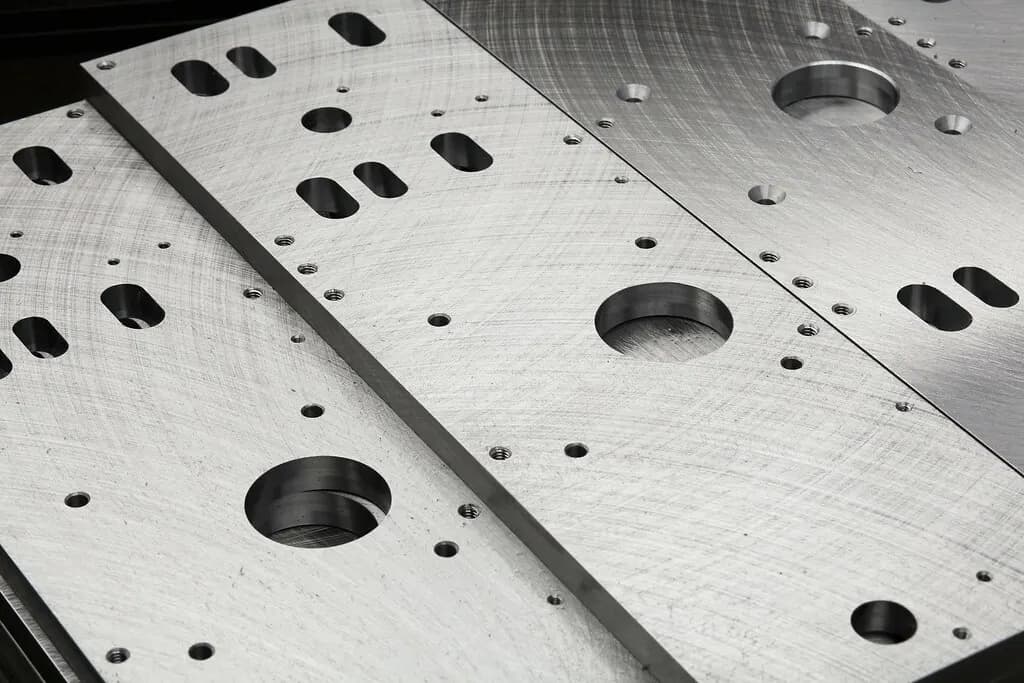
"Capital goods" is defined broadly. It includes machinery under Chapter 11 of the FTP, including machines imported in completely or semi-knocked-down condition. It also includes computer systems and software that form part of the machine, spares, moulds, dies, jigs, fixtures, tools and refractories, and catalysts for the initial charge plus one later charge. The scheme covers pre-production, production and post-production equipment. Items on the negative list in Appendix 5F are excluded.
Who can use it:
- Manufacturer exporters, with or without supporting manufacturers
- Merchant exporters tied to one or more supporting manufacturers, whose names are endorsed on the authorisation before the machines are installed at their premises
- Service providers, including those whose rupee receipts for services listed in Appendix 5D count towards the obligation
- Common Service Providers certified by DGFT in a Town of Export Excellence or a PM MITRA textile park, with conditions such as a bank guarantee equal to the duty saved
The goods carry an actual user condition until the export obligation is complete and the Export Obligation Discharge Certificate (EODC) is issued. You can't sell or lend the machine during that time. You may shift it between units listed in your IEC and RCMC if you file a fresh installation certificate within six months of the move.
EPCG at a glance (FTP 2023)
0%
Customs duty on capital goods
IGST and cess also exempt for physical exports
6 times the duties, taxes and cess saved
Specific export obligation
6 years
Time to fulfil it
From date of issue
24 months
Import validity
No revalidation
Zero duty: what is actually exempted
Under para 5.01(a) of FTP 2023, capital goods come in at zero customs duty. Capital goods imported for physical exports are also exempt from IGST and compensation cess, charged under section 3(7) and 3(9) of the Customs Tariff Act, through the notification issued by the Department of Revenue. In practice your customs broker claims the EPCG exemption notification in the bill of entry against your authorisation at the port where it is registered.
Two details affect the obligation directly:
- Duty saved includes IGST and cess. The obligation is six times the duties, taxes and cess saved. Exempting IGST therefore raises your obligation. If you prefer, you can pay IGST and cess in cash and leave them out of the duty saved, provided you don't take input tax credit on that IGST. Whether that is worth it depends on your cash flow and how much export headroom you have. Many exporters with plenty of exports take the full exemption, while those with a tight obligation sometimes pay IGST to shrink it.
- Domestic purchase is allowed. Instead of importing, you can buy capital goods from an Indian manufacturer using an invalidation letter or an Advance Release Order issued against the authorisation. The obligation is then worked out on the notional duty saved on the free-on-rail value, and it is 25% less than the normal EO, which equals 4.5 times. The domestic supplier gets deemed-export benefits under para 7.03.
The export obligation, explained
The obligation has two layers, and most EPCG trouble comes from mixing them up.
1. Specific export obligation (EO). This is 6 times the duties, taxes and cess saved on the capital goods, to be met within 6 years from the date the authorisation is issued. It runs from the issue date, not the date the machine arrives. You meet it by exporting goods made with the capital goods, or services rendered with them, either directly or through third-party exporters. Exports under Advance Authorisation, DFIA, drawback, RoSCTL and RoDTEP also count. So do deemed exports, supplies to SEZ units, royalty and R&D receipts in foreign exchange, and export proceeds realised in Indian rupees under the FTP's rupee-trade provisions.
2. Average export obligation (AEO). This is your average exports of the same and similar products over the previous three licensing years. You must keep exporting at that level every financial year until the specific EO is done. Only exports above the AEO count towards the specific EO. If a year falls short, excess exports in other years within the block or EO period can make up for it, provided the AEO is met overall.
Block-wise fulfilment. The six years are split into two blocks:
EPCG block-wise export obligation
| Block | Years from issue | Minimum specific EO | What to file |
|---|---|---|---|
Block I | 1st to 4th year | 50% of the specific EO | Intimation to the RA within 3 months of block end; online EO report |
Block II | 5th and 6th year | Balance EO | EODC application in ANF 5B |
Block I
- Years from issue
1st to 4th year
- Minimum specific EO
50% of the specific EO
- What to file
Intimation to the RA within 3 months of block end; online EO report
Block II
- Years from issue
5th and 6th year
- Minimum specific EO
Balance EO
- What to file
EODC application in ANF 5B
If you miss the first-block target and don't get an extension, you must pay customs duty with interest on the shortfall within six months of the block ending. That is proportionate duty on the unfulfilled part of the first-block obligation.
Who is exempt from AEO. Para 5.12 exempts exporters of handicrafts, handlooms, KVIC-covered industries, agriculture, aquaculture and fisheries, animal husbandry and dairying, floriculture and horticulture, poultry, viticulture, sericulture, carpets, coir and jute. Fishing trawlers, boats and ships don't get this exemption. Capital goods other than tools imported by these sectors can't be transferred for five years.
Early fulfilment. If you complete 75% or more of the specific EO and all AEO due in half the EO period or less, the remaining EO is condoned and the authorisation is redeemed. Only one concession applies per authorisation, so you choose between early fulfilment, indigenous sourcing, green technology and the North East reduction.
Reduced export obligations, and what MSMEs actually get
FTP 2023 offers three ways to reduce the specific EO. None changes the AEO.
| Situation | Specific EO | Multiple of duty saved |
|---|---|---|
| Standard (imported capital goods) | 100% | 6× |
| Capital goods sourced from Indian manufacturers | 25% less than the normal EO | 4.5× |
| Exporters of green technology products | 75% of the normal EO | 4.5× |
| Units in Arunachal Pradesh, Assam, Manipur, Meghalaya, Mizoram, Nagaland, Sikkim, Tripura, J&K and Ladakh | 25% of the normal EO | 1.5× |
Green technology products are listed in HBP para 5.26. They are solar and wind energy systems and their parts, LED lights, vapour absorption chillers, waste heat boilers and recovery units, unfired heat recovery steam generators, water treatment plants, battery electric vehicles (not hybrids), vertical farming equipment, wastewater treatment and recycling, rainwater harvesting systems and filters, and green hydrogen.
MSMEs: the fee, not the obligation. Many websites say MSMEs get a reduced EO under EPCG. FTP 2023 has no such provision. What MSMEs do get is a much smaller application fee. Under Appendix 2K, as revised in April 2025, an MSME pays ₹100 where the duty saved is up to ₹1 crore and ₹5,000 above that. A non-MSME pays ₹1 per ₹1,000 of duty saved, with a minimum of ₹500 and a maximum of ₹1 lakh. To qualify, keep your Udyam registration current and linked to your IEC. Check your category in our MSME classification guide. An MSME in the North East, or one buying from an Indian machine-builder, can of course use those reductions like anyone else.
Worked example: a Ludhiana MSME importing a CNC machine
A small Ludhiana manufacturer of bicycle components (registered as a micro enterprise) wants a CNC machining centre with a CIF value of ₹50,00,000. The duty rates below are assumptions for illustration, so check your machine's HSN code with our HSN code finder and your broker.
- Basic customs duty at an assumed 7.5%: ₹3,75,000
- Social welfare surcharge at 10% of BCD: ₹37,500
- IGST at 18% on (CIF + BCD + SWS = ₹54,12,500): ₹9,74,250
- Total duty, taxes and cess saved: ₹13,86,750
Specific EO = 6 × ₹13,86,750 = ₹83,20,500, to be exported within six years. At least ₹41,60,250 (50%) must be exported in years 1–4.
Average EO. Suppose the firm exported bicycle parts worth ₹80 lakh, ₹1.1 crore and ₹1.3 crore in the three years before the authorisation. The AEO is the average, ₹1.07 crore a year. Each year it must first export ₹1.07 crore. Only exports above that count towards the ₹83.2 lakh specific EO. If it exports ₹1.4 crore in year 1, about ₹33 lakh goes towards the specific EO.
Comparing options for the same machine:
Same ₹13.87 lakh duty saved, different EPCG routes
| Route | EO multiple | Specific EO | First-block minimum |
|---|---|---|---|
Imported, standard | 6× | ₹83,20,500 | ₹41,60,250 |
Bought from an Indian maker (on notional duty) | 4.5× | ₹62,40,375 | ₹31,20,188 |
Exporter of green technology products | 4.5× | ₹62,40,375 | ₹31,20,188 |
Unit in Assam or J&K | 1.5× | ₹20,80,125 | ₹10,40,063 |
Pays IGST in cash, no ITC | 6× on ₹4,12,500 | ₹24,75,000 | ₹12,37,500 |
Imported, standard
- EO multiple
6×
- Specific EO
₹83,20,500
- First-block minimum
₹41,60,250
Bought from an Indian maker (on notional duty)
- EO multiple
4.5×
- Specific EO
₹62,40,375
- First-block minimum
₹31,20,188
Exporter of green technology products
- EO multiple
4.5×
- Specific EO
₹62,40,375
- First-block minimum
₹31,20,188
Unit in Assam or J&K
- EO multiple
1.5×
- Specific EO
₹20,80,125
- First-block minimum
₹10,40,063
Pays IGST in cash, no ITC
- EO multiple
6× on ₹4,12,500
- Specific EO
₹24,75,000
- First-block minimum
₹12,37,500
The last row shows the trade-off. Paying ₹9.74 lakh of IGST up front cuts the EO by about ₹58 lakh, but that IGST is a real cost if you don't take credit for it. Use our ROI calculator to compare. As an MSME, the firm's application fee is ₹100, because duty saved is under ₹1 crore. Export earnings are in foreign currency, so the currency converter helps check how many shipments the obligation needs.
How to apply for an EPCG authorisation
Everything happens on the DGFT portal. You need an active IEC with its annual update done, and a digital signature or Aadhaar e-sign.
From application to closure
- 1
Get the Chartered Engineer's nexus certificate
An independent Chartered Engineer certifies in Appendix 5A that the capital goods are linked to the export product or service. For spares, moulds and catalysts, the CE also certifies the list of installed machinery they are for.
- 2
Apply online in ANF 5A
DGFT portalOn dgft.gov.in, choose EPCG, enter the capital goods, CIF value, duty saved, export product and port of registration, attach the CE certificate and pay the Appendix 2K fee.
- 3
Authorisation issued by the Regional Authority
The RA issues the authorisation with a single port of registration for imports. Exports can be made from any port listed in HBP para 4.35. Restricted items need clearance from the Exim Facilitation Committee first.
- 4
Register at the port and execute bond
Register the authorisation with Customs at the port, and execute the bond with bank guarantee or LUT that Customs requires. Then import within 24 months, or source domestically using an invalidation letter or ARO.
- 5
Install and certify
File the installation certificate from jurisdictional Customs or an independent CE within 3 years of completing imports. Extensions are possible within the EO period at ₹10,000 a year.
- 6
Export, report and close
Export through both blocks while meeting AEO. File online EO reports after year 4, apply for the EODC in ANF 5B, and get your bond and guarantee released.
Documents to keep ready: the IEC and RCMC from the relevant export promotion council, the Chartered Engineer nexus certificate, proforma invoices or quotations for the capital goods, a duty calculation, details of supporting manufacturers if you are a merchant exporter, and a CA-certified statement of your exports for the last three years for the AEO.
Extensions, composition fees and the 2026 relief
If exports fall behind, extensions are available, but they cost money and must be asked for on time. The Handbook of Procedures (as updated to July 2026) sets these slabs:
| Duty saved on the authorisation | Block I extension (within 6 months) | Block I extension (after 6 months, within 6 years) | EO extension beyond 6 years (per request) |
|---|---|---|---|
| Up to ₹2 crore | ₹5,000 | ₹10,000 | ₹20,000 |
| Over ₹2 crore to ₹10 crore | ₹10,000 | ₹20,000 | ₹30,000 |
| Above ₹10 crore | ₹15,000 | ₹30,000 | ₹60,000 |
Beyond six years you can get two one-year extensions, or one two-year extension. The request is due within six months of expiry. A late request within the extendable period costs a further ₹10,000, and regularisation requests between years 6 and 8 cost ₹15,000 on top of any composition fee. No EO extension goes beyond eight years from the issue date. If DGFT bans export of your product, the EO period extends automatically for the length of the ban, with no fee.
The 2026 automatic extension. Shipping disruption in West Asia led DGFT to issue Public Notice 51/2025-26 on 6 March 2026. EPCG EO and block periods expiring between 1 March and 31 May 2026 were extended automatically to 31 August 2026, with no application and no fee. That window has now closed. If your period was covered and you still haven't met it, you now need a normal extension with the composition fees above, or regularisation.
Closing the authorisation: EODC and redemption
When you have exported enough, apply online in ANF 5B for the Export Obligation Discharge Certificate, with your shipping bills, bank realisation evidence and CA-certified statements. The Regional Authority is meant to decide within 30 days of a complete application, raising any deficiencies in one go. The EODC goes to ICEGATE by API, so the Customs office holding your bond and guarantee can release them.
Since 1 August 2026, DGFT no longer asks for physical duty-payment challans with EODC applications. Licence-wise duty payment details are drawn on the portal instead, according to its trade notice. If you have paid any proportionate duty on a shortfall, check that it appears against the right authorisation before you apply.
If you can't complete the EO, you can exit voluntarily. Pay customs duty, IGST and cess in proportion to the shortfall, with interest. For domestically sourced goods, the duty is calculated on the notional duty saved. You can surrender an unused authorisation at any time without penalty. Keep records of exports and services against each authorisation for two years after redemption.
Mistakes that cost EPCG holders money
- Forgetting the average EO. Exports that only meet your AEO don't reduce the specific EO at all. Firms that grow slowly often find in year 6 that most of their exports never counted.
- Missing the first-block deadline. Fifty per cent by year 4 is enforced. Track it from year 2 and apply for a block extension within six months if needed. The fee doubles after that.
- No installation certificate. It is due within three years of import, and many holders forget until EODC time.
- Export product not on the authorisation. Exports of products not endorsed on the authorisation don't count. Get the export item list amended, with a fresh CE certificate, while the EO period is still valid.
- Assuming an MSME EO cut. There isn't one. Plan on the full 6× unless you qualify for the indigenous, green-tech or North East reductions.
- Shifting machines without telling anyone. Moving capital goods to an unlisted unit breaks the actual user condition.
- Clubbing too late. Two or more authorisations from the same RA for the same or similar products can be clubbed in ANF 5C. The EO period then runs from the first authorisation's date, which can catch you out.
Official links
- FTP 2023 — Chapter 5 (EPCG)Policy: zero duty, 6× EO, AEO, reductions
- Handbook of Procedures — Chapter 5 (July 2026)Procedure, blocks, fees, EODC
- Appendix 2K — application feesMSME and non-MSME fee slabs
- DGFT portalApply in ANF 5A; EODC in ANF 5B
- PIB — PN 51/2025-26 EO extensionAutomatic extension to 31 Aug 2026
- ICEGATEBill of entry, shipping bills, EODC messages
What to do next
Before you order the machine, work out the duty saved, multiply by six (or 4.5 or 1.5 if you qualify), and lay your realistic export plan over six years, after your average exports. If the numbers work, get the Chartered Engineer's certificate and apply on the DGFT portal. If you don't have an IEC yet, start with our IEC registration guide. Pair EPCG with RoDTEP on the same exports to recover embedded taxes too.
This is general information, not legal or tax advice — confirm on the official source or with a professional.
Frequently asked questions
The Export Promotion Capital Goods (EPCG) scheme under Chapter 5 of the Foreign Trade Policy 2023 lets you import capital goods at zero customs duty. Capital goods imported for physical exports are also exempt from IGST and compensation cess under the customs notification. In return you must export 6 times the duties, taxes and cess saved within 6 years, on top of your normal average exports.
The specific export obligation is 6 times the duties, taxes and cess saved on the capital goods, to be met within 6 years from the date the authorisation is issued. At least 50% of the specific EO must be met in years 1–4 and the balance in years 5–6. You must also keep up your average export obligation each year, unless your sector is exempt.
There is no MSME-only cut in the export obligation itself. MSMEs pay a much lower application fee: ₹100 (duty saved up to ₹1 crore); ₹5,000 above. The reduced obligations are for indigenous sourcing (25% less than the normal EO), green technology products (75% of the normal EO) and units in the North East, J&K and Ladakh (25% of the normal EO). Sectors such as handicrafts, handlooms and KVIC units are exempt from average EO.
Yes. FTP 2023 para 5.01(a) says capital goods imported under an EPCG authorisation for physical exports are exempt from IGST and compensation cess, as provided in the customs notification. If you choose to pay IGST in cash and do not take input tax credit on it, that IGST is left out of the duty saved, which lowers your export obligation.
You pay customs duty, IGST and cess in proportion to the unfulfilled obligation, plus interest, and the authorisation is regularised. You can also ask for extensions. Beyond six years, two one-year extensions (or one two-year extension) are allowed with a composition fee of ₹20,000 to ₹60,000 depending on duty saved. Ignoring it leads to bank guarantee invocation and action under the Foreign Trade Act and Customs Act.
An EPCG authorisation is valid for imports for 24 months from the date of issue, and it cannot be revalidated. You must install the capital goods and file an installation certificate within 3 years from completion of import. The export obligation period of 6 years runs from the issue date, not from the import date.
Sources & verification
Figures on this page were checked against the sources below when it was last reviewed on 9 October 2026. Each rate and limit is stored once with its own official source and review date, and official update channels are monitored daily so changes are picked up. How we verify
- 1.Foreign Trade Policy 2023 — Chapter 5: Export Promotion Capital Goods (EPCG) Scheme — Directorate General of Foreign Trade · accessed 9 October 2026
- 2.Handbook of Procedures 2023 (July 2026) — Chapter 5: EPCG — Directorate General of Foreign Trade · accessed 9 October 2026
- 3.Appendix 2K — Scale of application fee (as amended) — Directorate General of Foreign Trade · accessed 9 October 2026
- 4.DGFT extends export obligation period for Advance Authorisations and EPCG Authorisations till August 31, 2026 (7 Mar 2026) — PIB — Ministry of Commerce & Industry · accessed 9 October 2026
- 5.Public Notice 02/2025-26 — revised Appendix 2K (text) — World Trade Scanner · accessed 9 October 2026
- 6.DGFT dispenses with physical duty payment challans for EODC applications from 1 August 2026 — A2Z Taxcorp · accessed 9 October 2026
- 7.India extends export obligation deadlines under EPCG and Advance Authorization until August 31, 2026 — India Briefing (Dezan Shira) · accessed 9 October 2026
MSMETOOLS is an independent platform and is not affiliated with any government agency, ministry or department.
Tools for this
Currency Converter
Convert between 180+ currencies with live exchange rates.
ROI Calculator
Calculate return on investment for your business projects.
HSN Code Finder (India)
Find the correct HSN/SAC code for your product.
Related guides
 Export Promotion Councils in India 2026: List, RCMC & FeesRead guide
 RoDTEP Scheme 2026: Rates, Validity, Scrips & How to ClaimRead guide
 What Is a Letter of Credit? LC Types, UCP 600 & Charges (2026)Read guide
 Export Documentation in India 2026: Documents List & ProcessRead guide
Official links open the government site in a new tab.