 Business registration & legal
Wisconsin Business License in 2026: The Seller's Permit, DSPS Credentials and Local Licences
Wisconsin has no general business license. See what applies in 2026: the $20 seller's permit registration, DSPS credentials, trade names, Milwaukee and Madison.
 Edited by Sumeet YadavFounder & editor, MSMETOOLS · fact-checked against official sources
Contents (11)
- 1. Does Wisconsin have a state business license?
- 2. The seller's permit
- 3. Trade names
- 4. DSPS credentials for contractors and trades
- 5. Milwaukee: licences for specific activities
- 6. Madison: no generic licence, firm renewal dates
- 7. Home-based businesses
- 8. Worked examples
- 9. How to get set up in Wisconsin
- 10. Common mistakes and how to fix them
- 11. What to do next
Wisconsin is one of the states where you can open many kinds of business without any licence at all. There is no general state business license, and Madison says outright that it has no generic business licence either. What Wisconsin does have is a seller's permit for anyone selling taxable goods, a set of state credentials for contractors and regulated trades, food and lodging licences, and city licences for particular activities. This guide covers each in turn, with the 2026 fees, the contractor rules that trip people up, and what Milwaukee and Madison require. Figures were checked in October 2026.
Quick answer
Wisconsin has no general state business license. If you sell taxable goods or services, you need a seller's permit from the Department of Revenue, which comes with a $20 Business Tax Registration fee covering two years. Contractors building or remodelling homes need DSPS dwelling contractor credentials to pull permits, and cities such as Milwaukee and Madison license only specific activities.
Seller's permit renewal: $10 every two years
State sales tax 5%, plus 0.5% in most counties
Trade name registration with DFI is optional
Madison licences expire June 30; late renewals add 25%
Does Wisconsin have a state business license?
No. Wisconsin does not require every business to hold one state licence. Instead, a new business deals with a handful of agencies, each covering a narrower slice.
The Department of Financial Institutions (DFI) registers LLCs and corporations and, if you want, trade names. The Department of Revenue (DOR) issues seller's permits and registers businesses for withholding and other taxes through its Business Tax Registration system. The Department of Safety and Professional Services (DSPS) credentials more than a hundred professions and trades, from accountants and cosmetologists to electricians, plumbers and dwelling contractors. The Department of Agriculture, Trade and Consumer Protection (DATCP) licenses food businesses, often through local health departments acting as its agents. And cities, villages and counties license particular activities, approve zoning and issue building permits.
For a shop, an online seller or a café, the seller's permit is the registration people usually mean when they search for a Wisconsin business license. For a freelance designer or consultant selling services Wisconsin does not tax, there may be nothing to obtain beyond an LLC filing, if you form one. Our Wisconsin LLC guide covers that: articles of organization cost $130 online, and the annual report costs $25.
The seller's permit
You need a seller's permit if you have a Wisconsin location and sell, lease, license or rent taxable products or services, unless every sale you make is exempt. That covers storefronts, home-based online sellers and service businesses whose services Wisconsin taxes, such as certain repair, lodging and admissions. Wholesalers and manufacturers that make no taxable retail sales do not need one. Marketplace sellers whose only Wisconsin sales go through a marketplace provider that collects the tax do not need one for those sales. Out-of-state sellers without a Wisconsin location register for a use tax certificate once their sales into the state pass more than $100,000, and businesses that buy taxable items without paying Wisconsin tax may need a consumer's use tax certificate.
You apply through DOR's online Business Tax Registration system. The department does not charge for the permit itself. Instead, you pay a $20 Business Tax Registration fee, which covers two years and all of your permits and locations. Every two years after that, a $10 renewal fee covers the next period, and the department mails a new certificate with the new expiry date. You must post the permit at your place of business.
Apply at least three weeks before you open. Permits cannot be transferred, so if you buy an existing shop you need a permit in your own name; the seller's permit does not come with the business. DOR can also ask for a security deposit before or after it issues a permit, usually where there is a history of unpaid tax.
Once registered you charge the state rate of 5% plus any county tax, which is 0.5% in 70 counties. Milwaukee is the outlier: the county charges 0.9% and the City of Milwaukee 2%, for a combined 7.9% inside the city. Our Wisconsin sales tax guide covers filing frequencies, resort and exposition taxes and the retailer's discount.
| Registration | Who needs it | Cost |
|---|---|---|
| Seller's permit | Anyone with a Wisconsin location selling taxable products or services | Covered by the $20 Business Tax Registration (two years) |
| Use tax certificate | Out-of-state sellers over the remote threshold; buyers of untaxed items | Covered by the same registration |
| Withholding registration | Employers with Wisconsin employees | Covered by the same registration |
| Renewal | Every registered business, every two years | $10 |
| LLC articles | LLCs (optional structure) | $130 online |
Trade names
Wisconsin has no general requirement to file a DBA. If you trade under a name that is not your legal name, you can register it as a trade name with DFI. Registration is optional, lasts ten years and can be renewed. It puts your claim to the name on the public record, but it does not give you exclusive rights to it and does not stop another business using a similar name; for that, look at a state or federal trademark.
In practice, the person who most often asks for proof of your trade name is your bank. If "Sara Lindqvist" wants an account in the name "Northwoods Candle Co.", the bank will want a document linking the two, and a DFI trade name registration or an LLC's records usually satisfies it. Some counties keep their own assumed name records, so ask your register of deeds if a lender or landlord mentions a county filing. Our DBA guide compares the rules in other states.
Registrations vs operating licences in Wisconsin
| What it does | Lets you run a regulated activity? | |
|---|---|---|
DFI trade name | Records your use of a name | No |
LLC articles | Creates the legal entity | No |
Seller's permit | Lets you collect sales tax | No |
DSPS, DATCP or city licence | Authorizes a trade, food, lodging or alcohol business | Yes |
DFI trade name
- What it does
Records your use of a name
- Lets you run a regulated activity?
No
LLC articles
- What it does
Creates the legal entity
- Lets you run a regulated activity?
No
Seller's permit
- What it does
Lets you collect sales tax
- Lets you run a regulated activity?
No
DSPS, DATCP or city licence
- What it does
Authorizes a trade, food, lodging or alcohol business
- Lets you run a regulated activity?
Yes
DSPS credentials for contractors and trades
The Department of Safety and Professional Services issues most of Wisconsin's occupational credentials, including those for accountants, real estate agents, cosmetologists and barbers, engineers, nurses and many more. You can look up and apply for credentials online through DSPS.
Construction has a two-part rule that new builders often miss. Under section SPS 305.31 of the Wisconsin Administrative Code, no one may obtain a building permit for a one- or two-family dwelling unless the business holds a Dwelling Contractor certification (or a Dwelling Contractor Restricted certification, which is for businesses using a surety bond of less than $25,000), and the business has a certified Dwelling Contractor Qualifier, who can be the owner or an employee. The qualifier must complete at least 12 hours of an approved initial course in dwelling construction within one year before applying. Homeowners building their own homes fall under statutory exceptions.
Electrical, plumbing and HVAC work need their own DSPS credentials, from apprentice and journeyman levels through to master and contractor registrations, and many trades need a credential at both the individual and business level. Wisconsin has no separate state licence for commercial general contractors, but every project still needs local building permits, and commercial plans often need state plan review.
Food is shared between DATCP and local health departments. DATCP licenses retail food establishments, restaurants, mobile food businesses and lodging in most of the state, but in many counties a local health department acts as its agent and issues the licence directly. In Madison and Dane County, Public Health Madison and Dane County handles restaurants, grocery stores, food carts, hotels and short-term rentals, along with tattoo and body piercing studios.
Pulling a permit to build or remodel a home
Step 1
Dwelling Contractor Qualifier (12 hours course)
Step 2
Dwelling Contractor certification for the business
Step 3
Workers' comp and insurance or bond
Step 4
Local building permit
per job
Milwaukee: licences for specific activities
Milwaukee does not issue a general business licence. Its License Division, part of the City Clerk's office, processes more than 100 different licences and permits for specific activities. These include alcohol licences such as the Class "B" tavern licence and the manager's and bartender's licences that go with it, food dealer licences, home improvement contractor and salesperson licences, filling stations, weights and measures devices such as scales and scanners, mobile sellers and ice cream peddlers, and many others. New alcohol licences go through a public process with the Common Council's licensing committee.
The division has been moving online. Individual licences such as bartender and home improvement salesperson licences can already be applied for online, and the division announced that from May 2026 businesses would manage all their licensing through a new online licence management system at milwaukee.gov/lms. Check the current system before you apply, since forms and steps changed during 2026.
If your activity is not on the city's list, you need no city licence, but you will still need zoning approval for the premises, a certificate of occupancy where required, sign permits and any building permits. Restaurants also deal with the Milwaukee Health Department for food safety inspections.

Madison: no generic licence, firm renewal dates
The City of Madison's guide to opening a business sets out the order of steps: check whether you need a state seller's permit, choose a legal entity with DFI, confirm zoning (including for a home business), and then find out whether your business needs a city licence. The city states that it does not have a generic business licence. Most licences issued by the City Clerk are for businesses that need inspecting, and every licence application requires a copy of your state seller's permit. Food carts and other mobile businesses go through the city's street vending program, and food and lodging businesses through Public Health Madison and Dane County.
Madison's licences generally expire on June 30. Alcohol renewal invoices go out in mid-May with payment due by June 7; other city and county licence invoices go out at the end of May with payment due by June 30. Pay late and the city adds 25% of the fee, then another 25% once you are more than 30 days late. Unpaid amounts carry forward to next year's invoice as arrears.
A Madison licence year
Mid-May
Alcohol renewal invoices sent
End of May
Other city and county licence invoices sent
June 7
Liquor and beer renewals due
June 30
Other renewals due; licences expire
After the due date
25% late fee, plus another 25% after 30 days
Home-based businesses
Running a business from home does not change the state rules. If you sell taxable goods online or at markets, your home address is the business location on your seller's permit, and you charge the rate for your county. What changes is zoning. Most Wisconsin cities and villages allow home occupations only within limits, typically on customer visits, employees who live elsewhere, signs, parking and outdoor storage, and some require a home occupation permit. Madison tells new owners to confirm with zoning that a home business is allowed before they start. If clients will visit, or you plan to prepare food at home for sale, check the zoning code and the food rules first; food made at home for sale is subject to separate state limits.
Worked examples
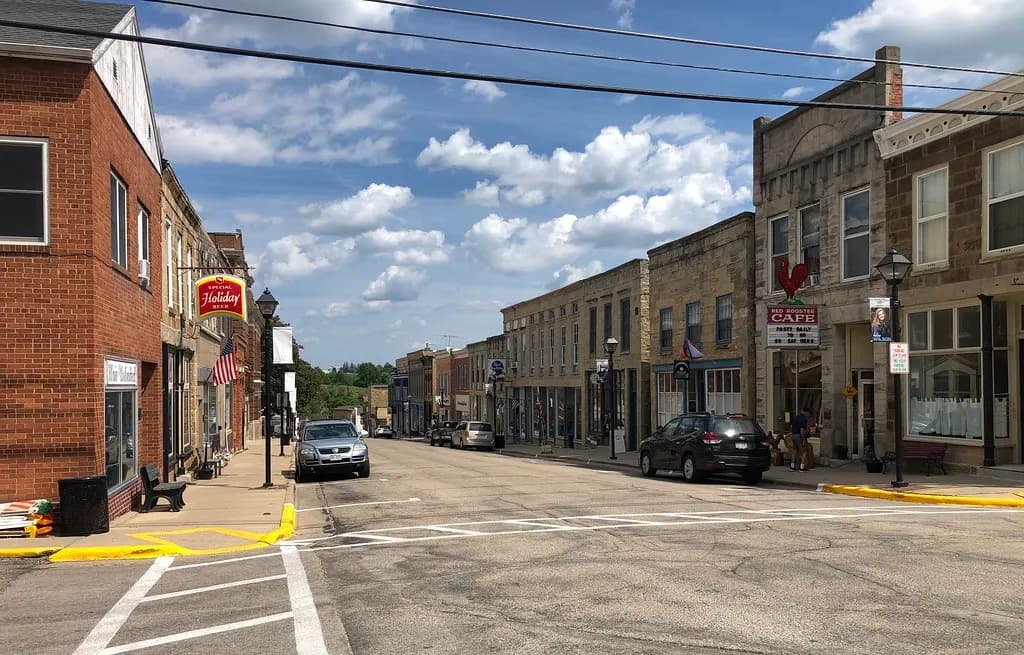
A gift shop in Mineral Point. The owner forms an LLC with DFI for $130 and registers for a seller's permit with the $20 Business Tax Registration. State setup cost: $150. Iowa County has the 0.5% county tax, so she charges 5.5% in total, and a $40 print costs the customer $42.20. She posts the permit by the till, files the $25 annual report each year, and pays the $10 renewal every two years.
A café in Milwaukee's Third Ward. The café needs a seller's permit, a food licence and inspection, and, if it serves beer and wine, a Class "B" licence and a licensed manager through the License Division. Inside the city it charges 7.9% sales tax plus the 0.5% Milwaukee County exposition food and beverage tax on food and drinks, so a $10 lunch carries $0.84 in tax.
A remodeler in Dane County. Before pulling a permit to finish a basement in a single-family home, the owner takes the 12 hours qualifier course, becomes the business's Dwelling Contractor Qualifier, and obtains the Dwelling Contractor certification for the company. The electrician and plumber he subcontracts hold their own DSPS credentials. He charges sales tax only on materials he sells separately, depending on how the contract is written, and confirms that with DOR's construction guidance.
Add licence and registration fees to your first-year budget
How to get set up in Wisconsin
Getting legally set up in Wisconsin
- 1
Choose your structure
Wisconsin LLC guideForm an LLC with DFI for $130 online, or operate as a sole proprietor; register a trade name with DFI if you want it on record.
- 2
Get an EIN
EIN guideFree from the IRS; needed for entities and employers.
- 3
Register with DOR
Apply through Business Tax Registration at least three weeks before you open; the $20 fee covers a seller's permit, withholding and other accounts for two years.
- 4
Get any state credential
Check DSPS for your occupation or trade, and DATCP or your local health department for food and lodging.
- 5
Confirm zoning and city licences
Ask the city clerk whether your activity is licensed, and the zoning office whether your location or home business is allowed.
- 6
Diary the renewals
Seller's permit every two years, DFI annual report, and city licences (June 30 in Madison).
Common mistakes and how to fix them
The first mistake is opening before the seller's permit arrives without keeping records. You can make sales before the certificate comes, but you owe tax from your first sale. Apply three weeks ahead, and if you are already trading, register now and file for the periods you missed.
The second is assuming a bought business's permit carries over. Seller's permits are not transferable. A new owner registers in their own name, and a new owner of a licensed bar or food business applies for new city licences too.
The third is pulling a home building permit without both dwelling credentials. Building inspectors check for the business certification and the qualifier. If either has lapsed, renew it before applying.
The fourth is missing city renewal dates. Madison's stacked late fees add up quickly, and other cities run similar systems. Put every licence's due date in your calendar the day it is issued.
The fifth is treating a DFI trade name registration as protection. It records your use of the name but does not stop others. If the brand matters, search the trademark registers and file.
Official Wisconsin links
What to do next
Choose your structure with our Wisconsin LLC guide, check the name with the LLC name checker and get an EIN. Register for your seller's permit three weeks before opening, and use our Wisconsin sales tax guide and sales tax calculator to charge the right county and city rate. Then ask your city clerk and zoning office about local licences before you sign a lease. For neighbouring states, see our Illinois and Michigan guides or the business licenses overview.
This is general information, not legal or tax advice — confirm on the official source or with a professional.
Frequently asked questions
No. Wisconsin does not issue a general state business license. Most sellers need a seller's permit from the Department of Revenue, regulated occupations and trades need a credential from the Department of Safety and Professional Services or another agency, and cities license particular activities. The City of Madison, for example, states that it does not have a generic business license.
There is no separate charge for the permit itself. You pay a $20 Business Tax Registration fee, which covers two years and all your permits and locations, and a $10 renewal fee every two years after that. Apply online through the Department of Revenue's Business Tax Registration system at least three weeks before you open.
Only for licensed activities. Milwaukee's License Division in the City Clerk's office processes more than 100 different licences and permits, covering activities such as alcohol sales, food dealers, home improvement contractors, mobile sellers and weights and measures devices. A business outside those categories needs no general city licence, but still needs zoning approval, a seller's permit if it sells taxable goods, and building and sign permits.
To pull a building permit for a one- or two-family home, the business needs a Dwelling Contractor certification from DSPS and must have a certified Dwelling Contractor Qualifier, the owner or an employee, who has completed the required training. Electricians, plumbers and HVAC installers need their own state credentials. Commercial general contracting has no separate state licence.
Wisconsin has no general state DBA requirement. You can register a trade name with the Department of Financial Institutions, which is optional and lasts ten years, but registration does not give exclusive rights to the name. Your bank will still want evidence linking your trade name to you or your entity, and some counties keep their own records, so ask the register of deeds.
Unless a licence says otherwise, City of Madison licences expire June 30. Non-alcohol renewal invoices go out at the end of May with payment due by June 30, and alcohol renewals are due by June 7. Late payment adds 25%, and another 25% if it is more than 30 days late. Health licences issued through Public Health Madison and Dane County follow their own rules.
Sources & verification
Figures on this page were checked against the sources below when it was last reviewed on 12 October 2026. Each rate and limit is stored once with its own official source and review date, and official update channels are monitored daily so changes are picked up. How we verify
- 1.Opening a Business in Madison — City of Madison Clerk's Office · accessed 12 October 2026
- 2.License Renewals — City of Madison Clerk's Office · accessed 12 October 2026
- 3.Business Tax Registration — Common Questions — Wisconsin Department of Revenue · accessed 12 October 2026
- 4.Permits for a New Business — Common Questions — Wisconsin Department of Revenue · accessed 12 October 2026
- 5.Dwelling Contractor Qualifier — Wisconsin Department of Safety and Professional Services · accessed 12 October 2026
- 6.Licenses and Permits — City of Milwaukee License Division · accessed 12 October 2026
- 7.File a DBA in Wisconsin — FindLaw (secondary) · accessed 12 October 2026
MSMETOOLS is an independent platform and is not affiliated with any government agency, ministry or department.
Tools for this
Sales Tax Calculator (US)
Calculate sales tax for all US states and cities.
Startup Cost Calculator
Estimate how much capital you need to launch.
LLC Name Checker (US)
Check business name availability in your state.
Related guides
 Wisconsin Sales Tax 2026: 5% State, Milwaukee 7.9% & PermitRead guide
 Michigan Business License 2026: What You Need & CostsRead guide
 Illinois Business License 2026: Chicago, Cook & State StepsRead guide
 How to Start an LLC in Wisconsin (2026): $130 Filing GuideRead guide
Official links open the government site in a new tab.