 Business registration & legal
New Jersey Business License in 2026: NJ-REG Registration, Occupational Licences and Town Permits
New Jersey business license 2026: there's no general state license. Register with NJ-REG, get a BRC, check town mercantile licences and pay the $75 annual report.
 Edited by Sumeet YadavFounder & editor, MSMETOOLS · fact-checked against official sources
Contents (10)
- 1. Does New Jersey have a state business license?
- 2. The three layers at a glance
- 3. Step one: form your entity and register with NJ-REG
- 4. The Business Registration Certificate (BRC)
- 5. Worked examples: what the state side costs
- 6. Occupational licences from the Division of Consumer Affairs
- 7. Municipal mercantile licences and local permits
- 8. Keeping your registration in good standing
- 9. Common mistakes and how to fix them
- 10. What to do next
If you're starting a business in New Jersey and searching for "the" business license, here's the short version: the state doesn't issue one. What it does require is a business registration, and depending on your trade and your town, one or more licences on top. This guide sets out each layer in the order you'll meet it: Form NJ-REG and the Business Registration Certificate, the entity filing fees that dropped on July 1, 2026, occupational licences from the Division of Consumer Affairs, municipal mercantile licences, and the $75 annual report that keeps you in good standing. Fees were checked on official New Jersey sites in October 2026.
Quick answer
New Jersey has no general state business license. Every business doing business in the state registers with the Division of Revenue and Enterprise Services using Form NJ-REG, which also sets up your tax accounts and lets you print a Business Registration Certificate (BRC). LLCs and corporations first file a certificate of formation or incorporation for $100.
Register with NJ-REG at least at least 15 business days before you open
Annual report: $75, due by the end of your anniversary month
Regulated trades need a state licence; home improvement contractors pay $110
Many towns require a mercantile licence, zoning approval or other local permits
Selling taxable goods? NJ-REG also gets you a sales tax Certificate of Authority
Does New Jersey have a state business license?
No. New Jersey has never had a single, all-purpose state business license that every company buys. A lot of websites use "business license" loosely, and that's where the confusion starts. When people in New Jersey talk about getting licensed to do business, they usually mean one of three different things.
The first is state registration. The Division of Revenue and Enterprise Services (DORES), part of the Department of the Treasury, says that all individuals and companies doing business in New Jersey must be registered. You register by filing Form NJ-REG online. This isn't a licence in the sense of a test or approval. It tells the state who you are, sets up your tax and employer accounts, and gives you a registration you can prove with a certificate.
The second is an occupational or professional licence. If your work is regulated, such as home improvement contracting, cosmetology, plumbing, real estate or accounting, you need a licence or registration from the relevant state board before you take on customers.
The third is a local licence or permit. New Jersey has 564 municipalities, and many set their own rules. Some require a general mercantile licence from every business in town. Others only license certain activities, such as food, peddling or towing. Almost all of them control zoning, signs and certificates of occupancy.
So the honest answer to "do I need a business license in NJ?" is: you need the state registration in nearly every case, and you may need the other two depending on what you do and where you do it.

The three layers at a glance
The table below shows who handles each layer and when it applies. Most small businesses deal with the first row and at least one of the others.
| Layer | Who issues it | Who needs it | Typical cost |
|---|---|---|---|
| Entity filing (LLC, corporation, LP) | Division of Revenue and Enterprise Services | Anyone forming a limited-liability entity | $100 once, then $75 a year |
| Business registration (NJ-REG) and BRC | Division of Revenue and Enterprise Services | Every business doing business in New Jersey | No fee listed for NJ-REG |
| Occupational licence | A Division of Consumer Affairs board or another state agency | Regulated trades and professions | Set by each board, e.g. $110 for home improvement contractors |
| Mercantile licence and local permits | Your municipality (clerk, zoning, health) | Depends on the town and the activity | Set by municipal ordinance |
Step one: form your entity and register with NJ-REG
How you register depends on your business structure.
Corporations, LLCs, limited partnerships and LLPs start by getting a federal Employer Identification Number (EIN) from the IRS. Next they file a certificate of formation, incorporation or authorization with DORES, which creates the entity in the state's records. Only then do they file Form NJ-REG to register for taxes. Both filings are done online through the state's business portal.
Sole proprietors and general partnerships skip the formation filing, because there's no separate entity to create. They file Form NJ-REG directly. General partnerships, and any business with employees, must get an EIN first. A sole proprietor without employees isn't required to have one, though the Division recommends it, and having one keeps your Social Security number off invoices and W-9s.
The state's existing guidance asks you to register at least at least 15 business days before you open or start selling, so your tax accounts exist on day one. NJ-REG is also where you register as an employer if you'll withhold payroll taxes, and where sellers of taxable goods and services get a sales tax Certificate of Authority. Our New Jersey sales tax guide covers the 6.625% rate, returns and the Certificate of Authority in detail.
Lower filing fees from July 1, 2026
New Jersey cut its formation fees this year. Under bill A-5325/S-4534, which took effect on July 1, 2026, the fee to file a certificate of formation for an LLC or a certificate of incorporation for a for-profit corporation fell from $125 to $100. Domestic nonprofit corporations now pay $50. The Division's fee page, updated on July 1, 2026, shows the new amounts. If you're comparing costs using an older guide, knock $25 off the formation fee it quotes.
Other filings you may need cost the following, per the Division's fee schedule: an alternate name registration, which lets an LLC or corporation trade under another name, costs $50; reserving a name before you form costs $50; and changing your registered office or agent costs $25.
New Jersey state filing fees (2026)
$100
LLC or corporation formation
From July 1, 2026; was $125
$75
Annual report
LLCs and for-profit corporations
$50
Alternate name registration
$75
LLC reinstatement fee
Corporations: $95
Trade names
If you trade under a name that isn't your legal name, you need to register it. For an LLC or corporation, that's the alternate name registration with DORES. For a sole proprietor or general partnership, it's a trade name certificate filed with the clerk of the county where you do business. Contractors, banks and payment processors often ask for this document, and the Division of Consumer Affairs asks home improvement contractors to attach either their alternate name form or their trade name certificate to the registration application. Our DBA guide explains how trade names work across states.
The Business Registration Certificate (BRC)
Once you've registered, you can get a Business Registration Certificate. The Division describes it as proof of valid business registration with the Division of Revenue. Many owners never need to show it to anyone, but for some it's essential.
You need a BRC if you're a contractor or subcontractor doing business with the State of New Jersey or any public agency in the state, such as a county, town, school district or authority. That's a requirement of state law, N.J.S.A. 52:32-44. The Division notes an exception for small contracts: the certificate isn't required if a single contract, or the total with that contractor over the fiscal year, is below 15 percent of the agency's bid threshold. Public contracts also need Form AA-302 for affirmative action, and the BRC can't stand in for it.
You also need a BRC to apply for a casino licence with the Casino Control Commission and to apply for a state grant or tax credit. Unincorporated construction contractors working in New Jersey use the BRC as their proof of registration too.
If you're already registered but don't have a certificate, you can get one online. If you're not registered, you file NJ-REG first. Individuals and unincorporated construction contractors who have no business tax or employer obligations can use the shorter Form REG-A instead, but an individual operating through an LLC can't. You can also look up whether another business is registered using the Division's online registration inquiry, which is useful when you're hiring a subcontractor for a public job. The Division's registration help line is 609-292-9292.
How to register a new business in New Jersey
- 1
Choose your structure and get an EIN
Get an EIN (IRS)LLCs, corporations, partnerships and any business with employees need an EIN from the IRS. Sole proprietors without staff can register without one, but it's advisable.
- 2
Form your entity if you need one
File the certificate of formation (LLC) or incorporation (corporation) with DORES for $100.
- 3
File Form NJ-REG online
NJ Division of Revenue — Getting RegisteredRegister for taxes, employer withholding and, if you sell taxable items, a sales tax Certificate of Authority. Do this at least at least 15 business days before you open.
- 4
Print your Business Registration Certificate
Download the BRC once your registration is complete. You'll need it for public contracts, grants and tax credits.
- 5
Get your trade licence and local approvals
Apply to the right state board if your work is regulated, then check zoning, mercantile licensing and permits with your municipal clerk.
Worked examples: what the state side costs
These examples use the official fees above. They leave out municipal fees, which differ by town, and professional fees such as insurance.
A freelance graphic designer working from home in Montclair, no employees. As a sole proprietor, she has no formation filing and pays no state formation fee. She files NJ-REG, which the Division doesn't list a fee for. If she trades as "Northside Studio" rather than under her own name, she files a trade name certificate with the Essex County clerk, which charges its own fee. Her state cost is close to zero, and she has no annual report to file because she has no entity. She should still check whether Montclair needs a home-occupation approval for client visits.
A two-member LLC opening a gift shop in Hoboken. The LLC pays $100 to file its certificate of formation, then files NJ-REG to get a sales tax Certificate of Authority because it sells taxable goods. In the year after formation, it pays $75 for the annual report, and every year after that. Under the old fee schedule the first year would have cost $125 for formation; now it's $100. Before opening, the shop also needs the City's zoning, sign and occupancy approvals for the storefront.
A home improvement company formed as an LLC in Ocean County. The LLC pays $100 for formation and registers through NJ-REG. It then registers with the Division of Consumer Affairs as a Home Improvement Contractor for $110, which requires proof of commercial general liability insurance of at least $500,000 per occurrence, workers' compensation insurance unless exempt, and additional security such as a compliance bond. State filing fees in the first year come to $210, and the annual report adds $75 from the second year. The insurance premium will be the largest cost by far and depends on the insurer.
Occupational licences from the Division of Consumer Affairs
The Division of Consumer Affairs is where most New Jersey trade and professional licences live. It runs 51 professional and occupational boards and committees, which together oversee more than 720,000 individuals and businesses. The boards cover a wide range: health professions, accountants, architects and engineers, barbers and cosmetologists, electrical contractors, master plumbers, HVACR contractors, real estate appraisers, home inspectors and more. Each board sets its own education, exam, fee and renewal rules.
Which state agency licenses what
| Activity | Licensing agency |
|---|---|
Home improvement contracting, home inspection, electrical, plumbing, HVACR | Division of Consumer Affairs boards and units |
Barbering, cosmetology, accounting, architecture, health professions | Division of Consumer Affairs boards |
Liquor sales | Your municipality, under Division of Alcoholic Beverage Control rules |
Cannabis | Cannabis Regulatory Commission |
Insurance and mortgage professionals | Department of Banking and Insurance |
Home improvement contracting, home inspection, electrical, plumbing, HVACR
- Licensing agency
Division of Consumer Affairs boards and units
Barbering, cosmetology, accounting, architecture, health professions
- Licensing agency
Division of Consumer Affairs boards
Liquor sales
- Licensing agency
Your municipality, under Division of Alcoholic Beverage Control rules
Cannabis
- Licensing agency
Cannabis Regulatory Commission
Insurance and mortgage professionals
- Licensing agency
Department of Banking and Insurance
The Division also runs registration programs for regulated businesses that aren't professions in the traditional sense. The best-known is the Home Improvement Contractor (HIC) registration. If your business repairs, renovates, installs, builds or demolishes on residential or non-commercial property, such as roofing, siding, kitchens, bathrooms, decks, pools or basement waterproofing, you must register before you do the work.
The HIC application has specific requirements that trip up new contractors:
- A non-refundable fee of $110, paid by check or money order to the Division.
- Proof of commercial general liability insurance in the business's own name, of at least $500,000 per occurrence, showing the policy number, issue date, effective date and expiry date. The name and address on the certificate must match the application exactly.
- Workers' compensation insurance, or documents showing why you're exempt.
- Additional security in the form of a compliance bond, an irrevocable letter of credit, or other money or securities.
- Your trade name certificate or alternate name form if you use a business name, and proof of your New Jersey business registration.
A duplicate or replacement HIC registration certificate costs $20. HIC registrations run on a fixed renewal cycle, so check the Division's renewal page for the current expiry date when you register.
Not every regulated activity sits with Consumer Affairs. Liquor licences are issued by municipalities under the rules of the Division of Alcoholic Beverage Control. Cannabis businesses are licensed by the Cannabis Regulatory Commission. Insurance producers and mortgage professionals are licensed by the Department of Banking and Insurance. If you aren't sure which agency regulates your work, the state's Business.NJ.gov site has a licensing guide and an interactive navigator that lists the agencies to contact for your type of business.
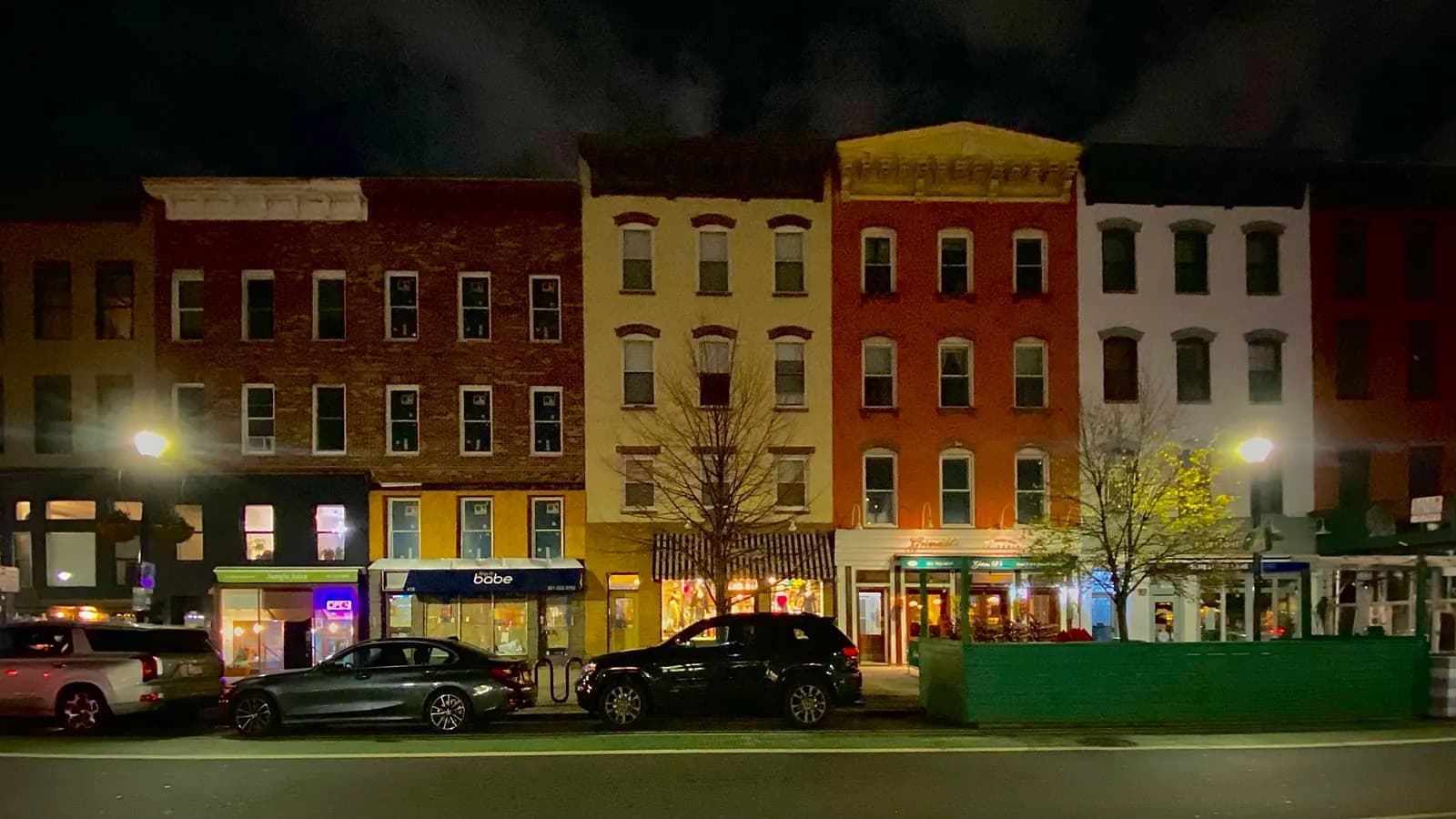
Municipal mercantile licences and local permits
This is the layer that varies most. New Jersey municipalities have broad power to license businesses within their borders, and many use it. A mercantile licence is a general local business licence: some towns require one from every shop, office or service business, while others license only particular activities.
Because each town writes its own ordinance, the details change from one border to the next. Municipal codes set the fee, whether the licence runs on a calendar year or a July-to-June cycle, whether there's a late penalty, and who is exempt. Nonprofits and businesses that already hold a home occupation permit are often exempt, but not everywhere. Many towns won't issue a mercantile licence until the zoning officer confirms your use is allowed at that address, and some issue a temporary licence while the zoning review is pending.
Even where there's no general mercantile licence, you'll usually deal with the municipality for:
- Zoning and use approval for your premises, and a certificate of occupancy or continued certificate of occupancy when you move into a commercial space.
- Sign permits for anything on the outside of the building.
- Health department licences for restaurants, food trucks and other retail food businesses, issued by the local health department.
- Peddler, solicitor and transient merchant licences for door-to-door sales and pop-up vendors.
- Home occupation rules if you work from home, which may limit client visits, employees, parking and signs.
The fastest way to get a definite answer is to call or email your municipal clerk with your exact address and a one-line description of the business. Ask three questions: does the town require a mercantile licence for this activity, does the use need zoning approval at this address, and are there any other local permits. Most towns publish their code on their website or through an online code library, so you can read the relevant chapter yourself.
Questions to settle with your municipality before opening
0/7Keeping your registration in good standing
The annual report
Every New Jersey LLC and corporation, and foreign entities registered to do business in the state, files an annual report with DORES. It confirms your registered agent, address and principals, and it costs $75 for LLCs and for-profit corporations. The report is due by the end of your anniversary month, which is the month your entity was formed or authorized in New Jersey. An LLC formed on March 12 files by March 31 each year, starting the following year.
The report is filed online through the state portal, and the State offers free email or text reminders before it's due. Don't rely on getting a notice, though; it's your responsibility to file on time either way.
What happens if you miss it
The consequence is serious. The Division says a business that fails to file annual reports for two consecutive years may have its charter voided or its authority to do business in New Jersey revoked. Corporations that fail to file corporation business tax returns face the same risk. A revoked LLC loses the liability protection that was the point of forming it, and it can't get a valid BRC, which ends any public contract work.
Reinstatement is possible but costs more than staying current. The Division's online reinstatement service starts with filing your missing annual reports. You'll need the entity's identification number and the month and year it was formed. You pay the past-due report fees plus a reinstatement fee of $75 for an LLC or $95 for a corporation. Some entities must also get a tax clearance certificate, which takes longer; the system tells you whether you need one.
Here's a worked example. An LLC formed in May 2023 never filed its 2024 or 2025 reports and was revoked. To reinstate in 2026, it files the missed reports at $75 each, plus the current one, and pays the $75 reinstatement fee. That's $300 in state fees before any tax clearance work, against $75 a year if it had filed on time.
A New Jersey LLC's first two years
Before opening
Get an EIN, file the certificate of formation ($100), then NJ-REG
At least at least 15 business days before opening
NJ-REG complete; print the BRC; sales tax Certificate of Authority if selling taxable items
Before first customer
State trade licence (e.g. HIC registration) and municipal mercantile licence, zoning and permits
End of anniversary month, year 2
First annual report, $75
Every year after
Annual report, trade licence renewal and municipal licence renewal on each one's own date
Changes during the year
If you move, change your registered agent, or add a trade name, update the state records. Changing the registered office or agent costs $25. Changes to your tax registration, such as hiring your first employee or starting to sell taxable goods, are made by updating your NJ-REG registration rather than re-registering. Remember to tell the municipality too: a move to a new town means starting its licensing process from scratch.
Common mistakes and how to fix them
Assuming the state registration is a licence for regulated work. NJ-REG and the BRC prove registration, not competence. A contractor who registers with DORES but skips the HIC registration is still working unlawfully on residential jobs, and an unregistered contractor's home improvement contracts can be hard to enforce. Fix it by registering with the right board before you take deposits.
Opening before NJ-REG is complete. If you start selling taxable goods before you have a Certificate of Authority, you can't legally collect sales tax, and you're still liable for it. Register early; the state asks for at least at least 15 business days.
Using an old fee schedule. Many formation services and older guides still show $125. Since July 1, 2026, the state's fee is $100. If a service quotes $125 "state fee", ask what the extra $25 covers.
Forgetting the town. Owners often deal with the State and the IRS but never speak to the municipal clerk, then get a notice from a code enforcement officer. One email to the clerk before you sign a lease avoids a lease on premises you can't legally use.
Letting the annual report slide. Two missed years can cost you your entity. Sign up for the State's reminders as soon as your LLC or corporation is formed.
Mismatched names on insurance and applications. For HIC registration, the insured name and address must match the application. Ask your insurer to issue the certificate in the exact legal name on your formation documents.
Official links
- Getting Registered (NJ-REG)Who must register and how
- Business Registration CertificateGet or verify a BRC
- Division of Revenue fee scheduleFormation, annual report, reinstatement fees
- Annual reports and reinstatementsFile online; sign up for reminders
- Reinstatement informationRevoked or voided entities
- Division of Consumer Affairs licensing boardsProfessional and occupational licences
What to do next
Decide on your structure, form the entity if you need one, and file NJ-REG at least at least 15 business days before you open. Then check whether your trade needs a state licence and email your municipal clerk about mercantile licensing and zoning. If you'll sell taxable goods or services, read our New Jersey sales tax guide, and use the startup cost calculator to budget for filing fees, insurance and local permits. Our LLC registration guide compares formation costs across states.
This is general information, not legal or tax advice — confirm on the official source or with a professional.
Frequently asked questions
New Jersey has no general statewide business license. Instead, every business doing business in the state registers with the Division of Revenue and Enterprise Services using Form NJ-REG. Certain occupations need a licence from a state board, and many municipalities require their own mercantile licence or local permits. The state registration is the step nearly everyone shares.
Sole proprietors can register with Form NJ-REG without paying a state formation fee. An LLC or for-profit corporation pays $100 to file its certificate of formation or incorporation, down from $125 before July 1, 2026, and then $75 for each annual report. Occupational licences and municipal licences cost extra and vary by trade and town.
The Business Registration Certificate, or BRC, is proof that your business is registered with the Division of Revenue. You need it to contract with the State or any New Jersey public agency, for casino licensing, and for state grants and tax credits. Once you're registered through NJ-REG, you can get or verify a BRC online.
The annual report is due by the end of your business's anniversary month, the month it was formed or authorized in New Jersey. It's filed online and costs $75 for LLCs and for-profit corporations. Missing it for two consecutive years can lead the State to revoke your LLC or void your corporation's charter.
Contractors doing home improvement work on residential property must register with the Division of Consumer Affairs as a Home Improvement Contractor. The fee is $110, and you must carry commercial general liability insurance of at least $500,000 per occurrence. Electricians, plumbers and HVACR contractors need their own trade licences from state boards.
A mercantile licence is a local business licence some New Jersey municipalities require from shops, offices and other businesses operating within their borders. Each town sets its own fee, renewal date and exemptions in its municipal code, and many require a zoning check first. Ask your municipal clerk whether your town has one before you open.
Sources & verification
Figures on this page were checked against the sources below when it was last reviewed on 9 October 2026. Each rate and limit is stored once with its own official source and review date, and official update channels are monitored daily so changes are picked up. How we verify
- 1.Getting Registered — New Jersey Division of Revenue and Enterprise Services · accessed 9 October 2026
- 2.Fees — New Jersey Division of Revenue and Enterprise Services · accessed 9 October 2026
- 3.Business Registration Certificate — New Jersey Division of Revenue and Enterprise Services · accessed 9 October 2026
- 4.Reinstatement — New Jersey Division of Revenue and Enterprise Services · accessed 9 October 2026
- 5.Annual Reports and Reinstatements — State of New Jersey (NJ Portal) · accessed 9 October 2026
- 6.Instructions and Application for Registration as a Home Improvement Contractor Business — New Jersey Division of Consumer Affairs · accessed 9 October 2026
- 7.Professional and Occupational Boards and Committees — New Jersey Division of Consumer Affairs · accessed 9 October 2026
- 8.New Jersey reduces business formation and filing fees — Morris Focus · accessed 9 October 2026
MSMETOOLS is an independent platform and is not affiliated with any government agency, ministry or department.
Tools for this
Startup Cost Calculator
Estimate how much capital you need to launch.
Sales Tax Calculator (US)
Calculate sales tax for all US states and cities.
Invoice Generator
Create professional invoices with tax, logo and custom details.
Related guides
 How to Start an LLC in New Jersey (2026): $100 GuideRead guide
 Connecticut Business License 2026: Permits, DCP & Town RulesRead guide
 Louisiana Business License 2026: Occupational Tax & PermitsRead guide
 Maine Business License 2026: Permits, Towns & Portland RulesRead guide
Official links open the government site in a new tab.