 Business registration & legal
Shop and Establishment Registration in Karnataka (2026): e-Karmika, Fees, the 2026 Amendment and Working Hours
Shop and establishment registration in Karnataka for 2026: e-Karmika steps, fees from ₹405, no renewal since September 2026, 7-day deemed approval, hours and fines.
 Edited by Sumeet YadavFounder & editor, MSMETOOLS · fact-checked against official sources
Contents (11)
- 1. What the Karnataka Shops Act covers
- 2. The September 2026 amendment: what changed
- 3. Who must register and by when
- 4. Shop and establishment registration fees in Karnataka
- 5. How to apply on e-Karmika
- 6. After registration: changes, closure and returns
- 7. Working hours, overtime, holidays and leave
- 8. Worked example: a Bengaluru home-décor store
- 9. Penalties, compounding and appeals
- 10. Common mistakes and how to fix them
- 11. What to do next
Opening a shop, salon, clinic, restaurant, software office or warehouse in Karnataka? The first labour-law registration you need is under the Karnataka Shops and Commercial Establishments Act, 1961, usually called the shop and establishment registration or "shop act licence". Banks, landlords, payment gateways and the GST office often ask for it. The law changed on 4 September 2026, and most pages online still describe the old renewal rules. This guide is for shop owners, startup founders and the accountants who register them. It covers who must register, the current fees, the e-Karmika steps, what the 2026 amendment changed, working hours and leave, fines, and a worked example for a Bengaluru store.
Quick answer
Every shop and commercial establishment in Karnataka must register under the Karnataka Shops and Commercial Establishments Act, 1961 within 30 days of starting work, online on e-Karmika. The fee is one-time and based on headcount, from ₹405 (no employees) and ₹810 (1–9). Since 4 September 2026 the certificate is valid until the establishment closes or ceases business, so there is no renewal.
Deemed registered if the Inspector does not refuse with reasons within 7 days
Establishments with ten or more workers already registered under the OSH Code are exempt
Hours: 9 hours a day, 48 a week; overtime at double pay, capped at 50 hours in any three continuous months
Fine for not registering up to ₹3,000, or ₹5,000 for a repeat
What the Karnataka Shops Act covers
The Act (Karnataka Act 8 of 1962) regulates employment in shops and commercial establishments across the State. A "shop" is any premises where goods are sold, retail or wholesale, or where services are provided to customers, along with its office, storeroom or godown. A "commercial establishment" is wider: offices of any trade, business or profession, banks, insurance and broking offices, clinics, hotels, restaurants, eating houses, cinemas, places of public amusement, and IT and IT-enabled service offices that are not factories. In practice almost every non-factory business with a fixed place of work falls inside it.
The Act applies whether or not you employ anyone. The fee table even has a separate slab for "no employees", which tells you the department expects one-person shops to register too. What changes with headcount is the fee and, at ten or more workers, whether the OSH Code exemption described below is available.
Some places are outside the Act altogether. Section 3 lists them: offices of the Central and State Governments and local authorities, the Reserve Bank, railway services, establishments in mines and oilfields, bazaars at fairs and festivals for a short time, and a few others. Factories registered under factory law are regulated by that law, not the Shops Act. People in managerial or confidential positions are covered by registration but excluded from some of the hours rules.
The authority is the State Labour Department, not your city corporation. The Labour Inspector or Senior Labour Inspector for the area where your establishment sits registers it. A trade licence from your city corporation or other municipal body is a separate permission for the premises and the trade; it does not replace the Shops Act registration, and the Shops Act registration does not replace it. If you also use contract workers, read our broader labour licence guide for Karnataka, which covers contract-labour registration and licences.

The September 2026 amendment: what changed
The Karnataka Shops and Commercial Establishments (Amendment) Act, 2026 (Karnataka Act 38 of 2026) received the Governor's assent on 3 September 2026 and came into force on publication in the Gazette on 4 September 2026. It is the biggest change to registration since 2005.
No renewal. Section 4(5) now says a registration, once issued, is valid until the establishment closes or stops business. The old five-year renewal cycle and sub-section (6), which dealt with deemed renewal, are gone. Owners whose certificates show a "valid up to" date before September 2026 do not need to renew them, but they should keep the certificate and a copy of the amendment handy for banks that still ask about expiry.
Faster deemed registration. If the Inspector is not satisfied with your application, he must refuse it and give reasons within 7 days of receiving the statement and fee; before September 2026 the window was 30 days. If no refusal reaches you in that time, the establishment is deemed to be registered. Falsely claiming deemed registration is now punishable with a fine of up to ₹50,000, replacing a minimum six-month prison term.
Digital by law. Applications, fees, certificates and notices of change must go through electronic or digital mode. Paper applications are no longer a legal option.
OSH Code exemption. A new clause in section 3 exempts an establishment employing ten or more workers that is already registered under the Occupational Safety, Health and Working Conditions Code, 2020. Godowns or storage facilities within one hundred metres of the main establishment need no separate registration.
Employee protections. New section 6-B makes an employer issue a service certificate within 7 days of an employee asking for one. New section 6-C bars employers from keeping an employee's original educational or experience certificates or other original documents, at hiring or later.
Higher fines and a structured compounding route. The amendment raised most fines and replaced the compounding section, adding an appeal. These are covered in the penalties section below.
Karnataka Shops Act at a glance (2026)
₹405
Lowest registration fee
no employees; one-time
30 days
Time to register
from starting work
7 days
Deemed registration
if not refused with reasons
No renewal
Certificate validity
since 4 Sep 2026
Who must register and by when
Every covered establishment. Section 4 requires the employer to send the Inspector a statement in the prescribed form, with the fee, within 30 days of the date the establishment starts work. On e-Karmika the statement is Form A. Apply before you open if you can: banks often want the certificate before opening a current account, and the 30 days run from the first day of business, not from when you get around to it.
Count all employees. The fee slab depends on the number of employees, so count everyone working in the establishment: permanent, temporary, part-time, trainees and people supplied by agencies such as guards and housekeeping. The owner and partners are employers, not employees. If headcount moves into a higher slab later, report the change; inspectors compare the registered number with your attendance and PF or ESIC records.
Each location registers. A registration covers one establishment at one address. A second outlet, a branch office or a separate kitchen needs its own registration. The one exception the amendment makes is for godowns and storage facilities within one hundred metres of the main establishment.
Shared offices and home businesses. A seat in a co-working centre or an office in your home still counts as an establishment if business is carried on there. Use the co-working agreement or a rent agreement as address proof. If you work from home with no staff and no customers visiting, the practical need is usually driven by your bank or payment gateway; registering at the lowest slab is cheap and avoids questions later.
OSH-registered establishments. If you have ten or more workers and have already registered the establishment under the OSH Code, you do not need a separate Shops Act registration. Karnataka had not notified its final rules under the OSH Code as of October 2026; its latest draft was published on 23 January 2026. Until the State's OSH portal and rules are in place, most establishments with ten or more workers will still be registering under the Shops Act, so do not skip e-Karmika on the strength of this clause unless you actually hold an OSH registration.
Shop and establishment registration fees in Karnataka
The fee is set in Schedule-I to the Karnataka Shops and Commercial Establishments Rules, 1963. The current table was substituted by amendment rules published in the Karnataka Gazette on 1 January 2025, and e-Karmika shows the same figures. It is a one-time payment.
| Employees | Registration fee |
|---|---|
| None | ₹405 |
| 1 to 9 | ₹810 |
| 10 to 19 | ₹5,400 |
| 20 to 49 | ₹13,500 |
| 50 to 99 | ₹27,000 |
| 100 to 250 | ₹54,000 |
| 251 to 500 | ₹67,500 |
| 501 to 1,000 | ₹94,500 |
| More than 1,000 | ₹1,01,250 |
Two points trip people up. First, many websites still show ₹300 for no employees and ₹600 for one to nine; those came from the department's 2021 checklist and were replaced in January 2025. Second, the jump from nine to ten employees is steep, from ₹810 to ₹5,400. Do not under-declare to stay in the lower slab. The headcount on your application is a statement to the Inspector, and a mismatch with ESIC or PF records is easy to spot.
Fees are paid online through Khajane-II, the State treasury's payment system; e-Karmika does not accept cash or demand drafts. What agents charge on top, often ₹1,000 to ₹3,000, is their service fee and not a government charge.
How to apply on e-Karmika
e-Karmika is the Labour Department's portal for the Shops Act. The same login is used for registration, amendments, duplicate certificates, annual returns, weekly-holiday exemptions, closure and appeals, so create it with an email and mobile number you will keep.
Shop and establishment registration on e-Karmika
- 1
Create a user account
Open e-KarmikaOpen e-Karmika and register as a new user with your mobile number and email. Keep the username and password; they are needed later for changes, returns and closure.
- 2
Fill in Form A
Enter the establishment's name and address, category (shop, commercial establishment, hotel, restaurant and so on), date of commencement, the employer's and manager's details, and the number of employees by gender.
- 3
Upload documents
Upload the owner's ID, proof of the premises, company documents if any, an authorisation or self-attestation letter and the signed form.
Tip: Use the exact business name that appears on your GST or company records; mismatches are a common reason for queries.
- 4
Pay through Khajane-II
The portal calculates the fee from the headcount you enter. Pay online and save the transaction receipt.
- 5
Track and download the certificate
The Labour Inspector scrutinises the application and approves it online. If there is no refusal with reasons within 7 days, you are deemed registered. Download the digital certificate and display it at the premises.
Documents to keep ready
- Owner's identity and address proof: Aadhaar, driving licence or voter ID
- Proof of the premises: rent or lease agreement, GST certificate, or property tax / khata receipt
- For a private limited company: certificate of incorporation and memorandum and articles
- Authorisation letter for the signatory, or a self-attestation letter if the owner signs
- Headcount by gender, including agency and part-time staff
- Fee payment receipt from Khajane-II
The Labour Department's own checklist sets a time limit of one day once the application is complete, while the Sakala list, Karnataka's public-service guarantee, allows 7 days. Most clean applications are approved within a few working days. If you get a query, answer it from the same login rather than filing a fresh application, which would generate a second fee.
After registration: changes, closure and returns
Changes. Section 6 requires you to notify the Inspector of any change in the particulars of your registration, such as name, address, ownership, nature of business or a move to a different headcount slab. Since September 2026 the notice must be given electronically, which on e-Karmika means the amendment service. If the change moves you into a higher fee slab, pay whatever the portal calculates for the amendment. A move to a new address is best treated as a closure at the old site and a fresh registration at the new one, unless the portal accepts it as an amendment.
Closure. When you stop trading at a location, close the registration from the same login. A registration is valid until closure, so an unclosed record stays live and can attract inspection notices or annual-return reminders long after the shutters are down.
Registers and annual returns. The Rules require registers of employees, attendance, wages, leave and overtime, and e-Karmika has an annual-return service. Keep them current month by month; reconstructing them before an inspection is how mistakes creep in.
Service certificates and documents. When an employee asks for a service certificate, issue it within 7 days. Return any original certificates you are holding; keeping them is now a separate breach. Copies, verified at joining, are enough.
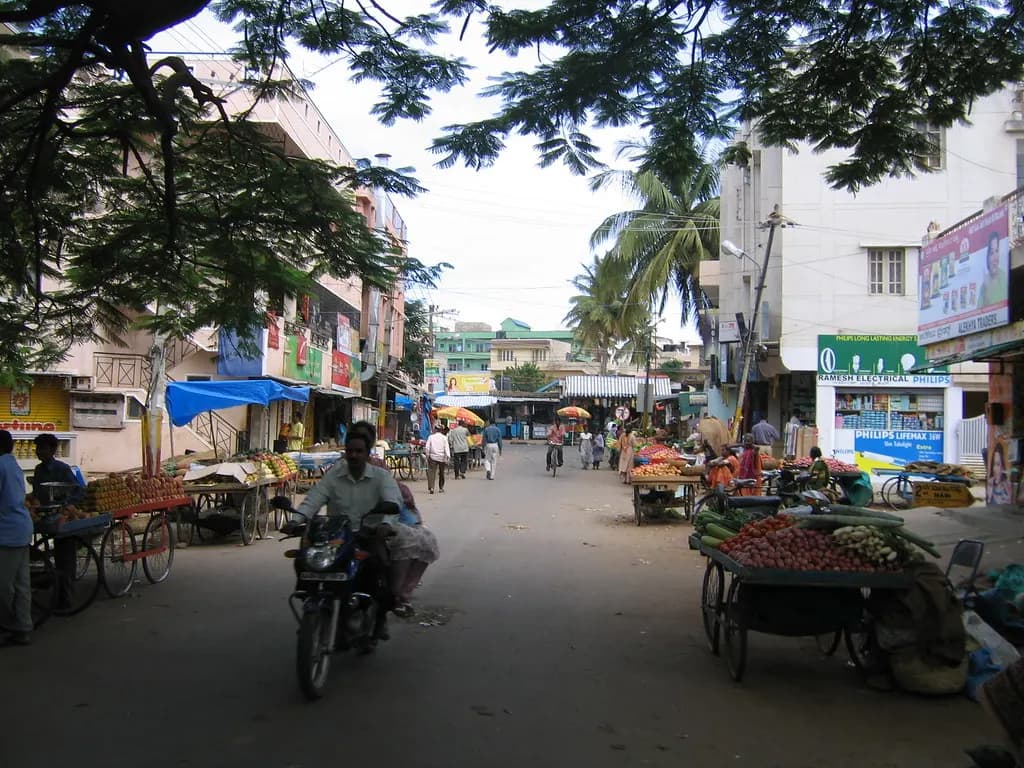
Name board. Karnataka's Kannada language law, as amended in 2024, requires name boards of commercial establishments to give Kannada 60 per cent of the space, in the upper half. Retailers have challenged the rule in the High Court, which has told the State not to take precipitate action while the case is pending. Putting Kannada first and larger on your board is the low-risk choice.
Life of a Karnataka shop registration
Step 1
Form A on e-Karmika
Step 2
Pay on Khajane-II
one-time fee
Step 3
Certificate
or deemed in 7 days
Step 4
Report changes online
Step 5
Close
when you stop trading
Working hours, overtime, holidays and leave
These rules apply to employees in every registered establishment, whatever the headcount.
Daily and weekly hours. Section 7 allows up to 9 hours of work a day and 48 hours a week. Including overtime, no one may work more than 10 hours in a day, except on stock-taking and accounts days, and total overtime cannot exceed 50 hours in any three continuous months. Work beyond nine hours a day or 48 a week is paid at twice the normal wage, which for this purpose includes basic pay and allowances but not bonus.
Rest and spread-over. No one may work more than five hours at a stretch without a rest interval of at least one hour, and the working day, including rest intervals, cannot spread over more than 12 hours.
The 10-hour-day proposal. In June 2025 the Labour Department circulated a draft amendment that would have allowed ten hours a day and 144 hours of overtime a quarter. After protests by employee unions, the union said in July 2025 that the department had dropped it, and the September 2026 amendment does not touch section 7. The limits above still apply.
Weekly holiday and 24x7 trading. Section 12 requires one whole day of rest a week for every employee, with no wage deduction for it. An establishment can stay open all seven days if staff rest on a rota. A notification of 27 September 2024 lets shops and commercial establishments employing ten or more people stay open 24 hours on all days, for three years from its publication, on conditions: extra staff so everyone gets a weekly off by rotation, wages paid into bank accounts, overtime limits, written consent, transport and safety for women working between 8 pm and 6 am, rest rooms and lockers, and an Internal Committee under the POSH Act. Commentators have pointed out that the notification repeats an older eight-hour daily limit; follow the stricter figure if you rely on it.
Women at night. Section 25 restricts night work for women. The 2026 amendment deleted the long list of conditions (driver checks, route planning, control rooms and the like) that had been attached to night shifts, but the basic consent and safety duties remain through the 24x7 notification and exemption orders. e-Karmika still offers an exemption application for women working night shifts.
Leave. An adult earns one day of annual leave for every 20 days worked, which can be accumulated up to 30 days. In addition, each employee gets up to 12 days of sick or casual leave with wages for every twelve months of continuous service. Wages for four or more days of leave are paid in advance if the employee asks. National and festival holidays come from Karnataka's separate holidays law.
Karnataka working-time rules in 2026
| Rule | Limit | Section |
|---|---|---|
Ordinary hours | 9 hours a day, 48 a week | s.7(1) |
Hours including overtime | 10 hours a day | s.7(1) |
Overtime cap | 50 hours in any three continuous months | s.7(1) |
Overtime rate | 2 × normal wages | s.8 |
Rest interval | 1 hour before more than 5 hours' work | s.9 |
Spread-over | 12 hours | s.10 |
Weekly rest | 1 whole day | s.12 |
Ordinary hours
- Limit
9 hours a day, 48 a week
- Section
s.7(1)
Hours including overtime
- Limit
10 hours a day
- Section
s.7(1)
Overtime cap
- Limit
50 hours in any three continuous months
- Section
s.7(1)
Overtime rate
- Limit
2 × normal wages
- Section
s.8
Rest interval
- Limit
1 hour before more than 5 hours' work
- Section
s.9
Spread-over
- Limit
12 hours
- Section
s.10
Weekly rest
- Limit
1 whole day
- Section
s.12
Worked example: a Bengaluru home-décor store
Shetty Home Interiors opens on 1 November in Jayanagar, Bengaluru (Zone 1 for minimum wages) with seven employees of its own and two security guards from an agency.
Registration. Headcount is nine, so the owner applies in Form A on e-Karmika by 1 December (30 days) and pays ₹810 through Khajane-II. She uploads her Aadhaar, the rent agreement and the GST certificate. The Inspector approves it in three days; had he not refused with reasons within 7 days, the store would have been deemed registered anyway.
Growth. By the next Diwali she has 13 employees including guards. She files an amendment on e-Karmika and pays whatever amendment fee the portal calculates for the new ₹5,400 slab. There is no renewal to diarise.
Overtime. A sales assistant paid the Zone 1 unskilled rate of ₹23,376.43 a month works 52 hours in a festival week, four over the weekly limit. At 26 days of eight hours, the hourly rate is about ₹112, so overtime at double is about ₹225 an hour, or roughly ₹900 for the week. Over the quarter she must stay within the 50 hours in any three continuous months cap.
Other registrations. With ten or more employees the store registers for ESIC, deducts Karnataka professional tax from salaries of ₹25,000 or more, pays at least the Karnataka minimum wages and sets up an Internal Committee under the POSH Act.
Penalties, compounding and appeals
Fines. Section 30(1) covers breaches of the registration, change-notice, hours, interval, spread-over, weekly-holiday, leave and several other sections. After the 2026 amendment the fine is up to ₹3,000 for a first offence and up to ₹5,000 for each later one. Breaches of the overtime-pay and advance leave-wage rules under section 30(2) carry up to ₹2,000. Breaching the child-labour or night-work sections attracts at least ₹10,000, and obstructing an Inspector up to ₹10,000. Employing a child under 14 can also lead to imprisonment.
Karnataka Shops Act fines before and after 4 September 2026
| Breach | Before | From 4 Sep 2026 |
|---|---|---|
Registration, hours, leave and other s.30(1) breaches (first) | ₹1,000 | ₹3,000 |
Same, repeat offence | ₹2,000 | ₹5,000 |
Overtime pay, advance leave wages (s.30(2)) | ₹250 | ₹2,000 |
Falsely claiming deemed registration | 6 months' jail + ₹5,000 | up to ₹50,000 |
Obstructing an Inspector | ₹500 | up to ₹10,000 |
Registration, hours, leave and other s.30(1) breaches (first)
- Before
₹1,000
- From 4 Sep 2026
₹3,000
Same, repeat offence
- Before
₹2,000
- From 4 Sep 2026
₹5,000
Overtime pay, advance leave wages (s.30(2))
- Before
₹250
- From 4 Sep 2026
₹2,000
Falsely claiming deemed registration
- Before
6 months' jail + ₹5,000
- From 4 Sep 2026
up to ₹50,000
Obstructing an Inspector
- Before
₹500
- From 4 Sep 2026
up to ₹10,000
Compounding. Under the new section 33-A, the jurisdictional labour officer can compound any offence by collecting 50% of the prescribed fine (first offence); 75% (repeat) of the prescribed fine. The same kind of offence cannot be compounded more than twice in a year, and no penalty can be imposed without a hearing.
Appeal. Section 33-B allows an appeal within 30 days of the compounding order to an appellate authority not below the rank of Assistant Labour Commissioner. The fine must be deposited first, and the appeal is to be decided within 60 days.
Common mistakes and how to fix them
Waiting for the certificate before opening. The 30 days run from the start of business. File Form A as soon as the premises are ready; if the Inspector does not refuse with reasons within 7 days, you are covered.
Paying old fees or agent "renewal" charges. Agents still sell five-year renewals. Since 4 September 2026 there is nothing to renew. If someone quotes a renewal fee, ask for the section of the Act that requires it.
Under-declaring headcount. Staying at nine employees on paper to avoid the ₹5,400 slab is a false statement. The fine is small compared with the cost of an inspection report that also triggers ESIC and PF questions.
One registration for several outlets. Each establishment registers separately. Only a godown within one hundred metres of the main establishment is spared.
Holding employees' original certificates. Common in retail and hospitality, and now prohibited by section 6-C. Return originals and keep attested copies.
Not closing a shut branch. Because registrations no longer expire, a closed branch stays on the register until you close it on e-Karmika.
Ignoring the Labour Codes. The four Labour Codes came into force on 21 November 2025. The OSH Code has its own registration for establishments with 10 or more workers. Once Karnataka's rules are final, larger establishments may move to OSH registration and drop out of the Shops Act registration. Watch our Labour Codes guide for the switch.
Official links
- e-Karmika — Shops Act registration and servicesForm A, amendments, duplicate, returns, closure
- Fee schedule — Karnataka Gazette, 1 January 2025 (PDF)Schedule-I fees by headcount
- Shops and Establishments checklist (PDF)Process, documents and time limit
- Sakala services of the Labour DepartmentGuaranteed service times
- Karnataka Labour DepartmentActs, rules, draft Labour Code rules
What to do next
Count everyone working at the premises, including agency staff, and register on e-Karmika within 30 days of opening; the fee is one-time and there is no renewal. Then set up attendance, overtime and leave registers, check pay against the Karnataka minimum wages, and register for professional tax. Our salary slip generator shows overtime and deductions clearly, and the hourly rate calculator helps you price overtime hours. If you have not yet registered for GST or Udyam, your Shops Act certificate is useful supporting proof of the business address.
This is general information, not legal or tax advice — confirm on the official source or with a professional.
Frequently asked questions
Yes. Every shop and commercial establishment covered by the Karnataka Shops and Commercial Establishments Act, 1961 must register within 30 days of starting work, even if the owner works alone. The only new exception, from 4 September 2026, is an establishment with ten or more workers that is already registered under the OSH Code, which does not need a second registration.
The fee is one-time and depends on headcount: ₹405 with no employees, ₹810 for one to nine, ₹5,400 for ten to nineteen and ₹13,500 for twenty to forty-nine, rising to ₹1,01,250 above 1,000. It is paid online through Khajane-II on e-Karmika. Older figures of ₹300 and ₹600 were replaced in January 2025.
Not any more. The Karnataka Shops and Commercial Establishments (Amendment) Act, 2026, in force from 4 September 2026, says a registration is valid until the establishment closes or ceases business. Before that, certificates had to be renewed every five years. You must still report changes such as a new address, owner or headcount online, and close the registration when you stop trading.
The Labour Department's checklist sets one day once the application is complete, and the Sakala guarantee allows 7 days. Under the 2026 amendment, if the Inspector does not refuse the application with reasons within 7 days, the establishment is deemed registered.
An employee may work up to 9 hours a day and 48 hours a week, with a one-hour rest interval before working more than five hours and a spread-over of no more than 12 hours. Including overtime, the day cannot exceed 10 hours, overtime is paid at twice the normal wage, and it is capped at 50 hours in any three continuous months.
Not registering breaches section 4, which section 30(1) now punishes with a fine of up to ₹3,000 for a first offence and up to ₹5,000 for a repeat. Falsely claiming deemed registration attracts up to up to ₹50,000. Offences can be compounded by paying 50% of the prescribed fine (first offence); 75% (repeat) of the prescribed fine.
Sources & verification
Figures on this page were checked against the sources below when it was last reviewed on 12 October 2026. Each rate and limit is stored once with its own official source and review date, and official update channels are monitored daily so changes are picked up. How we verify
- 1.Karnataka Shops and Commercial Establishments (Amendment) Act, 2026 — Karnataka Act 38 of 2026, Gazette Extraordinary No. 893, 4 September 2026 — Government of Karnataka, DPAL (gazette copy via Simpliance) · accessed 12 October 2026
- 2.e-Karmika — Karnataka Shops and Commercial Establishments Act online services — Labour Department, Government of Karnataka · accessed 12 October 2026
- 3.Updated fee structure of Labour Department Acts — Karnataka Gazette, 1 January 2025 — Labour Department, Government of Karnataka · accessed 12 October 2026
- 4.Shops and Establishments online services — procedure and checklist — Labour Department, Government of Karnataka · accessed 12 October 2026
- 5.Karnataka Labour Commissionerate — Sakala services — Labour Department, Government of Karnataka · accessed 12 October 2026
- 6.Karnataka Shops and Commercial Establishments Act, 1961 — consolidated text — LegitQuest · accessed 12 October 2026
- 7.Karnataka Shops and Commercial Establishments (Amendment) Act, 2005 — CaseMine · accessed 12 October 2026
- 8.Karnataka Shops and Commercial Establishments (Amendment) Act, 2026 — client update — AZB & Partners · accessed 12 October 2026
- 9.Karnataka Govt's 24x7 shop operations notification released — Fox Mandal & Associates · accessed 12 October 2026
- 10.Karnataka govt to drop proposal to increase daily working hours, says employees' union — The Week (PTI) · accessed 12 October 2026
- 11.Bill mandating 60 per cent Kannada on sign boards passed in Karnataka Assembly — The South First · accessed 12 October 2026
MSMETOOLS is an independent platform and is not affiliated with any government agency, ministry or department.
Tools for this
Salary Slip Generator
Create professional salary slips in seconds.
Freelance Hourly Rate Calculator
Work out the hourly rate you need to charge.
Related guides
 Labour License Karnataka 2026: Shops Act, CLRA & FeesRead guide
 Shop Act License Rajasthan 2026: 10-Worker Exemption, FeesRead guide
 Shop and Establishment Registration AP 2026: Fees, RulesRead guide
 Shop and Establishment Registration Odisha 2026: 20+ RuleRead guide
Official links open the government site in a new tab.