 Business registration & legal
Shop and Establishment Registration in Jharkhand (2026): Shramadhan Process, Fees, No Renewal and Working Rules
Shop and establishment registration in Jharkhand for 2026: who registers on Shramadhan, official ₹240–₹6,000 fee slabs, no renewal, hours and leave.
 Edited by Sumeet YadavFounder & editor, MSMETOOLS · fact-checked against official sources
Contents (11)
- 1. Which law applies in Jharkhand
- 2. Who must register, and what has not changed in 2025–26
- 3. Registration fees and the late fee
- 4. How to register on Shramadhan or the single window
- 5. Changes after registration: Form IV and closure
- 6. Working hours, holidays and leave
- 7. Notice, dismissal and final dues
- 8. Worked example: a coaching centre in Ranchi
- 9. Penalties
- 10. Common mistakes and how to fix them
- 11. What to do next
If you run a shop, office, clinic, coaching centre, restaurant, salon or service business in Ranchi, Jamshedpur, Dhanbad, Bokaro, Hazaribagh, Deoghar or any other town in Jharkhand, "shop and establishment registration" means registration with the State Labour Department under the Jharkhand Shops and Establishments Act. Jharkhand has not followed its neighbours in exempting small shops, so most businesses in its towns still need to register. The good news is that the process is online, the fees are modest and the certificate does not expire. This guide covers who must register, the official fees, the Shramadhan process, the working-time and leave rules your staff are owed, and a worked example for a Ranchi business.
Quick answer
Shops and establishments in Jharkhand's municipal and notified areas register online with the Labour Department on Shramadhan or the Jharkhand Single Window, in Form I. The official fee runs from ₹240 for up to ten employees to ₹6,000 for 101 or more, the certificate is generated within 30 days, and it stays valid until the business closes — there is no renewal.
Late application: 50% of the fee extra for every three months of delay
Amendments in Form IV for ₹5, plus extra fee if headcount rises into a higher slab
Up to 9 hours a day and 48 a week; overtime at twice the ordinary rate
No 20-worker threshold in Jharkhand, unlike Haryana, Punjab and Odisha
Which law applies in Jharkhand
When Jharkhand was carved out of Bihar in 2000, it inherited the Bihar Shops and Establishments Act, 1953, which continues in Jharkhand with State amendments and is administered as the Jharkhand Shops and Establishments Act. Jharkhand made its own Jharkhand Shops and Establishments Rules in 2001 and amended them in 2012. Bihar itself took a different path: it replaced the 1953 Act with a new law in 2025 and then repealed that law in 2026, as our Bihar shop act guide explains. None of that affects Jharkhand.
The Act applies to shops and establishments in municipal corporations, municipalities and notified areas, and in other areas the State extends it to, such as certain mining settlements. It covers shops, commercial establishments, offices, banks, restaurants, hotels, cinemas and places of amusement. It regulates registration, hours of work, rest intervals, the weekly holiday, festival holidays, leave, payment during leave, the employment of women and young persons, and dismissal and resignation notice.
Shop registration is a labour-law registration. It is separate from the municipal trade licence that Ranchi Municipal Corporation and other urban bodies issue, from GST registration, from Udyam registration and from Jharkhand professional tax. Banks often ask for it when opening a current account in the business name.
Who must register, and what has not changed in 2025–26
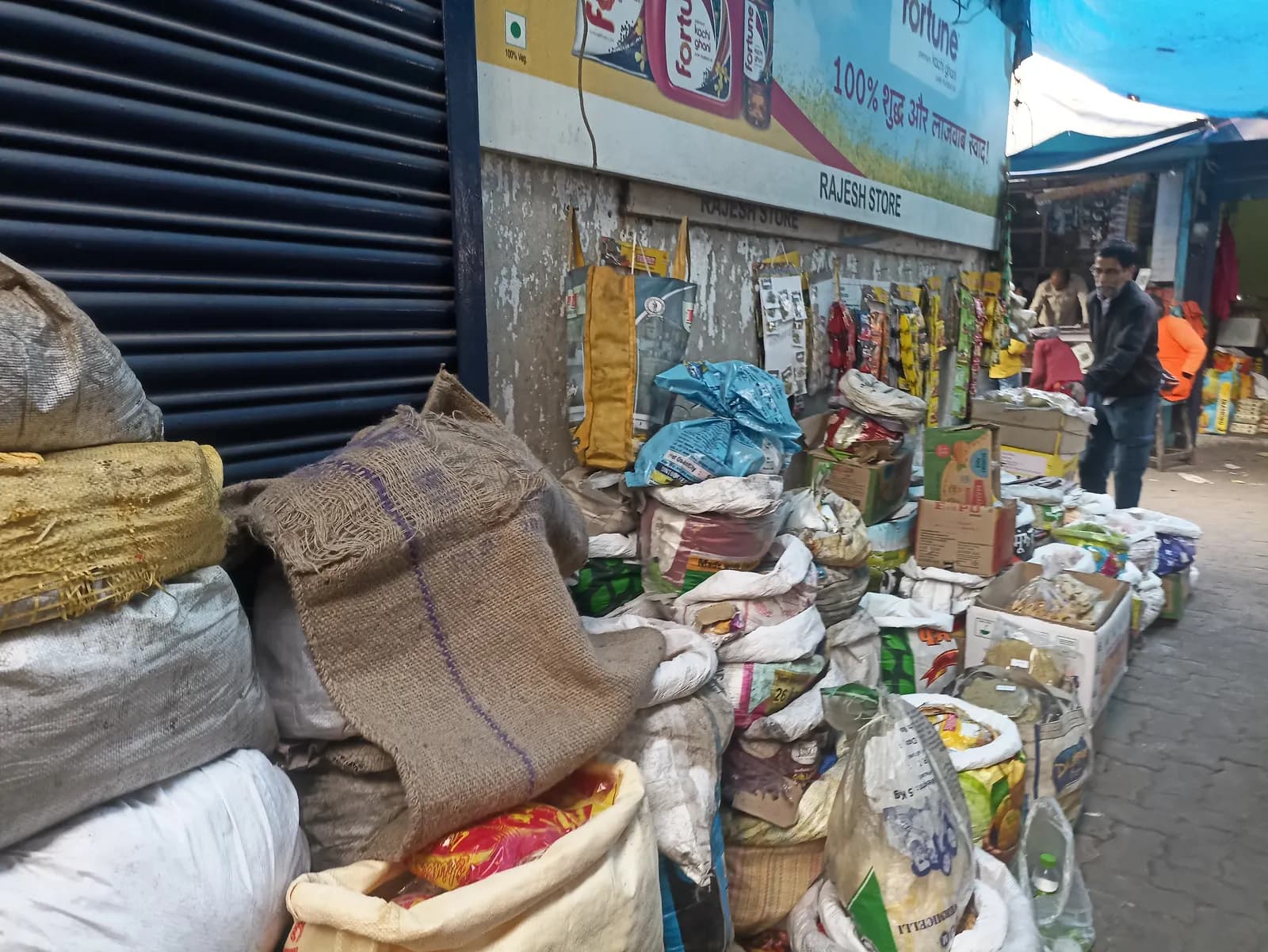
Every shop or establishment in a covered area must register, whatever its size. The fee table on the Labour Department's Shramadhan portal begins with establishments employing up to ten people, and the 2012 rules had separate slabs for establishments of two and of three to five employees. There is no exemption for owner-run shops. Each separate premises is normally its own establishment, so a business with a showroom in Main Road and a godown in Doranda would usually register both, each in the slab for the people working there. Offices count as much as shops: a CA firm, a software studio or a travel agency in a covered town registers just like a retail counter. If you are unsure whether your area is covered, the Labour Department's district office can confirm it, but almost every urban business in the State's municipal corporations and councils falls inside.
That makes Jharkhand an outlier in 2026. Haryana, Punjab and Odisha amended their shop laws in 2025 so that only establishments with twenty or more workers register. We searched the Jharkhand gazette references, the Labour Department's portal and Assembly news for a comparable amendment and found none as of October 2026. If Jharkhand does raise its threshold, small shops would likely move to a simpler intimation, as happened next door; until then, register.
The central Labour Codes add a second layer. The OSH Code, in force since 21 November 2025, requires every establishment with 10 or more workers to register under its section 3 within 60 days of the Code applying. Jharkhand published draft OSH rules in August 2021, and a leading law-firm tracker still listed them as not in force in July 2026. Without final rules or an exemption notification of the kind Haryana issued, a Jharkhand shop should keep its Shops Act registration current and watch Shramadhan for an OSH registration service.
Jharkhand shop registration at a glance (2026)
₹240
Fee, up to 10 employees
highest slab ₹6,000
30 days
Certificate issued within
from a complete application
None
Renewal
valid till closure since 2012
50% of the fee
Late fee
per three months of delay
Registration fees and the late fee
The Shramadhan fee page sets the registration fee by the maximum number of employees you expect to have, not by the type of business.
Official registration fee by maximum employees
| Maximum employees | Registration fee |
|---|---|
Up to 10 | ₹240 |
11 to 20 | ₹420 |
21 to 50 | ₹900 |
51 to 100 | ₹1,800 |
101 and above | ₹6,000 |
Amendment of certificate | ₹5 |
Up to 10
- Registration fee
₹240
11 to 20
- Registration fee
₹420
21 to 50
- Registration fee
₹900
51 to 100
- Registration fee
₹1,800
101 and above
- Registration fee
₹6,000
Amendment of certificate
- Registration fee
₹5
The 2012 amendment rules that set these amounts had two lower slabs, ₹60 for up to two employees and ₹120 for three to five, which the portal's current table no longer shows separately; on the portal, any establishment with up to ten employees pays the same ₹240. The portal's fee calculator is the figure you will actually pay, so use it before generating a challan.
Late fee. Rule 7, as substituted in 2012, says that if an application for registration or amendment reaches the Inspector after the time the rules allow, it is still accepted, but a further 50% of the fee of the original fee is payable for every three months, or part of three months, of delay, in one instalment. Apply as soon as you start trading to avoid it.
Headcount rising. If you amend your certificate because the maximum number of employees has gone up into a higher slab, the portal charges the difference in registration fee on top of the amendment fee. Fees, once paid, are not refunded.
How to register on Shramadhan or the single window
The Labour Department offers two online routes that lead to the same certificate. Both require a mobile number and an email ID, and the department says the process has no physical touch point.
Shop registration in Jharkhand, step by step
- 1
Choose your route
Open ShramadhanEither the Labour Department's Shramadhan portal (Services → Shops & Establishment Act → Registration) or the Jharkhand Single Window (Labour → Registration under Shops and Establishments Act).
- 2
Fill in Form I
Basic information about the shop or establishment, the owner or employer, the manager or agent, and the maximum number of employees.
- 3
Upload the documents
Address proof of the establishment, address proof of the employer and an identity proof of the owner.
Tip: Information and uploads are your responsibility; the department can cancel a registration later found to be based on false details.
- 4
Pay the fee
Online banking, or a treasury challan whose scanned copy you upload. Check the slab on the portal's fee calculator first.
- 5
Download the certificate
Generated online within 30 days of a complete application with fee. SMS alerts go to you and the officers at each stage.
If the officer asks for a clarification, the department's procedure says the 30-day clock starts again once you have answered. To check a certificate presented by someone else, Shramadhan has a licence verification service.
Documents to keep ready
- Photo ID of the owner: Aadhaar, voter ID, passport, PAN, driving licence or bank passbook
- Address proof of the owner: Aadhaar, ration card, electricity or telephone bill, LPG document, passbook or rent agreement
- Address proof of the shop: electricity or telephone bill, LPG document, passbook, ownership deed or rent or lease agreement
- Scanned treasury challan, if you pay through the treasury rather than online
- For an amendment: the document supporting the change, such as a new rent agreement
Changes after registration: Form IV and closure
Any change in the particulars on your certificate, such as a new address, a change of manager or a rise in headcount, goes through an online amendment request in Form IV on Shramadhan, with the ₹5 fee and supporting documents. The amended certificate is also generated within thirty days.
The portal restricts one kind of change: the employer named on the certificate can only be changed if the current employer has died, with a death certificate, or has sold the establishment, with the sale deed. A partnership that takes in a new partner, or a company that changes its directors, should check with the Inspector how to record the change rather than trying to swap the employer's name.
Because certificates remain valid until closure, keep yours safe and up to date. When you close, inform the Inspector so the establishment is removed from the register, and keep proof that you did.
Working hours, holidays and leave
The Act's working-time rules apply to every registered establishment, regardless of size.
Hours. No employee may work more than 9 hours a day or 48 hours a week, not counting rest and meal intervals. No one should work more than 5 hours at a stretch without a rest interval of at least half an hour, and an adult's working day, including intervals, may not spread over more than 12 hours. Extra hours worked during stock-taking, accounts or other permitted occasions are overtime, paid at twice the ordinary rate of wages, which is also the rule under the Code on Wages since 21 November 2025.
Holidays. Each employee gets one whole day off a week without loss of pay. Republic Day, Independence Day and Gandhi Jayanti are paid holidays, and the State can declare up to five more paid festival holidays a year. Work on such a holiday is paid at double the normal rate.
Leave. The Act gives 12 days of casual leave on full pay and 12 days of sick leave on half pay, on a medical certificate, each calendar year; neither carries forward. An employee who works 240 days or more in a year earns one day of leave for every twenty days worked, which can be carried forward up to 45 days. Watchmen and caretakers have a separate entitlement. Leave is paid at the employee's average daily full-time earnings, excluding overtime and bonus.
Women and young persons. Women and young persons may not work before 8 a.m. or after 10 p.m., unless the State relaxes this by written order with conditions for their safety. Since 21 November 2025, the OSH Code also permits women to work at night with consent, subject to conditions in State rules that Jharkhand has not yet finalised. Children under fourteen may not be employed.
| Rule | Jharkhand Shops Act |
|---|---|
| Daily / weekly hours | 9 hours / 48 hours |
| Work before a rest interval | 5 hours |
| Spread-over (adults) | 12 hours |
| Casual leave | 12 days on full pay |
| Sick leave | 12 days on half pay |
| Earned leave | 1 day per 20 days worked (240-day eligibility) |
Notice, dismissal and final dues
Section 26 is one of the Act's most-used provisions. An employer cannot dispense with the services of an employee who has worked continuously for six months or more except for a reasonable cause and after one month's notice or a month's wages in lieu, unless the employee is dismissed for misconduct proved at an inquiry. An employee with a year or more of service whose services are ended other than for misconduct also gets fifteen days' average wages for each completed year of service. The employee can complain to the prescribed authority within ninety days.
Employees owe notice too: a month's notice before resigning, failing which the employer may withhold up to fifteen days' unpaid wages. Set these terms out in appointment letters so neither side is surprised. Note that the Code on Wages separately requires full and final settlement within two working days of an employee leaving.
Worked example: a coaching centre in Ranchi
Mahto Classes opens in Lalpur, Ranchi on 1 July with eleven teachers and three office and housekeeping staff, fourteen people in all, and expects to stay under twenty.
Registration. The owner applies on Shramadhan in Form I, choosing the 11 to 20 slab, and pays ₹420 online. Had she waited and filed late enough to attract one late period, the portal would add 50% of the fee of that fee, taking it to about ₹630. The certificate is generated within thirty days and never needs renewal. When she hires her twenty-first person, she files Form IV, pays the amendment fee and the difference to the 21 to 50 slab.
Overtime. Before board exams an office assistant works 54 hours in one week. On Jharkhand's Zone A unskilled minimum of ₹13,586 a month (₹523 a day), an eight-hour base gives about ₹65 an hour; six overtime hours at twice the rate cost about ₹785. Calculate on actual pay where it is higher, and check the Jharkhand minimum wages for her zone and category.
| Mahto Classes, Ranchi | Detail |
|---|---|
| Employees | 14 |
| Fee slab | 11 to 20: ₹420 |
| Renewal | None |
| OSH Code | 10+ workers: register once Jharkhand's portal opens |
| One week's overtime, one assistant | 6 hours ≈ ₹773 at the minimum wage |
Other compliance. With fourteen employees she also needs ESIC at 10 or more employees for staff within the wage ceiling, an Internal Committee under the POSH Act at 10 or more employees, and professional tax deductions. EPF becomes compulsory at 20 or more employees.
Penalties
The Act punishes contraventions with fines imposed by a magistrate on a complaint by an Inspecting Officer. As reproduced from the India Code text, the general penalty in section 34 is a fine of up to ₹5,000 for a first offence and up to ₹10,000 for each later offence, and obstructing an Inspecting Officer is punishable separately. Directors, partners and managers can be held liable for offences by a company or firm unless they prove they did not know of the offence and took due care. A court can take cognisance only on a written complaint made within six months of the offence. Check the current amounts with the Labour Department, as the text we could open is an unofficial reproduction.
Common mistakes and how to fix them
Assuming small shops are exempt. That is true in Haryana, Punjab and Odisha, not Jharkhand. Fix: register even if you employ only one or two people.
Choosing too low a slab. The fee depends on the maximum number of employees. Fix: pick the slab for your expected peak headcount, or amend promptly when you cross into the next one.
Paying for renewal. Fix: keep the original certificate and update it through Form IV only when particulars change.
Ignoring leave and notice rules. Fix: put casual, sick and earned leave and the one-month notice rule into appointment letters and keep a leave register.
What to do next
Register on Shramadhan as soon as you open, in the slab for your expected peak headcount, and keep the certificate. Put hours, leave and notice terms into appointment letters, keep a leave and overtime register, and check pay against the Jharkhand minimum wages. Our salary slip generator itemises overtime and leave, and the hourly rate calculator works out the double rate. If you also operate across the border, compare the Bihar rules.
This is general information, not legal or tax advice — confirm on the official source or with a professional.
Frequently asked questions
Yes, for shops and establishments in the areas where the Jharkhand Shops and Establishments Act applies, which include municipal corporations, municipalities and notified areas. Unlike Haryana, Punjab and Odisha, Jharkhand has not raised its threshold to 20 workers: the official fee table starts with establishments of up to ten employees, so small shops register too.
The Labour Department's Shramadhan portal lists ₹240 for up to 10 employees, ₹420 for 11 to 20, ₹900 for 21 to 50, ₹1,800 for 51 to 100 and ₹6,000 for 101 or more. An amendment costs ₹5. Late applications pay 50% of the fee extra for every three months of delay.
No. The Jharkhand Shops and Establishment (Amendment) Rules, 2012 substituted rule 3(8) so that a registration certificate remains valid until the shop or establishment closes, and deleted the word 'renewal' from the rules. Websites that sell yearly or ten-yearly 'renewal' of a Jharkhand shop licence are out of date.
The Labour Department's published procedure says the certificate is generated online within 30 days of submitting a complete application with the fee. The clock restarts after you answer any clarification the officer raises, and SMS alerts are sent at each stage.
Up to 9 hours a day and 48 hours a week, with a rest interval of at least half an hour before an employee has worked more than 5 hours, and a daily spread-over of no more than 12 hours for adults. Overtime is paid at twice the ordinary rate.
The Act provides 12 days of casual leave on full pay and 12 days of sick leave on half pay each year, plus one day of earned leave for every 20 days worked by employees who work 240 days in a year, with up to 45 days carried forward. Republic Day, Independence Day and Gandhi Jayanti are paid holidays.
Sources & verification
Figures on this page were checked against the sources below when it was last reviewed on 13 October 2026. Each rate and limit is stored once with its own official source and review date, and official update channels are monitored daily so changes are picked up. How we verify
- 1.Shramadhan — Fee structure for registration under the Shops & Establishments Act — Department of Labour, Employment, Training & Skill Development, Government of Jharkhand · accessed 13 October 2026
- 2.Shramadhan — Rules & regulation of Shops & Establishments Act registration — Department of Labour, Government of Jharkhand · accessed 13 October 2026
- 3.Procedure for registration and amendment under the Shops & Establishments Act — Department of Labour, Government of Jharkhand · accessed 13 October 2026
- 4.Jharkhand Shops & Establishment (Amendment) Rules, 2012 — notification — Labour, Employment and Training Department, Government of Jharkhand · accessed 13 October 2026
- 5.Jharkhand Shops and Establishment Laws (Bihar Shops and Establishments Act, 1953 as applied in Jharkhand) — text — CaseMine (reproduction of the India Code text) · accessed 13 October 2026
- 6.Lakshmikumaran & Sridharan — State labour code rules tracker: Jharkhand OSH — Lakshmikumaran & Sridharan Attorneys · accessed 13 October 2026
MSMETOOLS is an independent platform and is not affiliated with any government agency, ministry or department.
Tools for this
Salary Slip Generator
Create professional salary slips in seconds.
Freelance Hourly Rate Calculator
Work out the hourly rate you need to charge.
Related guides
 Shop and Establishment Registration Telangana 2026: FeesRead guide
 Shop and Establishment Registration Bihar 2026: Act RepealedRead guide
 Shop and Establishment Registration AP 2026: Fees, RulesRead guide
 Gumasta License Chhattisgarh 2026: New Act, LIN & FeesRead guide
Official links open the government site in a new tab.