 Finance & accounting
Business Insurance in Australia (2026): Types, What's Compulsory and How to Budget
Business insurance in Australia for 2026: which policies are compulsory, the main types explained, what drives cost, duty, GST and tax, plus a worked A$ budget.
 Edited by Sumeet YadavFounder & editor, MSMETOOLS · fact-checked against official sources
Contents (13)
- 1. What's compulsory by law
- 2. The main types of business insurance
- 3. Choosing cover for your type of business
- 4. What business insurance costs and why
- 5. Business interruption and natural disasters
- 6. Cyber and management liability
- 7. Insurance for the owner
- 8. A worked insurance budget in A$
- 9. Tax and GST on insurance
- 10. Buying cover, making claims and your rights
- 11. What changed in 2025–26
- 12. Common mistakes
- 13. Next steps
Business insurance in Australia isn't one product. It's a set of policies — some the law requires, most it doesn't — that together stop an accident, a claim, a fire or an illness from wiping out what you've built. This guide is for new and small business owners, sole traders and the bookkeepers who help them budget. It sorts out what's actually compulsory in 2026, explains the main types in plain English, suggests a starting set by business type, and works through how GST, state insurance duty and tax deductions change the real cost, with an A$ example. It also covers your rights when you claim and the changes underway in 2026.
Quick answer
Only three kinds of business insurance are compulsory by law in Australia: workers compensation once you employ staff, compulsory third party (CTP) cover for registered vehicles, and any cover a licence or registration requires (such as public liability for some trades or PI for tax agents). Everything else — public liability for most businesses, contents, business interruption, cyber — is optional, but leases and contracts often make it essential.
Workers comp: required for employees; owners who are sole traders aren't covered
Public liability is the usual first policy — councils and landlords ask for it
Premiums include GST and state duty; Victoria's business insurance duty is 7% in 2026–27
Premiums are tax deductible; claim GST credits on general insurance
Check insurers on APRA's register and brokers on ASIC's register
What's compulsory by law
business.gov.au groups three covers as insurance "you may need by law".
Workers compensation. If you employ anyone, you must insure them under your state or territory's scheme. The rules differ: NSW and Victoria exempt only employers whose total wages are A$7,500 or less a year with no apprentices, while Queensland requires every employer to insure every worker. Premiums are wages multiplied by an industry rate. Our workers compensation guide covers each state. Remember that workers compensation covers workers, not owners: a sole trader or partner isn't covered for their own injuries.
Compulsory third party (CTP). CTP covers your liability if a vehicle you own injures or kills someone. business.gov.au notes it's often included in the registration fee. NSW is the main exception: SIRA says you must buy a CTP policy, known as a Green Slip, before you can register a vehicle. CTP covers injuries only — damage to cars and property needs separate comprehensive or third-party property motor insurance.
Cover a licence or registration requires. Some occupations can't operate without specific insurance. A Queensland electrical contractor licence requires at least A$5 million of public liability and A$50,000 of consumer protection insurance; Victorian licensed plumbers need at least A$5 million of public and completed work liability cover; registered tax and BAS agents, registered health practitioners and solicitors must hold professional indemnity insurance. Residential builders generally need home warranty (domestic building) insurance for jobs above a state threshold. Search your occupation on ABLIS to see the exact conditions.
| Policy | When it's compulsory | Who sets the rule |
|---|---|---|
| Workers compensation | From your first employee (NSW/Vic: above A$7,500 wages or any apprentice) | State and territory schemes |
| CTP | Every registered vehicle | State and territory transport and insurance regulators |
| Public liability | Some licensed trades (e.g. Qld electrical contractors, Vic plumbers) | State licensing bodies |
| Professional indemnity | Tax and BAS agents, health practitioners, solicitors, AFS licensees, most architects | TPB, Ahpra, law societies, ASIC, state boards |
| Home warranty / domestic building | Residential building work above state thresholds | State building regulators |
Everything else is a business decision — but often not a free one. A shop lease will usually require public liability and glass cover; an equipment financier will require the asset to be insured; a council permit, head contractor or government buyer will name minimum limits. Read your contracts before you buy.
The main types of business insurance
business.gov.au sorts optional cover into four more groups: personal and loss of income, stock and assets, liability, and technology. Here's what each policy does and who typically needs it.
Common business insurance policies
| Policy | What it covers | Who typically needs it |
|---|---|---|
Public liability | Injury or property damage to others caused by your negligence | Almost every business dealing with the public |
Product liability | Injury or damage caused by goods you make, sell, supply or repair | Retailers, manufacturers, importers, repairers |
Professional indemnity | Client losses from your advice or service | Consultants, accountants, designers, health and IT professionals |
Building and contents | Fire, storm and break-in damage to premises, fit-out and stock | Businesses with premises or stock |
Business interruption | Ongoing costs and lost profit after an insured event | Anyone who couldn't trade for weeks after a fire or flood |
Portable equipment / tools | Loss, damage or theft of tools taken to jobs | Tradies, photographers, mobile workers |
Cyber | Ransomware, data breaches, cyber business interruption | Anyone holding customer data or relying on online systems |
Management liability | Claims against directors and managers, employment disputes, some fines | Companies with employees |
Income protection | Part of the owner's income during illness or injury | Sole traders and working owners |
Public liability
- What it covers
Injury or property damage to others caused by your negligence
- Who typically needs it
Almost every business dealing with the public
Product liability
- What it covers
Injury or damage caused by goods you make, sell, supply or repair
- Who typically needs it
Retailers, manufacturers, importers, repairers
Professional indemnity
- What it covers
Client losses from your advice or service
- Who typically needs it
Consultants, accountants, designers, health and IT professionals
Building and contents
- What it covers
Fire, storm and break-in damage to premises, fit-out and stock
- Who typically needs it
Businesses with premises or stock
Business interruption
- What it covers
Ongoing costs and lost profit after an insured event
- Who typically needs it
Anyone who couldn't trade for weeks after a fire or flood
Portable equipment / tools
- What it covers
Loss, damage or theft of tools taken to jobs
- Who typically needs it
Tradies, photographers, mobile workers
Cyber
- What it covers
Ransomware, data breaches, cyber business interruption
- Who typically needs it
Anyone holding customer data or relying on online systems
Management liability
- What it covers
Claims against directors and managers, employment disputes, some fines
- Who typically needs it
Companies with employees
Income protection
- What it covers
Part of the owner's income during illness or injury
- Who typically needs it
Sole traders and working owners
Other policies fill specific gaps: goods in transit, machinery breakdown, deterioration of refrigerated stock, employee dishonesty, farm cover, and life, total and permanent disability (TPD) and trauma insurance for owners. Many insurers combine the common property and liability covers into a business pack, which business.gov.au notes can cost less than separate policies.

Choosing cover for your type of business
A useful way to decide is to ask, for each risk: could this event force me to close or sell assets to pay for it? If yes, insure it. If it would only sting, consider carrying the risk yourself or choosing a higher excess.
| Business | Usually essential | Often worth adding |
|---|---|---|
| Sole trader consultant (home-based) | Professional indemnity, public liability | Income protection, cyber, portable equipment |
| Tradie with a ute | Public liability, tools, CTP + motor | Income protection, workers comp once hiring |
| Café or restaurant | Public and product liability, workers comp, contents and stock | Business interruption, glass, spoiled stock |
| Online retailer | Product liability, stock (at home or warehouse) | Cyber, goods in transit |
| Small manufacturer | Public and product liability, workers comp, building/contents | Machinery breakdown, business interruption |
This is a starting point, not advice — an insurance broker can tailor it. Check a broker's licence on ASIC's professional register and an insurer's authorisation on APRA's register, as business.gov.au recommends.
What business insurance costs and why
There's no official average, so be wary of headline figures. Your premium for each policy depends on what you do, your turnover or wages, where you trade, your claims history, the sums insured or limits you choose and the excess. Premiums for liability cover have climbed sharply: the Insurance Council of Australia told Parliament in March 2026 that average public liability costs rose 55–60% since 2019, with hospitality, live music, tourism, outdoor recreation and businesses serving children hit hardest.
Taxes are built into every general insurance premium. GST of 10% applies, and each state charges insurance duty on top:
- Victoria is phasing out duty on business insurance. It's 7% for policies taken out or renewed from 1 July 2026, falls one percentage point each 1 July, and is abolished from 1 July 2033. Non-business general insurance still pays 10%.
- NSW charges 9% on most general insurance, but a CGT small business with aggregated turnover under A$2 million is exempt for commercial vehicle, occupational indemnity and public and product liability policies, if the insured makes a declaration each financial year.
- Other states charge their own rates — your quote shows the duty as a separate line.
Taxes inside a business premium (2026)
10%
GST on general insurance
Claimable if GST-registered
7%
Victorian business insurance duty
2026–27; nil from 2033
9%
NSW general insurance duty
Small business exemption for some policies
A$2 million
NSW exemption turnover limit
CGT small business test
Business interruption and natural disasters
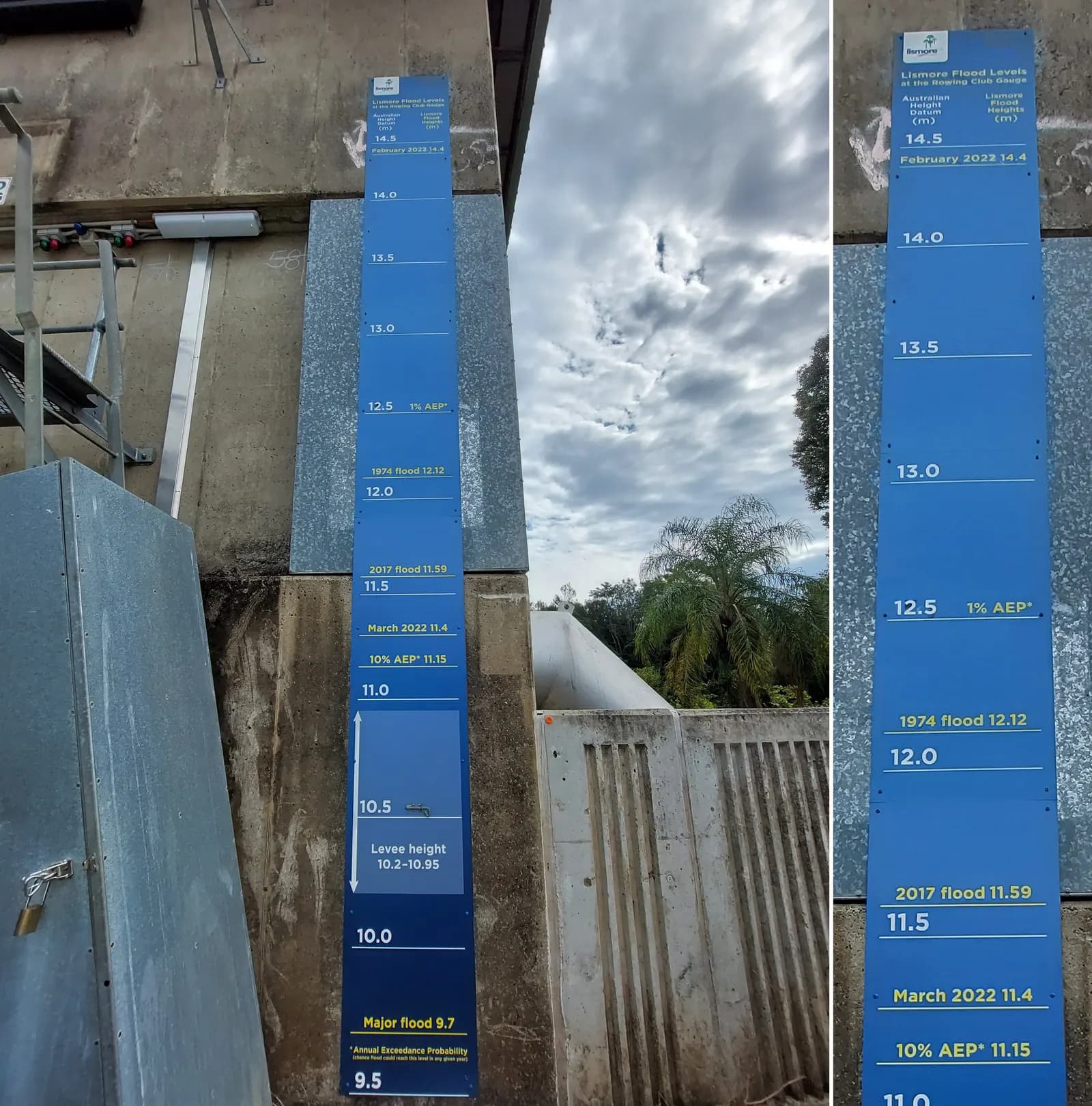
Business interruption insurance covers ongoing costs — rent, wages, loan repayments — and lost profit while you can't trade after an insured event such as a fire. It's often the cover that decides whether a business reopens. Three settings matter most. The indemnity period is how long the policy pays after the event; choose one that matches how long it would really take to rebuild, refit and win customers back, not the shortest option. The trigger is usually physical damage to your premises by an insured event, so if flood is excluded from your property cover, flood-related interruption is usually excluded too. And the sum insured should reflect gross profit, not turnover.
Flood is the big one to check. Many commercial policies treat flood differently from storm, and some exclude it or limit it in high-risk areas. Read the definition in the product disclosure statement or policy wording and ask the insurer directly if your premises are near a river or low-lying land.
Cyber and management liability
Cyber insurance has moved from niche to mainstream for small businesses that take bookings, store customer details or rely on cloud accounting. business.gov.au describes it as covering cyber extortion and ransomware, business interruption caused by a cyber event, network security and data breaches including data recovery, and the accidental release of customers' personal information. It's separate from electronic equipment cover, which pays to repair or replace damaged computers and point-of-sale systems but not data or extortion losses. Insurers increasingly ask about multi-factor authentication, backups and staff training before quoting, so tightening those controls can lower the premium as well as the risk.
Management liability is aimed at companies. It covers directors, officers and managers for claims about their management decisions and is usually sold as a package that can include employment practices liability (for example, an unfair dismissal or discrimination claim), employee theft, some government fines where the law allows them to be insured, and statutory liability. A sole trader with no employees rarely needs it; a company with staff and outside investors often does.
Insurance for the owner
The most overlooked risk in a small business is the owner. If you're a sole trader or partner, workers compensation doesn't cover you, and business.gov.au suggests personal insurance instead. Income protection replaces part of your income if illness or injury stops you working; life cover pays a lump sum on death or terminal illness; TPD pays if you're permanently unable to work; and trauma pays a lump sum on diagnosis of a specified serious illness. These are life insurance products, with different tax and GST rules from business insurance. Our guide to income protection for sole traders explains waiting periods, benefit periods and deductibility in detail.
A worked insurance budget in A$
Take a Melbourne café run through a company with A$900,000 turnover, eight casual and part-time staff and a leased shop. The premiums below are assumptions to show how the taxes and deductions work — they're not quotes.
| Policy | Assumed premium before taxes |
|---|---|
| Business pack (public and product liability A$20m, contents and stock, glass, theft, business interruption 12 months) | A$3,200 |
| Workers compensation (wages × industry rate; no duty or GST shown) | A$4,800 |
| Cyber (A$250,000 limit) | A$600 |
| Commercial motor for delivery van | A$1,400 |
On the pack, cyber and motor premiums (A$5,200), GST at 10% adds A$520. Insurance duty is generally worked out on the premium including GST, so Victorian business insurance duty at 7% adds about A$400 — roughly A$6,120 in total. Add workers compensation and the café's annual insurance bill is about A$10,920.
The café is registered for GST, so it claims back the A$520 of GST on its BAS (there's no GST on the duty itself). The remaining A$10,400 is a deductible operating expense. At the 25% base rate entity company tax rate, that deduction reduces company tax by about A$2,600, so the after-tax cost is roughly A$7,800. If the café paid its policies a year in advance, it could usually deduct them in the year paid under the small business 12-month rule. Use the break-even calculator to see how many extra coffees that cost represents.
The same café in Sydney with turnover under A$2 million would declare itself a CGT small business, so the public and product liability section of its pack would carry no NSW duty, though the property sections would still be dutiable at 9%.
Tax and GST on insurance
The ATO lists insurance premiums — including accident or disability, fire, burglary, professional indemnity, public risk, motor vehicle, loss of profits and workers compensation — among the operating expenses a business can generally deduct in the year it incurs them. If a policy covers both business and private use, such as a car, only the business portion is deductible.
On GST, registered businesses can claim a credit for the GST in a general insurance premium covering a business asset, reporting the premium less stamp duty. Life insurance policies, which include most income protection, are input taxed, so there's no GST in the price and no credit to claim. You can't claim a GST credit on an excess you pay your insurer. Tell your insurer what percentage of GST credits you're entitled to before you make any claim; the ATO says that if you don't, or you understate it, you may have to pay GST on the settlement. Insurance payouts for business assets are generally assessable income or reduce the asset's cost base, so tell your accountant about any claim.
Buying cover, making claims and your rights
How to set up your business insurance
- 1
List what's compulsory for you
Workers comp if you employ, CTP for vehicles, and any licence or registration condition (check ABLIS).
- 2
Read your contracts
Lease, finance, council permits and client terms often set minimum limits.
- 3
Rank your remaining risks
Insure what could close the business; self-insure what would only sting.
- 4
Get quotes on the same basis
Same limits, sums insured, excess and indemnity period, so you compare like with like.
- 5
Disclose fully and check the wording
Every activity, past claims, flood and cyber exclusions.
- 6
Diary renewals and declarations
Renewal dates, wage declarations for workers comp and the NSW duty declaration.
You can buy directly from an insurer, through an online platform or through a broker. A broker can compare the market and help at claim time but is paid commission or fees, so ask how they're paid. Whichever route you take, the duty of disclosure under section 21 of the Insurance Contracts Act 1984 applies to business policies: tell the insurer everything relevant, including past claims and all your activities, or a claim can be reduced or refused.
Most general insurers subscribe to the General Insurance Code of Practice, which commits them to decide claims within 4 months in most cases and complaints within 30 calendar days. The Code defines a small business as one employing fewer than 20 people, or fewer than 100 for manufacturers. If you can't resolve a dispute, small businesses can go to the Australian Financial Complaints Authority (AFCA) free of charge, and unfair contract terms laws have protected small business insurance contracts since 5 April 2021.
What changed in 2025–26
Parliament's Joint Committee on Corporations and Financial Services opened an inquiry into small business insurance in October 2025, looking at the cost and availability of public liability, professional indemnity, cyber and business interruption cover; it's due to report on 27 October 2026. The Insurance Council consulted on a redrafted General Insurance Code of Practice in June–July 2026 and has committed to seek ASIC's approval; until it takes effect, the current Code applies. ASIC's September 2026 priorities letter to general insurers names better outcomes for consumers and small business as the sector's key priority. And Victoria's business insurance duty fell again on 1 July 2026, to 7%.
Common mistakes
- Assuming you're covered as the owner. Workers comp covers employees, not sole traders; you need personal cover.
- Underinsuring stock and contents. Update sums insured when you expand or before peak season.
- A short indemnity period. Three months of business interruption rarely covers a major fire or flood.
- Not disclosing a new activity. New services can fall outside the policy description.
- Paying duty you don't owe. Eligible NSW small businesses must declare their status each year.
- Forgetting to tell the insurer your GST status. It can leave you with a GST bill on a settlement.
Official links
- business.gov.au — Types of business insuranceOverview of compulsory and optional cover
- ABLIS — licences and their conditionsLicence-linked insurance requirements
- APRA — List of registered general insurersCheck a general insurer is authorised
- ASIC — Professional registersCheck a broker's licence
- ATO — GST and insuranceCredits, excess, settlements
- SIRA — CTP Green Slips (NSW)Compulsory before NSW registration
- AFCAFree dispute resolution for small business
Next steps
Start with the compulsory list, then the contracts you've signed, then the risks that could close you. Our detailed guides cover public liability insurance, professional indemnity insurance and income protection for sole traders. Add your expected premiums to the startup cost calculator or your annual budget planner, and if you're still setting up, our how to start a business guide puts insurance in order with ABN, GST and licences.
This is general information, not legal or tax advice — confirm on the official source or with a professional.
Frequently asked questions
Only a few policies are required by law: workers compensation once you employ staff (NSW and Victoria exempt only employers paying A$7,500 or less in wages with no apprentices), compulsory third party (CTP) cover for registered vehicles, and specific cover some licences demand — for example public liability for Queensland electrical contractors and PI for tax agents. Everything else is optional but often required by leases and contracts.
Most start with public liability, plus workers compensation if they employ anyone. Then add cover for what would hurt most to lose: contents and stock, business interruption, portable tools, professional indemnity if you give advice, product liability if you sell goods, cyber if you hold customer data, and personal income protection for the owner.
There's no official average. A home-based consultant might spend a few hundred dollars a year, while a café or construction business can spend several thousand. The price includes GST and state insurance duty — 7% on business insurance in Victoria in 2026–27 and 9% on most general insurance in NSW, with a small business exemption for liability and indemnity policies.
Generally, yes. The ATO lists insurance premiums — including fire, burglary, public risk, professional indemnity, motor vehicle, loss of profits, accident or disability and workers compensation — as deductible business operating expenses. GST-registered businesses can also claim GST credits on general insurance premiums, but not on the stamp duty or on any excess paid to the insurer.
It's a package that combines several covers — typically public and product liability, contents and stock, glass, theft, business interruption, money and portable equipment — under one policy with one renewal date. business.gov.au notes packages can cost less than buying policies separately. Check each section's limit and exclusions; you can usually choose only the sections you need.
There's no general legal requirement, but a sole trader is personally liable for the business, so public liability is usually essential, and many clients won't hire you without it. Workers compensation doesn't cover you as the owner, so business.gov.au suggests personal accident, illness or income protection insurance to replace your income if you can't work.
Sources & verification
Figures on this page were checked against the sources below when it was last reviewed on 13 October 2026. Each rate and limit is stored once with its own official source and review date, and official update channels are monitored daily so changes are picked up. How we verify
- 1.Types of business insurance — business.gov.au (Australian Government) · accessed 13 October 2026
- 2.Compulsory Third Party insurance (Green Slips) — State Insurance Regulatory Authority (NSW) · accessed 13 October 2026
- 3.Electrical contractor licence — Queensland — ABLIS (business.gov.au) · accessed 13 October 2026
- 4.Deductions for other operating expenses — Australian Taxation Office · accessed 13 October 2026
- 5.GST and insurance — Australian Taxation Office · accessed 13 October 2026
- 6.Deductions for prepaid expenses 2026 — Australian Taxation Office · accessed 13 October 2026
- 7.Insurance policies — current rates — State Revenue Office Victoria · accessed 13 October 2026
- 8.Insurance duty — Revenue NSW · accessed 13 October 2026
- 9.Insurance duty — types of insurance — Revenue NSW · accessed 13 October 2026
- 10.Insurance duty — small business exemption — Revenue NSW · accessed 13 October 2026
- 11.General Insurance Code of Practice — Insurance Council of Australia · accessed 13 October 2026
- 12.ASIC's 2026–27 general insurance sector priorities (30 September 2026) — ASIC · accessed 13 October 2026
- 13.Small business insurance inquiry — Parliament of Australia · accessed 13 October 2026
- 14.Small business insurance — public liability insurance (submission, 6 March 2026) — Insurance Council of Australia · accessed 13 October 2026
MSMETOOLS is an independent platform and is not affiliated with any government agency, ministry or department.
Tools for this
Startup Cost Calculator
Estimate how much capital you need to launch.
Budget Planner
Plan and track your business budget easily.
Break Even Calculator
Find your break even point and units.
Related guides
 Public Liability Insurance Australia 2026: Costs & RulesRead guide
 Income Protection for Sole Traders 2026: Tax & Waiting PeriodsRead guide
 Professional Indemnity Insurance Australia 2026: GuideRead guide
 Business Bank Account Australia (2026): What You NeedRead guide
Official links open the government site in a new tab.