 Finance & accounting
Small Business Bookkeeping in Australia (2026): ATO Rules, Software Checklist and a Monthly Routine
Choosing programs for small business bookkeeping in Australia in 2026: ATO record rules, cash vs accrual GST, STP and BAS features, a software checklist and routine.
 Edited by Sumeet YadavFounder & editor, MSMETOOLS · fact-checked against official sources
Contents (9)
- 1. What bookkeeping means for a small business
- 2. The ATO's record-keeping rules
- 3. Cash vs accrual accounting for GST
- 4. BAS, STP and Payday Super: what your program must handle
- 5. Bookkeeping software checklist (no brand rankings)
- 6. Do you need a registered BAS agent?
- 7. A worked monthly bookkeeping routine
- 8. Common bookkeeping mistakes and how to fix them
- 9. What to do next
Bookkeeping is the unglamorous habit that decides whether your BAS takes twenty minutes or a lost weekend — and whether an ATO review is a formality or a fight. This guide is for Australian sole traders, partnerships and small companies choosing a bookkeeping program or tidying up how they keep their books. It covers what the ATO legally requires you to keep and for how long, how cash and accrual GST work in software, what Single Touch Payroll and Payday Super mean for your payroll, a feature checklist for comparing programs (without brand rankings), when a bookkeeper must be a registered BAS agent, and a monthly routine you can copy.
Quick answer
Any bookkeeping program — or even a spreadsheet — is fine if it lets you meet the ATO's rules: keep records in English for 5 years, report GST on the method you've chosen, and produce your BAS. If you employ anyone, you also need Single Touch Payroll (STP)-enabled payroll that reports every payday and, from 1 July 2026, reports super for Payday Super. Choose the cheapest plan that does those things for your size of business.
Cash GST accounting is open to businesses under A$10 million aggregated turnover
Quarterly BAS is due 28 October, 28 February, 28 April and 28 July; monthly BAS by the 21st of the following month
Micro employers with 1–4 employees can use the ATO's no-cost and low-cost STP options
Paid BAS work must be done by a TPB-registered BAS or tax agent
Not keeping records can attract a 20 penalty units penalty
What bookkeeping means for a small business
Bookkeeping is recording every financial transaction your business makes — sales, purchases, wages, loans, owner drawings — in an organised way, and reconciling those records to your bank statements so you know they're complete. Accounting builds on it: turning the records into profit and loss statements, balance sheets, tax returns and advice. Many small business owners do their own bookkeeping and pay an accountant for the accounting.
In Australia, good books serve three purposes at once. They let you lodge your business activity statement (BAS), which reports GST and, if they apply, PAYG withholding and PAYG instalments. They give your accountant clean figures for the annual tax return. And they show you, month by month, whether the business is actually making money. Bookkeeping programs automate much of this: they pull in bank transactions, suggest categories, calculate GST and produce the BAS figures.
Most programs use double-entry bookkeeping behind the scenes: every transaction is recorded in two accounts, so a A$1,100 sale paid into the bank increases both the bank balance and income (A$1,000) and the GST you owe (A$100). You don't need to understand debits and credits to use the software, but you do need a sensible chart of accounts — the list of income and expense categories. Keep it short and matched to the labels your accountant uses for the tax return, and resist inventing a new category for every supplier. A clean chart of accounts makes your reports readable and your year-end cheaper.
The ATO's record-keeping rules
The ATO doesn't tell you which program to use, but it does tell you what your records must achieve. Its record-keeping rules for business boil down to five points:
The ATO's five record-keeping rules
0/5Five years, from the later date. The 5 years period generally runs from when the record was prepared or obtained, or from when the transaction was completed, whichever is later. Some records have different clocks. Records for depreciating assets need to be kept for as long as you have the asset and then five more years after you sell or dispose of it. Capital gains records run for five years after the asset is sold, unless you keep an asset register. If you're amending a return or in a dispute with the ATO, keep the relevant records until it's resolved.
Companies keep longer. The ATO notes that other laws can require longer periods — companies must keep financial records for 7 years under the Corporations Act, so a company's books should be kept for at least that long.
Digital is fine. You don't have to keep paper. The ATO accepts electronic records and scanned copies of paper receipts, as long as they're true and clear copies. It expects you to be able to export your data in a standard format such as CSV or a spreadsheet, to back up regularly and off-site, and to document any routine procedure you use to delete old digital records. That has a practical consequence for software: if you stop paying for a cloud program, you must still be able to produce five years of records, so export your data before you cancel.
Penalties. Failing to keep or retain the records you need can attract an administrative penalty of 20 penalty units — at the current penalty unit value of A$364, that's thousands of dollars. More often, the real cost of poor records is losing deductions and GST credits you can't prove during a review.
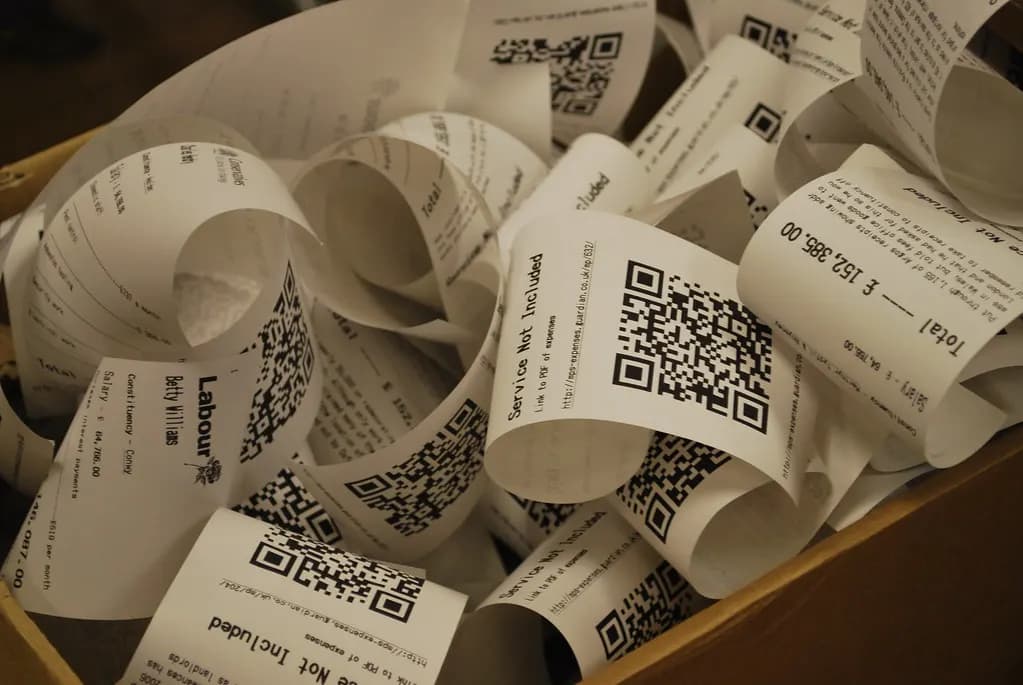
What records you need to keep
The exact list depends on your business, but most small businesses need:
- Income records: tax invoices and receipts you issue, cash register Z-totals, merchant and payment-platform statements, and marketplace payout reports.
- Expense records: tax invoices and receipts for purchases; for GST credits, a valid tax invoice for purchases over A$82.50.
- Bank records: statements for every business account, credit card and loan.
- GST records: your BAS working papers and how you calculated each figure, including adjustments and any private-use apportionment.
- Employee records: tax file number declarations, pay slips, timesheets, super payments and STP reports.
- Asset and stock records: purchase and sale documents, depreciation schedules and year-end stocktakes.
- Motor vehicle records: logbooks or the records needed for the method you use.
If you use a cash register, the ATO says you can discard the tape after a month only if you keep Z-totals reconciled to sales and bankings; otherwise keep the whole roll for five years.
Cash vs accrual accounting for GST
When you register for GST, you choose how to account for it, and your bookkeeping program must be set the same way.
Cash vs accrual (non-cash) GST accounting
| Cash accounting | Accrual (non-cash) accounting | |
|---|---|---|
Who can use it | Aggregated turnover under A$10 million, or if you use cash accounting for income tax | Anyone; required if you don't qualify for or choose cash |
When you report GST on sales | In the BAS period you receive payment | In the BAS period you issue the invoice (or receive payment, if earlier) |
When you claim GST credits | In the period you pay the supplier | In the period you receive the invoice (or pay, if earlier) |
Best for | Businesses whose customers pay late | Businesses wanting a full picture of debtors and creditors |
Software setting | Cash basis GST reports | Accrual basis GST reports |
Who can use it
- Cash accounting
Aggregated turnover under A$10 million, or if you use cash accounting for income tax
- Accrual (non-cash) accounting
Anyone; required if you don't qualify for or choose cash
When you report GST on sales
- Cash accounting
In the BAS period you receive payment
- Accrual (non-cash) accounting
In the BAS period you issue the invoice (or receive payment, if earlier)
When you claim GST credits
- Cash accounting
In the period you pay the supplier
- Accrual (non-cash) accounting
In the period you receive the invoice (or pay, if earlier)
Best for
- Cash accounting
Businesses whose customers pay late
- Accrual (non-cash) accounting
Businesses wanting a full picture of debtors and creditors
Software setting
- Cash accounting
Cash basis GST reports
- Accrual (non-cash) accounting
Accrual basis GST reports
Cash accounting protects your cash flow: you don't pay GST to the ATO on invoices your customers haven't paid yet. Accrual accounting gives a truer picture of profit for the period and is required once you're over the threshold. Either way you still need a valid tax invoice before you can claim a GST credit, apart from low-value purchases. Changing method later is allowed but must be done at the start of a tax period, and your software's historical reports won't automatically follow — talk to your accountant first. Our GST in Australia guide covers registration and rates.
BAS, STP and Payday Super: what your program must handle
BAS. If you're registered for GST, you lodge a BAS quarterly (most small businesses) or monthly. Quarterly BAS is due 28 October, 28 February, 28 April and 28 July, and monthly BAS by the 21st of the following month. Lodging online can give you an extra 2 weeks for most quarters, and registered agents get later dates for their clients. Most bookkeeping programs calculate the GST labels (G1, 1A, 1B) and PAYG withholding labels (W1, W2) and can lodge directly with the ATO. Our BAS guide explains each label.
Single Touch Payroll. If you pay employees, you must report wages, PAYG withholding and super to the ATO through STP on or before each payday. That means using payroll software listed on the ATO's STP product register, or a provider that reports on your behalf. Micro employers with 1–4 employees can choose from no-cost and low-cost STP solutions listed by the ATO, and closely held payees — such as family members or directors — can be reported quarterly if you have 19 or fewer payees. You must also make a finalisation declaration each year by 14 July.
Payday Super from 1 July 2026. The biggest bookkeeping change this year. For paydays from 1 July 2026, employers must pay super guarantee at 12% of qualifying earnings for each payday, and the money must reach the employee's fund within 7 business days. STP reports must now include each employee's qualifying earnings and super liability every payday. The ATO's free Small Business Superannuation Clearing House has closed, so you need your payroll software or another provider to pay super. If your current program can't do Payday Super reporting, it's time to change. Our PAYG withholding guide covers the tax side of payroll.

Bookkeeping software checklist (no brand rankings)
We don't rank brands, because the right program depends on your business and prices change often. Instead, compare the plans you're considering against this checklist and choose the cheapest one that ticks every box you need.
Features to check before you subscribe
0/10Free programs, spreadsheets and when to upgrade
A spreadsheet is legal and fine for a sole trader with a handful of transactions a month and no employees. Its weaknesses are manual bank entry, easy formula errors, and no direct BAS lodgment. Free or entry-level plans suit very small businesses but often cap the number of invoices, bank accounts or employees, and some leave out payroll. Paid mid-tier plans add payroll, multiple bank feeds and inventory.
Upgrade when you hire your first employee (you'll need STP and Payday Super), when manual entry is eating more than an hour a week, when you register for GST, or when your accountant is spending billable hours fixing your categorisation. And whichever program you use, ask your accountant or BAS agent which one they work with — they'll often get you a discount and work faster in software they know.
Do you need a registered BAS agent?
You can do your own bookkeeping and lodge your own BAS. If you pay someone else, the rules depend on what they do. The Tax Practitioners Board (TPB) says that someone who provides BAS services for a fee — working out the figures for your activity statement, completing or lodging it, or advising you on GST, PAYG withholding, PAYG instalments, super guarantee or similar obligations — must be a registered BAS agent or tax agent. Simple data entry under the supervision of a registered agent isn't a BAS service, and employees doing their own employer's books don't need registration. Unregistered people who provide BAS services for a fee face significant civil penalties.
To register as a BAS agent, an individual needs at least a Certificate IV in bookkeeping or accounting, a Board-approved course in basic GST/BAS taxation principles and 1,400 hours in the past 4 years of relevant experience — or voting membership of a recognised association, the GST/BAS course and 1,000 hours in the past 4 years. They must also be fit and proper and hold professional indemnity insurance. Since 1 July 2024, registered agents renew their registration annually rather than every three years.
Before you hire a bookkeeper, search their name on the TPB register. A registered BAS agent also gets the later agent lodgment dates for your BAS, which can ease your cash flow.
A worked monthly bookkeeping routine
Here's how Tom, a Brisbane electrician running a sole-trader business with one apprentice, keeps his books in about two hours a month. He's registered for GST, uses cash accounting and lodges BAS quarterly.
Tom's bookkeeping routine
Every payday (fortnightly)
Run payroll for his apprentice; software lodges the STP report and pays super for Payday Super
Every Friday (15 min)
Snap receipts, match bank-feed transactions, send invoices for completed jobs
First week of each month (45 min)
Reconcile all accounts to statements; chase overdue invoices; review profit and loss
Within 7 business days of payday
Check that super reached the apprentice's fund
Quarterly — before 28 October, 28 February, 28 April and 28 July
Run GST report, review unusual items, lodge BAS and pay
By 14 July
Make the STP finalisation declaration for the year
In the July–September quarter, Tom invoices A$66,000 including GST and is paid A$55,000 of it by 30 September. Under cash accounting, he reports GST only on what he received: A$55,000 ÷ 11 = A$5,000 of GST collected. He paid suppliers A$22,000 including GST for materials and tools, giving A$2,000 in GST credits. His BAS shows A$3,000 of net GST payable, plus the PAYG withheld from his apprentice's wages, due by 28 October (or later with the online concession). Had he used accrual accounting, he'd have reported GST on the full A$66,000 of invoices — A$6,000 — even though A$11,000 was still unpaid.
The weekly habit is what makes this work. Matching transactions while the job is fresh takes seconds; reconstructing them from a bank statement three months later takes hours and risks missed GST credits. Our Australia GST calculator helps check the figures, and the invoice generator produces tax invoices with the details the ATO requires.
Common bookkeeping mistakes and how to fix them
- Mixing personal and business spending. Open a separate business account and card. If personal items slip through, record them as owner drawings, not expenses.
- Claiming GST credits without a tax invoice. Ask the supplier for a valid tax invoice — they must provide one within 28 days of your request.
- Software set to the wrong GST method. If your GST report doesn't match your ATO election, correct the setting and ask your agent to review past BAS periods.
- Ignoring unreconciled transactions. Unmatched items usually mean missing income or duplicated expenses. Clear them monthly.
- Cancelling software without exporting data. You must still produce 5 years of records. Export everything first.
- Forgetting the year-end. Do a stocktake, list assets bought and sold, and check debtors and creditors on 30 June.
Official links
- ATO — record-keeping rules for businessFive rules and retention
- ATO — choosing an accounting method for GSTCash vs non-cash
- ATO — BAS due datesQuarterly and monthly
- ATO — STP reporting optionsProduct register and micro employers
- ATO — About Payday SuperFrom 1 July 2026
- TPB — BAS services and registrationWho must be registered
What to do next
List what your business actually needs — GST method, employees, number of bank accounts, inventory — then compare two or three programs against the checklist above and start the free trial of the one that fits. Set up a weekly reminder for reconciliation, and if you'd rather hand over BAS preparation, check your bookkeeper's registration on the TPB register first. Our BAS guide and budget planner are good next steps.
This is general information, not legal or tax advice — confirm on the official source or with a professional.
Frequently asked questions
The best one is the cheapest program that meets your legal needs: it handles GST and BAS, is Single Touch Payroll enabled if you have employees, connects to your bank feeds, keeps records for at least 5 years, and can export your data. A sole trader with no staff needs far less than a café with ten employees. Use the checklist in this guide to compare plans.
Yes — some providers offer free plans, and the ATO keeps a register of no-cost and low-cost Single Touch Payroll solutions for micro employers with 1–4 employees. A spreadsheet is also legal for a very simple business. Check that a free plan supports GST, BAS lodgment and data export before you rely on it.
The ATO requires most business records to be kept for 5 years from when they were prepared or obtained, or the transaction was completed, whichever is later. Some records must be kept longer — for example, depreciating-asset records for five years after you dispose of the asset. Companies must also keep financial records for 7 years under the Corporations Act.
If your aggregated turnover is under A$10 million, you can choose cash accounting, reporting GST when you're paid and when you pay. It suits businesses with slow-paying customers. Accrual (non-cash) accounting reports GST when invoices are issued or received. Your software must be set to the same method you've chosen with the ATO.
A bookkeeper who only enters data doesn't need registration. Anyone who, for a fee, works out the figures for your BAS, completes or lodges it, or advises you on GST, PAYG or super obligations must be a registered BAS agent or tax agent with the Tax Practitioners Board. Check the TPB register before you hire.
Yes. Most sole traders and many small companies do their own day-to-day bookkeeping in software and pay an accountant or BAS agent for the year-end return or a quarterly BAS review. The key is a regular routine — weekly bank reconciliation, monthly reports and BAS preparation before the due date.
Sources & verification
Figures on this page were checked against the sources below when it was last reviewed on 9 October 2026. Each rate and limit is stored once with its own official source and review date, and official update channels are monitored daily so changes are picked up. How we verify
- 1.Overview of record-keeping rules for business — Australian Taxation Office · accessed 9 October 2026
- 2.Failure to meet other tax obligations — Australian Taxation Office · accessed 9 October 2026
- 3.Choosing an accounting method for GST — Australian Taxation Office · accessed 9 October 2026
- 4.Due dates for lodging and paying your BAS — Australian Taxation Office · accessed 9 October 2026
- 5.STP reporting options — Australian Taxation Office · accessed 9 October 2026
- 6.Single Touch Payroll reporting under Payday Super — Australian Taxation Office · accessed 9 October 2026
- 7.About Payday Super — Australian Taxation Office · accessed 9 October 2026
- 8.Qualifications and experience for BAS agents — Tax Practitioners Board · accessed 9 October 2026
- 9.BAS services — Tax Practitioners Board · accessed 9 October 2026
MSMETOOLS is an independent platform and is not affiliated with any government agency, ministry or department.
Tools for this
GST Calculator (Australia)
Add or remove 10% Australian GST.
Invoice Generator
Create professional invoices with tax, logo and custom details.
Payment Receipt Generator
Issue payment receipts in seconds.
Budget Planner
Plan and track your business budget easily.
Related guides
 Business Bank Account Australia (2026): What You NeedRead guide
 Small Business Loans Australia 2026: Rates, Types & ApprovalRead guide
 Business Insurance Australia 2026: Types & What's CompulsoryRead guide
 Instant Asset Write-Off 2026: $20,000 Rules & ExamplesRead guide
Official links open the government site in a new tab.