 Business registration & legal
Dubai Chamber of Commerce Membership (2026): Who Must Join, Fees, Certificates of Origin and Renewal
Dubai Chamber of Commerce membership in 2026: who must join, the AED 300 to AED 2,200 fee table, free zone rules, AED 100 certificates of origin and renewal.
 Edited by Sumeet YadavFounder & editor, MSMETOOLS · fact-checked against official sources
Contents (11)
- 1. What the Dubai Chamber of Commerce is now
- 2. Who must join, who is exempt, and who may join
- 3. Membership fees in 2026
- 4. Documents for membership
- 5. Certificates of origin and other member services
- 6. Free zone companies: should you join?
- 7. Renewal, suspension and exemptions
- 8. Cancellation
- 9. Worked examples
- 10. Common mistakes
- 11. What to do next
Membership of the Dubai Chamber of Commerce is one of the less visible parts of running a Dubai business, until you need a certificate of origin for a shipment, an attested invoice for a foreign buyer or an ATA Carnet for a trade show. This guide is for mainland business owners who want to know what they're paying for, free zone exporters deciding whether to join, and PROs who handle renewals. It covers who must join under the 2022 law and 2023 membership resolution, the official 2026 fee table, free zone rules, certificates of origin and other member services, renewal, suspension and cancellation, and worked annual cost examples.
Quick answer
Most Dubai mainland businesses become Dubai Chamber of Commerce members automatically when DET issues their licence; free zone companies, including DIFC firms, can join voluntarily. Dubai Chambers lists annual fees of AED 300 to AED 2,200 depending on legal form, owners' nationality and activity. Membership lasts as long as the licence and is renewed with it. Members can get certificates of origin for AED 100 each, usually within two hours.
Exempt from mandatory membership: designated micro and small enterprises and elementary trades
Free zone companies: AED 2,200 a year, with the zone's approval
Suspension possible after three months of unpaid renewal while trading
Cancellation is free with a DET cancellation letter (mainland)
What the Dubai Chamber of Commerce is now
Since 2022, the old Dubai Chamber of Commerce and Industry has been reorganised under Law No. 1 of 2022 Establishing the Dubai Chambers. The law creates an umbrella body, Dubai Chambers, with three affiliated chambers: the Dubai Chamber of Commerce, the Dubai International Chamber and the Dubai Chamber of Digital Economy. The Dubai Chamber of Commerce is the one that holds the membership register for local businesses and runs the trade documentation services most companies use.
Among the functions the law gives Dubai Chambers are representing the business community, resolving commercial complaints between members and others, providing members with certificates proving membership, and issuing all types of certificates of origin for goods exported from the emirate. Membership itself is regulated in detail by Dubai Chambers Board of Directors Resolution No. 4 of 2023, which is the rulebook this guide relies on.
Who must join, who is exempt, and who may join
Mandatory members. Article 2 of Resolution No. 4 of 2023 says a person licensed by the Department of Economy and Tourism (DET) to carry out any commercial, industrial, agricultural, professional or service activity listed in DET's activity directory becomes a member of Dubai Chambers once DET issues the commercial or professional licence. In other words, for a typical Dubai mainland LLC, sole establishment or professional firm, membership isn't a separate decision: it comes with the licence.
Exempt businesses. The same article exempts microenterprises, small-sized enterprises and elementary manual occupations and trades, as determined by Dubai Chambers in agreement with DET. The resolution doesn't list them; the categories are set administratively. If you think your business falls in an exempt category, check what your DET licence voucher and the Chamber portal show rather than assuming.
Voluntary members. Article 3 lets two groups join voluntarily: businesses exempt from mandatory membership, and establishments licensed in free zones or special development zones, with the Dubai International Financial Centre named as an example. A free zone company applying must provide its licence, the owner's passport or Emirates ID, and proof that its own zone authority approves the membership.
How membership starts
Step 1
DET licence issued
mainland
Step 2
Automatic membership
Resolution 4/2023, Art. 2
Step 3
Membership certificate
Step 4
Free zone company?
voluntary, with zone approval
Step 5
Apply on Chamber portal
Step 6
Pay fee and download certificate
about two hours
Membership fees in 2026
Dubai Chambers publishes its annual membership fees on its New Membership and Membership Renewal service pages. The fee depends on the legal form, the nationality of the owners and the type of activity. The categories and amounts listed are:
| Category (Dubai Chambers fee table) | Annual fee |
|---|---|
| Simple handicrafts | AED 50 |
| Branches holding the principal's trade name | AED 100 to AED 2,200, by activity |
| Handicraft, e-traders and Intelaq licence | AED 300 |
| Various simple trade | AED 500 |
| National establishments (specific activity) | AED 700 |
| Lawyers, auditors and consultancy engineers | AED 1,000 to AED 2,200 |
| General trading | AED 1,200 to AED 2,200 |
| Hotels, related financial services, insurance brokers | AED 2,000 to AED 2,200 |
| Banks, insurers, building contractors, foreign company branches | AED 2,200 |
| Free zone companies | AED 2,200 |
Dubai Chambers notes that the total may vary with your specific requirements, so treat the table as the base fee. It also lists a five-year exemption for members of the Mohammed Bin Rashid Establishment for Small and Medium Enterprises (Dubai SME), which is worth checking if you're an Emirati founder registered with that programme.
For mainland businesses, the membership fee is part of the cost of holding a licence, so include it when you compare licence quotes; our UAE business licence guide explains the other fees on the licence voucher.
Documents for membership
The documents depend on the legal form. Dubai Chambers lists these:
Membership documents by business type
0/5The process runs through the Dubai Chambers services portal or mobile app: create an account or log in, submit the application and documents, wait for review and approval (the Chamber states two hours if everything is in order), pay, and download the membership certificate. Keep the certificate with your licence; banks, government tenders and some foreign buyers ask for it.
Certificates of origin and other member services
For most members, the practical value of membership is trade documentation. A certificate of origin is an official document certifying where exported or re-exported goods come from; the destination country's customs uses it to apply duties and trade rules. Dubai Chambers says only members can apply.
Member services at a glance (2026)
AED 100
Certificate of origin
per certificate
AED 5
Per extra page
invoice after page 5; each packing-list page
AED 100
GSP certificate of origin
UAE-origin goods
AED 900 to AED 2,300
ATA Carnet
plus a security deposit
Standard certificate of origin. The fee is AED 100, plus AED 5 for each page of the commercial invoice after the fifth and for each page of the packing list. The core document is the commercial invoice. For direct shipments, add the bill of lading; for UAE-origin goods, add a copy of the industrial licence and the factory's invoice; for transshipment goods, add the transit bill from Dubai Customs. The Chamber can ask for more, such as a packing list or the exporting country's invoices. It states a processing time of two hours.
GSP certificate of origin. Some countries give reduced customs duties to qualifying goods under the Generalised System of Preferences. Dubai Chambers issues GSP certificates for AED 100, for UAE-origin products exported to the listed countries. A manufacturer submits its commercial invoice; a trader with a commercial licence also submits the purchase invoice from the UAE factory.
ATA Carnet. A carnet lets goods be temporarily imported and re-exported without paying duties, for up to a year: samples, exhibition stands, professional equipment. Dubai Chambers lists issuance at AED 900 to AED 2,300, typically in one to two business days, plus a security deposit calculated from the goods' value and the destination's duty rate.
Getting a certificate of origin, in practice
The application follows the same pattern as membership: log in to the Dubai Chambers services portal or app, choose the certificate type, upload the commercial invoice and supporting papers, and wait for review. Once approved, you pay and download the certificate from the portal, as the Chamber's service page describes; if your buyer insists on a stamped paper original, ask the Chamber how to obtain one. Apply after the invoice is final but before the goods sail, because many buyers' banks and customs brokers want the certificate in the shipping document set.
Consistency is what gets a request approved first time. The exporter's name must match the licence and membership exactly, the consignee and goods description must match the invoice and bill of lading, and the stated origin must be supportable. A trader re-exporting goods made elsewhere shouldn't describe them as UAE origin; that claim needs a UAE manufacturer's industrial licence and factory invoice behind it.
Members can also use attestation of signatures and documents, "to whom it may concern" certificates, commercial mediation, business groups and events. Our VAT guide covers how exports are treated for VAT, which is a separate question from origin.
Free zone companies: should you join?
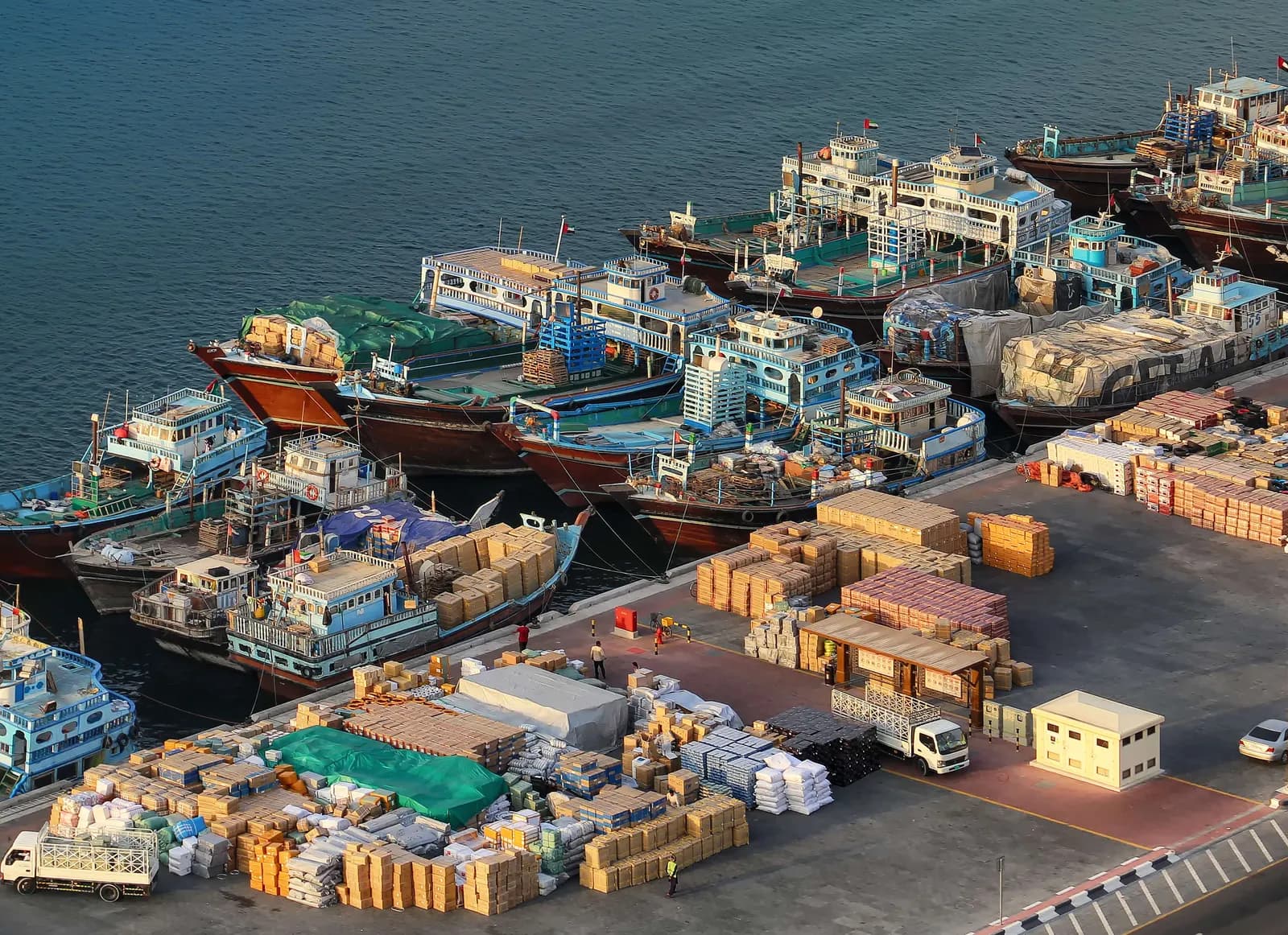
Free zone companies don't have to join, and many never do. The case for joining is mainly about exports. If you sell goods to buyers abroad who need a certificate of origin, or you take equipment to overseas exhibitions on a carnet, membership gives you direct access to those services at the Chamber's published fees. Before you pay AED 2,200 a year, ask your buyer exactly which certificate their customs accepts and ask your free zone what document services it offers. Meydan Free Zone, for example, notes that its companies aren't registered automatically and suggests membership for those exporting, joining trade delegations or bidding for public sector tenders.
To join, a free zone company needs written approval from its own zone authority, along with its licence and the owner's ID; that's a condition in Article 5 of the 2023 resolution. If you leave and later want to rejoin, note that a voluntary member whose membership is forfeited must wait at least two years before reinstatement and can be reinstated only once.
Mainland vs free zone membership
| Dubai mainland (DET licence) | Free zone or DIFC | |
|---|---|---|
Basis | Automatic on licence issue | Voluntary application |
Exemptions | Designated micro and small enterprises, elementary trades | Not applicable |
Extra requirement | None beyond licence documents | Zone authority's approval |
Annual fee | By category: AED 50 to AED 2,200 | AED 2,200 |
Cancellation document | DET cancellation letter | Signed request letter |
Basis
- Dubai mainland (DET licence)
Automatic on licence issue
- Free zone or DIFC
Voluntary application
Exemptions
- Dubai mainland (DET licence)
Designated micro and small enterprises, elementary trades
- Free zone or DIFC
Not applicable
Extra requirement
- Dubai mainland (DET licence)
None beyond licence documents
- Free zone or DIFC
Zone authority's approval
Annual fee
- Dubai mainland (DET licence)
By category: AED 50 to AED 2,200
- Free zone or DIFC
AED 2,200
Cancellation document
- Dubai mainland (DET licence)
DET cancellation letter
- Free zone or DIFC
Signed request letter
Renewal, suspension and exemptions
Membership runs for the same period as your licence, under Article 6 of the resolution, and is renewed the same way it was obtained. On the portal, the renewal step is simply uploading the renewed licence and paying the annual fee. Renew the licence first, then the membership.
If you don't, Article 17 of Law No. 1 of 2022 lets the Chamber suspend a member who fails to renew and pay within three months of the due date while continuing to trade, without an acceptable reason. Suspension also follows a failure to cooperate with a commercial complaint or submitting false documents. A suspended member loses access to services, which means no certificates of origin, so an unpaid AED 1,200 fee can hold up a shipment worth far more. The Chamber must notify a suspension in writing, and you can file a grievance within 30 days of learning of the decision; the grievance committee then has 30 days to decide.
The resolution also allows full or partial exemption from renewal fees where a licence renewal was delayed for reasons outside the member's control: legal proceedings involving the business, the owner's death or estate procedures, delays caused by the licensing authority, an emergency or force majeure, or other economic, social or humanitarian reasons the Director General accepts. Apply for the exemption with the renewal.
Cancellation
Membership ends automatically when the licensing authority cancels the licence, the member goes bankrupt, or for other reasons listed in Article 18 of the law. If you're closing a company, use the Membership Cancellation service: there's no fee, and Dubai Chambers asks mainland companies for their cancellation letter from DET and free zone members for a request letter signed by the authorised person. Do it as part of the closure checklist, with visa cancellations, the establishment card and Ejari, so nothing is left open.
Worked examples
1. A mainland general trading company that exports. Omar's Dubai mainland general trading LLC ships electronics to East Africa, about 40 shipments a year. Its membership fee falls in the general trading band of AED 1,200 to AED 2,200. Each shipment needs a certificate of origin at AED 100; with typical seven-page invoices (two pages over five, at AED 5 each) and a two-page packing list, each certificate costs AED 120. Annual documentation cost: 40 × AED 120 = AED 4,800, plus membership of up to AED 2,200, so about AED 7,000 in all.
2. A consultancy that never exports. A mainland engineering consultancy pays membership in the AED 1,000 to AED 2,200 band as part of its licence costs and uses the Chamber mainly for a membership certificate in tender files. Its cost is the annual fee alone. If it's one of the designated micro or small enterprises exempt from mandatory membership, it may pay nothing unless it chooses to join.
3. A free zone manufacturer selling to Europe. A food manufacturer in a Dubai free zone exports to the EU and Japan. It obtains its zone's approval, joins Dubai Chambers voluntarily for AED 2,200 a year, and requests GSP certificates at AED 100 each where the buyer's country grants GSP preferences, submitting its commercial invoice as the manufacturer.
4. Taking samples to a trade fair. A jewellery wholesaler takes AED 300,000 of samples to an exhibition abroad and back. Instead of paying import duty and claiming it back, it gets an ATA Carnet: an issuance fee in the AED 900 to AED 2,300 range plus a refundable security deposit calculated by the Chamber from the goods' value and the destination's duty rate.
5. A lapsed renewal. A trading firm renews its DET licence in March but forgets the Chamber renewal. In July, more than three months later, it applies for a certificate of origin and finds its membership suspended. It renews, pays the fee and gets the certificate, but the shipment misses its vessel. A calendar reminder tied to the licence renewal would have avoided it.
A member's year
Licence issued or renewed
Membership starts or renews for the same term
Every export shipment
Certificate of origin (AED 100), about two hours
Before a trade fair
ATA Carnet, one to two business days
three months after renewal due
Suspension possible if unpaid while trading
On closure
Free cancellation with DET cancellation letter
Common mistakes
Assuming free zone companies are members. They aren't, unless they've applied. Check before promising a buyer a Chamber certificate.
Renewing the licence but not the membership. They're separate steps on separate portals. Do both on the same day.
Sending incomplete origin documents. The commercial invoice must match the goods and the shipment; for UAE-origin claims, include the industrial licence and factory invoice. Missing documents are the main reason certificate requests are returned.
Paying an agent for something the Chamber does in two hours. The portal and app handle membership and certificates directly; agents are optional.
Official links
- Dubai Chambers — New Membership (fees and documents)Fee table by category
- Dubai Chambers — Issuing a Certificate of OriginAED 100, documents
- Dubai Chambers — Issuance of ATA CarnetFees and deposit calculator
- Resolution No. 4 of 2023 Regulating MembershipMandatory and voluntary membership
- Law No. 1 of 2022 Establishing the Dubai ChambersSuspension and termination
What to do next
If you're setting up on the mainland, budget the Chamber fee alongside the licence; our Dubai business setup guide and UAE business licence guide show the full cost picture. If you export, line up your invoice format before the first shipment: the free invoice generator and proforma invoice generator produce the commercial documents a certificate of origin request needs.
This is general information, not legal or tax advice — confirm on the official source or with a professional.
Frequently asked questions
For most Dubai mainland businesses, yes. Under Dubai Chambers Board Resolution No. 4 of 2023, anyone licensed by the Department of Economy and Tourism (DET) for a commercial, industrial, agricultural, professional or service activity becomes a member once the licence is issued. Micro and small enterprises and elementary trades that the Chamber and DET designate are exempt. Free zone companies can join voluntarily.
Dubai Chambers lists annual fees of AED 300 to AED 2,200, depending on legal form, owners' nationality and activity. Examples: AED 300 for e-traders and Intelaq licences, AED 500 for simple trade, AED 700 for national establishments, AED 1,200 to AED 2,200 for general trading and AED 2,200 for free zone companies.
Dubai Chambers charges AED 100 per certificate of origin, plus AED 5 for each commercial invoice page after the fifth and for each packing-list page. A GSP certificate of origin for UAE-origin goods is also AED 100. Only members can apply, and the stated processing time is two hours.
No, it's voluntary. Free zone and special development zone companies, including DIFC firms, may join under Article 3 of Resolution No. 4 of 2023, with proof that their zone authority approves the membership. The listed annual fee for free zone companies is AED 2,200. Many exporters join to get certificates of origin and ATA Carnets.
Membership runs for the same period as your licence and is renewed by uploading the renewed licence and paying the fee. Under Law No. 1 of 2022, the Chamber can suspend a member who hasn't renewed and paid within three months of the due date while still trading, and deny services such as certificates of origin until it's sorted.
Use the Membership Cancellation service on the Dubai Chambers portal; there's no fee. A mainland company uploads its cancellation letter from DET, and a free zone member submits a request letter signed by its authorised person. Membership also ends automatically when the licensing authority cancels the licence.
Sources & verification
Figures on this page were checked against the sources below when it was last reviewed on 13 October 2026. Each rate and limit is stored once with its own official source and review date, and official update channels are monitored daily so changes are picked up. How we verify
- 1.Dubai Chambers Board of Directors Resolution No. (4) of 2023 Regulating Membership in the Dubai Chambers — Dubai Legislation Portal · accessed 13 October 2026
- 2.Law No. (1) of 2022 Establishing the Dubai Chambers — Dubai Legislation Portal · accessed 13 October 2026
- 3.New Membership — Dubai Chambers · accessed 13 October 2026
- 4.Membership Renewal — Dubai Chambers · accessed 13 October 2026
- 5.Issuing a Certificate of Origin — Dubai Chambers · accessed 13 October 2026
- 6.Generalised System of Preferences (GSP) — Dubai Chambers · accessed 13 October 2026
- 7.Issuance of ATA Carnet — Dubai Chambers · accessed 13 October 2026
- 8.Membership Cancellation — Dubai Chambers · accessed 13 October 2026
- 9.How to register your business with Dubai Chamber of Commerce — Meydan Free Zone · accessed 13 October 2026
MSMETOOLS is an independent platform and is not affiliated with any government agency, ministry or department.
Tools for this
Invoice Generator
Create professional invoices with tax, logo and custom details.
Proforma Invoice Generator
Send advance invoices before supply.
Related guides
 Ejari Registration 2026: Commercial Fees, Documents & StepsRead guide
 Check a Trade Licence in Dubai (2026): Mainland & Free ZonesRead guide
 JAFZA Free Zone 2026: Licences, Costs, Visas & TaxRead guide
 Trade Name Reservation Dubai 2026: Rules, AED 620 FeeRead guide
Official links open the government site in a new tab.