 Finance & accounting
SBA Loan Rates in 2026: 7(a) Rate Caps, Fixed vs Variable, 504 and Microloan Rates, and FY2027 Fees
Current SBA loan rates for 2026: 7(a) variable and fixed caps over prime by loan size, the new SOFR and Treasury base rates, 504 and microloan rates, FY2027 fees.
 Edited by Sumeet YadavFounder & editor, MSMETOOLS · fact-checked against official sources
Contents (11)
- 1. How SBA loan rates work
- 2. SBA 7(a) maximum variable rates in 2026
- 3. New in 2026: SOFR and Treasury base rates
- 4. SBA 7(a) maximum fixed rates
- 5. Worked example: a $400,000 7(a) loan
- 6. SBA 504 loan rates
- 7. SBA microloan rates
- 8. SBA loan fees for fiscal year 2027
- 9. How SBA rates compare with other business credit
- 10. How to get a lower SBA rate
- 11. What to do next
SBA loan rates aren't set by SBA. Your lender negotiates the rate with you, and SBA sets the ceiling it can't exceed, which depends on the program, the loan size and whether the rate is fixed or variable. This guide gives the current maximums for 7(a) and SBA Express loans with today's prime rate plugged in, explains the new base-rate options SBA allowed in March 2026, covers 504 and microloan rates, lists the fiscal year 2027 fees and works through what a $400,000 loan really costs. Every figure was checked against SBA notices, the Federal Register and Federal Reserve data in October 2026.
Quick answer
With prime at 7.00%, the most a lender can charge on a variable-rate 7(a) loan is 10% to 13.5% (prime plus 3% to 6.5%, depending on loan size). Fixed-rate 7(a) caps are prime plus 5% to 8%, or 12% to 15%. 504 loans carry a fixed CDC rate tied to Treasuries, about 6.54% for 25 years in September, and microloans generally run 8%–13%.
Variable caps: Prime + 6.5% up to $50,000, falling to Prime + 3.0% above $350,000
Since March 1, 2026, lenders may also use SOFR or 5-/10-year Treasury rates as the base
FY2027 upfront fee: 2% of the guaranteed portion to 3.75% of the guaranteed portion; 0% for manufacturers, food supply chain and rural firms up to $700,000
No origination, commitment or broker fees allowed on 7(a) loans
How SBA loan rates work
Every SBA 7(a) loan is made by a private lender: a bank, credit union or licensed non-bank lender. SBA guarantees part of the loan, which lowers the lender's risk, and in exchange limits what the lender can charge. The rate itself is a negotiation. Two borrowers with the same loan size at the same bank can end up with different rates depending on credit strength, collateral, industry and the lender's appetite.
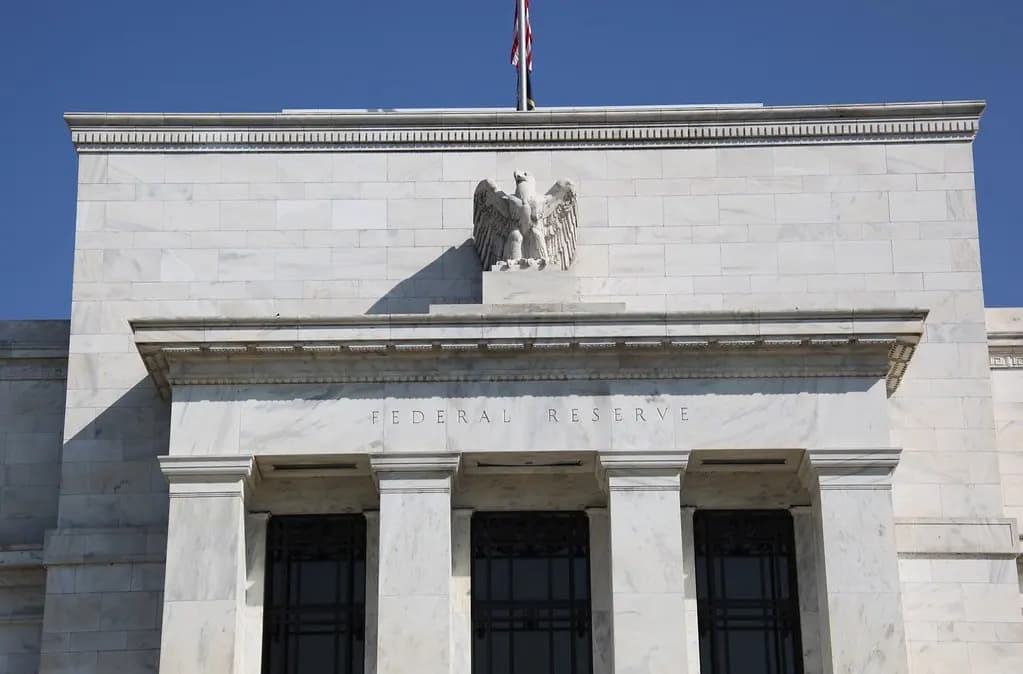
SBA's limits are written as a spread over a base rate. For variable-rate loans, the base is usually the prime rate, published by the Federal Reserve in its H.15 release and by major newspapers; it was 7.00% on October 8, 2026. Prime moves when the Federal Open Market Committee changes its federal funds target, so the maximum SBA rate moves too.
Three things decide your maximum rate:
- Program. 7(a) loans (including SBA Express and 7(a) Small) share one set of caps. 504 loans and microloans use completely different rules.
- Loan size. Smaller loans are allowed higher spreads because they cost lenders more to make relative to the interest they earn.
- Fixed or variable. Fixed rates carry higher maximums than variable ones because the lender takes the interest rate risk.
The current rules come from SBA's SOP 50 10 8.1, effective October 1, 2026, the Federal Register notice that sets fixed-rate maximums, and SBA's procedural notice on alternative base rates.
SBA 7(a) maximum variable rates in 2026
These caps apply to standard 7(a), 7(a) Small and SBA Express loans with variable rates:
| Loan amount | Maximum variable rate | At prime of 7.00% |
|---|---|---|
| $50,000 or less | Prime + 6.5% | 13.50% |
| $50,001 – $250,000 | Prime + 6.0% | 13.00% |
| $250,001 – $350,000 | Prime + 4.5% | 11.50% |
| Over $350,000 | Prime + 3.0% | 10.00% |
The cap applies to both the starting rate and every later adjustment: whatever the base rate does, the lender must add the same spread it set at approval, and that spread can't exceed the maximum allowed when the loan was made.
Adjustment rules. The lender must state in the note how often the rate adjusts. Adjustments can happen no more often than monthly, and many lenders use calendar quarters. The first adjustment may be delayed: SBA's notice says lenders have held the initial rate steady for as long as five years before it starts to float. Once the rate begins adjusting, the payment is usually recalculated so the loan still pays off by maturity.
The Optional Peg Rate. Besides prime, lenders may use SBA's Optional Peg Rate, a weighted average of the federal government's cost of money for maturities similar to SBA loans. SBA publishes it each quarter in the Federal Register. For October to December 2026 it is 5.00%, two points below prime. A loan priced at the peg plus the same spread costs less than one priced off prime, so it's worth asking whether your lender offers it.
New in 2026: SOFR and Treasury base rates
On March 1, 2026, SBA's Procedural Notice 5000-875051 added three alternative base rates that lenders may use on variable-rate 7(a) loans:
- SOFR, the Secured Overnight Financing Rate published by the Federal Reserve Bank of New York, using the rate in effect on the first business day of the month (lenders may use their in-house 30-day term or average SOFR)
- The 5-year Treasury note rate
- The 10-year Treasury note rate
The Treasury rates are taken from the Federal Reserve's H.15 release for the last business day of the prior month. For context, the 5-year Treasury was 4.99% on October 8, 2026.
The key protection for borrowers is that the maximum rate is still capped by prime. If a lender bases your loan on the 10-year Treasury, the combined rate still can't exceed prime plus 3% to 6.5% for your loan size. The notice also removed an older rule in SBA's Working Capital Pilot that added 3 percentage points to SOFR to make it roughly equal to prime.
Why it matters: many banks already price commercial loans off SOFR or Treasuries, and longer-term Treasury bases can suit borrowers who want a rate that behaves more like a fixed rate. There is a catch for lenders. Loans using an alternative base rate can't currently be sold on SBA's secondary market, so some lenders, especially those that sell guaranteed portions, may not offer them.
SBA 7(a) maximum fixed rates
A 7(a) loan can also carry a fixed rate for its whole term. SBA sets the maximum fixed rate in a Federal Register notice. The current schedule, in effect since August 1, 2022, uses the prime rate in effect on the first business day of the month plus a spread by loan size:
SBA 7(a) maximum rates — variable vs fixed
| Loan amount | Variable cap | Fixed cap | Fixed cap at 7.00% prime |
|---|---|---|---|
$25,000 or less | Prime + 6.5% | Prime + 8% | 15.00% |
$25,001 – $50,000 | Prime + 6.5% | Prime + 7% | 14.00% |
$50,001 – $250,000 | Prime + 6.0% | Prime + 6% | 13.00% |
$250,001 – $350,000 | Prime + 4.5% | Prime + 5% | 12.00% |
Over $350,000 | Prime + 3.0% | Prime + 5% | 12.00% |
$25,000 or less
- Variable cap
Prime + 6.5%
- Fixed cap
Prime + 8%
- Fixed cap at 7.00% prime
15.00%
$25,001 – $50,000
- Variable cap
Prime + 6.5%
- Fixed cap
Prime + 7%
- Fixed cap at 7.00% prime
14.00%
$50,001 – $250,000
- Variable cap
Prime + 6.0%
- Fixed cap
Prime + 6%
- Fixed cap at 7.00% prime
13.00%
$250,001 – $350,000
- Variable cap
Prime + 4.5%
- Fixed cap
Prime + 5%
- Fixed cap at 7.00% prime
12.00%
Over $350,000
- Variable cap
Prime + 3.0%
- Fixed cap
Prime + 5%
- Fixed cap at 7.00% prime
12.00%
The same fixed maximums apply to SBA Express and Export Express loans. They don't apply to Export Working Capital Program loans, where SBA monitors rates for reasonableness instead.
Fixed or variable? A fixed rate gives you a payment that never changes, which helps if your margins are thin or you're financing a long-lived asset. The trade-off is a higher ceiling and usually a higher starting rate. A variable rate starts lower and falls if prime falls, but you carry the risk of increases. A middle path many lenders offer is a variable loan with the first adjustment delayed for three to five years. Ask any lender for both options in writing, at the same loan size and term.
Worked example: a $400,000 7(a) loan
A family bakery borrows $400,000 over 10 years to buy ovens and add working capital. It isn't a manufacturer for SBA fee purposes and isn't in a rural area.
$400,000 7(a) loan, 10 years
10.00%
Maximum variable rate
Prime + 3.0% at today's prime
12.00%
Maximum fixed rate
Prime + 5%
$9,000
FY2027 upfront fee
3% of the $300,000 guaranteed portion
$5,286/mo
Payment at 10%
$5,739 at the 12% fixed cap
Guaranty and fee. Loans over $150,000 carry a 75% guaranty, so $300,000 is guaranteed. The FY2027 fee for loans of $150,001 to $700,000 is 3% of the guaranteed portion, or $9,000. Lenders usually let you finance it in the loan. If the bakery's primary NAICS code were in manufacturing (sectors 31–33), as commercial bakeries' often are, the fee would be $0 for FY2027.
Payment. At the 10% variable cap, the payment is about $5,286 a month and total interest is about $234,000. At the 12% fixed cap, it's about $5,739 and $289,000. If prime rose one point, the variable payment would rise to about $5,510; if it fell a point, to about $5,067.
Negotiation matters more than the cap. If the bank priced the loan at the Optional Peg Rate plus 3%, 8% today, the payment would be about $4,853 and total interest about $182,000, roughly $52,000 less than at the prime-based cap. Get quotes from at least two or three SBA lenders, and compare the spread, the base rate, the adjustment schedule and the fee. Try your own numbers in the loan payment calculator.
SBA 504 loan rates
The 504 program finances real estate and long-life equipment through three pieces: a bank loan of about 50%, a Certified Development Company (CDC) loan of up to 40%, and your contribution of at least 10% of project cost. Each lender's piece has its own rate.
The CDC portion is funded by an SBA-guaranteed debenture sold to investors each month, so the rate is fixed for the full term and set by the market, not negotiated. SOP 50 10 8.1 says 20- and 25-year debentures are priced off the 10-year Treasury and 10-year debentures off the 5-year Treasury. CDCs publish the monthly result. Michigan CDC reported September 2026 effective rates of 6.54% for 25 years, 6.53% for 20 years and 6.60% for 10 years, including ongoing program fees. Treat those as a recent snapshot: the October sale will price differently, and a CDC can quote the latest figure.
The bank portion is a conventional loan with a first lien. Its rate is negotiated, but SBA caps it: the maximum legal rate on a 504 third-party lender's loan is Prime + 6%, or the state maximum if lower. Banks typically quote a fixed rate for five to ten years or a variable rate.
504 fees for FY2027 include an upfront guaranty fee of 0.50% and an annual fee of 0.203% on the debenture, both waived for manufacturers, food supply chain and rural businesses, plus CDC processing, funding and underwriting fees. SBA puts the total at about 3% of the debenture, most of which is financed in the debenture. Our SBA 504 loan guide itemizes the fee stack.
SBA microloan rates
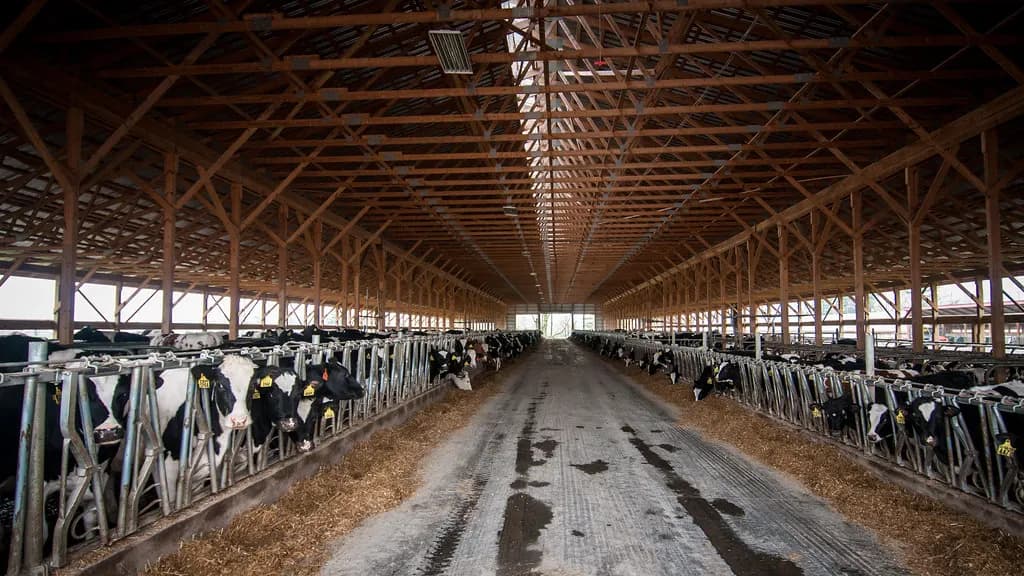
Microloans of up to $50,000 are made by nonprofit intermediaries that borrow from SBA and relend. SBA says rates generally run 8%–13%. The legal ceiling, set in 13 CFR 120.707, is the interest rate the intermediary pays on its SBA loan plus:
- 7.75 percentage points on microloans of more than $10,000
- 8.5 percentage points on microloans of $10,000 or less
SBA charges intermediaries the 5-year Treasury rate minus 1.25%, set when the intermediary borrows. As an illustration, if an intermediary's SBA funds cost 3.74% (the 5-year Treasury of 4.99% less 1.25%), the most it could charge would be 11.49% on a $30,000 microloan and 12.24% on an $8,000 one. A $30,000 microloan at 11.49% over five years costs about $660 a month. Each intermediary sets its own rate within the cap. See our SBA microloan guide for eligibility.
SBA loan fees for fiscal year 2027
Fees can add more to the cost of an SBA loan than a small rate difference. For 7(a) loans approved from October 1, 2026 to September 30, 2027, SBA's upfront guaranty fee is a percentage of the guaranteed portion:
| 7(a) loan size (maturity over 12 months) | Upfront guaranty fee |
|---|---|
| $150,000 or less | 2% of the guaranteed portion |
| $150,001 – $700,000 | 3% of the guaranteed portion |
| $700,001 – $5,000,000 | 3.5% of the guaranteed portion up to $1M + 3.75% above $1M |
| Any size, maturity 12 months or less | 0.25% of the guaranteed portion |
| Manufacturers, listed food supply chain and rural businesses, up to $700,000 | 0% |
| SBA Express loans to veteran-owned businesses | $0 |
The lender also pays SBA an annual service fee of 0.55% a year on the guaranteed balance, which it may not pass on to you.
What lenders can't charge on 7(a) loans matters just as much: no origination, commitment, broker, referral or renewal fees and no points. They may pass on reasonable out-of-pocket closing costs such as appraisals and filing fees, and charge a late fee of up to 5% of a payment more than 10 days late. On loans of 15 years or more, a prepayment fee applies if you voluntarily prepay 25% or more within the first three years: 5% in year one, 3% in year two and 1% in year three.
How SBA rates compare with other business credit
Even at the caps, SBA loans are among the cheapest ways for a small business to borrow over several years. A variable 7(a) loan above $350,000 can't exceed 10% today, and a $50,000 loan can't exceed 13.5%. By comparison, the Federal Reserve's G.19 data put the average rate on credit card accounts assessed interest at 22.36% in August 2026, and online term loans and factor-rate products often work out far higher once fees and short terms are converted to an APR, as our short-term business loan guide shows.
Conventional bank loans can beat SBA pricing for strong borrowers with collateral, because there's no guaranty fee and banks can price below the SBA ceiling. The SBA's advantage is access: longer terms (up to 25 years for real estate), smaller down payments and approval for businesses a bank wouldn't take on alone. Lenders must also document that you can't get the same credit on reasonable terms without the guaranty, so if your bank offers a conventional loan at a similar rate, take it and skip the fee.
How to get a lower SBA rate
Borrow at a size that crosses a tier. Caps fall at $50,000, $250,000 and $350,000. Don't inflate a loan to get a lower cap, but if you're close to a threshold, know that the lender's maximum changes there.
Ask about the base rate. Prime, the Optional Peg Rate, SOFR and Treasury rates can produce different results. Ask the lender which bases it offers and what spread it will add to each.
Strengthen the file. Lenders price risk. Clean, matching tax returns and financial statements, a solid debt service coverage ratio and some collateral, even when not strictly required, all support a lower spread. Our business loan documents guide covers what to prepare.
Questions to ask every SBA lender about the rate
0/6Compare lenders. SBA's Lender Match tool connects you with participating lenders. Getting two or three term sheets is the single most effective way to lower your rate, because the caps are ceilings, not prices.
Claim your fee relief. If you're a manufacturer, a listed food supply chain business, in a rural area, or a veteran using SBA Express, confirm the lender has applied the FY2027 fee relief.
Official links
- SBA — 7(a) terms, conditions and eligibilityVariable-rate maximums and fee rules
- SBA — Procedural Notice 5000-875051SOFR and Treasury base rates
- Federal Register — Maximum allowable 7(a) fixed ratesFixed-rate caps
- Federal Register — SBA Optional Peg Rate (Oct–Dec 2026)Quarterly peg rate; 504 bank-loan cap
- SBA — FY 2027 7(a) fee noticeUpfront and annual fees
- SBA — FY 2027 504 fee notice504 guaranty fees and waivers
- Federal Reserve — H.15 Selected Interest RatesPrime and Treasury rates
What to do next
Decide which program fits the purpose, then get quotes. For working capital, equipment or buying a business, start with our SBA 7(a) loan guide or the faster SBA Express guide. For a building, compare the fixed 504 rate in our SBA 504 guide. For small amounts or a start-up, look at microloans. Before you apply, check the SBA loan requirements.
This is general information, not legal, tax or financial advice — confirm on the official source or with a professional.
Frequently asked questions
SBA doesn't set one rate; it caps what lenders can charge. For variable-rate 7(a) loans the maximum is prime plus 3% to 6.5% depending on size. With the prime rate at 7.00% in October 2026, that's 10% for loans over $350,000 and up to 13.5% for loans of $50,000 or less. Fixed-rate caps are prime plus 5% to 8%, or 12% to 15% today.
Either. Most 7(a) loans are variable, adjusting with prime or another approved base rate no more often than monthly, and lenders may hold the rate steady for an initial period such as five years. Fixed-rate 7(a) loans are allowed but carry higher maximums. The CDC portion of a 504 loan is always fixed for its full 10, 20 or 25 years.
The CDC's debenture rate is set each month when SBA sells debentures and is priced off Treasury yields. A certified development company reported September 2026 effective rates of 6.54% for 25 years and 6.60% for 10 years, including ongoing fees. The bank's first-mortgage portion is priced separately but can't exceed Prime + 6%.
SBA says microloan rates generally run 8%–13%. The legal maximum is the intermediary's own cost of SBA funds plus 7.75 percentage points on loans over $10,000, or plus 8.5 percentage points on loans of $10,000 or less. Each nonprofit intermediary sets its own rate within that cap.
For 7(a) loans approved from October 1, 2026, the upfront guaranty fee is 2% of the guaranteed portion on loans up to $150,000, 3% of the guaranteed portion up to $700,000 and higher above that, with 0% for manufacturers, food supply chain and rural businesses up to $700,000. Loans of 12 months or less pay 0.25% of the guaranteed portion. Lenders can't charge origination or commitment fees.
Yes, since March 1, 2026. SBA now lets lenders base variable-rate 7(a) loans on SOFR or the 5- or 10-year Treasury rate as well as prime or SBA's Optional Peg Rate. The maximum rate is still capped at the prime-based ceiling for the loan size, and loans using these alternative bases can't currently be sold on SBA's secondary market.
Sources & verification
Figures on this page were checked against the sources below when it was last reviewed on 12 October 2026. Each rate and limit is stored once with its own official source and review date, and official update channels are monitored daily so changes are picked up. How we verify
- 1.7(a) loan program: terms, conditions and eligibility — U.S. Small Business Administration · accessed 12 October 2026
- 2.Procedural Notice 5000-875051 — 7(a) Alternative Base Rate Options — U.S. Small Business Administration · accessed 12 October 2026
- 3.Maximum Allowable 7(a) Fixed Interest Rates (87 FR 46849) — Federal Register / U.S. Small Business Administration · accessed 12 October 2026
- 4.Interest Rates (SBA notice, 2026-20080) — Federal Register / U.S. Small Business Administration · accessed 12 October 2026
- 5.SOP 50 10 8.1 — Lender and Development Company Loan Programs — U.S. Small Business Administration · accessed 12 October 2026
- 6.Information Notice 5000-881797 — FY 2027 7(a) program fees — U.S. Small Business Administration · accessed 12 October 2026
- 7.Information Notice 5000-881796 — FY 2027 504 program fees — U.S. Small Business Administration · accessed 12 October 2026
- 8.13 CFR 120.707 — Conditions on microloans — Electronic Code of Federal Regulations · accessed 12 October 2026
- 9.Microloans — U.S. Small Business Administration · accessed 12 October 2026
- 10.H.15 Selected Interest Rates — Board of Governors of the Federal Reserve System · accessed 12 October 2026
- 11.Rates and calculator — current SBA 504 rates — Michigan Certified Development Corporation · accessed 12 October 2026
- 12.G.19 Consumer Credit — Board of Governors of the Federal Reserve System · accessed 12 October 2026
MSMETOOLS is an independent platform and is not affiliated with any government agency, ministry or department.
Tools for this
EMI Calculator
Calculate loan EMIs for business and personal loans.
Loan Eligibility Calculator
Check your business loan eligibility based on income and existing loans.
Break Even Calculator
Find your break even point and units.
Related guides
 SBA Express Loan 2026: Limits, Rates, Fees & TurnaroundRead guide
 SBA Microloan 2026: $50,000 Limit, Rates & How to ApplyRead guide
 SBA 504 Loan 2026: Rates, Fees, Down Payment & RulesRead guide
 Documents Needed for a Business Loan (2026 Checklist)Read guide
Official links open the government site in a new tab.