 Starting & growing a business
What Is a Franchise? Meaning, the FTC Franchise Rule, Fees and How to Vet One (2026)
Franchise meaning explained: the FTC's legal test, the 23-item FDD and 14-day rule, state registration, fees and royalties, and franchise vs license in 2026.
 Edited by Sumeet YadavFounder & editor, MSMETOOLS · fact-checked against official sources
Contents (11)
- 1. What does franchise mean?
- 2. How a franchise works
- 3. The FTC Franchise Rule and the 14-day rule
- 4. Exemptions: when the rule doesn't apply
- 5. State franchise registration and disclosure rules
- 6. Franchise fees, royalties and the real cost
- 7. Franchise vs license vs dealership
- 8. How to vet a franchise before you sign
- 9. Financing a franchise
- 10. Pros, cons and common mistakes
- 11. What to do next
Buying a franchise is one of the most common ways Americans become business owners, and one of the easiest to get wrong. "Franchise" sounds like a casual word for a chain store, but in US law it has a precise meaning with real consequences: it triggers federal disclosure rules, state registration in about 14 states, and contracts that typically run for 10 years or more. This guide explains what a franchise means in 2026, how the FTC Franchise Rule and the 23-item disclosure document protect you, what you'll pay, how a franchise differs from a license or dealership, and how to check one out before you sign.
Quick answer
A franchise is a business you own and run under another company's brand and system, in exchange for fees. Under the FTC Franchise Rule it exists when three elements are present: use of the franchisor's trademark, significant control or assistance over how you operate, and a required payment of at least $735 within six months of opening.
Franchisors must give you their 23-item Franchise Disclosure Document 14 calendar days before you sign or pay
About 14 states also require franchisors to register or file before selling there
Expect an initial fee, ongoing royalties on gross sales, and marketing and technology fees
A license or distributorship becomes a franchise if all three elements are present
SBA-backed loans require the brand to be eligible under SBA's Franchise Directory
What does franchise mean?
In everyday speech, a franchise is a branch of a chain that's owned by a local operator rather than the head office. Two parties are involved. The franchisor owns the brand, the trademarks and the operating system. The franchisee buys the right to open and run a location using that brand and system, pays fees for the privilege, and agrees to follow the franchisor's standards.
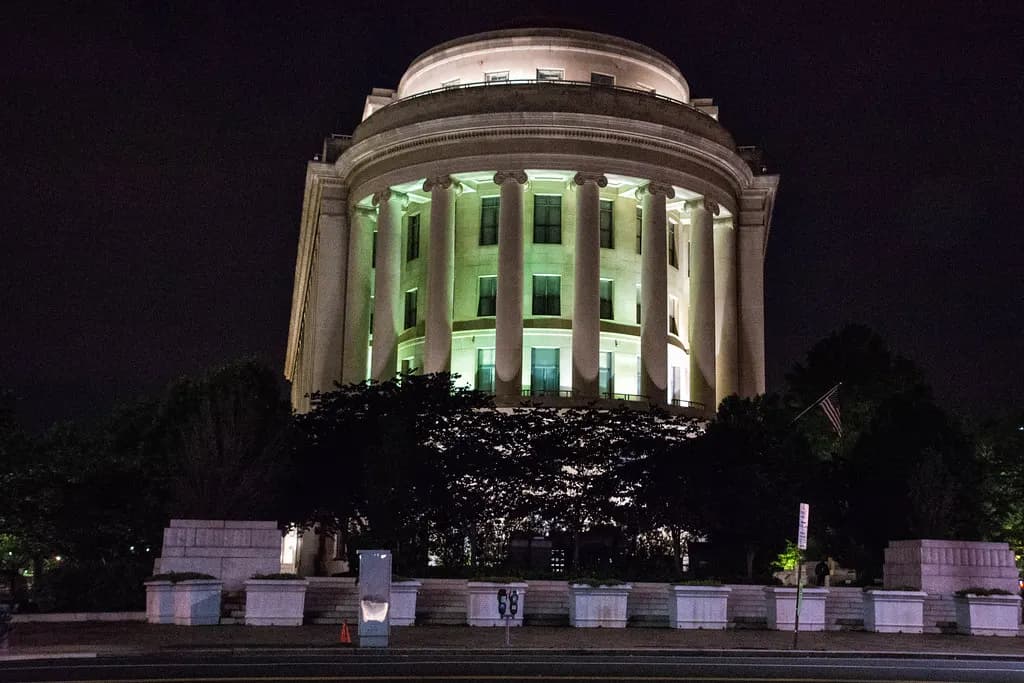
The legal definition is more precise, and it's the one that matters. Under the FTC Franchise Rule (16 CFR Part 436), a commercial relationship is a franchise if the franchisor promises or the parties agree that:
- Trademark. The franchisee will run a business identified or associated with the franchisor's trademark, or sell goods and services bearing it.
- Control or assistance. The franchisor will have significant control over, or give significant help with, the franchisee's method of operation, such as site approval, required training, operating manuals, hours, design or marketing.
- Required payment. The franchisee makes, or commits to make, a payment to the franchisor or its affiliate as a condition of getting or starting the business.
The label on the contract doesn't matter. If an agreement called a "license," "dealership" or "partnership" ticks all three boxes, the seller must follow the Franchise Rule. Lawyers call this an accidental franchise, and it's a real risk for small companies that start licensing their brand to others.
The word itself also has other meanings you may run into. "Franchise tax" is a state tax on doing business as a corporation or LLC, as in Texas; a sports franchise is a team's membership in a league; and a cable or utility franchise is a government grant to operate in an area. None of those is the business-format franchise this guide covers.
How a franchise works
Most franchises in the US are business-format franchises: you get the whole system, including the brand, store design, products, suppliers, training, software and marketing. Restaurants, fitness studios, home services, tutoring, senior care and hotel brands work this way. A smaller group are product-distribution franchises, where a supplier licenses a dealer to sell its products, such as some automotive and fuel arrangements.
Ownership can take several forms. A single-unit franchisee runs one location. A multi-unit franchisee owns several, often added over time. An area developer commits to opening a set number of units in a territory on a schedule. A master franchisee buys the right to sell franchises to others in a region and collects part of their fees. Some owners convert an existing independent business to a franchise brand, which is called a conversion franchise.

Day to day, you're an independent business owner. You form your own LLC or corporation, sign your own lease, hire your own staff, carry your own insurance and file your own taxes. But you operate inside the franchisor's rules: what you sell, which suppliers you use, how the store looks, how you advertise and what software you run. The franchise agreement usually lasts 10 years or more, with renewal conditions, and it controls whether and how you can sell the business.
The FTC Franchise Rule and the 14-day rule
The federal Franchise Rule is a disclosure law. It doesn't set fees, territories or fairness standards; it makes sure you get the facts in writing before you commit. The core obligations are timing rules.
- The franchisor must give you its current Franchise Disclosure Document (FDD) at least 14 calendar days before you sign any binding agreement or pay any money to the franchisor or an affiliate.
- If the franchisor makes a material change to the standard agreement on its own initiative, it must give you the revised agreement at least 7 calendar days before you sign it. Changes you negotiated don't restart that clock.
- Any statement about sales, income or profits must appear in Item 19 of the FDD. If it isn't in Item 19, the franchisor shouldn't be making it, and you shouldn't rely on it.
The FTC enforces the rule but doesn't approve or review FDDs, and there's no private right to sue under the federal rule itself. Your remedies usually come from state franchise laws, state consumer-protection statutes or contract law, which is one reason the state rules below matter.
In July 2024 the FTC added two pieces of guidance that are still posted on its website. A Commission policy statement, adopted by a 3–2 vote, said franchisors can't use non-disparagement, confidentiality or similar clauses to stop franchisees from reporting possible violations to the government. And FTC staff guidance said franchisors can't lawfully impose fees that weren't disclosed in the FDD, including new technology, training or marketing charges added through the operations manual. The FTC's rule page lists no new franchise rulemaking in 2025 or 2026, but the current Commission's leadership dissented from the 2024 policy statement, so watch for changes.
The 23 items in an FDD
Every FDD follows the same structure, which makes brands easy to compare once you know where to look.
| Item | Title | What to check |
|---|---|---|
| 1 | The franchisor, parents, predecessors and affiliates | How long it has franchised; industry-specific licences you'll need |
| 2 | Business experience | Background of directors and executives |
| 3 | Litigation | Lawsuits with franchisees, regulators or fraud claims |
| 4 | Bankruptcy | Bankruptcies of the franchisor or its officers |
| 5 | Initial fees | Franchise fee and whether any of it is refundable |
| 6 | Other fees | Royalties, marketing fund, technology, training, transfer, renewal |
| 7 | Estimated initial investment | Total cost range to open, including working capital |
| 8 | Restrictions on sources of products and services | Required suppliers and any rebates the franchisor receives |
| 9 | Franchisee's obligations | Cross-reference to your duties in the agreement |
| 10 | Financing | Any financing the franchisor offers and its terms |
| 11 | Franchisor's assistance, advertising, computer systems and training | Pre-opening help, ad fund rules, required software |
| 12 | Territory | Whether you get any protection, and its limits |
| 13 | Trademarks | Whether the main marks are federally registered |
| 14 | Patents, copyrights and proprietary information | What you can and can't use |
| 15 | Obligation to participate in operation | Whether you must work in the business yourself |
| 16 | Restrictions on what the franchisee may sell | Product and service limits |
| 17 | Renewal, termination, transfer and dispute resolution | Term, exit rules, non-compete, arbitration and venue |
| 18 | Public figures | Celebrity involvement and payments |
| 19 | Financial performance representations | Any earnings data, with its basis |
| 20 | Outlets and franchisee information | Openings, closures, transfers; contact lists |
| 21 | Financial statements | Franchisor's audited statements |
| 22 | Contracts | Copies of every agreement you'll sign |
| 23 | Receipts | Proof of when you received the FDD |
Item 21 requires audited financial statements, so it's worth knowing what an audit actually covers before you read them. A franchisor with weak finances or a "going concern" warning may struggle to support you.
Exemptions: when the rule doesn't apply
Some sales fall outside the federal rule, either because the buyer is sophisticated or the money is small. The FTC adjusts the dollar thresholds for inflation every four years; the current figures took effect in July 2024.
Main FTC Franchise Rule exemptions
| Exemption | Test | Rule |
|---|---|---|
Minimum payment | Total required payments less than $735 from before opening to six months after | 16 CFR 436.8(a)(1) |
Fractional franchise | Buyer has 2+ years in the same type of business and expects the new line to be no more than 20% of first-year sales | 16 CFR 436.1(g) |
Large investment | Initial investment of at least $1,469,600, excluding unimproved land and franchisor financing; buyer signs an acknowledgment | 16 CFR 436.8(a)(5)(i) |
Large franchisee | Buyer in business 5+ years with net worth of at least $7,348,000 | 16 CFR 436.8(a)(5)(ii) |
Leased department | Operating a department inside a larger retailer's store | 16 CFR 436.8(a)(3) |
Insiders | Buyer owning 50%+ has been an officer, director, manager or 25% owner of the franchisor for two years | 16 CFR 436.8(a)(6) |
Oral agreement | No written document describing any material term | 16 CFR 436.8(a)(7) |
Minimum payment
- Test
Total required payments less than $735 from before opening to six months after
- Rule
16 CFR 436.8(a)(1)
Fractional franchise
- Test
Buyer has 2+ years in the same type of business and expects the new line to be no more than 20% of first-year sales
- Rule
16 CFR 436.1(g)
Large investment
- Test
Initial investment of at least $1,469,600, excluding unimproved land and franchisor financing; buyer signs an acknowledgment
- Rule
16 CFR 436.8(a)(5)(i)
Large franchisee
- Test
Buyer in business 5+ years with net worth of at least $7,348,000
- Rule
16 CFR 436.8(a)(5)(ii)
Leased department
- Test
Operating a department inside a larger retailer's store
- Rule
16 CFR 436.8(a)(3)
Insiders
- Test
Buyer owning 50%+ has been an officer, director, manager or 25% owner of the franchisor for two years
- Rule
16 CFR 436.8(a)(6)
Oral agreement
- Test
No written document describing any material term
- Rule
16 CFR 436.8(a)(7)
Payments for reasonable amounts of inventory at bona fide wholesale prices don't count as a "required payment," which is why many ordinary distribution and dealer deals aren't franchises. State laws have their own exemptions, which don't always match the federal ones.
State franchise registration and disclosure rules
On top of the federal rule, about 14 states require franchisors to register their FDD with a state agency, or file it, before offering or selling franchises to residents or for locations in the state. These are California, Hawaii, Illinois, Indiana, Maryland, Michigan, Minnesota, New York, North Dakota, Rhode Island, South Dakota, Virginia, Washington and Wisconsin. Most are administered by the state securities regulator; Illinois runs its program through the attorney general's office.
The depth of review varies. Some states examine the FDD and can require changes, escrow of initial fees or a deferral of fees until the franchisor opens your unit. Others take a simpler notice filing: South Dakota, for example, requires a notice filing before any offer or sale and accepts filings through NASAA's electronic depository, FRED. Registrations generally have to be renewed every year, so an expired registration is a red flag.
Other states sit in between. Oregon requires the FDD to be delivered 14 days before signing but doesn't require filing or approval. Several states have business opportunity laws that require a filing unless the franchisor qualifies for an exemption, and a number of states have franchise relationship laws that limit when a franchisor can terminate or refuse to renew. Before you buy, look up your state's rules on its securities or attorney general website, and check whether the franchisor is currently registered there.
Franchise fees, royalties and the real cost
A franchise costs much more than the franchise fee. The FDD breaks the money into three places: Item 5 (initial fees), Item 6 (ongoing fees) and Item 7 (the estimated initial investment). Here's what typically appears.
- Initial franchise fee. Paid when you sign, often non-refundable. The FTC notes it can run from tens of thousands of dollars upward.
- Build-out, equipment and inventory. Leasehold improvements, signage, fixtures, vehicles and opening stock, often the largest part of Item 7.
- Royalties. Usually a percentage of gross sales, paid weekly or monthly, owed even in months when you lose money.
- Marketing or brand fund. A percentage of sales or a flat amount, plus any local advertising you must spend yourself.
- Technology and software fees. Point-of-sale, scheduling, apps and data fees, which have been rising across many systems.
- Training, renewal, transfer and remodel costs. Charged at set points in the relationship.
Fees vary widely by brand and industry, so don't rely on averages. Use the brand's own FDD. Here's a hypothetical worked example of how the percentages translate into dollars:
| Assumption (hypothetical brand) | Amount |
|---|---|
| Annual gross sales | $600,000 |
| Royalty (Item 6): 6% of gross sales | $36,000 |
| Brand fund (Item 6): 2% of gross sales | $12,000 |
| Required local marketing: 1% of gross sales | $6,000 |
| Technology fee: $400 a month | $4,800 |
| Total paid to franchisor and required marketing | $58,800 a year |
That $58,800 comes out before rent, payroll, food or product costs and loan payments. Model your own numbers with our break-even calculator, and test what happens if sales come in 20% below the Item 19 figures.
Franchise vs license vs dealership
These three arrangements can look alike from outside, but the legal treatment differs, and the difference often comes down to control and payment.
| Franchise | License | Dealership / distributorship | |
|---|---|---|---|
| What you get | Brand plus a full operating system | Right to use a trademark, patent or content | Right to resell a supplier's products |
| Control over your business | Significant (site, design, suppliers, training, manuals) | Usually limited to how the mark is used | Usually limited to sales and service standards |
| Payment to the brand owner | Initial fee plus royalties and fund contributions | License fee or royalty on licensed products | Mostly the wholesale price of goods |
| FTC Franchise Rule applies? | Yes, unless exempt | Only if all three franchise elements are present | Usually not, if you only pay bona fide wholesale prices |
| Typical example | Branded fitness studio | Apparel maker printing a cartoon character | Equipment dealer selling a manufacturer's machines |
If you're the one granting rights, this table is a warning. A company that licenses its name to a few operators, then adds required training and an upfront fee, may have created a franchise without an FDD, which can expose it to FTC action, state rescission claims and refunds. If you're the buyer, a "license" or "business opportunity" that looks like a franchise but comes without an FDD deserves extra scrutiny.
How to vet a franchise before you sign
The FDD gives you the raw material. The work is in checking it.
Franchise due diligence, step by step
- 1
Get the FDD and note the receipt date
You're entitled to it 14 calendar days before signing or paying. Sign only the Item 23 receipt at this stage.
- 2
Read Items 3, 4, 20 and 21 first
Litigation, bankruptcy, outlet turnover and the franchisor's audited finances tell you most about risk.
Tip: Many closures, transfers or ceased-operations entries in your area are a warning sign.
- 3
Call current and former franchisees
Use the Item 20 lists. Ask how long breakeven took, whether support matches the promises, and why former owners left.
- 4
Test the money
Startup cost calculatorBuild a budget from Items 5–7 and your local rent and wages, and compare it with Item 19. Ask whether Item 19 figures include company-owned units.
- 5
Check registration and the trademark
Confirm the franchisor is registered in your state if required, and that its main marks are federally registered.
- 6
Hire a franchise lawyer and an accountant
Have them review the agreement's term, territory, transfer, termination, non-compete and personal guarantee.
- 7
Confirm financing
If you'll use an SBA loan, ask your lender to confirm the brand is eligible on SBA's Franchise Directory before you pay any fee.
Questions worth asking franchisees in their first year: did you open on time, was training adequate, and have you broken even? For owners of five years or more: how long did it take to recover your investment, does the franchisor meet its obligations, and would you buy another unit? Former owners are often the most candid.
Financing a franchise
Many franchisees combine personal savings with a bank or SBA loan. SBA 7(a) and 504 loans are widely used for franchise purchases, but the brand has to be eligible. Under SBA's current lending rules, the agency maintains a Franchise Directory that lenders and certified development companies use to check whether a brand meets the FTC franchise definition and is eligible; the directory was reinstated from June 1, 2025, and the current edition took effect September 29, 2026. SBA says that placement in the directory is not an endorsement, and doesn't mean the business will succeed.
Expect lenders to want a business plan, personal financial statements, a credit check, an equity injection and a personal guarantee. See our SBA 7(a) loan guide and SBA loan requirements for the details, and use the business plan generator to draft the plan lenders ask for. Some franchisors offer their own financing for the franchise fee or equipment; Item 10 discloses the terms.
A typical franchise purchase, from first call to opening
Weeks 1–4
Inquiry, application and discovery calls; request the FDD
Day 0
You receive the FDD and sign only the Item 23 receipt
Day 0–14+
Review with a lawyer and accountant; call franchisees; build your budget
Day 14 calendar days at the earliest
Sign the franchise agreement and pay the initial fee
Months 1–6
Financing, site approval, lease, build-out and training
Opening
Grand opening; royalties and fund contributions start
Pros, cons and common mistakes
Franchising's appeal is a proven system: a recognized brand, a tested menu or service, supplier pricing, training and a playbook for opening. For a first-time owner, that can shorten the learning curve. The trade-offs are cost and control. You pay royalties for the life of the agreement, you follow rules you didn't write, and you usually can't sell the business without the franchisor's approval, or open a competing business for a period after you leave.
The most common mistakes are avoidable:
- Relying on sales pitches instead of the FDD. Earnings claims made outside Item 19 aren't supposed to be made at all.
- Underestimating working capital. Item 7 includes an "additional funds" line for the first months; many owners need more.
- Assuming a protected territory. Read Item 12 closely. An "exclusive" territory may still allow online sales, delivery apps or company-owned outlets near you.
- Signing a letter of intent or paying a deposit too early. A reservation deposit before the 14-day period has run violates the rule; know what you're signing (see our guide to a letter of intent).
- Skipping the personal guarantee review. Most franchise agreements and leases make you personally liable, even if you operate through an LLC.
What to do next
Shortlist two or three brands in an industry you understand, request each FDD, and compare Items 5–7, 19 and 20 side by side. Build a conservative budget with our startup cost calculator, talk to at least five current and former franchisees per brand, and have a franchise lawyer review the agreement before you pay. Then follow our how to start a business guide to form your entity, get an EIN and set up the licenses your location needs.
Official links
- FTC Franchise RuleRule text, compliance guide and updates
- A Consumer's Guide to Buying a FranchiseFTC buyer's guide
- 16 CFR Part 436 (eCFR)Definitions, 23 items, exemptions
- SBA Franchise DirectoryBrand eligibility for SBA loans
- South Dakota franchise filingExample of a state notice filing
- Oregon franchise disclosureDisclosure-only state rules
This is general information, not legal or tax advice — confirm on the official source or with a professional.
Frequently asked questions
A franchise is an arrangement in which a business owner (the franchisee) pays for the right to run a business under another company's brand (the franchisor), following its system. Under the FTC Franchise Rule, a relationship is a franchise when three things are present: the right to use the franchisor's trademark, significant control or assistance from the franchisor, and a required payment of at least $735 within six months of opening.
The FDD is the disclosure the FTC Franchise Rule requires franchisors to give prospective buyers. It contains 23 items, including the franchisor's litigation and bankruptcy history, every fee, the estimated initial investment, territory rules, a list of current and former franchisees, any earnings claims, and audited financial statements. You must receive it at least 14 calendar days before you sign or pay anything.
Most franchises charge an initial franchise fee when you sign, then ongoing royalties, usually a percentage of gross sales paid weekly or monthly, plus contributions to a marketing fund and often technology fees. Royalties are typically owed whether or not you're profitable. Every fee must be disclosed in Items 5 and 6 of the FDD, and the FTC's staff has said fees that weren't disclosed can't lawfully be imposed.
About 14 states make franchisors register or file their FDD before offering franchises there: California, Hawaii, Illinois, Indiana, Maryland, Michigan, Minnesota, New York, North Dakota, Rhode Island, South Dakota, Virginia, Washington and Wisconsin. Review depth varies; South Dakota and Wisconsin use simpler filings. Several other states have business opportunity filing rules or require disclosure without registration.
A license gives you permission to use someone's trademark or technology, usually without the owner controlling how you run your business. A franchise adds significant control or assistance over your operations and a required payment. If a license agreement includes all three franchise elements, it is legally a franchise, whatever it's called, and the licensor must comply with the FTC Franchise Rule.
Often, yes. SBA 7(a) and 504 loans can finance franchise purchases, but the brand must be eligible. SBA's Franchise Directory lists brands that lenders can check; it was reinstated from June 1, 2025, and the current edition took effect September 29, 2026. A listing is not an SBA endorsement, so you still need to do your own due diligence on the brand.
Sources & verification
Figures on this page were checked against the sources below when it was last reviewed on 8 October 2026. Each rate and limit is stored once with its own official source and review date, and official update channels are monitored daily so changes are picked up. How we verify
- 1.16 CFR § 436.1 — Franchise Rule definitions — Legal Information Institute, Cornell Law School (Code of Federal Regulations) · accessed 8 October 2026
- 2.16 CFR § 436.2 — Obligation to furnish documents — Legal Information Institute, Cornell Law School (Code of Federal Regulations) · accessed 8 October 2026
- 3.16 CFR § 436.5 — Disclosure items — Legal Information Institute, Cornell Law School (Code of Federal Regulations) · accessed 8 October 2026
- 4.16 CFR § 436.8 — Exemptions — Legal Information Institute, Cornell Law School (Code of Federal Regulations) · accessed 8 October 2026
- 5.Franchise Rule — Federal Trade Commission · accessed 8 October 2026
- 6.A Consumer's Guide to Buying a Franchise — Federal Trade Commission · accessed 8 October 2026
- 7.FTC Takes Action to Ensure Franchisees' Complaints are Heard and to Protect Against Illegal Fees — Federal Trade Commission · accessed 8 October 2026
- 8.Franchise Registration — South Dakota Department of Labor & Regulation, Division of Insurance – Securities Regulation · accessed 8 October 2026
- 9.Franchises — Oregon Division of Financial Regulation · accessed 8 October 2026
- 10.SBA Franchise Directory — U.S. Small Business Administration · accessed 8 October 2026
- 11.SBA Franchise Directory Reintroduced Effective June 1, 2025 — Taft Stettinius & Hollister LLP · accessed 8 October 2026
MSMETOOLS is an independent platform and is not affiliated with any government agency, ministry or department.
Tools for this
Startup Cost Calculator
Estimate how much capital you need to launch.
Break Even Calculator
Find your break even point and units.
Business Plan Generator (US)
Create a professional business plan for US investors and banks.
Related guides
 How to Start a Business in 2026: 12 Steps, Costs & TaxesRead guide
 How to Start a Laundromat in 2026: Buy or Build?Read guide
 B2B Meaning vs B2C Meaning: Differences & Examples (2026)Read guide
 How to Start a Web Page for Your Business in 2026Read guide
Official links open the government site in a new tab.