 HR, payroll & employment
Company Car Tax in 2026-27: BIK Rates, Electric Cars, Fuel and Worked Examples
Company car tax for 2026-27: BIK rates by CO2, electric cars at 4% rising to 9% by 2029-30, hybrids, the fuel benefit, Class 1A at 15% and worked examples.
 Edited by Sumeet YadavFounder & editor, MSMETOOLS · fact-checked against official sources

Contents (11)
- 1. How company car tax works
- 2. 2026-27 company car tax rates by CO2
- 3. What counts as the list price
- 4. Electric cars: 4% now, 9% by 2029-30
- 5. Plug-in hybrids and the April 2028 change
- 6. Free fuel: the car fuel benefit
- 7. Worked examples for 2026-27
- 8. Directors, salary sacrifice and reporting
- 9. Common mistakes
- 10. Budget 28 October 2026: what could change
- 11. What to do next
Company car tax is the Income Tax an employee or director pays for being able to use a work car privately, plus the National Insurance the employer pays on top. In 2026-27 the gap between an electric car and a petrol one has never been wider, but the electric rates are now rising every year and plug-in hybrids face a sharp jump in 2028. This guide is for employers, directors of small companies and employees weighing up a car. It covers the 2026-27 percentages, the rates already set to 2030, the fuel benefit, the employer's Class 1A bill and worked examples in pounds.
Quick answer
Company car tax is charged on the car's list price × an appropriate percentage set by its CO2 emissions. In 2026-27 that's 4% for a fully electric car (up from 3%), 4%–16% for plug-in hybrids depending on electric range, and up to 37% for high-emission cars. The employee pays Income Tax on the result; the employer pays Class 1A at 15%.
Electric rates are set to rise to 5% (2027-28), 7% (2028-29) and 9% (2029-30)
All 1–50 g/km hybrids move to 18% from April 2028
Free private fuel adds £29,200 × the car's percentage; charging an EV doesn't count
Non-RDE2 diesels pay a 4 percentage points supplement
Cars must be payrolled from 6 April 2027 instead of reported on a P11D
How company car tax works
A company car is a benefit in kind when an employee or director can use it for private journeys, and commuting counts as private. The law doesn't tax the cost of the car to the business or how much the employee actually drives. Instead, it uses a formula: the car's list price multiplied by an "appropriate percentage" based on its official CO2 figure. That gives the cash equivalent, the amount added to the employee's taxable pay for the year.
The employee then pays Income Tax on that amount at their marginal rate: 20%, 40% or 45% in England, Wales and Northern Ireland, or the Scottish rates in Scotland. They don't pay National Insurance on it. The employer pays Class 1A National Insurance at 15% of the same amount. That employer cost can't be reduced by the Employment Allowance, which only covers Class 1.
Cars that are genuinely available only for business use aren't taxed, provided you forbid private use and check it doesn't happen. Pool cars are exempt too, but only if they're shared by several employees, normally kept at your premises overnight, and any private use is merely incidental to business trips. A car the employee owns privately isn't a company car at all; mileage for business trips in it is covered by mileage allowance payments.
2026-27 company car tax rates by CO2
HMRC's table for 6 April 2026 to 5 April 2027 is below, grouped where the percentage is the same. CO2 figures are rounded down to the nearest 5 g/km before you look them up, except in the 1–50 g/km band where the electric range decides the rate.
| CO2 (g/km) | Electric range | 2026-27 | 2025-26 |
|---|---|---|---|
| 0 (fully electric) | — | 4% | 3% |
| 1–50 | 130 miles or more | 4% | 3% |
| 1–50 | 70–129 miles | 7% | 6% |
| 1–50 | 40–69 miles | 10% | 9% |
| 1–50 | 30–39 miles | 14% | 13% |
| 1–50 | under 30 miles | 16% | 15% |
| 51–54 | — | 17% | 16% |
| 55–59 | — | 18% | 17% |
| 60–64 | — | 19% | 18% |
| 65–69 | — | 20% | 19% |
| 70–74 | — | 21% | 20% |
| 75–79 | — | 21% | 21% |
| 80–84 | — | 22% | 22% |
| 85 and above | — | +1% per 5 g/km (95–99 = 25%, 120–124 = 30%) | same |
| 155 and above | — | 37% (maximum) | 37% |
Source: HMRC 480 Appendix 2, figures for cars registered from 6 April 2020 (WLTP). The NEDC column for older cars is the same in both years.
Notice where the rate changed. Only cars below 75 g/km rose in April 2026; everything from 75 g/km upward stayed at its 2025-26 percentage. That pattern repeats in 2027-28, when low-emission cars rise by another point and the rest stay put.
Diesels. Diesel cars that don't meet the Real Driving Emissions 2 (RDE2) standard pay a 4 percentage points supplement on top of the table, still capped at 37%. RDE2-certified diesels (Euro 6d, with NOx no higher than 80 mg/km) and diesel hybrids don't. The car's certificate of conformity shows which standard it meets.
Company car tax at a glance (2026-27)
4%
Fully electric car
Was 3% in 2025-26
37%
Maximum percentage
155 g/km and above
£29,200
Car fuel benefit multiplier
15%
Employer Class 1A on the benefit
What counts as the list price
The list price is the manufacturer's published price for the car on the day before it was first registered, including VAT, delivery charges and any optional extras fitted. It is not what the business paid. A dealer discount, a fleet deal or buying the car second-hand makes no difference: a three-year-old car is taxed on its original list price.
Accessories added later count if they cost £100 or more, from the year they're fitted. Equipment needed only because the employee has a disability is ignored. Vehicle Excise Duty and the first registration fee aren't part of the list price.
Two things reduce the figure. First, if the employee contributes to the cost of the car or its accessories as a capital sum, up to £5,000 is deducted from the list price for that year and later years. Second, after applying the percentage, you deduct anything the employee is required to pay for private use, for example a monthly charge taken from net pay. The car benefit is also reduced proportionately for any period when the car wasn't available, such as a car that arrived part-way through the year or was off the road for at least 30 consecutive days.
Working out the taxable benefit
Step 1
List price incl. options and VAT
Step 2
Less capital contribution
Max £5,000
Step 3
× appropriate percentage
4% to 37%
Step 4
Pro-rata for days unavailable
Step 5
Less employee payments for private use
Step 6
Taxable benefit
Employee pays Income Tax
Step 7
× 15%
Employer Class 1A
Electric cars: 4% now, 9% by 2029-30
Fully electric cars carry by far the lowest charge. The rate was 2% from 2022-23 to 2024-25, then rose by one point a year from April 2025: 3% in 2025-26, 4% in 2026-27 and, as already legislated, 5% in 2027-28. The 2024 Autumn Budget then set the next two years, raising the zero-emission rate by two points a year to 7% in 2028-29 and 9% in 2029-30.
Even at 9%, an electric car stays far cheaper than a petrol equivalent. A £45,000 electric car taxed at 9% has a benefit of £4,050; a £35,000 petrol car at 30% has £10,500. So the incentive remains, but drivers who chose an EV for the low tax should expect their monthly deduction to more than double over four years.
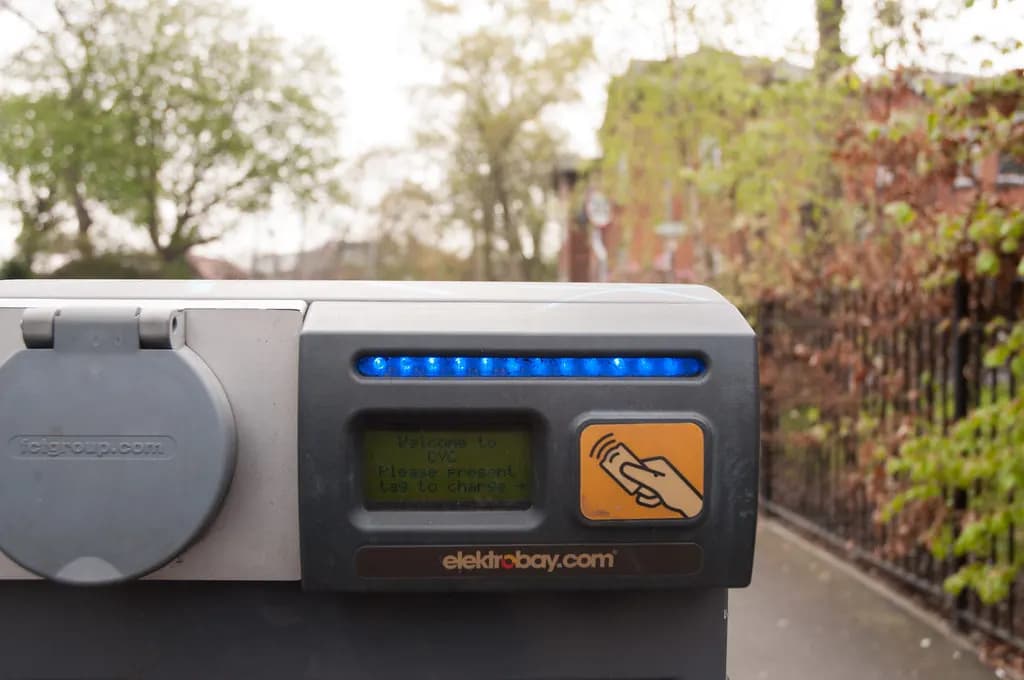
Running costs help as well. Charging a fully electric company car that the employer owns or leases, whether at work or by paying for public charging, isn't a taxable fuel benefit, because HMRC doesn't treat electricity as fuel. Workplace charging points are also exempt when used for employees' own electric cars.
Plug-in hybrids and the April 2028 change
Plug-in hybrids with official emissions of 1 to 50 g/km are taxed on their electric-only range until 5 April 2028. A model with 70 to 129 miles of range sits at 7% in 2026-27; one with under 30 miles pays 16%. Hybrids above 50 g/km follow the ordinary CO2 bands.
From 6 April 2028 the electric range stops mattering. Every car from 1 to 50 g/km moves to 18% in 2028-29 and 19% in 2029-30. For a long-range hybrid currently on 4% to 7%, that's a two- or threefold increase in the taxable benefit overnight. If your business is ordering hybrids on three- or four-year leases now, the cost in the final years of the lease will be much higher than in the first.
There is a temporary easement for newer hybrids caught by tougher emissions-testing standards. A plug-in hybrid first registered on or after 1 January 2025, tested under a standard other than Euro 6d-ISC-FCM or Euro 6e, with an official CO2 figure of 51 g/km or more and an electric range of at least one mile, is treated as having a nominal CO2 figure of 1, so it stays in the range-based bands. The easement runs to 5 April 2028; anyone who has the car by then keeps it until the earlier of a variation or renewal of the arrangement or 5 April 2031. It applies only to employment taxes, not capital allowances or VED.
Appropriate percentages already set, 2025-26 to 2029-30
| Car | 2025-26 | 2026-27 | 2027-28 | 2028-29 | 2029-30 |
|---|---|---|---|---|---|
Fully electric (0 g/km) | 3% | 4% | 5% | 7% | 9% |
Hybrid 1–50 g/km, 130+ miles range | 3% | 4% | 5% | 18% | 19% |
Hybrid 1–50 g/km, 40–69 miles range | 9% | 10% | 11% | 18% | 19% |
Petrol 120–124 g/km | 30% | 30% | 30% | 31% | 32% |
Maximum (155 g/km and above) | 37% | 37% | 37% | 38% | 39% |
Fully electric (0 g/km)
- 2025-26
3%
- 2026-27
4%
- 2027-28
5%
- 2028-29
7%
- 2029-30
9%
Hybrid 1–50 g/km, 130+ miles range
- 2025-26
3%
- 2026-27
4%
- 2027-28
5%
- 2028-29
18%
- 2029-30
19%
Hybrid 1–50 g/km, 40–69 miles range
- 2025-26
9%
- 2026-27
10%
- 2027-28
11%
- 2028-29
18%
- 2029-30
19%
Petrol 120–124 g/km
- 2025-26
30%
- 2026-27
30%
- 2027-28
30%
- 2028-29
31%
- 2029-30
32%
Maximum (155 g/km and above)
- 2025-26
37%
- 2026-27
37%
- 2027-28
37%
- 2028-29
38%
- 2029-30
39%
The 2027-28 hybrid figures follow the policy paper's one-point rise for cars under 75 g/km; the 2028-29 and 2029-30 petrol figures follow the one-point annual increase in the 2024 Budget paper. Check HMRC's Appendix 2 once each year's table is published.
Free fuel: the car fuel benefit
If the employer pays for any fuel used for private journeys in a petrol, diesel or hybrid company car, a second charge applies on top of the car benefit. For 2026-27 it is £29,200 multiplied by the car's appropriate percentage, whatever the amount of fuel actually used. A car on 30% produces a fuel benefit of £8,760, which costs a higher-rate taxpayer £3,504 a year and the employer £1,314 in Class 1A.
The charge only goes away if the employee repays the cost of all fuel used privately, including commuting, by 6 July after the tax year. Paying back some of it doesn't reduce the charge. To make repayment work, keep a mileage log and use HMRC's advisory fuel rates, which are updated quarterly, to price the private miles. Unless an employee drives a very high private mileage, the tax on the fuel benefit can exceed the value of the fuel, so compare the two before offering it; many employers reimburse business miles only.
Electricity isn't fuel for these rules, so no fuel benefit arises on a fully electric car.
Worked examples for 2026-27
These examples use 2026-27 rates for a full year of availability, England income tax rates, and the 15% Class 1A rate. Monthly figures are what the employee's tax code or payslip would collect.
| Car | Taxable benefit | Tax at 20% | Tax at 40% | Employer Class 1A |
|---|---|---|---|---|
| Electric, list price £45,000, 4% | £1,800 | £360 (£30/month) | £720 (£60/month) | £270 |
| Plug-in hybrid £42,000, 25 g/km, 45-mile range, 10% | £4,200 | £840 | £1,680 | £630 |
| Petrol £30,000, 128 g/km, 31% | £9,300 | £1,860 | £3,720 | £1,395 |
| Same petrol car with free private fuel (+£29,200 × 31% = £9,052) | £18,352 | £3,670.40 | £7,340.80 | £2,752.80 |
| Non-RDE2 diesel £28,000, 115 g/km, 29% + 4% = 33% | £9,240 | £1,848 | £3,696 | £1,386 |
Capital contribution. An employee pays £3,000 towards a £50,000 electric car. The benefit is (£50,000 − £3,000) × 4% = £1,880, saving a higher-rate taxpayer £48 a year compared with no contribution, and it continues to reduce the benefit in later years.
Part-year car. A director receives a £40,000 electric car on 1 October 2026. It's available for 187 of the 365 days in the tax year, so the benefit is £1,600 × 187/365 = £819.73.
Looking ahead. The same £45,000 electric car will produce a benefit of £2,250 in 2027-28, £3,150 in 2028-29 and £4,050 in 2029-30. For a higher-rate taxpayer, the annual tax rises from £720 now to £1,620. The 45-mile hybrid goes from £4,200 to £7,560 in 2028-29, an extra £1,344 of tax at 40%.
Directors, salary sacrifice and reporting
For owner-managed companies the decision is often between a company car and buying a car personally with dividends or salary. An electric company car at 4% usually wins, because the company gets tax relief on the cost while the director's benefit is small; a petrol car rarely does. Compare the options with our director salary vs dividends guide, and check capital allowances on the car itself.
Many employers offer electric cars through salary sacrifice. Normally, where a benefit is provided in exchange for salary, the employee is taxed on the higher of the salary given up and the benefit value. HMRC's company car guidance confirms you report the salary amount if it's higher than the car and fuel value. Cars with CO2 of 75 g/km or less are outside that comparison, so they're taxed on the ordinary percentage, which is why salary-sacrifice schemes focus on electric and low-emission cars.
For 2026-27, employers that don't payroll the car report it on a P11D and the Class 1A on the P11D(b) by 6 July 2027, and pay the Class 1A by 22 July (19 July by cheque). You also need to tell HMRC when you start or stop providing a car, or change it, using its online company car reporting service, so the employee's tax code can be adjusted. From 6 April 2027, company cars and car fuel must be payrolled, with the benefit taxed through each payslip and Class 1A reported in real time. Our P11D guide and payroll year-end guide cover both routes.

Common mistakes
Using the purchase price instead of the list price. Discounts and second-hand prices don't count. Use the list price when new, including options and VAT.
Assuming a hybrid is low-emission. Check the official CO2 figure and electric range on the V5C or manufacturer data. A hybrid at 55 g/km is taxed at 18%, not 4% or 7%.
Forgetting the diesel supplement. Older diesels without RDE2 certification add 4 percentage points.
Partly reimbursed fuel. Repaying some private fuel doesn't reduce the fuel benefit. It's all private fuel by 6 July after the tax year or the full charge.
Treating a car as a pool car when it goes home every night. If one employee keeps it at home, it isn't a pool car.
Not planning for rising rates. Electric and hybrid percentages are set to rise every year to 2029-30; cost a lease over its whole term.
Budget 28 October 2026: what could change
Company car rates up to 2029-30 have already been announced, so big surprises are less likely, but the Budget on 28 October 2026 could still change them. Things to watch: the car fuel benefit multiplier and van charges for 2027-28, which are usually uprated each year; any extension or tightening of the plug-in hybrid easement; and HMRC's final guidance on mandatory payrolling of car benefits from April 2027, which it says will align with the Budget. The planned pay-per-mile charge for electric and plug-in hybrid cars from April 2028 announced in Budget 2025 is a vehicle tax, separate from company car tax. We'll update this guide after the Budget.
Official links
- Company car benefit: appropriate percentagesFull table by CO2 and electric range
- Company car tax rates 2028 to 2030Electric, hybrid and maximum rates
- Plug-in hybrid BIK easementCars first registered from January 2025
- Expenses and benefits: company carsEmployer reporting and exemptions
- Fuel benefit charges 2026 to 2027Car fuel multiplier and van charges
What to do next
List every car your business provides with its list price, CO2 figure, electric range and fuel arrangements, then run the numbers for this year and the next three. If you pay for private fuel in petrol or diesel cars, compare the fuel benefit with the fuel actually used. Before April 2027, ask your payroll provider how it will handle payrolled car benefits, and read our P11D guide for the 2026-27 filing.
This is general information, not legal or tax advice — confirm on the official source or with a professional.
Frequently asked questions
Zero-emission cars use an appropriate percentage of 4% of list price in 2026-27, up from 3% in 2025-26. It rises to 5% in 2027-28, 7% in 2028-29 and 9% in 2029-30. On a £45,000 electric car the 2026-27 benefit is £1,800, which costs a higher-rate taxpayer £720 a year.
Take the car's list price including options and VAT, deduct up to £5,000 of capital contributions from the employee, and multiply by the appropriate percentage for its CO2 emissions. Deduct anything the employee pays for private use. The result is the taxable benefit, taxed at the employee's Income Tax rate. The employer pays Class 1A National Insurance at 15% on it.
37% in 2026-27, reached at 155 g/km of CO2 and above, including any diesel supplement. The cap rises to 38% in 2028-29 and 39% in 2029-30, when most petrol and diesel bands also rise by one percentage point a year.
Yes, unless the car is fully electric. If your employer pays for any private fuel, including commuting, you're taxed on £29,200 × the car's appropriate percentage. It's only removed if you repay the cost of all private fuel by 6 July after the tax year. Electricity isn't treated as fuel, so charging an electric company car doesn't create a fuel benefit.
From 6 April 2028, all cars emitting 1 to 50 g/km use 18%, whatever their electric range, rising to 19% in 2029-30. A plug-in hybrid with a long electric range on 4% today could jump to 18%. Some newer hybrids also benefit from a temporary easement for emissions-test changes until 5 April 2028.
Yes. The employer pays Class 1A National Insurance at 15% of the car and fuel benefit. For 2026-27 it's reported on the P11D(b) by 6 July 2027 and paid by 22 July (19 July by cheque). From 6 April 2027, car benefits must be payrolled, with tax and Class 1A reported through each pay run.
Sources & verification
Figures on this page were checked against the sources below when it was last reviewed on 11 October 2026. Each rate and limit is stored once with its own official source and review date, and official update channels are monitored daily so changes are picked up. How we verify
- 1.Company car benefit: the appropriate percentage (480 Appendix 2) — HMRC · accessed 11 October 2026
- 2.Taxation of company cars: appropriate percentage for 2025-26, 2026-27 and 2027-28 — HMRC policy paper · accessed 11 October 2026
- 3.Taxation of company cars: appropriate percentage for 2028-29 and 2029-30 — HMRC policy paper · accessed 11 October 2026
- 4.Plug-in hybrid electric vehicles: benefits in kind easement — HMRC policy paper · accessed 11 October 2026
- 5.Income Tax: cars appropriate percentage — increasing the diesel supplement — HMRC policy paper · accessed 11 October 2026
- 6.Expenses and benefits: company cars — HMRC / GOV.UK · accessed 11 October 2026
- 7.Van benefit charge and fuel benefit charges for cars and vans 2026 to 2027 — HMRC policy paper · accessed 11 October 2026
- 8.EIM25660 — Car fuel benefit: belated making good — HMRC manual · accessed 11 October 2026
- 9.Rates and thresholds for employers 2026 to 2027 — HMRC / GOV.UK · accessed 11 October 2026
- 10.EIM44060 — Optional remuneration arrangements: cars with CO2 of 75 g/km or less — HMRC manual · accessed 11 October 2026
MSMETOOLS is an independent platform and is not affiliated with any government agency, ministry or department.
Tools for this
Salary Slip Generator
Create professional salary slips in seconds.
Budget Planner
Plan and track your business budget easily.
Related guides
 P11D 2026: Deadlines, Class 1A & Benefits in Kind GuideRead guide
 Employer National Insurance 2026: 15%, £5,000 & AllowanceRead guide
 Payrolling Benefits in Kind 2026: 2027 Mandatory RulesRead guide
 Salary Sacrifice 2026: Pensions, NI Savings & the 2029 CapRead guide
Official links open the government site in a new tab.