 HR, payroll & employment
Probation Periods in the UK (2026): Length, Extensions, Dismissal and the 2027 Unfair Dismissal Change
UK probation periods in 2026: how long they can be, extending, notice and dismissal during probation, and what the 6-month unfair dismissal rule from 2027 means.
 Edited by Sumeet YadavFounder & editor, MSMETOOLS · fact-checked against official sources
Contents (10)
- 1. What a probation period is — and isn't
- 2. How long should probation be in 2026?
- 3. Why statutory notice matters for the six-month line
- 4. Running probation reviews
- 5. Extending probation
- 6. Dismissal during or at the end of probation
- 7. What the Employment Rights Act 2025 does — and doesn't — change
- 8. Worked example: setting a probation decision date
- 9. Common mistakes
- 10. What to do next
A probation period gives an employer and a new starter a set time to check the job is working out. In the UK it's entirely contractual — there's no law that creates one or fixes how long it lasts — but what happens at the end of it is about to matter far more. This guide is for small employers designing or running probation, and for employees who want to know where they stand. It covers length, reviews, extensions, notice and dismissal during probation, the rights that apply from day one, and what the Employment Rights Act 2025's six-month unfair dismissal rule from 1 January 2027 means in practice.
Quick answer
Probation is optional and contractual: it exists only if the contract or written statement says so, and it can be any length. During probation employees keep their day-one rights — minimum wage, paid holiday, sick pay, protection from discrimination. From 1 January 2027, unfair dismissal protection starts after 6 months (now 2 years), so decisions about failing probation need to be made — and fairly — before the six-month point.
No legal minimum or maximum; 3–6 months is common, 4–5 months is becoming the safer choice
Extensions need a contractual right and written confirmation before probation ends
Notice: at least 1 week after one month's service, or longer if the contract says
Statutory notice counts towards the six months, so a dismissal at 5 months 3 weeks can still be caught
The Employment Rights Act 2025 doesn't create a statutory probation period
What a probation period is — and isn't
A probation period is a term in the employment contract that says the first few months are a trial. It usually comes with closer supervision, set review meetings, sometimes a shorter notice period, and occasionally reduced contractual benefits such as company sick pay. At the end, the employer confirms the employee has passed, extends probation, or ends the employment.
What probation doesn't do is suspend the law. Acas is clear that statutory rights apply from the first day, whatever the contract calls the period. A probationer must be paid at least the National Minimum Wage, builds up paid holiday from day one, is entitled to Statutory Sick Pay if they're ill, and is protected from discrimination and from detriment for whistleblowing or joining a trade union.
Because probation is contractual, it only works if it's written down. Since April 2020 the principal written statement — due on or before the first day — must include the length and conditions of any probation period. Our employment contract guide explains what else goes in. A probation clause that appears for the first time in a handbook six weeks into the job is much harder to rely on.
Acas notes that probation can be any length of time, and that six months or less may not suit technical or specialist roles that need longer for training. That flexibility now has to be balanced against the new unfair dismissal rules, covered below.
Rights that apply from day one of probation
£12.71 an hour
National Living Wage
21 and over
5.6 weeks
Paid holiday a year
accrues from the first day
£123.25 a week
Statutory Sick Pay
from the first day of sickness
3 months
Max auto-enrolment postponement
must enrol on request
How long should probation be in 2026?
There's no legal answer, but there's now a practical one. Until 31 December 2026, an employee normally needs 2 years of continuous service to claim ordinary unfair dismissal. That gave employers a long buffer: probation of three, six or even twelve months could end with a short meeting and a week's notice, with limited legal risk outside discrimination and other day-one protections.
That buffer shrinks sharply. For dismissals with an effective date of termination on or after 1 January 2027, the qualifying period falls to 6 months. The government's business guidance tells employers who use probation to "consider how it will operate" alongside the six-month rule. A probation period that runs to six months or more means the decision to end someone's employment for failing it will usually fall after they've gained unfair dismissal rights — so it will need a fair reason and a fair procedure.
Probation design under the 2027 rules
| Probation design | When the decision falls | Unfair dismissal risk |
|---|---|---|
3 months, extendable by 2 | Month 3, or month 5 at the latest | Low — decision and notice fit within 6 months |
4 months, optional 1-month extension | Month 4 or 5 | Low if decided by month 5 |
6 months | Month 6 | High — statutory notice carries the employee past 6 months |
6 months, extendable by 3 | Month 6–9 | Employee likely protected; follow a full fair process |
12 months (senior or specialist roles) | Month 12 | Protected — treat as performance management |
3 months, extendable by 2
- When the decision falls
Month 3, or month 5 at the latest
- Unfair dismissal risk
Low — decision and notice fit within 6 months
4 months, optional 1-month extension
- When the decision falls
Month 4 or 5
- Unfair dismissal risk
Low if decided by month 5
6 months
- When the decision falls
Month 6
- Unfair dismissal risk
High — statutory notice carries the employee past 6 months
6 months, extendable by 3
- When the decision falls
Month 6–9
- Unfair dismissal risk
Employee likely protected; follow a full fair process
12 months (senior or specialist roles)
- When the decision falls
Month 12
- Unfair dismissal risk
Protected — treat as performance management
Law firm Mishcon de Reya, for example, suggests probation of no more than five months, or four months with a one-month extension option, so that the keep-or-terminate decision can be made with headroom. Longer probation remains perfectly lawful — some roles genuinely need it — but from 2027 a longer probation is really a structured performance-management period that must end, if it ends badly, with a fair capability or conduct process.
Why statutory notice matters for the six-month line
The qualifying period is measured to the effective date of termination, and when an employer dismisses without giving at least the statutory minimum notice, that date is pushed back by the statutory notice the employee should have had. The government's guidance confirms that statutory notice counts towards service whether or not it's actually given. This applies even when you pay in lieu of notice; it doesn't apply to summary dismissal for genuine gross misconduct.
Once an employee has worked for a month, statutory notice is 1 week until they reach two years. So if someone started on 1 March and you dismiss them in the last week of August with pay in lieu of notice, the extra week of statutory notice can carry their deemed termination date to the end of August or beyond — and therefore to six months' service. Mishcon de Reya gives a similar example of a dismissal at five months and three weeks being caught. Margins this fine are exactly why advisers recommend making the probation decision at around five months, not in the final fortnight.
Running probation reviews
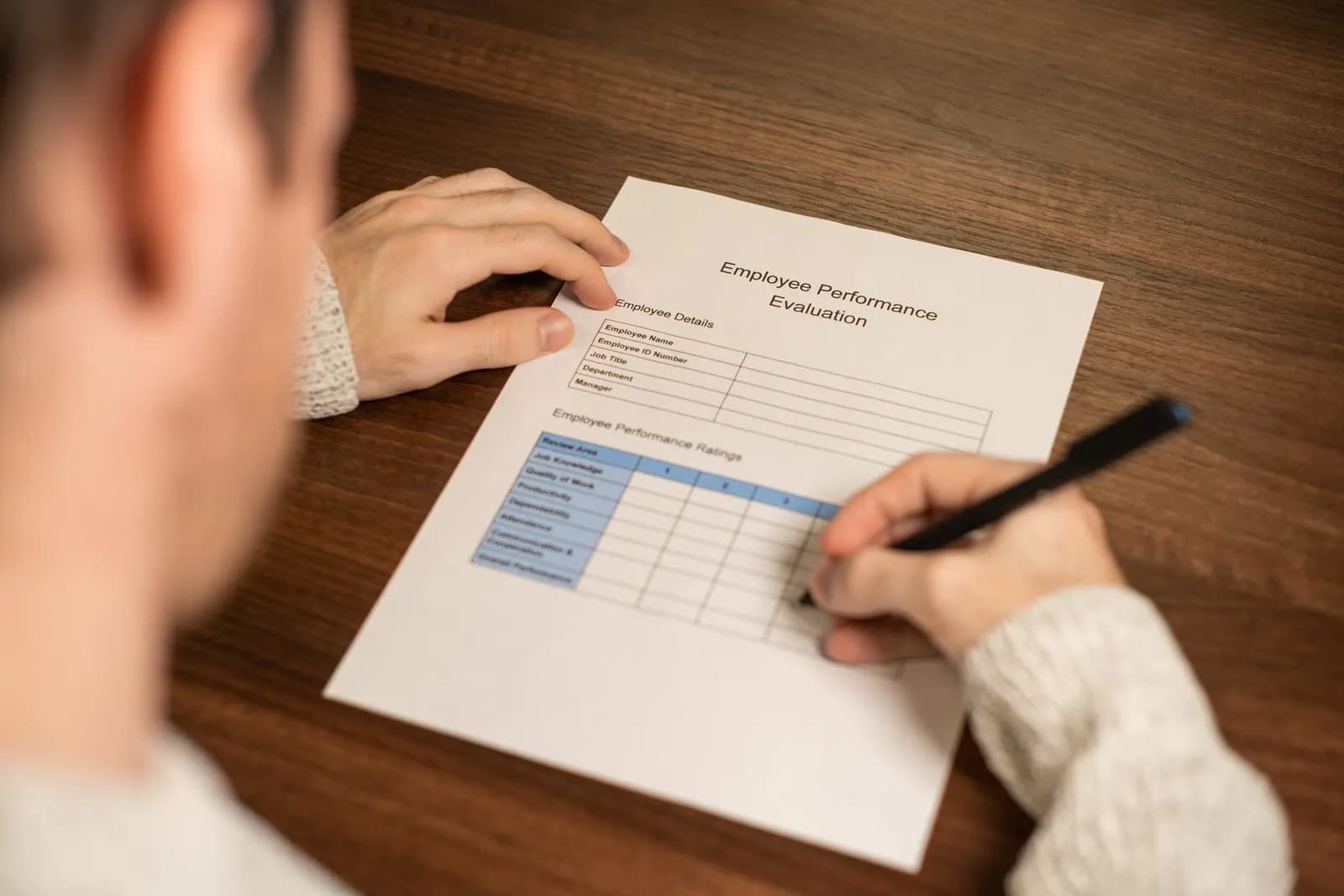
A good probation is mostly about early, honest feedback. Set out at the start what "passing" looks like — targets, behaviours, training to complete — and book review meetings at fixed points, for example at four weeks, three months and a week or two before the end. Write each review down: what's going well, what isn't, what support you'll give and what needs to change by the next review. Share the note with the employee.
When concerns appear, raise them straight away rather than saving them for the final meeting. Acas says dismissal should be a last resort and that employers should first try performance management, training or support. For a disabled employee, consider reasonable adjustments, which may include allowing a companion at review meetings. If several new starters fail probation, Acas suggests looking at your recruitment process rather than only at the individuals.
Extending probation
Extension is useful when someone is close to the standard and likely to get there with more time — perhaps after sickness absence, or where training was delayed. Acas sets out how to do it properly. The contract or probation policy should allow extension and say on what basis. Confirm the extension before the original probation ends — leaving it until afterwards could be a breach of contract and may mean the employee is treated as having passed. Confirm it in writing, by letter or email.
The extension letter should cover how long the extension lasts, the review points within it, the performance or conduct expected (including any training), the date of the final review, and the possible outcomes. Because probation terms form part of the written statement, Acas says the employer must update the statement of particulars within one month of a change.
Under the 2027 rules, think carefully about the total. A three-month probation extended by three months ends at six months — and the decision, plus a week's statutory notice, will put the employee past the qualifying period. If you extend, keep the end date at or before about five months, or accept that the final decision must follow a full fair procedure.
How to extend probation properly
- 1
Check the contract or policy
Make sure there's a right to extend and note any maximum.
- 2
Meet before probation ends
Explain the gaps, listen to the employee's view and agree support or training.
- 3
Confirm in writing
Length of extension, review dates, standards expected, final review date, possible outcomes.
- 4
Update the written statement
Within one month of the change, as Acas advises.
- 5
Review and decide on time
Hold the final review before the extended end date and confirm the result in writing.
Dismissal during or at the end of probation
Failing probation makes dismissal likely, but not automatic. Acas's guidance on probation dismissals says the employer should follow a fair process, give the reasons in writing, and give the right amount of notice. Employees can ask to be accompanied to meetings that could lead to dismissal and to any appeal meeting about a dismissal; the statutory right might not apply to routine probation review meetings, but employers can offer it.
Notice. The employer must give at least the statutory minimum — 1 week once the employee has worked a month — or the contractual notice if longer. Many contracts set one week during probation and a month afterwards; that's lawful as long as it doesn't drop below the statutory minimum. In the first month there's no statutory notice duty, so only the contract applies. See our notice period guide for pay in lieu and garden leave.
Day-one protections. Some dismissals are automatically unfair or unlawful from the first day, regardless of probation or service: for example, dismissal because of pregnancy, for whistleblowing, for asserting a statutory right such as the minimum wage, or for a reason linked to a protected characteristic. An employer that ends probation shortly after an employee discloses a disability or a pregnancy needs strong, documented, unrelated reasons.
From 1 January 2027. Employees with at least 6 months of service can claim ordinary unfair dismissal, and can ask for written reasons for dismissal after six months rather than two years. The cap on the compensatory award — currently £123,543 or 52 weeks' pay if lower — is removed at the same time. For employees past the six-month point, follow the Acas Code: investigate, invite in writing, hold a meeting with a companion, decide, and offer an appeal, as set out in our disciplinary procedure guide.
Resigning during probation
Probation works both ways. An employee who decides the job isn't right must give the notice in their contract, and once they've worked for a month the law requires at least 1 week, however short the contractual probation notice is. In the first month there's no statutory minimum, so only the contract applies. Employer and employee can always agree a shorter period, ideally confirmed by email. Leaving without giving the notice required is usually a breach of contract, though employers rarely pursue new starters for it; Acas says a contract may allow deductions from final pay, for example towards the cost of agency cover, so check the wording before relying on it. Whichever side ends it, the employee is entitled to pay for accrued holiday they haven't taken.

What the Employment Rights Act 2025 does — and doesn't — change
The Employment Rights Act 2025 became law on 18 December 2025. As originally introduced, the government's plan was to give unfair dismissal protection from day one, with special arrangements for probation. On 27 November 2025 the Commons agreed instead to a six-month qualifying period to break a deadlock with the Lords. Acas now confirms that the Act doesn't change probation rules: probation remains optional, contractual and of any length. There is no statutory probation period to follow.
What changes is the backdrop. The six-month qualifying period, the removal of the compensatory award cap and the six-month request for written reasons all apply to dismissals from 1 January 2027 in England, Scotland and Wales. Mishcon notes the Act also removes the government's power to change the qualifying period by regulations, so any future change would need a new Act of Parliament. Employees with at least six months' service on 1 January 2027 are protected from that date, which in practice means anyone who started on or before about 1 July 2026.
Key dates for probation planning
27 Nov 2025
Parliament agrees 6-month qualifying period instead of day-one rights
18 Dec 2025
Employment Rights Act 2025 becomes law
6 Apr 2026
SSP payable from the first day of sickness
1 Oct 2026
Tribunal time limit rises to 6 months
1 Jan 2027
Unfair dismissal after 6 months; compensatory cap removed
Worked example: setting a probation decision date
Sana runs a dental practice in Bristol and hires a receptionist, Ben, starting Monday 4 January 2027 on £26,000 a year with a four-month probation, extendable by one month, and one week's notice during probation. Ben will reach six months' service on 3 July 2027.
At the eight-week review Sana records two issues: appointment booking errors and slow call handling. She arranges a half-day training session on the booking system and sets clear targets. At the four-month review on 30 April, booking errors have fallen but call handling is still below target. Before probation ends she extends it by one month in writing, setting a final review on 28 May and updating Ben's written statement.
If Ben still isn't meeting the standard on 28 May and Sana decides to end his employment, one week's notice takes his employment to 4 June — roughly a month short of six months' service. He can't claim ordinary unfair dismissal, though day-one protections still apply. Ben's notice pay is one week at £26,000 ÷ 52 = £500 gross, plus pay for any accrued, untaken holiday. If Sana had instead used a six-month probation and decided on 2 July, the week's statutory notice would carry Ben past the six-month line, and she'd need a full fair procedure.
Common mistakes
No probation clause in the written statement. If it's not in the principal statement on day one, you may not be able to rely on shorter notice or extension rights.
Extending after the end date. Confirm extensions in writing before the original probation expires.
Saving everything for the final review. If problems weren't raised during probation, a sudden dismissal looks unfair and makes discrimination claims harder to defend.
Keeping old six-month or twelve-month templates unchanged. Review them before 1 January 2027.
Forgetting statutory notice. A dismissal a week before the six-month point may still be caught.
Withholding statutory rights. Probation can limit contractual extras, but not holiday, minimum wage or SSP. See the Statutory Sick Pay guide.
Make your probation process 2027-ready
0/7Official links
- Acas: probation periodsReviews, extension and dismissal
- Unfair dismissal changes from 1 January 2027Six-month qualifying period and probation advice
- Employment Rights Act 2025 timelineLatest commencement dates
- Acas: Employment Rights Act 2025What changes and when
- Employment contracts: written statementProbation must be in the principal statement
What to do next
Pull out your offer letter and contract templates and check the probation length against the six-month rule, then add a clear extension clause and a review schedule. Make sure every new starter's written statement includes probation terms on day one. If a probation is heading towards failure, use the disciplinary procedure guide for the fair-process steps and the notice period guide to work out notice and final pay, and produce the final payslip with the salary slip generator.
This is general information, not legal or tax advice — confirm on the official source or with a professional.
Frequently asked questions
No. There's no law requiring a probation period and no statutory minimum or maximum length. Probation is a contractual arrangement: it exists only if your contract or written statement says so, and it works on the terms written there. If you have one, its length and conditions must be included in the principal written statement given on or before day one.
Acas says probation can be any length. Three to six months is common. From 1 January 2027, unfair dismissal protection starts after 6 months of service, so many employers are moving to probation of around four to five months, leaving time to decide and give notice before the six-month point.
Yes, if your contract or probation policy allows it. Acas says the extension should be confirmed in writing before the original probation ends, with a plan covering its length, review dates, expectations and possible outcomes. If probation terms are in your contract, the employer must also update your written statement within one month.
At least the statutory minimum — one week once you've worked for a month — or the notice in your contract if it's longer. Many contracts set a shorter notice period during probation, but it can't go below the statutory minimum. In your first month there's no statutory notice requirement, so the contract decides.
Until 31 December 2026, most employees need 2 years of service to claim ordinary unfair dismissal. From 1 January 2027 that falls to 6 months. Whatever your service, dismissal for a discriminatory reason, for whistleblowing, for pregnancy or for asserting a statutory right is unlawful from day one. Acas recommends giving the reasons in writing.
Yes. Paid holiday, the National Minimum Wage and Statutory Sick Pay all apply from day one, and probation doesn't change them. Contractual sick pay can be withheld during probation if the contract says so. Employers can postpone pension auto-enrolment for up to three months but must enrol you if you ask.
Sources & verification
Figures on this page were checked against the sources below when it was last reviewed on 13 October 2026. Each rate and limit is stored once with its own official source and review date, and official update channels are monitored daily so changes are picked up. How we verify
- 1.Probation periods — Acas · accessed 13 October 2026
- 2.Probation periods: extending probation — Acas · accessed 13 October 2026
- 3.Probation periods: dismissal — Acas · accessed 13 October 2026
- 4.Unfair dismissal rights — Department for Business and Trade (business.gov.uk) · accessed 13 October 2026
- 5.Plan to Make Work Pay and Employment Rights Act: timeline update — Department for Business and Trade · accessed 13 October 2026
- 6.Employment Rights Act 2025 — Acas · accessed 13 October 2026
- 7.Notice periods — Acas · accessed 13 October 2026
- 8.Unfair dismissal rights from six months and why acting at five months may not be enough — Mishcon de Reya · accessed 13 October 2026
- 9.The end of day-one unfair dismissal rights: sensible compromise or sell-out? — Bryan Cave Leighton Paisner · accessed 13 October 2026
MSMETOOLS is an independent platform and is not affiliated with any government agency, ministry or department.
Tools for this
Salary Slip Generator
Create professional salary slips in seconds.
Freelance Hourly Rate Calculator
Work out the hourly rate you need to charge.
Related guides
 Statutory Notice Period UK 2026: Scale, PILON & Garden LeaveRead guide
 Employment Contract UK 2026: Day-One Statement & ERA ChangesRead guide
 Disciplinary Procedure UK 2026: Acas Steps & the 25% UpliftRead guide
 Grievance Procedure UK 2026: Acas Steps, Timescales & AppealsRead guide
Official links open the government site in a new tab.