 HR, payroll & employment
Statutory Notice Periods in the UK (2026): How Much Notice, Notice Pay, PILON and Garden Leave
UK statutory notice periods in 2026: the week-per-year scale up to 12 weeks, employee notice, pay in lieu, garden leave, sickness during notice and worked examples.
 Edited by Sumeet YadavFounder & editor, MSMETOOLS · fact-checked against official sources
Contents (11)
- 1. The statutory notice scale
- 2. Contractual notice versus statutory notice
- 3. When notice starts and ends
- 4. Notice pay and being off during notice
- 5. Pay in lieu of notice (PILON)
- 6. Garden leave
- 7. Gross misconduct and summary dismissal
- 8. When notice goes wrong
- 9. Worked examples
- 10. Common mistakes
- 11. What to do next
When a job ends, notice decides how long it takes and how much is paid on the way out. This guide is for UK employers working out how much notice to give, and for employees checking what they're owed or how much notice they need to give when resigning. It covers the statutory minimum scale in section 86 of the Employment Rights Act 1996, how contractual notice interacts with it, notice pay when someone is off sick, pay in lieu of notice (PILON), garden leave, gross misconduct, and what happens when either side gets it wrong — with worked examples in pounds.
Quick answer
After one month's service, an employer must give at least one week's notice. From two years, it's one week per complete year, up to 12 weeks after 12 years. An employee must give at least 1 week once they've worked a month, however long they've been there. A contract can give longer notice, never shorter — and the longer period applies.
Pay in lieu of notice needs a contract clause, or the employee's agreement
Garden leave: still employed and paid, but told not to work
Off sick during notice? Full pay if contractual notice is less than a week longer than statutory
Gross misconduct: no notice or notice pay after a fair process
The Employment Rights Act 2025 doesn't change notice periods
The statutory notice scale
Section 86 of the Employment Rights Act 1996 sets minimum notice that an employer must give to end an employee's contract — whether it's a dismissal for conduct or capability, a redundancy, or the end of probation. It only applies once the employee has been continuously employed for one month. It then rises with each complete year of service, so part-years don't count: Acas gives the example that someone with 4 years and 9 months' service is entitled to four weeks.
| Continuous service | Minimum notice from employer |
|---|---|
| Less than 1 month | None by statute (check the contract) |
| 1 month to less than 2 years | 1 week |
| 2 years | 2 weeks |
| 3 years | 3 weeks |
| 5 years | 5 weeks |
| 8 years | 8 weeks |
| 10 years | 10 weeks |
| 12 years or more | 12 weeks (the maximum) |
In between, the rule is the same: one week for each complete year from two years upwards. A person with 6 years and 11 months' service gets six weeks; on their seventh anniversary, seven.
Employees' statutory notice is simpler. Once they've worked for a month, they must give at least 1 week, and that doesn't increase with service. Under a month, with nothing in the contract, no notice is required. Acas notes an employee doesn't have to give notice if the employer has seriously breached the contract, or if both sides agree something else.
Who the statutory scale covers
The section 86 scale protects employees. Workers who aren't employees — some casual, zero-hours or agency arrangements — and the genuinely self-employed don't have statutory notice rights, so how much notice they get depends entirely on their contract or engagement terms. If you're unsure which group someone falls into, our agency workers guide and employment contract guide explain the difference.
Service is measured from the employee's start date to the date notice is given, and it's continuous service that counts. A short break, a change of job title or a pay rise doesn't restart the clock, and when a business is transferred to a new owner, staff usually keep their accrued service. For a long-serving employee, check old payroll records before giving notice: miscounting by a single year means giving one week too little and a likely breach of contract claim.
Statutory notice at a glance (2026)
1 month
Service before statutory notice applies
1 week
Employer notice, 1 month to 2 years
12 weeks
Maximum employer notice
after 12 years
1 week
Employee's minimum notice
doesn't rise with service
The government's guidance on the Employment Rights Act 2025 confirms there are no changes to notice periods — the 2027 reforms change unfair dismissal, not notice.
Contractual notice versus statutory notice
Most contracts set their own notice. The written statement of employment particulars must tell employees the notice periods on day one — see our employment contract guide. The rule is simple: the employee gets whichever is longer, the contractual period or the statutory minimum. A contract can't reduce notice below the statutory scale, and any clause that tries to is overridden.
That catches out employers with older contracts. A common clause is "one month's notice on either side". That's fine for an employee with three years' service (statutory: three weeks), but for someone with seven years it's less than the seven weeks the law requires — so they must get seven weeks. Contracts often fix this by saying "one month, or statutory notice if longer".
Notice in contracts doesn't have to be the same both ways. Many employers ask senior staff to give three months' notice while giving them the longer of three months and the statutory scale. Probation clauses often set a shorter period, such as a week, for the first few months; that works as long as it's not less than statutory notice. See the probation period guide.
When notice starts and ends
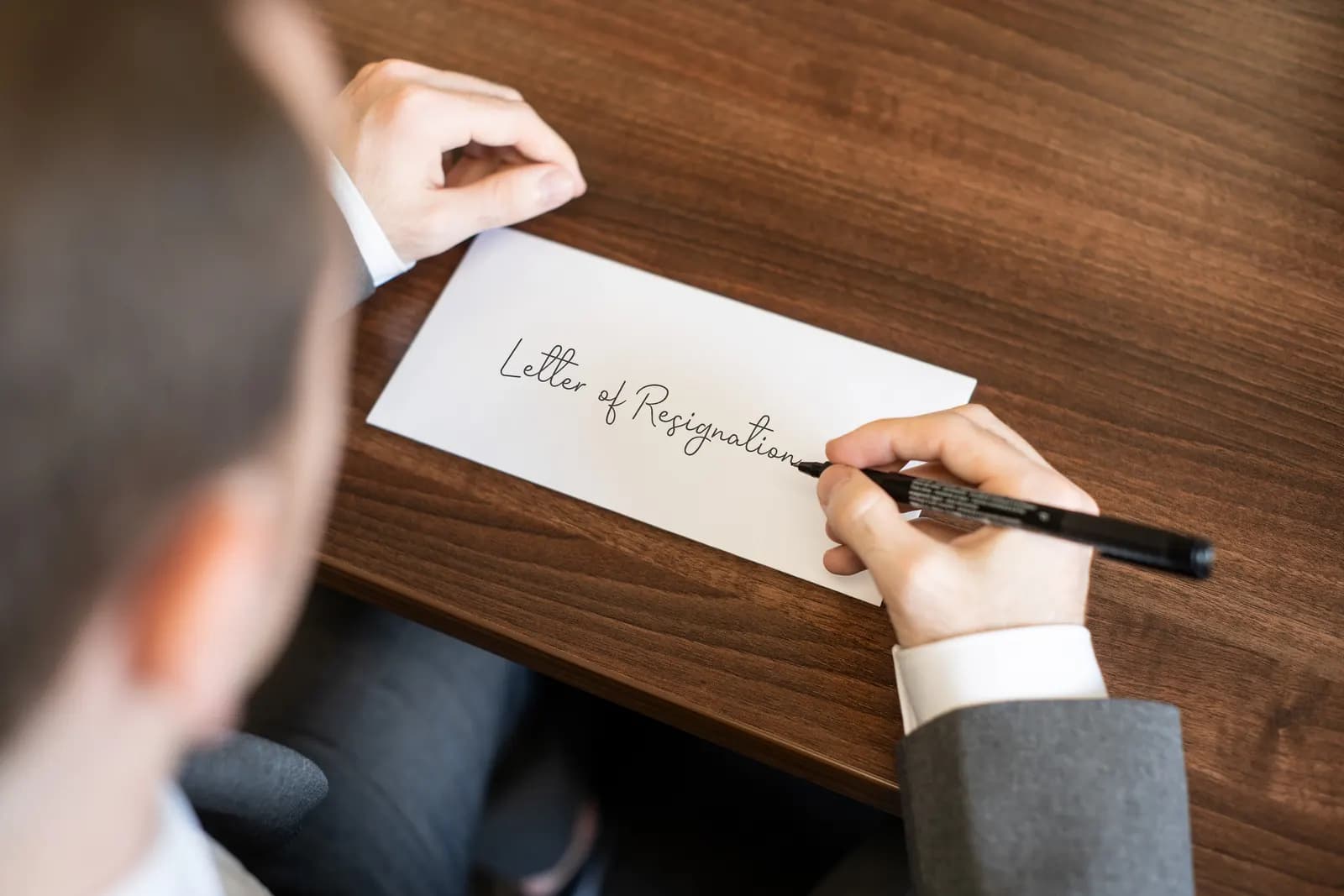
If the contract doesn't say, Acas explains that notice starts the day after the employee resigns or is told in person of their dismissal. Written notice starts once the employee has had a reasonable chance to read it — for example, a letter that arrives while they're on holiday counts from when they could reasonably have read it, not from when it was posted. Giving notice in writing, and keeping proof of when it was received, prevents arguments about the leaving date.
Both sides can agree to shorten notice, and Acas recommends doing that in writing, even by email. If the employee asks to leave early and the employer agrees, the employer only has to pay for the time actually worked. If the employee simply walks out early without agreement, that's usually a breach of contract.
Notice pay and being off during notice
During notice, the employee normally continues to receive their usual pay and benefits. GOV.UK's redundancy guidance says notice pay is based on the employee's pay rate and notice period, using average weekly earnings over the 12 weeks before notice starts. Accrued, untaken statutory holiday must be paid on leaving — see our holiday pay guide.
The tricky case is an employee who is off sick, on holiday or on family leave during notice. The Employment Rights Act gives special protection here, and Acas sets out the test:
- If the employer's contractual notice is the same as statutory notice, or less than one week longer, the employee gets full normal pay for the notice period, even while off sick, on holiday or on family leave.
- If the employer's contractual notice is one week or more longer than statutory notice, the protection doesn't apply. The employee only gets the pay they'd normally receive for the reason they're off — Statutory Sick Pay, for example, or contractual sick pay if the contract provides it.
Acas's own examples show the difference. Alex has seven years' service and a seven-week contractual notice period and is off sick throughout notice: he gets full normal pay for all seven weeks. Riley also has seven years' service but an eight-week contractual notice period and a contract that only provides SSP: Riley gets SSP only.
Where it's the employee who resigns, Acas says to look at the notice the employer would have had to give. If that's less than a week longer than statutory, the employee gets one week's full normal pay while off, and the normal rate for the reason they're off for the rest. If it's a week or more longer, they get only what they'd normally get for being off.
Off sick during notice — who gets full pay?
| Service | Employer's contractual notice | Statutory notice | Gap | Pay while sick during notice |
|---|---|---|---|---|
7 years | 7 weeks | 7 weeks | 0 | Full normal pay (Acas example: Alex) |
7 years | 1 month (~4.3 weeks) | 7 weeks | Statutory applies | Full normal pay for 7 weeks |
7 years | 8 weeks | 7 weeks | 1 week | SSP or contractual sick pay only (Acas example: Riley) |
3 years | 3 months (~13 weeks) | 3 weeks | 10 weeks | SSP or contractual sick pay only |
7 years
- Employer's contractual notice
7 weeks
- Statutory notice
7 weeks
- Gap
0
- Pay while sick during notice
Full normal pay (Acas example: Alex)
7 years
- Employer's contractual notice
1 month (~4.3 weeks)
- Statutory notice
7 weeks
- Gap
Statutory applies
- Pay while sick during notice
Full normal pay for 7 weeks
7 years
- Employer's contractual notice
8 weeks
- Statutory notice
7 weeks
- Gap
1 week
- Pay while sick during notice
SSP or contractual sick pay only (Acas example: Riley)
3 years
- Employer's contractual notice
3 months (~13 weeks)
- Statutory notice
3 weeks
- Gap
10 weeks
- Pay while sick during notice
SSP or contractual sick pay only
Pay in lieu of notice (PILON)
Pay in lieu of notice lets an employer end employment straight away and pay for the notice period instead of having it worked. Whether the employer can insist depends on the contract.
With a PILON clause, the employer can usually end the contract immediately and make the payment, depending on the wording. Acas says the employee stops work immediately and gets full pay for the notice period, though other contractual benefits are unlikely to continue unless the clause says so. GOV.UK adds that the payment must cover the basic pay the employee would have received during notice, and any pension, health insurance or other contributions the contract requires.
Without a PILON clause, the employer can only ask. The employee can't be forced to agree. If they do agree, Acas says they should receive full pay for the notice period, and the employer may offer other benefits. If an employer without a clause simply dismisses on the spot and pays a sum in lieu, that's technically a breach of contract on the employer's side, so get the employee's agreement in writing first.
Tax. GOV.UK says tax and National Insurance must be deducted from PILON. Since April 2018, the basic pay for any unworked notice — called post-employment notice pay — is taxed as earnings even if it's paid as part of a wider severance package and even if there's no PILON clause. Our termination payments guide explains how that interacts with the £30,000 tax-free allowance for genuine compensation.
Remember that PILON doesn't shorten the employee's service for unfair dismissal purposes. When an employer dismisses without giving statutory notice, the employee's service is treated as continuing to the end of the statutory notice period. From 1 January 2027 that can tip someone over the 6 months qualifying period, so dismissing at five months and three weeks with a payment in lieu may not avoid unfair dismissal rights. Only summary dismissal for genuine gross misconduct escapes that rule.
Garden leave
Garden leave is when the employer tells the employee not to work for some or all of their notice period. Acas describes the purpose: often to keep the employee away from confidential information, clients or colleagues before they join a competitor. The employee stays employed, is paid as usual and keeps their contractual benefits.
Because they're still employed, the duties in their contract — confidentiality, not working for anyone else — continue until the notice ends. That's the point: an employee on three months' garden leave can't start with a rival until the three months are up. It's safest for employers to include an express garden leave clause in contracts for roles where this matters, setting out what the employee may and may not do and whether they must stay available for handover questions.

Gross misconduct and summary dismissal
An employer can dismiss without notice — summary dismissal — for gross misconduct, such as theft, fraud or violence. Acas confirms the employee then isn't entitled to statutory notice or pay for it. But the Acas Code is clear that gross misconduct still requires a fair disciplinary process — investigation, a hearing, a decision and a right of appeal — before dismissal. Getting the label wrong is expensive: if the conduct wasn't really gross misconduct, the employee can claim the notice pay they should have had. See our disciplinary procedure guide.
When notice goes wrong
Employer gives too little notice. The employee can raise it informally first, then claim wrongful dismissal — a breach of contract claim — at an employment tribunal or in the civil courts. The claim is essentially for the notice pay they should have received. Since 1 October 2026, tribunal breach of contract claims in England and Wales have a time limit of 6 months (six months minus one day); in Scotland, the six-month limit applies to breaches from 9 November 2026.
Employee gives too little notice. This is usually a breach of contract. Acas says the contract may allow the employer to make deductions from wages — for example to cover the cost of an agency worker — and the employer can claim losses through the county court in England and Wales or the sheriff court in Scotland. In practice, employers rarely sue, but a short-notice departure can affect references, particularly in regulated roles.
Worked examples
A redundancy with long service. Carol has worked at a printing firm for 13 years and 2 months and earns £35,360 a year (£680 a week). Her contract says "one month's notice". Statutory notice is capped at 12 weeks, which is longer than a month, so she must get 12 weeks. Notice pay = 12 × £680 = £8,160 gross, plus her statutory redundancy pay and accrued holiday. If her employer pays in lieu under a PILON clause, the £8,160 is taxed and NICable as earnings.
A short-service dismissal. Dev has worked at a retailer for 1 year and 8 months on £24,960 a year (£480 a week), with "one week's notice" in his contract. Statutory and contractual notice are both one week, so he gets £480. If he's off sick for the whole week, he still gets full pay, because his contractual notice isn't a week or more longer than statutory.
A resignation. Leah has 4 years and 9 months' service and a contract requiring her to give one month's notice. Her statutory minimum as an employee is only one week, but the contract applies, so she must give a month unless her employer agrees to less.
Notice-related dates to know
6 Apr 2018
Post-employment notice pay taxed as earnings
1 Oct 2026
Tribunal time limit 6 months (England and Wales breach of contract)
9 Nov 2026
Six-month limit for breach of contract claims in Scotland
1 Jan 2027
Unfair dismissal after 6 months — statutory notice counts towards service
Common mistakes
Using a flat "one month" for everyone. Long-serving staff may be entitled to more. Add "or the statutory minimum if longer".
Counting part-years. Only complete years count — 4 years 11 months means four weeks.
PILON without a clause. Ask for the employee's agreement in writing, or add a clause for the future.
Forgetting benefits. Pension contributions and other contractual benefits usually continue during worked notice and garden leave.
Mis-paying sickness during notice. Check the "less than a week longer" test before paying only SSP.
Notice checklist for a leaver
0/6Official links
- Making staff redundant: giving staff noticeStatutory notice table and pay in lieu
- Acas: notice periodsEmployer and employee notice, PILON, garden leave
- Acas: final pay when someone leavesNotice pay, sickness during notice, holiday pay
- Dismissal: your rightsGOV.UK guidance for employees
- Employment tribunal time limitsSix-month limit from 1 October 2026
What to do next
Check your contract templates say "or the statutory minimum if longer" and include PILON and garden leave clauses where they're useful, then use the table above whenever someone leaves. For the money side, read the termination payments guide for tax on PILON and severance, the redundancy pay guide if the role is going, and produce the final payslip with the salary slip generator.
This is general information, not legal or tax advice — confirm on the official source or with a professional.
Frequently asked questions
An employer must give at least one week's notice to an employee who has worked for a month or more but less than two years, then one week for each complete year of service from two years, up to a maximum of 12 weeks after 12 years. A contract can give more notice, but never less. The Employment Rights Act 2025 doesn't change these periods.
At least 1 week once they've worked for a month, however long they've been employed — unless the contract sets a longer period, in which case the contract applies. In the first month there's no statutory minimum. Employer and employee can always agree a shorter period, ideally in writing.
If your contract has a pay in lieu of notice (PILON) clause, your employer can usually end your employment immediately and pay you for the notice period instead. Without a clause they can only ask; you can't be forced to agree. If you agree, you should get full pay for the notice period. PILON is taxed and subject to National Insurance as earnings.
Garden leave is when your employer tells you not to come to work for some or all of your notice period, often to keep you away from clients or confidential information. You stay employed and are paid as normal, including contractual benefits, and you're still bound by your contract — so you can't start a new job until your employment ends.
It depends on your contractual notice. If your employer's notice under the contract is the same as statutory notice, or less than a week longer, you get full normal pay for the statutory notice period even while sick. If it's a week or more longer, you only get the pay you'd normally get while off, such as Statutory Sick Pay.
No. If an employee is dismissed for gross misconduct after a fair process, they're not entitled to statutory notice or notice pay. They're still entitled to wages earned and accrued, untaken holiday up to the termination date.
Sources & verification
Figures on this page were checked against the sources below when it was last reviewed on 13 October 2026. Each rate and limit is stored once with its own official source and review date, and official update channels are monitored daily so changes are picked up. How we verify
- 1.Making staff redundant: giving staff notice — GOV.UK · accessed 13 October 2026
- 2.Notice periods — Acas · accessed 13 October 2026
- 3.Final pay when someone leaves: pay during the notice period — Acas · accessed 13 October 2026
- 4.Unfair dismissal rights — Department for Business and Trade (business.gov.uk) · accessed 13 October 2026
- 5.Employment tribunal time limits — Department for Business and Trade (business.gov.uk) · accessed 13 October 2026
- 6.Code of Practice on disciplinary and grievance procedures — Acas · accessed 13 October 2026
- 7.Unfair dismissal rights from six months and why acting at five months may not be enough — Mishcon de Reya · accessed 13 October 2026
MSMETOOLS is an independent platform and is not affiliated with any government agency, ministry or department.
Tools for this
Salary Slip Generator
Create professional salary slips in seconds.
Freelance Hourly Rate Calculator
Work out the hourly rate you need to charge.
Related guides
 Probation Period UK 2026: Rules, Extensions & the 2027 ChangeRead guide
 Termination Payments Tax 2026: £30,000 Rule, PENP & Class 1ARead guide
 Employment Contract UK 2026: Day-One Statement & ERA ChangesRead guide
 Disciplinary Procedure UK 2026: Acas Steps & the 25% UpliftRead guide
Official links open the government site in a new tab.